
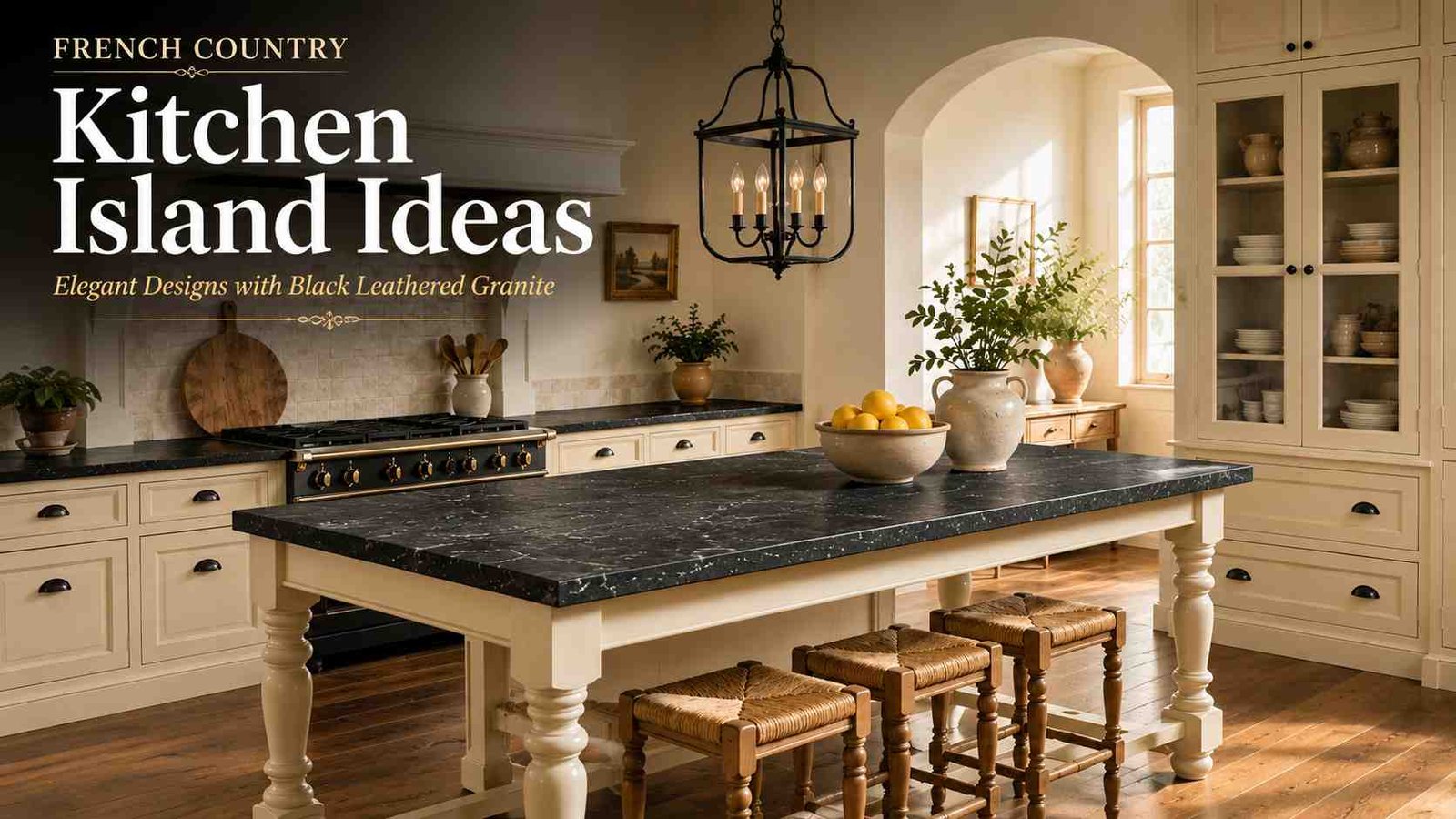
The first time I ran my hand across a slab of leathered granite, I did it twice without meaning to. It doesn’t feel like stone the way a polished countertop does.
There’s a soft, almost fabric-like texture under your palm, and that one detail is a big part of why black leathered granite has become one of the most requested black granite island designs in the renovations I’ve followed over the last few years.
It reads as moody and expensive without needing any shine to pull that off, and it hides fingerprints, water rings, and flour dust in a way a mirror-polished slab simply can’t.
What’s changed my thinking about this stone over time is watching how differently it behaves depending on what’s around it.
The same black leathered top can look completely different next to white oak than it does next to sage green shaker doors, and a lot of people pick the stone first and figure out the cabinets later, which is really the wrong order to do it in.
Below are 21 leathered granite kitchen ideas built specifically around the island, across kitchens of very different sizes and budgets, along with the details, hardware, lighting, and wood tones, that made each one actually work rather than just look good in a single photo.
Why the Leathered Finish Matters More on an Island Than Anywhere Else
A quick detour before the list, because it affects how you plan around this stone. Leathering is done with diamond-tipped brushes instead of polishing pads, so instead of a flat, mirror surface, you get thousands of tiny peaks and valleys.
On black granite, that texture scatters light instead of bouncing it straight back at you, which is why a leathered black island rarely looks flat or one-note under different lighting the way a polished one can.
Most fabricators offer this stone in standard 2cm or 3cm slabs, and the edge profile you pick, a simple eased edge, a mitered edge, or a full waterfall, changes both the price and how visible the leathered texture reads from the side.
It’s worth deciding on the edge before you fall for a specific slab, since not every fabricator cuts every profile in leathered stone.
It also changes maintenance in small but real ways. Leathered stone still needs sealing, and every fabricator I’ve spoken with charges a small premium for the leathering process itself, usually an extra dollar or two per square foot over a standard polished finish.
That’s a fair trade for a surface that’s genuinely more forgiving of daily use, but don’t go in assuming “leathered” means “never needs attention.” It still does, just less often than you’d think.
1. Matte Black Cabinets With Warm Brass
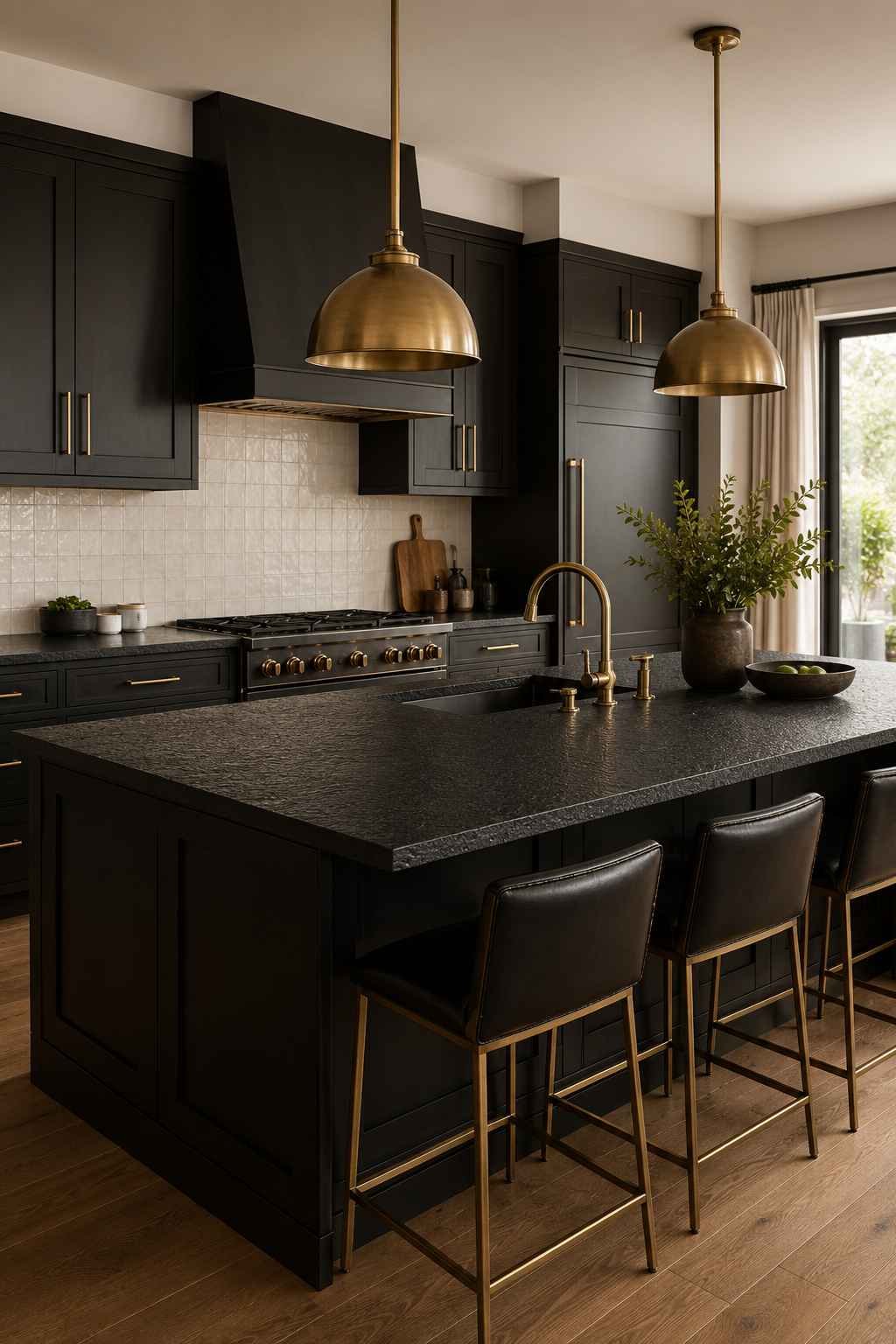
This is the pairing people ask about most, and it works because it commits instead of splitting the difference. Matte black shaker cabinets, an island top in something like Absolute Black or a leathered Black Pearl, and then warm, slightly unlacquered brass pulls and a brass-finished faucet to keep the whole room from reading like a cave. The brass does more work than most people expect. Without it, an all-black kitchen can go flat and heavy under normal daylight. With it, the same room photographs well, and feels just as intentional day to day, rather than dark for the sake of it. If natural light is limited, lean toward a warmer white for the walls rather than a stark white, since a cool white next to this much black can feel clinical instead of moody.
Best for: kitchens that get decent natural light and homeowners who want a dramatic look without it reading as cold.
2. White Oak Cabinets for a Classic, Safer Contrast
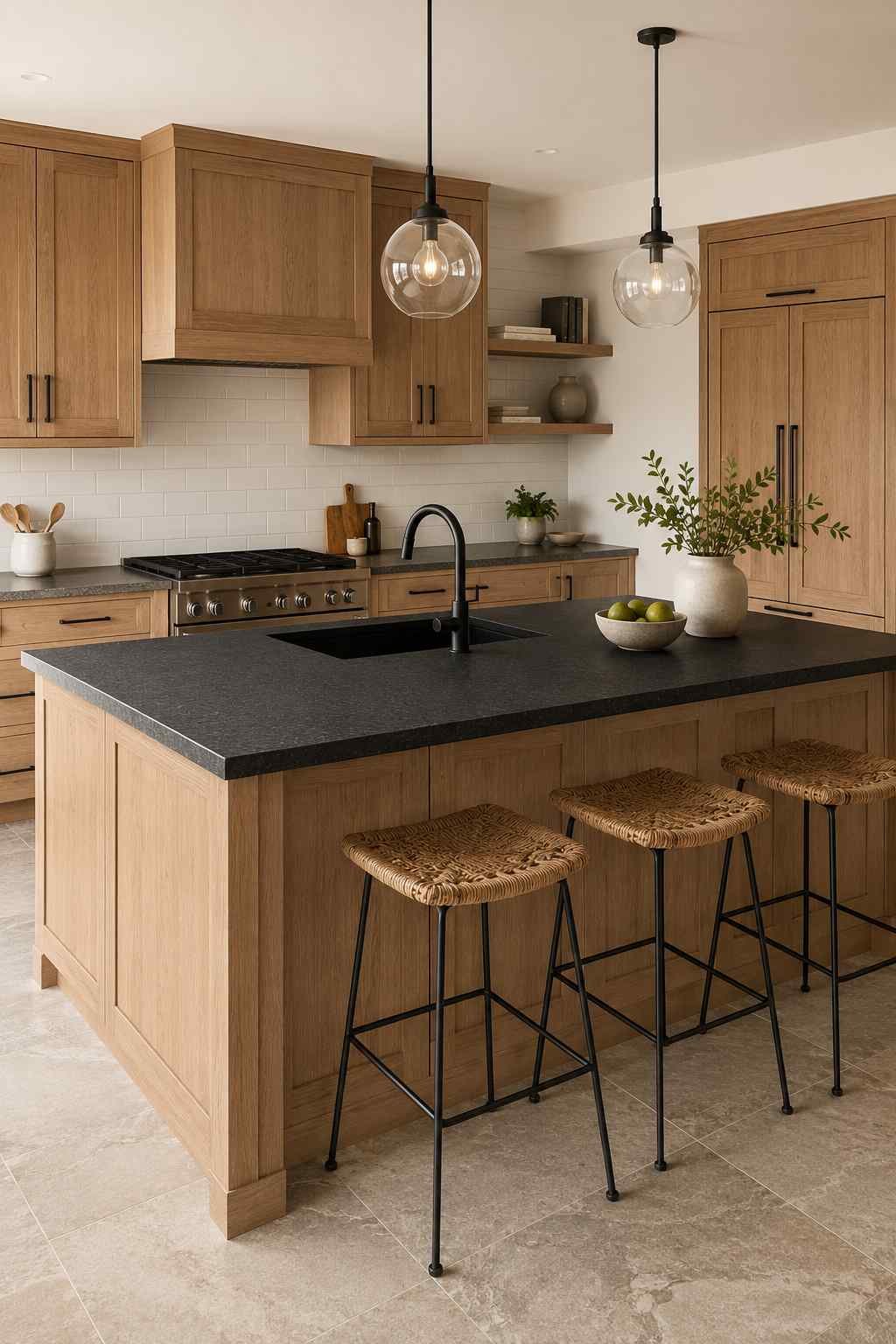
If committing to a fully black kitchen feels like too much, white oak perimeter cabinets against a black leathered island are the version of this look that almost never dates badly. The wood grain reads warm next to the cool stone, and because oak has real variation running through it, no two kitchens using this combination end up looking identical, even with the same cabinet order placed twice. I’ve noticed this pairing also ages well in a practical sense. The wood can be refinished or restained a decade in without touching the island top at all, which isn’t possible with every cabinet material.
Best for: first-time renovators who want a safe, resale-friendly look that still feels current in ten years.
3. A Curved Island for a Softer Room
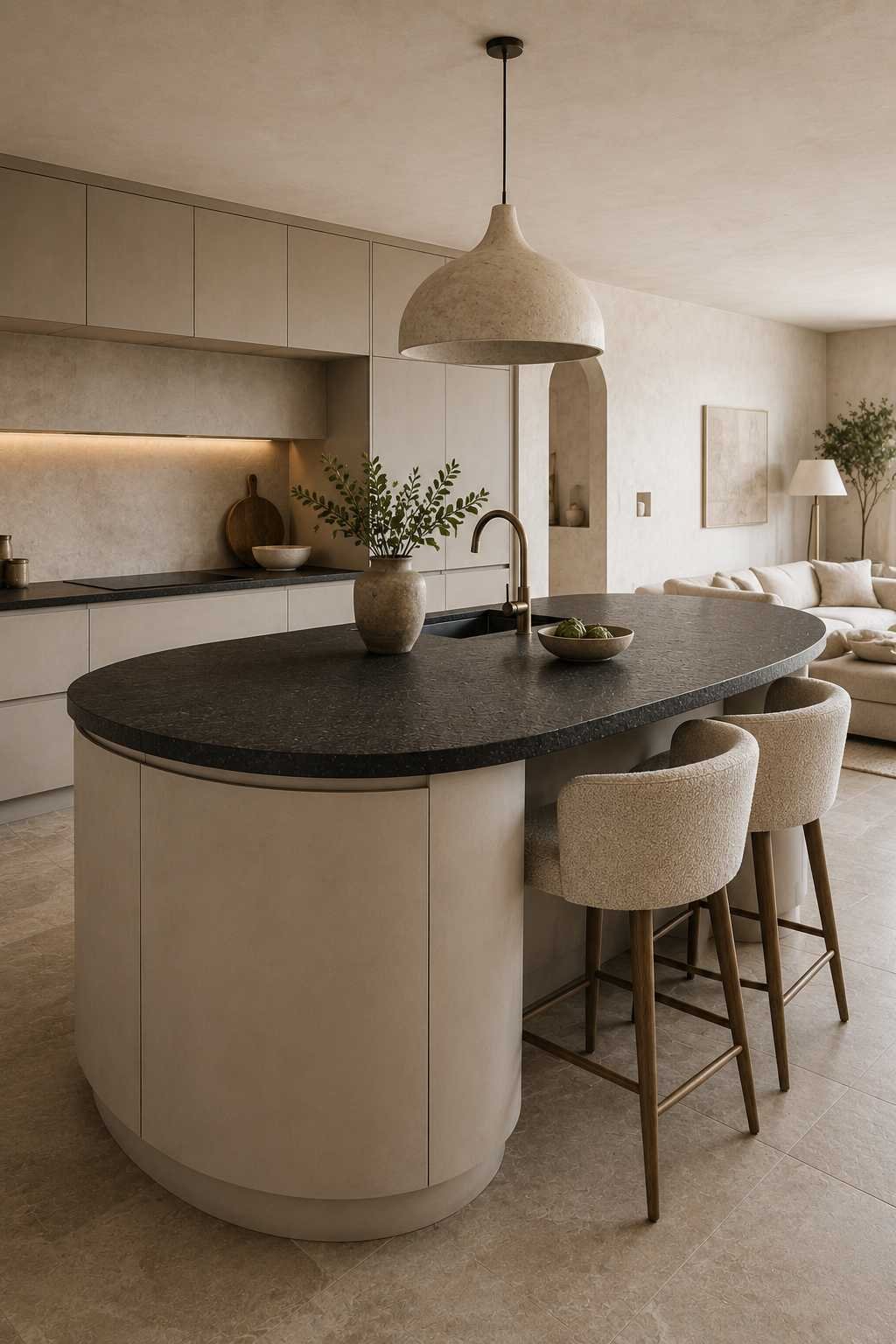
Not every kitchen needs sharp corners, especially if the island is visible from an open-plan living area rather than tucked into its own room. A rounded or curved island edge topped in leathered granite softens the whole footprint of the space, and the texture actually helps here. A curved edge in polished granite can throw strange, broken reflections as light hits the curve, while the leathered finish keeps that same light diffuse and even along the bend. Expect to pay more for the curved fabrication itself, since it’s a slower, more specialized cut than a straight edge, and not every shop takes the job on.
Best for: open-concept homes where the island is seen from the living room as much as it’s used from the kitchen.
4. The Two-Tier Island for Tight Kitchens
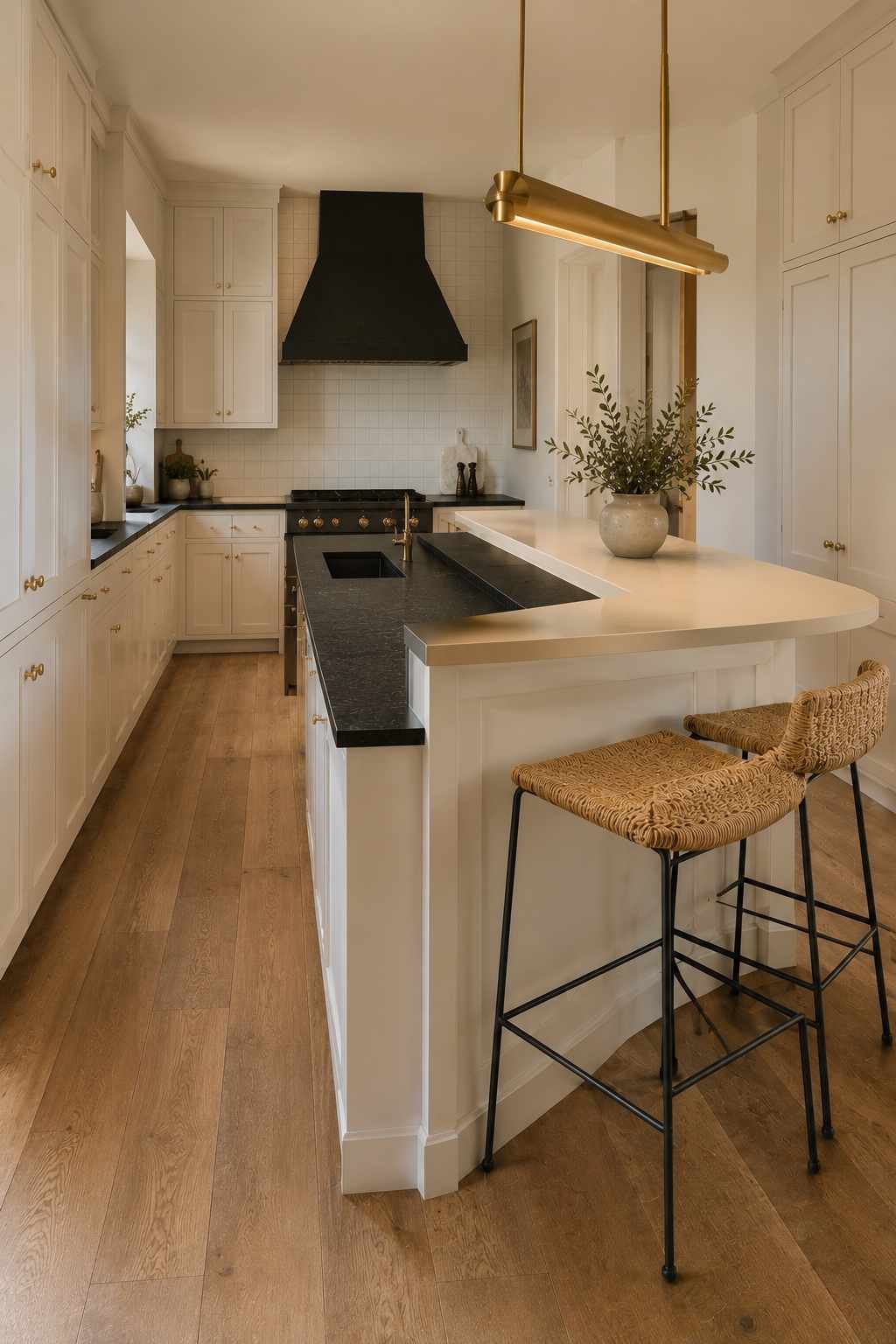
When floor space is limited, a two-tier island earns its footprint by doing two jobs at once. Keep the lower tier, at standard counter height, in black leathered granite for actual food prep, and let the raised bar-height tier, often in a lighter wood or a painted finish, be where the stools live. That way nobody’s sitting directly across from a hot pan while you’re cooking a few feet away. It’s a layout worth considering for anyone renovating a galley kitchen where the island is the only real workspace in the entire room, not just a place to perch with a coffee.
Best for: galley and narrow kitchens where the island has to double as the only prep and seating space.
5. Sage Green Cabinets, Kept Matte
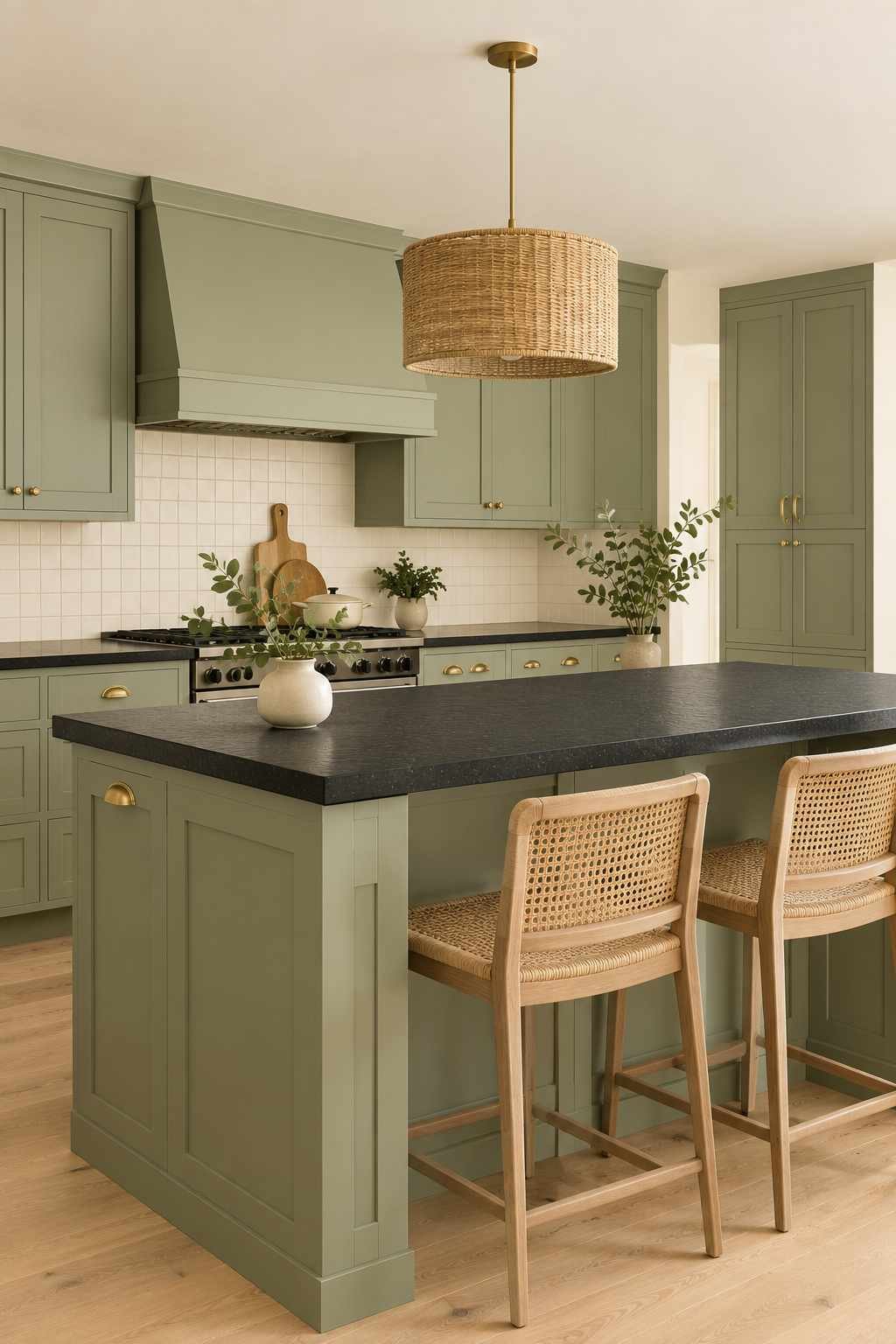
Sage green has stuck around as a favorite for a reason: it’s calm enough that it doesn’t fight with a bold countertop for attention. Paired with a black leathered top and brass cup pulls, it leans closer to modern cottage than the more rustic farmhouse look everyone associates with green kitchens, especially with a plain woven pendant overhead instead of anything overly rustic. The one thing I’d insist on here is keeping the green matte rather than satin or gloss, so the cabinet finish and the stone sit in the same tonal register instead of one of them looking shinier than intended.
Best for: cottage and modern-farmhouse kitchens that want color without going full rustic.
6. A Bold Waterfall Edge
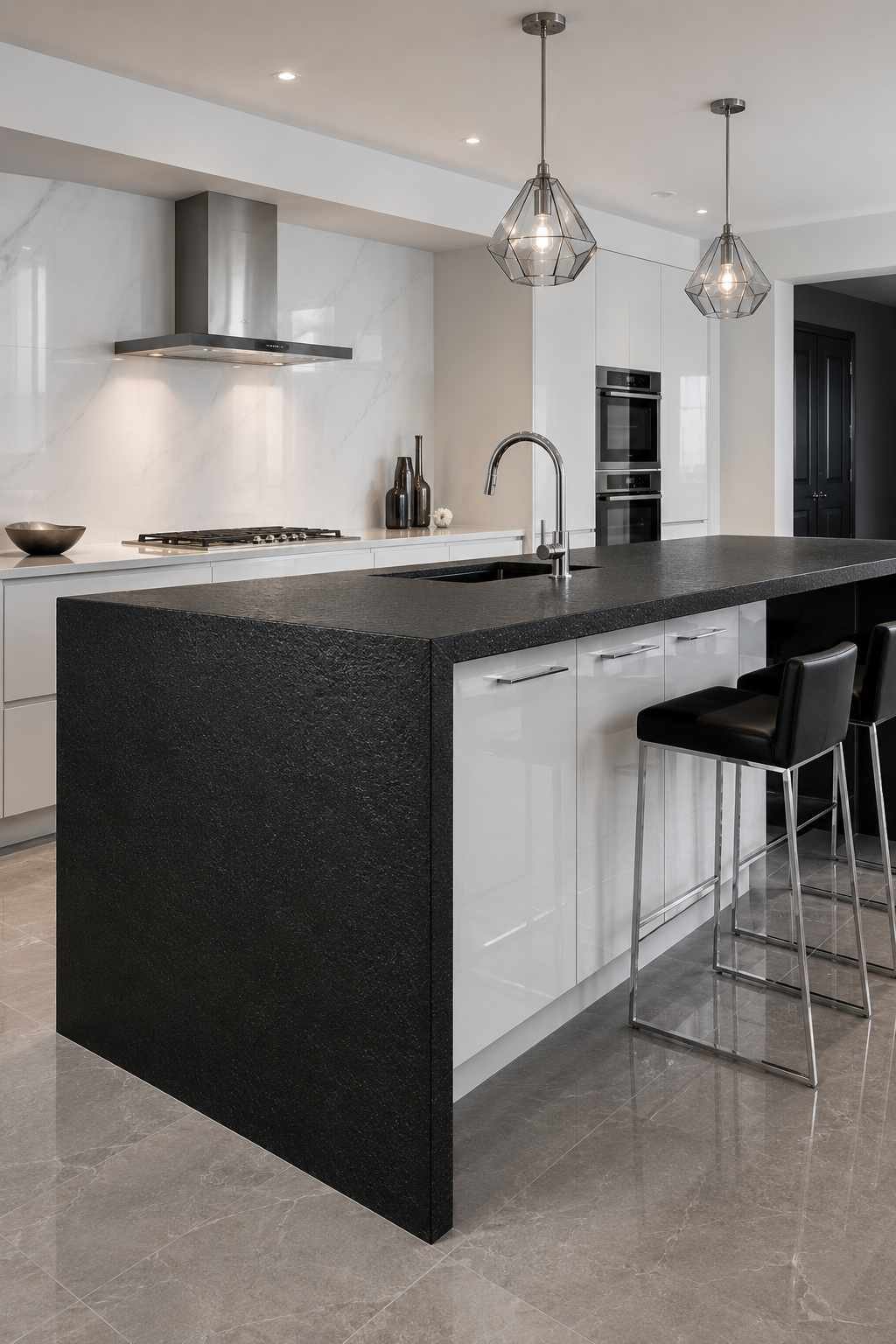
A waterfall edge, where the countertop wraps down the sides of the island all the way to the floor, is one of the few details that can push this stone from practical into unmistakably luxurious, particularly in a deep, consistent black like Angola Black or Absolute Black. Against glossy white lacquer cabinets, the contrast is sharp and, frankly, very photogenic. There’s a real fabrication consideration though: matching the leathered texture across a mitred waterfall corner is harder than doing it on a flat, single-surface slab, so ask to see a fabricator’s previous waterfall work in leathered stone specifically, not just their polished portfolio. Budget a little extra for material waste too, since a true waterfall cut uses noticeably more of the slab than a standard overhang edge does.
Best for: larger budgets and anyone prioritizing a dramatic, high-end look over cost efficiency.
7. Fluted Wood Paneling on the Island Base
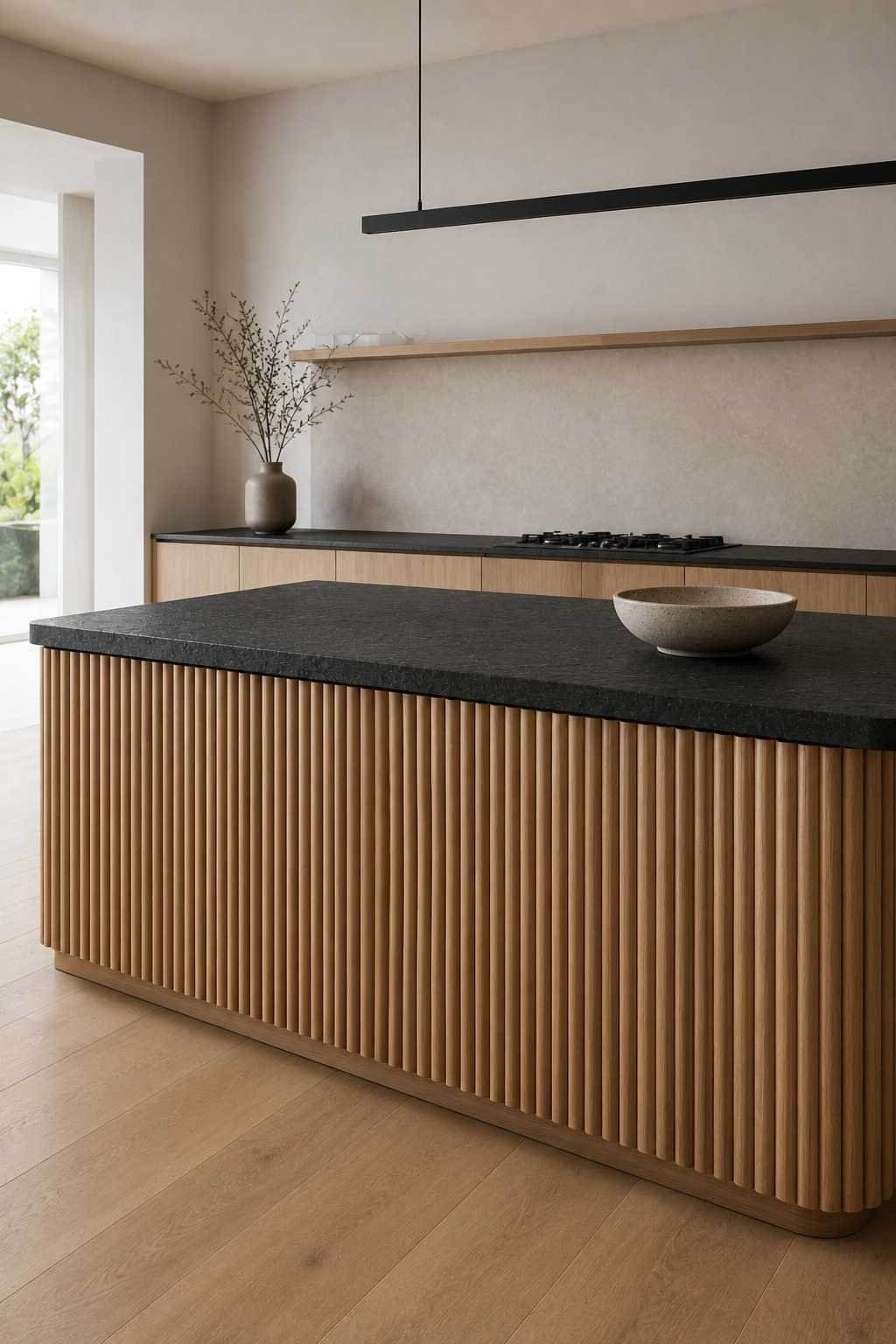
Vertical fluted or reeded wood paneling on the island’s base is one of my favorite ways to add texture without adding another color to the room. Paired with a black leathered top, you get two different textures sitting in the same tonal family, stone and wood, both matte, both tactile, which reads as considered rather than busy. This combination works especially well in a Japandi-leaning kitchen, where the rest of the palette stays quiet and lets the fluting and the granite’s texture do the talking instead of competing with a bold color scheme elsewhere in the room.
Best for: quiet, neutral-palette kitchens that want texture rather than color as the main interest.
8. Whitewashed Oak for an Unexpected Coastal Look
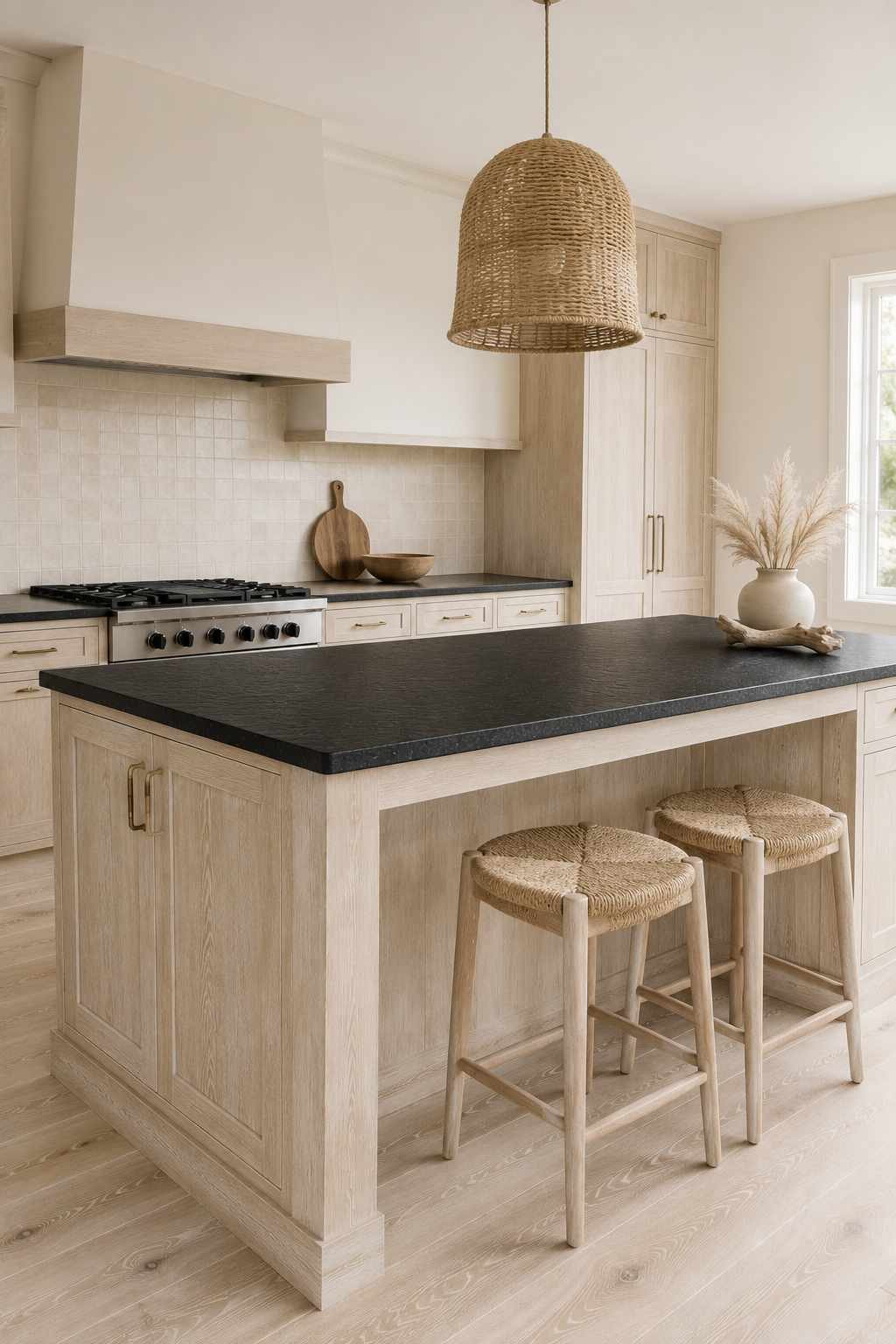
Black leathered granite isn’t a material people usually reach for in a coastal kitchen, but whitewashed oak cabinets change that. The pale, almost bleached wood keeps the room feeling bright and beach-adjacent, while the island grounds the space so it doesn’t tip into looking washed out or flat. A jute or woven rattan pendant over the island finishes the look without introducing another hard, reflective material into a kitchen that’s otherwise leaning soft and textural throughout. Pale, wide-plank flooring underneath keeps the whole room in the same soft register, so the island reads as the single deliberate contrast in the space rather than one dark note fighting against several others.
Best for: coastal and beach-house kitchens that still want one grounding, grown-up detail.
Also Check – Kitchen Design Ideas for Highland Homes
9. Exposed Brick and Black Steel Shelving
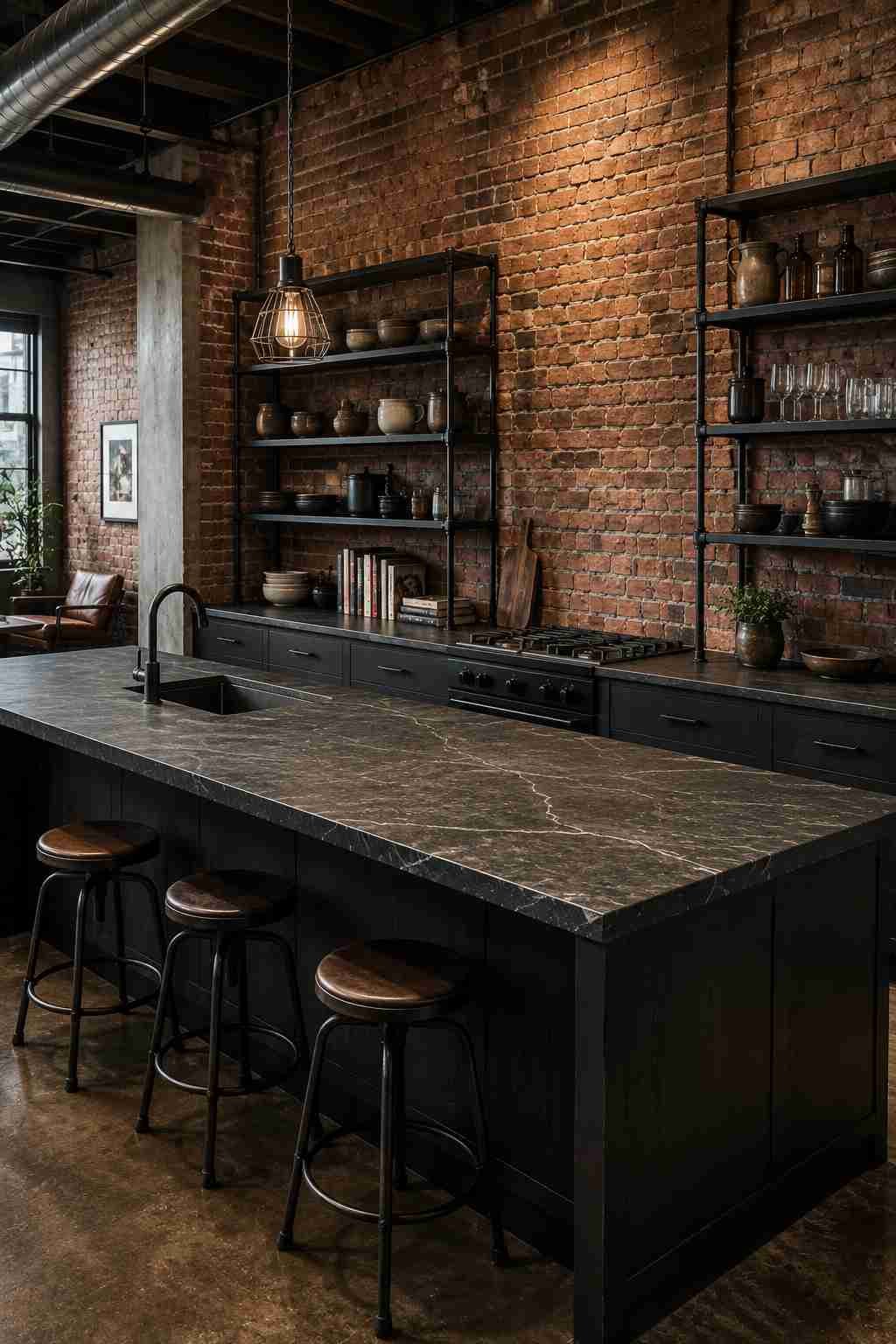
In a loft or a converted industrial space, exposed brick as a backsplash and open black steel shelving flanking the island let leathered granite do exactly what it does best: look like it’s been there for years rather than just installed. A moodier, grey-veined stone like Nero Mist can work particularly well here, since the movement in the slab echoes the brick instead of sitting flat against it. Skip upper cabinets entirely if your ceiling height allows it. Open shelving mixed with ceramics, glassware, and a few cookbooks reads far more lived-in than a fully cabineted wall ever manages to.
Best for: loft conversions and industrial-style spaces with exposed structural details already in place.
10. Scandinavian Restraint, With One Exception
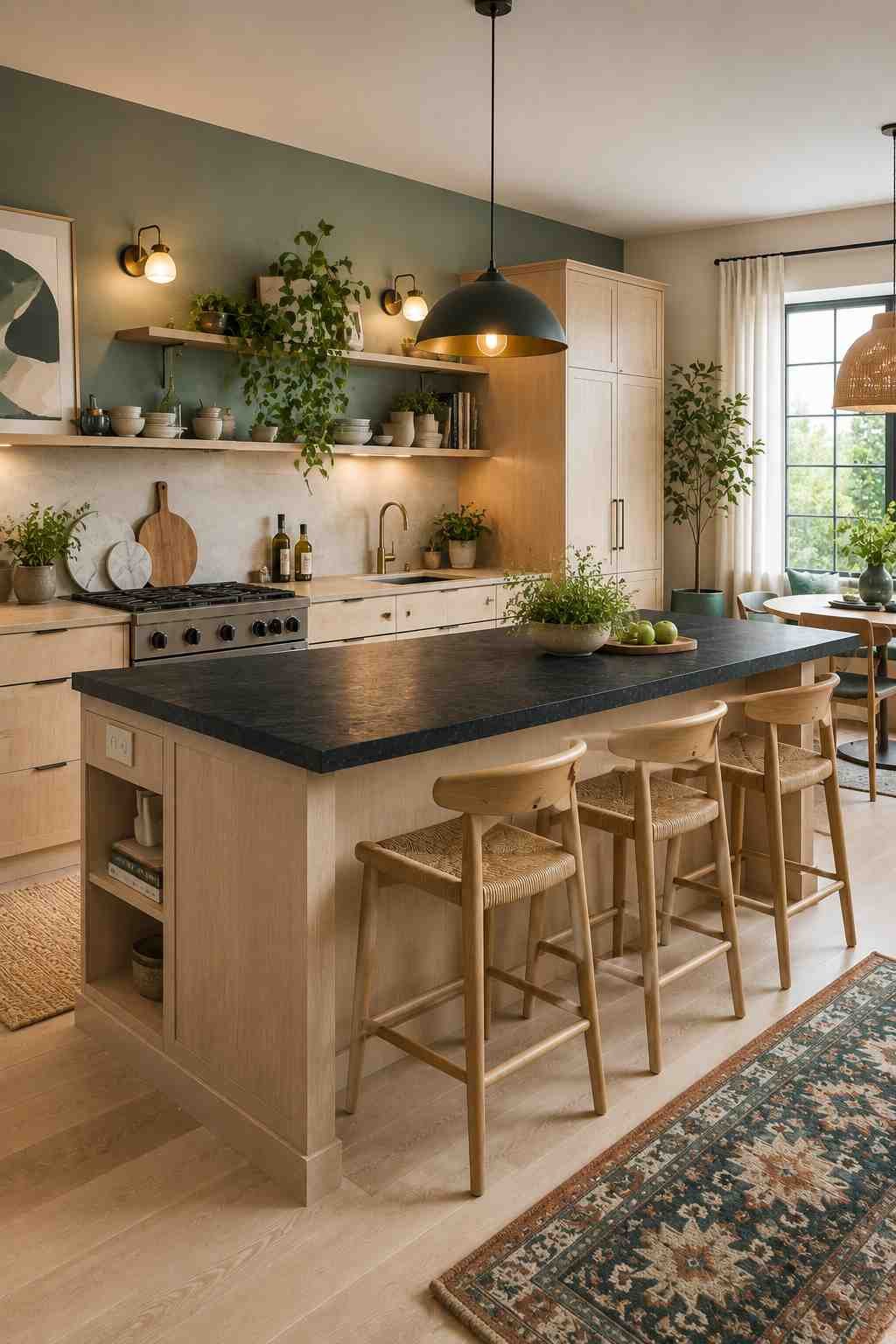
Scandinavian kitchens generally avoid strong contrast, but black leathered granite is the one material worth breaking that rule for. Paired with pale ash cabinets and no upper cabinetry at all, the island becomes the single dark anchor in an otherwise light, quiet room, and it earns that role rather than fighting for it. A single sculptural pendant, rather than a row of matching ones, keeps the overall restraint of the style intact instead of turning the lighting into its own competing statement above the stone.
Best for: minimalist kitchens that want exactly one bold material and nothing else competing with it.
11. Art Deco Details in an Otherwise Modern Kitchen

Thin brass inlay strips along the cabinet fronts, a fluted glass pendant, and a geometric tile backsplash bring a hint of art deco into a kitchen that’s otherwise fairly contemporary, and this stone fits naturally here because its texture already reads as more tactile and expensive than a flat black surface would on its own. This is a pairing I’d suggest to anyone who wants a bit of drama and pattern in the kitchen without going fully maximalist with color across every surface. Keep the metal finishes limited to brass and aged bronze throughout the room; adding a third finish tends to dilute the deco reference rather than reinforce it.
Best for: apartment kitchens and city homes where a touch of pattern and drama fits the wider building’s character.
12. Desert Modern, With Terracotta Warmth
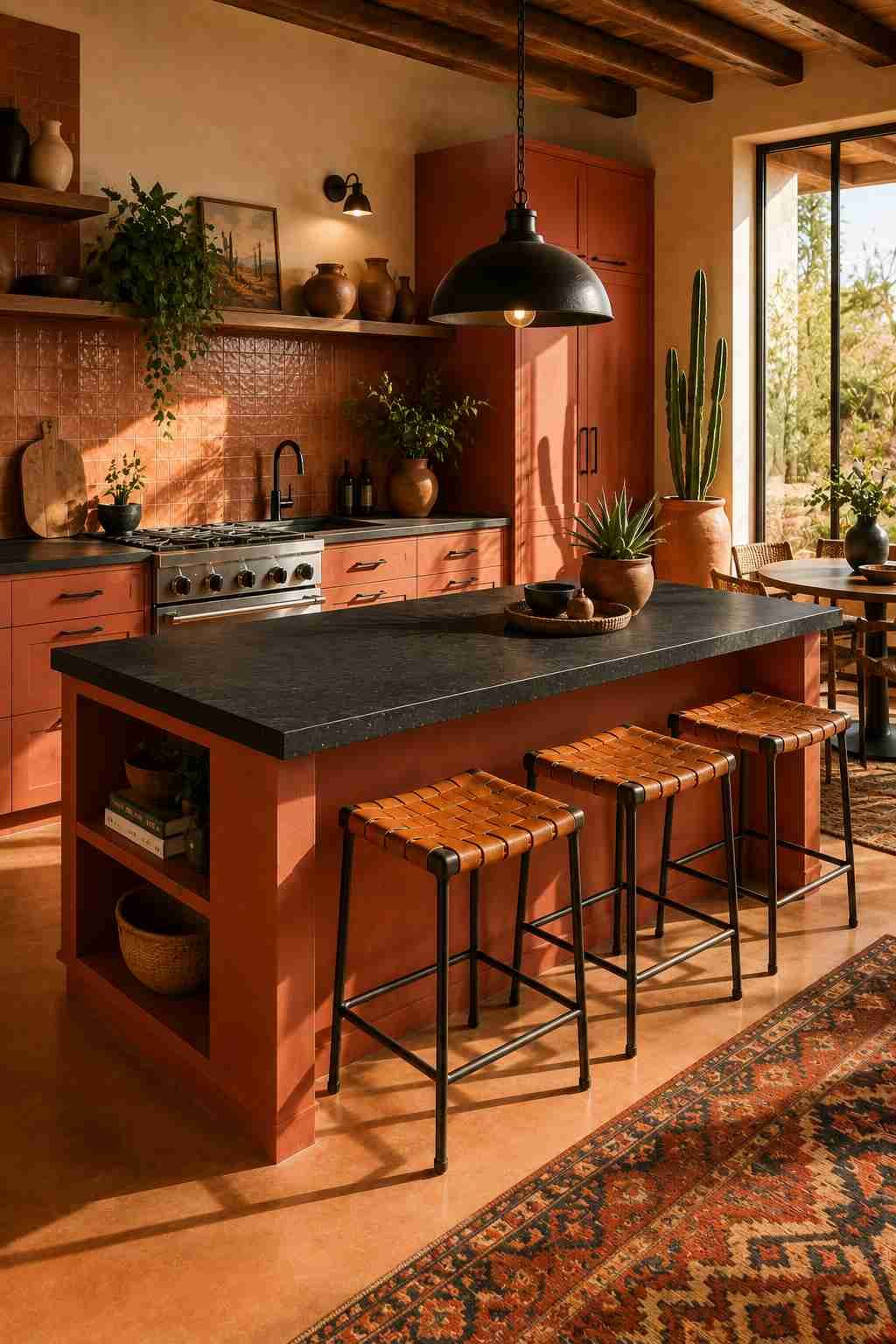
Warm, terracotta-toned cabinets against a black leathered island give a kitchen a Southwestern, sun-warmed feel that a lot of the cooler pairings on this list don’t have. Woven leather counter stools and a black iron pendant keep the metals and textures consistent throughout the room rather than introducing a third material that doesn’t belong. This particular combination tends to work best in kitchens that actually get strong, direct natural light, since the warmth in the cabinet tone needs real sun on it to land the way it’s supposed to.
Best for: sun-drenched kitchens in warm climates, or homes already leaning Southwestern or desert modern elsewhere.
13. French Country, Without the Clutter

Cream cabinets, turned wood legs on the island itself instead of a solid panel base, and a leathered granite top (Virginia Mist’s soft grey veining, also sold as Jet Mist, is a particularly good fit here) pull a French country look into something that doesn’t feel dated or overly ornate. The texture is doing real work here, since a polished black top would have read as too formal and cold against the softer, more traditional cabinet detailing. Wrought iron pendant lighting ties the whole thing together without adding yet another material into a kitchen that already has wood, stone, and painted cabinetry in the mix.
Best for: traditional-leaning homes that want French country warmth without it tipping into fussy or dated.
14. Mountain Lodge, With Reclaimed Wood
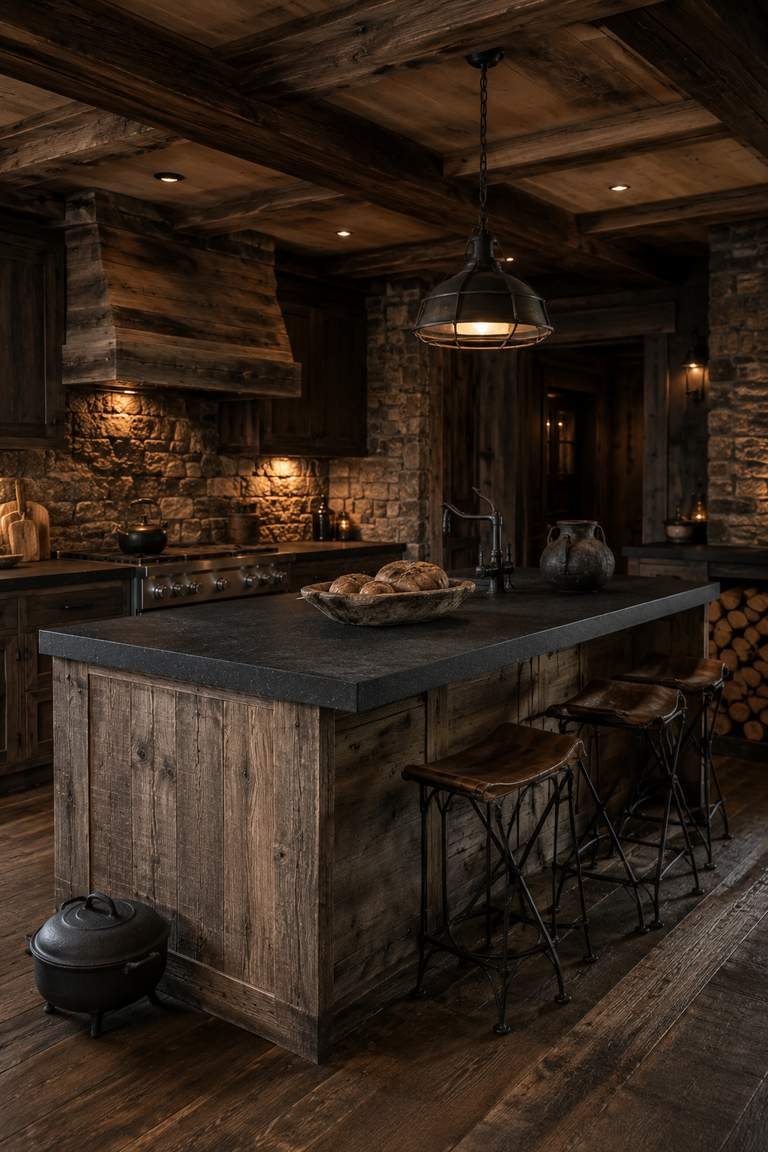
A reclaimed or heavily wire-brushed wood island base topped in black leathered granite is one of the more textural combinations on this entire list, and it holds up particularly well in mountain or cabin homes with stone backsplashes and exposed ceiling beams. Cambrian Black, with its faint grey flecks, is a natural fit here since the subtle movement in the stone echoes the variation already in the reclaimed wood. The leathered finish keeps the stone from looking too refined or out of place next to raw, weathered wood, which is really the balance a cabin kitchen needs to strike.
Best for: mountain homes, cabins, and any kitchen already built around reclaimed or rough-sawn wood.
15. Navy Lower Cabinets, Brass Throughout
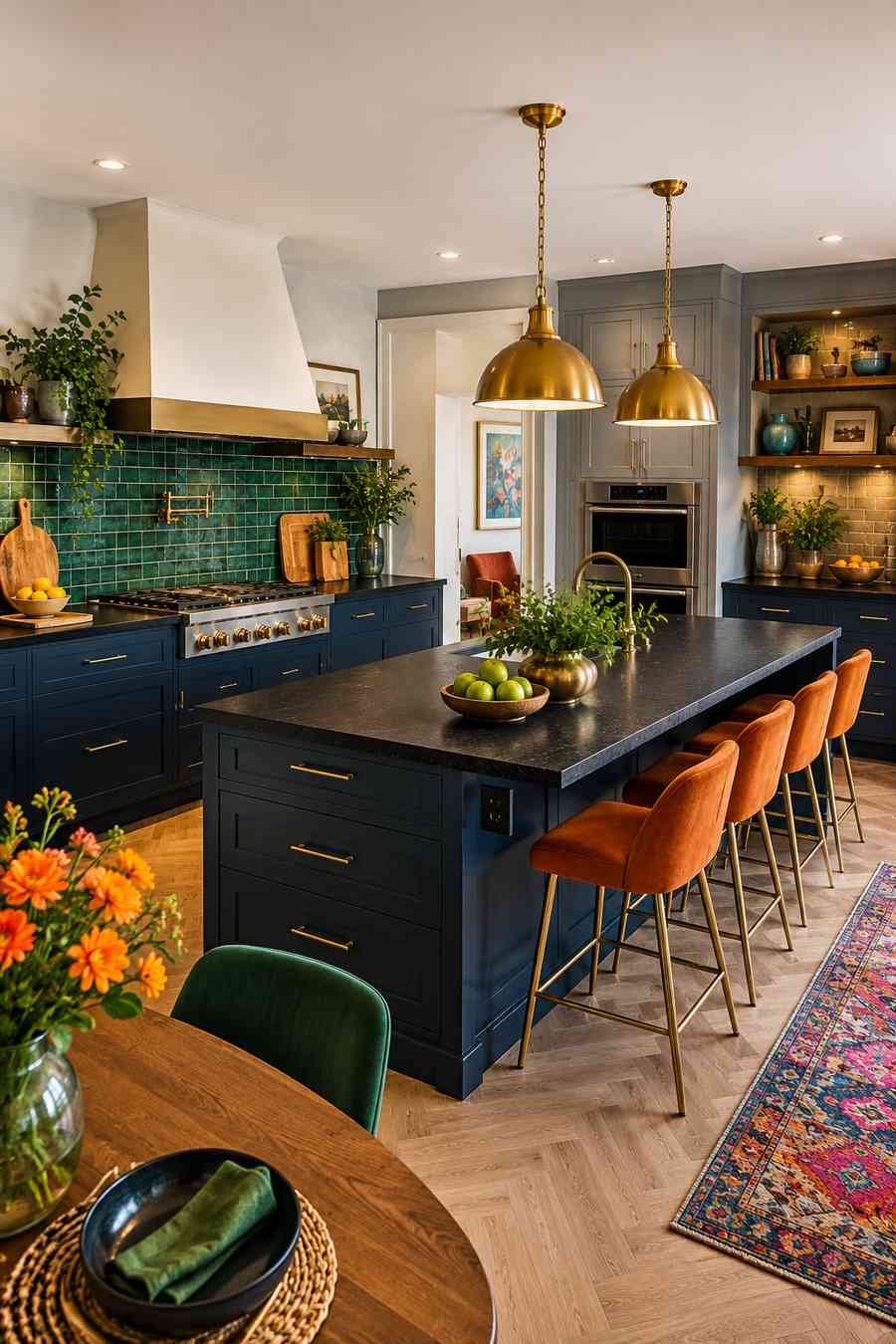
Navy blue on the lower perimeter cabinets, a black leathered island, and brass hardware carried through both is a combination that’s held its popularity for a good reason. Navy and black read as different enough not to blend into one dark mass, but close enough in tone that they don’t fight each other for attention either. Herringbone tile flooring underneath adds some visual movement to a kitchen that could otherwise start to feel heavy with two dark tones already doing a lot of the work in the room.
Best for: transitional kitchens that want a moodier palette without going fully monochrome black.
Also Check – Blue and Grey Kitchen Design Ideas
16. Leaving One End of the Island Open
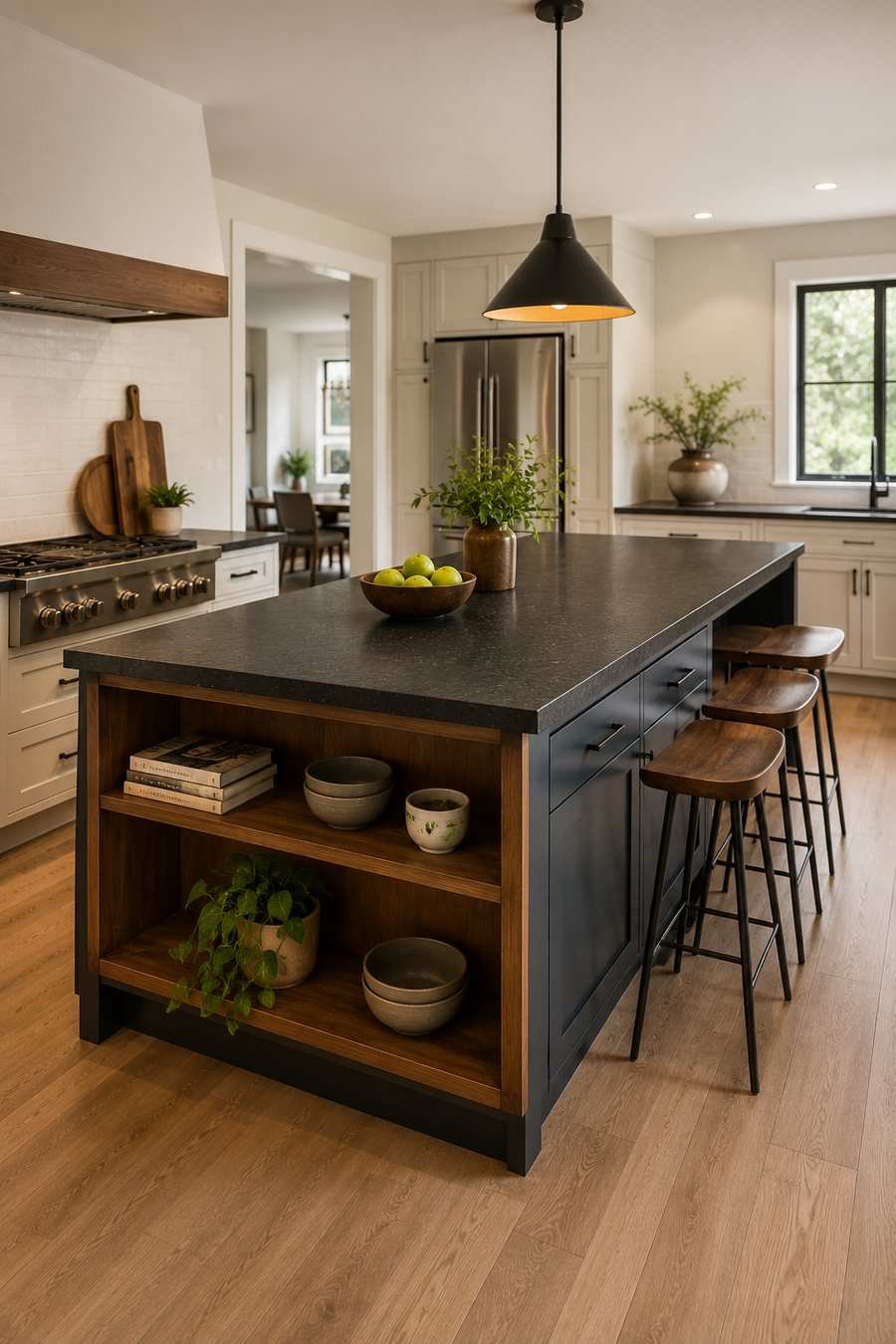
Leaving one end of the island open, with a few shelves for cookbooks, everyday dishes, or a couple of plants, is a small detail that makes a large island feel more like a piece of furniture and less like a slab of stone sitting in the middle of the room. It pairs particularly well with a black leathered top, since the open shelving underneath can carry a warmer wood tone, which breaks up what would otherwise be a lot of dark cabinetry sitting at floor level.
Best for: larger islands that risk feeling heavy or overly built-in without a lighter, furniture-like detail.
17. Building the Island Around a Prep Sink
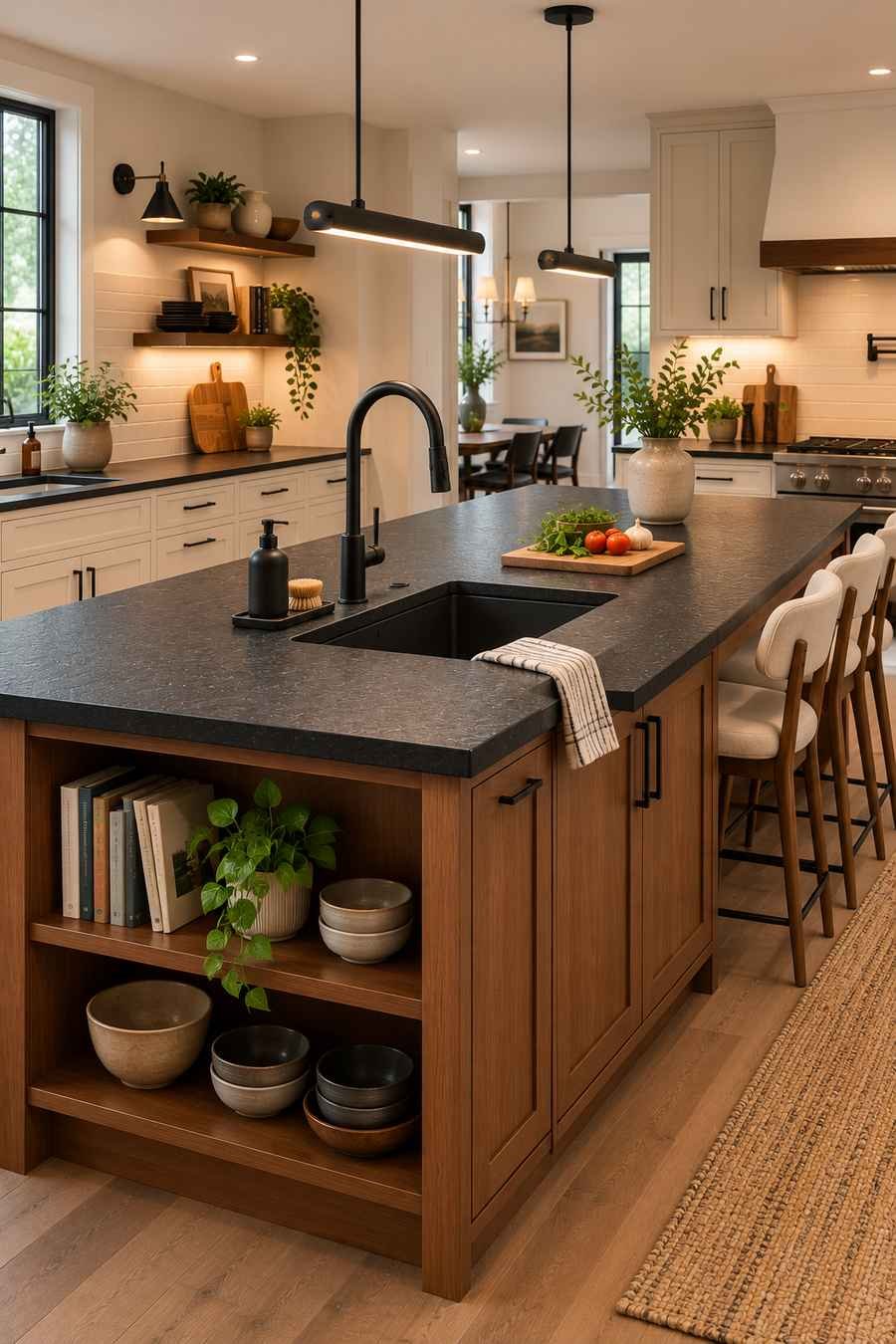
If the island is actually doing work in your kitchen rather than just hosting stools, a prep sink set into the black leathered granite is worth the extra plumbing. A matte black faucet keeps the hardware consistent with the stone instead of introducing chrome into an otherwise warm kitchen, and a small run of task lighting directly overhead gives you actual usable light instead of just ambient glow from across the room. Anyone who cooks daily rather than occasionally will notice the difference within the first week of using it set up this way.
Best for: serious home cooks who want the island to function as a second full workstation, not just extra counter space.
18. The Furniture-Style, Movable Island
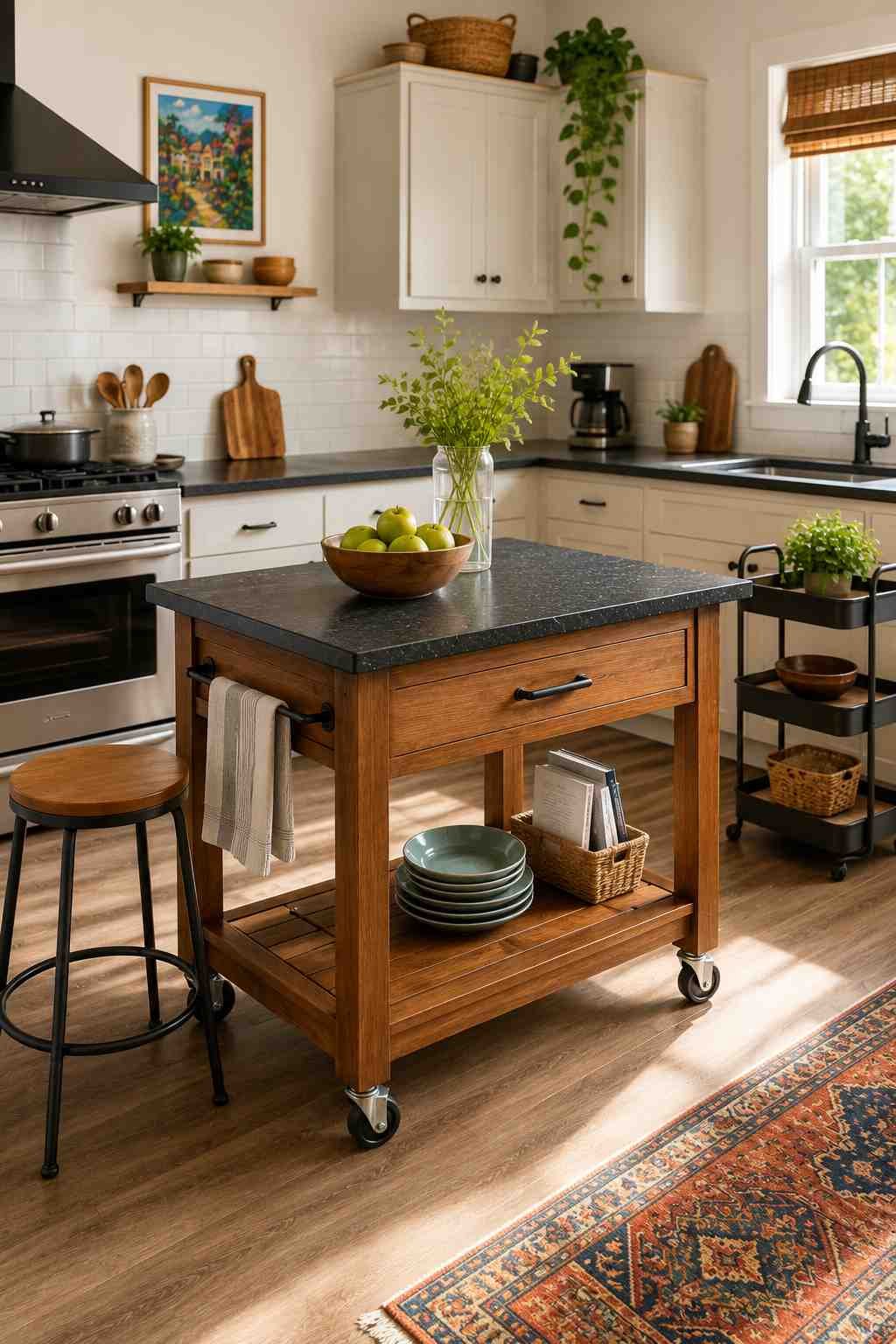
A furniture-style island, on turned legs or locking castors and topped with a remnant of black leathered granite, is worth considering wherever a built-in island isn’t possible, whether that’s a rental, a smaller footprint, or a kitchen where a plumbing change isn’t in the budget this year. It’s a solid option for anyone who still wants the look and function of an island without permanent construction. Ask your fabricator specifically about remnant pricing. Leathered offcuts left over from larger jobs are often considerably cheaper than ordering a full slab cut down to size.
Best for: renters, smaller kitchens, and anyone wanting the look without a construction project.
19. The Grand, Entertaining Island
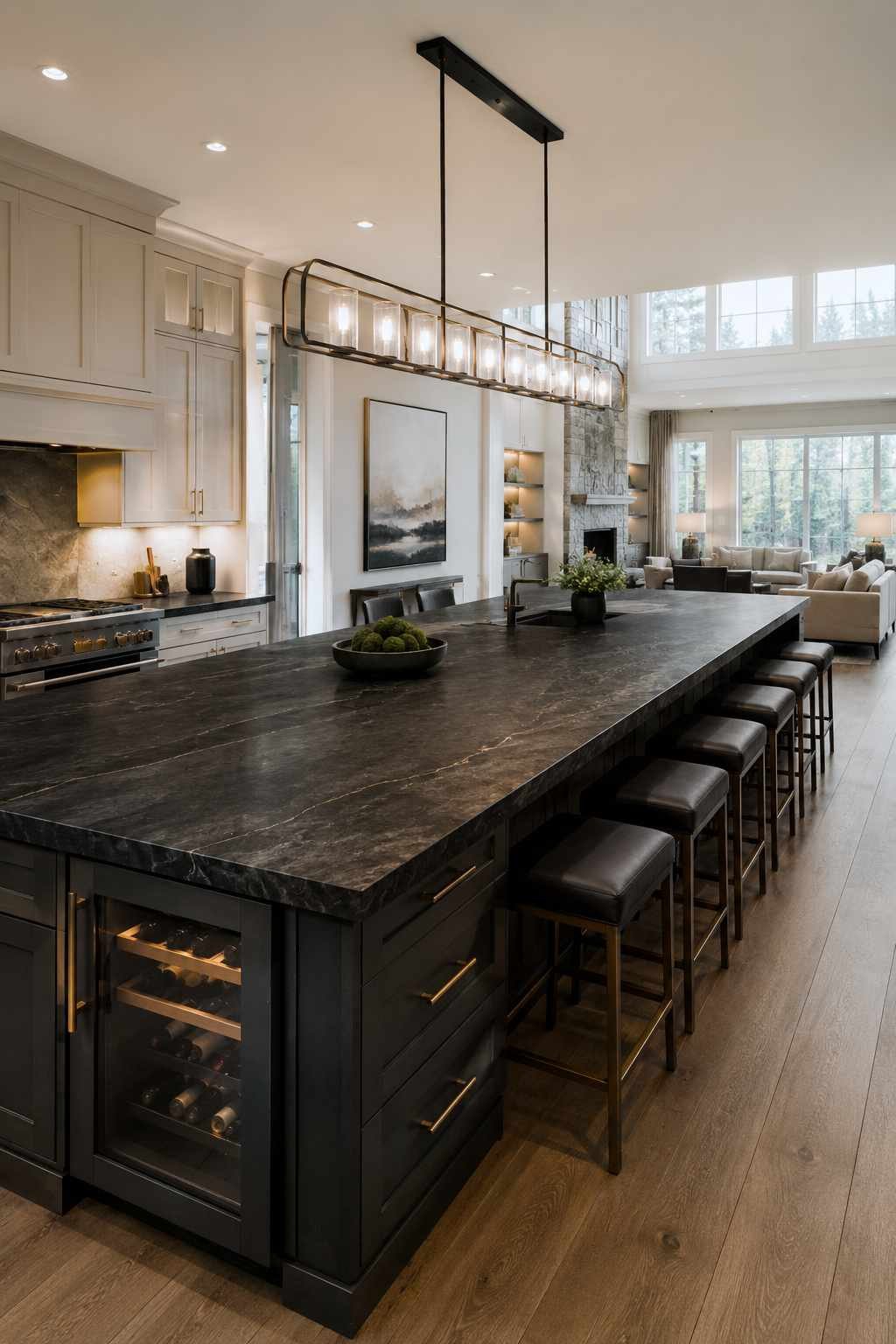
At the other end of the scale entirely, a single, seamless slab running the full length of an oversized island, often with a built-in wine fridge and seating for five or six people, is the version of this trend built for large, open-concept great rooms. A big, dramatic stone like Titanium, with its natural movement across the slab, suits a scale like this particularly well, and a linear chandelier fits the room better than a row of smaller pendants would. This is the one design on this list where the budget conversation with your fabricator needs to happen before you fall for a specific slab, since a single-piece top this size is genuinely not cheap.
Best for: large open-concept homes built around entertaining and hosting rather than everyday solo cooking.
20. A Built-In Butcher Block Insert
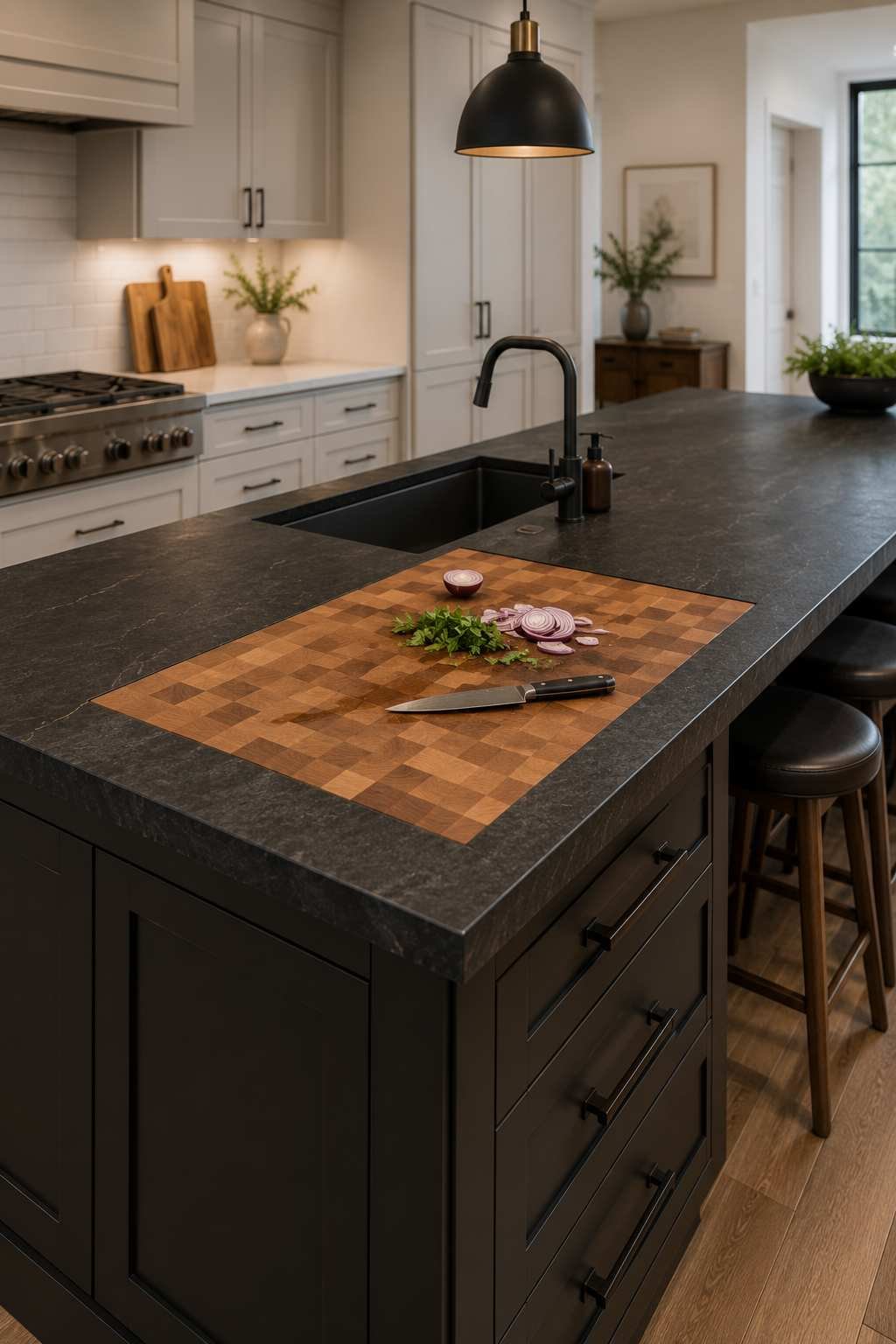
Instead of running black leathered granite across the entire island top, some kitchens leave a rectangular section, usually near the sink or main chopping zone, in end-grain butcher block instead. The material contrast does more for the island’s presence than another cabinet color ever could, and it gives you an actual dedicated cutting surface that won’t dull your knives the way stone will over time. It also breaks up a kitchen that already has a lot of black or dark tones elsewhere, without introducing an entirely new color into the room.
Best for: anyone who chops daily and wants a real cutting surface built in, not just a cutting board pulled out each time.
21. A Round Island for a Small Breakfast Nook
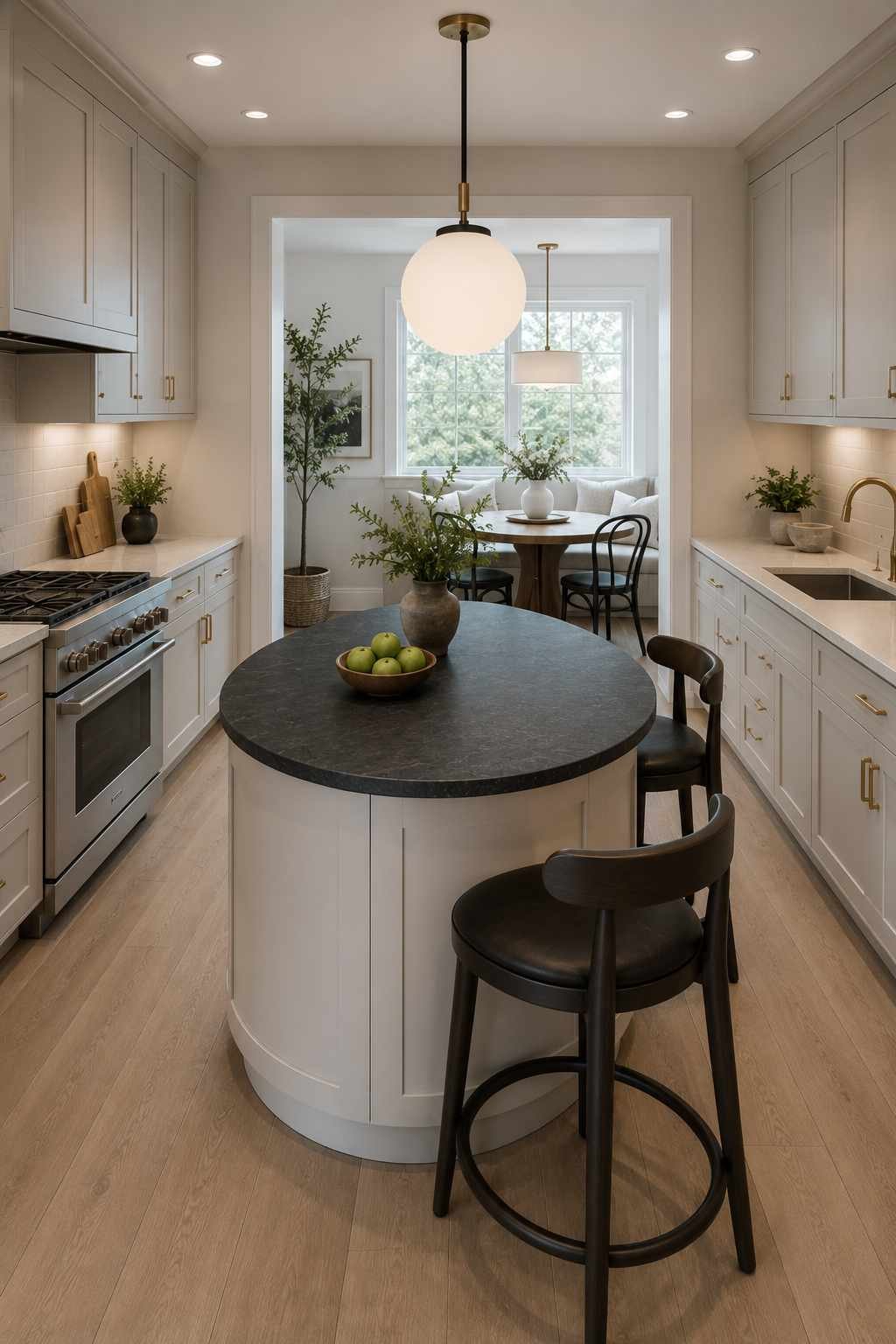
Round islands are fairly rare, mostly because they’re harder to fabricate well and don’t maximize storage the way a rectangular island does, but in a smaller kitchen with an adjoining breakfast nook, a round island in black leathered granite softens a room that might otherwise feel boxy and cramped. It also solves a real circulation problem, since there are no sharp corners to navigate around in a tight, galley-style layout where every inch of walking space actually matters to whoever’s cooking.
Best for: small kitchens with an adjoining nook or breakfast area, where circulation space matters more than storage.
Frequently Asked Questions

Is leathered granite harder to clean than polished granite? Not really — day-to-day cleaning is the same: warm water and a pH-neutral stone cleaner. The one real difference is that a leathered surface won’t show water spots or fingerprints as readily as a polished one, which in practice often means less wiping, not more.
Does black leathered granite stain? It can, the same as any granite, since the stone is still porous underneath the texture. A properly sealed slab resists spills from wine, oil, or coffee long enough for you to wipe them up, but a spill left sitting overnight is where staining actually happens, leathered or not.
Is leathered granite more expensive than polished granite? Slightly. The leathering process itself typically adds somewhere around one to two dollars per square foot over a standard polished finish, before any waterfall edge, curve, or single-slab requirement adds its own labor cost on top.
Which black granite is best for a kitchen island? There isn’t one universal answer, it depends on the look you want. Absolute Black and Black Pearl both give a consistent, uniform black. Cambrian Black and Virginia Mist (also sold as Jet Mist) bring in soft grey veining if you’d rather the island show some visible movement instead of one flat tone.
Does black leathered granite need to be sealed? Yes, it’s not optional just because the finish already looks matte. Granite of any finish is porous, and a leathered surface typically needs resealing somewhat more often than a polished one, since the texture leaves slightly more surface area exposed. Ask your fabricator for a schedule based on your specific slab rather than a generic number.
Will a black leathered island make a small kitchen feel darker? It can, if the rest of the room is dark too. In a small kitchen, this stone tends to work best paired with lighter cabinets and good task lighting directly over the island, rather than combined with dark walls or low upper cabinets that block natural light.
A Few Practical Things Before You Commit
Whichever direction you lean toward, see the actual slab in person before finalizing anything.
Leathered granite varies more from slab to slab than a lot of engineered materials do, and photos genuinely don’t capture the texture or the way it shifts under warm light versus daylight.
If the fabricator’s showroom allows it, ask to view your shortlisted slabs under lighting closer to what your own kitchen actually has, rather than under the bright, even showroom lighting that flatters almost anything you put under it.
It’s also worth having the sealing conversation upfront instead of after installation day.
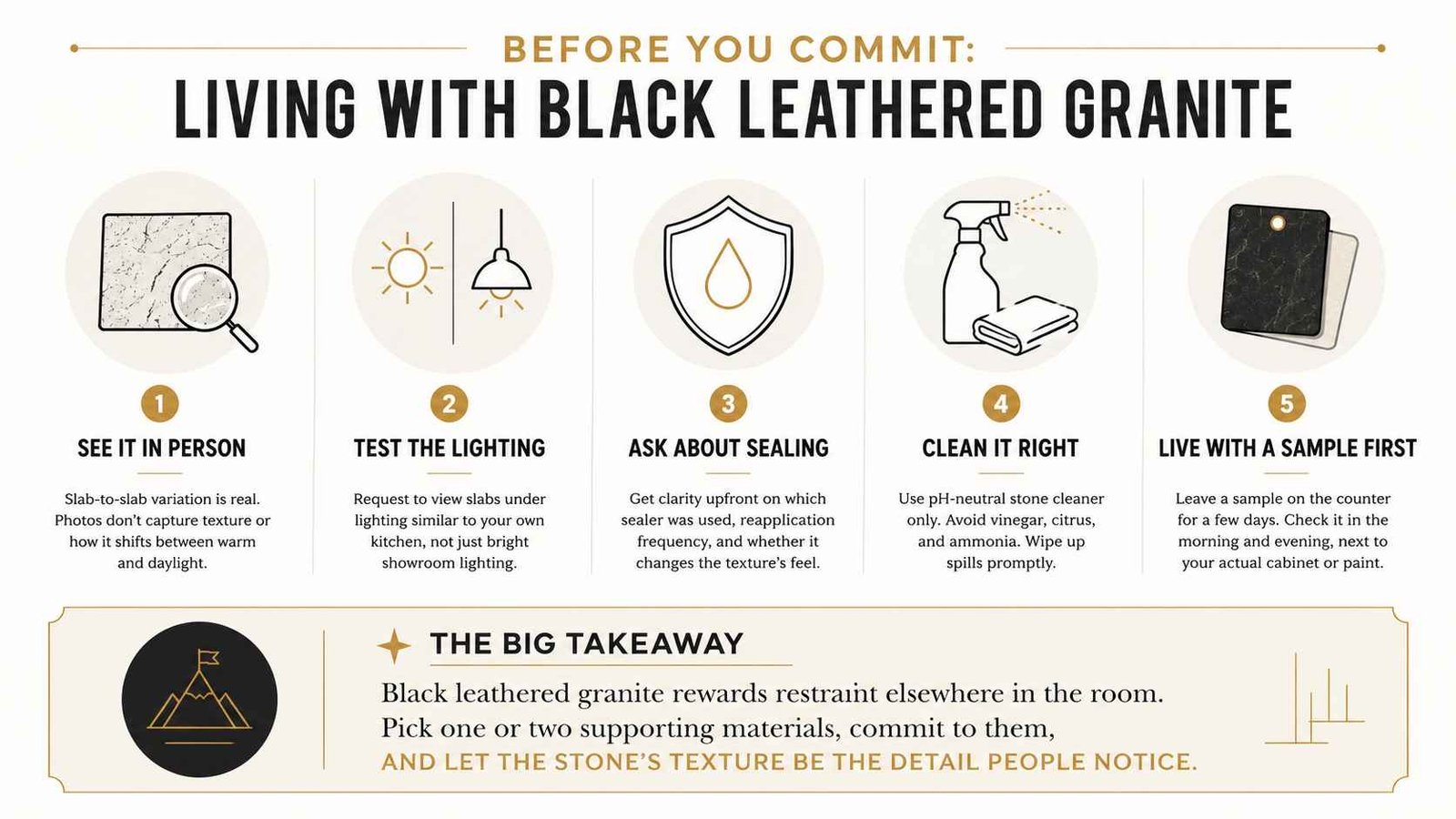
Get a clear answer on which sealer was used, how often it needs reapplying, and whether it changes the feel of the texture at all, since some sealers leave a leathered finish feeling slightly smoother than it did on the original showroom sample.
Day to day, stick to a pH-neutral stone cleaner rather than vinegar, lemon, or anything ammonia-based, since those break sealant down faster than plain use will, and wipe up wine, oil, or citrus spills as soon as you notice them rather than leaving them for later.
None of this makes the stone high-maintenance. It just means going in with accurate expectations, which is really the difference between still loving this material ten years in and feeling like the kitchen never quite matched what you pictured on day one.
One last practical note: bring home a sample piece if your fabricator offers one, and leave it out on your actual counter for a few days instead of judging it only under the shop’s lighting.
Watch how it looks in the morning, in the evening, and next to whatever cabinet sample or paint chip you’re leaning toward.
Several of the pairings on this list only really click once you’ve seen the stone sitting in your own kitchen rather than in a photograph or a showroom display.
If there’s one thing that comes up across almost every one of these 21 designs, it’s that black leathered granite rewards restraint elsewhere in the room.
It’s already doing a lot visually, so the cabinets, hardware, and lighting around it work best when they support that instead of competing with it.
Pick one or two supporting materials, commit to them fully, and let the island’s texture be the detail people actually notice when they walk in.
 Sumit Banerjee
[…] feel like you have to pick one material for the whole kitchen. A lot of the island layouts in our black leathered granite kitchen island roundup use exactly this kind of split: stone where spills are likely, wood where warmth matters […]