
I’ve redone enough kitchens at this point that people have stopped asking me if butcher block is “still in style” and started asking me the real question instead: will it survive a family that actually cooks.
That’s a fair worry. Wood on a counter sounds like it belongs in a farmhouse Pinterest board, not next to a dishwasher and a five-year-old with a juice box.
But the honest answer, after installing it, living with it, and fixing other people’s mistakes with it, is that butcher block earns its place in a working kitchen more often than it gets credit for.
It just needs to be used in the right spot, sealed the right way, and picked in the right wood for how hard you actually cook.
What follows isn’t a slideshow of pretty counters. It’s the list I’d actually give a friend who asked me where to use butcher block, what to avoid, and which of these ideas are worth the extra sanding on a Saturday.
What Butcher Block Actually Means (Worth Knowing Before You Shop)
“Butcher block” gets used loosely, but it technically describes how the wood strips are joined, not just that it’s a wood counter. You’ll run into three constructions when you shop:
- Edge grain – long strips of wood glued side by side, so you see the length of the grain running across the counter. This is the most common and the most affordable, and it’s plenty durable for daily use.
- End grain – the wood is turned so you’re looking at the cut ends, like a traditional cutting board. It self-heals from knife marks better than edge grain and is the toughest option, but it costs noticeably more and is heavier.
- Plank style – wide, whole boards laid side by side rather than thin strips. It shows off the most dramatic grain pattern but is the least forgiving of moisture, since a full board expands and contracts more than a glued strip.
Species matters just as much as construction. Maple is the standard because it’s hard, tight-grained, and takes stain evenly. Walnut gives you a deep, warm brown without staining at all.
Oak has more visible grain and hides nicks better. Acacia is a budget-friendly option with a lot of natural color variation, which is great for hiding wear but can look busy in a small kitchen.
Cherry darkens with age and sun exposure, which some people love and others find unpredictable if they didn’t know to expect it.
Now, the ideas.
19 Butcher Block Countertop Ideas Worth Copying
1. Full Maple Counters With a White Kitchen
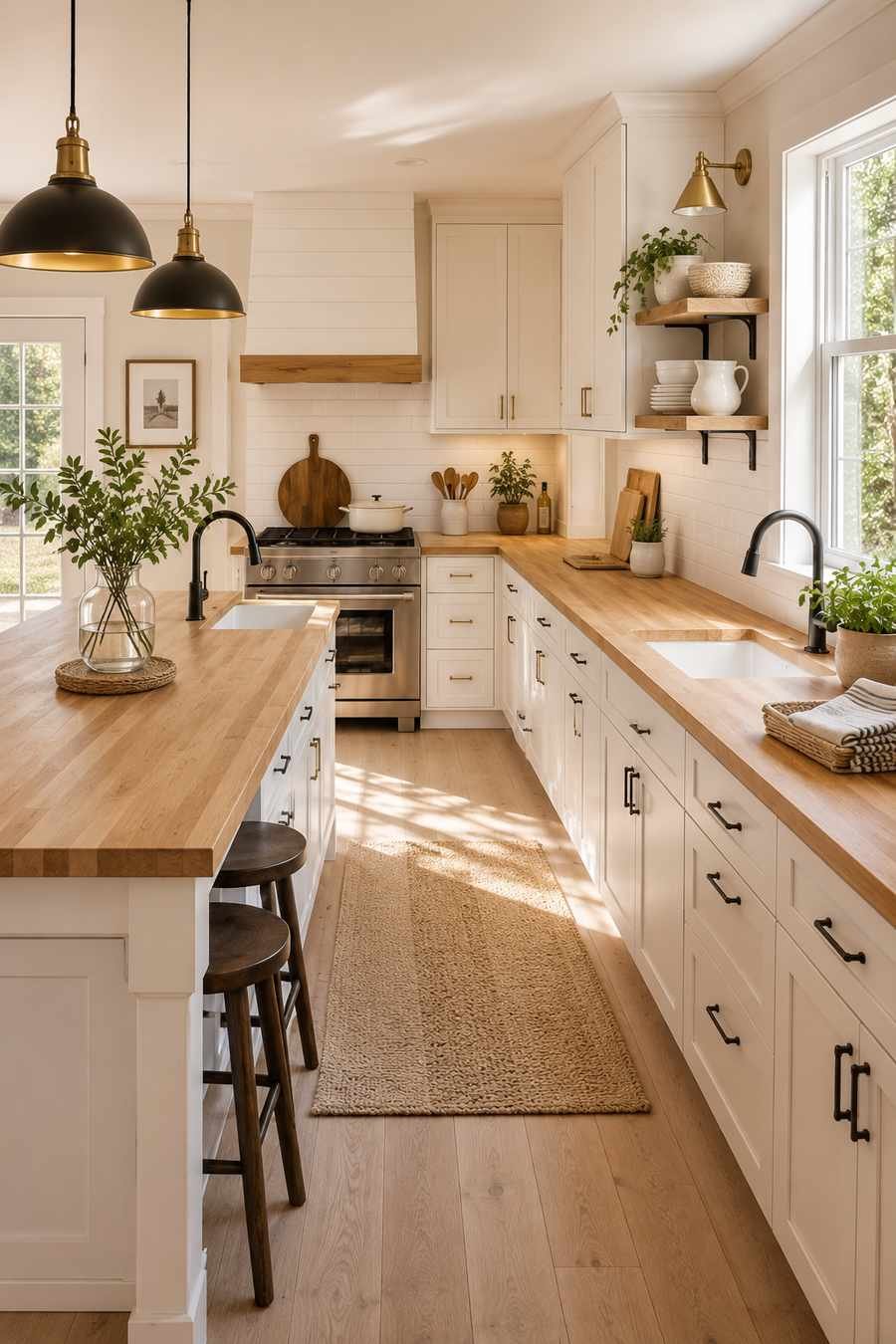
The classic pairing, and there’s a reason it hasn’t gone away: pale maple against white shaker cabinets keeps a kitchen bright while adding the one texture a white kitchen usually lacks. Go with a matte oil finish here rather than a glossy polyurethane, since gloss tends to make a light wood look plasticky under kitchen lighting.
2. Walnut Island, Painted Perimeter
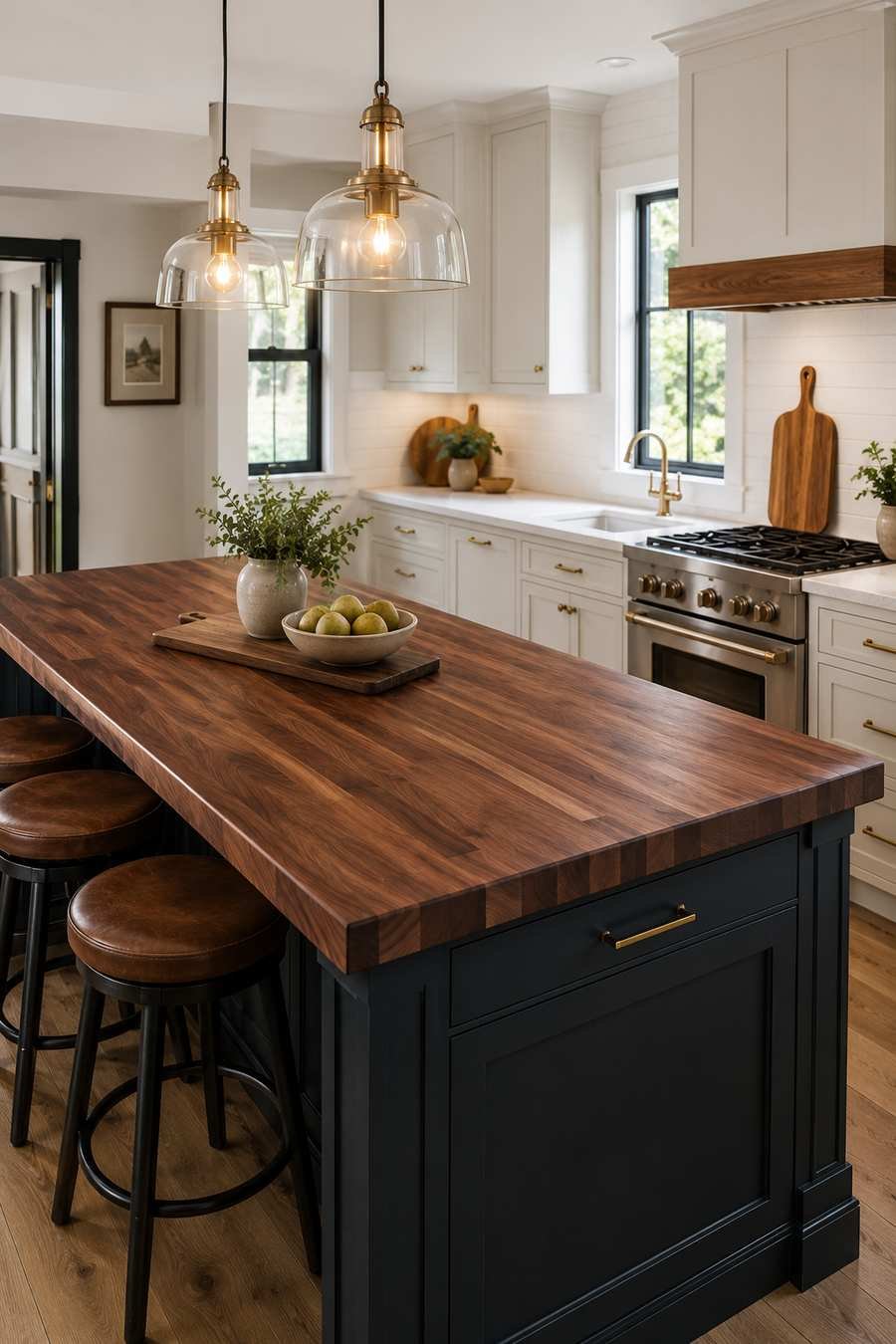
Instead of running wood across the whole kitchen, use it only on the island and keep the surrounding counters in quartz or laminate. Walnut is dark enough to read as a deliberate design choice rather than a mismatch, and this is the lowest-commitment way to try butcher block if you’re nervous about maintenance on your main prep zone.
3. Butcher Block Paired With Black Leathered Granite
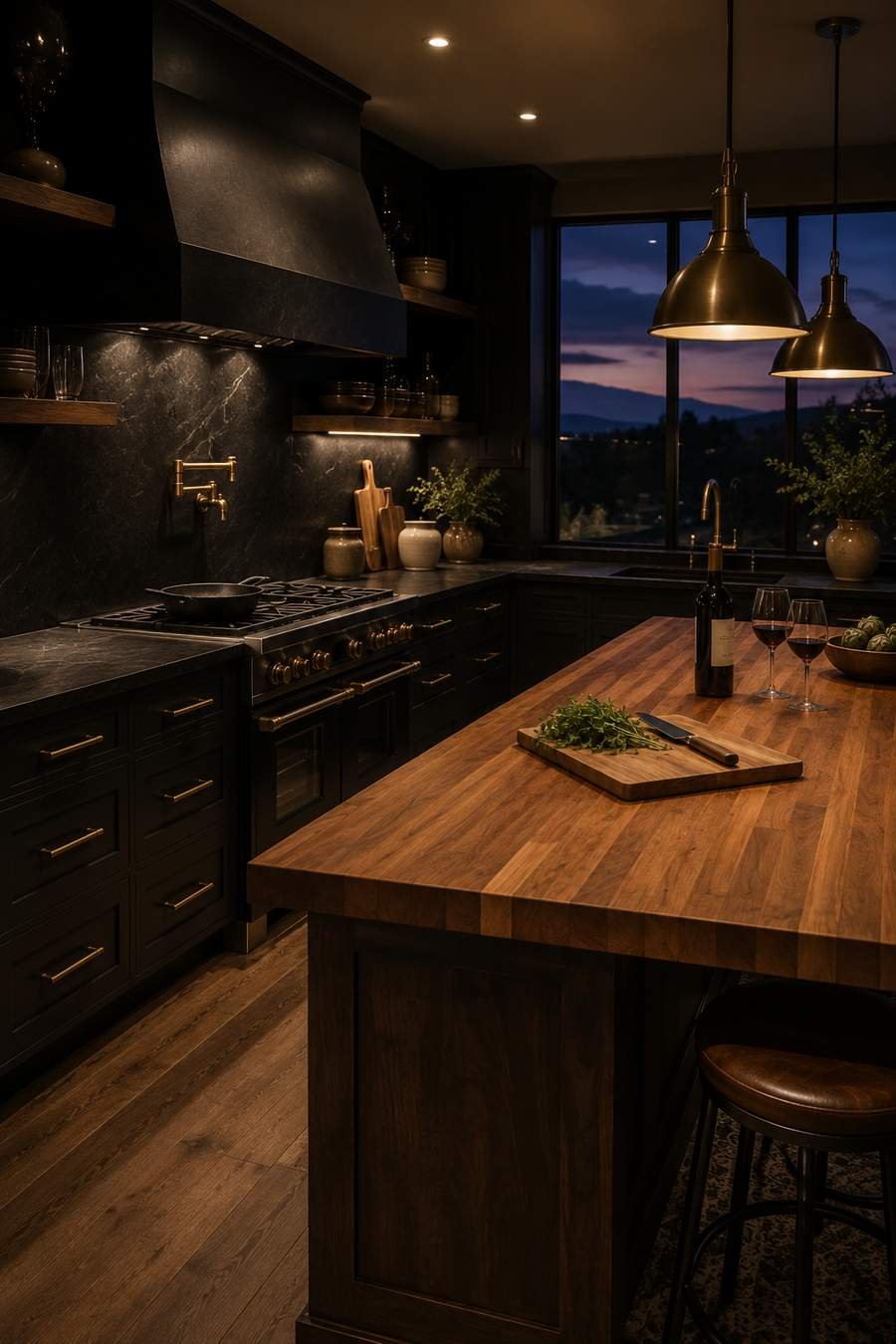
If you already like the moody, textured look of leathered stone, don’t feel like you have to pick one material for the whole kitchen. A lot of the island layouts in our black leathered granite kitchen island roundup use exactly this kind of split: stone where spills are likely, wood where warmth matters more.
4. Two-Tone Wood: Maple and Walnut Checkerboard
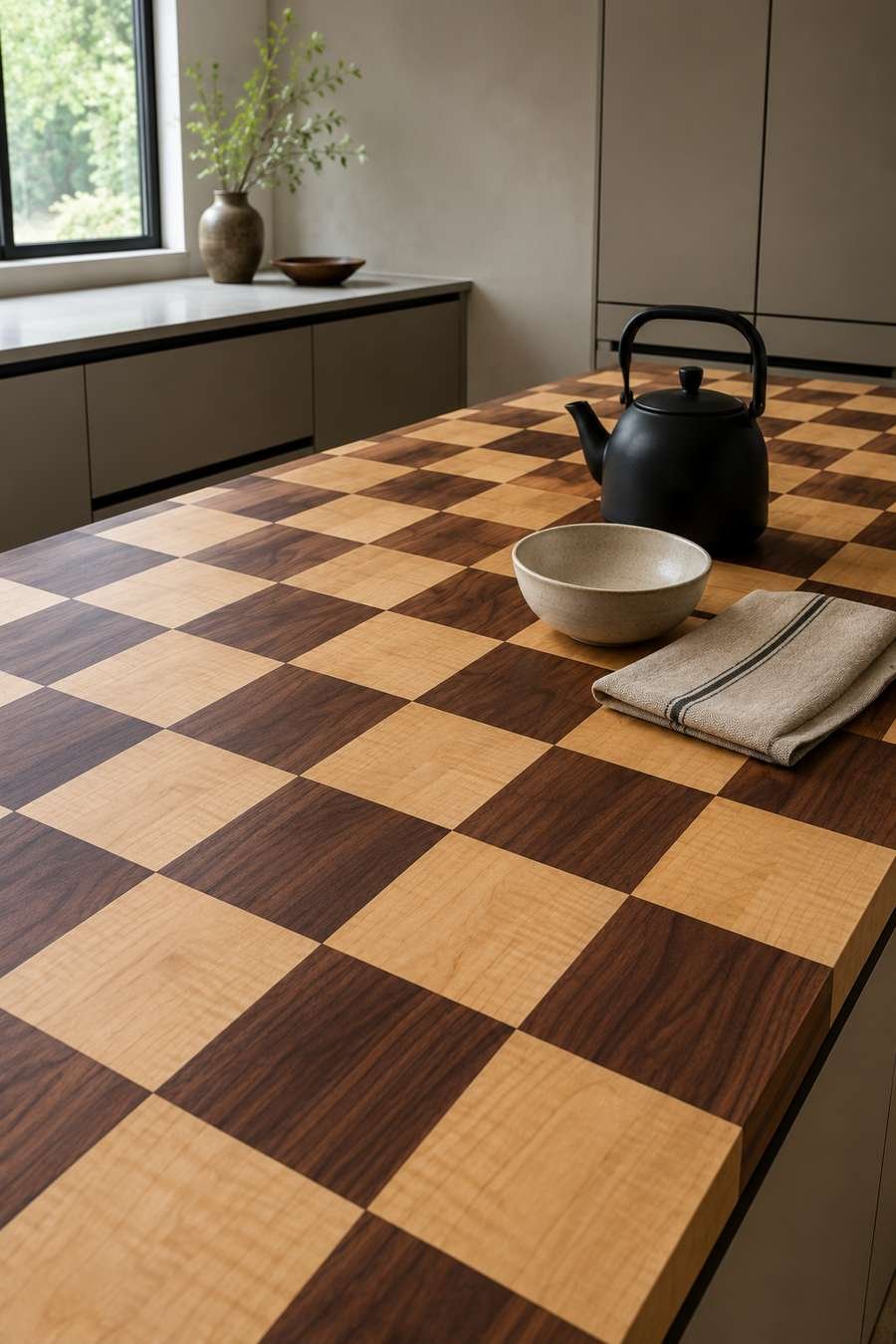
A dual-wood glue-up, alternating light and dark strips in a grid, turns the countertop itself into the focal point of the room. It’s more expensive to fabricate because of the extra joinery, but in a kitchen with otherwise plain cabinetry, it does more visual work than a backsplash would.
5. Reclaimed Barn Wood Countertop
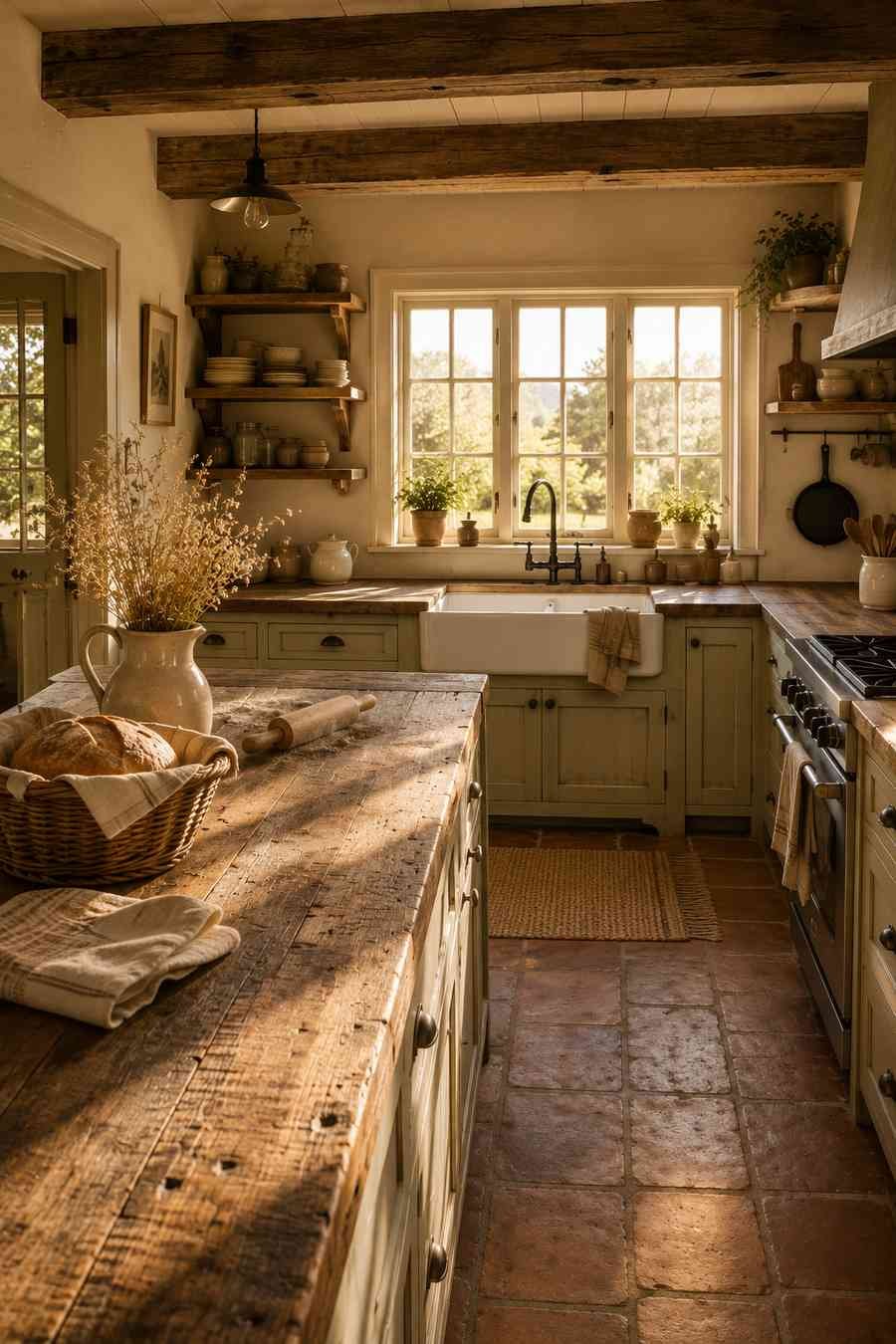
Reclaimed wood carries genuine age, nail holes, saw marks, weathering, that you cannot fake with a new board and a distressing kit. It needs more sealing than new wood because reclaimed timber has usually dried unevenly, but for a farmhouse kitchen it’s worth the extra prep work.
6. Butcher Block on a Waterfall-Edge Island
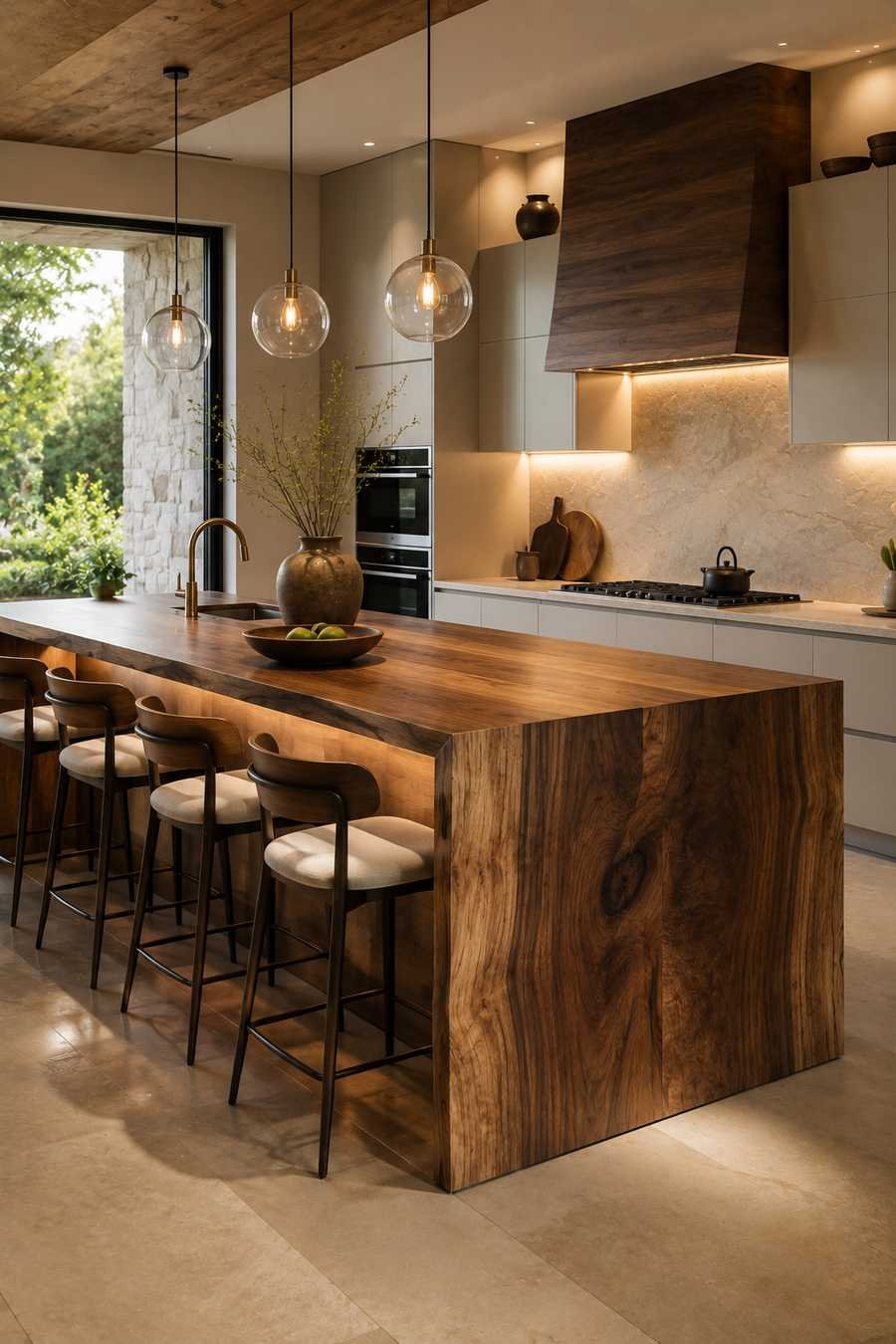
Waterfall edges, where the countertop material wraps down the sides of the island to the floor, are usually shown in stone, but wood does it just as well and costs a fraction of a stone waterfall. The grain has to be book-matched carefully at the corner so it reads as one continuous piece, so this is one to have a fabricator handle rather than a DIY cut.
7. Small Butcher Block Accent Next to a Farmhouse Sink
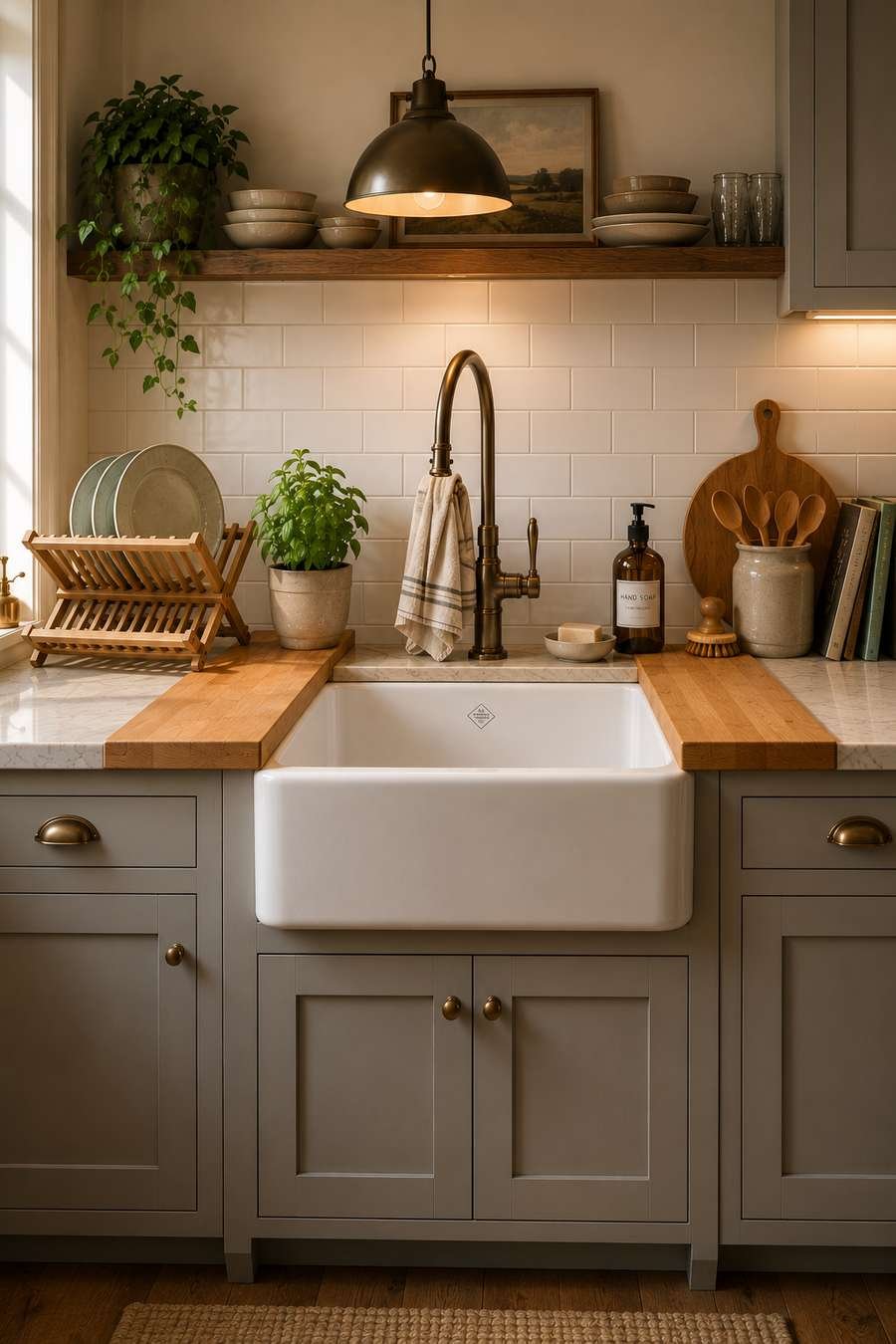
You don’t need to counter your entire kitchen in wood to get the look. A short run of butcher block flanking a farmhouse sink, with stone everywhere else, gives you the warmth exactly where you’ll see it most, at the sink, while keeping the high-splash zone in a material that shrugs off water without a second thought.
8. Built-In Cutting Board Insert
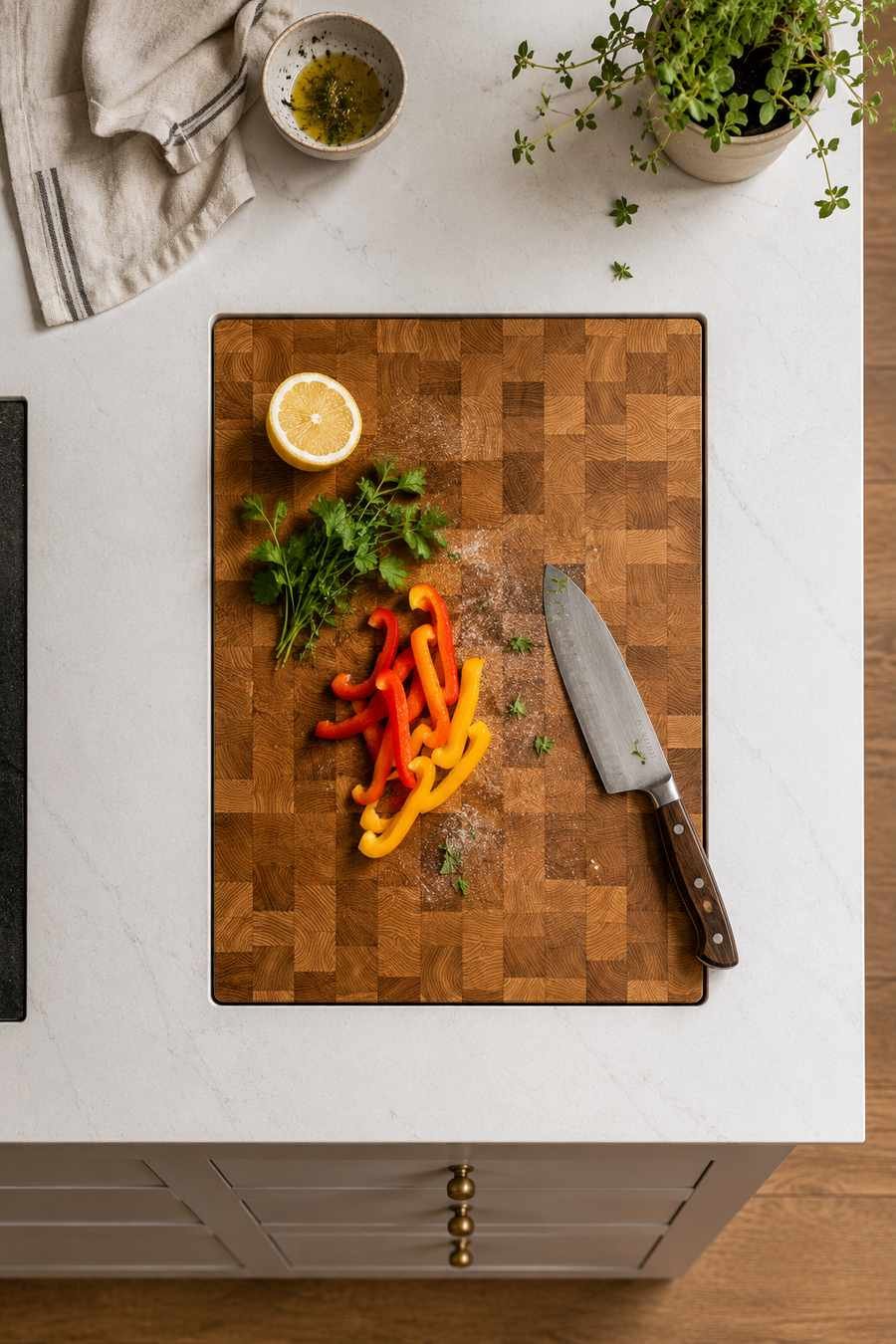
Rather than treating the whole counter as a cutting surface, some fabricators will drop a smaller, removable end-grain block directly into a cutout in a stone or quartz counter. You get a genuine butcher-block cutting surface exactly where you chop, and the rest of the counter stays low-maintenance stone.
9. Butcher Block Breakfast Bar Overhang
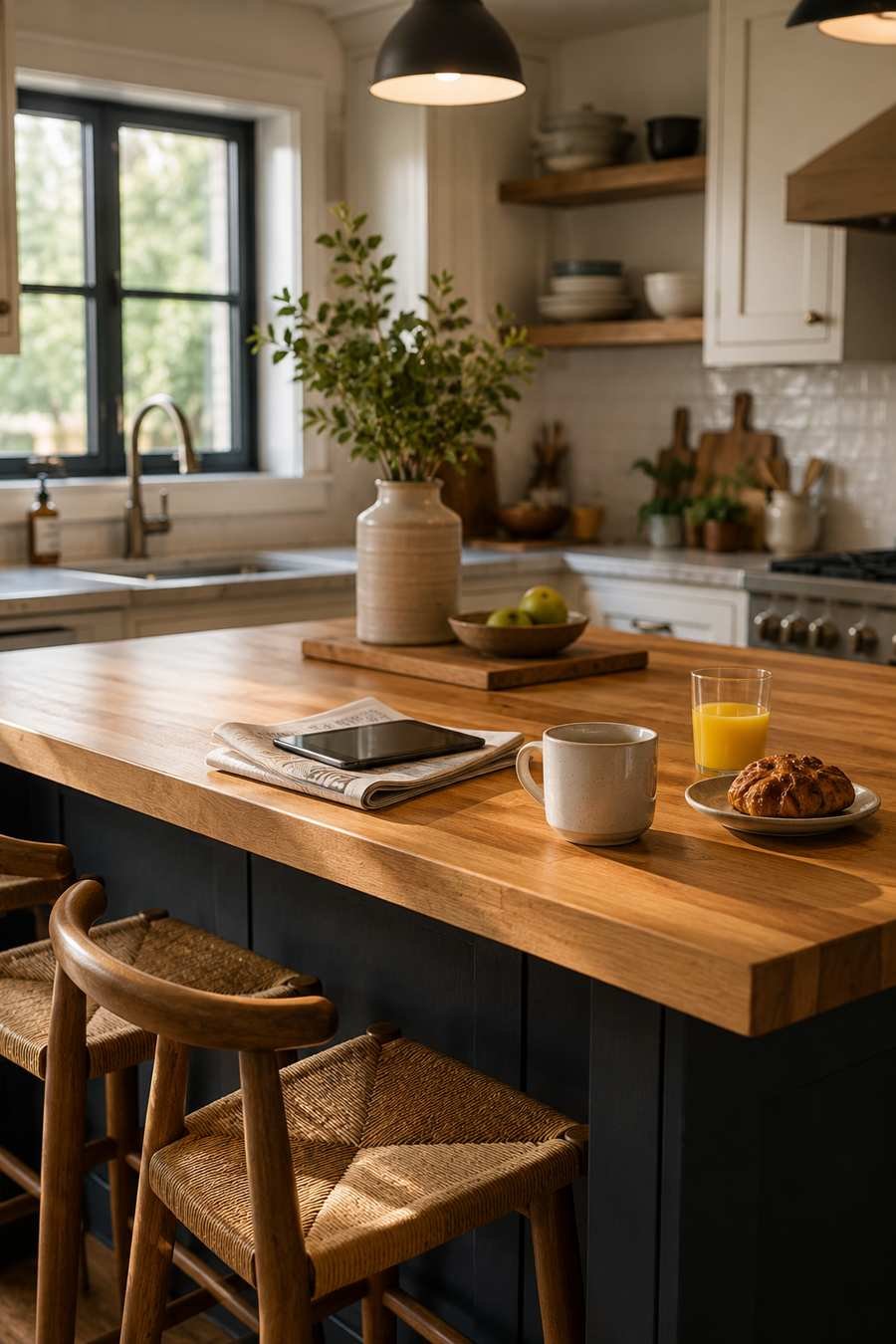
An island topped in butcher block with a deep overhang on the seating side gives you a warm, casual breakfast bar without adding a second material. Just size the overhang with your seating height in mind, roughly 12 inches of overhang works for counter-height stools, closer to 15 for bar height, so knees actually fit underneath.
10. Dark-Stained Butcher Block With White Oak Cabinets
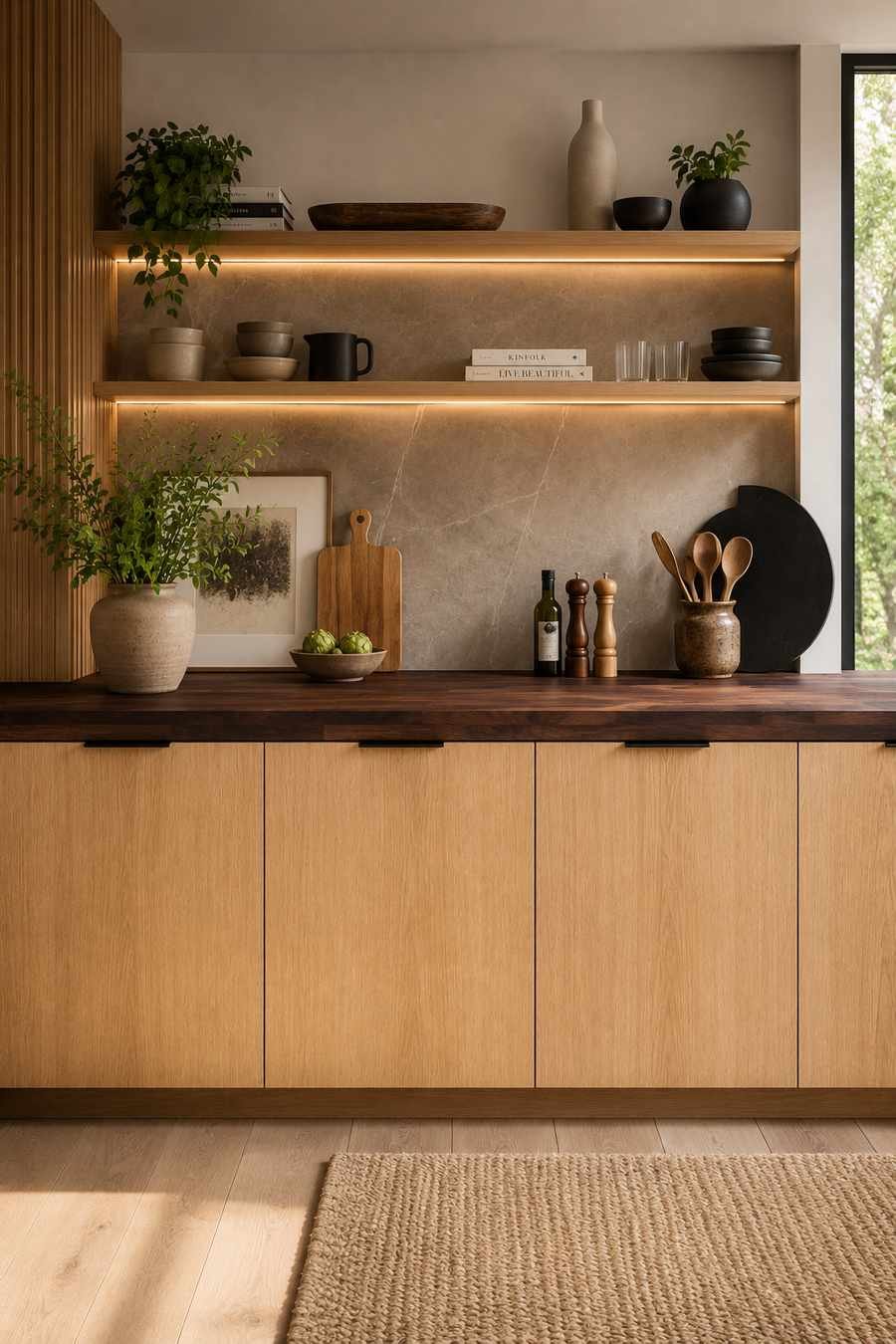
If you’re already drawn to the white oak cabinet look, a dark walnut-stained counter on top of white oak lower cabinets creates real contrast without needing a second wood species. Just be aware that white oak’s natural undertones can shift over time, so test your stain against an actual sample of your cabinet finish before committing.
11. Wood Countertop Paired With Quartz Waterfall Island
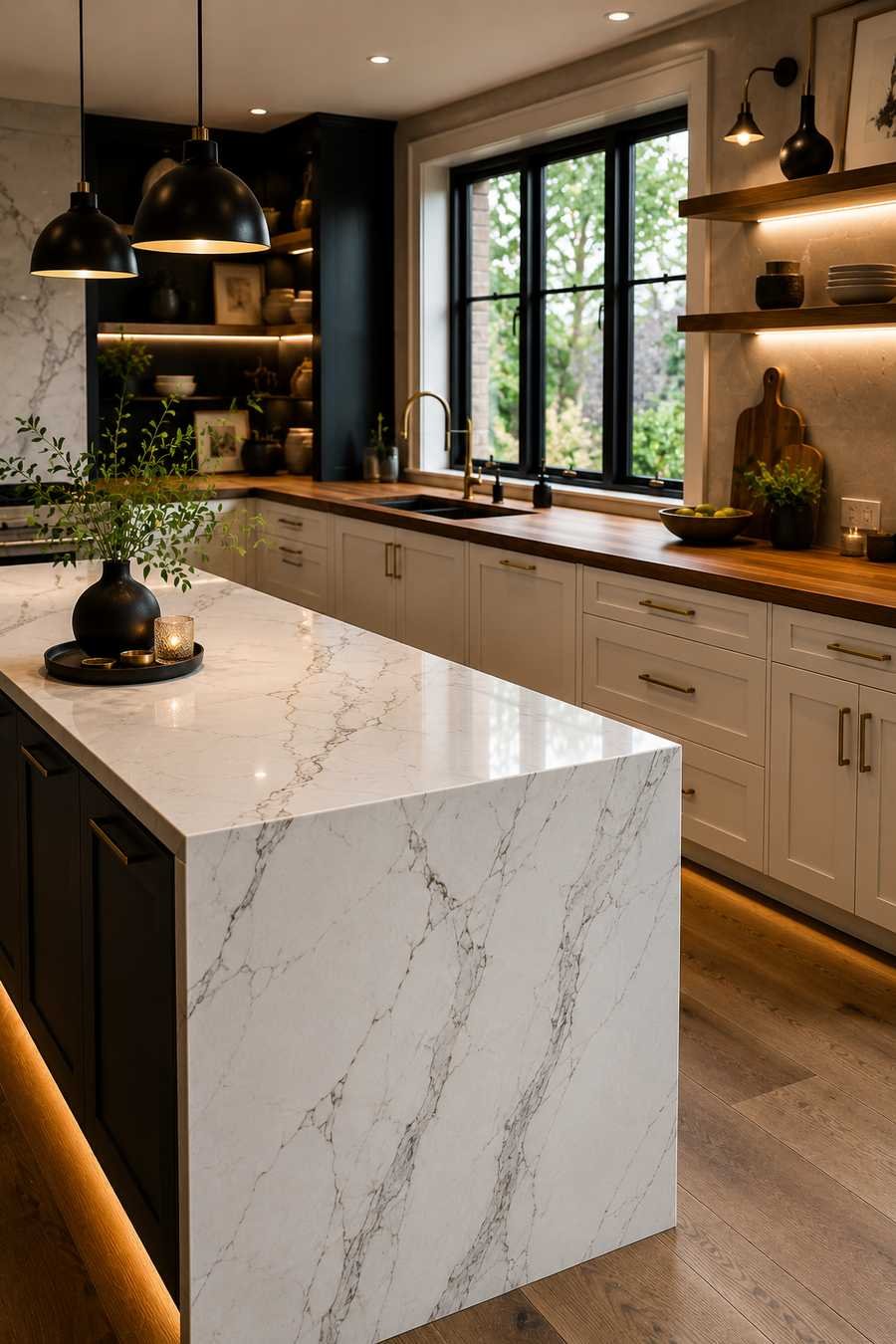
Some of the most convincing modern kitchens I’ve seen mix a quartz island with butcher block perimeter counters, which is the reverse of the usual setup. If you like that kind of material pairing, our piece on pairing quartz countertops with wood cabinets covers a lot of the color-matching logic that applies here too.
12. Butcher Block Coffee Bar Counter
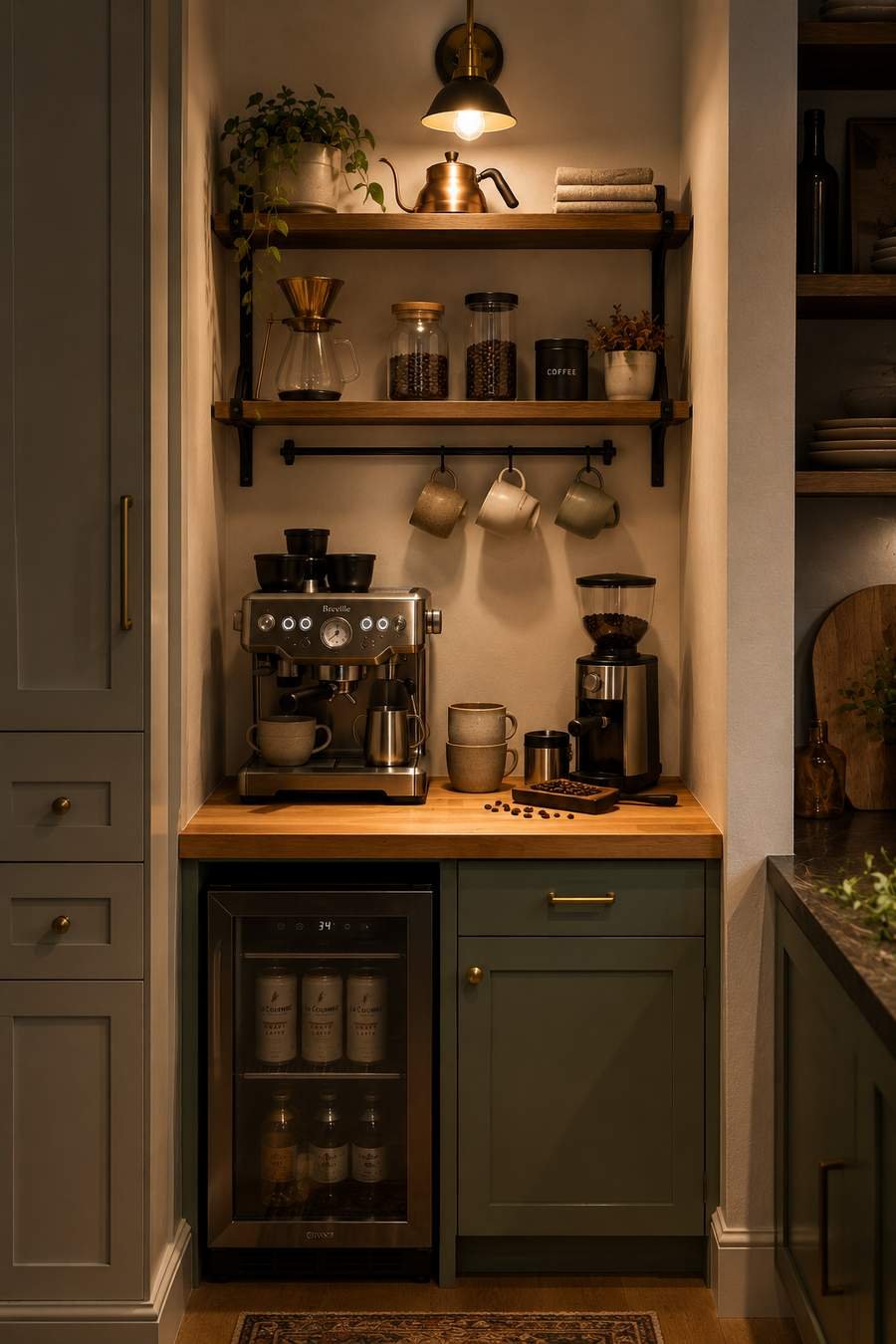
A dedicated coffee station is one of the easiest places to try butcher block if you’re not ready to commit to it on your main prep counters, since it sees far less water and knife contact. A lot of the layouts in our coffee bar corner ideas piece would take a small butcher block cap beautifully.
13. Light Ash or Birch With Subway Tile Backsplash
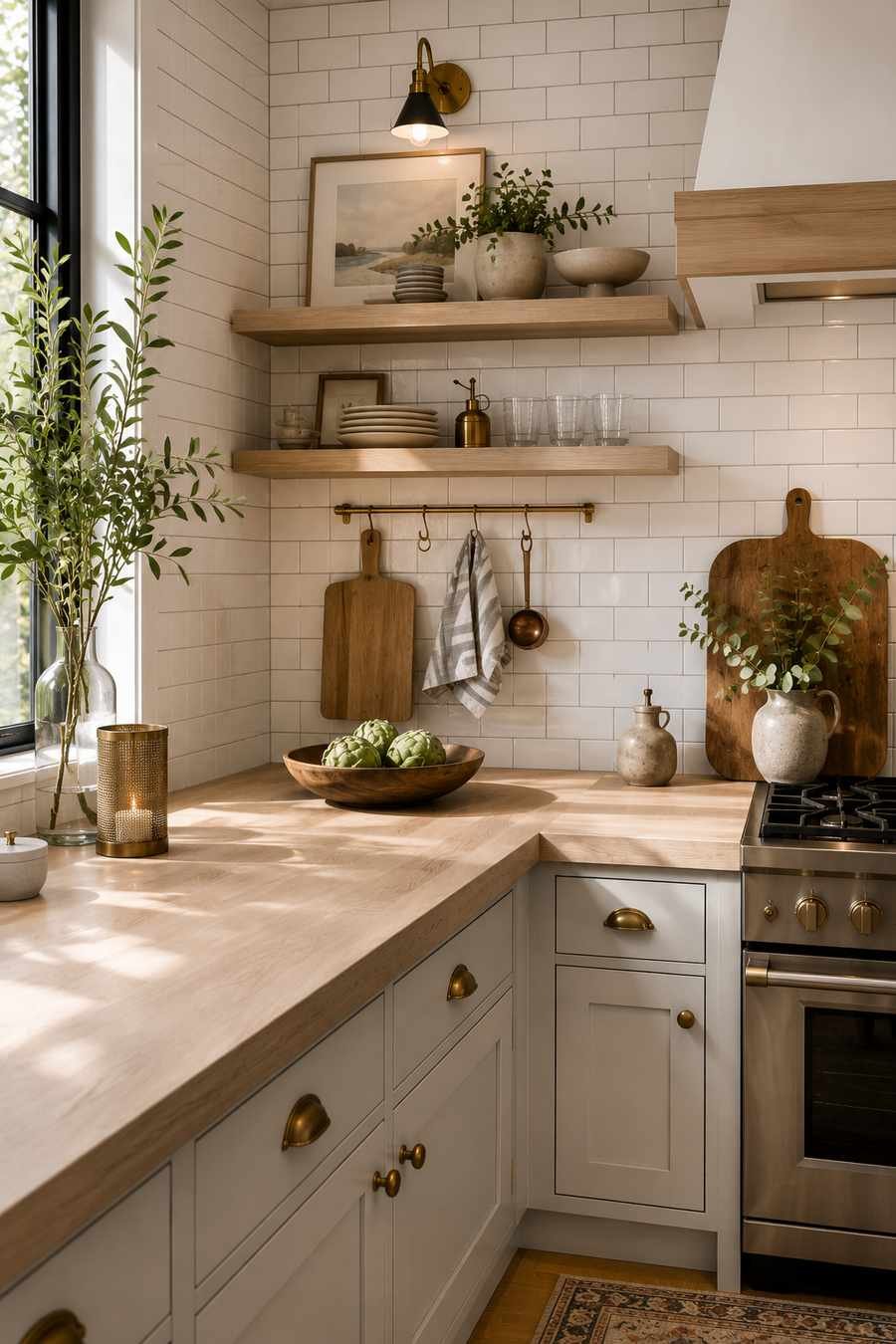
Pale wood tones next to classic white subway tile keep a kitchen looking clean and a little coastal rather than heavy. If that’s the direction you’re leaning, our subway tile backsplash guide has layout patterns that work especially well against a light wood counter.
14. Butcher Block Over Open Shelving
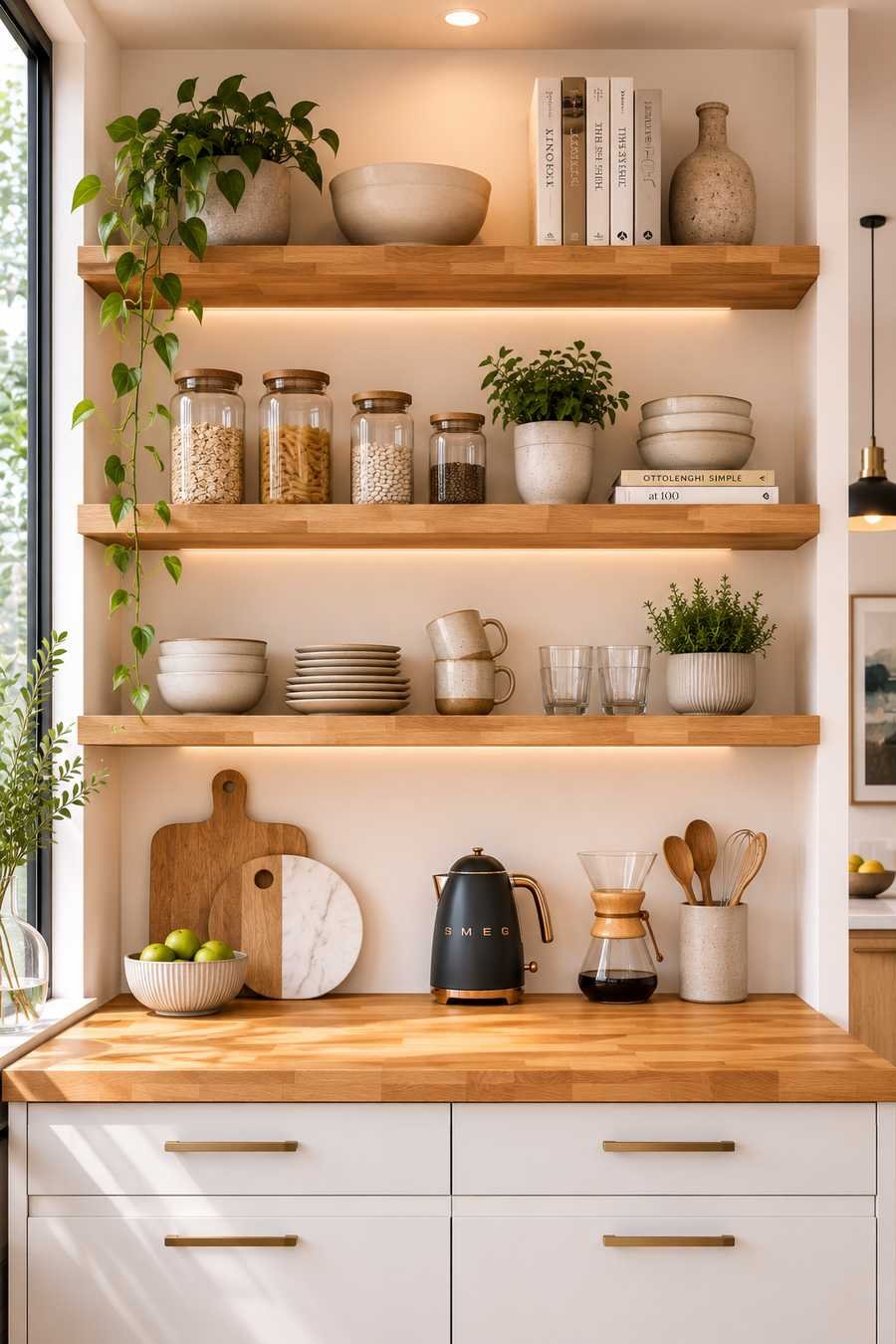
Skip the upper cabinets above a butcher-block run and use open wood shelving instead, matched or close to the counter tone. It’s a look that photographs beautifully, but I’ll be honest that it only works if you’re genuinely tidy, since open shelves show every stray item.
15. Rustic Knotty Pine for a Cabin-Style Kitchen
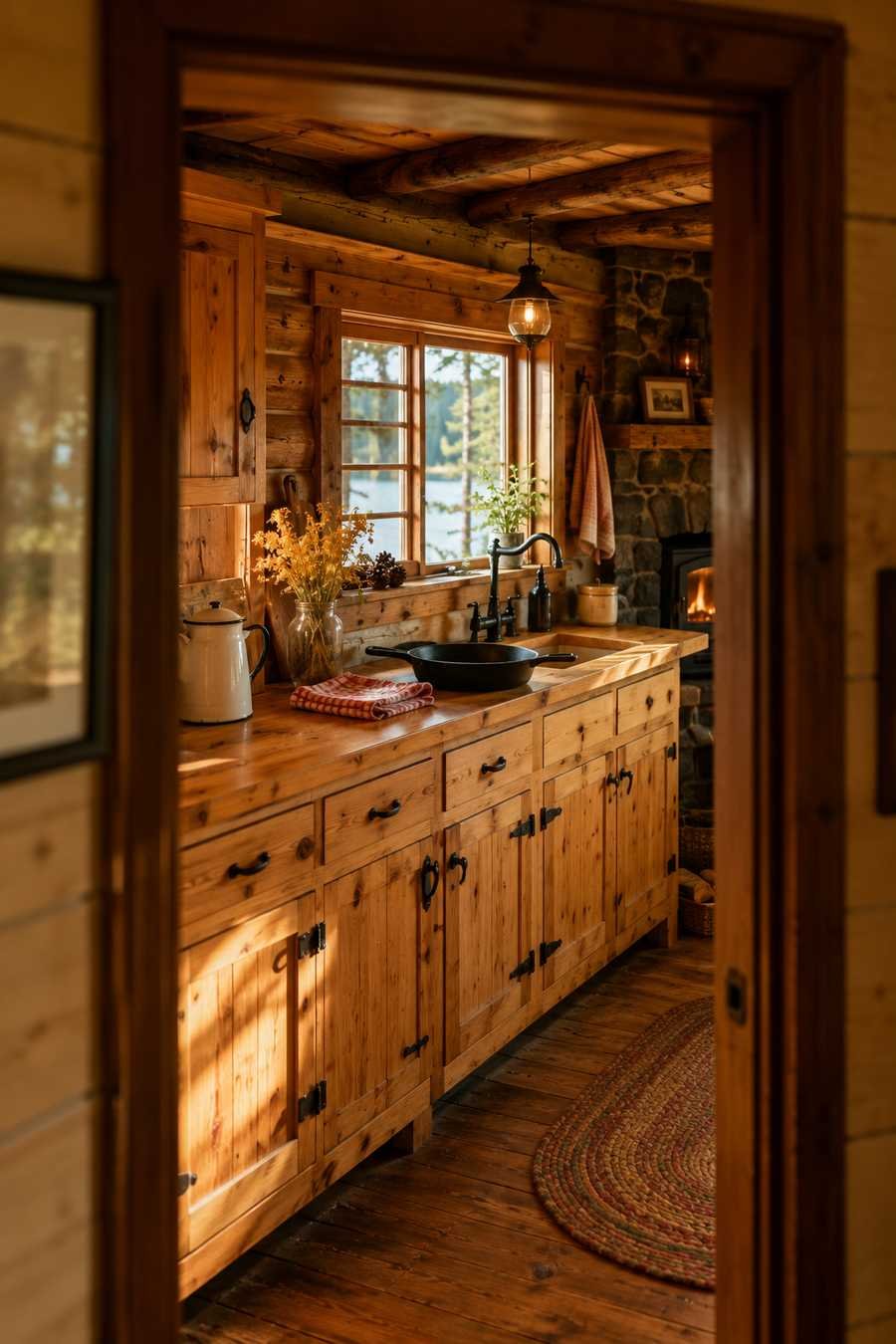
Pine is softer than maple or oak, so it dents more easily, but that’s part of the appeal in a cabin or lake-house kitchen where a lived-in look is the goal rather than a flaw to avoid. It’s also one of the more affordable species if you’re covering a large run.
16. Butcher Block Peninsula Facing a Living Space
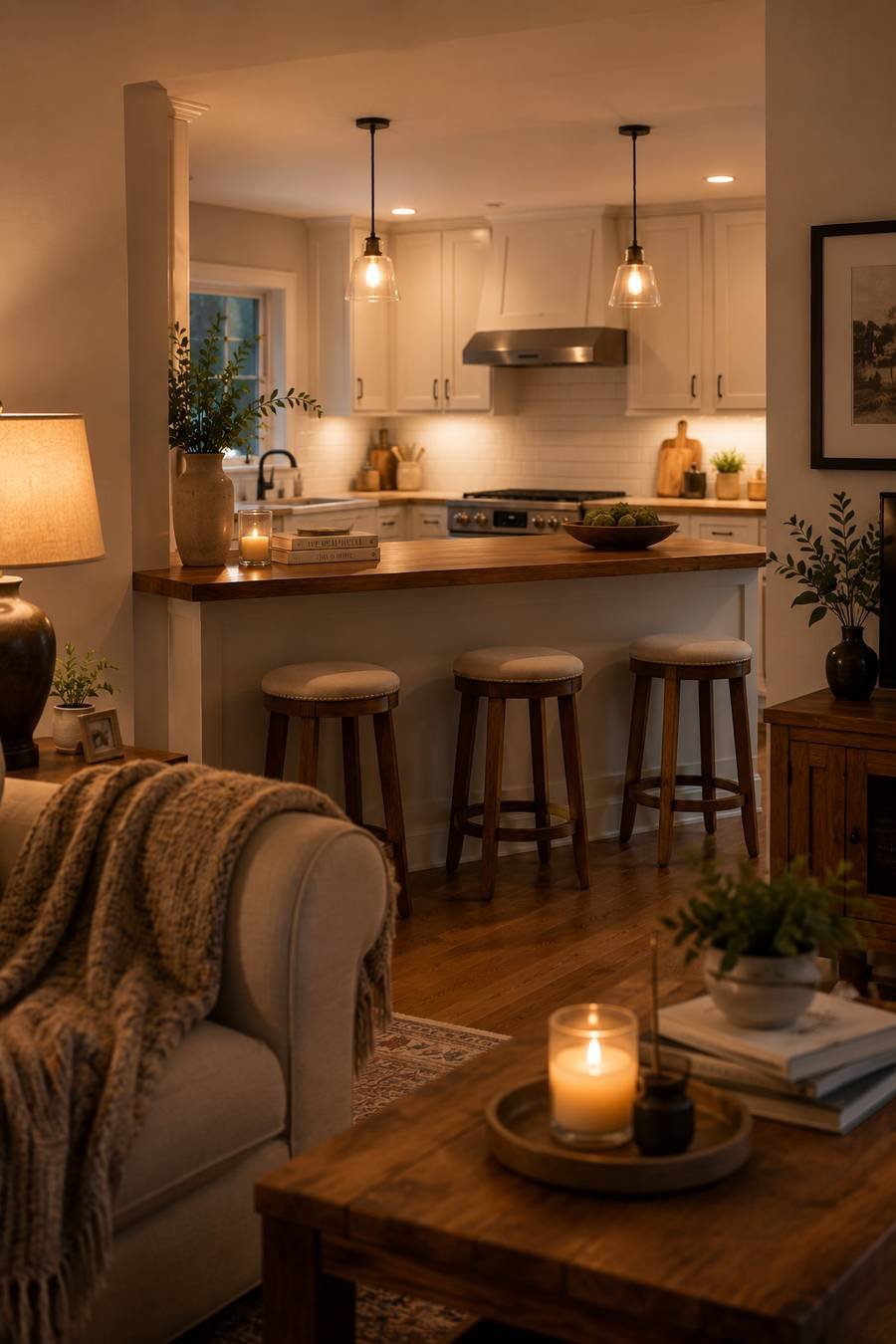
In an open floor plan, a peninsula counter in wood softens the line between the kitchen and the living area far more than stone does. It reads less like a hard boundary and more like a piece of furniture, which matters if your kitchen opens directly onto a family room.
17. Mixed-Wood Herringbone Countertop
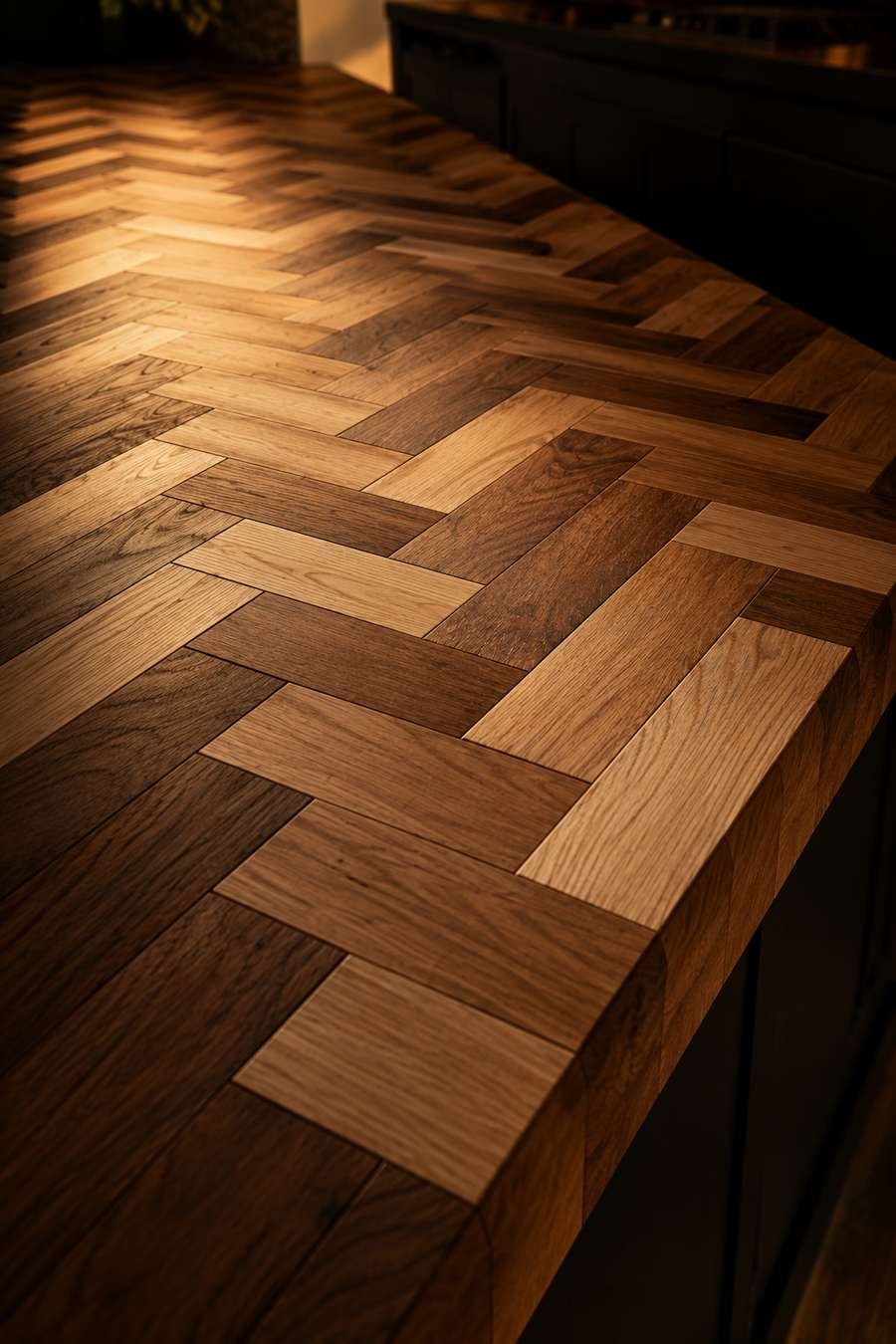
A herringbone glue-up pattern, the same layout you’d see in a wood floor, applied to a countertop is a genuine showstopper and a genuine fabrication challenge. It needs a shop with real experience in wood countertops specifically, not just cabinetry, since the joinery has to be precise for the pattern to line up.
18. Butcher Block Countertop With Matching Wood Flooring
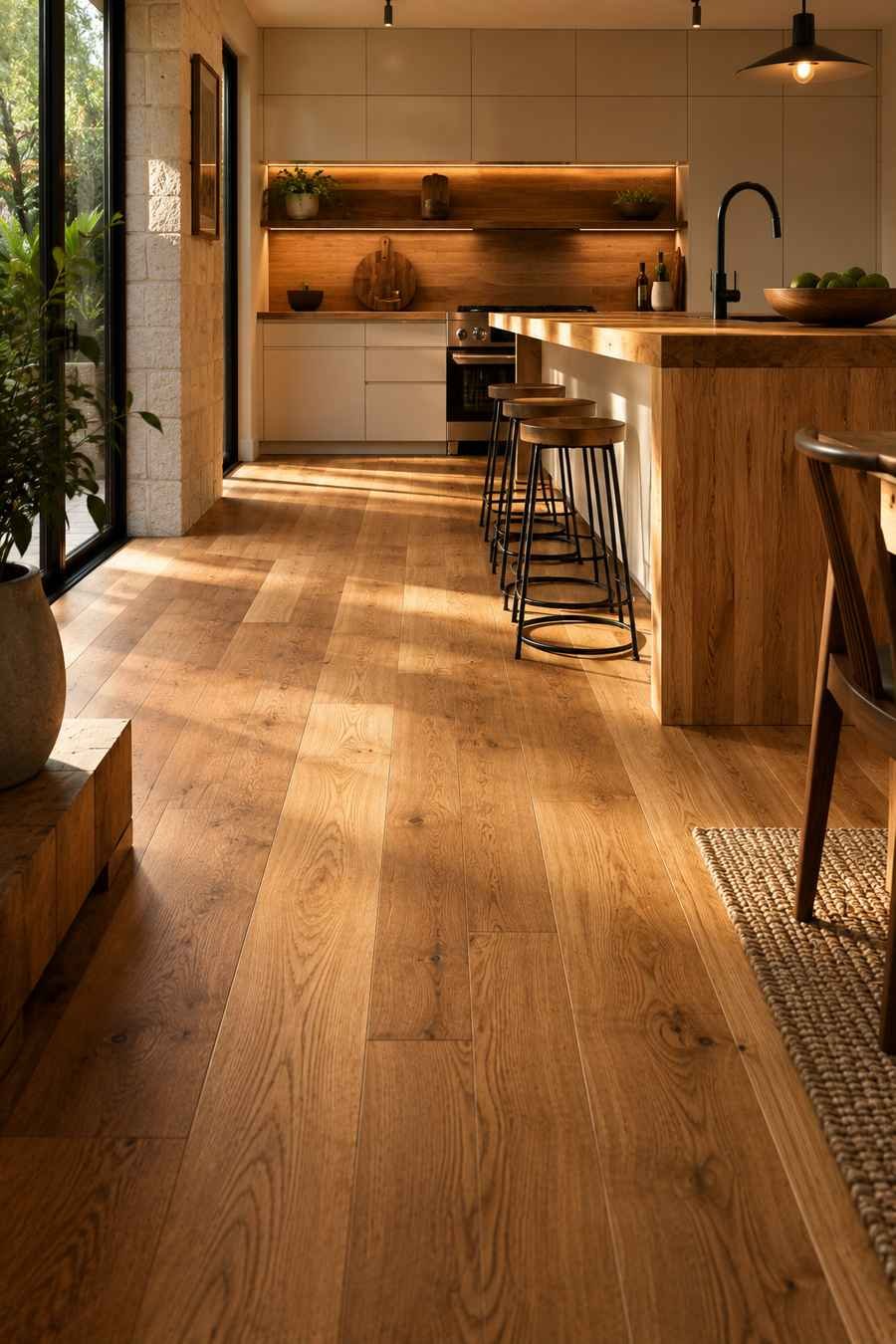
Running the same or a closely matched wood tone from your floor up into your counters ties a kitchen together in a way that’s hard to fake with paint or tile. If you’re weighing flooring options at the same time, our modern kitchen flooring guide is worth reading before you lock in either material, since matching undertones between floor and counter is easier to plan up front than to fix after installation.
19. Small Kitchen, Single Species, No Contrast
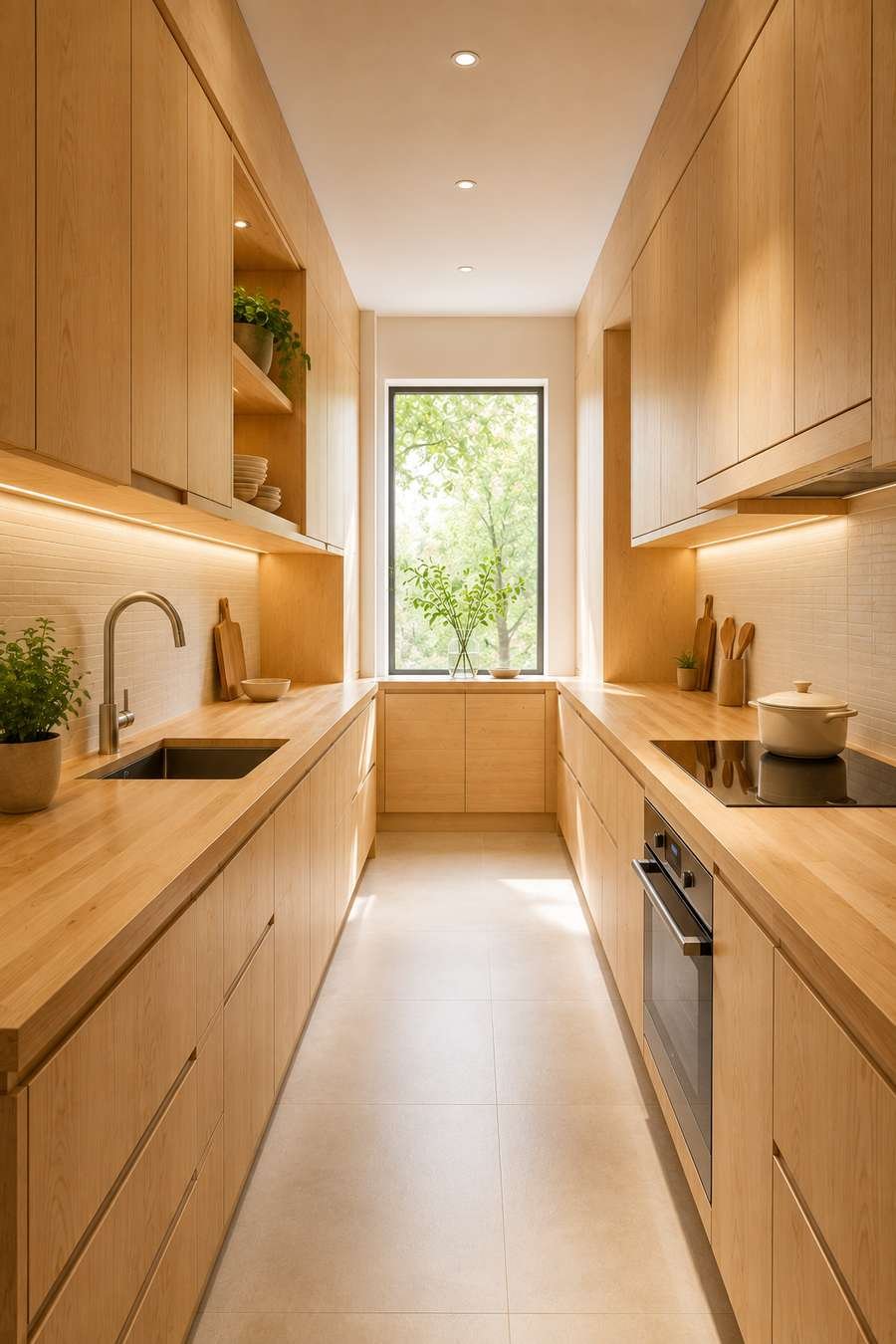
In a genuinely small kitchen, the highest-impact move is often the simplest: one wood species, one finish, no mixed materials competing for attention. A small galley kitchen in all maple, cabinets included or close to it, reads larger and calmer than the same kitchen chopped up into three different finishes.
How to Keep Butcher Block Looking Good for Years
This is the part most roundups skip, and it’s the part that actually determines whether you’ll still like your counter in five years.
Butcher block needs a food-safe finish, and you have two real routes. Mineral oil (sometimes with beeswax added) soaks into the wood and needs reapplying every few weeks at first, then roughly once a month once the wood is saturated.
It’s low-effort per application but never fully stops, and it won’t protect against standing water.
A hardening oil like a food-safe tung oil or a specific butcher-block finish cures into the wood and holds up longer between applications, but takes several coats and a few days of cure time up front.
Whichever you choose, the habit that matters most is wiping up water immediately rather than letting it sit, especially around a sink or dishwasher gap.
Standing water is what causes the graying and lifting that people blame on “the wood not being sealed properly,” when it’s usually just water sitting for hours, not minutes.
Cutting directly on the counter will happen, that’s the whole point of the material, but a light sanding with fine-grit paper once or twice a year removes surface scratches and lets you re-oil a fresh surface.
It takes an afternoon and makes an old counter look new again, which isn’t something you can say about most other countertop materials.
The Honest Downsides Nobody Puts on Pinterest
I’d rather tell you this now than have you find out after installation. Butcher block will darken and shift color slightly with sun exposure over the first year, particularly cherry and walnut.
It’s genuinely more work than quartz or laminate; there’s no version of wood counters where you can just wipe and forget. Around a sink, without a proper seal and a little discipline about standing water, the edge of the cutout is the single most common failure point I see.
And if you’re set on a completely uniform, flawless look with zero variation, wood isn’t going to give you that. Every board is a little different, and that’s either the appeal or the dealbreaker, depending on who you ask.
What It Actually Costs
Prices shift by region and wood, but as a rough guide: laminated maple edge-grain counters typically run in the lower range compared to natural stone, often noticeably less than granite or quartz per square foot.
Walnut and cherry sit higher because the raw material costs more. End-grain construction costs more than edge-grain in the same species because of the extra labor in the glue-up.
Installation is usually more DIY-friendly than stone, since the material is lighter and can be cut with standard woodworking tools, which is where a lot of people save real money if they’re comfortable handling the sealing themselves.
Where I’d Skip It
I wouldn’t put butcher block as the sole material directly around a cooktop where grease splatter is constant, or as the entire counter in a household that genuinely never wipes up spills promptly.
It’s also not the best call for a rental you’re planning to leave in a year or two, since the payoff on the maintenance routine is a longer-term one.
In those situations, I’d lean toward the accent approach, an island or a short run, rather than committing the whole kitchen.
Frequently Asked Answer
Is butcher block hard to maintain compared to quartz or granite?
Yes, honestly. It needs periodic oiling and quick cleanup of spills, where stone doesn’t. The upside is that it’s also the only counter material you can sand and refinish yourself when it wears.
Can you use butcher block near a sink?
You can, and plenty of the ideas above do exactly that, but the cutout edge needs to be sealed carefully and re-checked over time. Some people leave a small stone or tile strip right around the sink itself and use wood everywhere else, which sidesteps the issue entirely.
Which wood species holds up best for heavy daily cooking?
Maple and walnut are the two I’d point a busy household toward first. Both are hard enough to resist dents well and take an oil finish evenly, without the softness of pine or the higher price of exotic species.
Does butcher block work in a modern kitchen, or only farmhouse style?
It works in both. A single light species with a matte finish and minimal contrast, paired with flat-panel cabinets, reads modern. Mixed woods, visible grain, and a warm stain read farmhouse. The wood doesn’t dictate the style; the finish and the cabinets around it do.
Butcher block isn’t a material you choose because it’s trendy this year. It’s one you choose because you genuinely like the idea of a counter that ages instead of just wearing out, and you’re willing to give it fifteen minutes of care every so often in exchange.
If that trade makes sense for how you actually use your kitchen, it’s one of the few countertop choices that gets better looking the longer you own it.