
White oak cabinets photograph beautifully and then, about eighteen months in, half the internet starts asking why theirs looks orange.
I redid my own kitchen in rift-sawn white oak two years ago, watched a friend do the same thing in quarter-sawn six months later, and the two kitchens have aged in completely different directions.
This is everything that separates the white oak kitchens that still look sharp from the ones people quietly start calling “that honey kitchen” by year three.
If you’re deciding between white oak cabinets and painted ones, or you’ve already committed and you’re trying to figure out what to pair them with, these 23 ideas are pulled from kitchens I’ve either built, watched get built, or picked apart in person not rendered mood boards.
Some are full remodels, some are workarounds for renters who can’t touch a single cabinet box.
23 White Oak Kitchen Cabinet Ideas You Can Actually Build
Skim these first, then use the sections below to work out grain direction, sheen, and what actually happens to white oak after two years of cooking oil and morning sun.
1. Rift-Sawn Slab Fronts With a Waterfall Quartzite Island
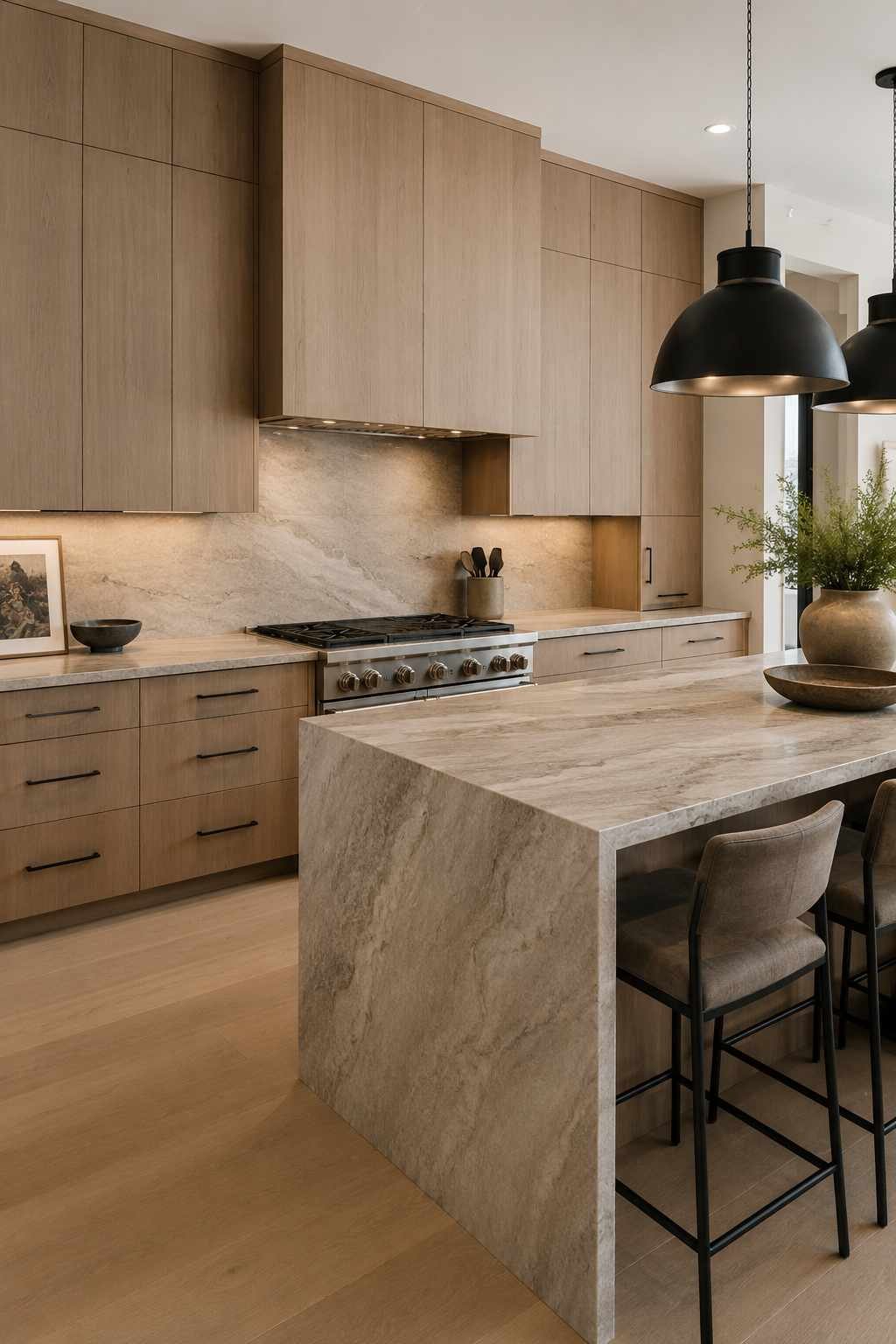
Rift-sawn cuts the grain into tight, straight vertical lines with none of the cathedral arches you get from plain-sawn boards, which is why it reads so much calmer on a full wall of cabinetry. Pair it with a leathered quartzite island in a soft taupe-grey and matte black hardware, and the wood stops competing with the stone’s movement instead of fighting it for attention. This is the combination that shows up most in higher-end builds right now, and it’s the one I’d choose again if I were starting over.
2. White Oak Uppers Over Black Painted Lowers
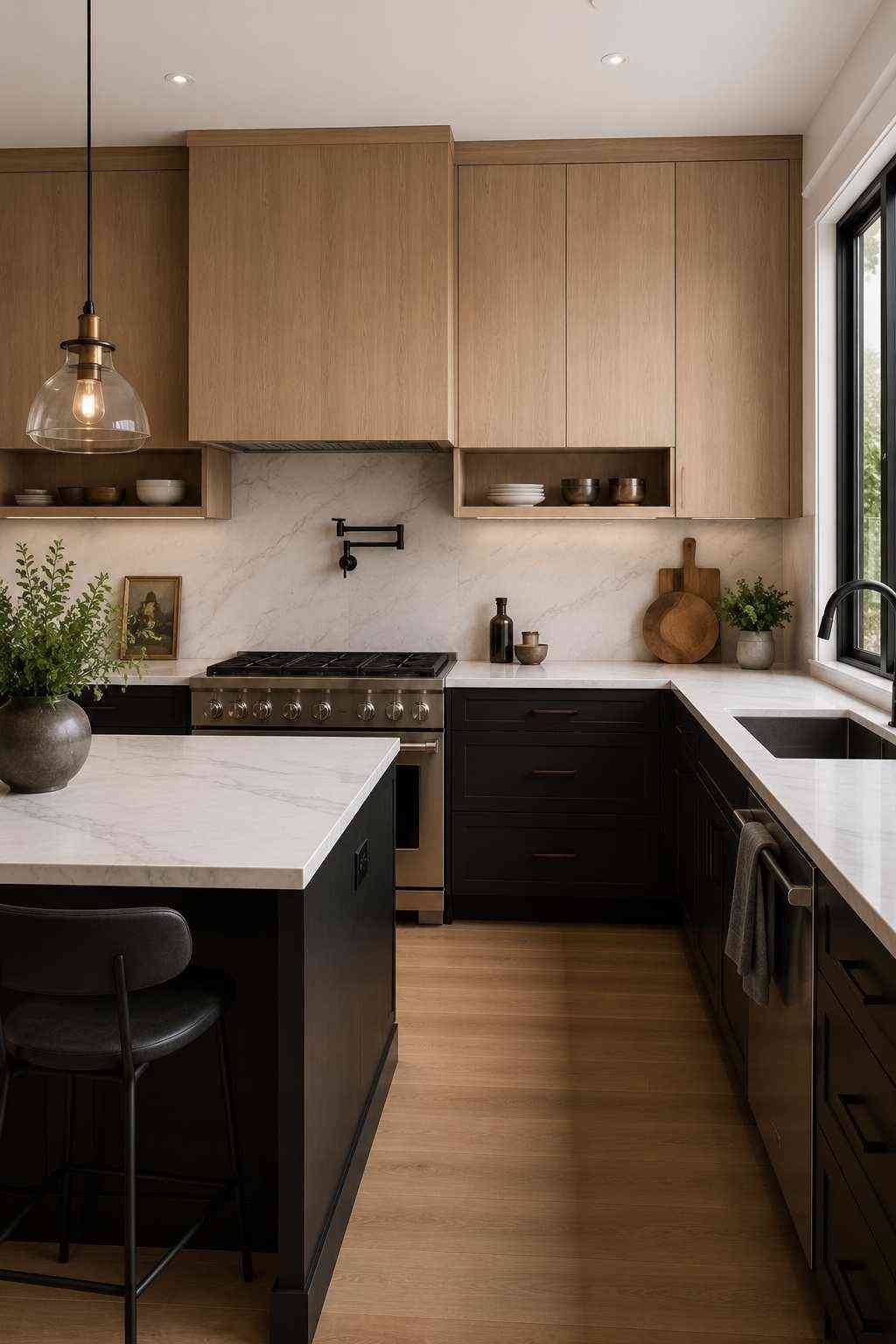
Keep the top cabinets in natural white oak and drop the base cabinets to a deep, almost-black charcoal — not true black, which reads flat under warm kitchen lighting. It lightens the upper half of the room where you actually look most, while grounding the floor level so the kitchen doesn’t feel like it’s floating. Works especially well in kitchens with 9-foot ceilings, where all-wood uppers can start to feel heavy by the time they reach the crown.
3. Limed, Whitewashed White Oak Shaker Fronts
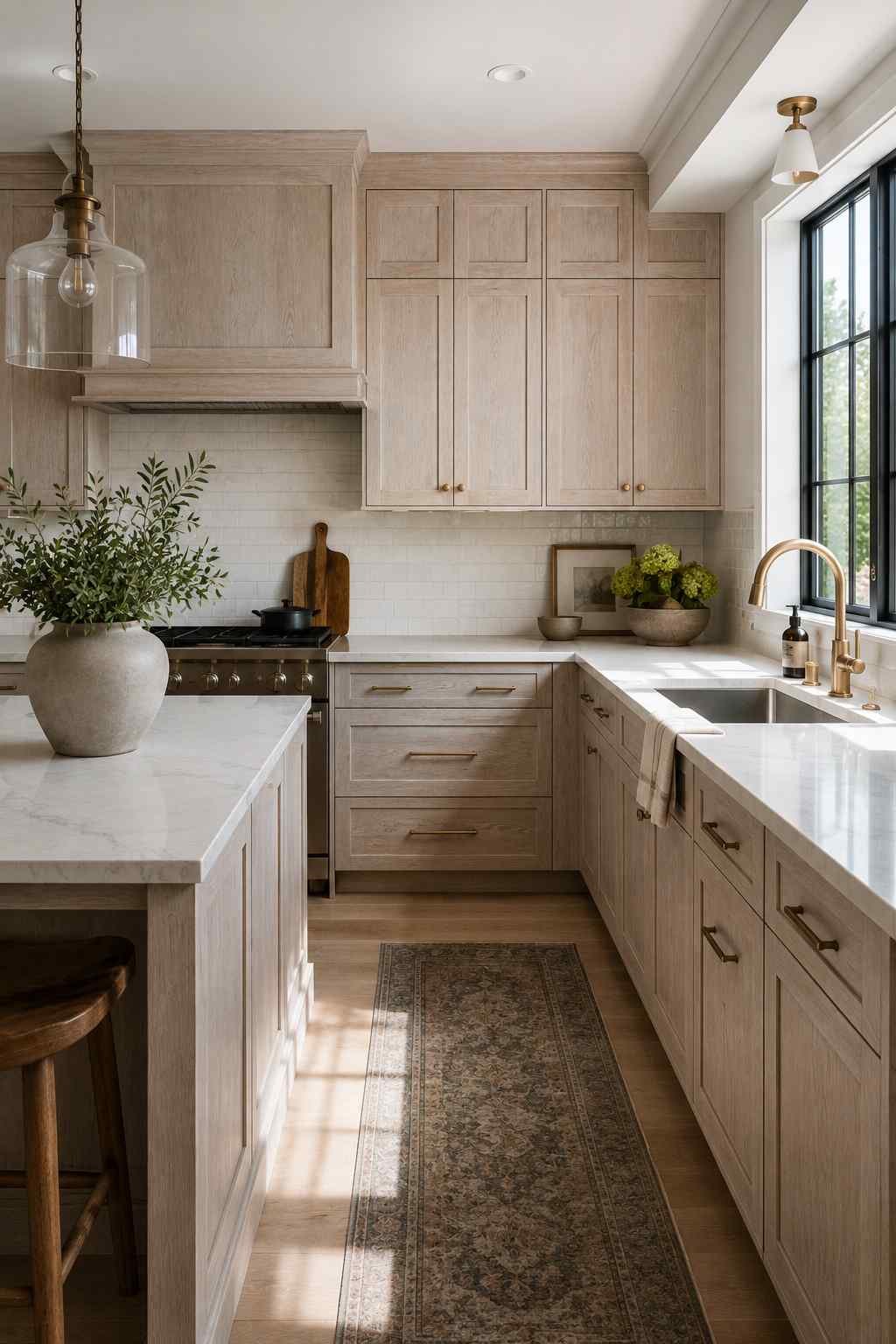
A limed finish rubs white pigment into the open grain of the oak, which mutes the honey tones without fully painting over the wood texture. It’s the move for anyone who loves the idea of wood cabinets but is nervous about yellowing, since the white pigment already sits in the grain and shifts far less under UV exposure. Expect to pay 15–20% more than a clear-coated finish for the extra labor, and know that the open-grain texture will show water spots more than a smooth painted door.
4. Warm Brass Hardware Against Natural White Oak
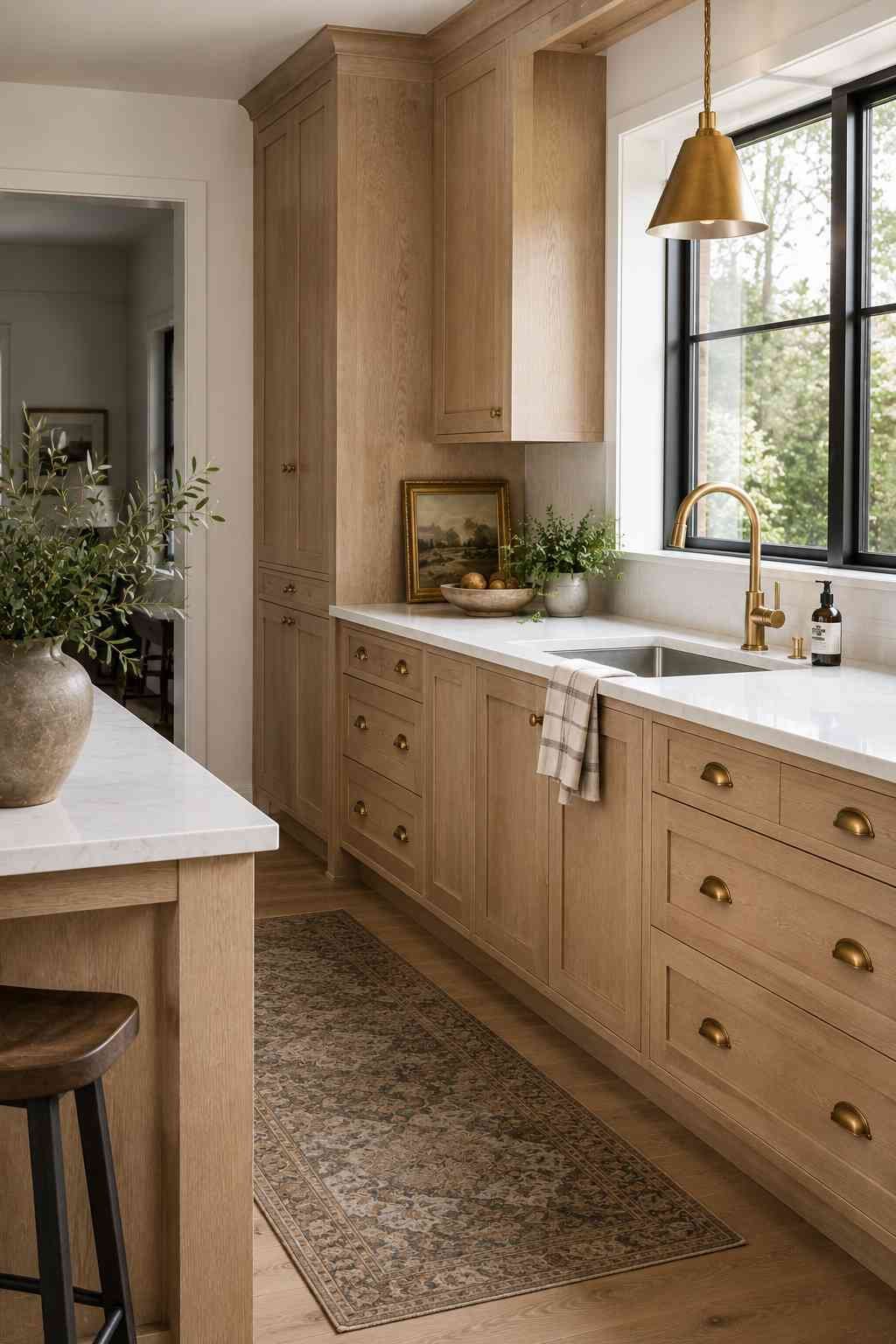
Skip the trendy matte black for a minute and go back to warm, slightly worn brass — unlacquered if you can find it, so it develops its own patina instead of staying showroom-shiny. Against natural white oak, warm brass reads expensive and collected rather than matchy, especially on simple bin pulls instead of ornate knobs. The tradeoff: unlacquered brass tarnishes and fingerprints show, so this only works if you’re willing to either polish it occasionally or embrace the aged look on purpose.
Also Check – Kitchen Design Ideas
5. Open White Oak Shelving Flanking a Plastered Hood
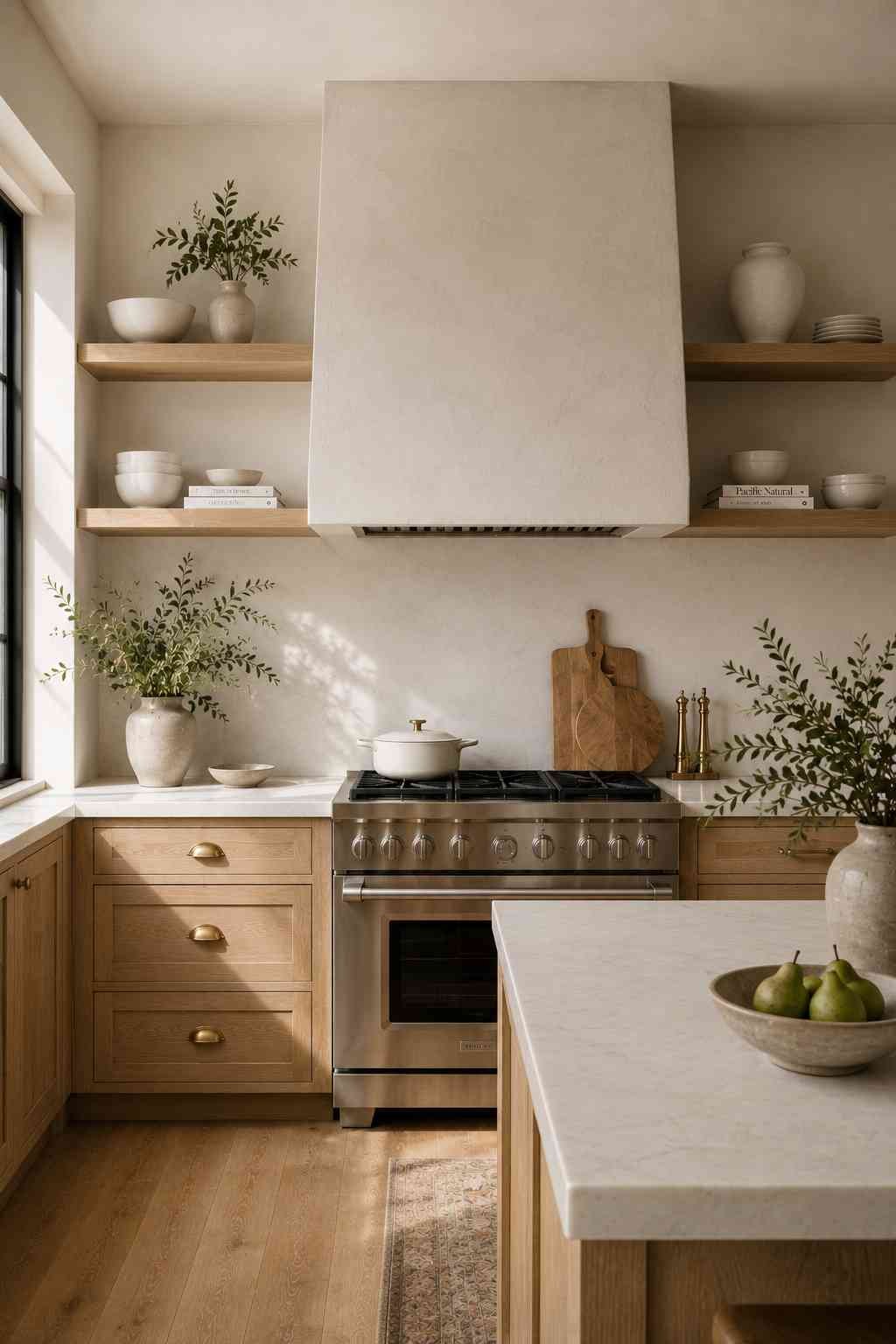
Pull the upper cabinets on either side of the range and replace them with two floating white oak shelves, then wrap the hood itself in hand-troweled plaster instead of tile or stainless steel. The plaster gives you a soft, matte focal point with visible trowel marks that catch afternoon light, while the shelves force you to actually curate what’s on display — plain white ceramics, one stack of linen napkins, nothing busier than that. This idea eats storage, so it only makes sense if you have a full pantry elsewhere to absorb what the missing cabinets used to hold.
6. Quarter-Sawn White Oak With Visible Ray Fleck
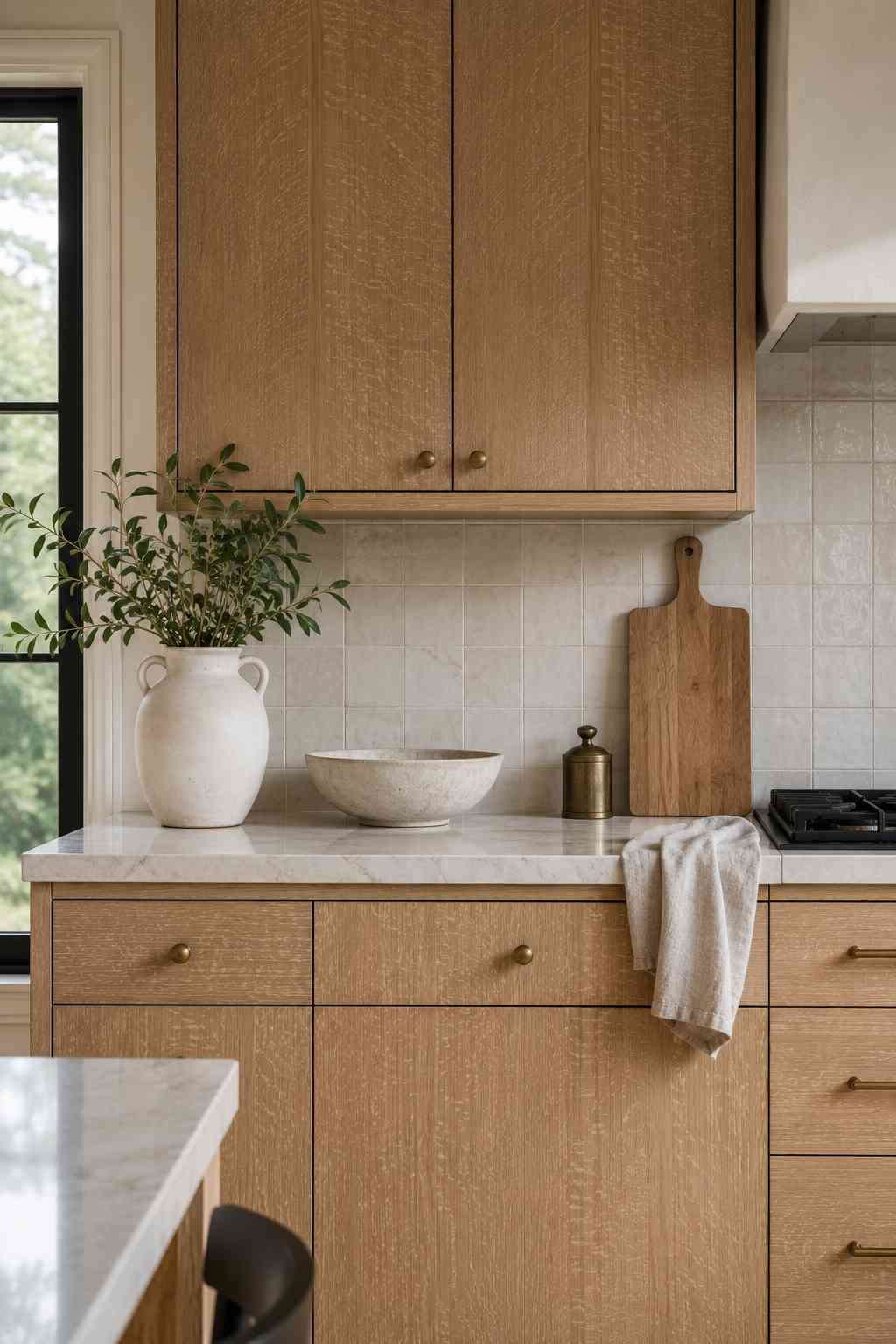
Quarter-sawn boards show a distinctive fleck pattern — small silvery streaks running across the grain — that plain-sawn and rift-sawn cuts don’t have. It’s the most traditional, almost Arts-and-Crafts-coded cut of white oak, and it looks best on simple, flat slab doors that don’t distract from the fleck itself. This is also the most expensive cut to source in cabinet-grade lumber, so budget accordingly if a supplier quotes you a number that sounds too good — it’s probably rift-sawn or plain-sawn mislabeled.
7. Natural White Oak Island in an All-White Kitchen
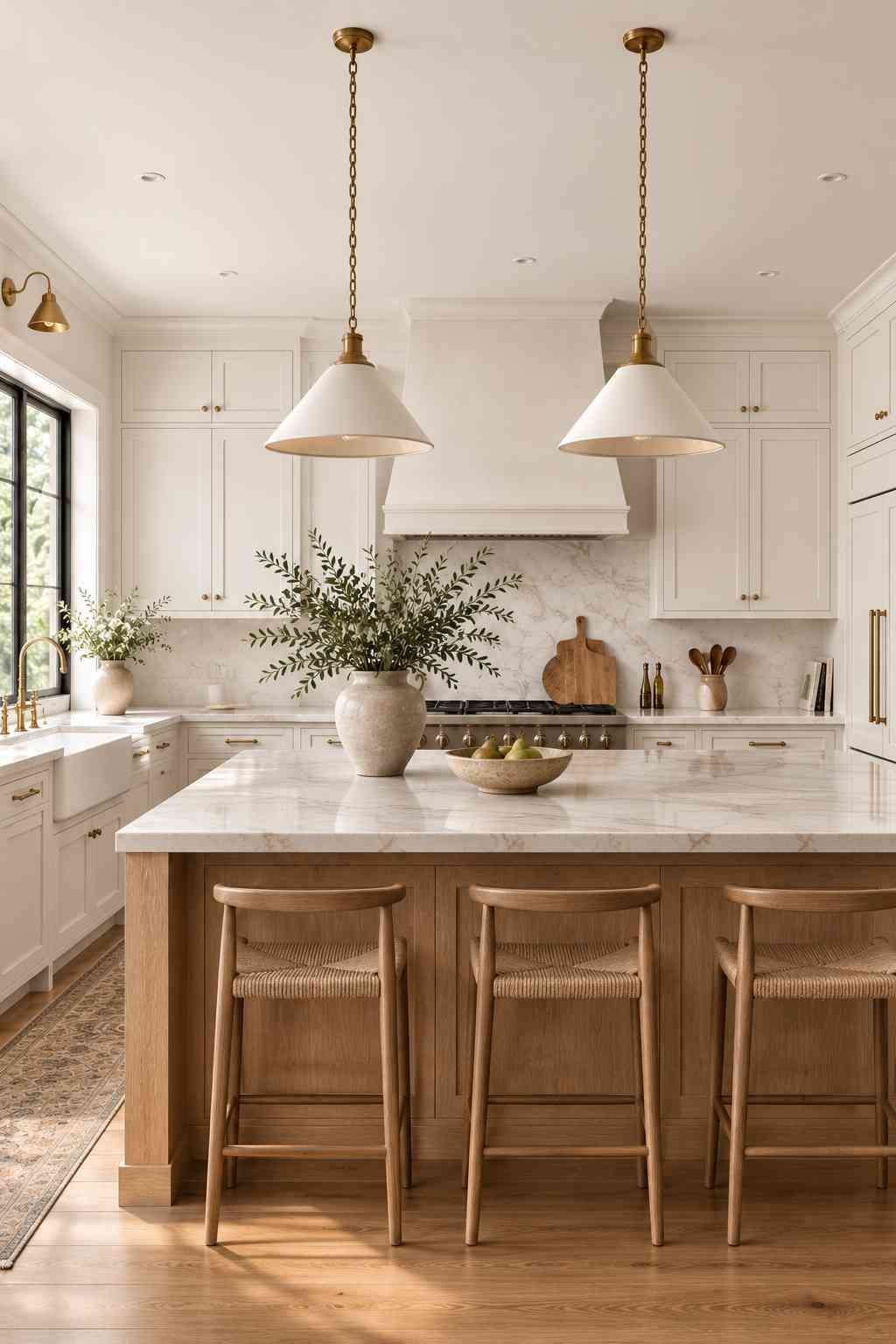
Keep every perimeter cabinet a soft warm white and let a single white oak island carry all the wood tone in the room. It’s the lowest-commitment way to try white oak without covering every surface in it, and it’s easy to reverse later if you change your mind — repaint one island instead of refinishing an entire kitchen’s worth of doors. A honed white marble or marble-look quartz top on the island keeps the contrast crisp rather than busy.
8. White Oak Slabs Against Sage-Green Venetian Plaster Walls
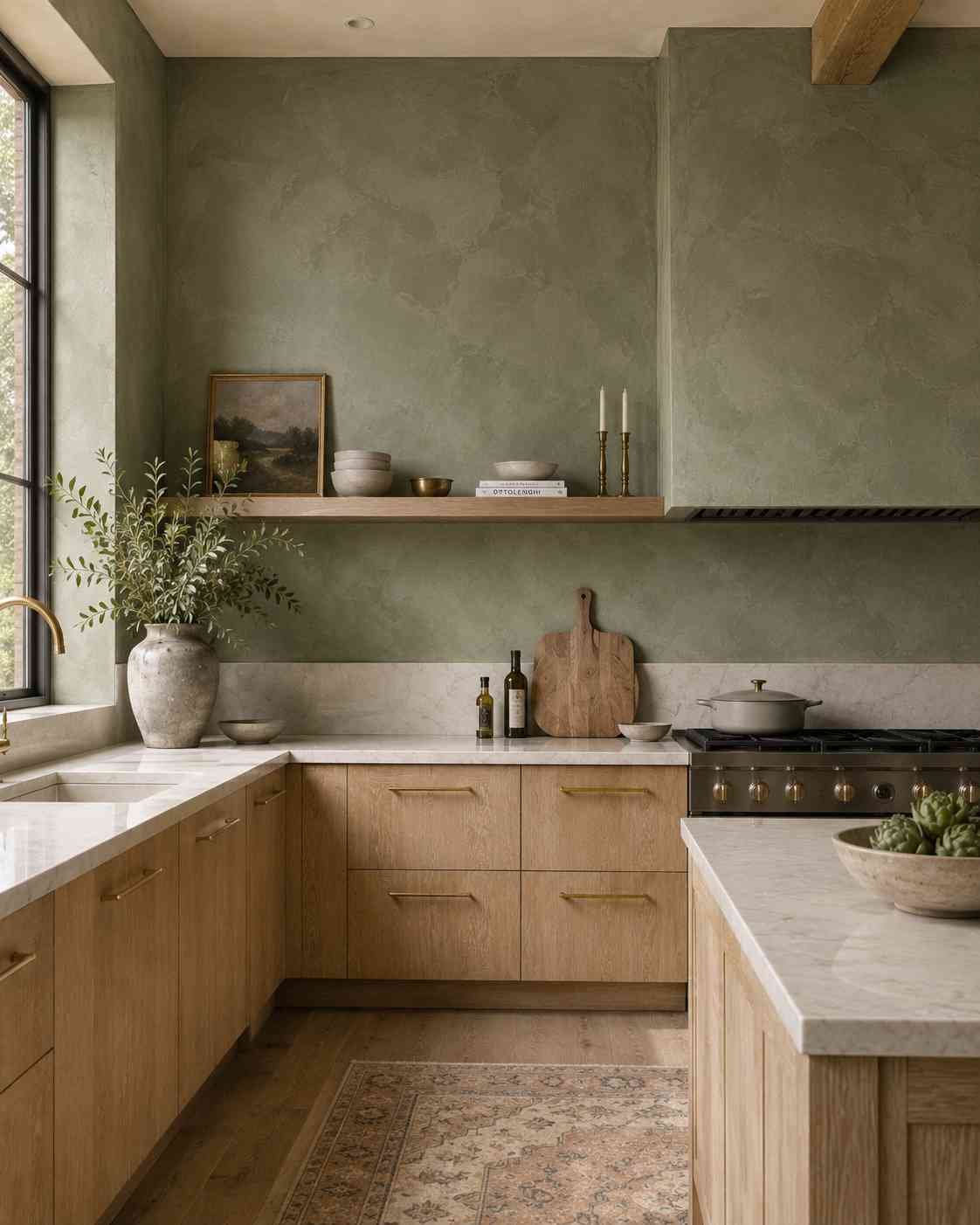
Plain-sawn white oak slab cabinets on the lower run, paired with hand-applied venetian plaster in a muted sage on the upper walls where cabinets would normally go. The plaster’s subtle texture and slightly mottled color depth give the room a sense of age that flat paint can’t fake, and the green pulls just enough cool tone to balance the warmth of the oak. This is a splurge-tier idea — proper venetian plaster application runs well above standard paint, and it needs a skilled plasterer, not a weekend DIY attempt.
9. Fully Integrated White Oak Paneling, Japandi Style
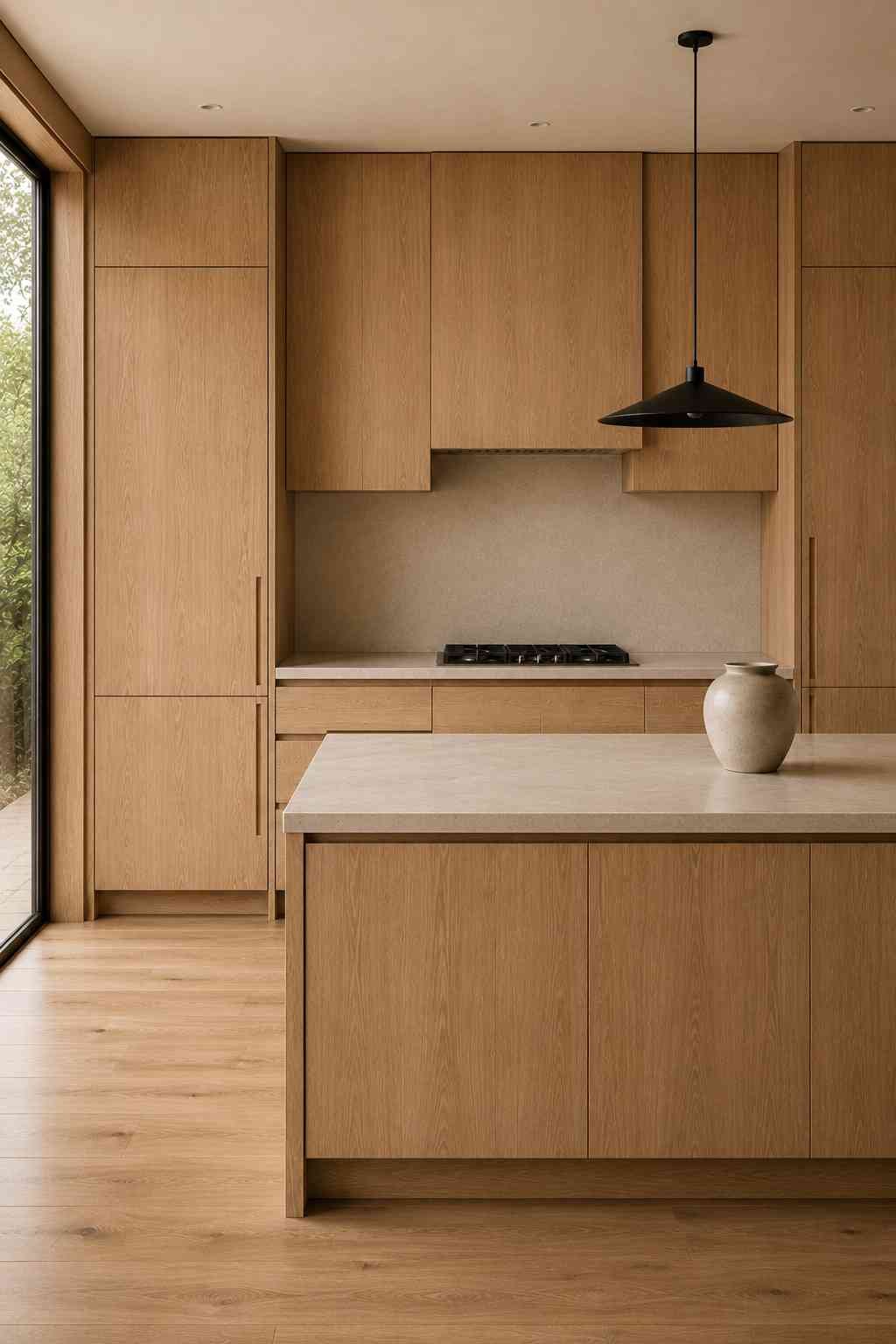
Panel every appliance — fridge, dishwasher, even the range hood — in matching white oak so nothing reads as “appliance” at a glance, then keep hardware nearly invisible with integrated finger pulls instead of knobs. Pair it with a low-profile black steel pendant over the island and a single ceramic vessel on the counter, and resist the urge to add anything else. The trade-off is cost and complexity: panel-ready appliances run more than standard finishes, and integrated pulls need to be routed precisely or the doors look off.
10. Vertical Beadboard-Style White Oak Fronts
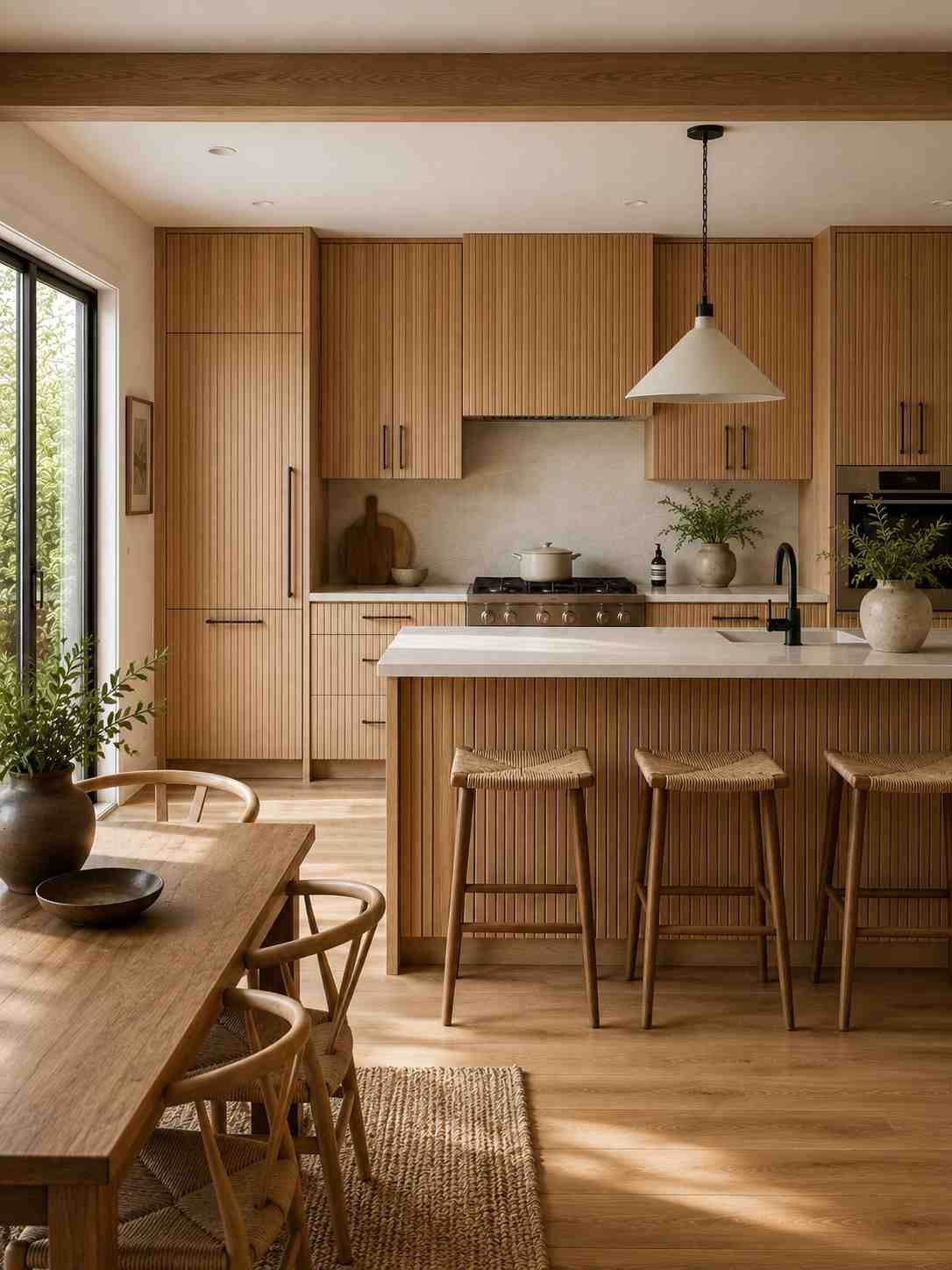
Ultra-realistic open-concept kitchen featuring vertical beadboard-style white oak cabinets with milled grooves, a matching beadboard island, matte black bar pulls, light quartz countertops, woven bar stools, a solid wood dining table with Wishbone chairs, warm oak flooring, and soft natural daylight in a modern organic farmhouse-inspired design.
Instead of a flat slab or a five-piece shaker door, run narrow vertical grooves down each cabinet front for a beadboard effect, milled directly into solid white oak rather than applied as a separate panel. It reads farmhouse without tipping into full rustic, especially when paired with simple bar pulls instead of anything ornate. The grooves collect dust and grease more than a flat door, so factor in a slightly higher cleaning routine before committing.
11. Black Steel-Frame Glass Uppers With White Oak Lowers

Swap solid upper cabinets for black powder-coated steel frames with reeded or clear glass, sitting above solid white oak base cabinets. It opens up a small kitchen visually since you can see through to the wall behind, and the black frame adds a hard architectural line against the softness of the wood grain below. Keep what’s inside curated — glass doors mean your dishware is part of the design now, not hidden storage.
12. No Upper Cabinets at All, Just White Oak Lowers and Plaster
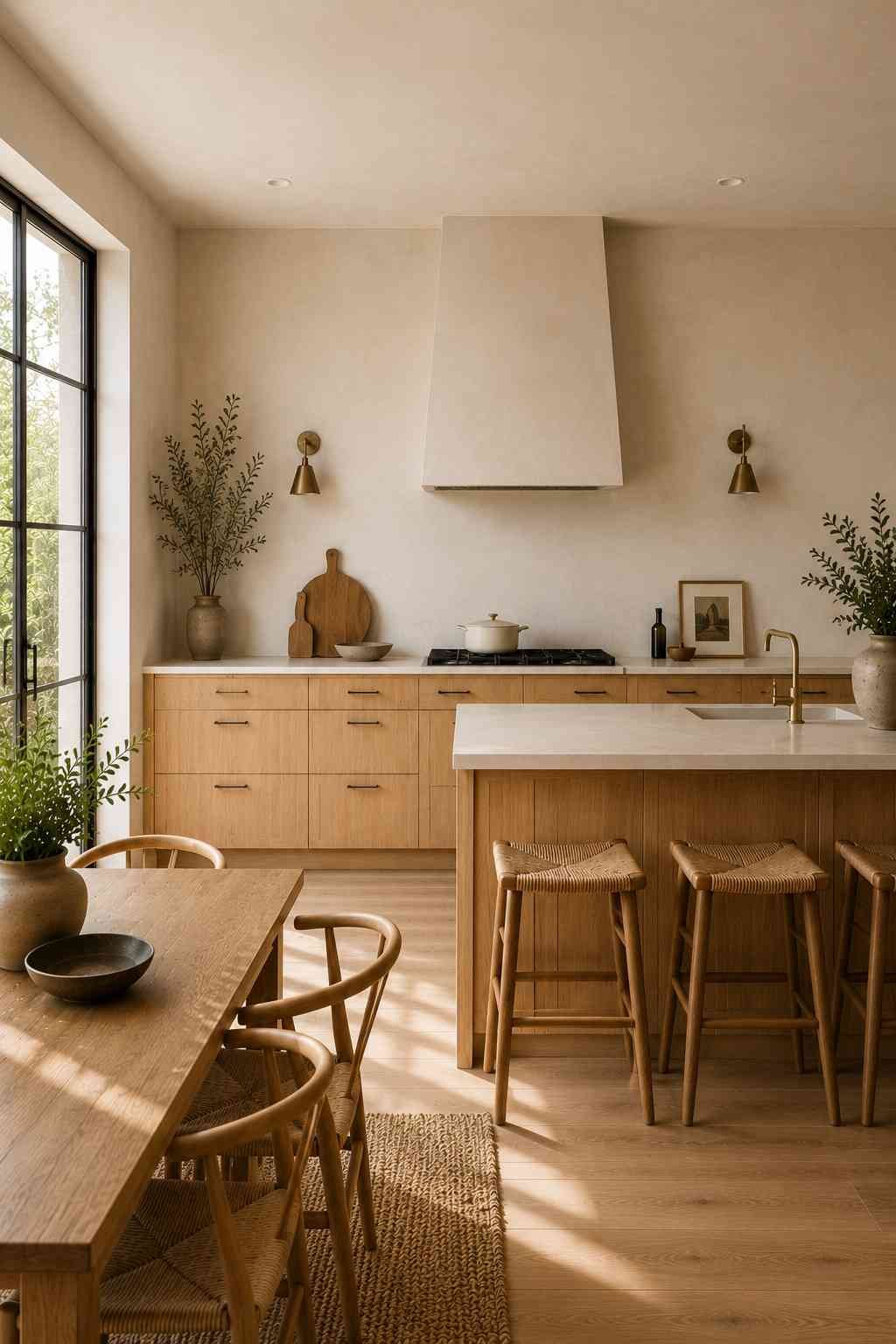
A fully European approach: skip upper cabinetry entirely, run white oak base cabinets at counter height, and finish the wall above in the same warm plaster as the hood. It reads dramatically more spacious and calm than a standard layout, but only works if you have real pantry storage elsewhere — this isn’t a fit for a kitchen that already runs tight on cabinet space. Best in kitchens with at least 9 feet of wall run so the plaster has room to breathe rather than feeling like a gap where cabinets should be.
13. Fluted White Oak Island Front
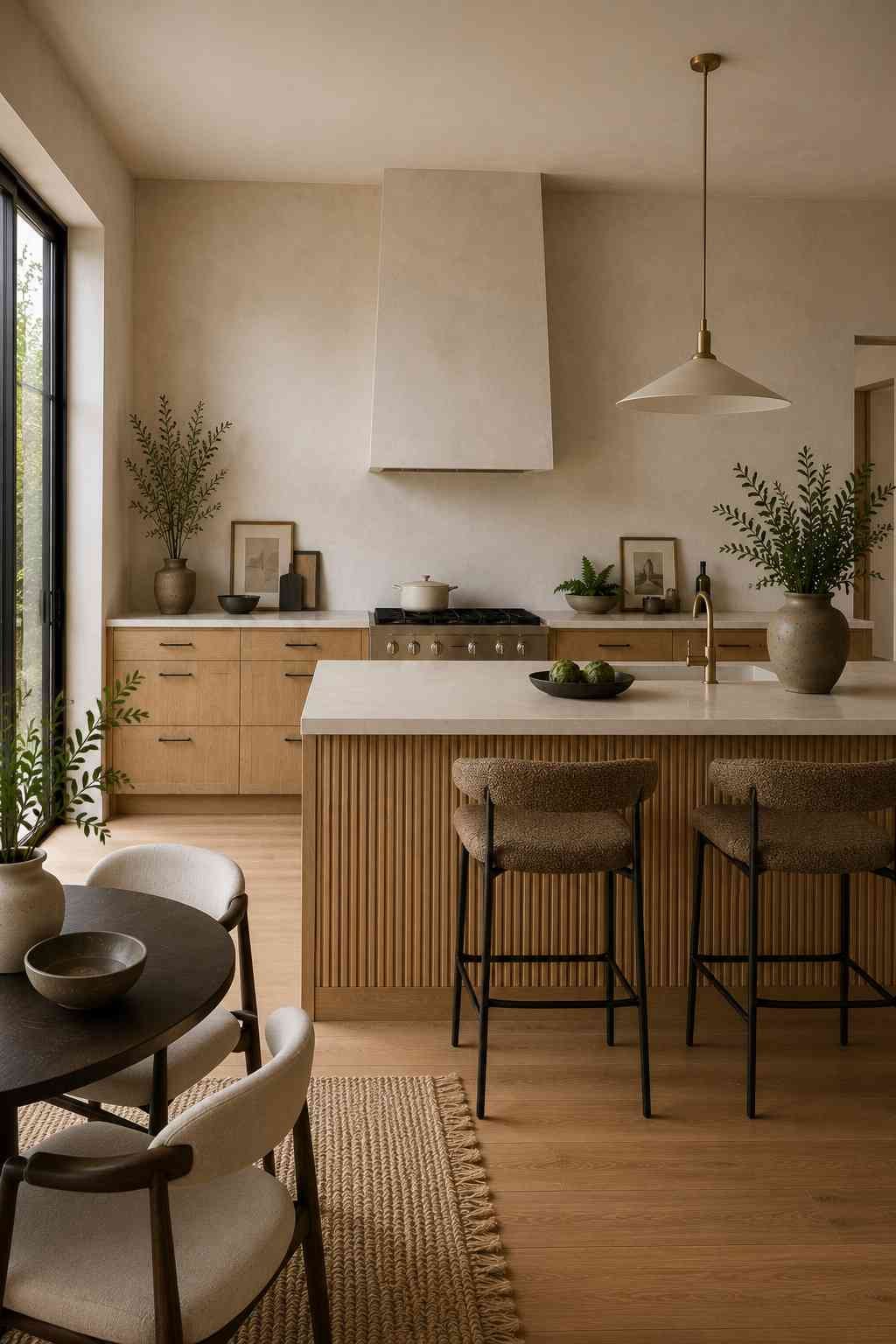
Run vertical fluting across the full island face — a series of shallow, rounded grooves milled into solid white oak — while keeping the perimeter cabinets flat and simple so the fluting stays the one statement move in the room. It catches light differently depending on the time of day, which is part of the appeal and part of the maintenance cost: grooves need more attention when wiping down spills. A honed stone counter on top, rather than anything glossy, keeps the island feeling like a single considered piece instead of two competing textures.
14. Budget Reface: Peel-and-Stick White Oak Woodgrain Over Existing Boxes
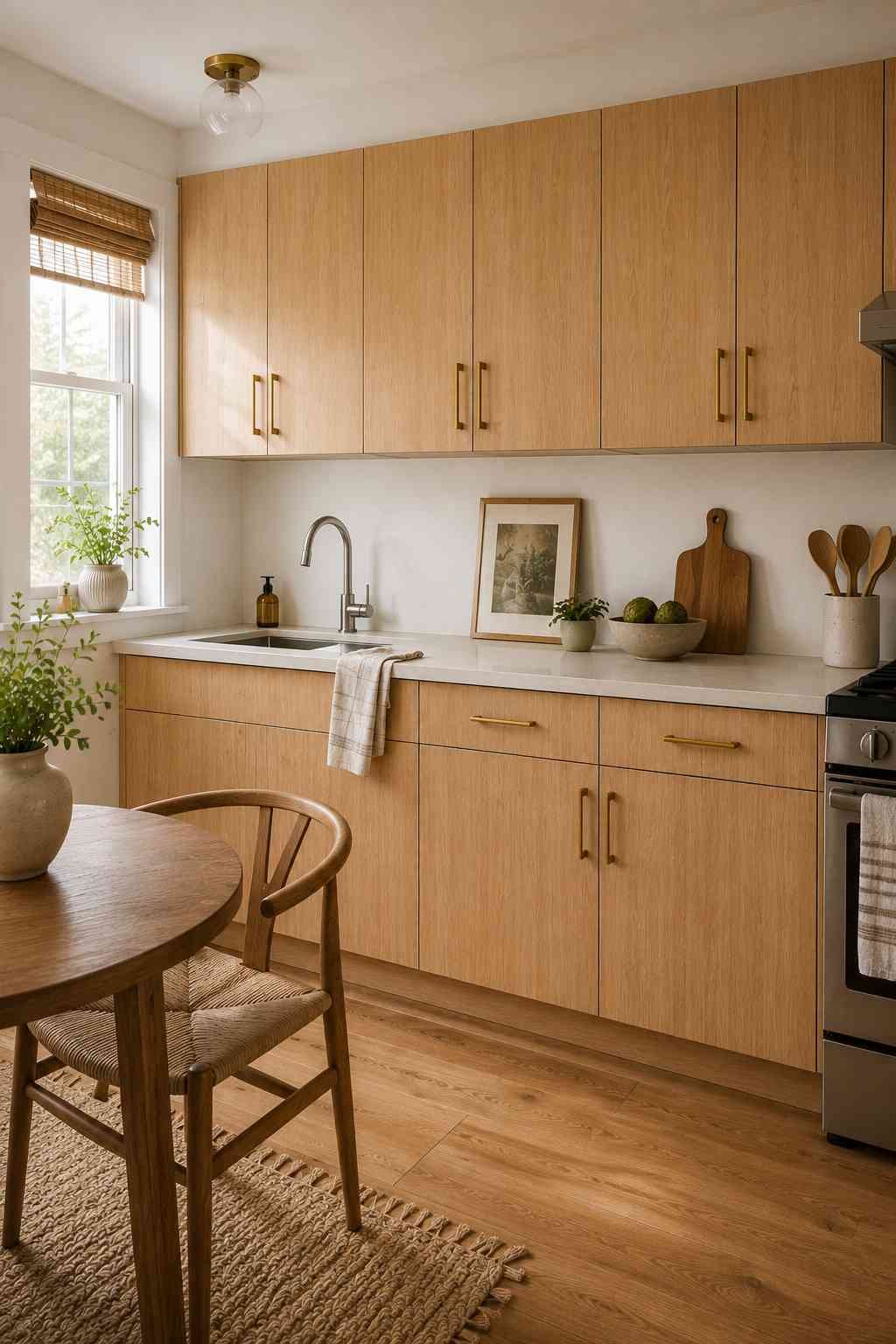
If you’re renting or not ready to gut a kitchen, quality woodgrain contact vinyl applied over existing flat-front cabinet doors gets you 70% of the visual effect for under $200 in materials. It won’t survive heavy scratching near the stove the way solid wood does, and it needs a flawlessly clean, primed surface to adhere properly, but it’s fully reversible at move-out. Pair it with swapped-in brass hardware for the biggest visual jump per dollar spent.
15. Aged Bronze Range Hood Against Natural White Oak
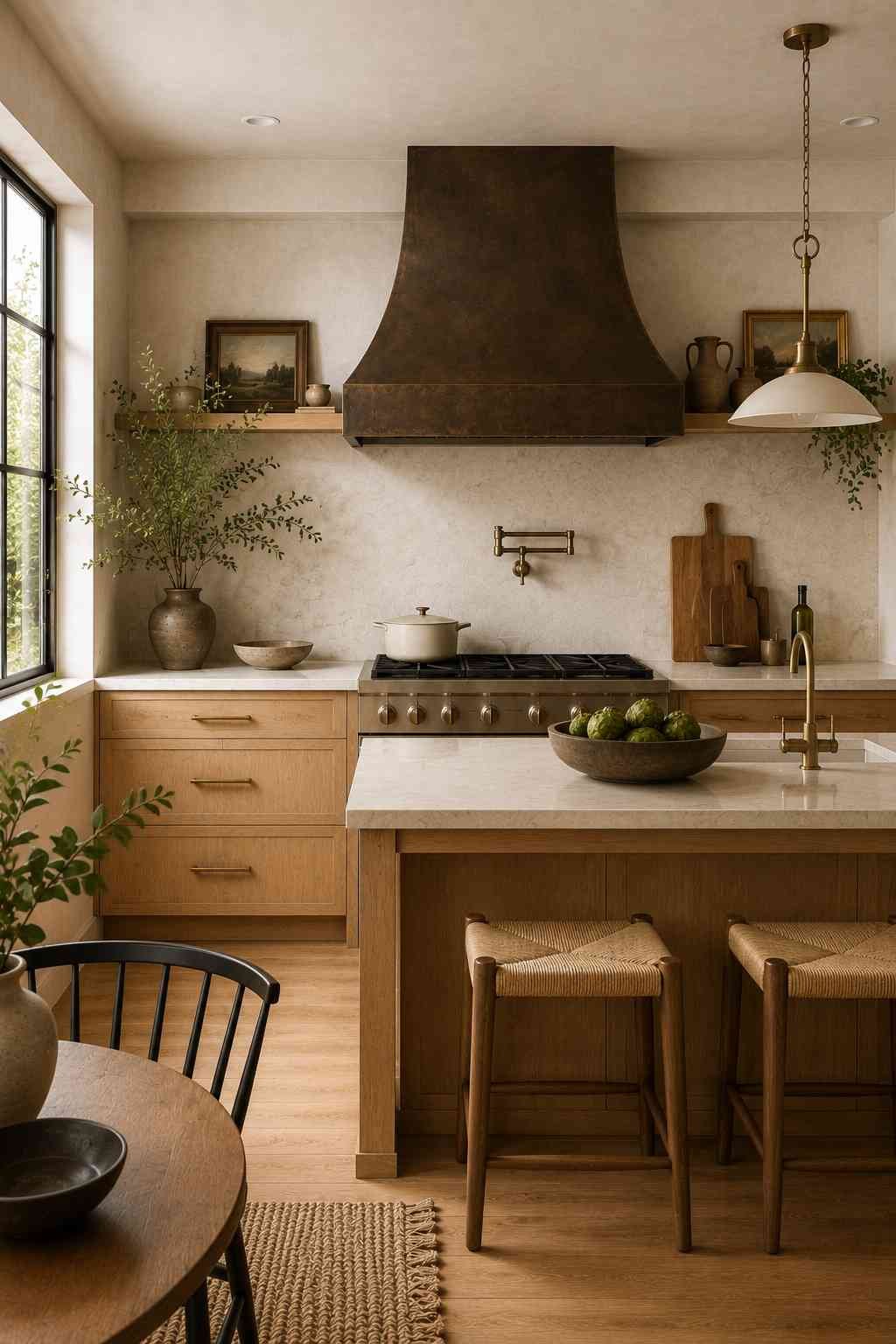
Instead of stainless steel or a plastered hood, use a hand-hammered aged bronze hood as the room’s single dark accent against otherwise all-natural white oak cabinetry. The warm, uneven patina of real aged bronze keeps it from reading cold the way stainless can, and it becomes the natural focal point of the kitchen without needing anything else to compete for attention. Bronze hoods are a genuine splurge item — budget several thousand dollars for a custom piece, and expect a 6–10 week lead time from most fabricators.
Also Check – Rustic Modern Black And White Kitchen
16. White Oak With a Zellige Terracotta Backsplash

Plain-sawn white oak lowers, a simple white quartz counter, and a full-height backsplash in handmade terracotta zellige tile with its characteristic uneven glaze and slight variation from tile to tile. The warmth of the terracotta plays directly off the warmth of the oak instead of contrasting it, which sounds risky on paper but reads rich and layered in person, especially under warm-toned pendant lighting. Zellige is hand-glazed and genuinely inconsistent tile to tile — order at least 15% overage and expect the grout lines to need more attention than machine-made subway tile.
17. Curved White Oak Island With an Organic Edge
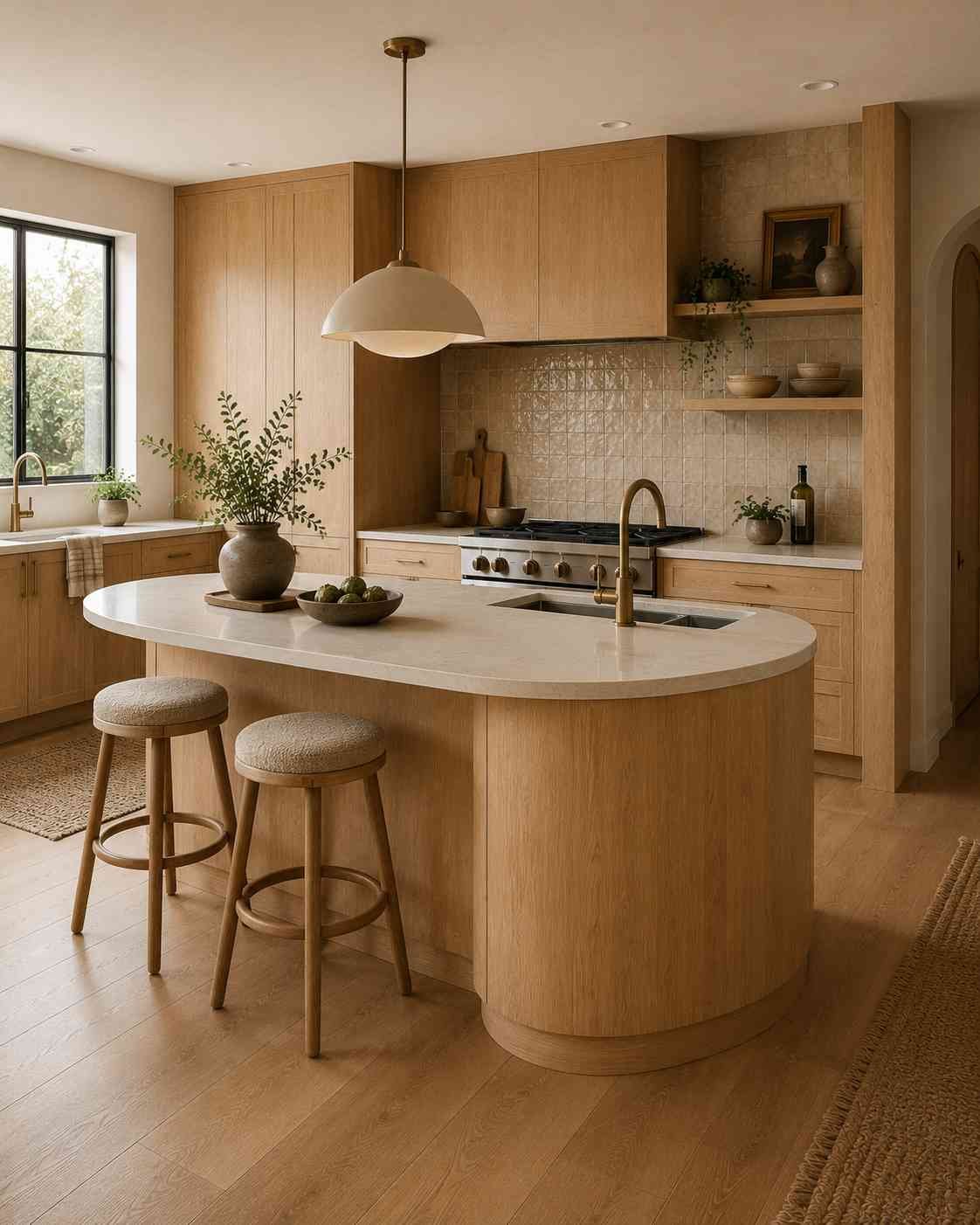
Instead of a hard rectangular island, mill one long edge of the white oak island into a soft, rounded curve — a shape that’s harder to build and costs more in labor, but softens the whole kitchen’s geometry and improves traffic flow around tight corners. Pair it with rounded stool silhouettes and a single pendant light rather than a row of three, so the curve stays the focal point. This only makes structural sense in kitchens with at least 4 feet of clearance on the curved side; anything tighter and the extra swing space gets wasted.
18. Book-Matched Stone Backsplash Rising to Meet White Oak Uppers
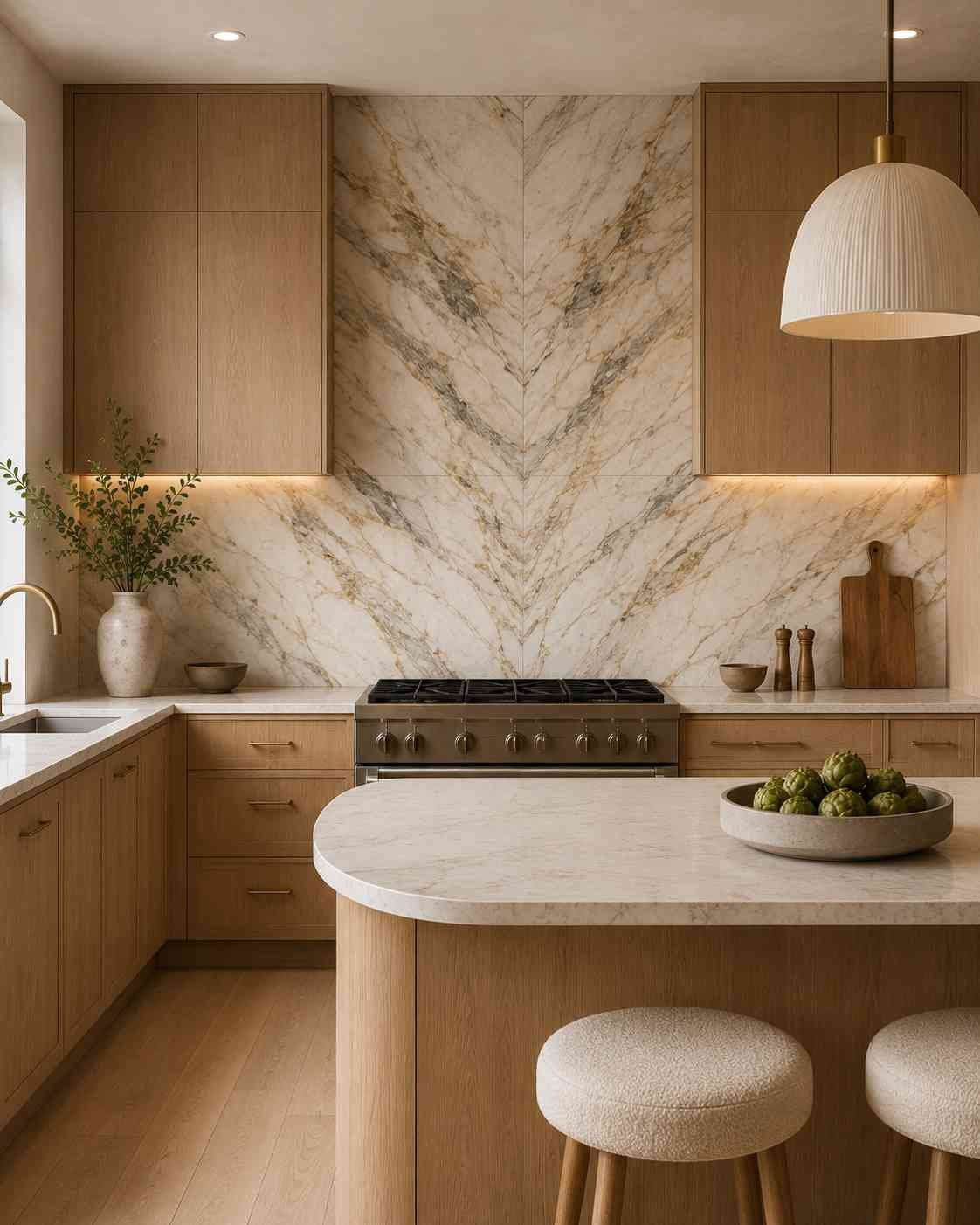
Choose a stone slab with strong veining, cut it into two mirrored pieces so the pattern reflects across the seam behind the range, and run it all the way up to meet white oak upper cabinets with no gap of tile or paint between them. It’s one of the more expensive backsplash choices you can make, since book-matched slab requires buying two full consecutive cuts from the same block, but the payoff is a single uninterrupted visual moment that reads as the kitchen’s centerpiece. Keep everything else in the room quiet — plain hardware, no busy floor pattern — so the stone has room to be the statement.
19. Reeded Glass White Oak Uppers in a Small Galley Kitchen
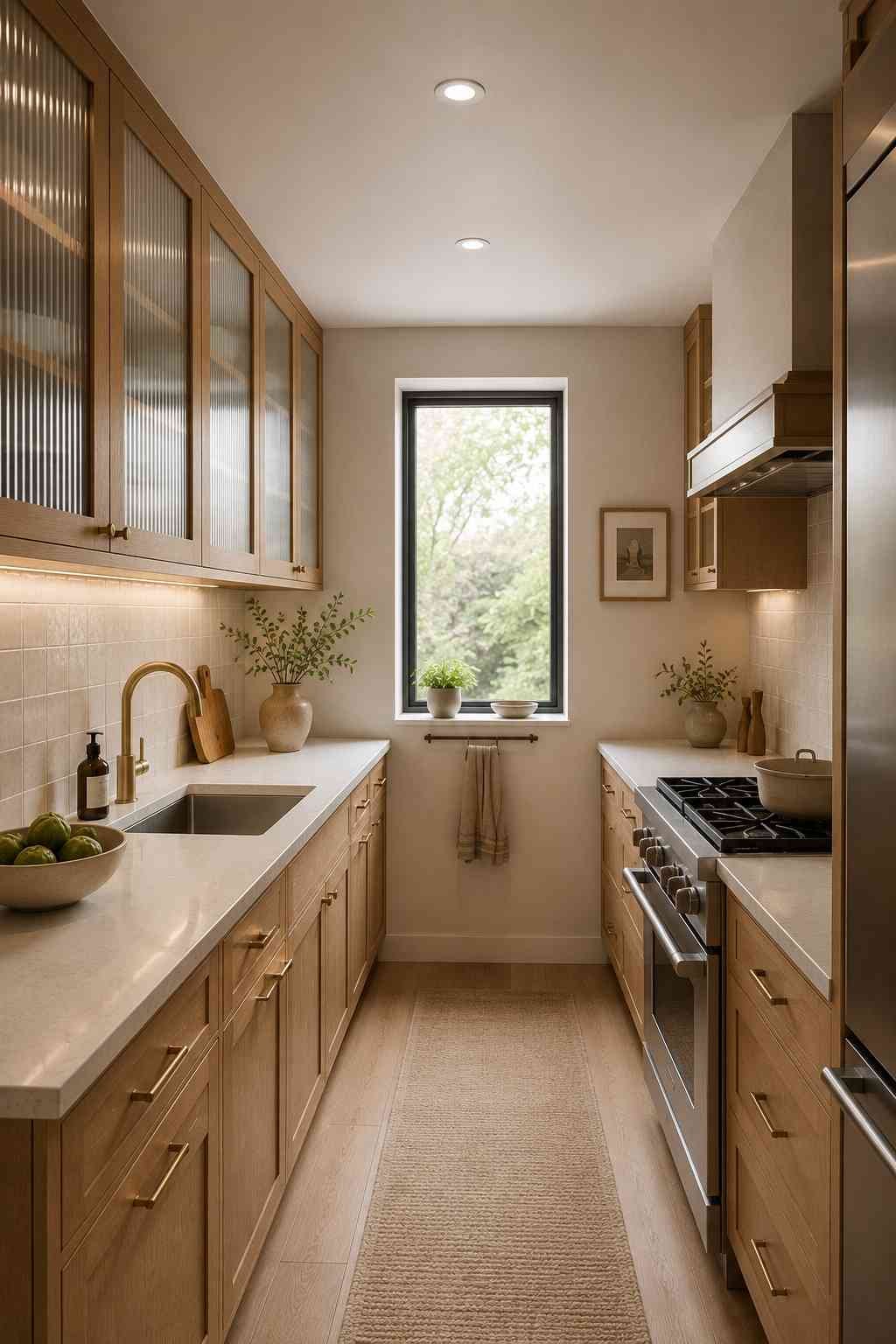
In a narrow galley layout, swap solid upper doors for reeded (fluted) glass set into simple white oak frames — it diffuses light through from any window behind, bounces brightness deeper into a tight space, and still hides the visual clutter of stacked dishware that clear glass would expose. This is one of the few upgrades on this list that actually makes a small kitchen feel bigger rather than just prettier. Keep lower cabinets solid oak for durability where the wear actually happens.
20. Black-and-White Checkerboard Floor With White Oak Cabinets
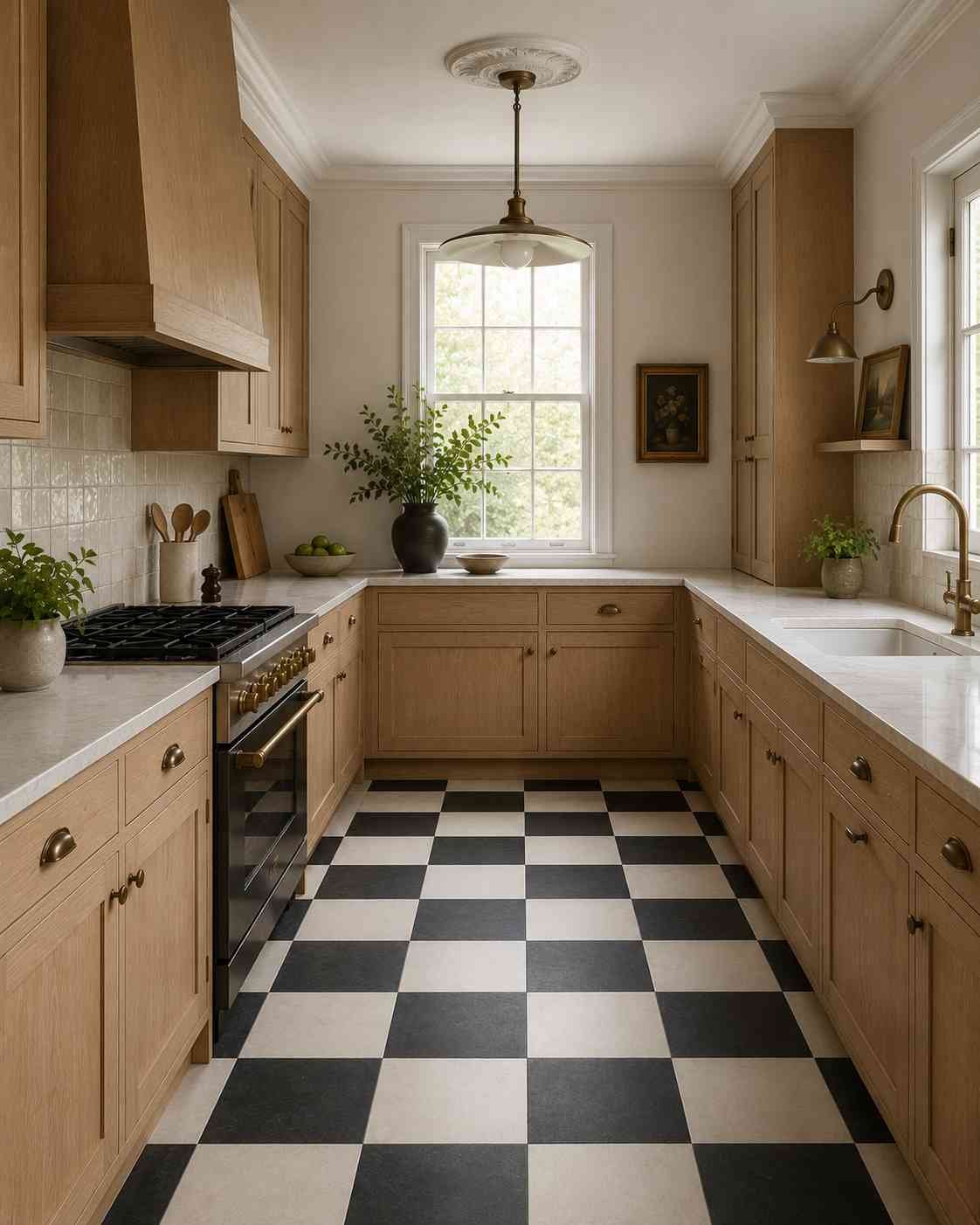
A graphic, high-contrast checkerboard floor in matte porcelain tile grounds an otherwise all-natural-wood kitchen and keeps it from reading too monochromatic or too soft. It’s a bolder, more playful direction than most of the ideas here, and it works best in kitchens that already have some architectural personality — older homes, taller ceilings, a bit of moulding — rather than a flat modern box where the floor would feel like the only thing happening. Go with a matte, not glossy, tile finish; gloss on a checkerboard pattern reads more like a diner than a kitchen.
21. Greige Walls and Brushed Nickel Hardware, the Resale-Safe Version
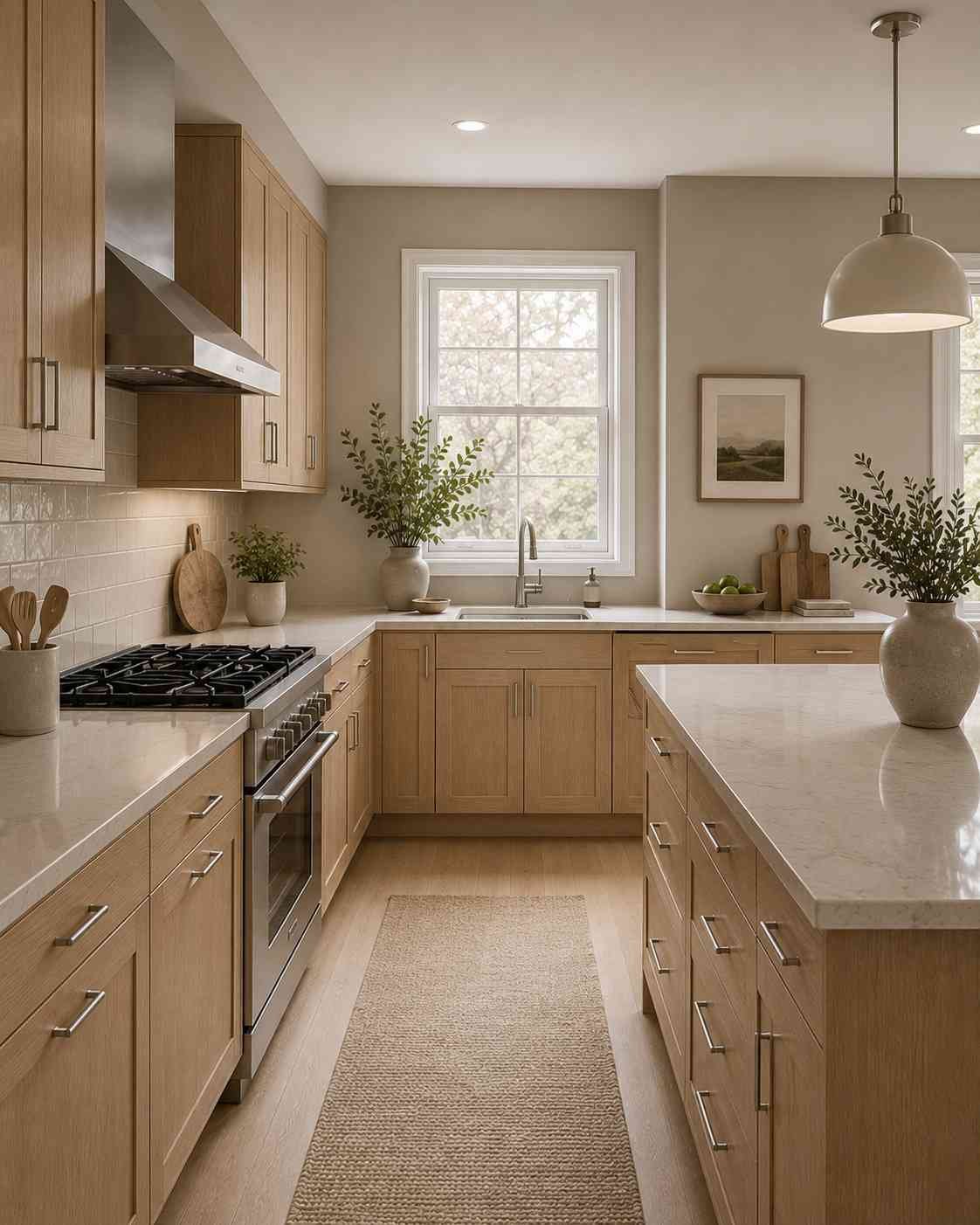
If you’re renovating a kitchen you might sell within five years, pair natural white oak with warm greige walls and brushed nickel hardware instead of a bolder finish choice — it’s the combination least likely to feel dated or polarizing to a future buyer walking through an open house. It’s not the most exciting idea on this list, and I’ll say that plainly, but it’s the one that protects your investment if resale is genuinely a factor in your decision. Save the boldness for things you can change cheaply later, like a runner rug or open shelf styling.
22. Dark Herringbone Wood Floor Against Light White Oak Cabinets
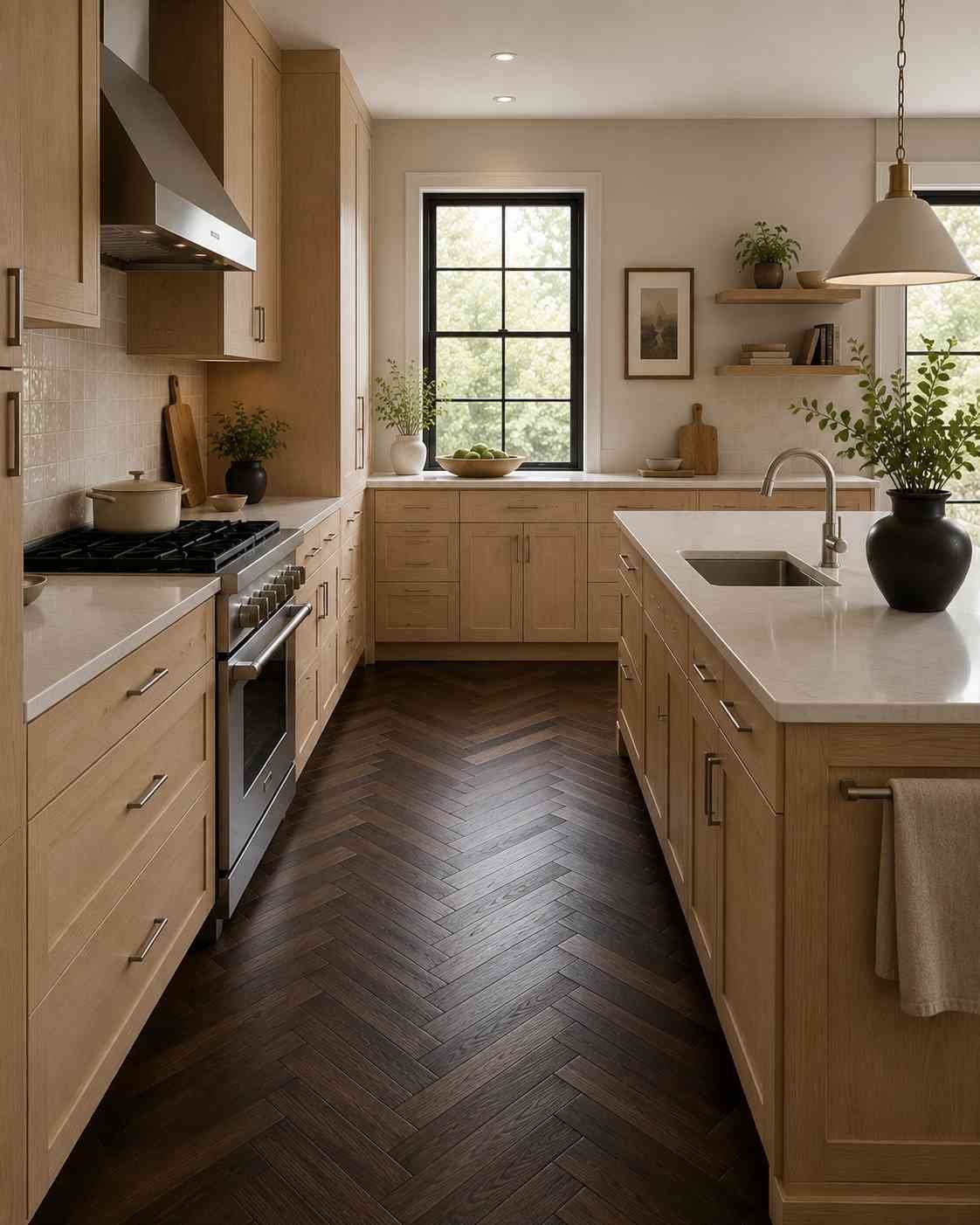
Instead of matching your floor to your cabinets, go the opposite direction: a dark walnut or ebonized oak herringbone floor underneath light, natural white oak cabinetry. The contrast reads more intentional and more current than a monochromatic wood-on-wood kitchen, and herringbone’s diagonal pattern adds movement to a floor that would otherwise just be a dark backdrop. This pairing is genuinely one of my favorite combinations from any kitchen I’ve watched get built, mostly because it stops the room from reading as “one big wood blob” under warm lighting.
23. Whitewashed White Oak in a Coastal, Light-Filled Kitchen
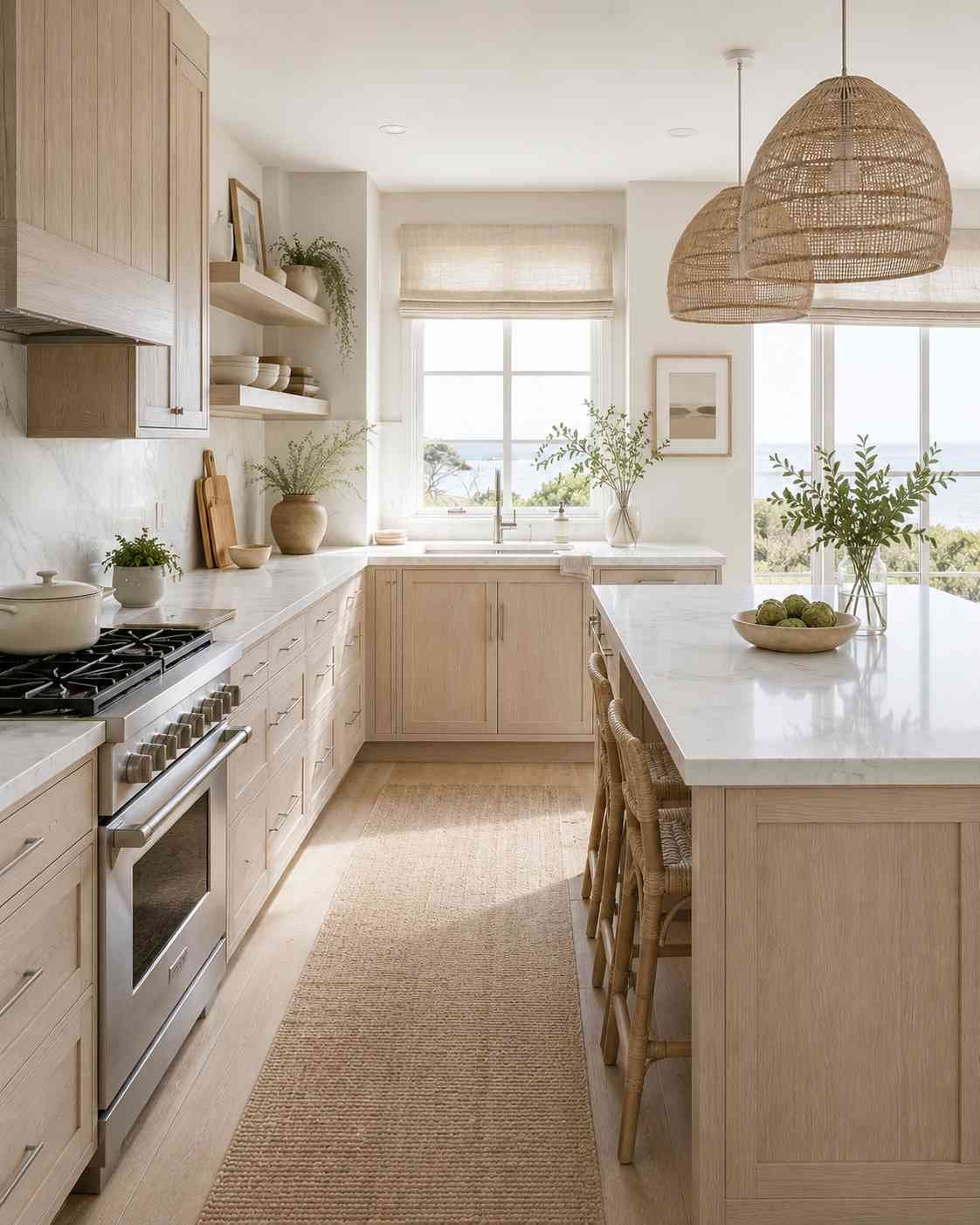
Take the limed or whitewashed white oak finish from idea #3 and build the whole kitchen around it — white oak cabinets, white oak open shelving, pale linen roman shades instead of heavy drapery, and a honed white marble counter with soft grey veining. It leans Scandinavian-coastal rather than farmhouse, especially with woven rattan pendant lights instead of anything metallic. This direction needs genuine natural light to work; in a north-facing or low-light kitchen, this much pale wood and white surface can read washed-out rather than airy.
Before You Pick One
Don’t try to combine more than two or three of these at once — that’s usually the difference between a kitchen that feels curated and one that feels like a Pinterest board with no editing.
Choose your cabinet finish first, since it’s the hardest and most expensive thing to change later, then let your counter, backsplash, and hardware respond to it rather than fighting each other for attention.
And if you’re not sure your kitchen gets enough natural light for a pale or whitewashed finish, test a sample door in your actual space before committing to a full run.
The Yellowing Problem Nobody Mentions Before You Buy

Every clear-coated white oak cabinet ages. It’s not a defect, it’s the wood — white oak has tannins that react to UV exposure and oxidize over time, shifting from its fresh-cut pale gold toward a deeper amber.
My kitchen faces south and picked up noticeably more warmth in the first year than my friend’s north-facing kitchen did in two.
The finish matters more than people expect. A standard oil-based polyurethane accelerates yellowing because the oil itself ambers with age, on top of whatever the wood is doing underneath.
A water-based conversion varnish or a hardwax oil finish slows this down considerably, since it doesn’t add its own amber tint on top of the wood’s natural shift.
If you’re set on white oak and worried about the color drifting, ask your cabinet maker specifically what topcoat they’re using and whether it’s UV-stabilized — not every shop defaults to one that is.
Getting Contrast Right When Everything Starts Out the Same Color
The single biggest mistake I see in all-white-oak kitchens is treating every wood surface as interchangeable.
Cabinets, floor, and open shelving in the exact same tone of white oak reads flat and a little cheap, even when every individual material is expensive.
The fix isn’t complicated: pick one wood surface to be your dominant tone, and let everything else shift at least one shade warmer or cooler, or switch materials entirely.
This is why ideas like the dark herringbone floor against light cabinets, or the black steel-frame glass uppers, keep showing up in the strongest white oak kitchens — they build in contrast on purpose instead of leaving it to chance.
If your floor is already white oak and you’re not planning to replace it, that’s a good argument for choosing a slightly different cut or stain on your cabinets rather than matching them exactly.
Matching (or Deliberately Not Matching) White Oak Floors to Cabinets
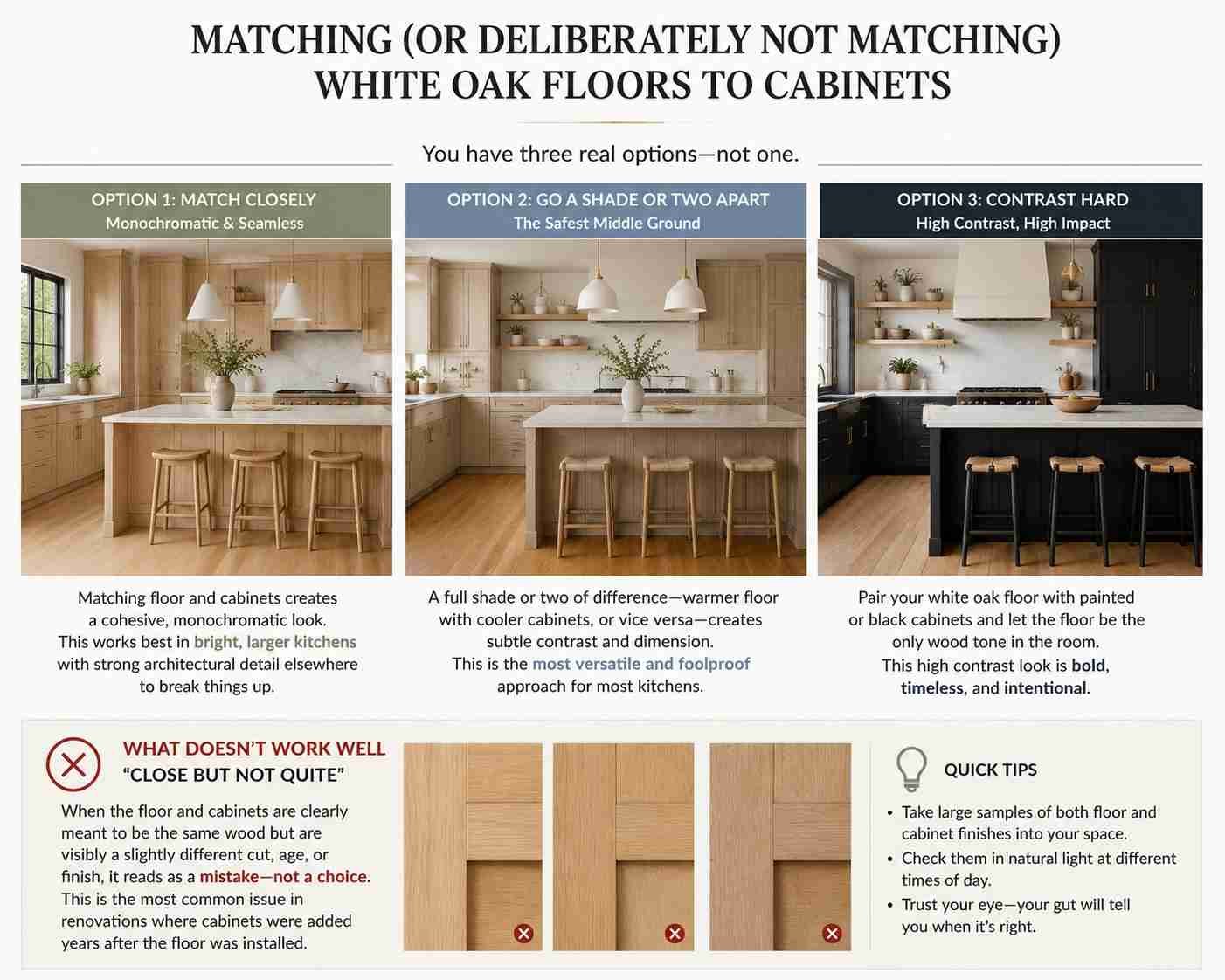
If you already have white oak floors and you’re adding white oak cabinets, you have three real options, not one.
You can match them closely and accept a monochromatic look, which works best in bright, larger kitchens with strong architectural detail elsewhere to break things up.
You can go a full shade or two apart — a warmer honey floor with cooler, more grey-toned cabinets, or vice versa — which is the safest middle ground for most kitchens.
Or you can contrast hard, pairing your existing oak floor with painted or black cabinets and letting the floor be the only wood tone in the room.
What doesn’t work well: matching “close but not quite,” where the floor and cabinets are clearly meant to be the same wood but are visibly a slightly different cut, age, or finish.
That reads as a mistake rather than a choice, and it’s the single most common issue I see in kitchen renovations that added cabinets years after the floor went in.
What White Oak Cabinets Actually Cost
Prices vary a lot by region and shop, but as a rough guide: semi-custom white oak cabinetry typically runs somewhere in the $500–$900 per linear foot range installed, with fully custom work from a specialty cabinet maker climbing well past that, especially for book-matched or quarter-sawn material.
That’s meaningfully more than a comparable painted MDF shaker cabinet, which is one of the real reasons budget-tier ideas like the peel-and-stick reface exist on this list not everyone can or should spend cabinet-grade lumber money on a kitchen they’re renting or planning to leave in two years.
Where you can save without sacrificing the look: use white oak on visible runs (island, perimeter at eye level) and a lower-cost material like painted MDF or a white-oak veneer on less visible cabinetry, like a pantry wall or upper cabinets that sit above sight line.
Nobody touring your kitchen is running their hand along the inside of your pantry to check if it’s solid wood.
Mistakes I’d Fix If I Started Over
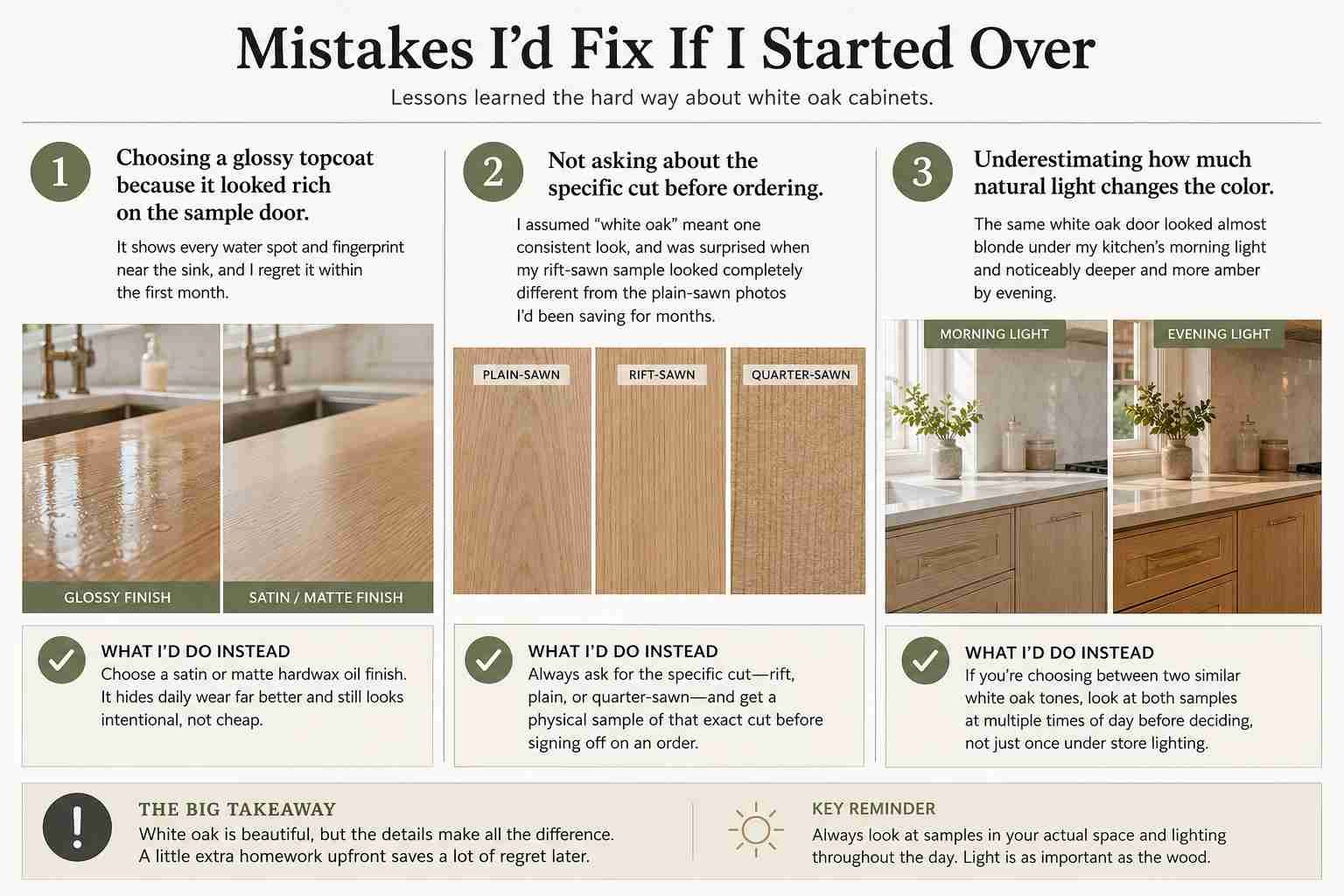
Choosing a glossy topcoat because it looked rich on the sample door — it shows every water spot and fingerprint near the sink, and I regret it within the first month. A satin or matte hardwax oil finish hides daily wear far better and still looks intentional, not cheap.
Not asking about the specific cut before ordering. I assumed “white oak” meant one consistent look, and was surprised when my rift-sawn sample looked completely different from the plain-sawn photos I’d been saving for months.
Always ask for the specific cut — rift, plain, or quarter-sawn — and get a physical sample of that exact cut before signing off on an order.
Underestimating how much natural light changes the color. The same white oak door looked almost blonde under my kitchen’s morning light and noticeably deeper and more amber by evening.
If you’re choosing between two similar white oak tones, look at both samples at multiple times of day before deciding, not just once under store lighting.
What I’d Tell Someone Starting From Scratch
Pick your cut and finish before anything else — cabinets are the hardest and most expensive part of this to undo.
Get a real sample door, not a paint chip or a photo, and live with it in your kitchen for at least a week before you commit to an entire run.
And if budget is the real constraint, don’t force full solid white oak everywhere; a mix of solid wood where it’s seen and a lower-cost material where it isn’t will look just as intentional in photos and save you thousands in the process.
 Sumit Banerjee
[…] how much warmth wood tones alone can add to a kitchen, I went deep on that specific pairing in my white oak kitchen cabinets piece, it’s a good companion read if you’re torn between leading with the cabinet color […]