
Beige gets a bad rap. Somewhere along the way it became shorthand for “safe,” the color you pick when you can’t decide on anything else.
I used to think that too, until I noticed which kitchens I kept coming back to. A surprising number of them were beige.
Here’s the thing nobody mentions: beige isn’t one color, it’s a whole family. Warm sand, cool greige, soft oatmeal, dusty putty. Each one looks completely different depending on what’s next to it.
Pair warm sand with brass hardware and white oak floors and you get a sunlit, almost Mediterranean feel.
Pair cool greige with matte black and honed stone and it reads more like a minimal hotel kitchen. Same color family, two totally different rooms.
Beige also happens to be one of the most forgiving choices for a kitchen you don’t plan to redo in five years. It hides everyday mess better than white.
It won’t clash with whatever countertop or flooring you already have. And it tends to age well instead of looking dated.
Below are 21 ways to actually use beige cabinets in a real kitchen, not a showroom. Some lean traditional, some are more modern, a few are built for small kitchens where there’s no room for a mistake.
Pick what fits how you live, not what’s trending in your feed this month.
1. Warm Sand Beige with Brushed Brass Hardware and White Oak Floors
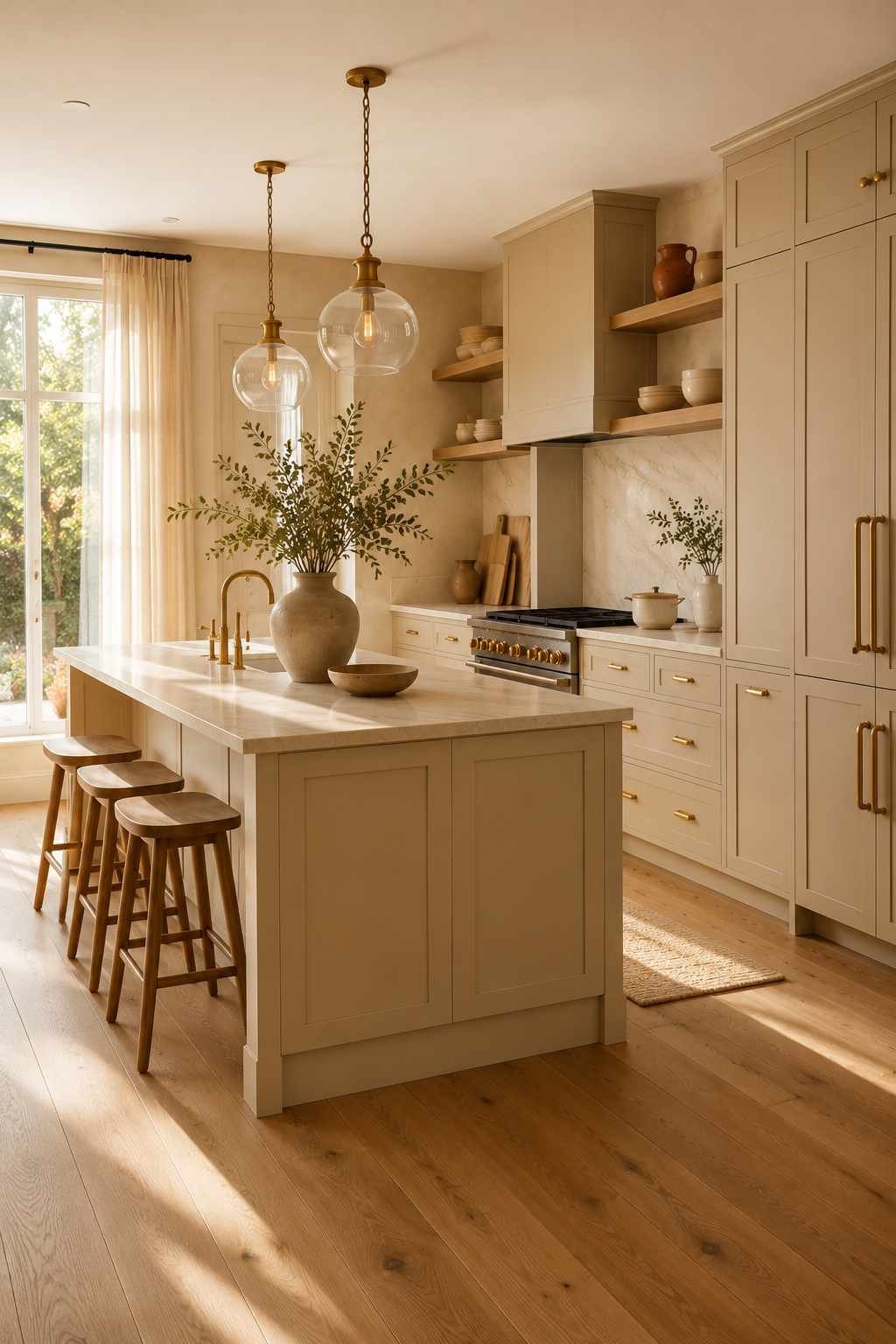
This is the pairing I’d point to first if someone wanted proof that beige can feel rich rather than flat. A warm, sand-toned beige, something with a yellow undertone rather than gray, sits beautifully against white oak flooring, since both colors come from the same warm family and never fight each other. Brushed or unlacquered brass hardware adds just enough shine to keep it from feeling too soft. If you want to see how much warmth wood tones alone can add to a kitchen, I went deep on that specific pairing in my white oak kitchen cabinets piece, it’s a good companion read if you’re torn between leading with the cabinet color or the floor.
2. Greige Cabinets with Matte Black Hardware for a Quieter, Modern Look
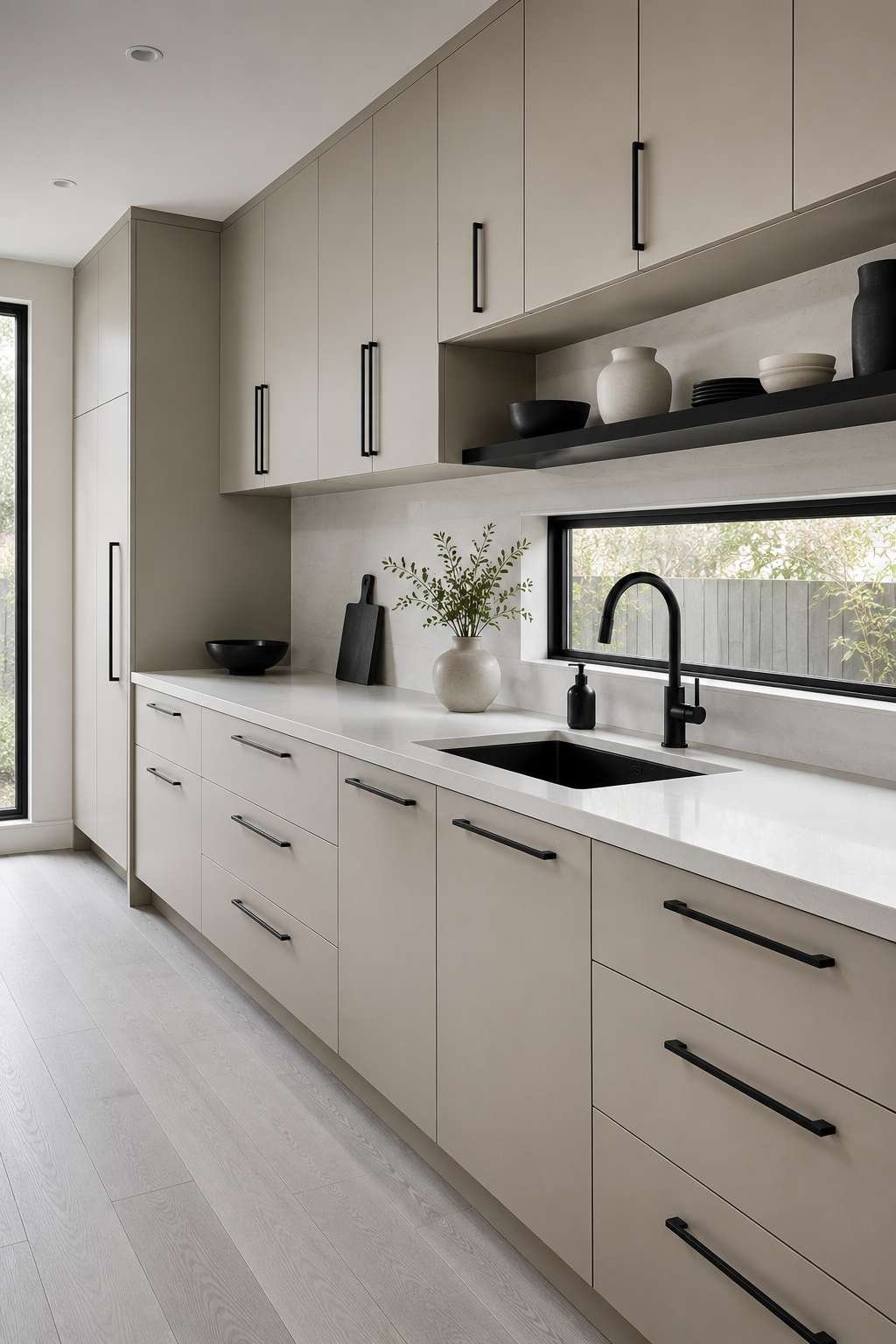
If warm sand feels like too much for your space, greige, beige with a gray undertone, moves the whole kitchen in a cooler, more modern direction. It pairs naturally with matte black bar pulls, a plain white or light-veined quartz counter, and flat-panel doors instead of shaker. The result reads calm and current rather than trendy, which matters if you’re not planning to touch the kitchen again for a decade.
3. Beige Shaker Cabinets with a Handmade Zellige Backsplash
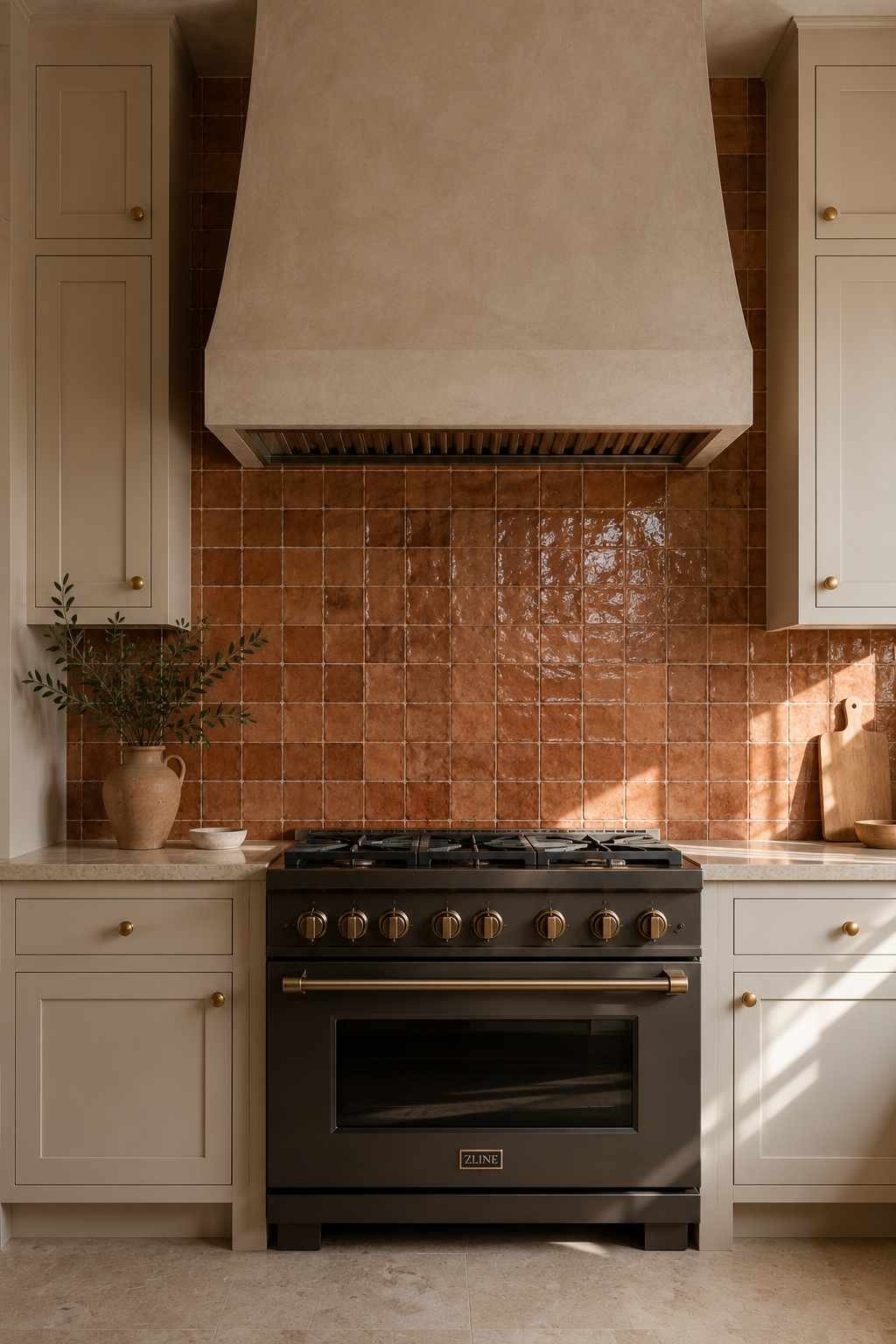
Keep the cabinets simple, plain shaker doors, and let a handmade zellige tile backsplash in a warm terracotta or clay tone do the visual work. Zellige has natural texture and slight color variation from tile to tile, which beige cabinets are calm enough to let shine instead of competing with it. This combination works especially well behind a range, where the tile catches light differently throughout the day.
4. Two-Tone Kitchen: Beige Perimeter Cabinets with a Walnut Island
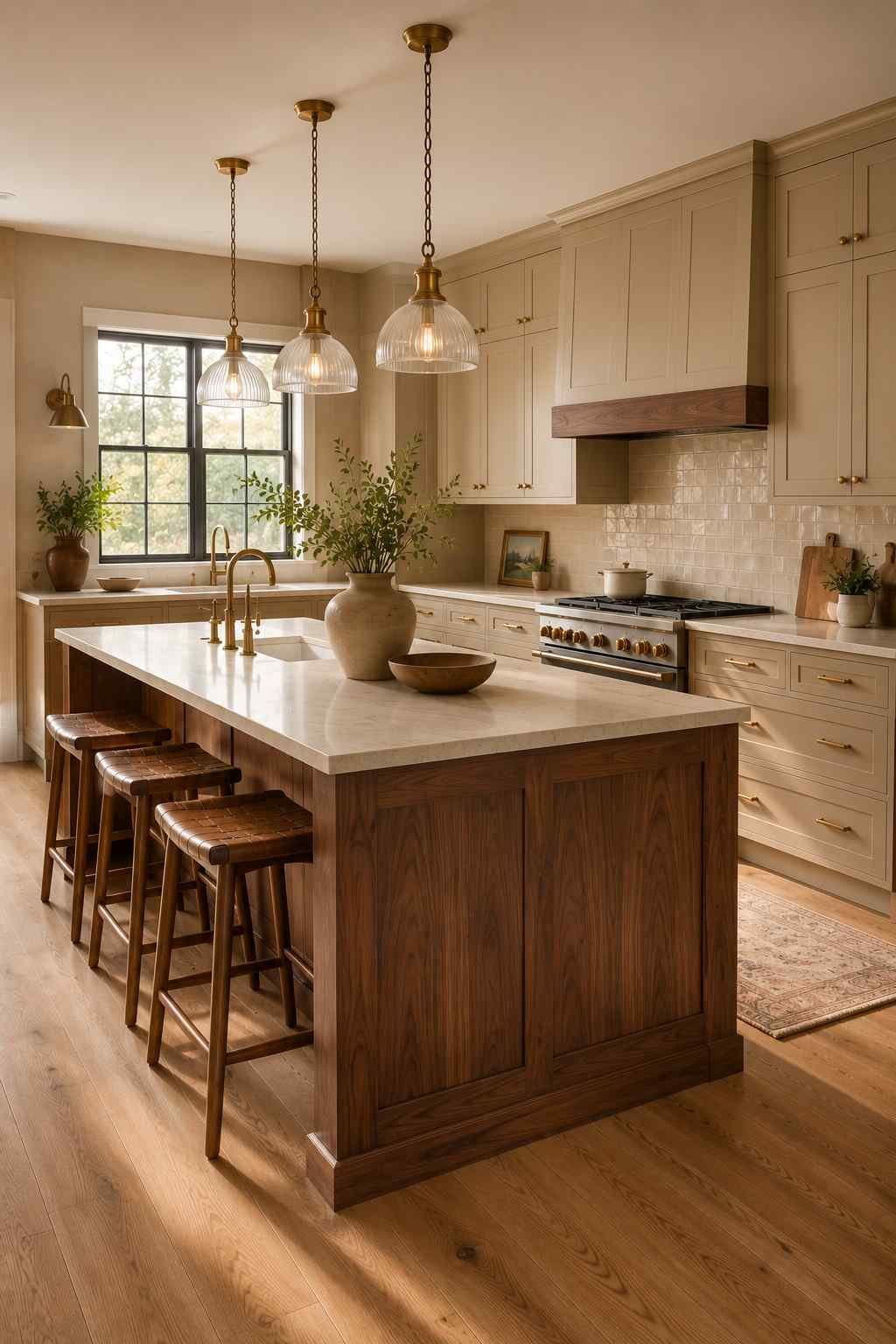
Two-tone kitchens are everywhere right now, but most examples pair white with wood. Beige with a dark walnut island is a quieter version of the same idea, and honestly a more forgiving one, since beige and walnut already share enough warmth that they don’t need to match perfectly. One practical note from watching this go wrong more than once: keep the wood tones in the same warmth family. A cool-toned walnut next to a warm beige can look slightly off, even if you can’t immediately say why.
5. Fluted Beige Cabinet Fronts on the Island Only
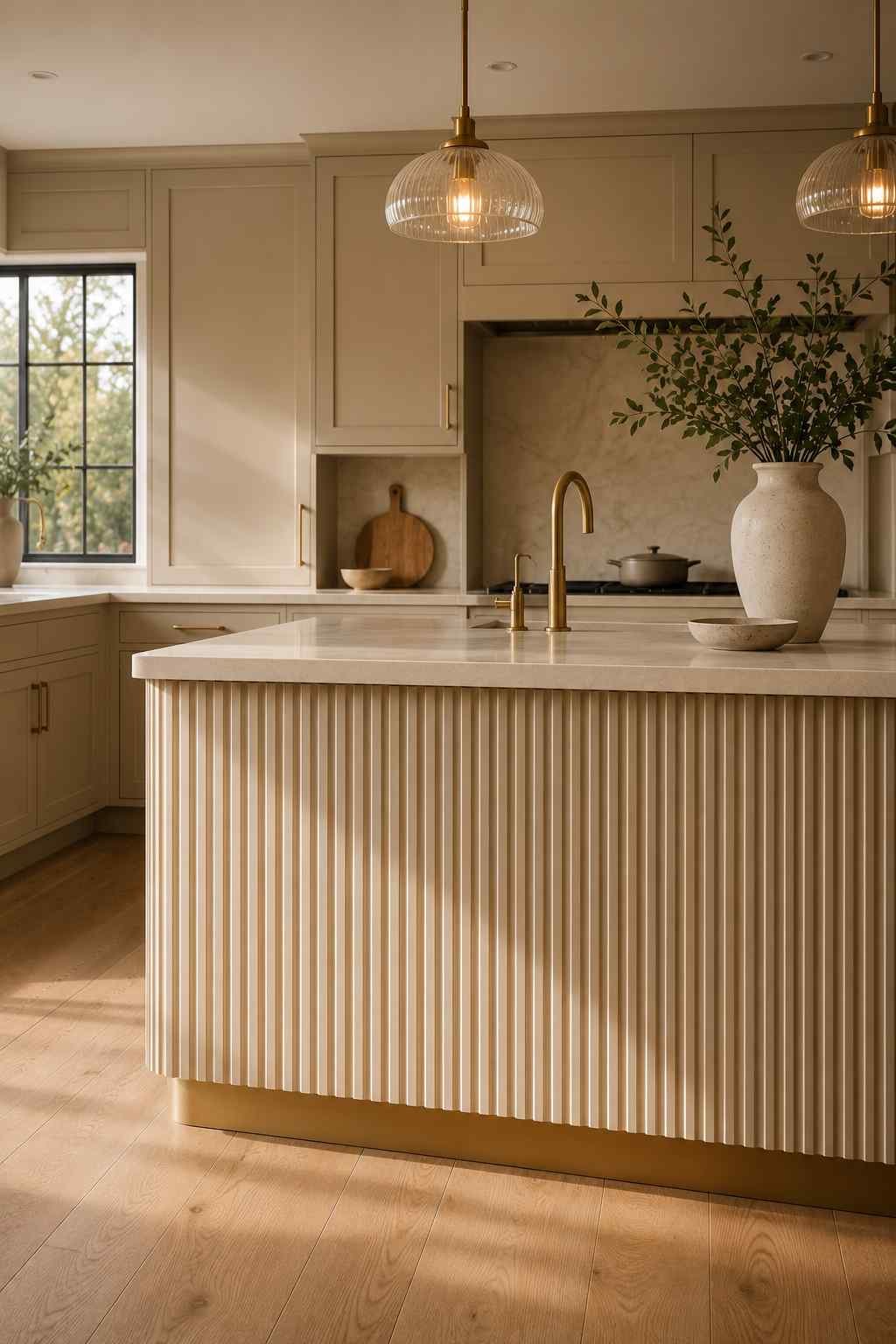
Full fluted or reeded cabinetry throughout a kitchen gets expensive fast and can visually overwhelm a smaller room. Using the detail only on the island, with plain shaker or flat-panel doors everywhere else, gives you the texture without the cost or the visual noise. It also naturally draws the eye to the island as the room’s focal point, which is usually where you want the attention anyway.
6. Beige Cabinets with a Full Marble Slab Backsplash
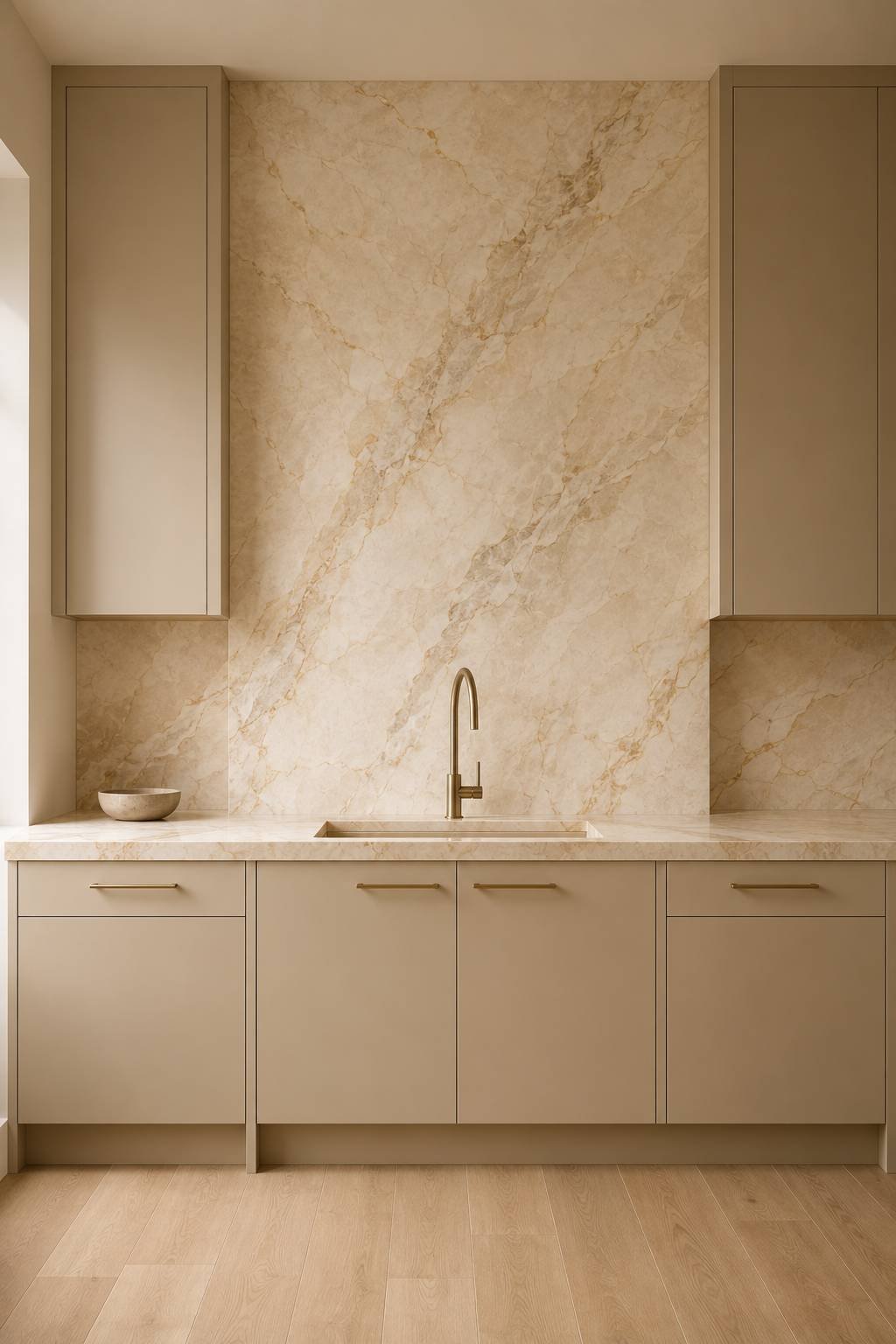
For a quieter, more expensive-feeling kitchen, run the same marble from the countertop straight up the wall as a slab backsplash, ideally with warm, subtle veining rather than stark gray-and-white marble. Keep hardware minimal, slim brass or nickel bar pulls, and let the stone be the only pattern in the room. This is one of the few beige pairings where I’d actually recommend keeping everything else this restrained; adding a second pattern anywhere else usually makes it feel busy instead of luxe.
7. Galley Kitchen: Beige Lower Cabinets with Open Shelving Up Top
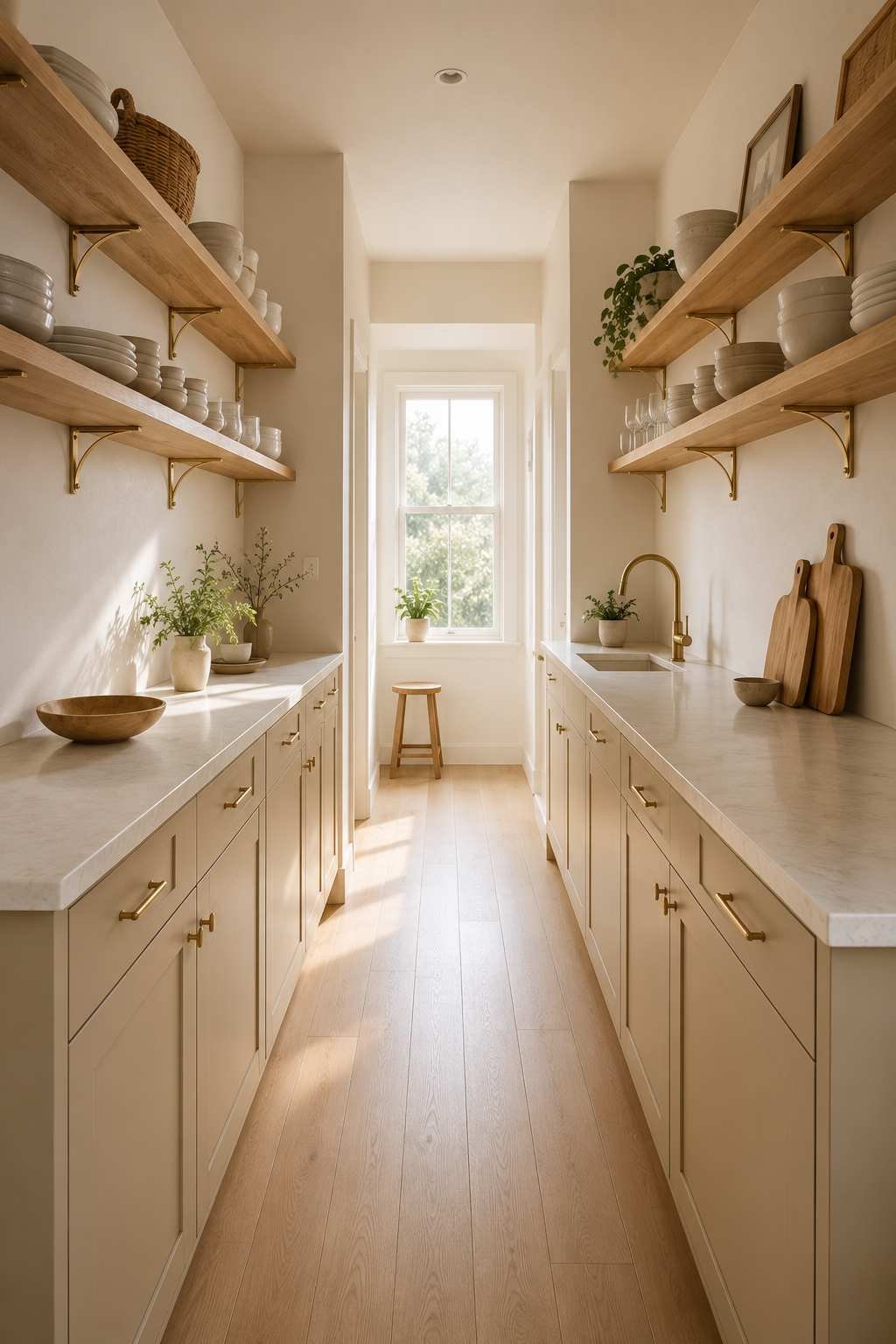
Galley kitchens can feel like a tunnel if both walls are floor-to-ceiling cabinets. Keeping the lower cabinets beige and swapping the uppers for open wood or brass shelving opens up the sightline and makes the whole space feel taller and wider than it actually is. It does mean keeping your everyday dishware looking presentable, which isn’t for everyone, but in a genuinely narrow kitchen it’s one of the more effective tricks I’ve come across.
8. Beige Cabinets Against Black Steel Window Frames
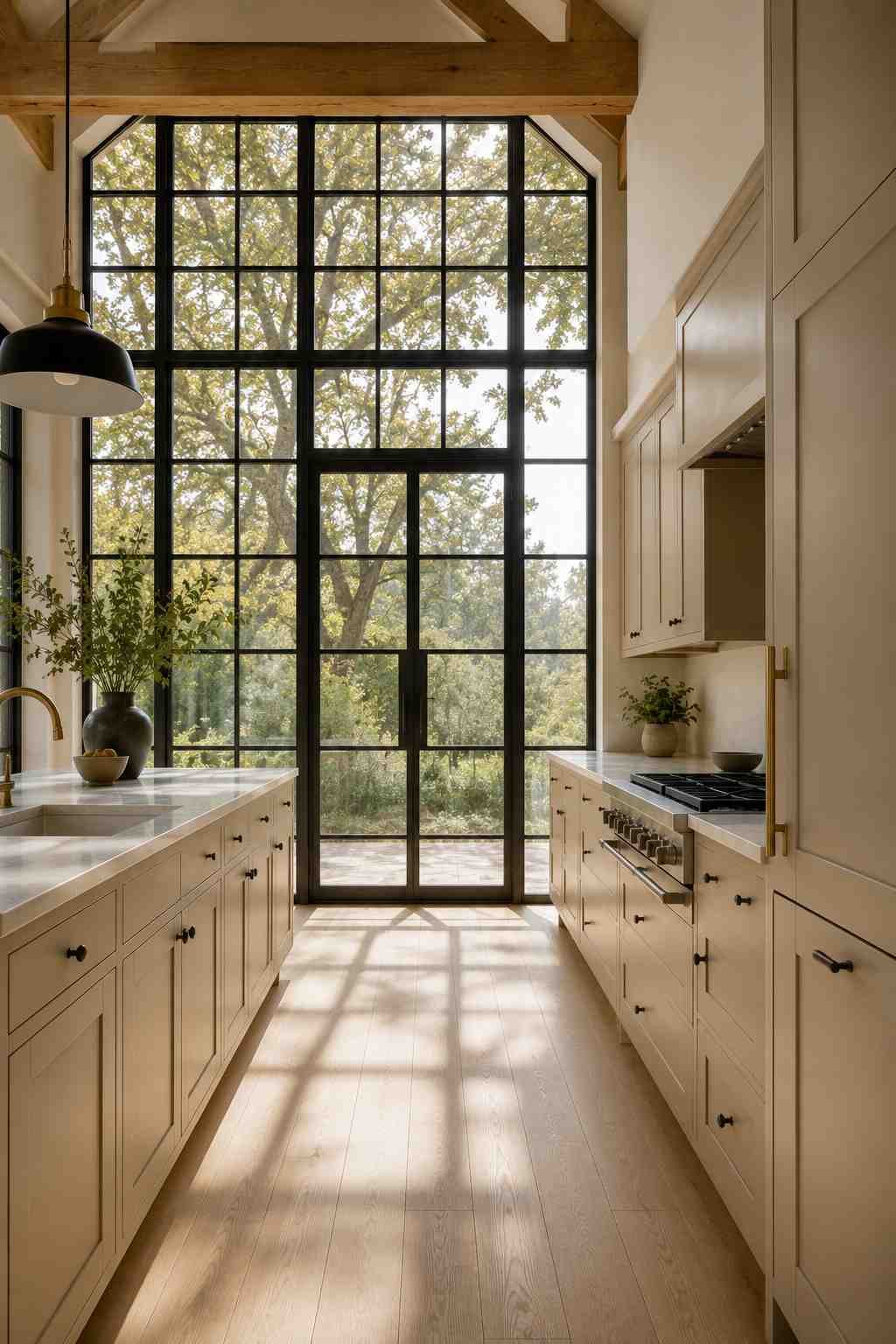
Not every contrast has to come from hardware. If your kitchen has, or can have, black steel window frames or a black steel door, that alone provides enough of an anchor that beige cabinets don’t need much else. This combination leans slightly industrial-transitional and works particularly well in kitchens with high ceilings or larger windows, where the black frames read as architecture rather than an accessory.
9. Beige Cabinets with a Patterned Cement Tile Floor
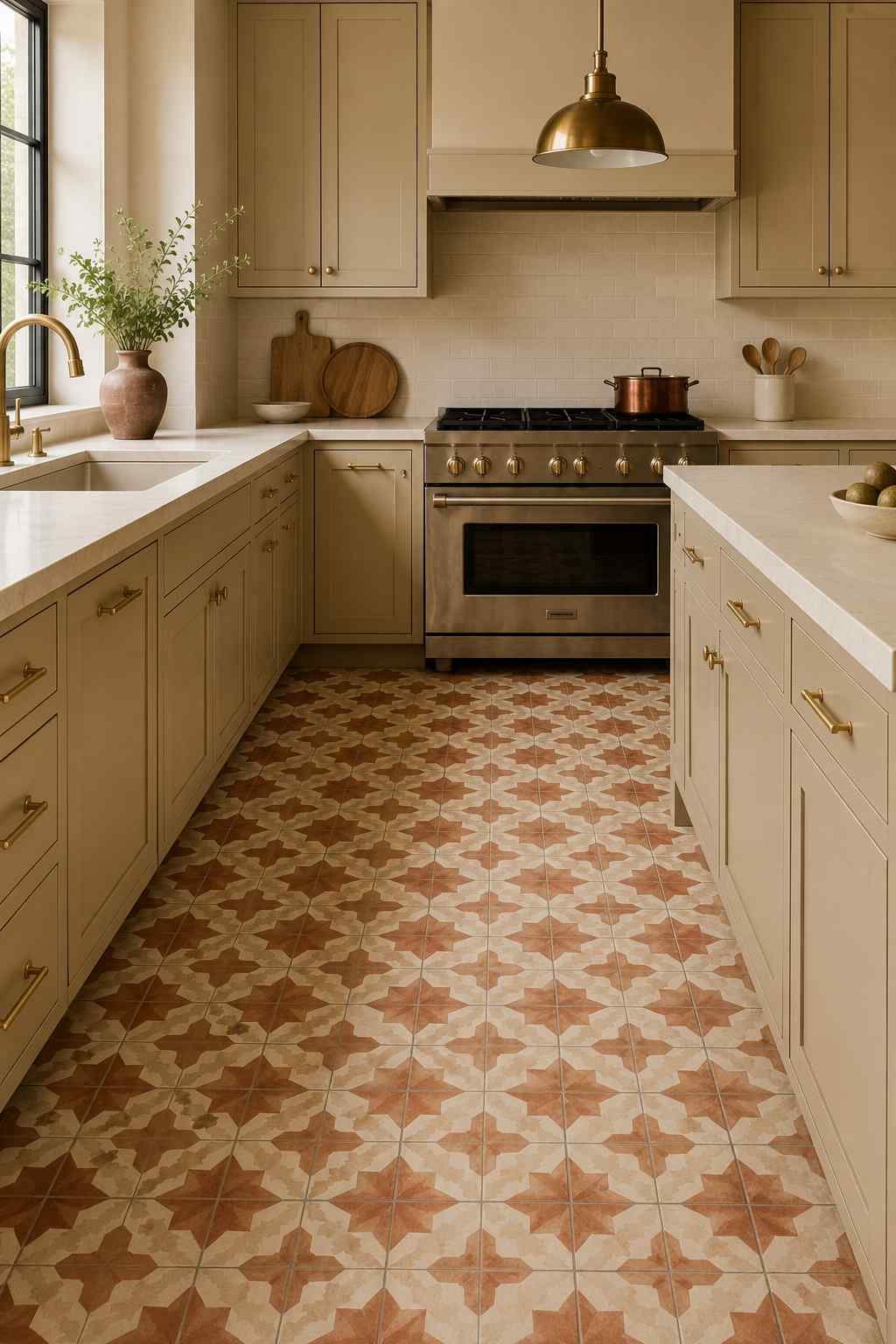
Let the floor carry the pattern instead of the cabinets. An encaustic-style cement tile in warm tones, terracotta, cream, faded rust, grounds a kitchen with beige cabinets in a way that feels collected rather than decorated. The trick is restraint everywhere else: plain cabinet doors, simple hardware, a quiet countertop. One patterned surface is interesting; two competing for attention in the same room usually isn’t.
10. An All-Tonal Beige Kitchen: Cabinets, Walls, and Counter in Related Shades
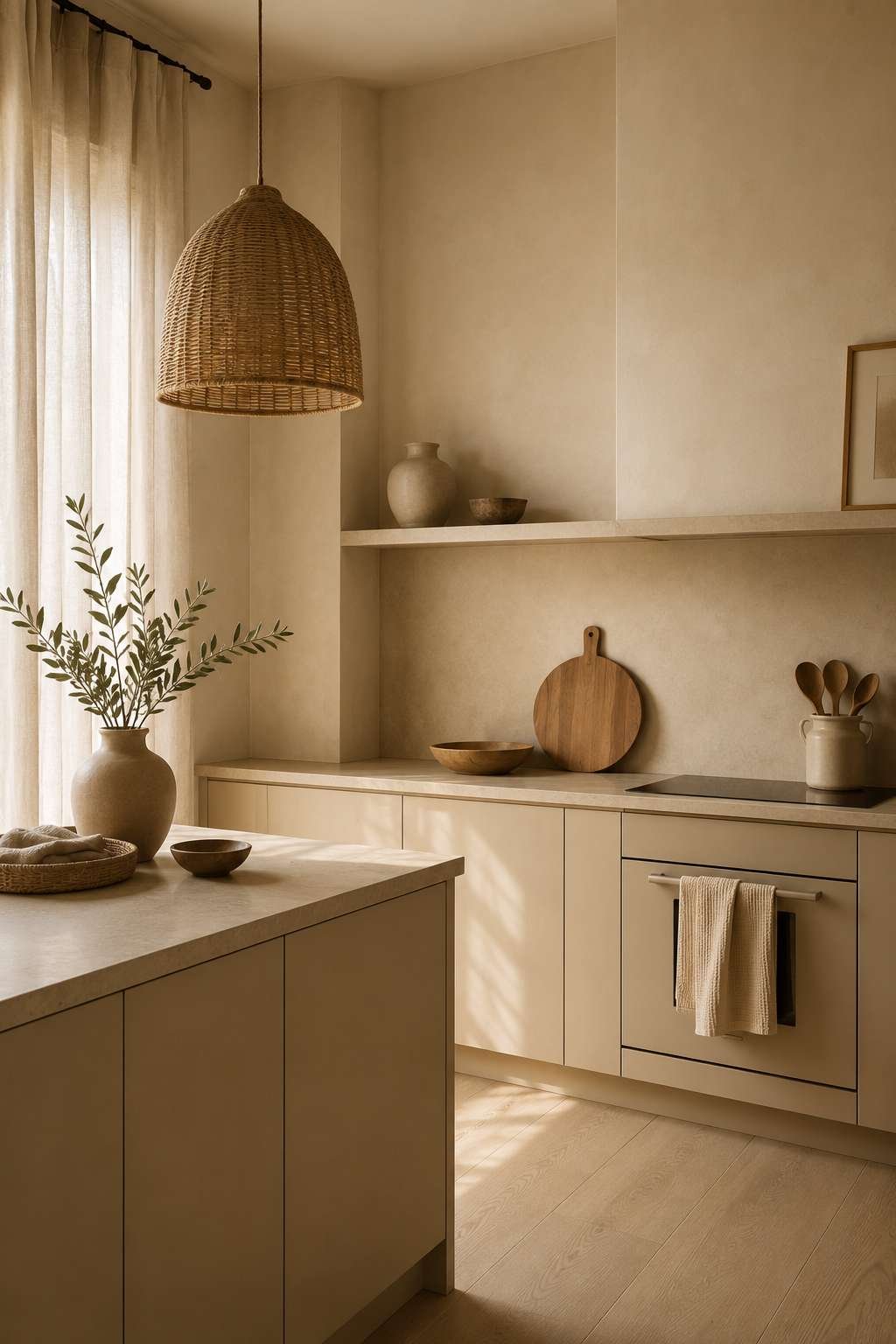
This is the version people are usually picturing when they worry beige will look flat, and it’s a fair concern if you do it wrong. The way to avoid it is texture, not color. Keep the cabinets beige, the walls a slightly lighter or warmer beige, and the counter in the same family, but vary the finish: matte cabinets, a honed stone counter, a woven light fixture, linen curtains. Texture is what keeps a tonal room from reading as one flat block of color.
11. Beige Cabinets with a Sage Green Island
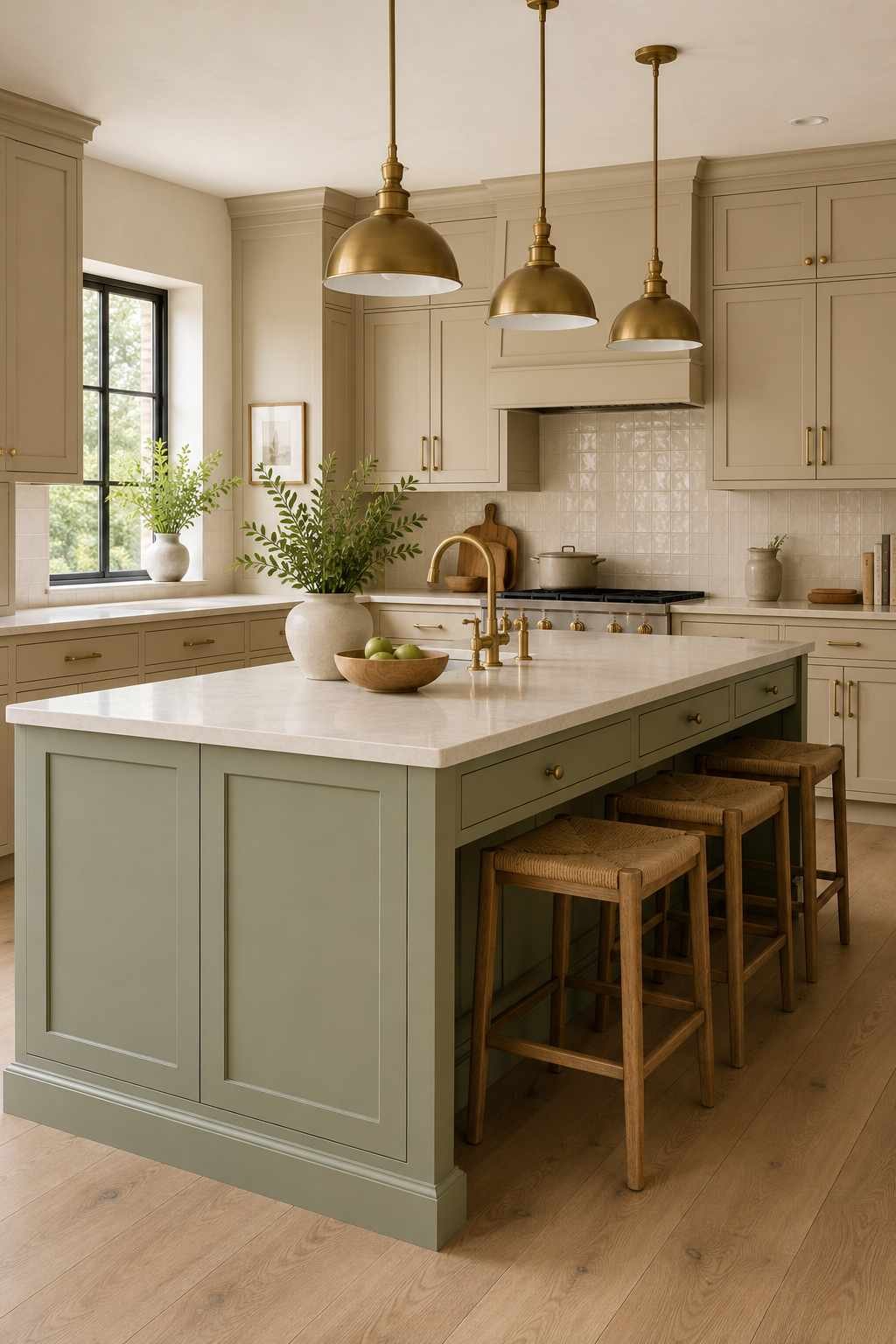
If you like the idea of color but aren’t ready to commit to a fully colored kitchen, a sage green island against beige perimeter cabinets is a gentle way in. The two colors share enough warmth and muted quality that they read as related rather than clashing. I’ve written more specifically about how far you can push sage as a full kitchen color in my sage green kitchen piece, in case you end up liking the green more than you expected to.
12. Small Kitchen: Beige Without the Flat, Boxed-In Feeling
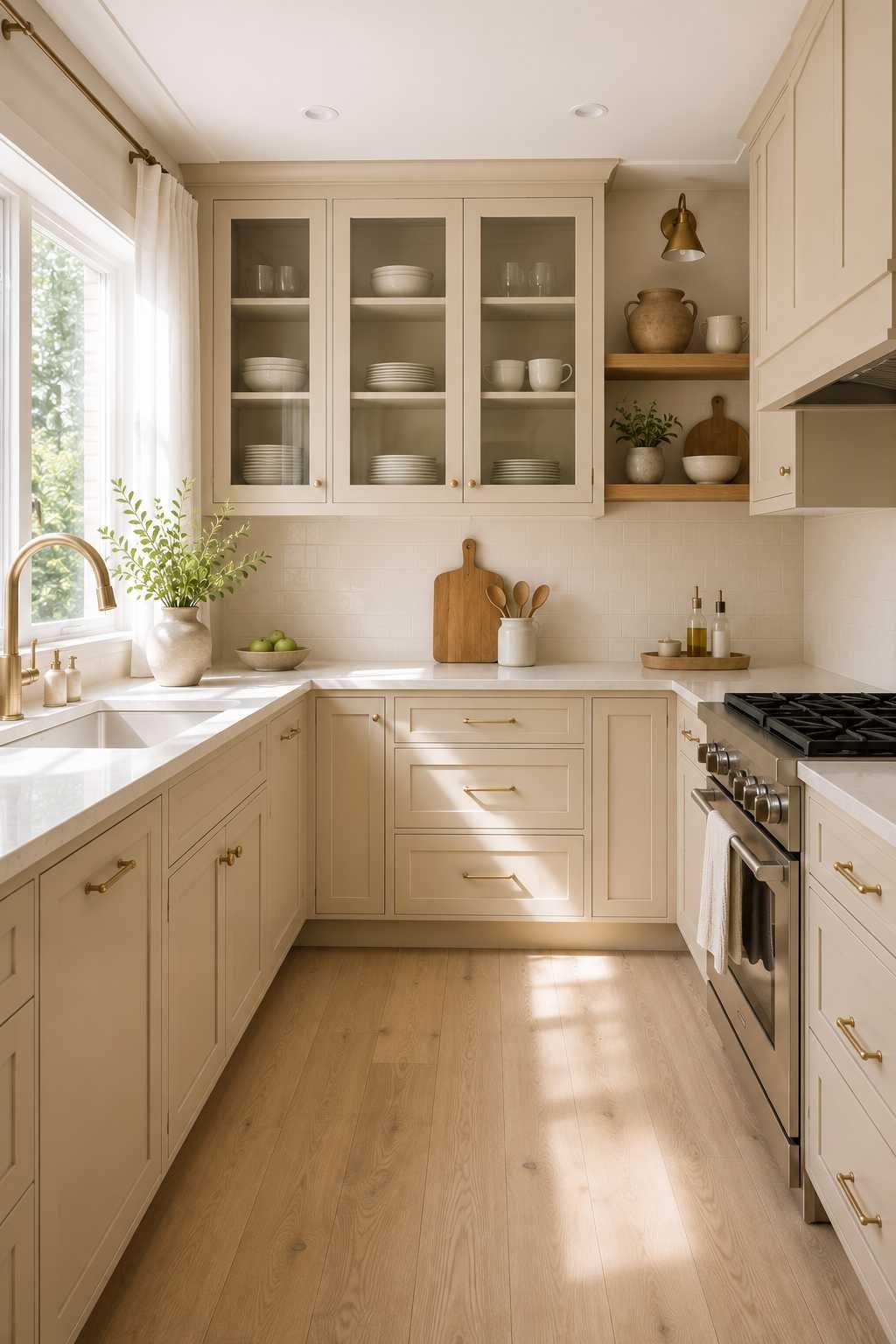
In a genuinely small kitchen, going all-beige can occasionally make the walls feel like they’re closing in if you’re not careful. A few things help: a slightly lighter, warmer beige rather than a deep or cool one. At least a few upper cabinets left glass-fronted or open instead of fully boxed in. And if the kitchen gets decent natural light, don’t fight it with heavy window treatments, beige needs plenty of light to look warm rather than dull.
13. Beige Beadboard Cabinets for a Coastal Cottage Feel
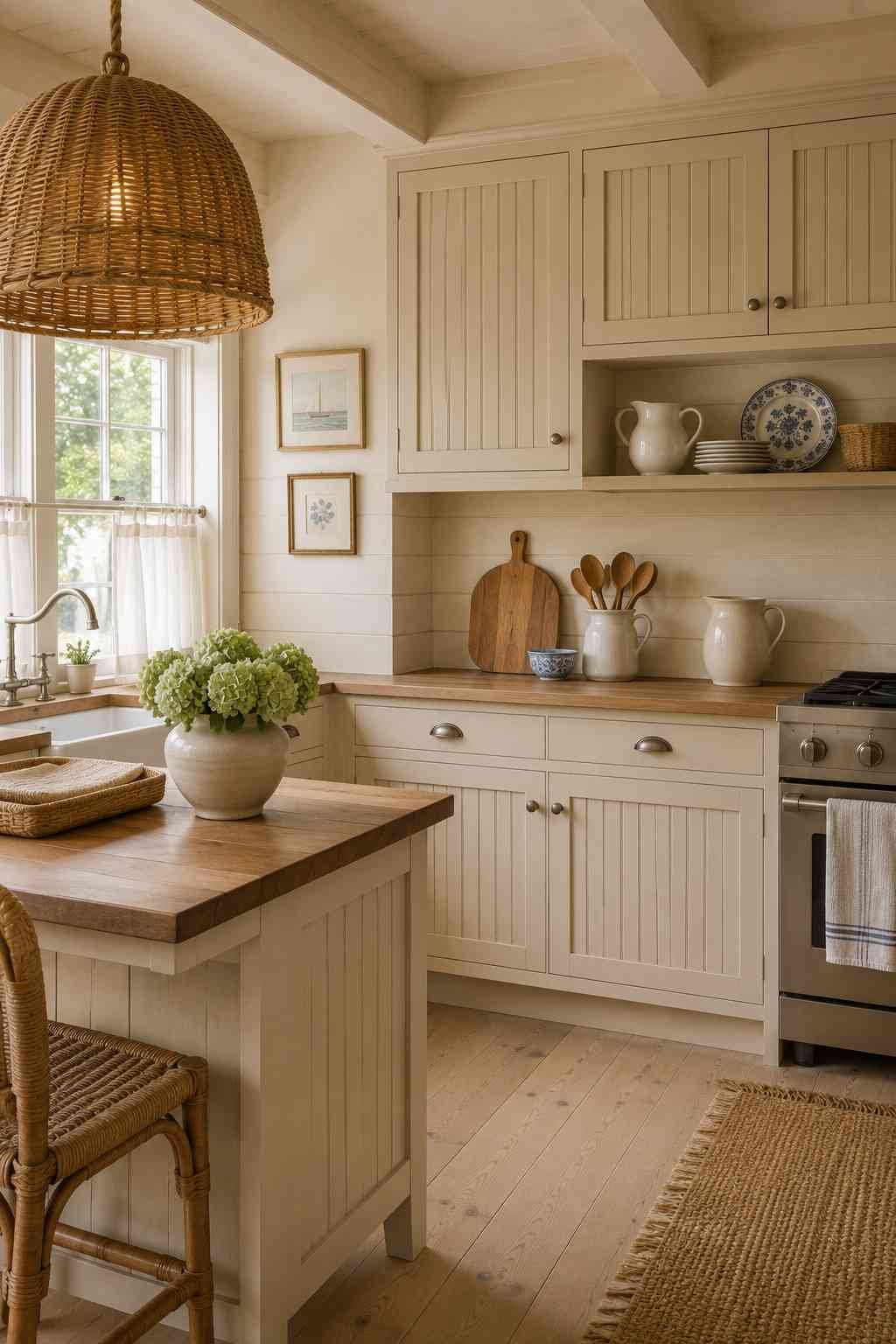
Swap flat shaker panels for beadboard detailing and beige immediately reads more cottage than contemporary. This works especially well with brushed nickel or unlacquered brass hardware, a woven pendant light, and a lighter, almost sandy beige rather than anything too deep. It’s a good option if the rest of your home already leans coastal or traditional and a stark modern kitchen would feel out of place next to it.
14. Beige Cabinets with a Butcher Block Countertop
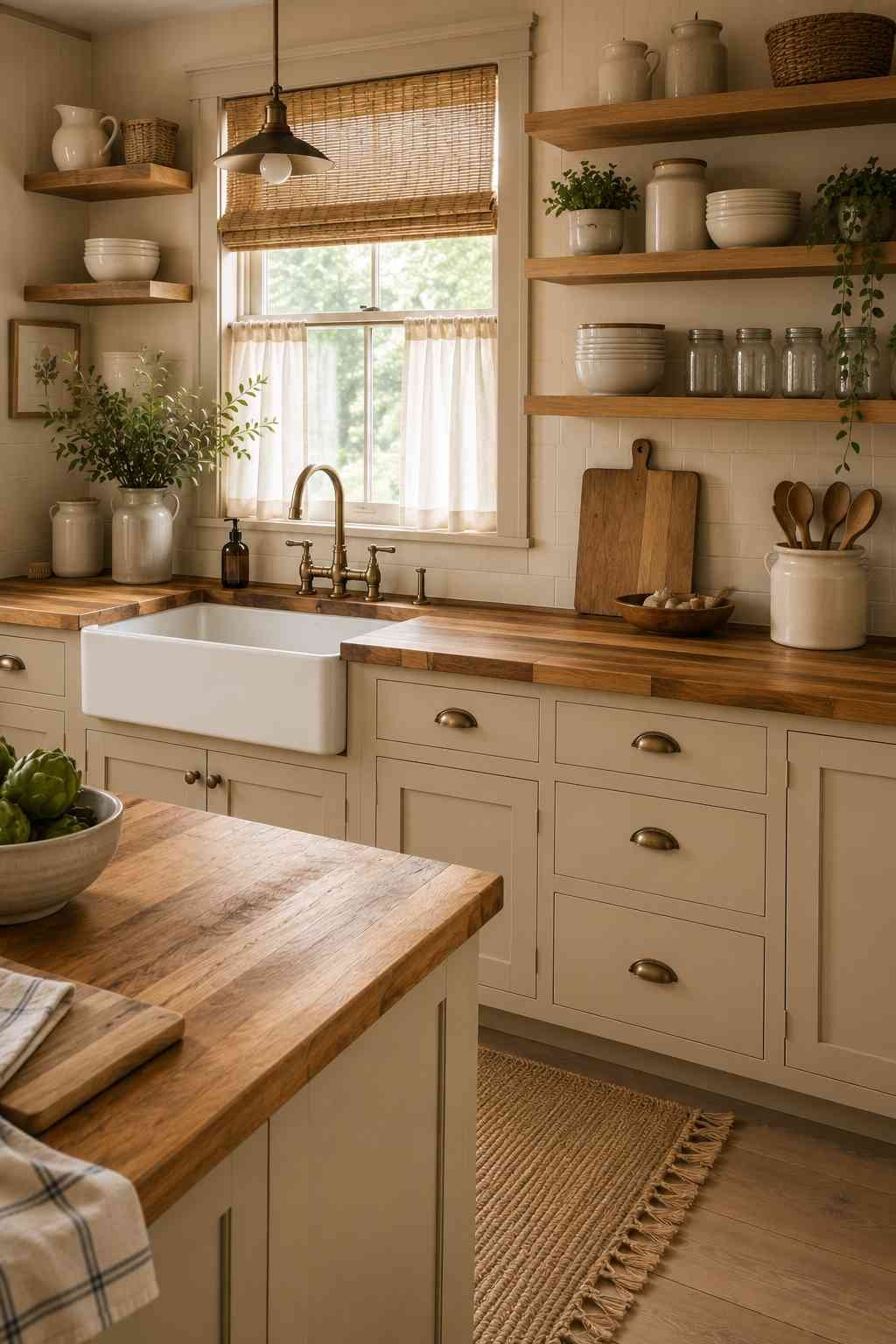
Swapping stone for butcher block instantly warms up a beige kitchen and pushes it toward farmhouse territory without needing shiplap or barn doors to get there. The one honest trade-off worth knowing: butcher block needs regular oiling to stay protected, especially around the sink, so it suits someone who doesn’t mind a bit of upkeep more than someone who wants to install it and forget about it. If farmhouse styling is the direction you’re headed, I’ve put together a broader look at what makes that style work in my modern farmhouse interiors piece.
15. U-Shaped Kitchen with an Arched Range Hood Niche
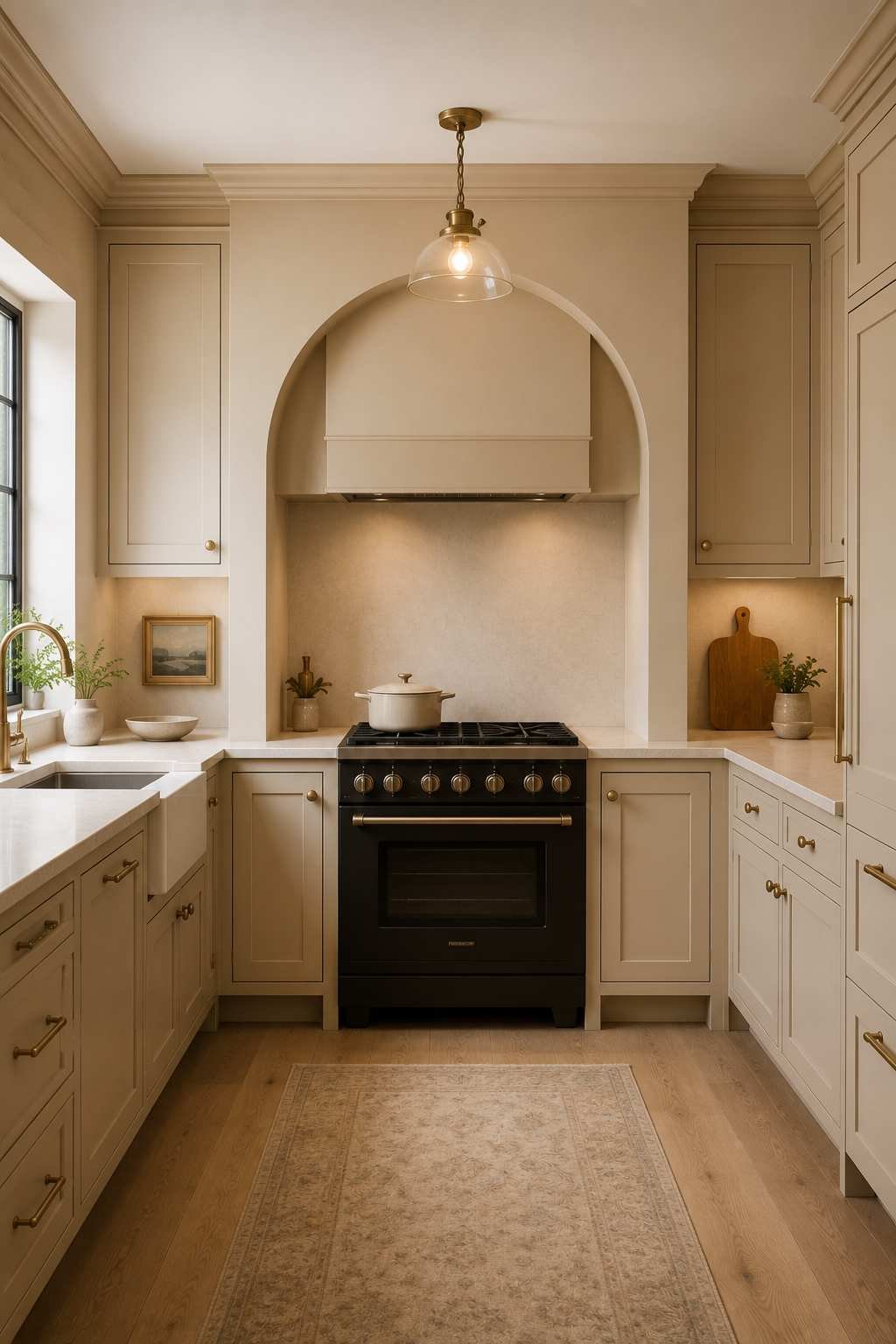
In a U-shaped layout, an arched niche around the range hood softens what can otherwise be a very boxy, rectangular room. Beige cabinets suit this detail particularly well, since the color itself already feels soft rather than sharp, and the arch becomes a quiet architectural moment instead of a loud one. This is worth discussing with whoever is doing your cabinetry early on, since it changes the hood specification, not something to decide after the boxes are already ordered.
16. Putty-Beige Cabinets with Unlacquered Brass That’s Meant to Age
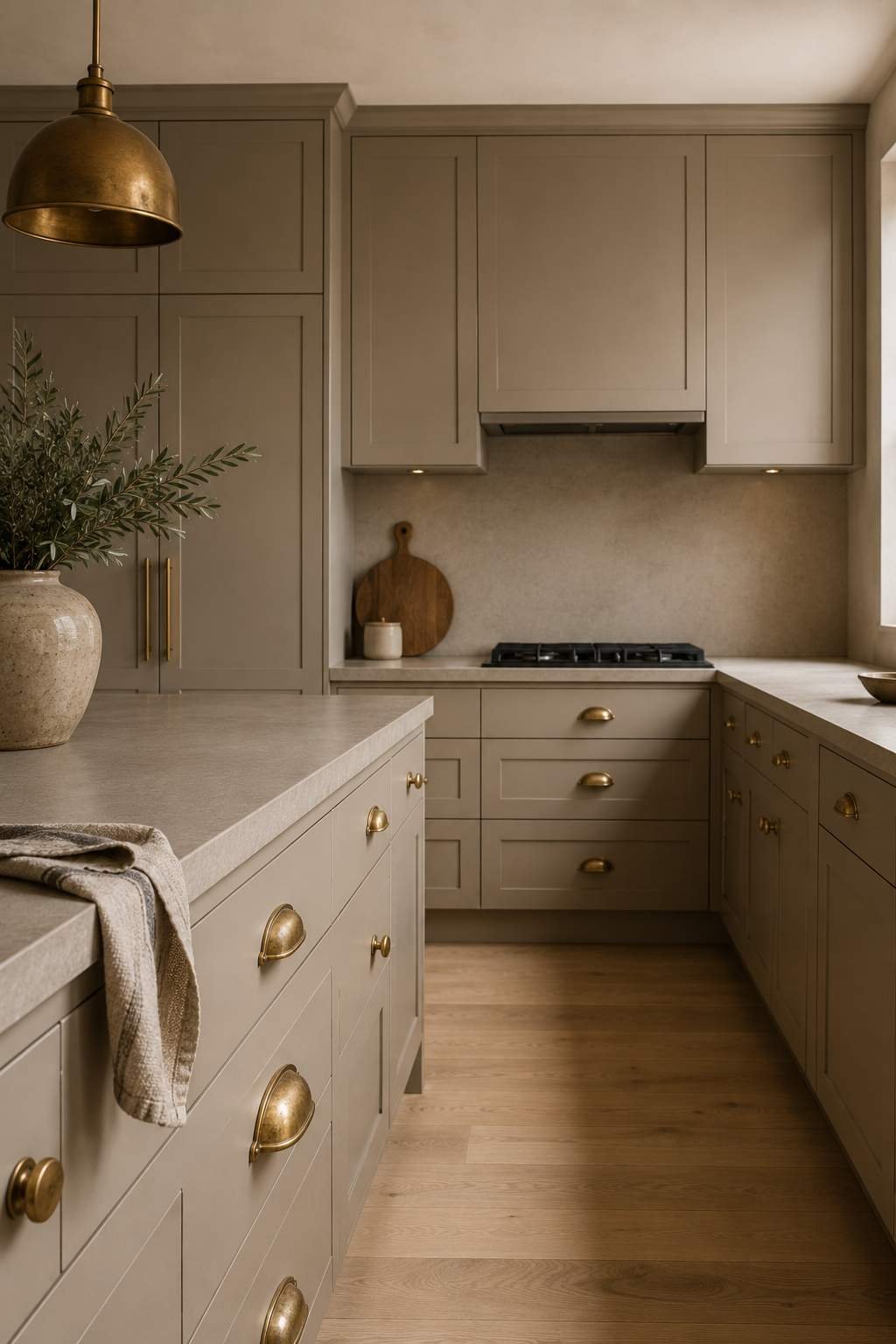
Putty is beige pushed slightly toward gray-brown, and it’s one of the more sophisticated versions of the color if you want something that doesn’t read as sweet or cottage-y. Pair it with unlacquered brass hardware and be honest with yourself about what that means: the brass will show fingerprints and water spots at first, then slowly develop a soft patina over months of use. If that sounds appealing, it’s a beautiful, living finish. If it sounds like extra cleaning, a lacquered or brushed brass will hold its exact finish with far less thought involved.
17. Beige Lower Cabinets with Wood Open Shelving Instead of Uppers
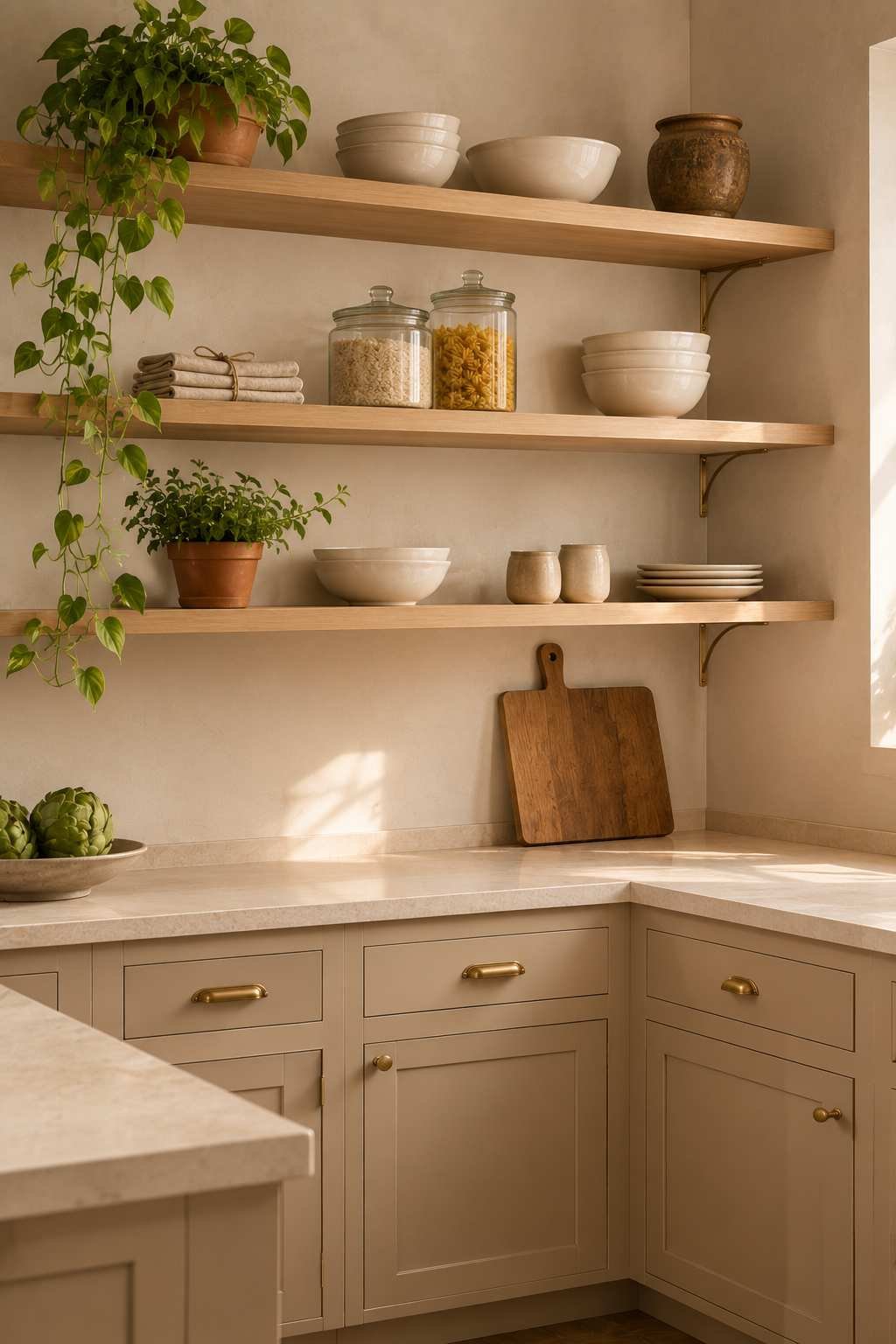
Removing the upper cabinets entirely and replacing them with simple wood shelving is a bigger commitment than it looks, since it means everything on display needs to actually look good, all the time. But against beige lower cabinets, it creates a kitchen that feels more like a curated room than a storage box. Worth it if you already keep a tidy kitchen; genuinely difficult to live with if you don’t.
18. Beige Cabinets with a Woven Rattan Pendant and Natural Textures
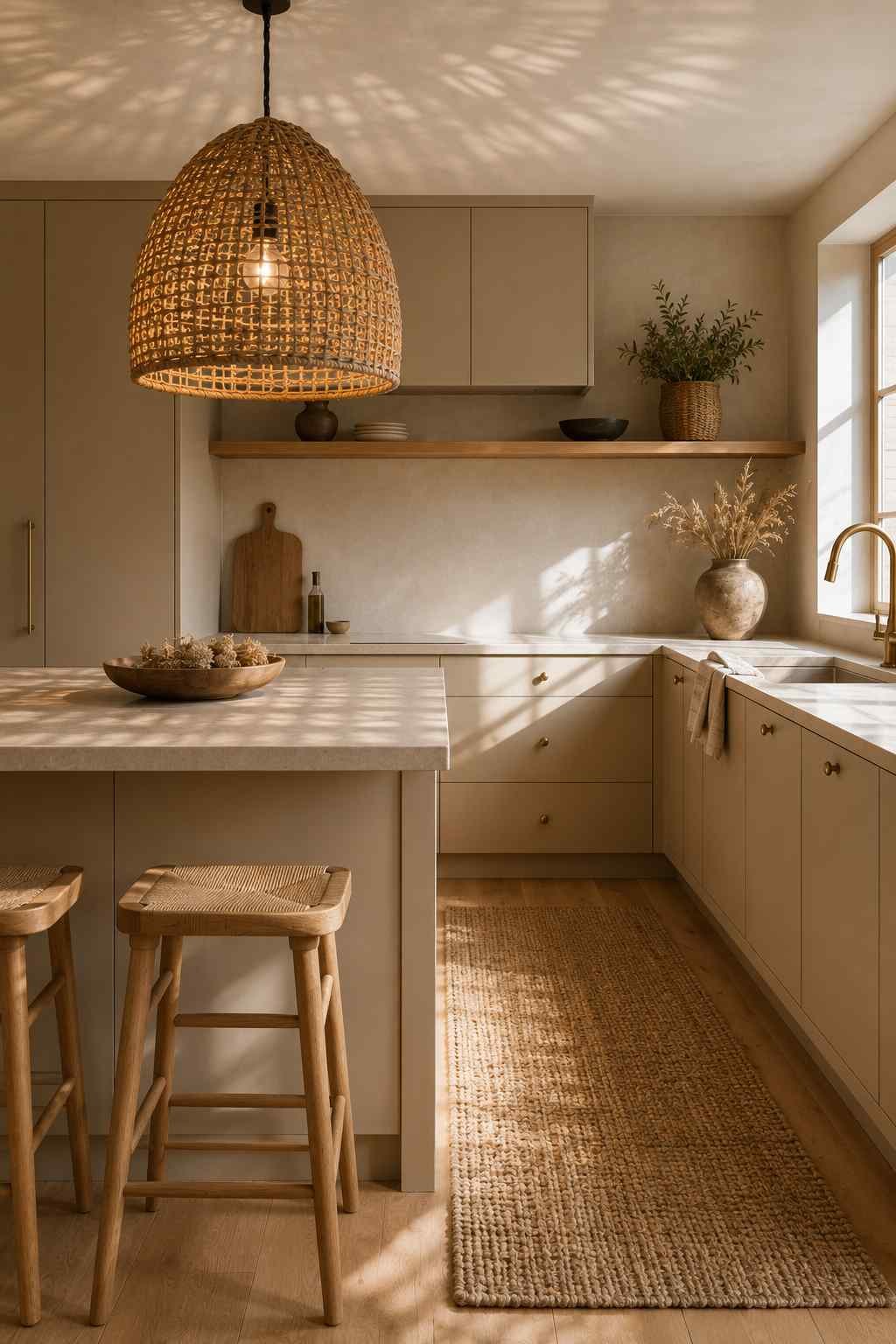
Smooth, flat beige cabinet fronts benefit from something textural nearby to keep the kitchen from feeling one-note. A woven rattan or seagrass pendant over the island, a jute runner, a few natural wood bar stools, these small additions do a lot of work without touching the cabinetry itself. It’s often the cheapest, lowest-risk way to test whether you actually like a more organic, textured direction before committing to anything permanent.
19. Beige Cabinets with a Deep Charcoal or Navy Island
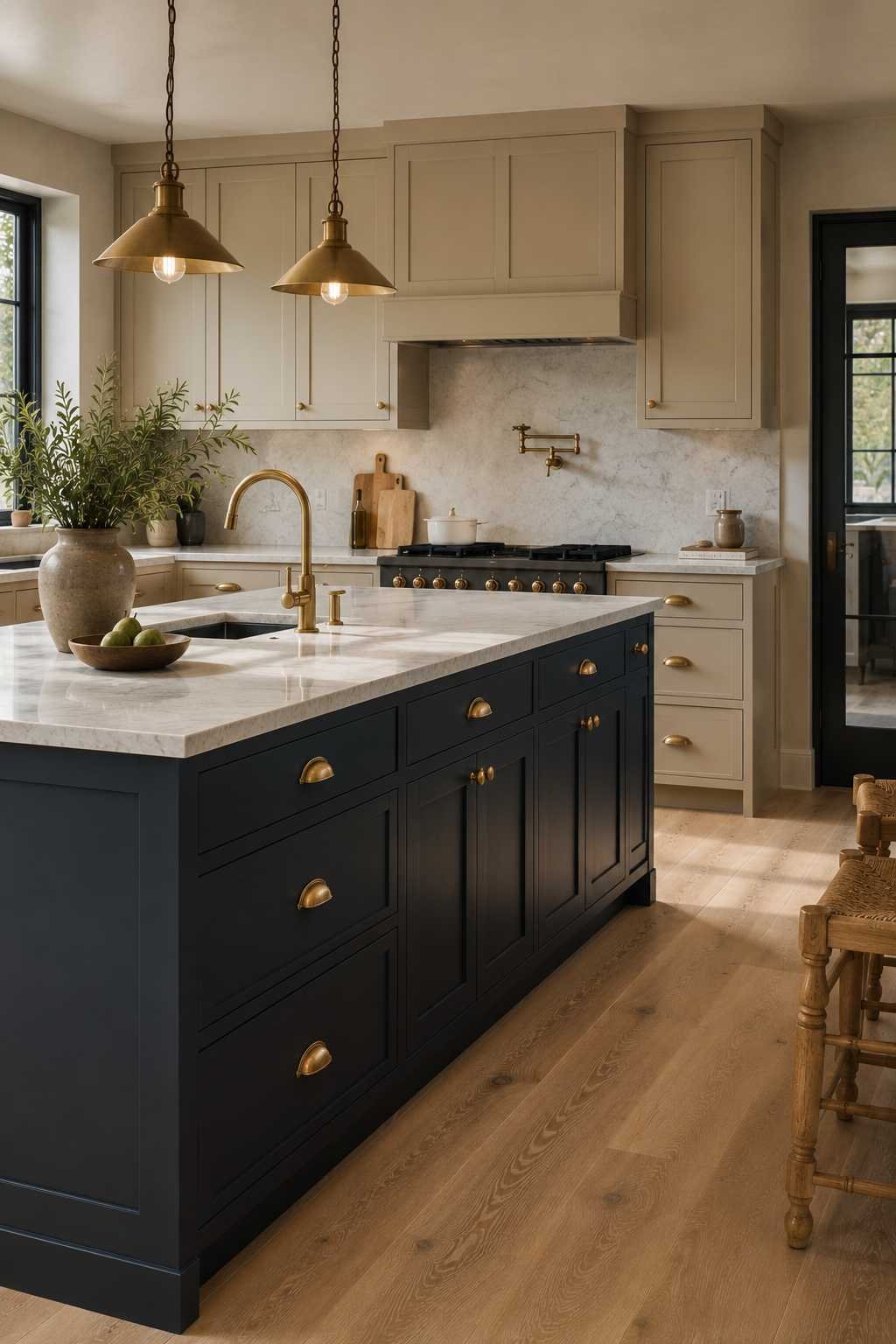
For more drama than a walnut or sage island offers, a deep charcoal or navy island against beige perimeter cabinets creates real contrast while keeping the room grounded in a neutral base. It’s a good middle ground for people who want a bold kitchen but aren’t ready to commit to bold on every wall. If you’d rather explore a full-color kitchen instead of just an island, I’ve broken down that approach separately in my blue and grey kitchen piece.
20. Beige Cabinets with Honed Soapstone Counters
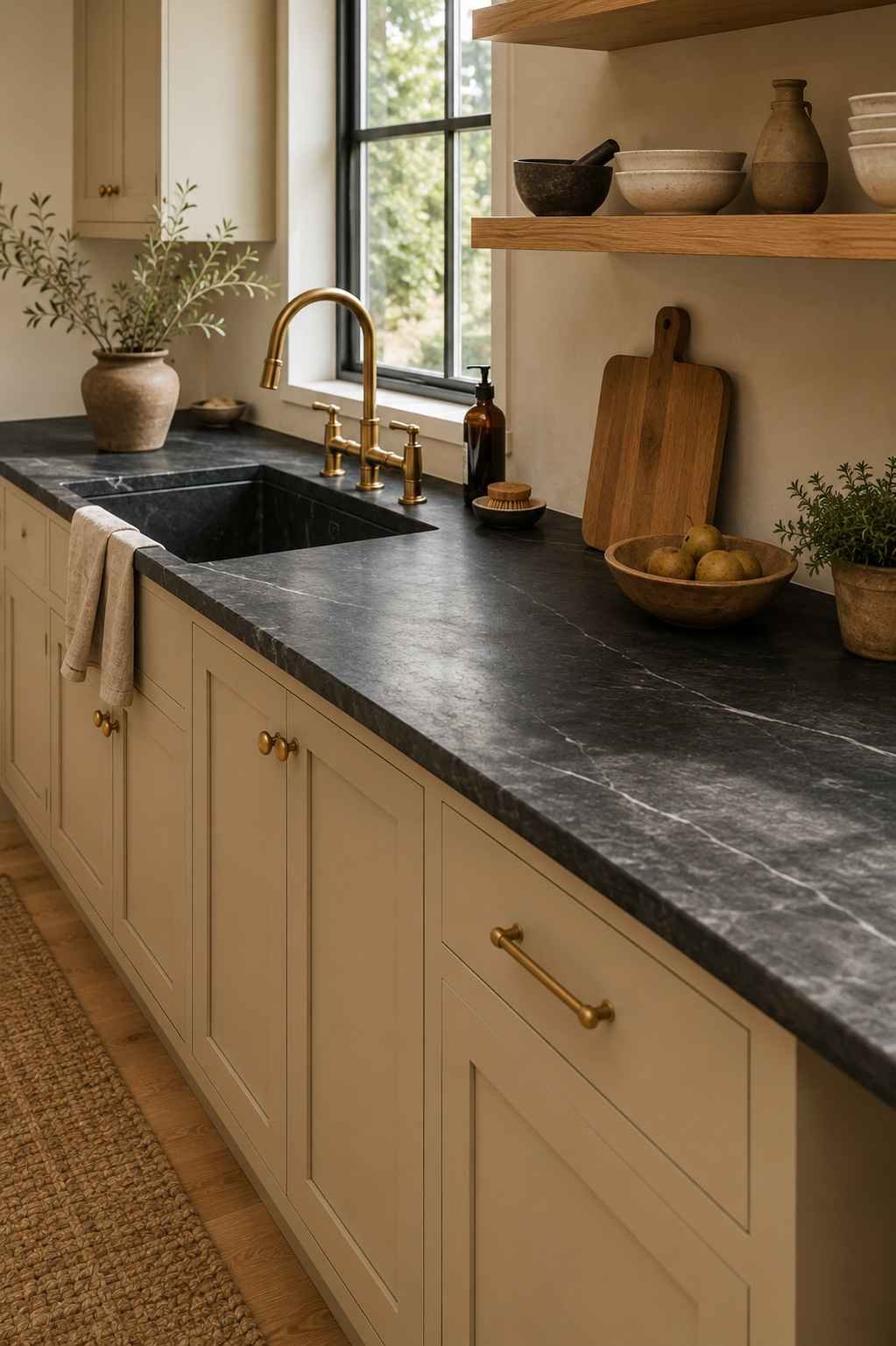
Soapstone brings a soft, almost matte black-gray surface that reads noticeably warmer, to the touch and to the eye, than most quartz. Against beige cabinets it creates contrast without any hardness, since soapstone deepens and develops its own patina with mineral oil over time rather than staying static like engineered stone does. It suits someone who likes the idea of a counter that changes slightly with use rather than looking factory-fresh forever.
21. An Open-Concept Kitchen Anchored by a Large Beige Island
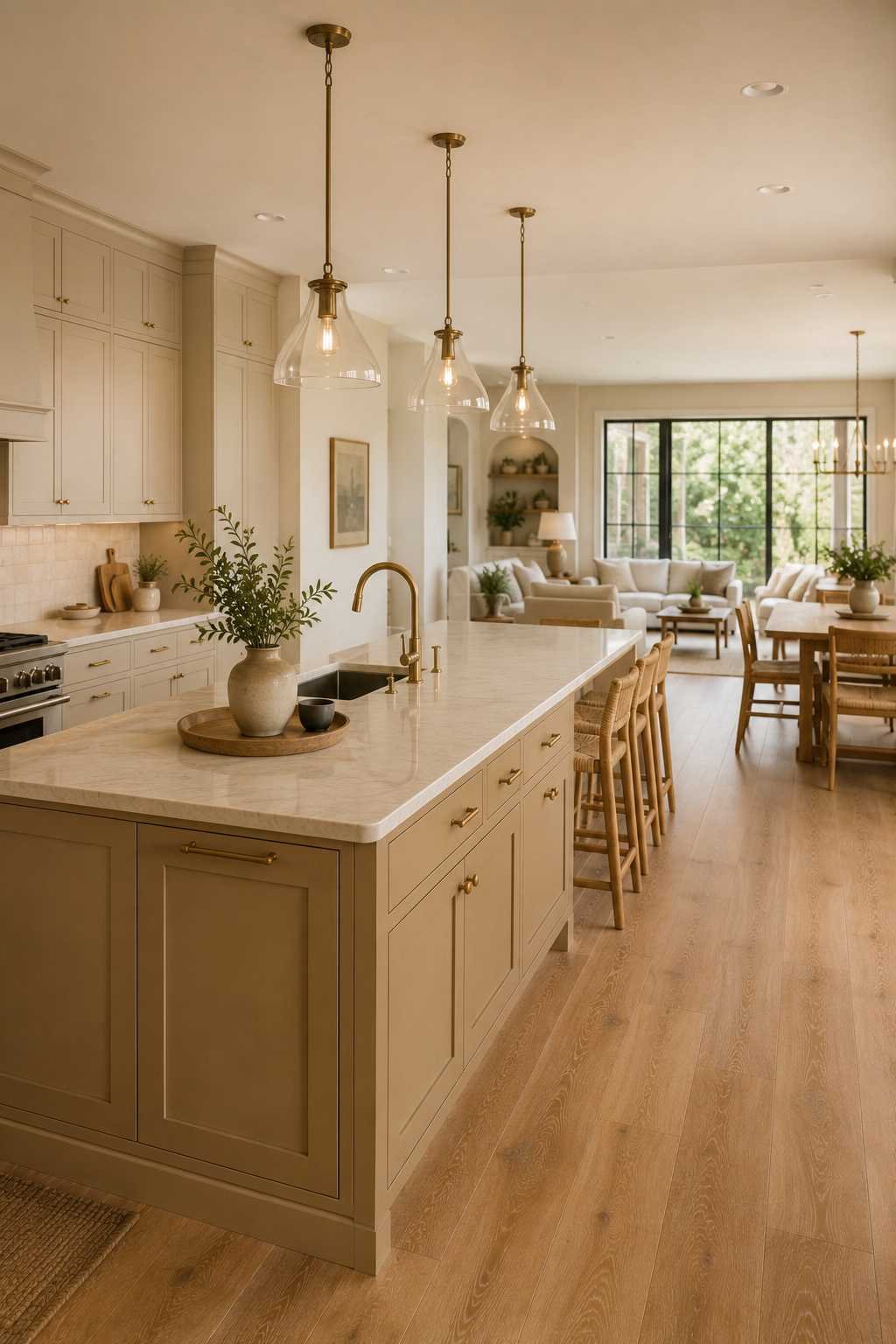
In an open floor plan, a beige kitchen has an easier job than a bold-colored one, since it doesn’t have to negotiate constantly with whatever is happening in the adjoining living or dining space. A large island in a warm honey-beige, big enough to double as the main gathering spot, becomes the anchor for the whole open area. If you like the openness but still want some sense of definition between the kitchen and the rest of the room, I’ve written about how a glass partition can do exactly that without closing anything off, in my glass partition between kitchen and living room piece.
Where Beige Kitchens Usually Go Wrong
When beige kitchens don’t work, it’s almost never about the beige itself. A few patterns show up over and over.
The biggest one is undertone clashing: warm sand cabinets next to a cool gray floor, or a cool greige next to honey-toned wood. It’s a mismatch that’s hard to name but easy to feel, the room just looks slightly off.
Most people blame the beige when really it’s the pairing. Before you commit, hold an actual cabinet sample (not a tiny paint chip) against your flooring and countertop, in the room’s own light.
The second is going matte and flat everywhere. This is the real version of “beige is boring,” and it happens when every surface has the same finish and the same visual weight.
The fix isn’t a different color, it’s texture: a woven light fixture, honed stone instead of polished, a different sheen on the walls than the cabinets.
The third is picking a color from a two-inch chip under store lighting and never testing it at home. Beige shifts more than almost any other color depending on the light.
North-facing rooms pull it cooler and grayer, south-facing rooms warm it up. What looked perfect on a chip can look completely different across a full wall of cabinetry.
How to Pick the Right Beige for Your Kitchen
Start with what you’re not replacing: flooring, existing stone, window trim. Whatever undertone dominates there should guide the beige you pick, not the other way around.
Warm wood floors call for a warm beige. Cool gray tile calls for a cooler greige.
Think about the room’s light before its trend appeal. North-facing kitchens usually look better with a warmer beige, since the light already leans cool and gray.
South- or west-facing kitchens can handle a cooler greige without feeling cold, since the light warms it up naturally through the day.
As a rule, warm beiges pair best with brass, wood tones, and warmer whites. Cooler greiges lean better toward black, nickel, and true white.
That’s not a hard rule, plenty of good kitchens mix warm cabinets with cool metals. Just do it on purpose, not by accident.
Last thing: test big. A paint chip or a small door sample won’t tell you much about a color that’s about to cover this much surface area. If your cabinet maker can send a larger sample door, or you can paint a poster-board swatch and move it around the kitchen at different times of day, do that first. Beige is forgiving once you get it right, but it’s genuinely hard to judge from something the size of a business card.
A Few Common Questions About Beige Cabinets
Do beige kitchen cabinets go out of style?
Less than most trend colors. Beige has stayed in steady rotation through several kitchen design cycles because it functions as a neutral rather than a statement, similar to white or a light wood tone. What goes out of style faster is the styling around it, ornate raised-panel doors or heavy glazing, rather than the color itself.
What countertop color works best with beige cabinets?
White or light-veined quartz and marble are the safest, most versatile pairing. For more warmth, butcher block or a warm-toned quartzite works well. For contrast, a honed soapstone or a darker quartz in charcoal or deep gray gives the kitchen more visual weight without clashing.
Are beige cabinets hard to keep clean?
Generally easier than white, since beige hides fingerprints, light scuffs, and everyday splatters better. Matte finishes hide more than high-gloss, and lighter beiges show grease marks near the stove faster than deeper tones do.
What hardware finish looks best with beige cabinets?
Brass, in any finish from polished to unlacquered, tends to look the most natural against beige because both read as warm. Matte black works well too, especially with cooler greige tones, for more contrast. Polished chrome is the one finish I’d generally steer away from; it can make beige look slightly dated rather than current.
Beige rewards patience more than almost any other kitchen color. It won’t grab attention in a single photo the way a bold green or navy island will, but it also won’t feel dated in five years, and it gives you room to change hardware, lighting, or accessories later without redoing the whole kitchen. If you’re weighing beige against something bolder, pick two or three ideas from this list that actually match your fixed elements, your floor, your light, your existing stone, rather than the ones that simply photograph well, and start there. That’s usually where the kitchens people are still happy with, years later, come from.