
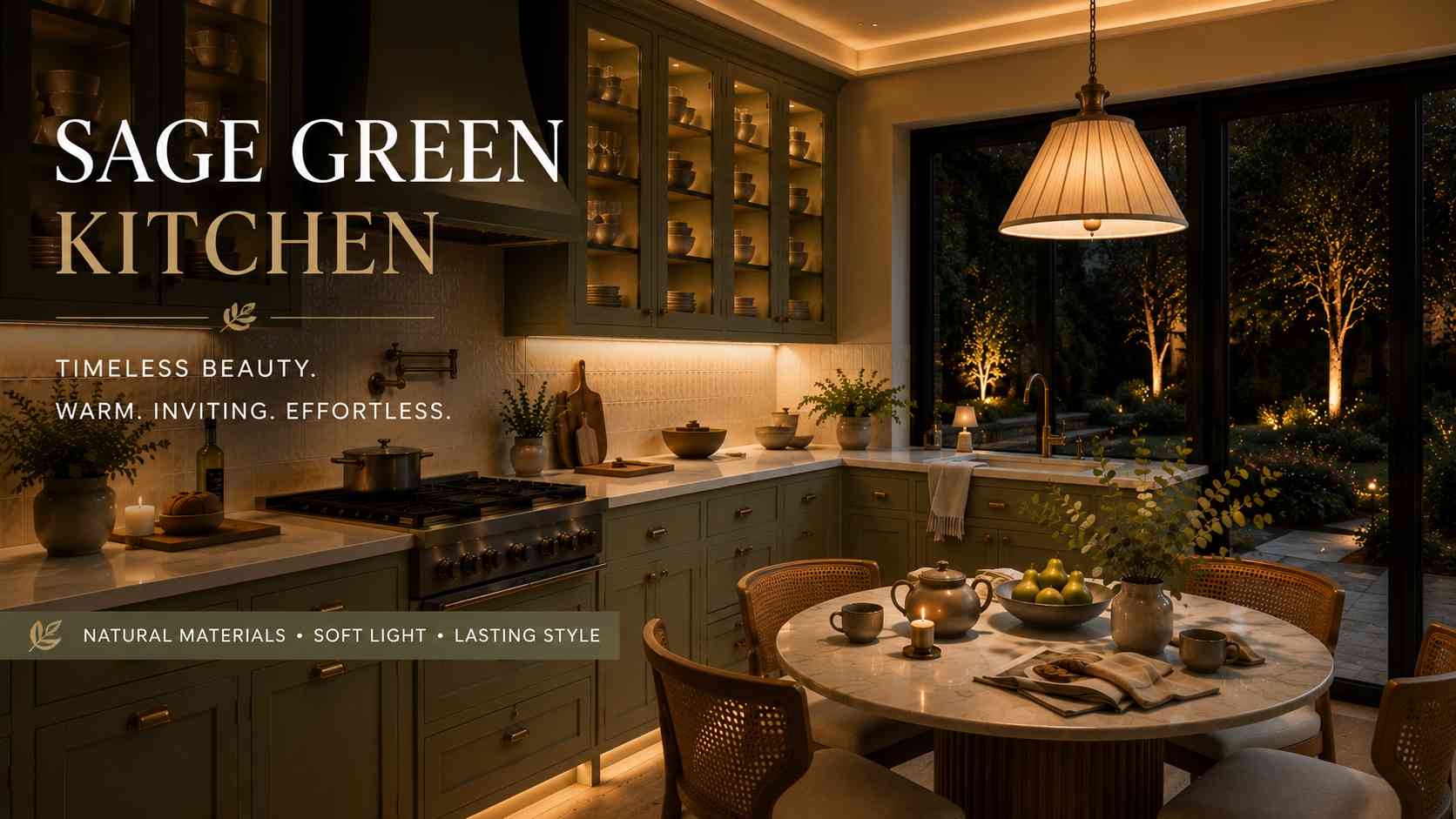
Sage green has quietly become one of the most requested kitchen colors of the last few years, and honestly, I get why.
It sits in that rare sweet spot between “safe neutral” and “actual personality” — muted enough that it doesn’t fight with your countertops or flooring, but warm enough that it never reads as cold or sterile the way pure gray or stark white sometimes can.
I’m not a professional designer — most of what’s here I’ve picked up by actually working with color in my own spaces and paying attention to what worked and what didn’t.
When I first tried sage green myself, I picked the wrong shade the first time around, and it looked flat and slightly dull under my regular ceiling lights.
It wasn’t until I switched to a warmer bulb and went a shade deeper that it finally looked like the photos I’d been saving. That one mistake taught me more about undertones and lighting than any guide I’d read beforehand.
Green kitchens have existed for decades, and plenty of them look tired.
The difference between a sage kitchen that feels current and one that feels like a 1990s countryside cottage almost always comes down to the supporting choices: the hardware, the countertop, the lighting, and how much restraint you use elsewhere in the room.
Below are 25 sage green kitchen ideas, organized so you can actually use them — whether you’re repainting cabinets this weekend or planning a full renovation.
I’ve also included the practical details (finishes, pairings, and a few mistakes I’ve seen people make) so this isn’t just a list of pretty pictures with no substance behind them.
A Quick Note on Why Sage Green Works
Before jumping into the ideas, it’s worth understanding what makes this color perform so well in kitchens specifically. Sage green is a desaturated, grayed-down green — think dried herbs, eucalyptus, or the underside of an olive leaf rather than anything bright or saturated.
Because it has gray undertones, it behaves more like a neutral than a “color choice,” which means it pairs easily with wood, brass, black, white, and stone without a lot of second-guessing.
It also photographs beautifully in both warm and cool lighting, which is part of why it’s so popular for kitchens people plan to sell or list on rental platforms — it tends to appeal across a wide range of tastes rather than polarizing people the way navy or terracotta might.
With that out of the way, here are the ideas.
1. Sage Green Shaker Cabinets With Brass Hardware
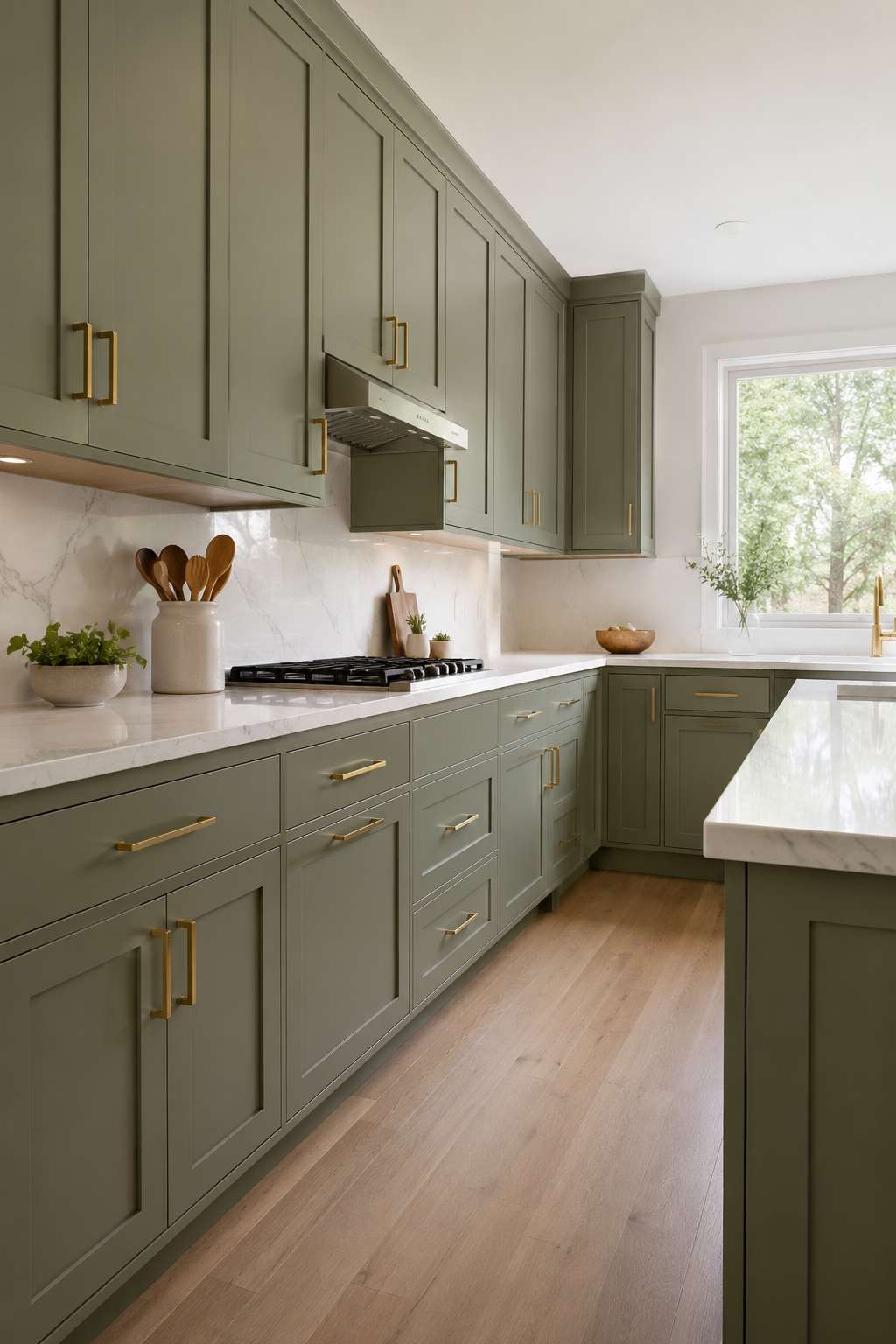
Shaker cabinets are the easiest way to keep a sage kitchen feeling modern rather than country-cottage, because the flat panel and clean lines do a lot of the “contemporary” work for you. Swap the fixtures for unlacquered or satin brass pulls and you get warmth without any fussiness. This combination is forgiving for DIY painters, too, since shaker doors are simple to mask and roll evenly — this was actually the first cabinet style I ever repainted myself, and the flat panels made it a lot more forgiving of my uneven brush strokes than I expected.
2. Two-Tone Kitchen: Sage Lower Cabinets, White Uppers
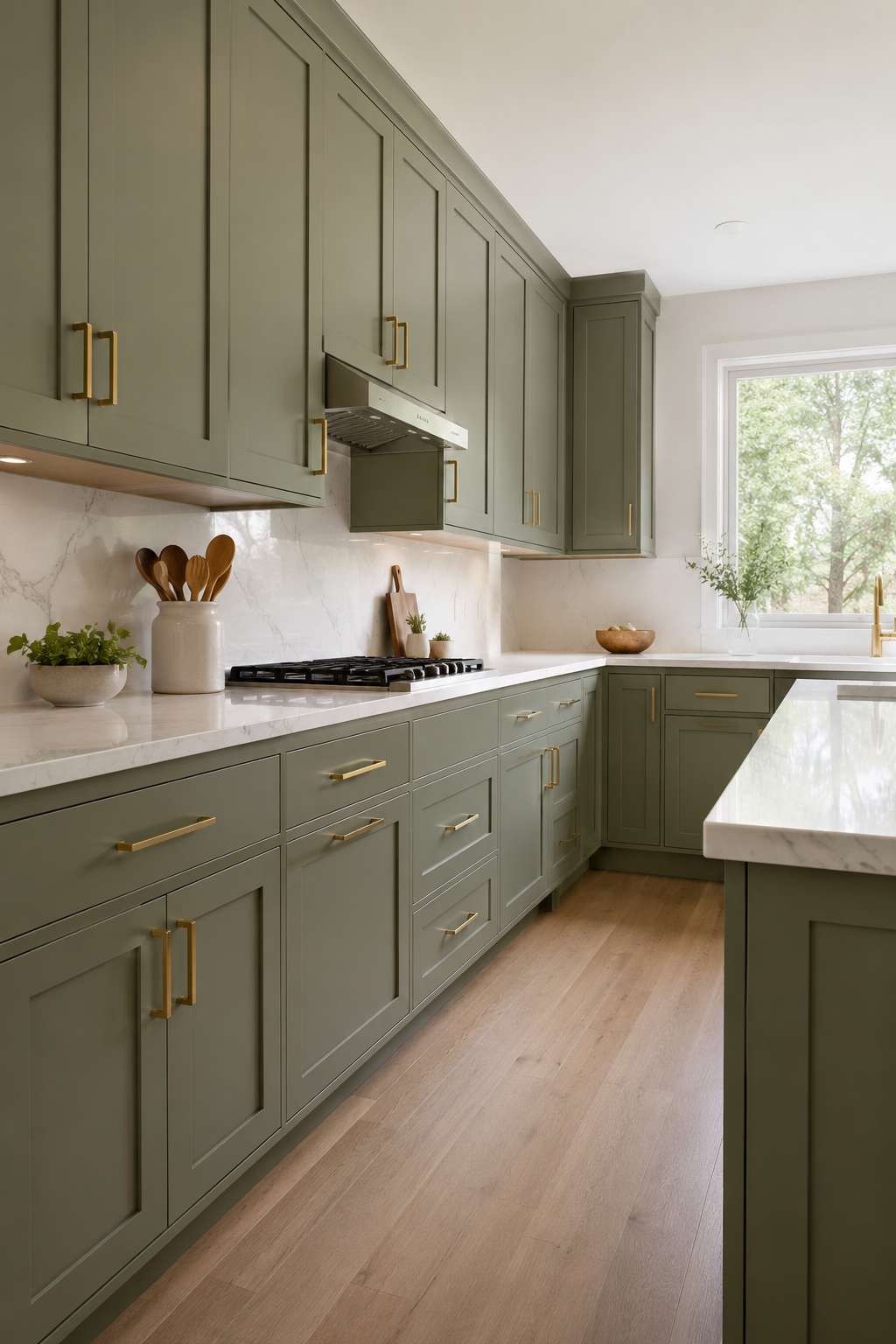
Painting only the lower cabinets sage and leaving the uppers white (or off-white) is one of the most practical ways to introduce color if you’re nervous about commitment. It keeps the upper half of the room bright, which matters a lot in kitchens with limited natural light, while still giving you the visual interest of the color where it’s most noticeable — at eye level and against the floor.
3. Matte Sage Green Island With Contrasting Countertop
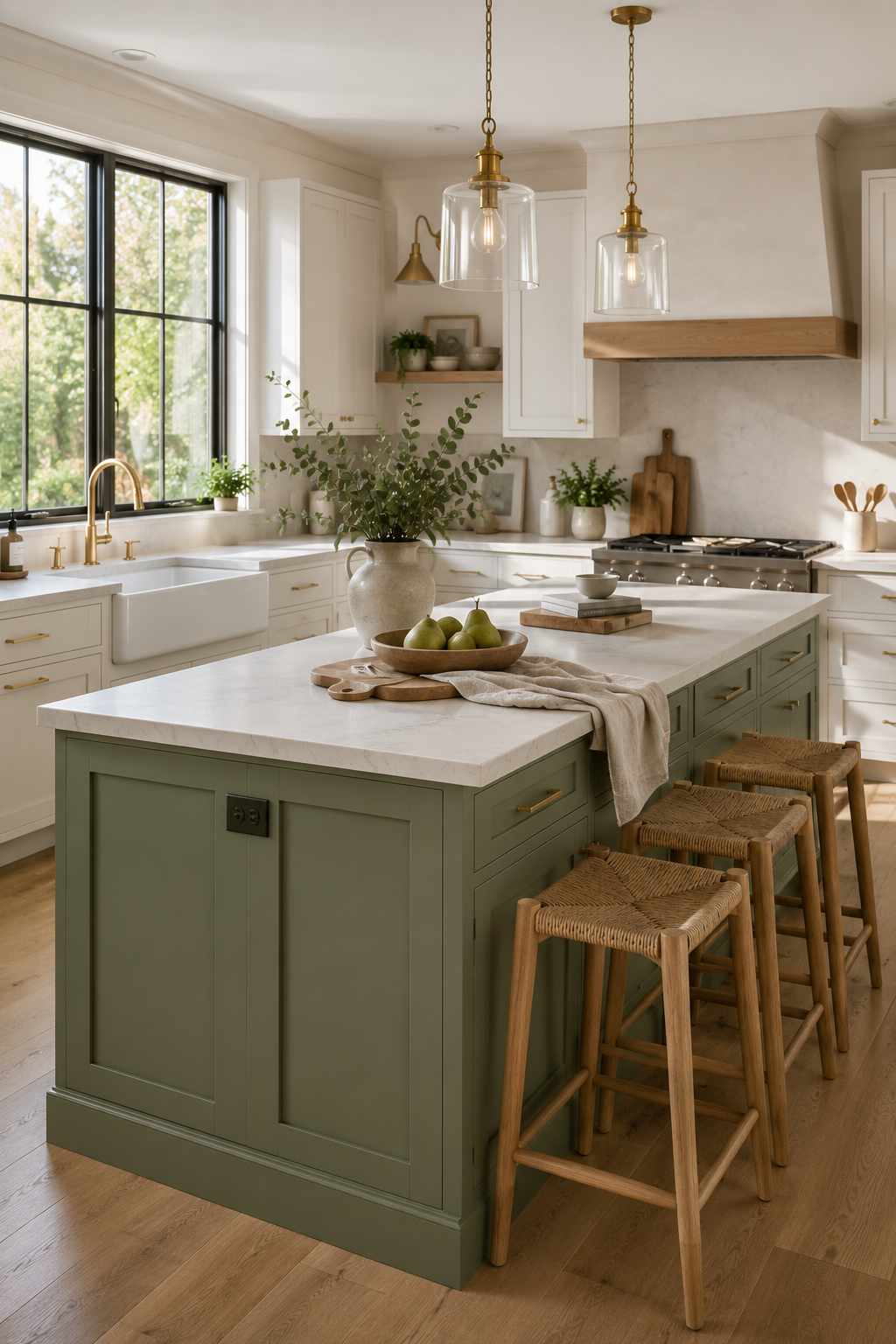
Islands are the one place in a kitchen where a bolder color choice rarely backfires, since the surrounding cabinetry usually stays neutral. A matte-finish sage island paired with a honed white or cream stone countertop creates a soft, tactile contrast rather than a harsh one — much more in line with the quiet, warm-minimalist look that’s dominating modern kitchen design right now.
4. Sage Green With Brushed Nickel or Chrome for a Cooler Palette
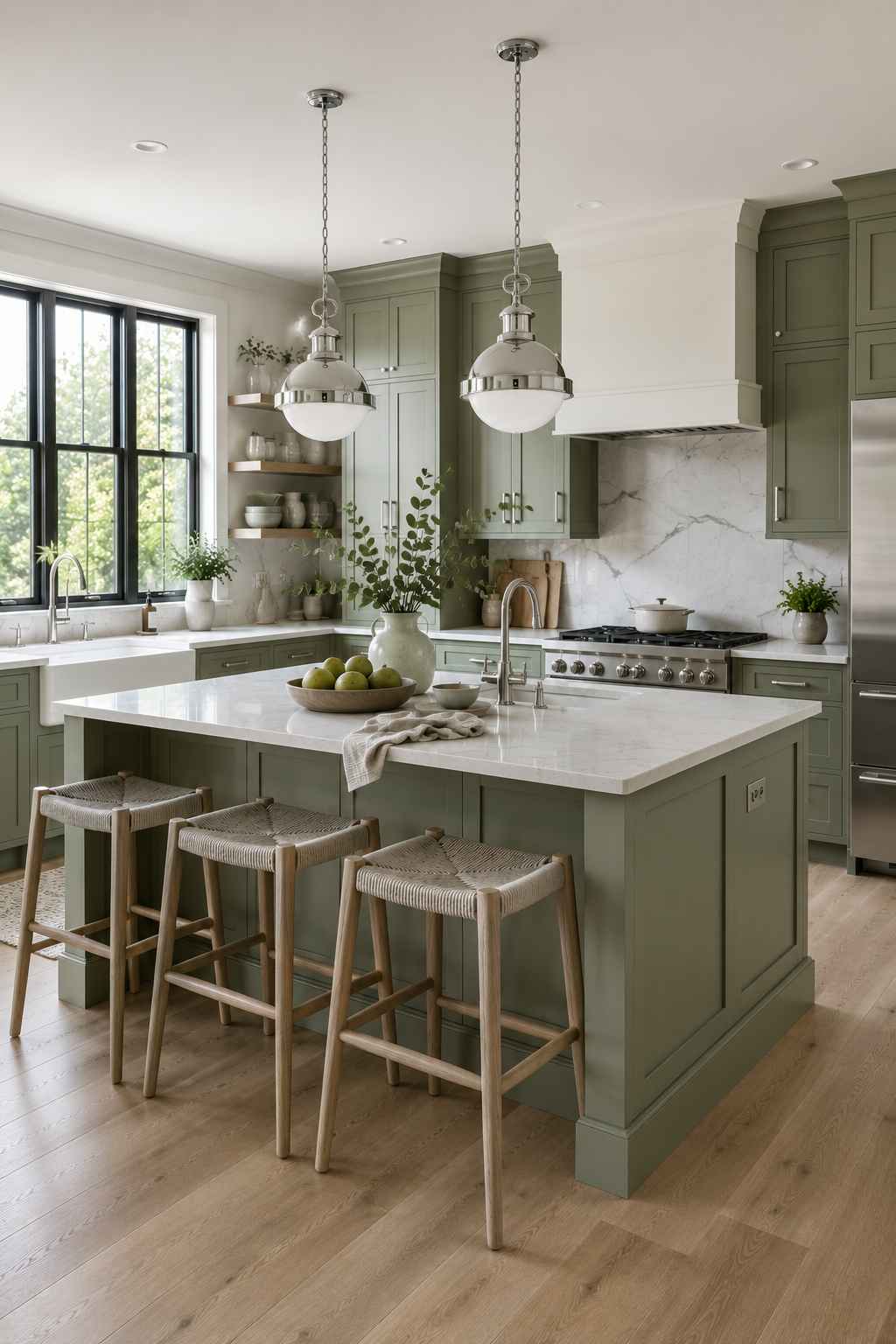
Not every sage kitchen needs to lean warm. If your flooring or countertop already has cool undertones, brushed nickel or chrome hardware and fixtures will keep the whole room in the same temperature family, which reads as more intentional and “designed” than mixing warm brass into an otherwise cool space.
5. All-Sage Cabinetry, Floor to Ceiling
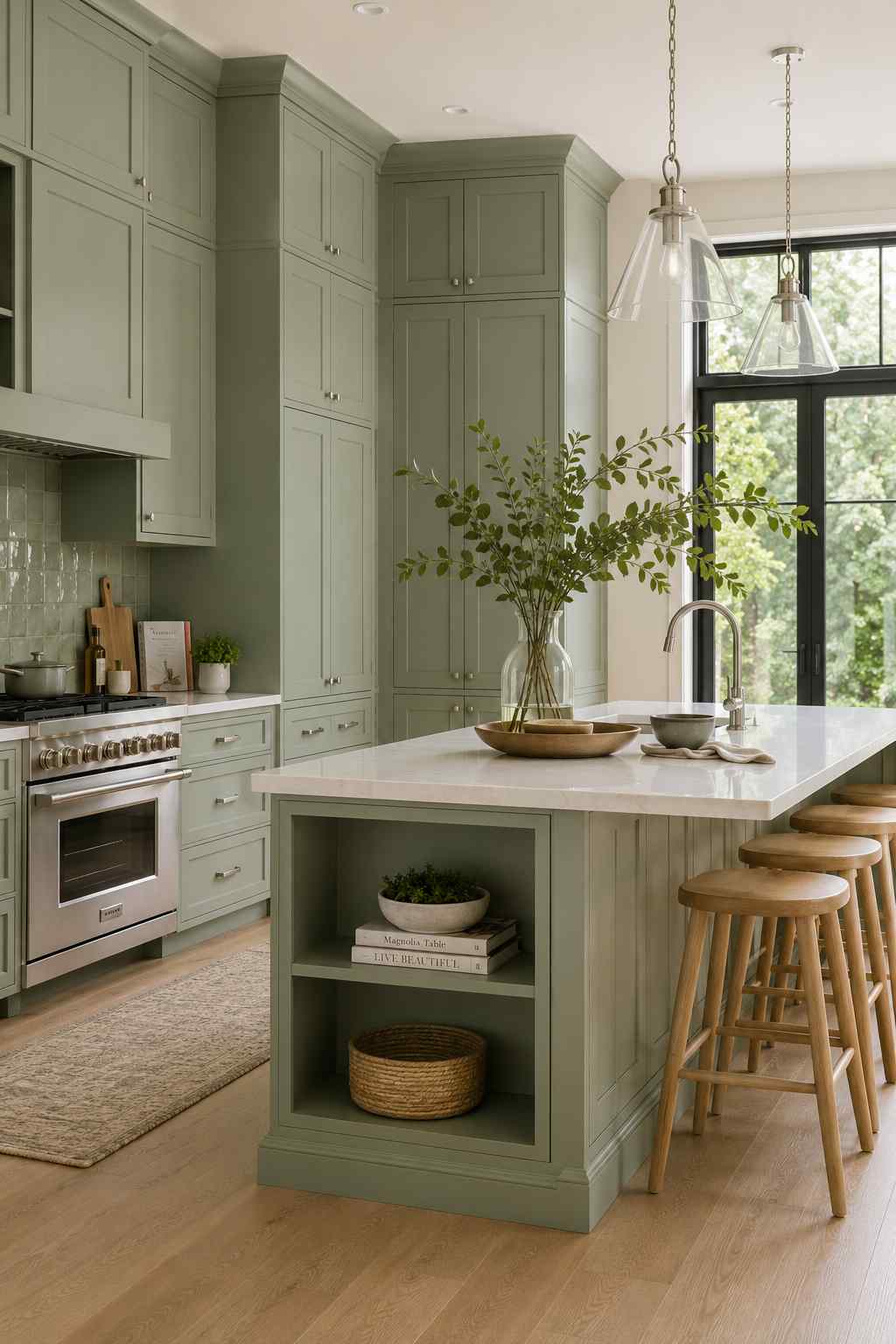
Going monochrome — sage uppers, sage lowers, sage island — is a bolder move but works surprisingly well in kitchens with tall ceilings and good natural light, because it avoids visual breaks that can make a small kitchen feel choppier. The key is varying the sheen slightly between elements (say, satin cabinets against a slightly glossier tile) so the room doesn’t feel flat.
6. Sage Green Cabinets With a Butcher Block Countertop
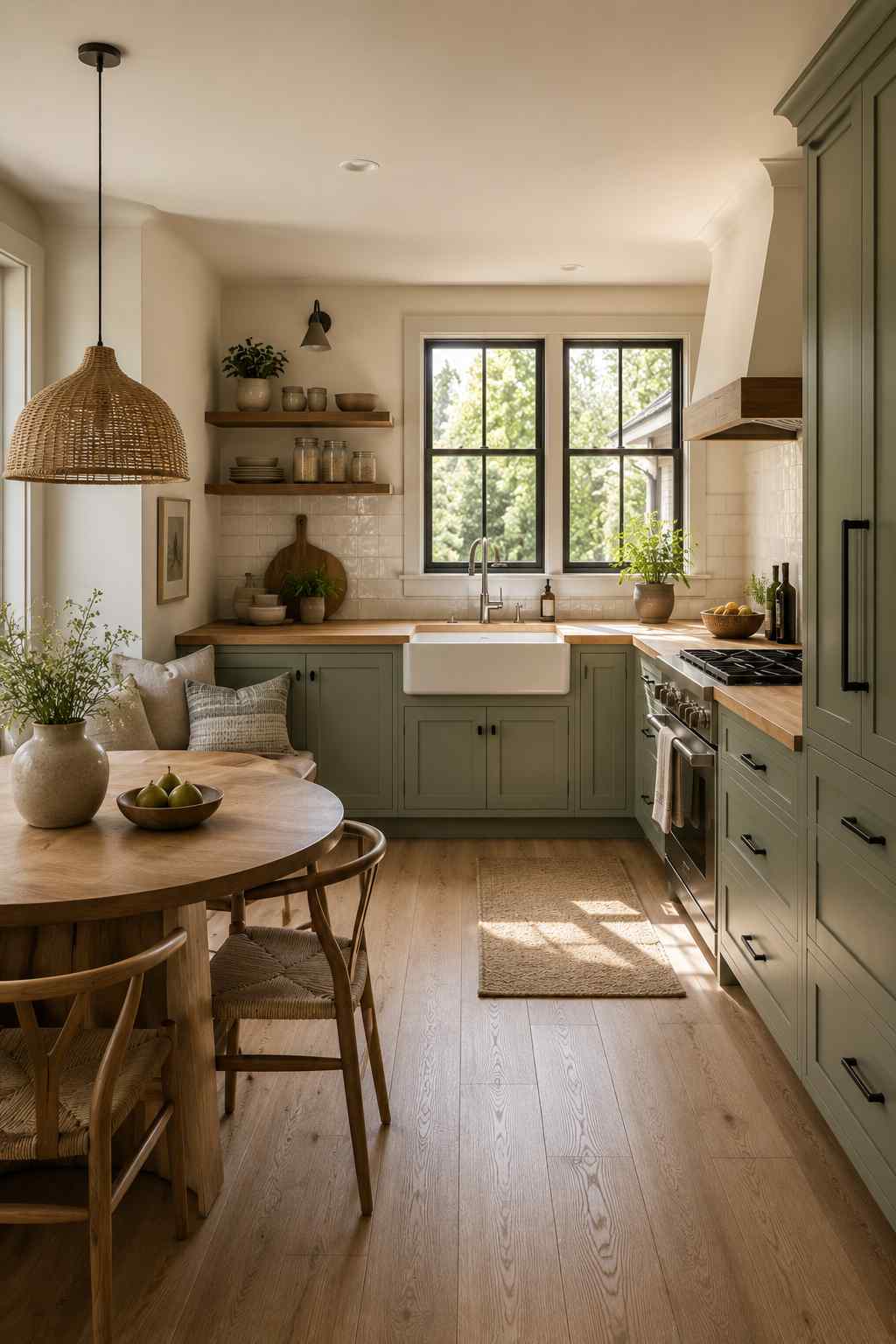
Wood countertops soften sage green considerably and lean the whole kitchen toward a cozier, Scandinavian or Japandi-adjacent feel. This pairing works particularly well in smaller kitchens where stone countertops can sometimes feel heavy — butcher block keeps things light, warm, and approachable.
7. Sage Green Backsplash With White Cabinetry
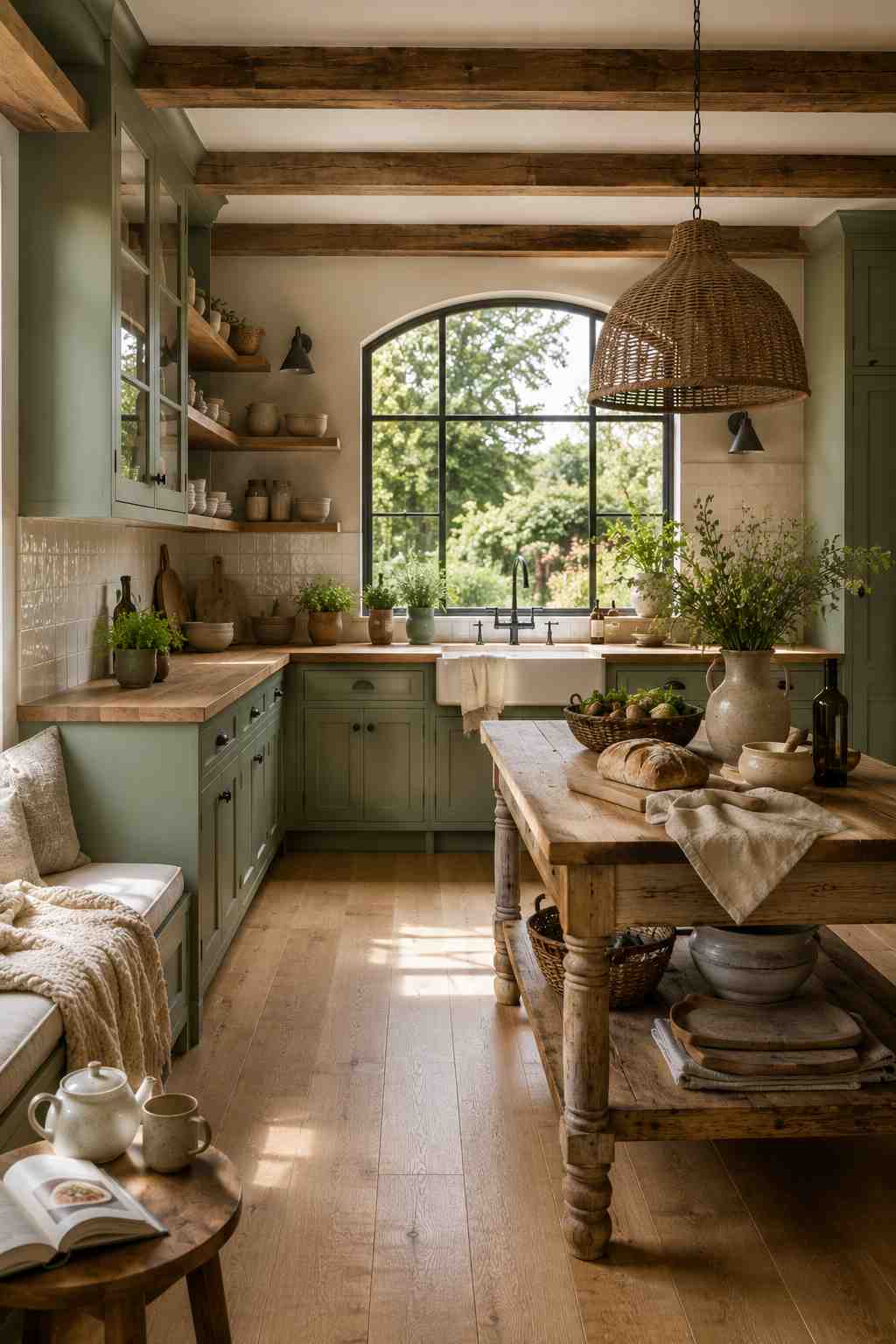
If painting cabinets feels like too much commitment, flip the formula: keep cabinets white and let a sage green zellige or subway tile backsplash carry the color. This is a lower-cost, lower-risk way to test the color in your space, and it’s much easier to change later than repainting an entire cabinet run.
8. Sage Green Kitchen With Black Steel-Frame Cabinet Doors
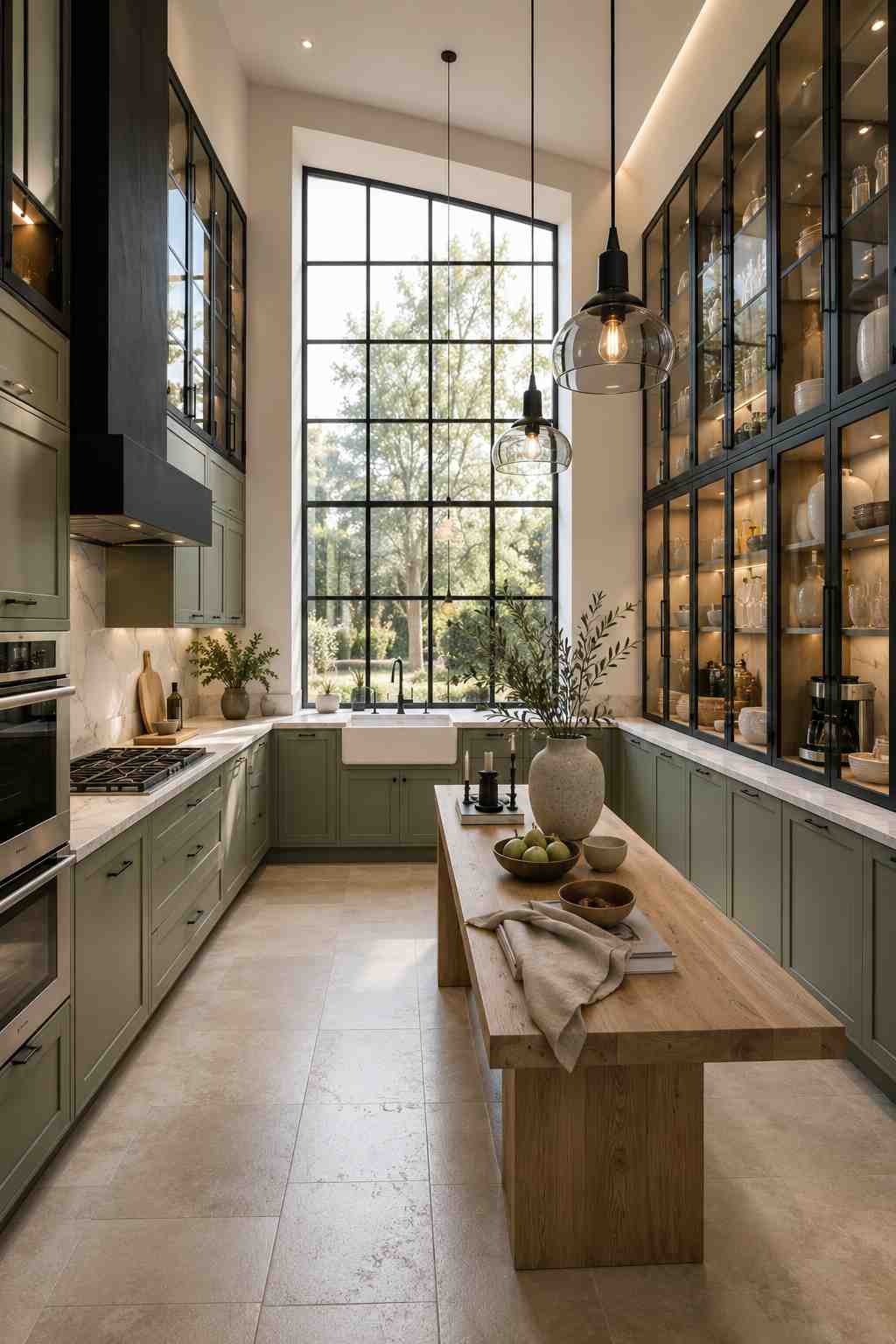
Black metal-framed glass cabinet doors against sage green cabinetry is one of the more distinctly “modern” combinations on this list — it borrows from industrial-loft aesthetics while the sage keeps things from feeling cold. It works especially well for open shelving or display cabinets where you want visual texture without adding more color.
9. Sage Green Paired With Warm Terracotta Floor Tile
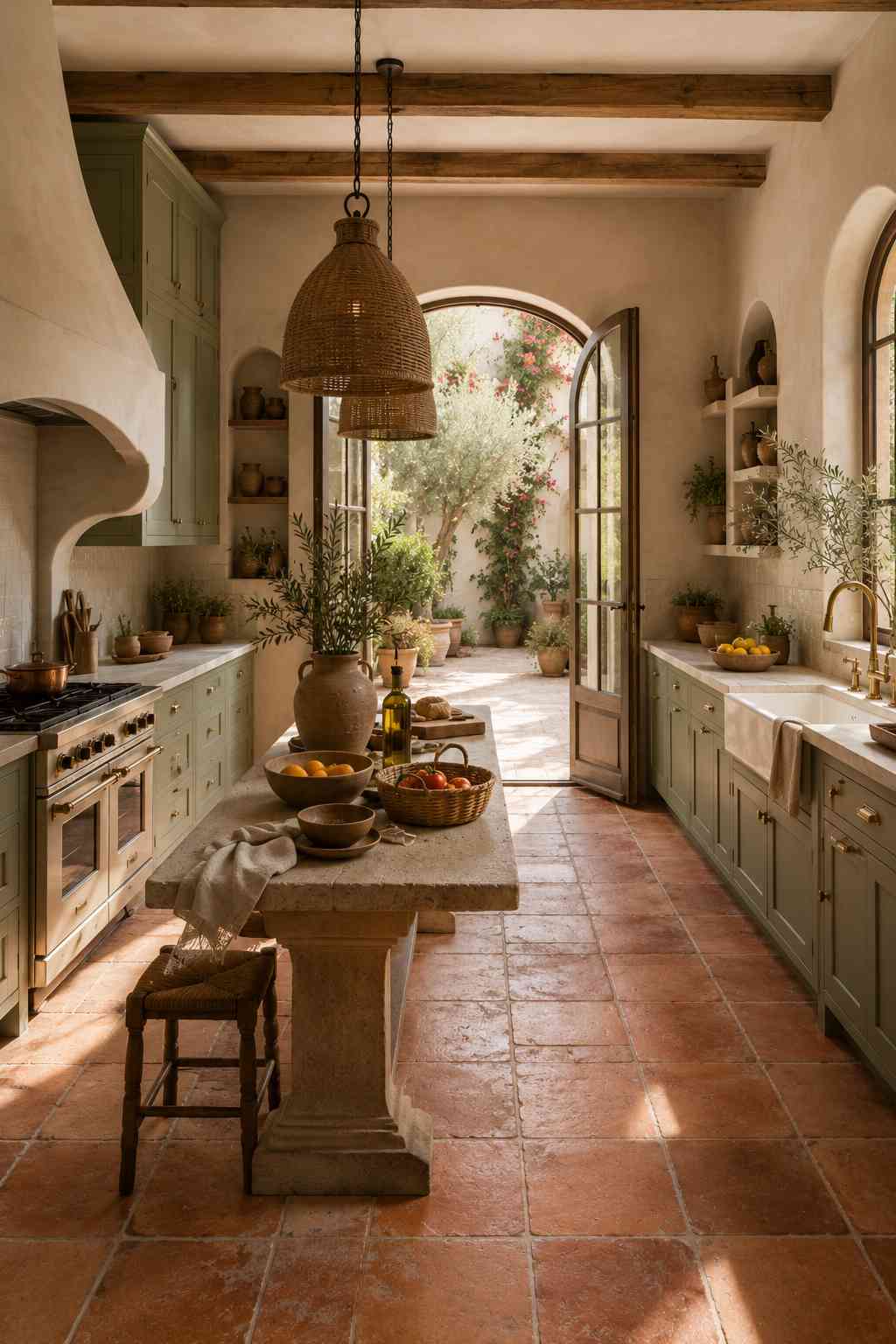
Terracotta and sage share the same muted, earthy family, so pairing them doesn’t compete the way brighter colors might. This combination has a distinctly Mediterranean or Californian feel and works well if you want your kitchen to feel a little more layered and collected rather than showroom-perfect.
10. Sage Green Cabinets With Marble or Quartz Waterfall Island
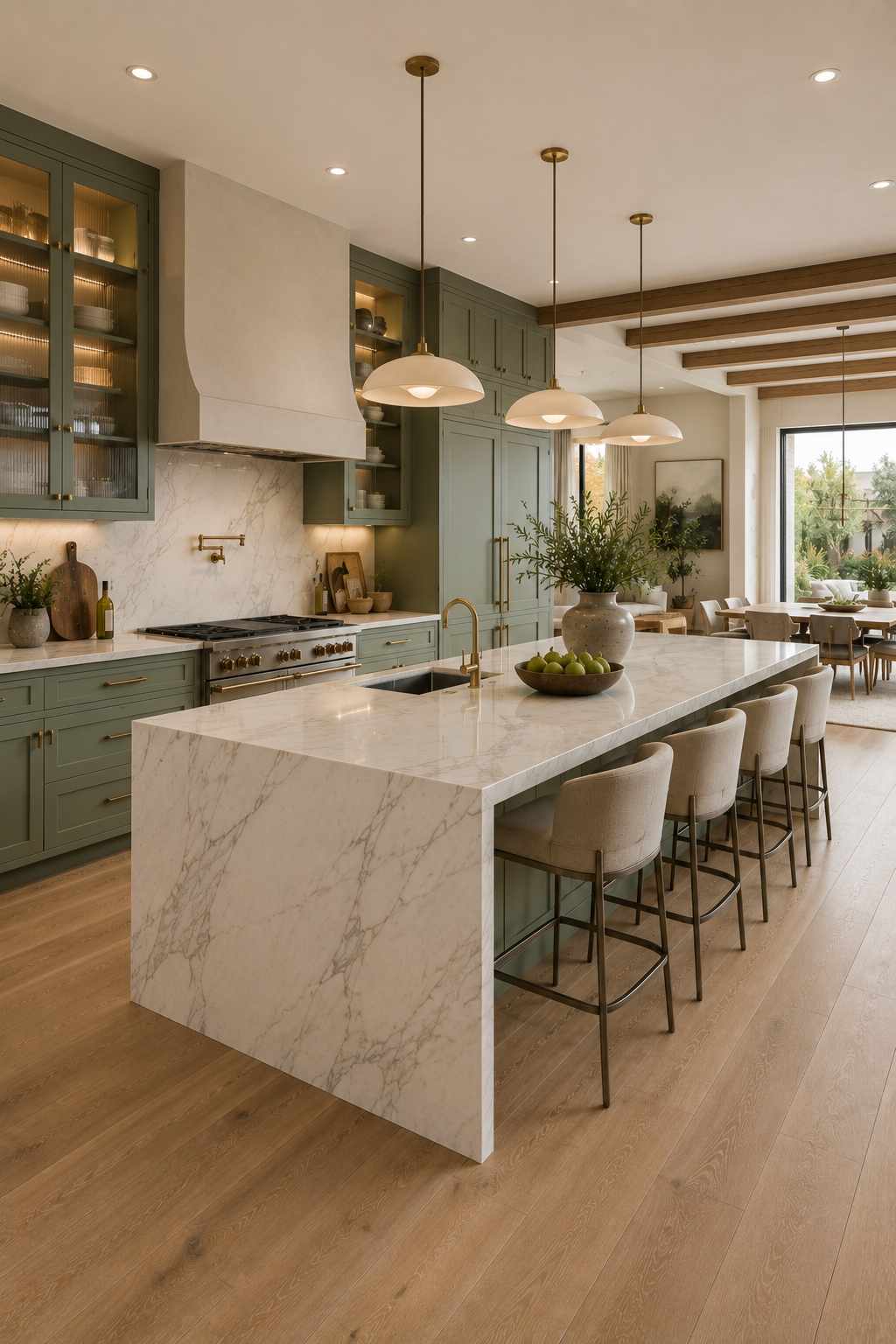
A waterfall-edge countertop in white or light gray marble (or a quartz that mimics it) adds a sleek, high-end feel to sage cabinetry without introducing another color. This pairing shows up constantly in higher-end renovation photos because the smooth stone edge visually “finishes” the cabinetry in a way that feels custom rather than off-the-shelf.
11. Sage Green Kitchen With Open Wood Shelving
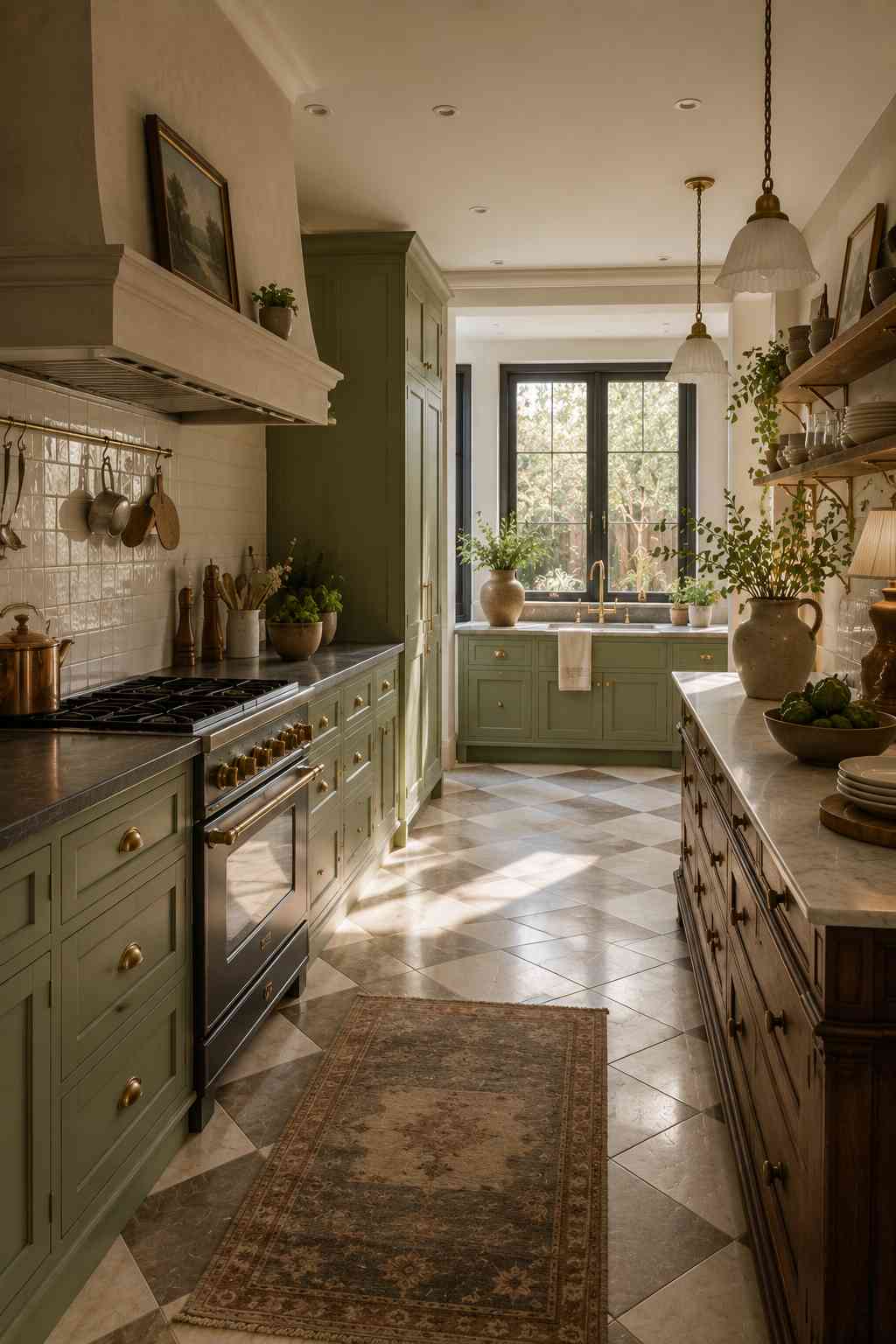
Swapping some upper cabinets for open oak or walnut shelving breaks up a solid run of sage and adds warmth, texture, and a sense of curated display. It’s a popular move in modern farmhouse and Japandi kitchens alike, and it’s genuinely one of the more budget-friendly upgrades if you’re renovating on a limited budget, since open shelving costs less than cabinetry.
12. Sage Green Cabinets With a Bold Black Faucet and Fixtures
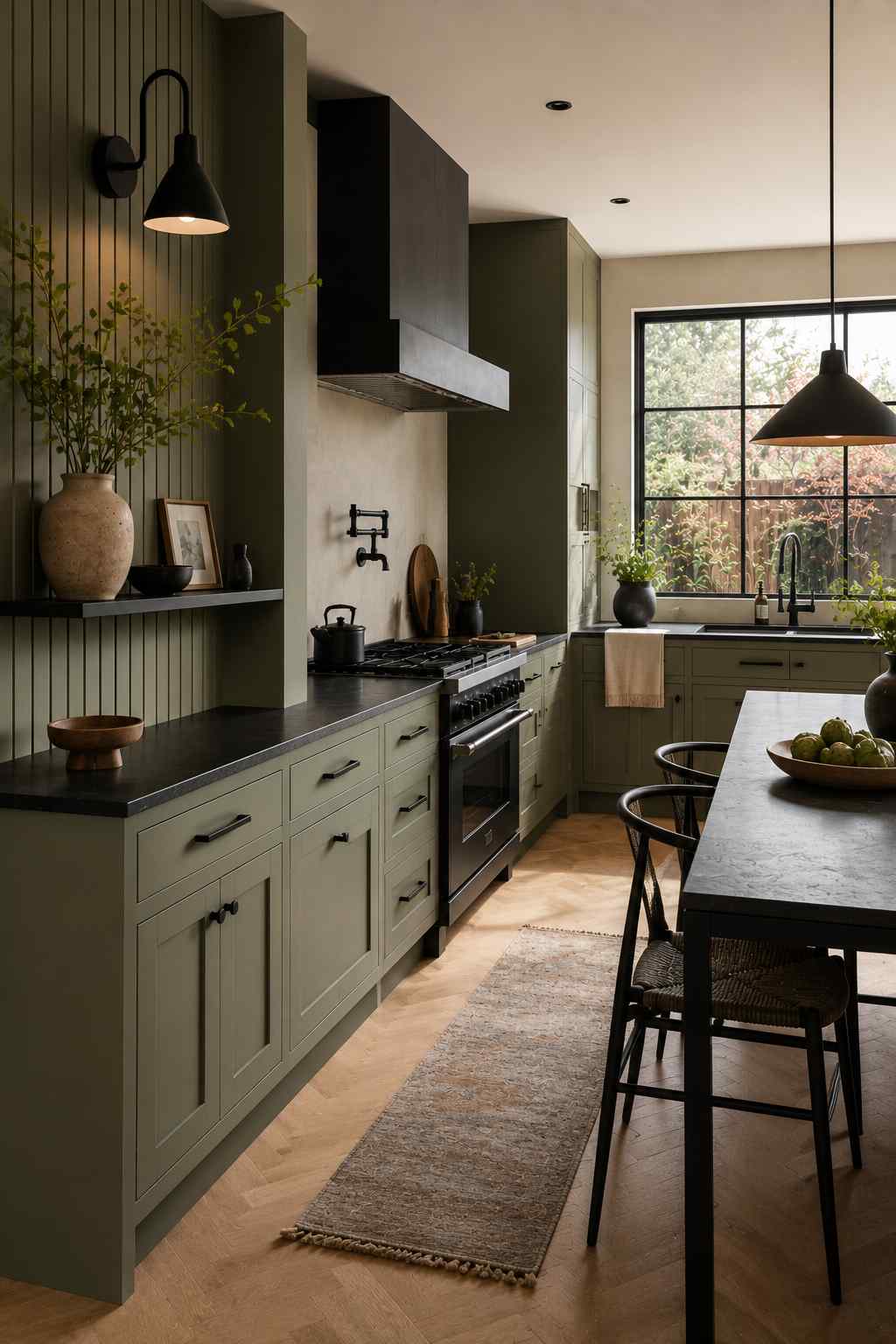
Matte black hardware, faucet, and pendant lights against sage green cabinetry create a much more graphic, high-contrast look than brass or nickel. This is a strong option if the rest of your kitchen (walls, floor) is very neutral and you want a few strong anchor points rather than an evenly distributed color story.
13. Sage Green Kitchen With a Patterned Encaustic Tile Floor
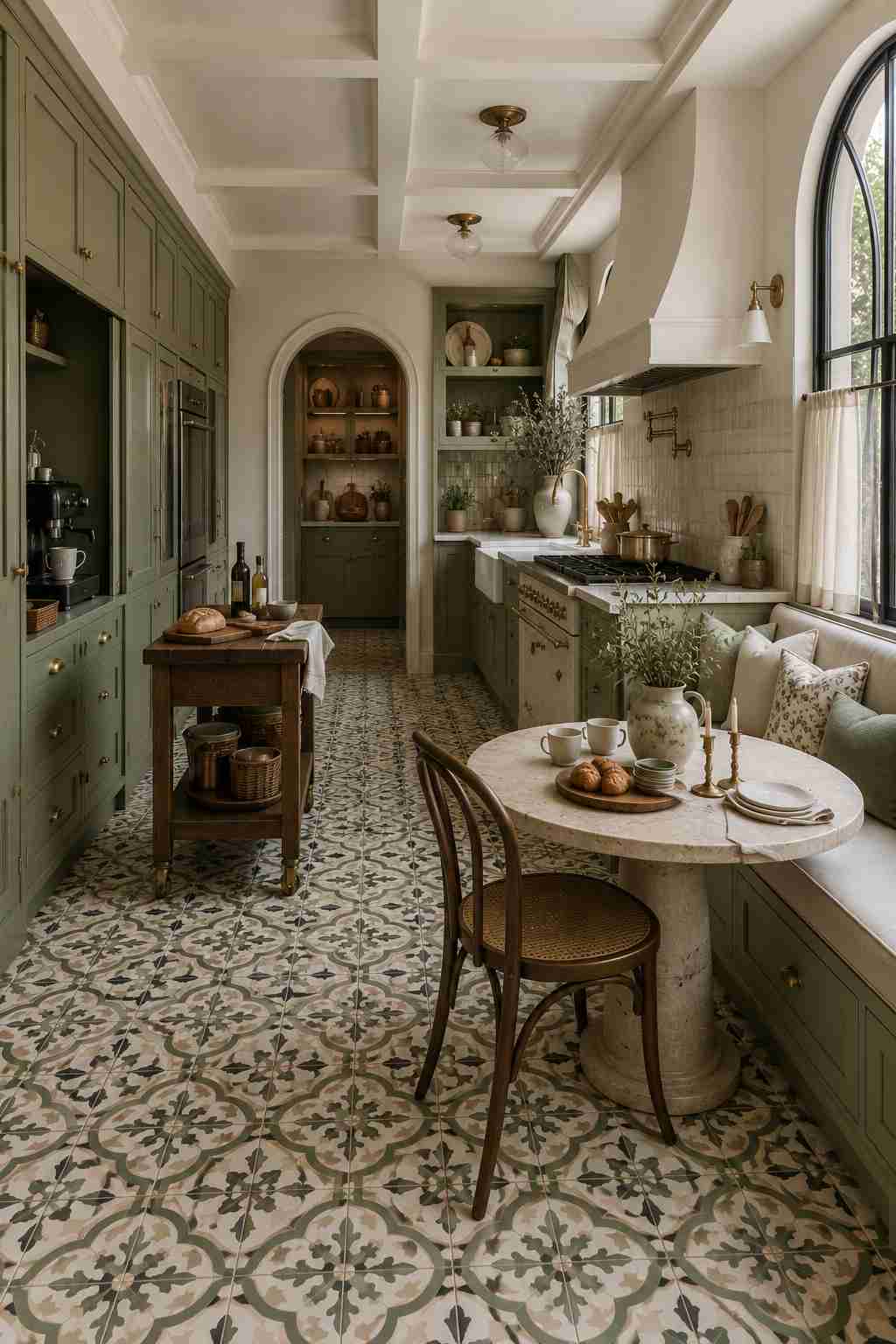
Patterned cement or encaustic tile in sage, cream, and charcoal tones grounds the whole room and adds visual interest at floor level, which matters a lot in kitchens where the cabinetry itself is a single solid color. This is a great option for anyone who wants more personality in the space but isn’t ready to introduce a second wall or cabinet color.
14. Sage Green Lower Cabinets With Wood-Tone Uppers
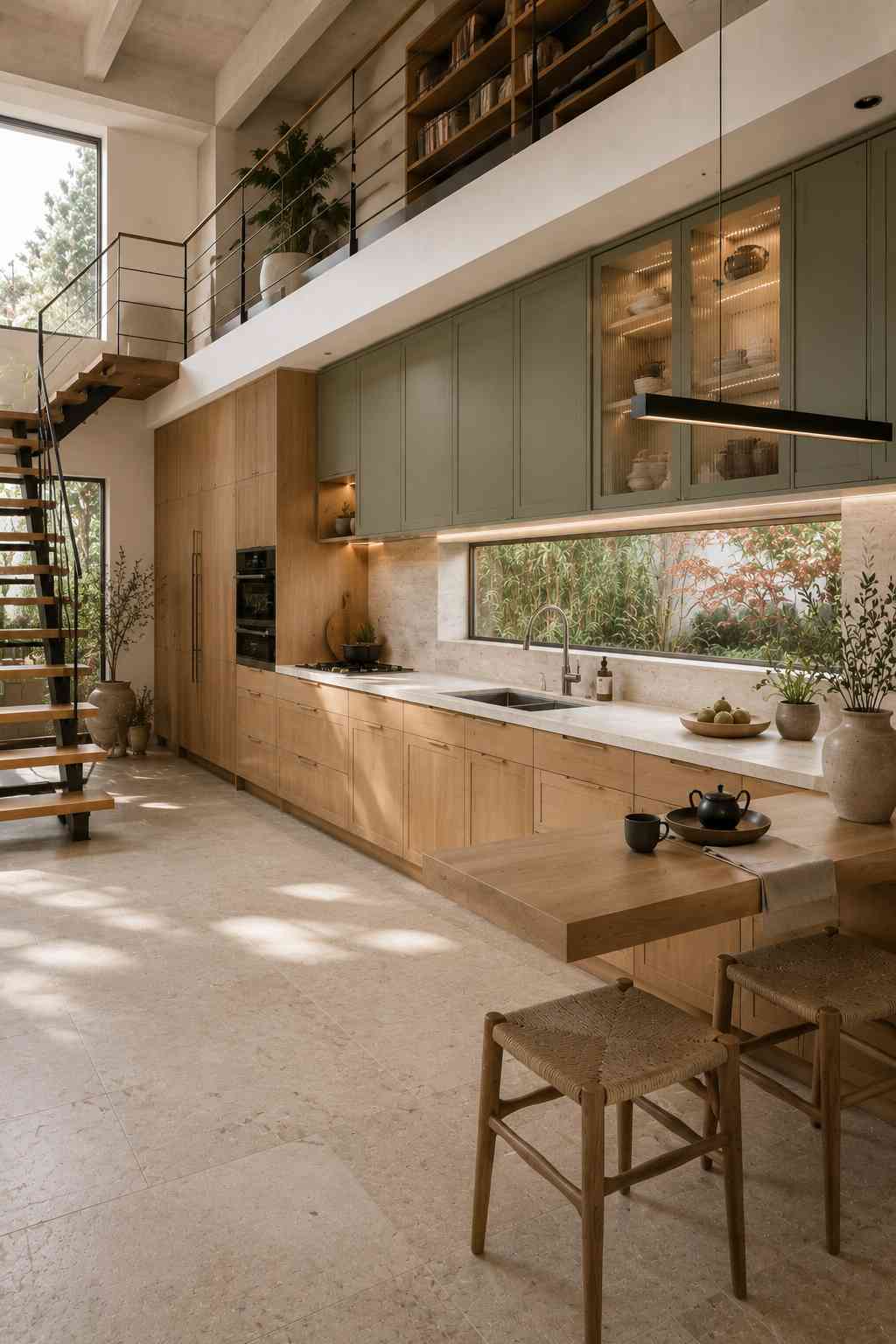
Instead of pairing sage with white, try pairing it with warm oak or ash upper cabinets. This combination leans heavily into the “modern organic” or Japandi trend and tends to feel more current in 2026 than the classic two-tone white-and-color pairing, which has been popular for almost a decade now.
15. Sage Green Kitchen Island as the Sole Color Statement
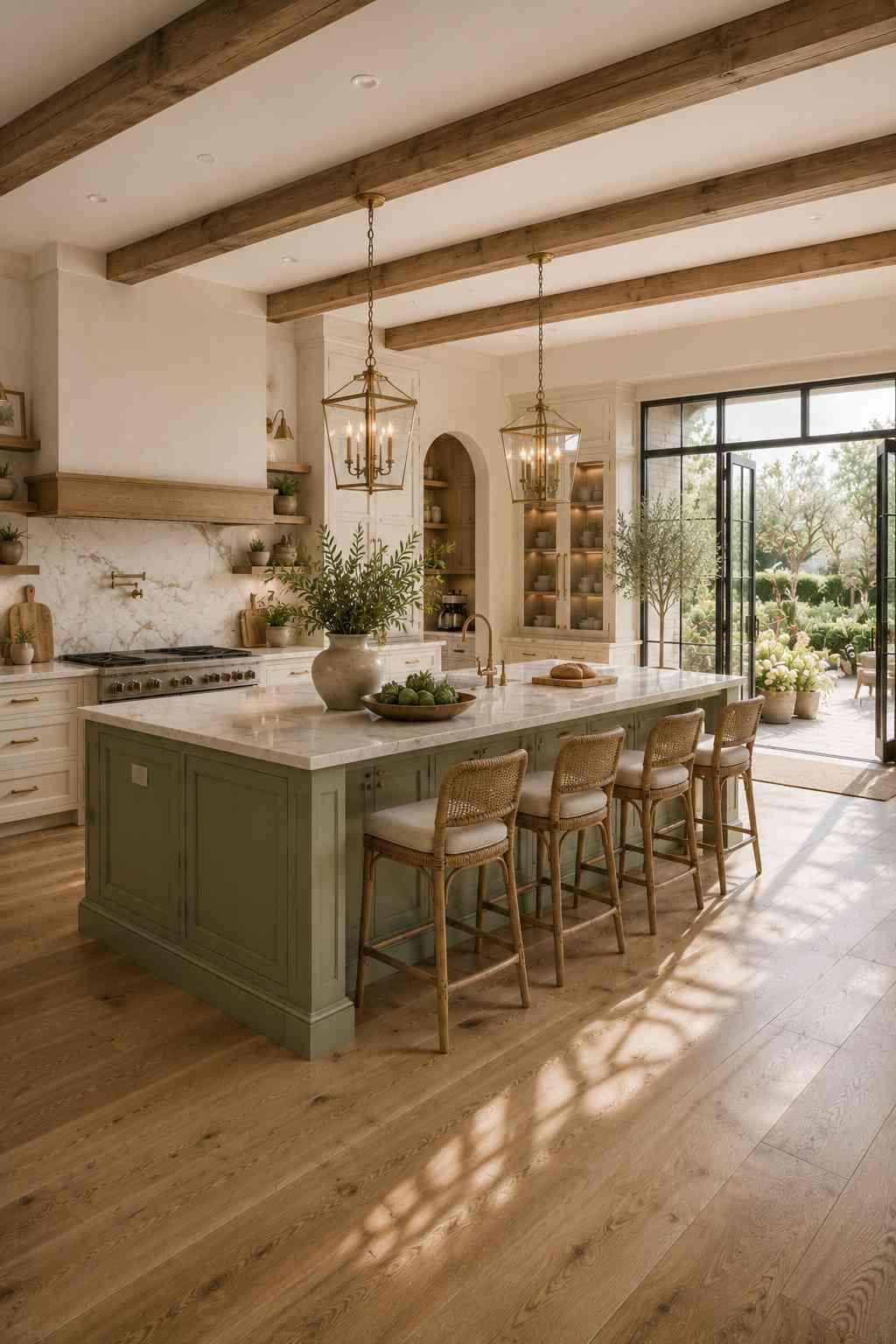
In an otherwise all-white or all-wood kitchen, painting only the island sage green gives you a focal point without any risk of the color feeling overwhelming. It’s also one of the easiest updates to reverse later if your taste changes, since you’re only repainting one piece of furniture rather than an entire kitchen.
16. Sage Green Cabinetry With Ribbed or Fluted Cabinet Fronts
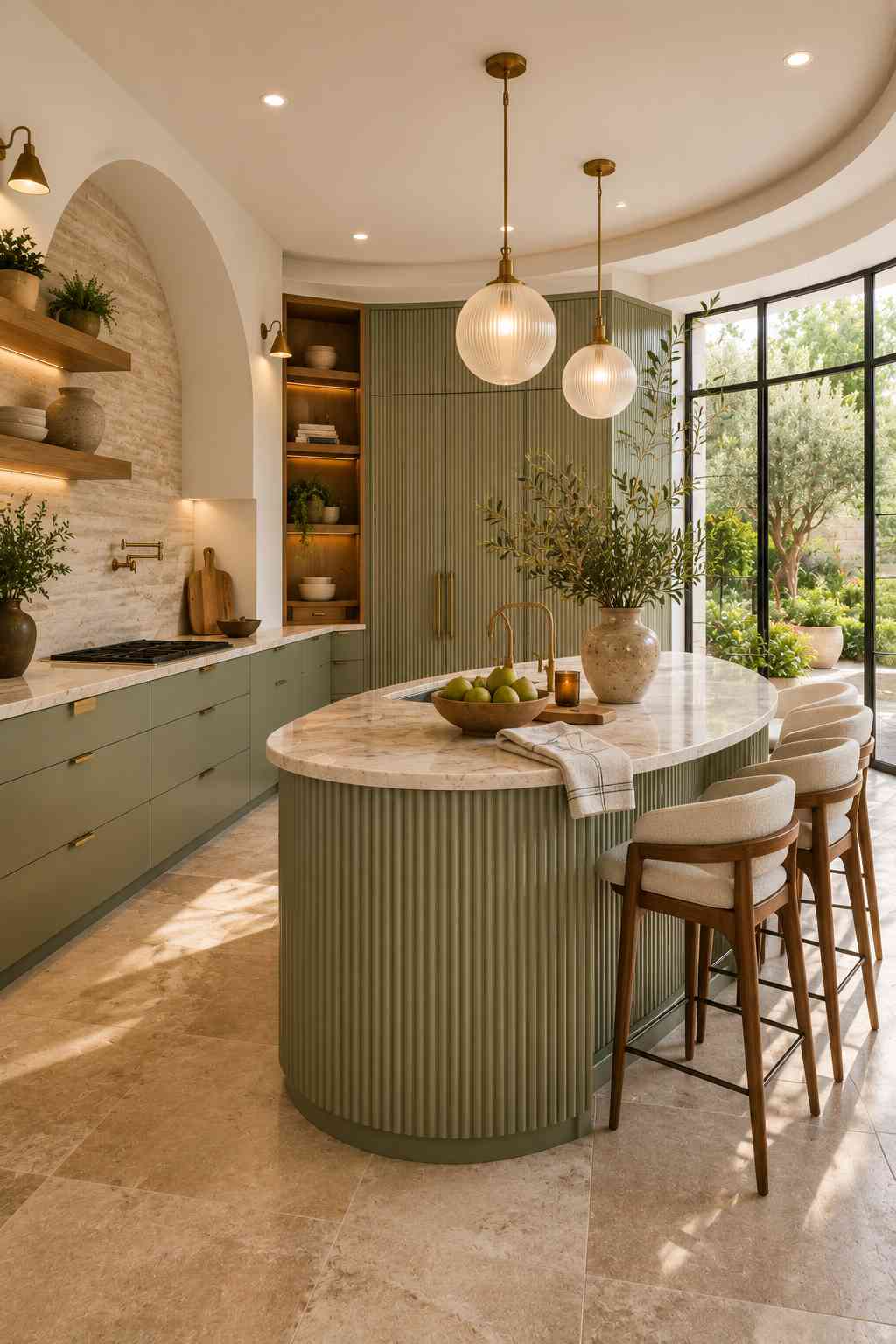
Fluted or ribbed cabinet detailing has become a signature of modern kitchen design over the last couple of years, and it looks particularly good in a muted color like sage because the color doesn’t distract from the texture — it enhances the shadow lines the fluting creates. This detail is often reserved for an island or a statement pantry wall rather than the whole kitchen.
17. Sage Green With Handleless, Push-to-Open Cabinets
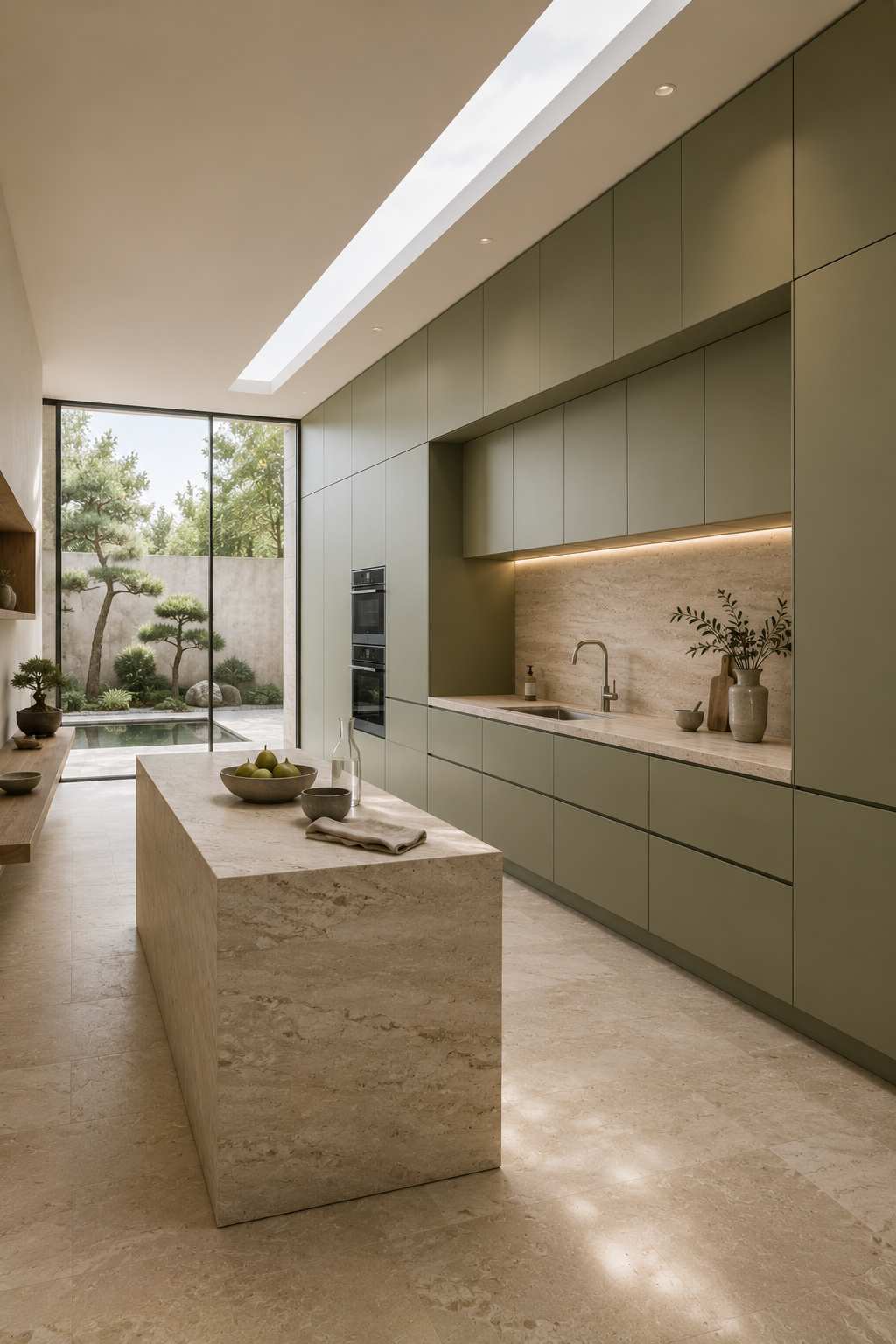
For a very clean, minimalist European look, skip hardware entirely and use push-to-open or integrated finger-pull cabinet doors. This pairs especially well with matte sage finishes, since the lack of visible hardware keeps the focus entirely on the color and the cabinet lines.
18. Sage Green Kitchen With a Contrasting Navy Pantry Wall
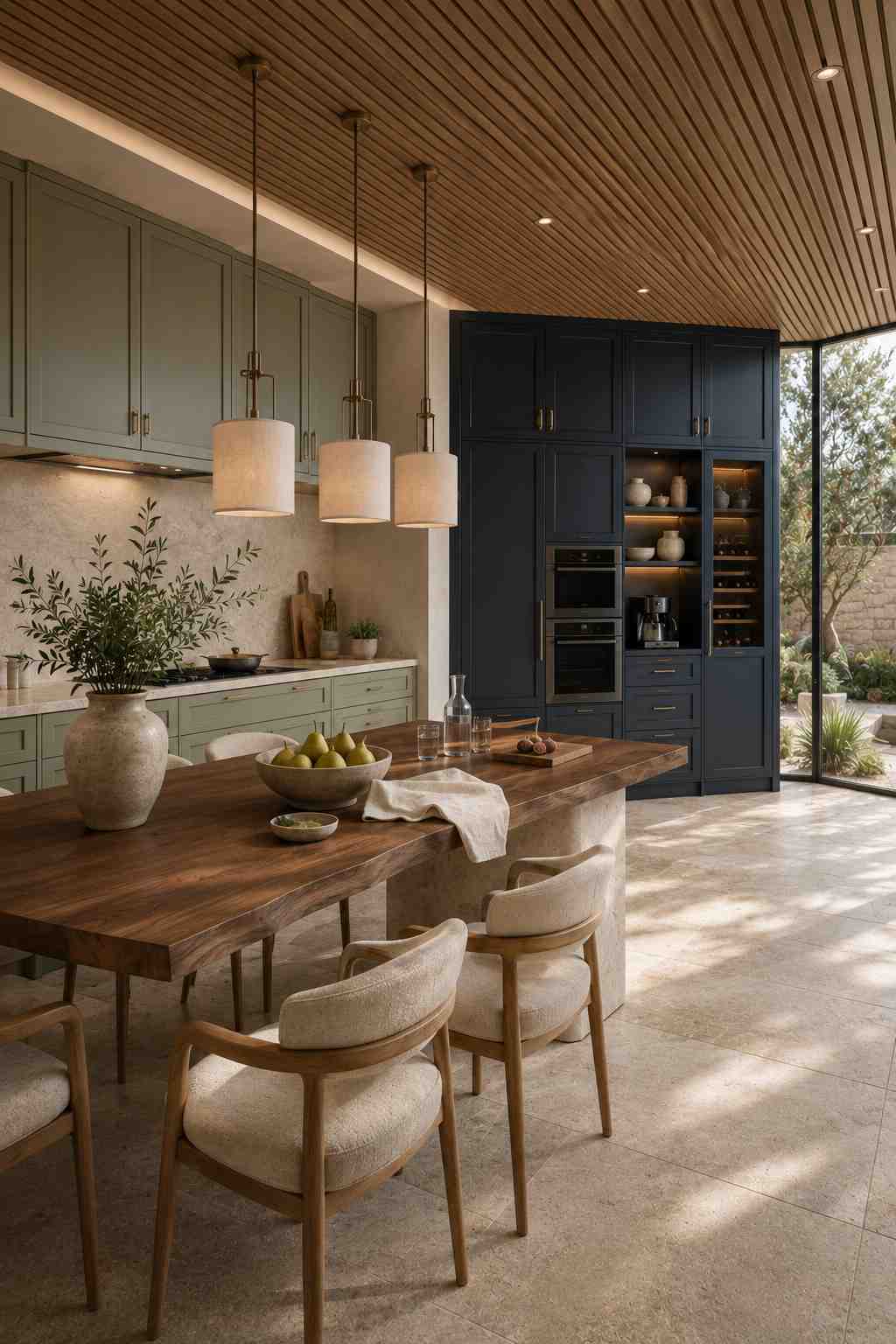
If you want more than one color in the space but still want it to feel cohesive, pair sage cabinetry with a navy blue pantry or coffee-station wall. Both colors sit in the same muted, low-saturation family, so the contrast feels intentional rather than random.
19. Sage Green Cabinets With Terrazzo Countertops
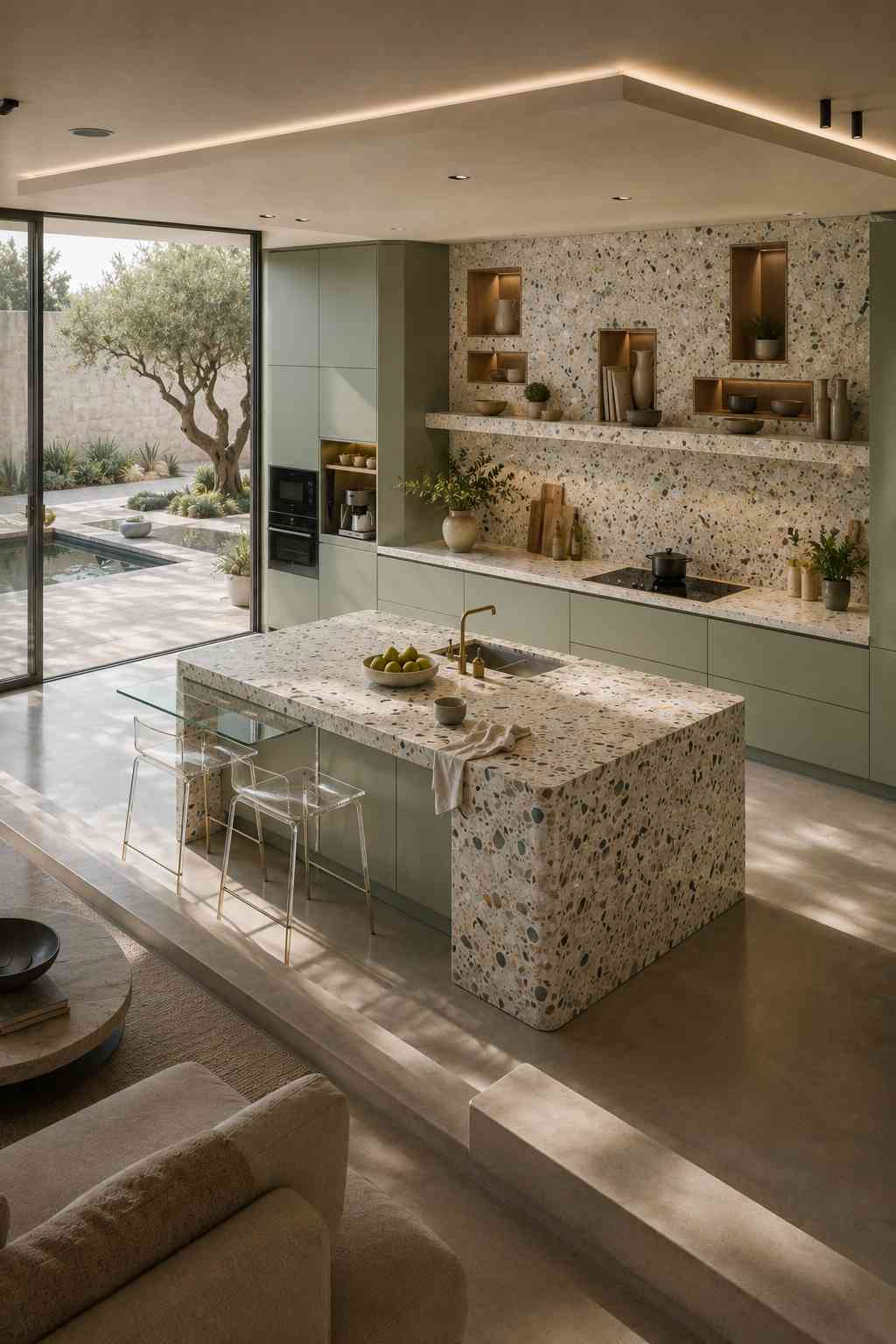
Terrazzo has made a strong comeback in modern kitchens, and a terrazzo countertop with flecks of white, cream, and even a little green ties beautifully into sage cabinetry. It’s a good option if you want the countertop itself to feel like a design feature rather than a neutral backdrop.
20. Sage Green Kitchen With Exposed Range Hood in Matching Color
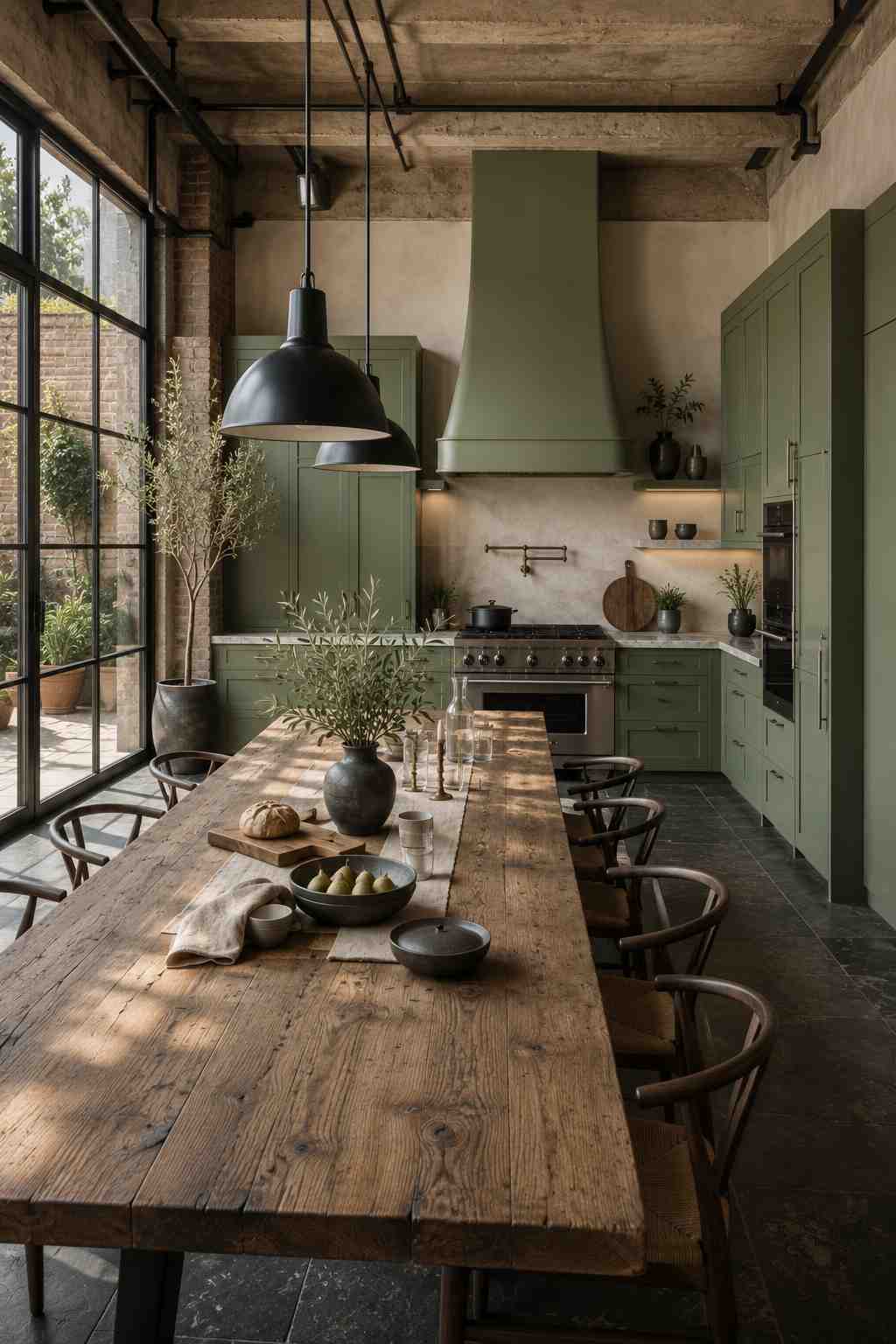
Rather than hiding the range hood in a cabinet surround, let it stay exposed and paint or clad it in the same sage tone as your cabinetry. It creates a clean, uninterrupted color story and works particularly well in kitchens with a strong architectural or industrial lean.
21. Sage Green Cabinets With a Bold Graphic Tile Backsplash
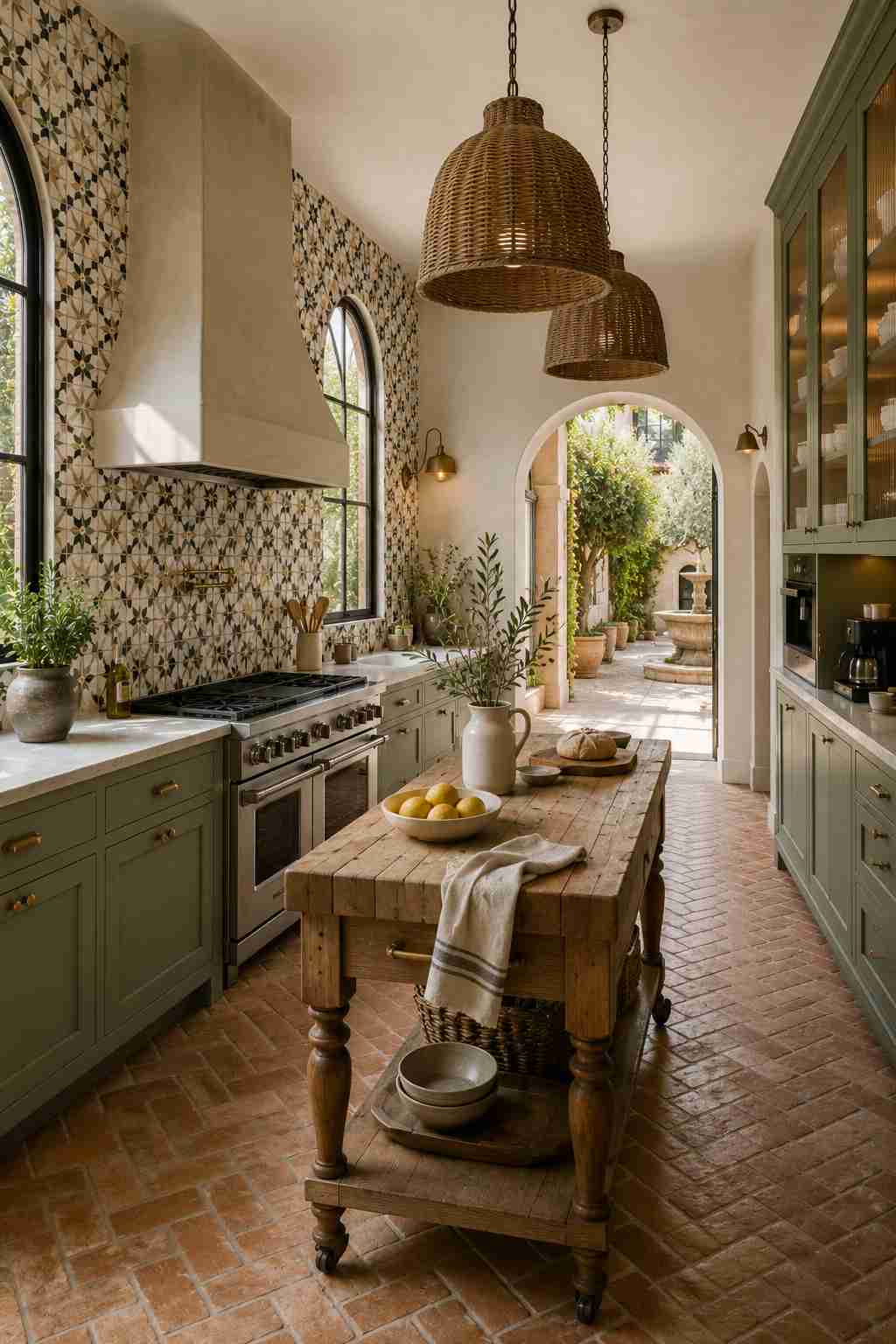
If your cabinetry is a solid, calm sage, you can afford a busier backsplash — think Moroccan-inspired patterns or bold geometric tile in complementary tones. The muted cabinet color acts as a buffer so the backsplash pattern doesn’t overwhelm the whole room.
22. Small Sage Green Kitchen With Glass-Front Upper Cabinets
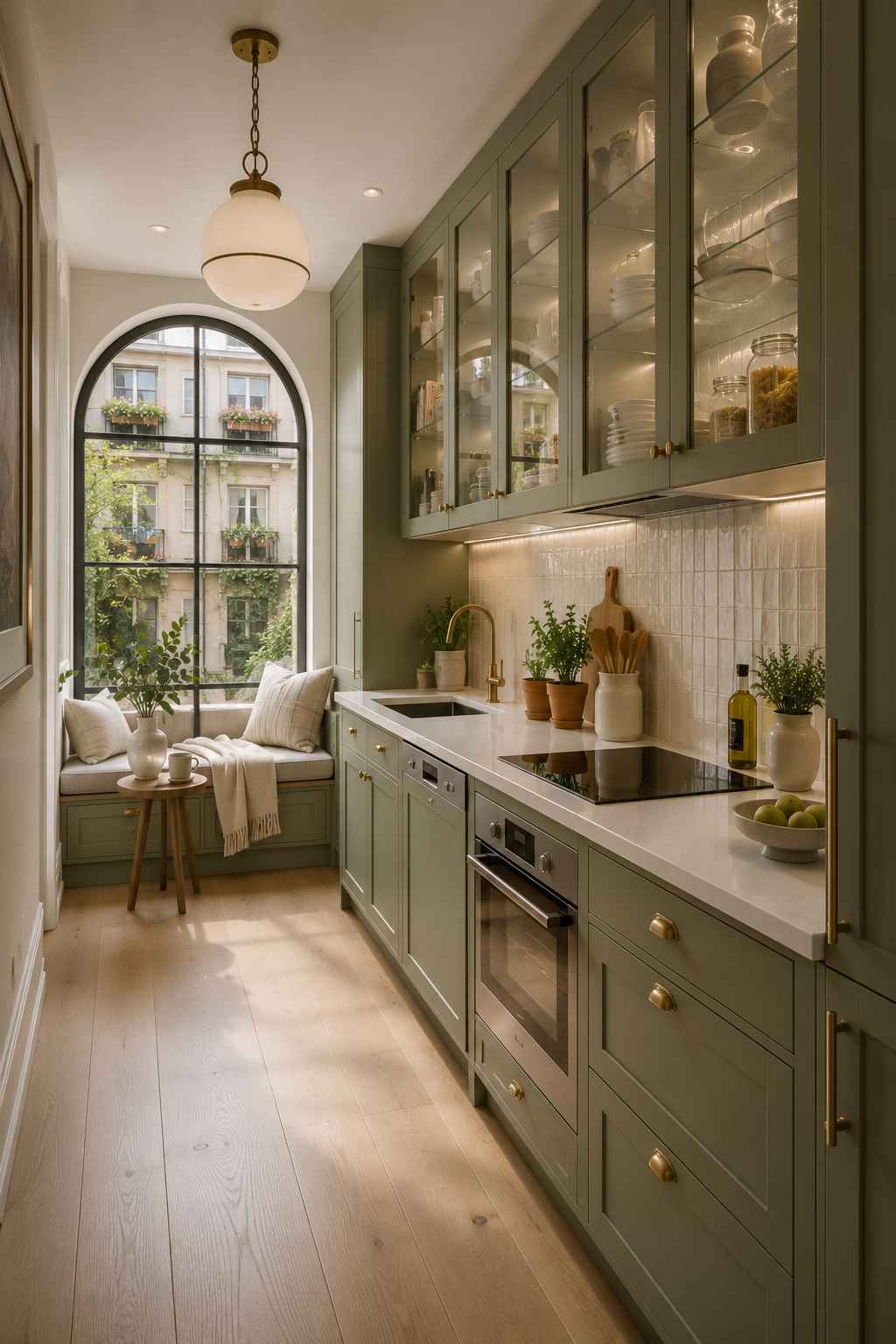
In smaller kitchens, glass-front uppers in a sage frame keep the room feeling open rather than boxed in, since you can see through to the wall behind rather than facing a solid block of color at eye level. This is one of the better ideas on this list specifically for apartment or galley kitchens.
23. Sage Green Kitchen With Warm Dimmable Lighting
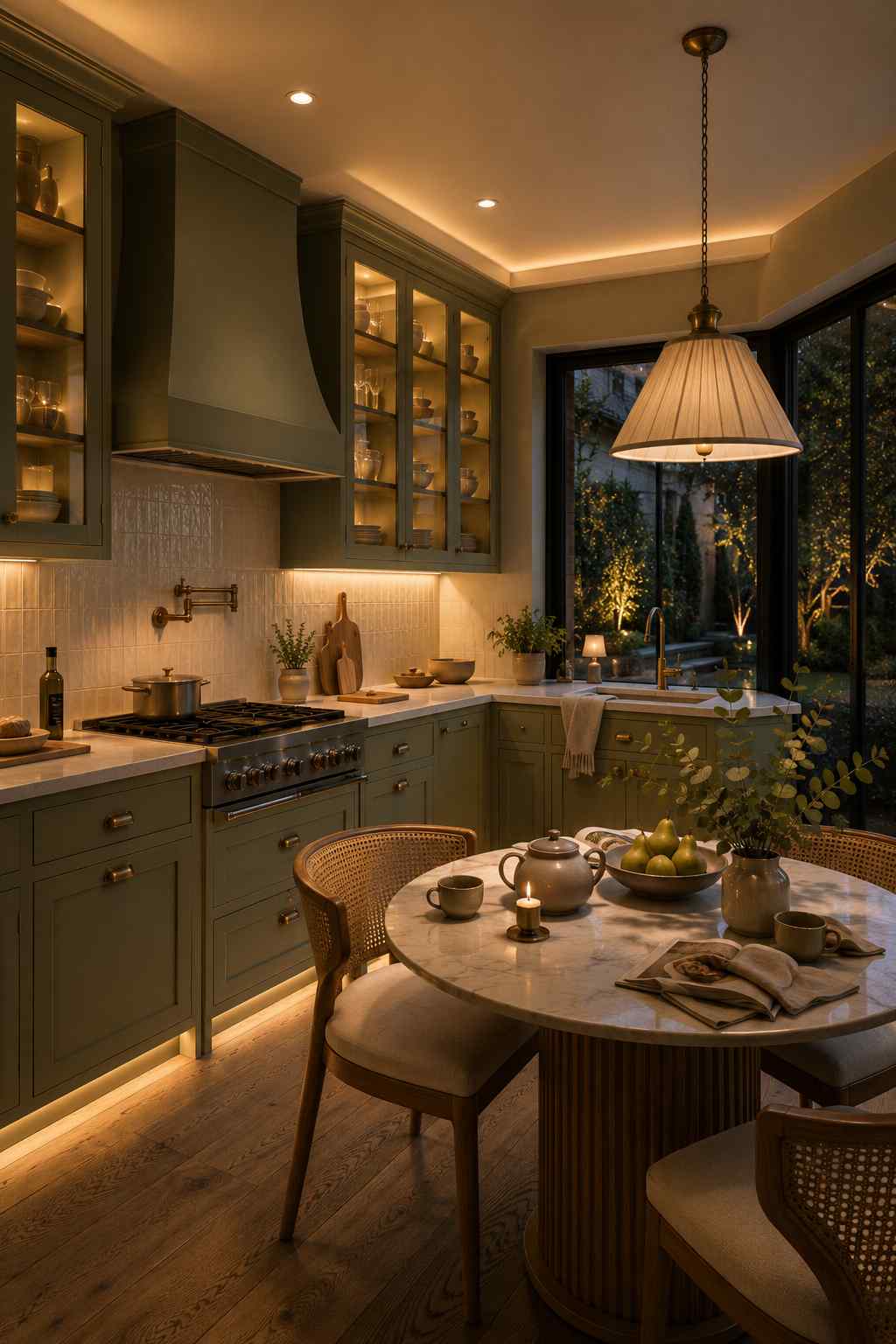
This one isn’t about cabinetry at all, but it matters more than people expect: sage green shifts noticeably under different lighting temperatures. Warm dimmable lighting (2700K–3000K) brings out the color’s earthy, herbal undertones, while cooler lighting can push it toward a flatter, more gray-green look. This is the mistake I made in my own kitchen — I picked my paint color under daylight-temperature bulbs, and by evening the whole room looked gray instead of green. If you’re planning a sage kitchen, test your paint sample under your actual kitchen lighting at night before committing.
24. Sage Green Cabinets With a Woven or Rattan Light Fixture
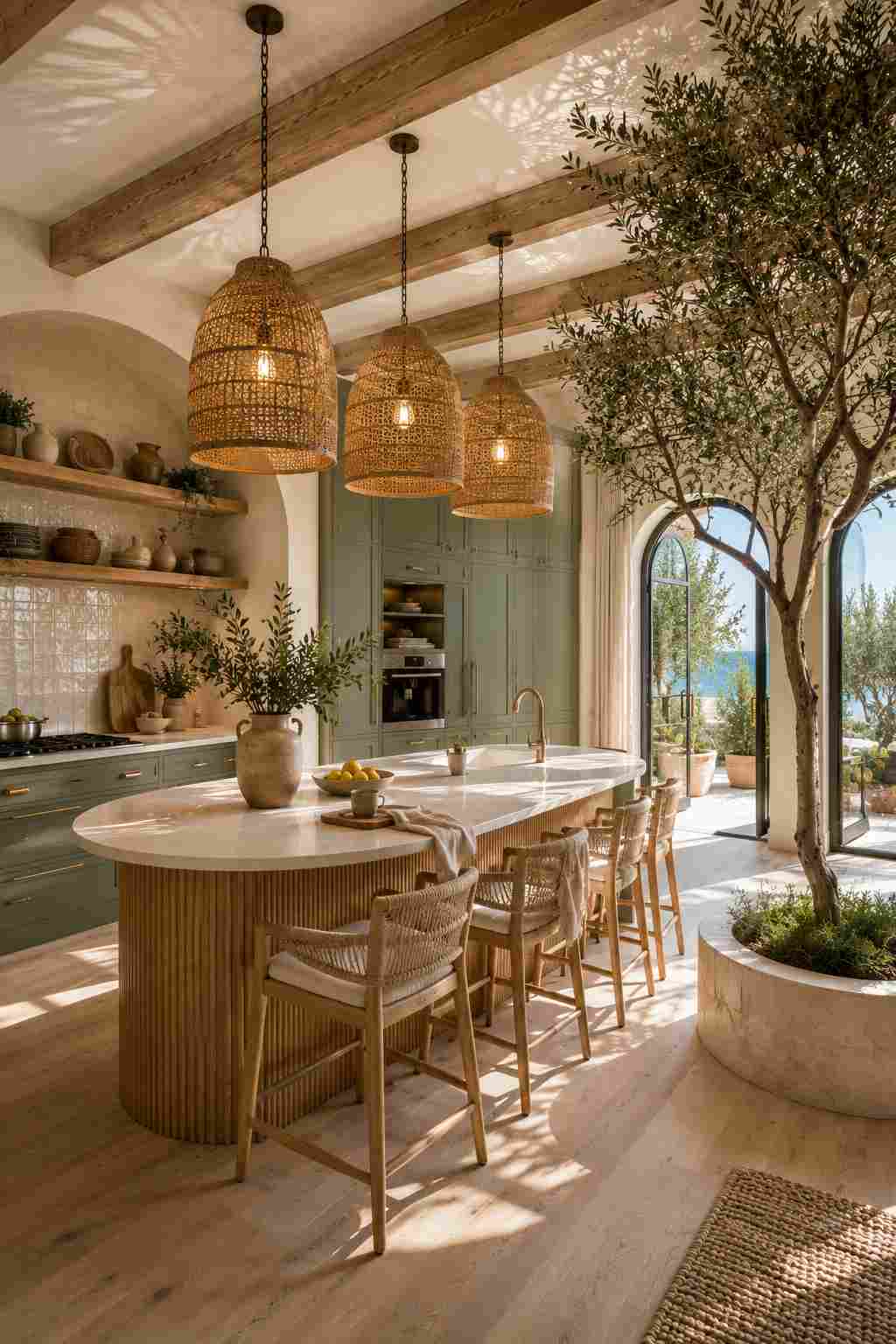
Pendant lights in rattan, cane, or woven rope add a natural, textural counterpoint to painted cabinetry and are one of the easiest, lowest-cost ways to make a sage kitchen feel current, since this detail is closely associated with the modern organic and coastal-modern trends dominating interior design right now.
25. Sage Green Kitchen With Minimal Upper Cabinets (Open-Concept Wall)
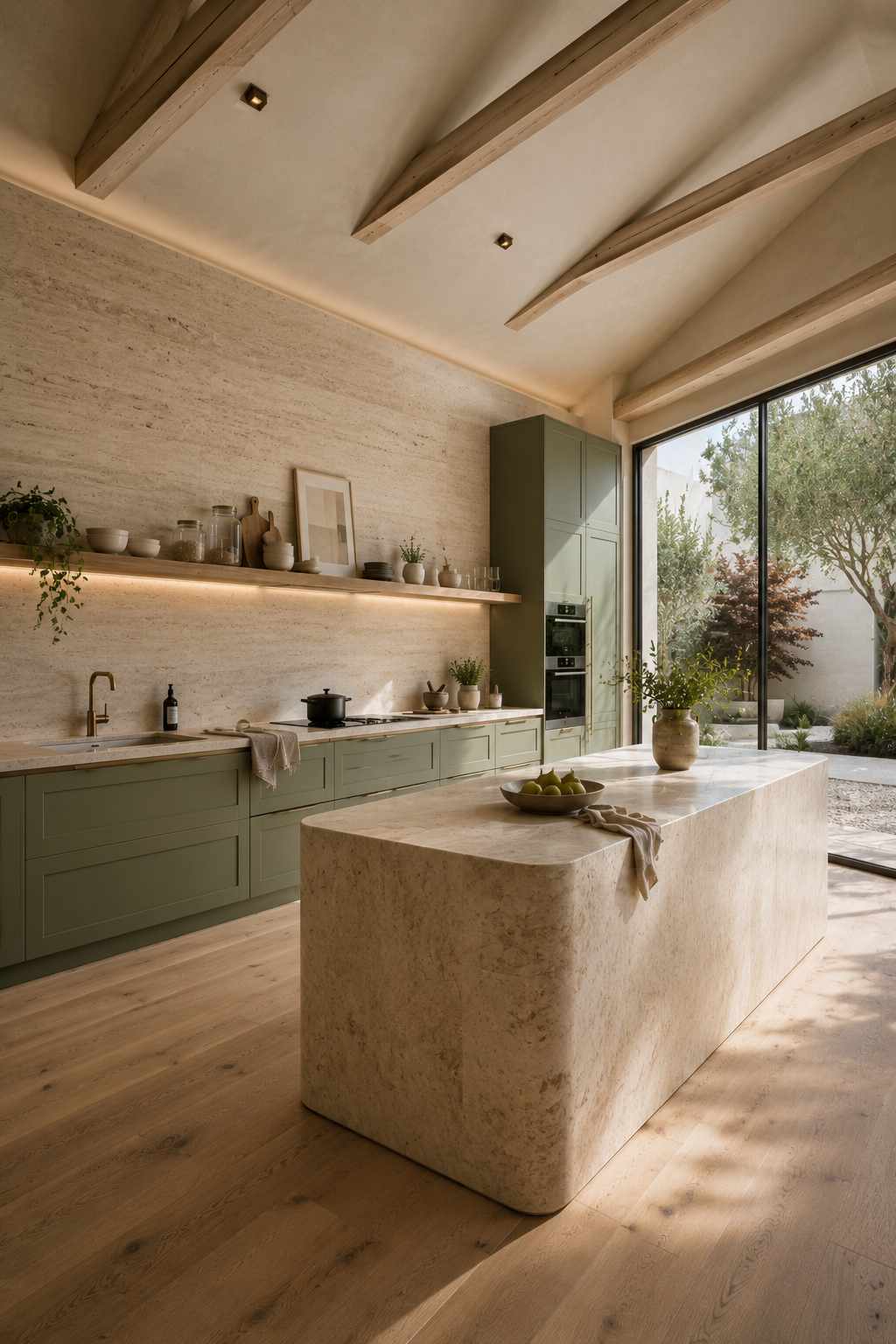
Some of the most striking modern sage kitchens skip upper cabinets almost entirely, relying instead on a single run of lower cabinetry, a large island, and maybe one tall pantry cabinet. This lets the sage color read almost like a piece of furniture rather than “kitchen cabinetry,” which is part of why it photographs so well and feels architecturally modern.
How to Choose the Right Shade of Sage Green
Not all sage greens are equal, and this is where a lot of kitchen repaints go wrong. A few things I’d genuinely recommend checking before you buy a gallon of paint:
- Test in your actual room, not a store swatch. Sage green shifts dramatically depending on natural light exposure, so a color that looks perfect in a north-facing showroom can look muddy or overly yellow in a south-facing kitchen.
- Look at the undertone. Some sage greens lean gray, some lean yellow (closer to olive), and some lean slightly blue. Hold your swatch next to your countertop and flooring samples to see which undertone actually complements what you already have, rather than choosing the color in isolation.
- Go slightly darker than you think for cabinets. Paint always reads lighter once it’s rolled onto a large vertical surface under kitchen lighting than it does on a small paint chip.
- Use a durable cabinet-grade paint or professional spray finish. Kitchen cabinets take a lot of abuse — grease, water, constant hand contact — so a standard wall paint will chip and yellow much faster than a proper enamel or cabinet-specific finish.
Common Mistakes to Avoid
A few things I’ve noticed come up again and again in kitchens that don’t quite land the way people hoped — including a couple I only learned by getting them wrong myself:
- Pairing sage with too many other colors. Sage is a quiet color, and it works best when it’s allowed to be the main event, paired with one or two neutrals rather than three or four competing tones.
- Choosing a shiny, high-gloss finish. Sage green almost always looks more expensive and more modern in a matte or satin finish. High gloss tends to push it toward looking like a plastic toy kitchen rather than a considered design choice.
- Ignoring the floor. A busy or very warm-toned floor can fight with sage green more than people expect. If you’re not replacing flooring, bring a sample of your paint color to stand next to it before committing.
- Skipping the hardware decision. Hardware finish changes the entire feel of a sage kitchen — warm brass reads traditional-modern, black reads industrial-modern, and nickel or chrome reads clean and contemporary. This is not a minor detail to leave for last — I left it for last in my own kitchen and ended up buying hardware twice because the first finish just didn’t sit right with the paint once everything was up.
Frequently Asked Questions
Does sage green go out of style quickly?
Because sage is a muted, low-saturation color rather than a trend-driven bright shade, it tends to have more staying power than more saturated greens like emerald or kelly green. It behaves more like a neutral, which is part of why designers keep returning to it year after year rather than treating it as a passing fad.
What countertop color goes best with sage green cabinets?
White, cream, and warm gray countertops are the safest and most versatile choices, but butcher block, terrazzo, and honed marble all work well depending on the overall style you’re going for. The main thing to avoid is a countertop with strong, busy veining in a competing color, since that can visually clash with the softness of sage.
Is sage green too dark for a small kitchen?
Not necessarily — a matte or satin sage on lower cabinets only, paired with white or light wood uppers and good lighting, can work beautifully in a small kitchen. The mistake to avoid is painting every surface (cabinets, walls, and ceiling) the same dark tone in a room with limited natural light, which can make the space feel smaller rather than cozier.
What wall color pairs best with sage green cabinets?
A soft white, warm greige, or very pale cream wall color tends to work best, since it lets the cabinetry stand out without introducing a second competing color. If you want more contrast, a warm white with slightly more depth (rather than a stark, cool white) usually looks more intentional.
Final Thoughts
Sage green earns its popularity honestly — it’s genuinely one of the more flexible, forgiving colors you can build a kitchen around, whether you’re doing a full renovation or just repainting an existing cabinet run over a weekend. The ideas above range from full commitment (all-sage cabinetry floor to ceiling) to low-risk experiments (a sage backsplash or a single painted island), so there’s a reasonable starting point here no matter your budget or how ready you are to commit to the color.
If you’re still deciding, my honest advice is to start smaller than you think you want to. Paint an island, or a lower cabinet run, live with it for a few weeks under your actual kitchen lighting, and then decide whether you want to go further. Color decisions in a room you use every day are much easier to get right in stages than all at once — that’s certainly how I wish I’d approached mine, instead of committing to the whole kitchen on the first try.
 Sumit Banerjee
[…] Also Check – Sage Green Kitchen Deisgns […]
[…] ALSO READ: 25 Sage Green Kitchen Ideas With Modern Design […]