
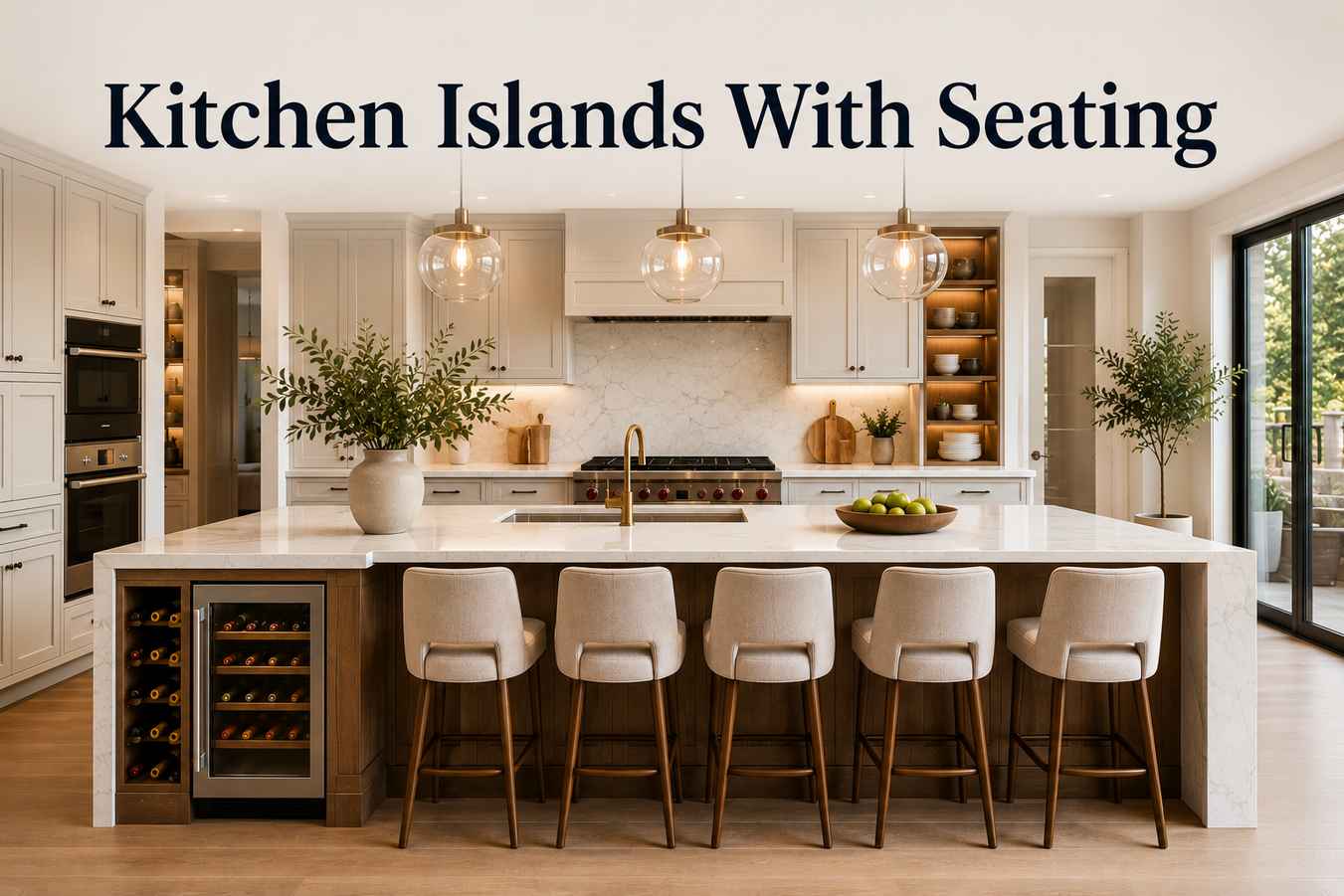
A kitchen island with seating is one of the most practical and stylish upgrades you can make to your home. Whether you’re feeding a family of four or hosting dinner parties for twelve, the right island transforms your kitchen into the social heart of your home.
This guide covers every seating configuration — from intimate two-person setups to grand ten-person islands — along with real design ideas, size recommendations, and tips to help you plan smarter.
Why a Kitchen Island with Seating Is Worth the Investment
Kitchen islands have evolved far beyond simple prep stations. Today, they serve as breakfast bars, homework desks, entertaining hubs, and informal dining spaces all in one.
According to home renovation data, kitchen remodels consistently deliver strong return on investment, and islands with seating are among the most requested features by homebuyers.
Before diving into each seating configuration, here are the key planning principles that apply to every island:
- Counter height (36 inches) works with standard bar stools (24-inch seat height).
- Bar height (42 inches) pairs with tall bar stools (28-30 inch seat height).
- Each seated person typically needs 18-24 inches of width and at least 12 inches of knee depth.
- Leave a minimum of 42-48 inches of walkway clearance on all working sides.
- Always verify structural support and plumbing/electrical placement before finalizing a design.
Kitchen Island with Seating for 2
A two-seat kitchen island is the perfect solution for couples, small apartments, or kitchens where space is at a premium. It keeps the layout open while adding a comfortable spot for quick meals, morning coffee, or a casual catch-up at the end of the day.
Recommended Dimensions
For two seats, aim for an island that is at least 36 to 48 inches wide and 24 inches deep on the seating side. This allows comfortable elbow room without crowding.
Idea 1: The Minimalist Breakfast Bar
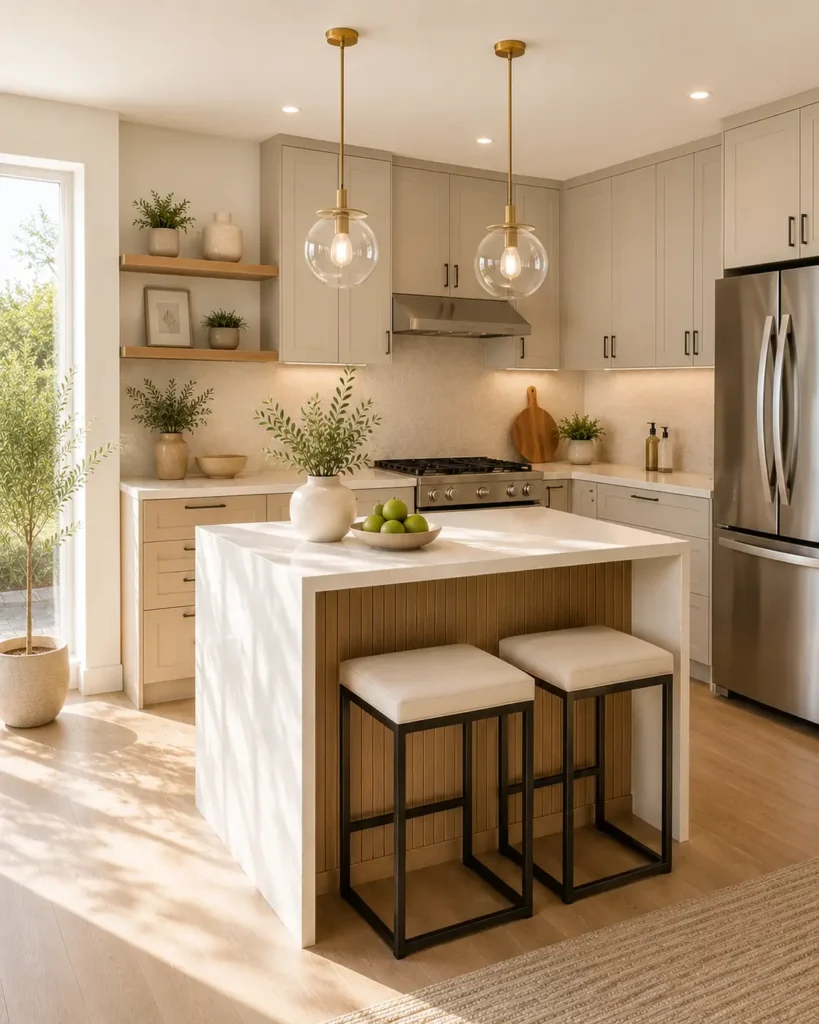
A sleek, narrow island — roughly 36 inches wide and 18 inches deep on the overhang — works beautifully in galley or urban kitchens. Choose backless stools that tuck completely under the counter when not in use, keeping sight lines clean and traffic flow unobstructed. Waterfall quartz countertops in white or light grey give this look a polished, modern feel.
Idea 2: The Cozy Cottage Corner Island
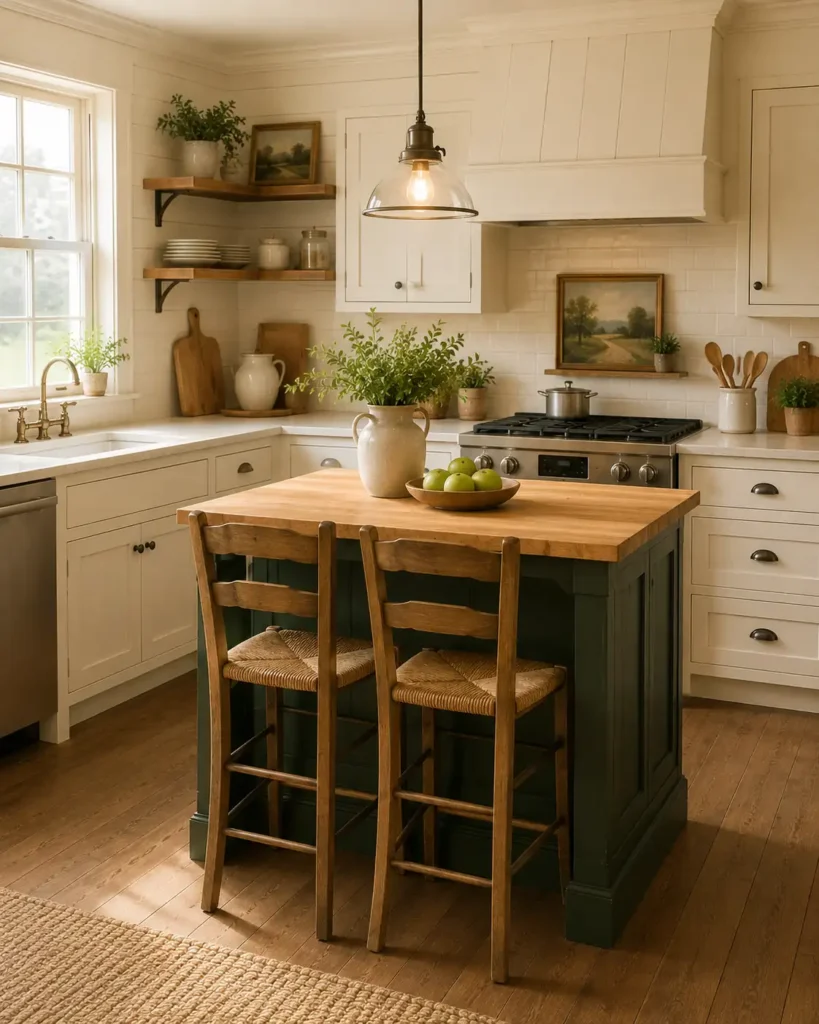
In a farmhouse or cottage-style kitchen, a small butcher-block island with two ladder-back stools creates a warm, lived-in feel. Paint the island base in a contrasting color — deep navy or forest green — to make it a visual focal point. Add a pendant light above to define the seating zone even in an open-plan space.
Idea 3: The Rolling Island for Flexible Living
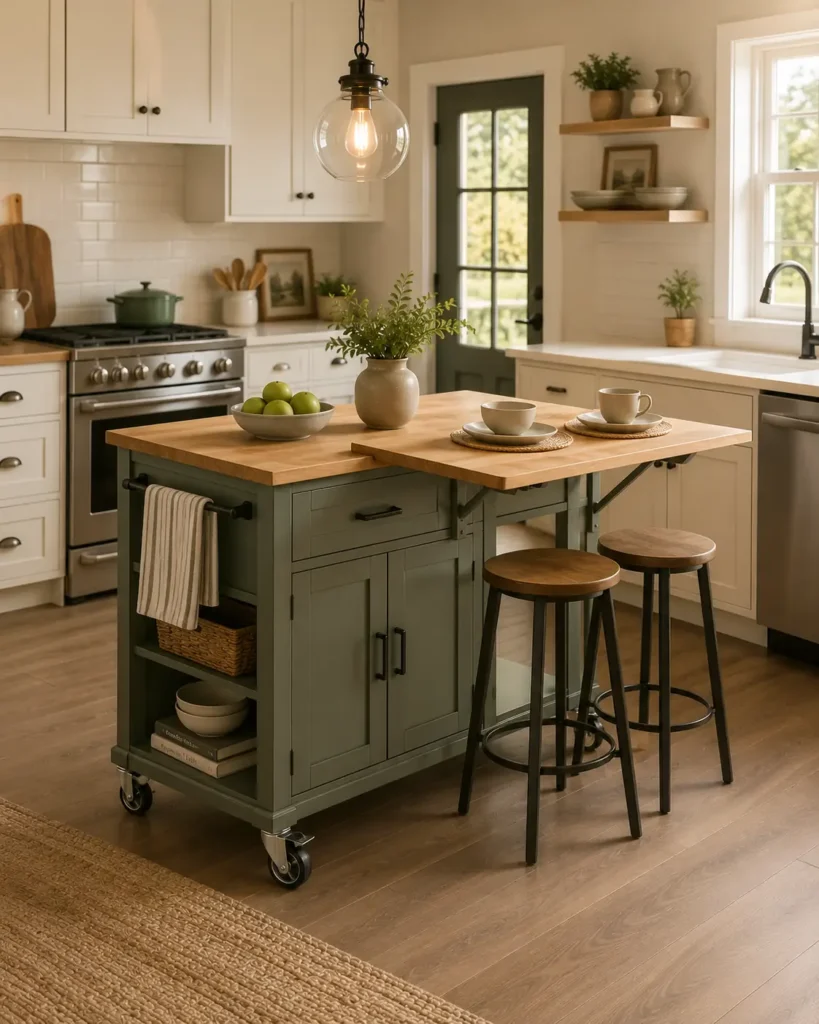
If your kitchen layout changes depending on the occasion, a mobile island on locking casters is a brilliant two-person solution. When you need more prep space, roll it to the center; when guests arrive, wheel it to a wall and use it as a side bar. Look for models with a drop-leaf extension that creates extra seating surface on demand.
Idea 4: The Sunlit Scandinavian Island
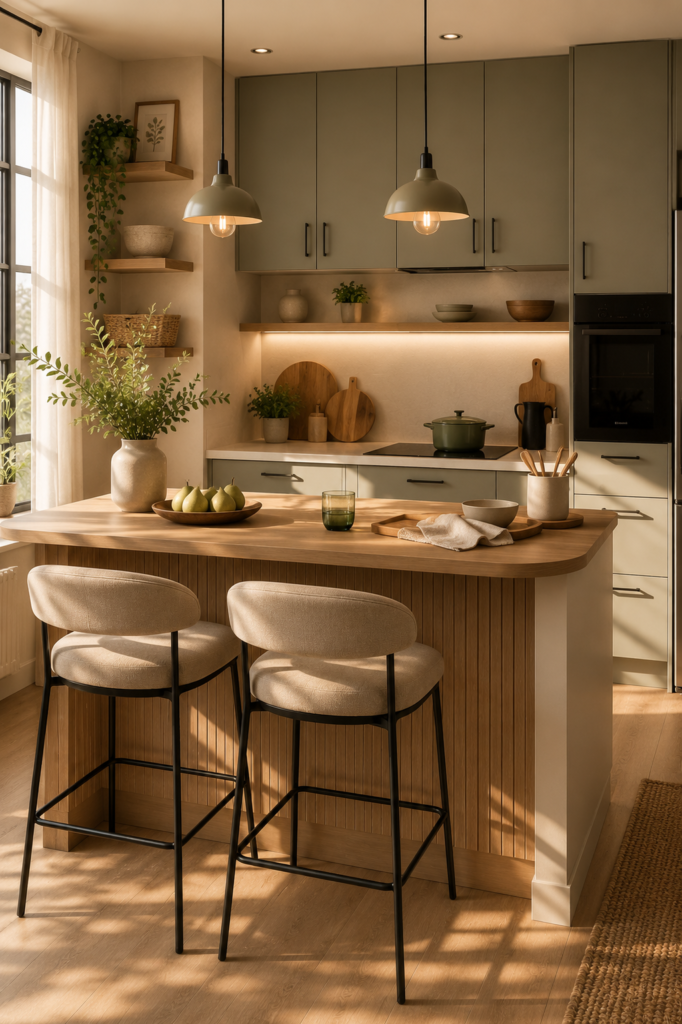
This design draws on Nordic simplicity to create the warmest possible two-person island. A rounded-edge butcher-block countertop in warm oak sits on a fluted wood panel base, giving the island organic texture without visual clutter. Two upholstered low-back stools with slim black metal legs tuck neatly underneath, keeping the footprint compact. Sage-green flat-panel cabinetry in the background, under-cabinet LED strip lighting, and a pair of dome pendants in a matching muted tone tie the whole kitchen together. The natural light flooding in from a side window bounces off the light timber floors, making this layout feel bright and airy even in a modest-sized kitchen. It is a perfect choice for anyone who wants warmth, practicality, and a touch of effortless Scandinavian style.
Kitchen Island with Seating for 3
Three-seat islands strike a sweet spot for small families or couples who occasionally host a friend. It is also the ideal configuration when you want to maintain a continuous prep surface on one side while offering a full row of seating on the other.
Recommended Dimensions
Plan for at least 54 to 60 inches of usable seating width, which comfortably fits three 18-inch-wide stools with a little breathing room between them.
Idea 1: The Open-Plan Divider Island
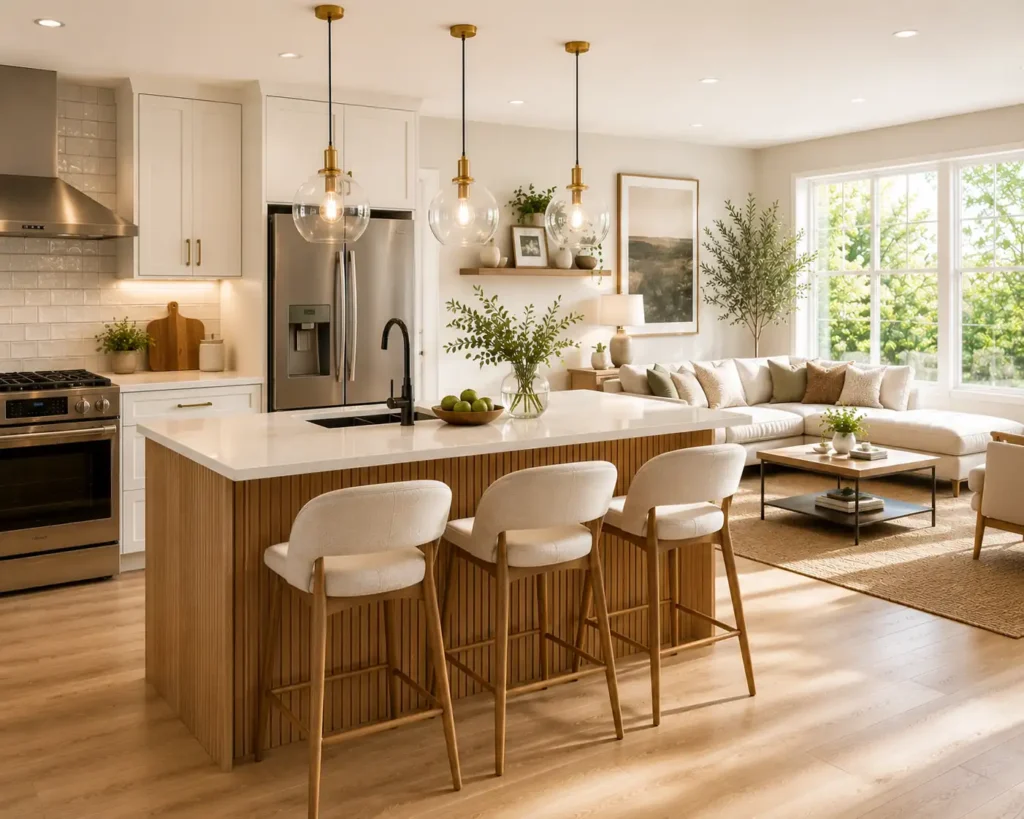
Use a three-seat island as a room divider between your kitchen and living area. A 60-inch island with seating on the living-room side creates a natural boundary while keeping the two spaces connected visually. Choose pendant lights that hang low over the seating zone to anchor the space and create ambiance.
Idea 2: The L-Shaped Prep and Eat Island
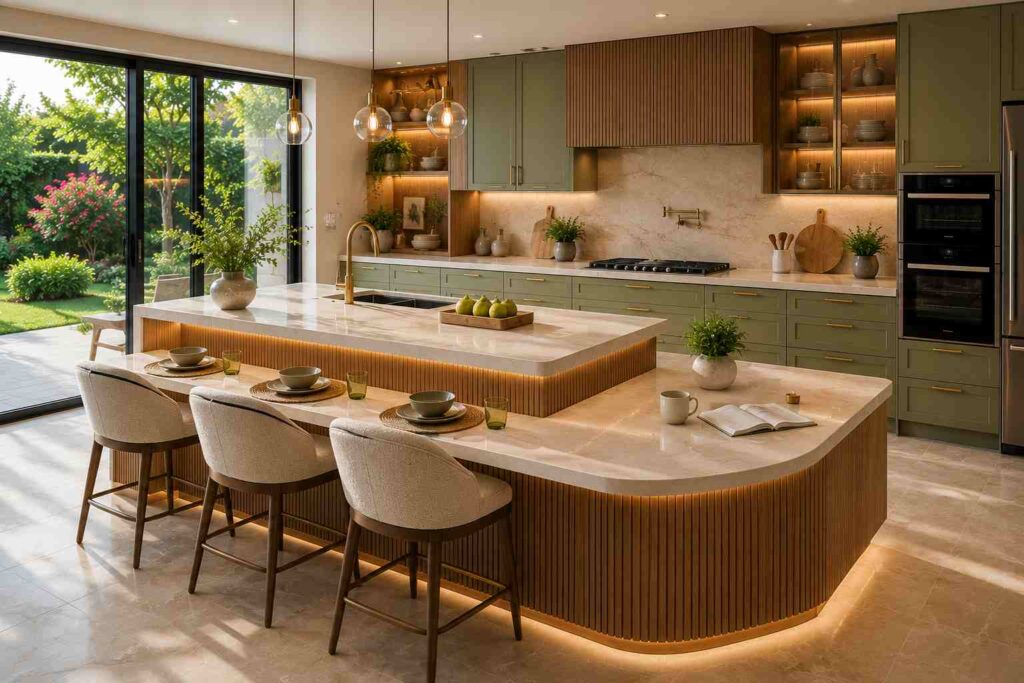
An L-shaped or slightly angled island can seat three people at a lower breakfast-bar height (30 inches) while keeping the main counter at standard 36-inch work height. This two-level design is ideal for families where children do homework at the island — the lower tier is more comfortable for kids, while the upper tier handles adult food prep.
Idea 3: The Industrial Loft Island
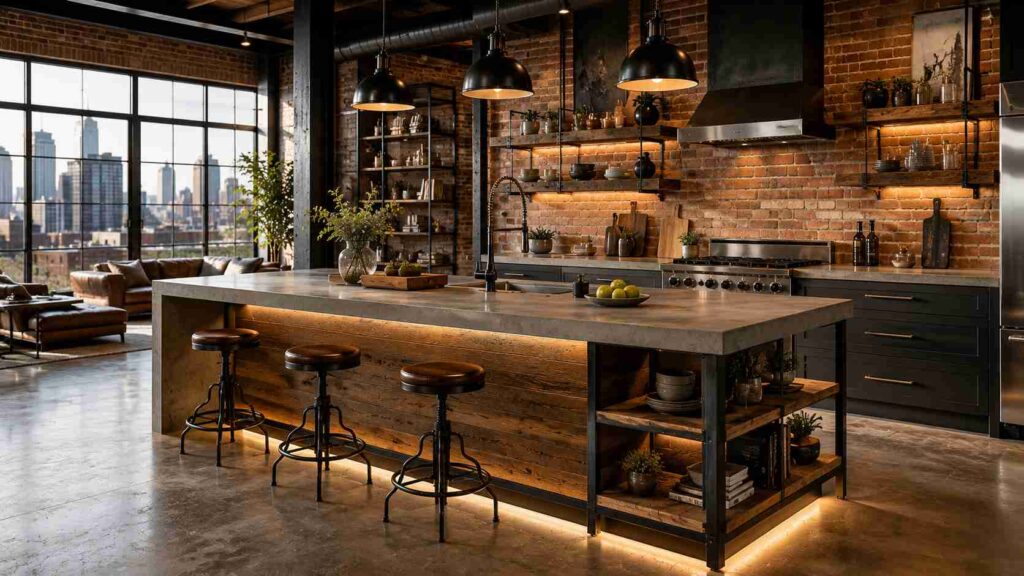
For open-concept lofts or modern urban kitchens, a raw concrete or steel-and-wood island with three matching metal stools makes a bold design statement. Keep the overhead storage minimal to preserve the airy feel, and use recessed LED strips under the island overhang to create a warm glow at night.
Kitchen Island with Seating for 4
Four seats is the most popular kitchen island configuration — it comfortably accommodates a standard family and doubles as an informal dining table for everyday meals, eliminating the need for a separate breakfast nook.
Recommended Dimensions
A minimum of 72 inches (6 feet) long and at least 36 inches wide is recommended. The seating overhang should be 12-15 inches to provide adequate knee clearance.
Idea 1: The Family Hub Island
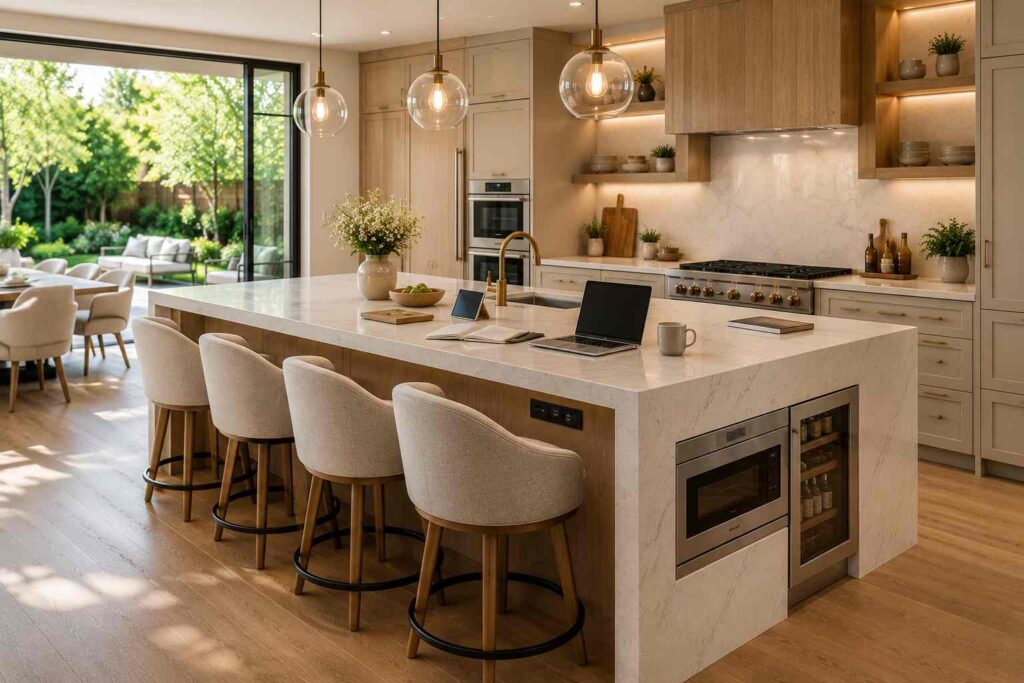
A 7-foot waterfall island in a neutral quartz anchors a family kitchen perfectly. Four upholstered swivel stools add comfort for longer meals, and built-in USB charging ports on the seating side make it a practical homework and device-charging station. Include a built-in microwave drawer or wine fridge in the base to maximize function.
Idea 2: The Transitional Style Island
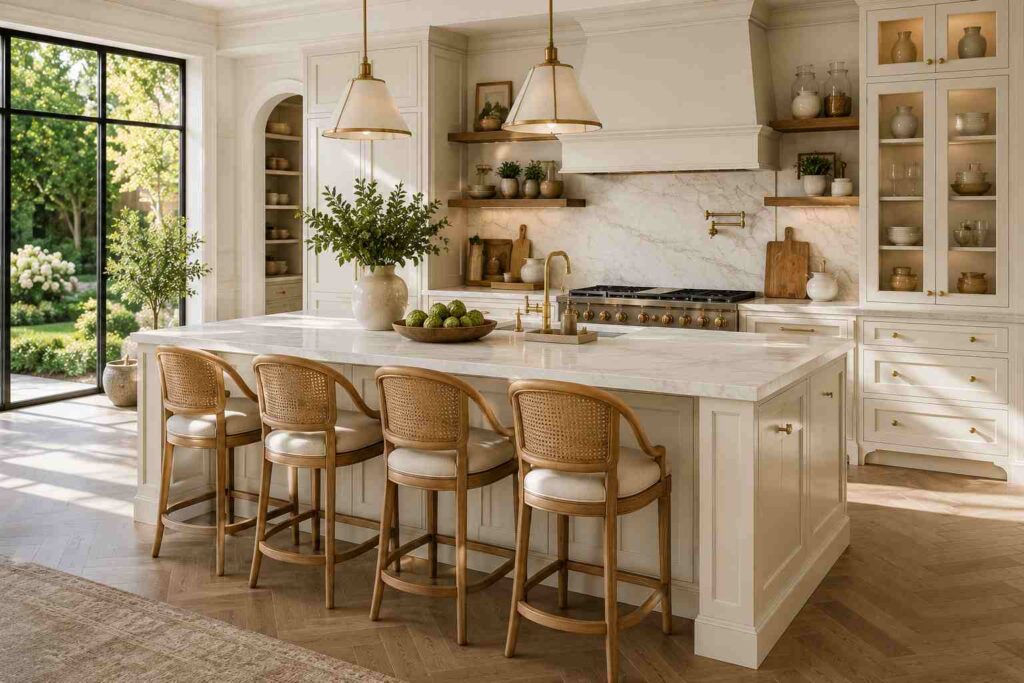
Transitional kitchens blend classic and contemporary elements, and a four-seat island is the perfect centerpiece. Combine shaker-style cabinet doors in a warm white with a honed marble countertop and brushed brass hardware. Pair with wood-and-rattan counter stools for a collected, curated look that feels timeless without being trendy.
Idea 3: The Entertainer’s Prep Island
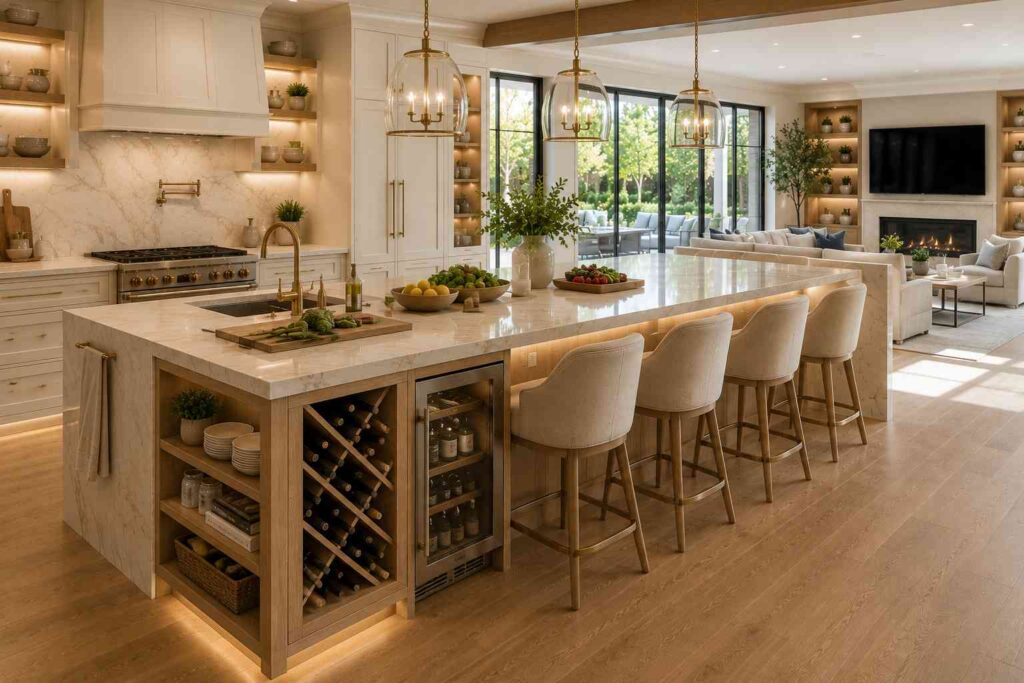
Design the non-seating side of the island as a full prep station with a second sink, a wine rack, and built-in shelving for frequently used items. The seating side faces the living area so guests can chat with the host during meal prep. This configuration turns cooking into a social event rather than an isolated task.
Kitchen Island with Seating for 5
A five-seat island is perfect for blended families, frequent hosts, or households that eat together every night and want everyone at one casual surface. This configuration begins to require careful kitchen planning to ensure adequate flow on all sides.
Recommended Dimensions
Budget for an island of approximately 84 to 90 inches (7 to 7.5 feet) in length. Your kitchen should be at least 12 feet wide to maintain comfortable clearance on all sides.
Idea 1: The Mixed-Height Island
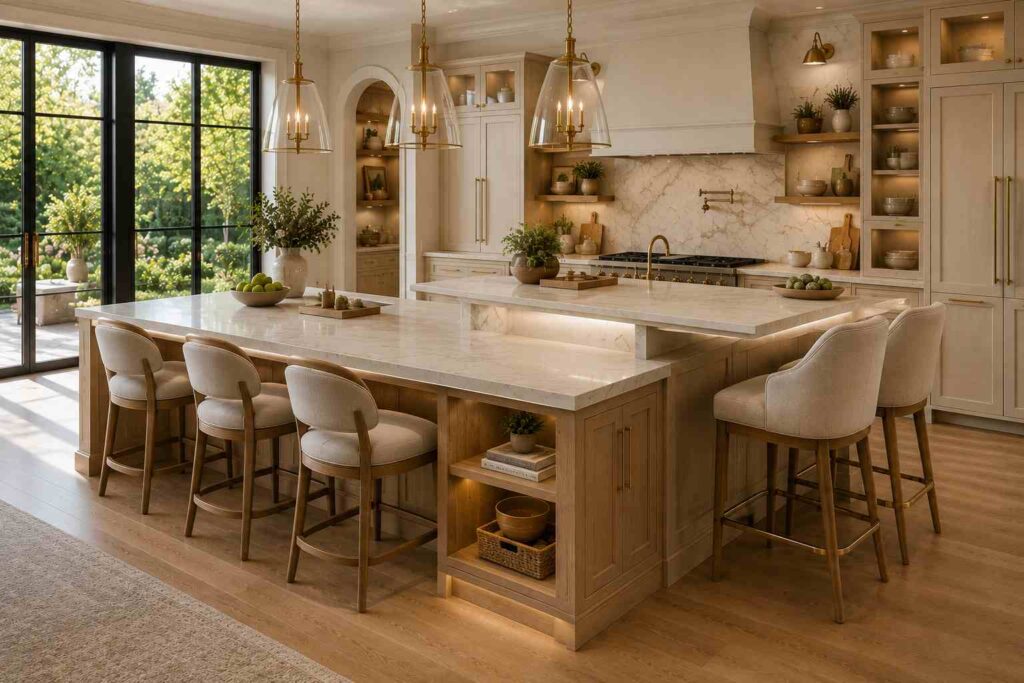
A five-seat island with a raised bar section (42 inches) on one end and a standard counter height section (36 inches) on the other can seat adults and children simultaneously at comfortable heights. The visual variation also adds architectural interest to the kitchen.
Idea 2: The Statement Stone Island
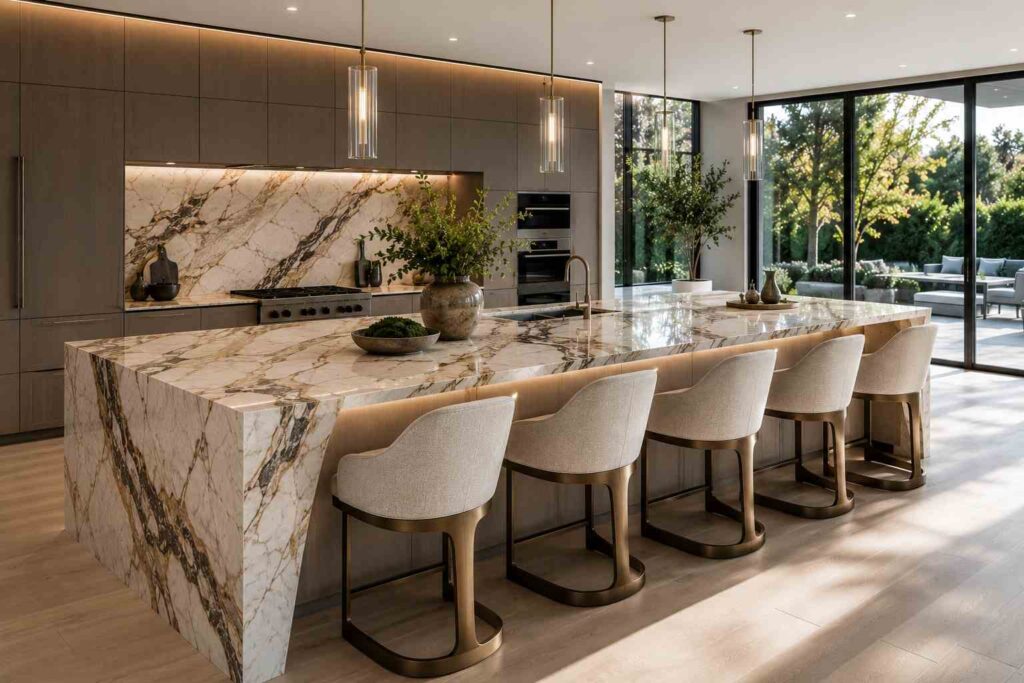
With five seats, the island becomes the undeniable focal point of the kitchen. Invest in a show-stopping countertop material — a thick-cut bookmatched marble slab or dramatic leathered quartzite creates a feature worthy of its size. Keep the island base simple (flat-panel doors in a solid color) to let the stone do the talking. Choose five matching sculptural stools for a cohesive, designer look.
Idea 3: The Wraparound Seating Island
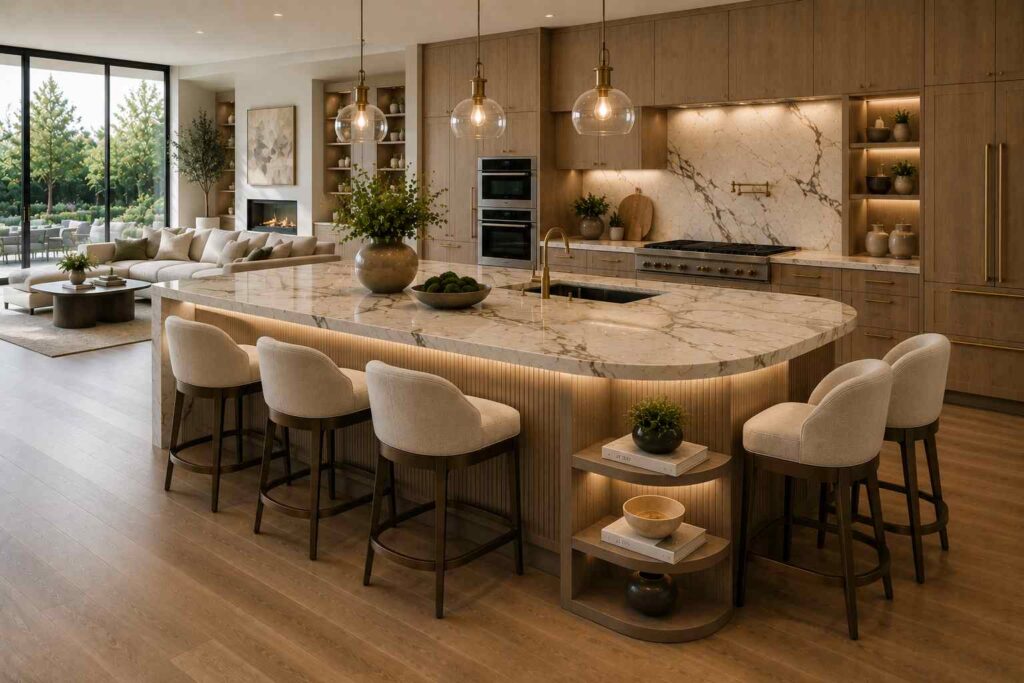
Rather than lining all five seats along one edge, wrap three seats along the long side and two seats at one end. This creates a more intimate, restaurant-booth feel and encourages conversation around a corner. It works especially well in kitchens where the island is positioned away from the perimeter cabinets.
Kitchen Island with Seating for 6
Six-seat kitchen islands blur the line between a kitchen island and a full dining table. They are increasingly popular in open-plan homes where a formal dining room has been replaced by one large, multifunctional living and eating space.
Recommended Dimensions
A six-seat island should be at least 96 to 108 inches (8 to 9 feet) long. The kitchen must be large enough — ideally 13 feet or wider — to preserve safe walkways around the island perimeter.
Idea 1: The Island-Dining Hybrid
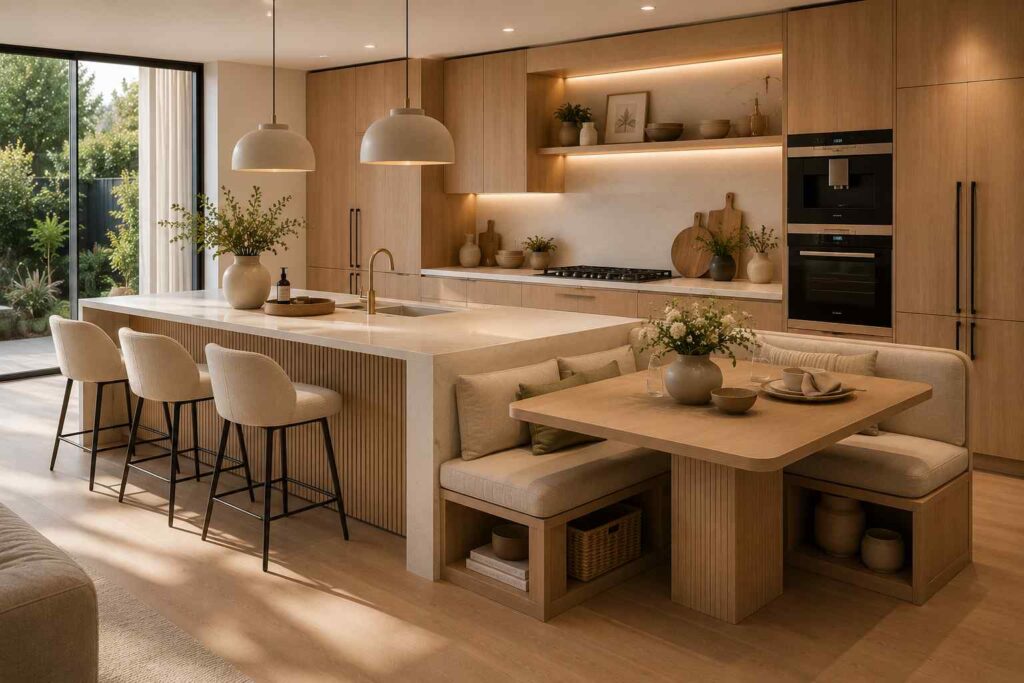
Design a long island with a generous 15-inch overhang on one side and seating that transitions seamlessly into a dining bench on one end. This approach replaces the traditional kitchen table entirely, saving square footage while creating a more casual and convivial dining atmosphere. Built-in storage cubbies under the bench provide a practical bonus.
Idea 2: The Scullery-Connected Island
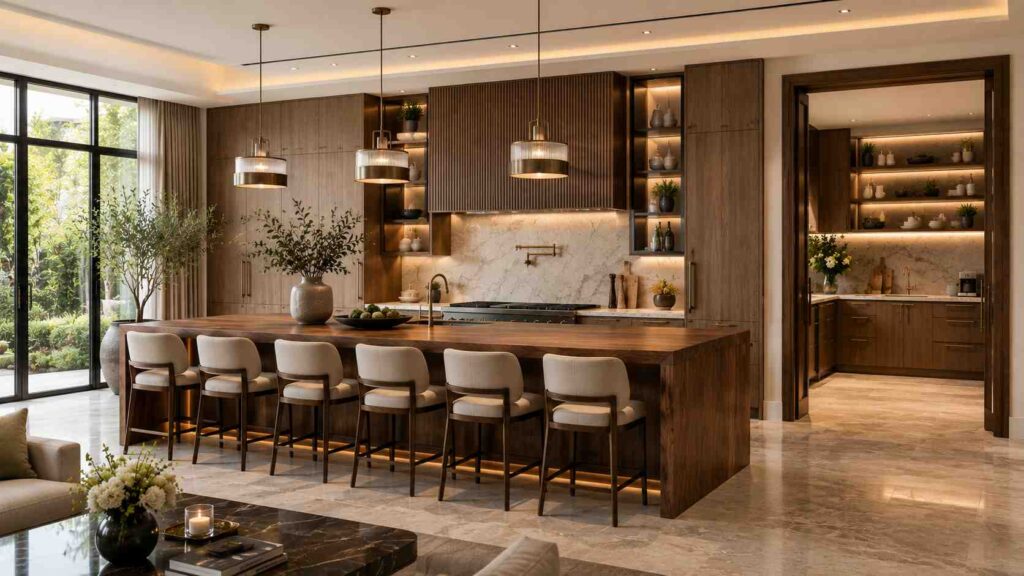
In luxury kitchens with a separate scullery or butler’s pantry, the main kitchen island can focus entirely on dining and entertaining. A six-seat island in a rich wood tone becomes the anchor of a show kitchen, while the scullery handles all the messy prep and washing up. Conceal appliances behind cabinetry doors so the kitchen looks more like a stylish living room than a work space.
Idea 3: The Color-Blocked Island
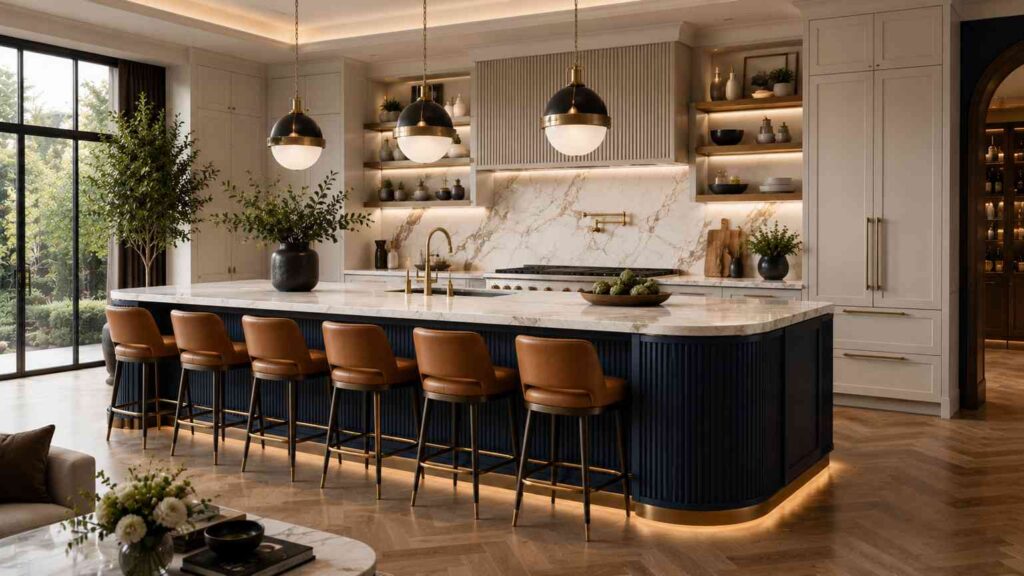
A six-seat island is large enough to benefit from two-tone treatment. Paint the base in a deep, saturated hue — midnight blue, charcoal, or olive green — and pair it with a light countertop. Use six bar stools in a complementary accent color to reinforce the palette. This design approach adds personality and keeps the large island from feeling visually heavy.
Kitchen Island with Seating for 8
An eight-seat kitchen island is a genuine statement piece that anchors a large open-plan space. This configuration is typically found in high-end homes, renovation projects, and new builds with dedicated great rooms where cooking, dining, and living all happen in one connected space.
Recommended Dimensions
You will need an island of at least 120 to 144 inches (10 to 12 feet) in length. The surrounding kitchen should have a footprint large enough to provide a minimum of 48 inches of clearance on the working sides and 36 inches on the seating side.
Idea 1: The Grand Kitchen Island with Waterfall Ends
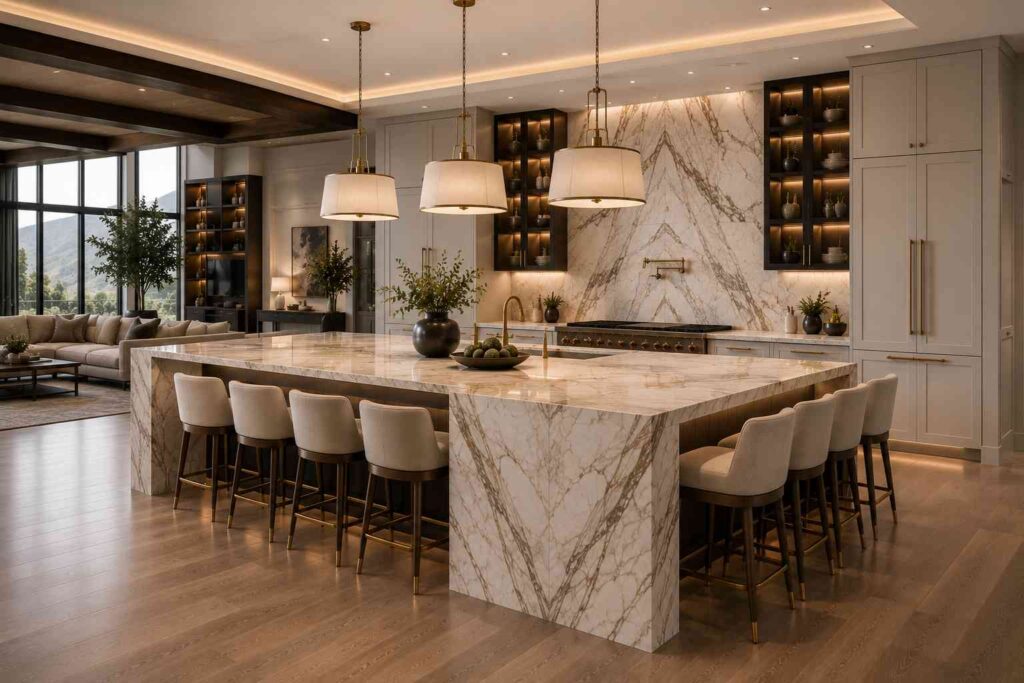
An oversized island with a full-height waterfall on both ends creates a sculptural centerpiece in a large great room. Use a book-matched natural stone slab for maximum visual drama. Hang three large matching pendants in a row above the island to define the space from above and ensure even lighting across all eight seats. Choose low-back upholstered stools that slide under the counter when not in use to keep the look refined.
Idea 2: The Two-Zone Work-and-Dine Island
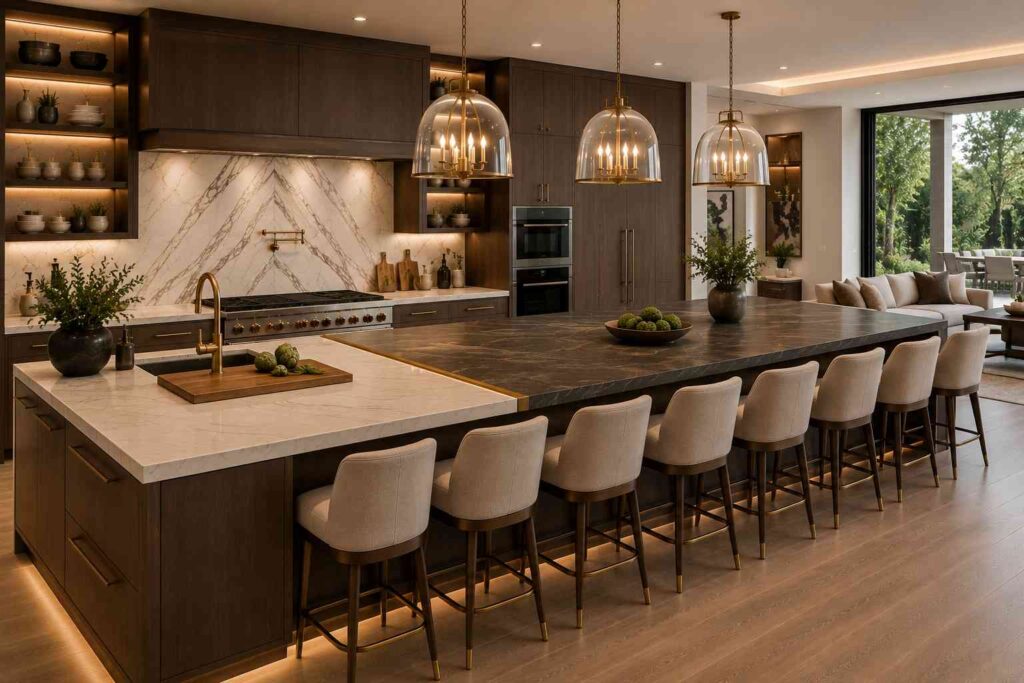
Divide the island into a dedicated work zone (one end with a prep sink and built-in cutting board) and a pure dining zone (the remaining six to eight feet with an extended overhang). Use a subtle visual cue — a change in countertop material or a narrow inset strip — to delineate the two zones without breaking the continuity of the design. This approach keeps kitchen work organized while giving diners a clean, dedicated eating surface.
Idea 3: The Integrated Technology Island
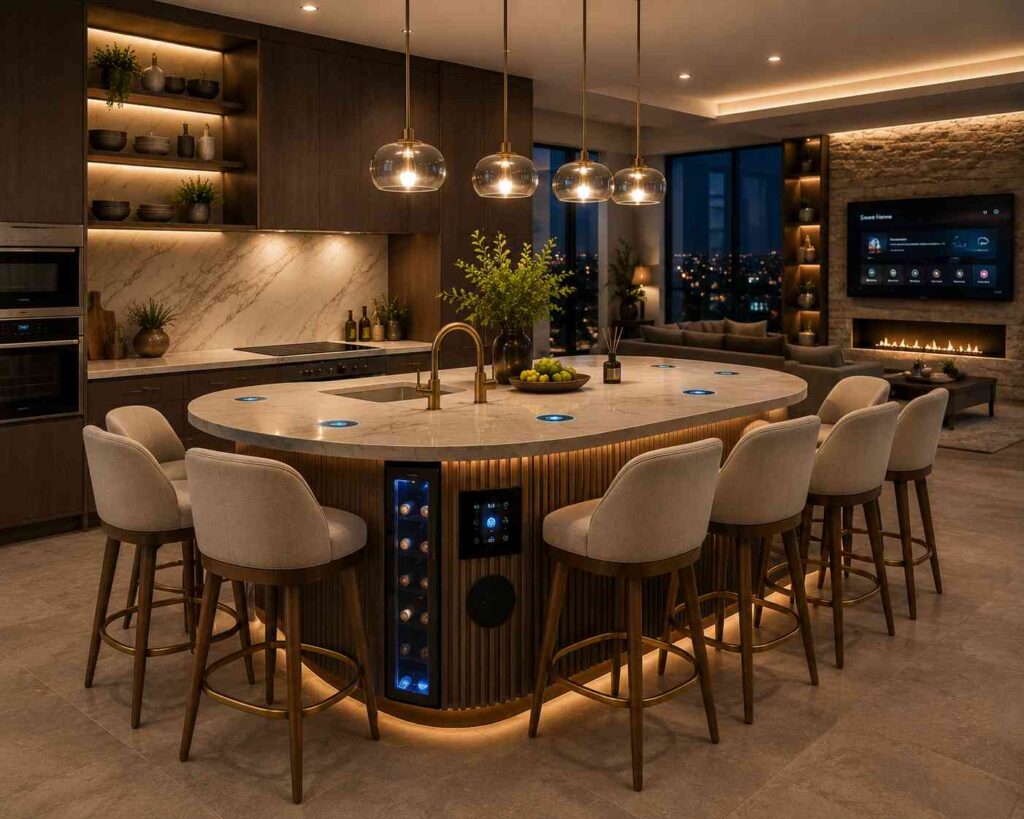
A modern eight-seat island can be equipped with integrated wireless charging pads, under-counter Bluetooth speakers, built-in wine coolers, and touch-sensitive lighting controls. Design the island as the true smart hub of the home. Pair it with smart pendant lights that can be dimmed for dinner parties or brightened for morning prep. This is a particularly popular choice for media rooms and entertainment-focused open-plan spaces.
Kitchen Island with Seating for 10
A ten-seat kitchen island is rare, ambitious, and unforgettable. It is suited to custom-built homes, commercial-inspired residential kitchens, and grand entertaining spaces where the island is designed to replace a formal dining table entirely. Planning a ten-seat island requires close collaboration with a kitchen designer and a structural engineer.
Recommended Dimensions
A ten-seat island should be between 150 and 180 inches (12.5 to 15 feet) long. The surrounding space must be extraordinarily generous — plan for a kitchen width of 18 feet or more to maintain safe and comfortable circulation on all sides.
Idea 1: The Restaurant-Inspired Kitchen Island
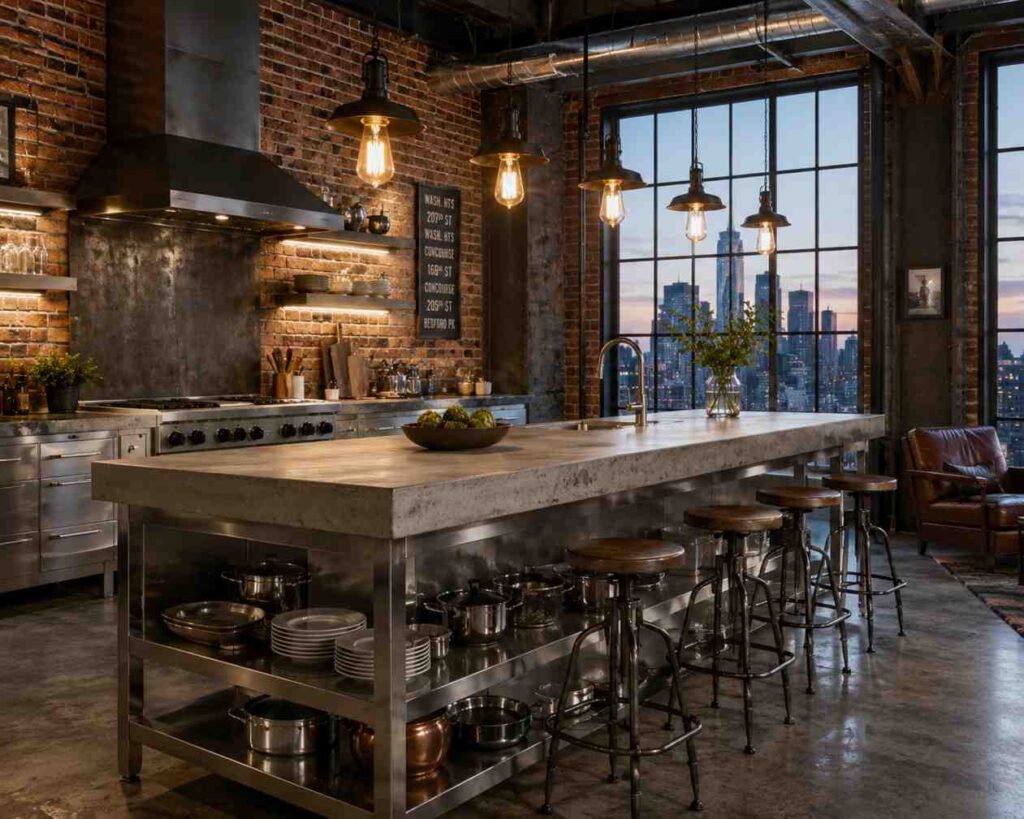
Take cues from commercial kitchen design: use a thick poured-concrete countertop, a stainless-steel base with open shelving below, and restaurant-grade bar stools with footrests. Install professional pendant lighting with exposed Edison bulbs above to reinforce the hospitality aesthetic. This design is especially impactful in industrial-style homes or converted warehouse loft spaces.
Idea 2: The Multisection Modular Island
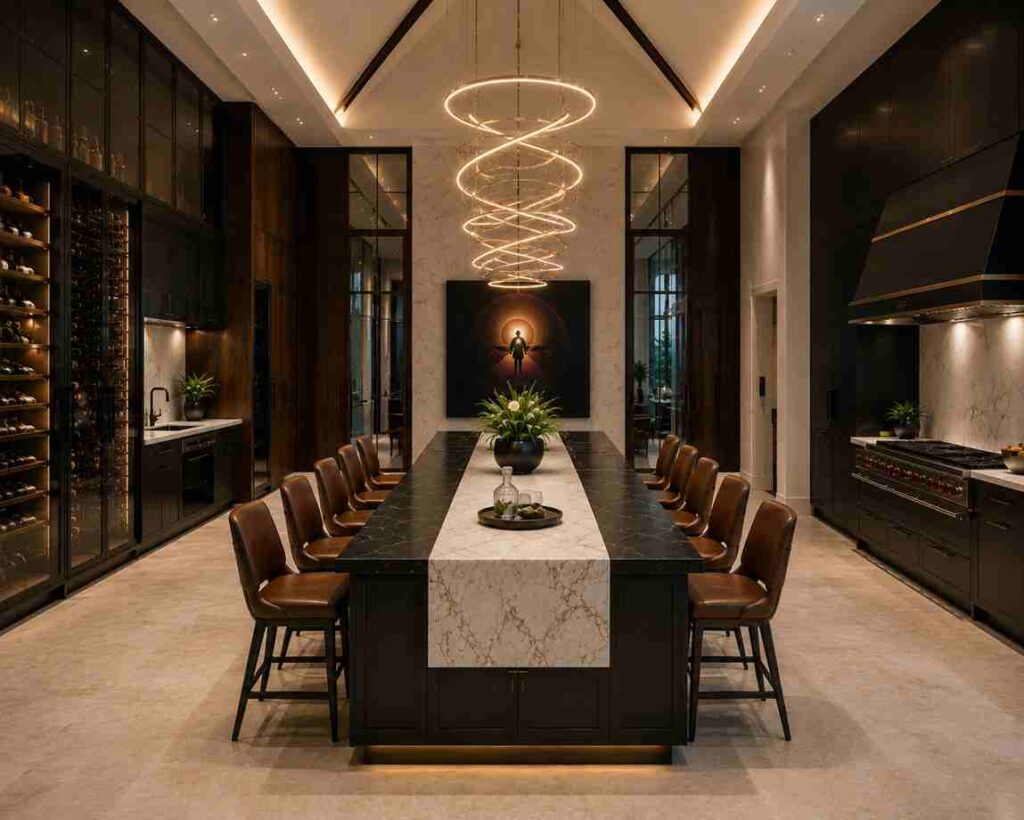
Rather than one continuous slab, design the ten-seat island as two or three connected modules, each with a distinct function — a prep module, a baking module with a marble insert, and a dining module with the longest overhang. The modular approach breaks up the visual mass of such a large piece and makes the kitchen feel purposefully designed rather than simply oversized.
Idea 3: The Architectural Island as Room Anchor
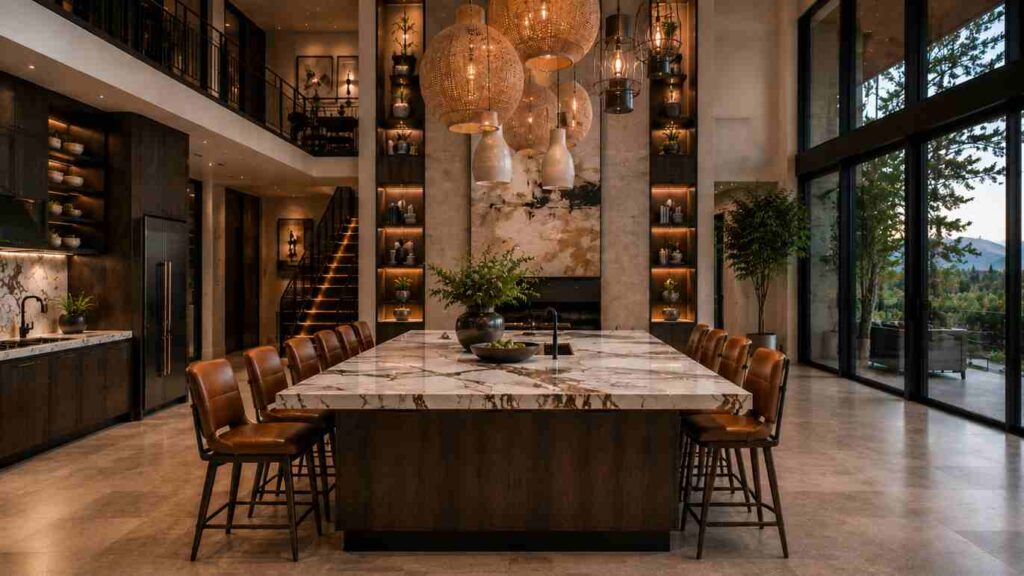
In a great room with double-height ceilings, a ten-seat island anchors the space and provides a human-scaled focal point within the vast architecture. Use oversized pendant lights — dramatic rattan globes, sculptural ceramic pendants, or geometric metal shades — to bring visual weight from the ceiling down to the island level. The seating arrangement itself becomes a design statement, with mixed stool heights and materials creating an intentionally curated, collected look.
Kitchen Island with Seating on Both Sides
Seating on both sides of a kitchen island is a less common but highly functional choice. It maximizes seating capacity without requiring extra floor space in length, and it creates a natural social dynamic where people face each other across the island surface — perfect for conversation, game nights, or family meals where connection is the priority.
Key Planning Considerations
When seating both sides, the island must be wider — at least 48 inches (ideally 54 to 60 inches) — to provide adequate knee space on both sides simultaneously. Keep in mind that a wider island requires a larger kitchen footprint overall.
Idea 1: The Community Dining Island
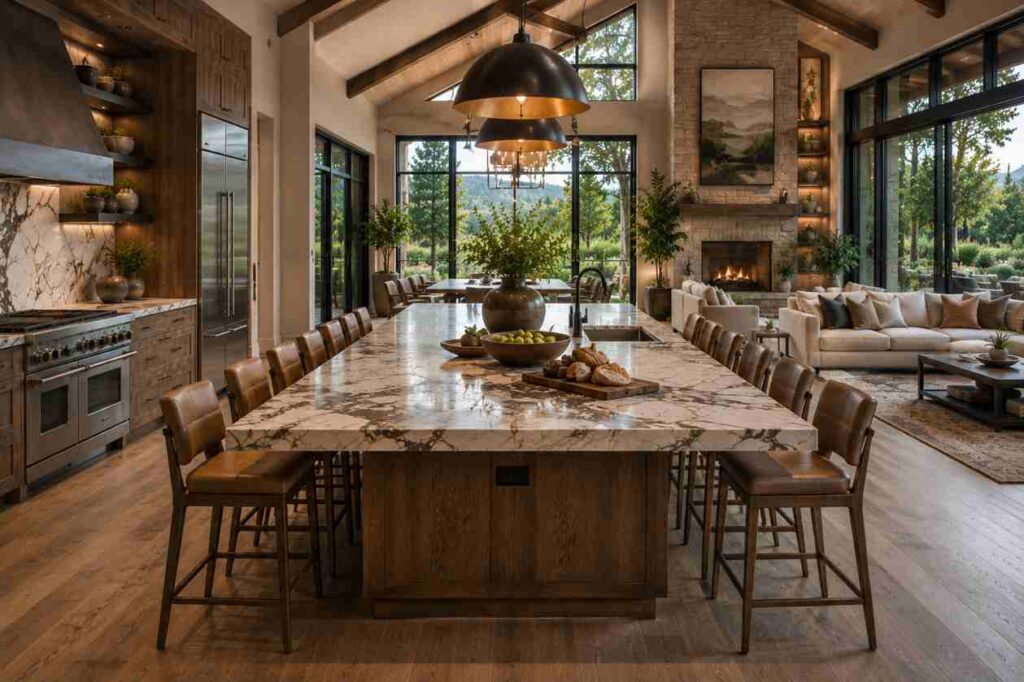
In an open-concept kitchen designed for large gatherings, a 60-inch-wide island with seating on both sides functions like a communal dining table. Use long, backless bench seating on one side and individual stools on the other to allow flexible arrangements for different group sizes. The bench side can seat more people per linear foot, increasing total capacity.
Idea 2: The Children and Adults Island
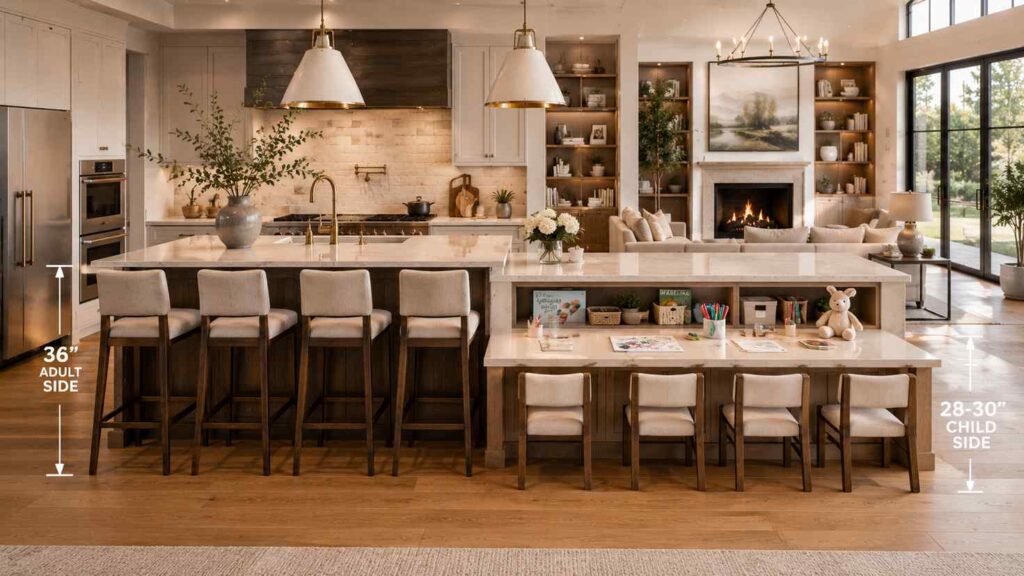
A double-sided island with standard height (36 inches) on the adult side and a lower counter (28-30 inches) on the child-facing side creates an age-appropriate eating arrangement for families with young children. The lower side can transition to a craft station, drawing area, or snack bar as children grow. This is an investment in long-term versatility.
Idea 3: The Bar and Breakfast Counter
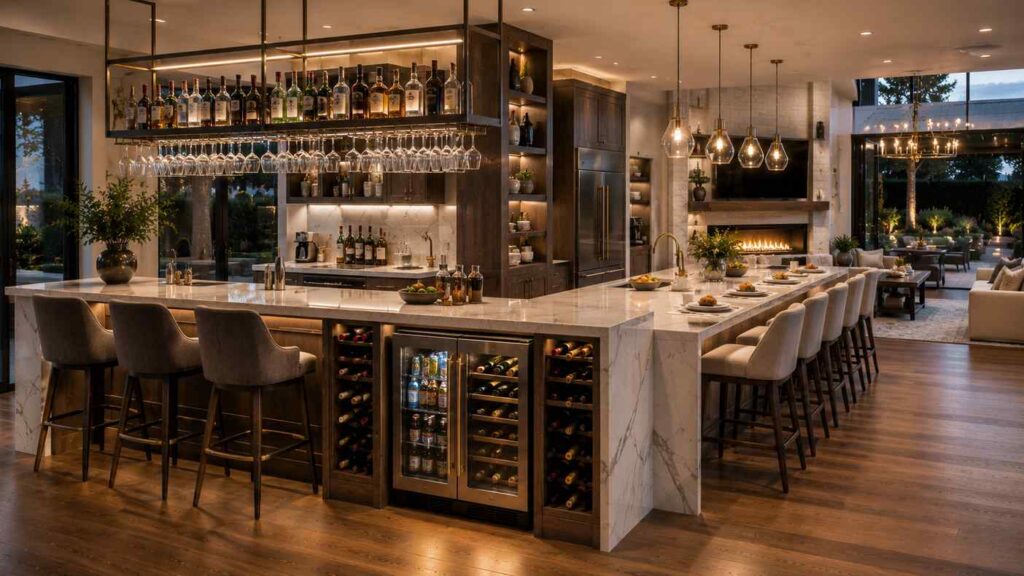
Use one side as a full bar setup — with wine storage, a beer fridge, and glassware racks above — and the other as a standard breakfast counter. Guests can sit at the bar side and be served from the breakfast-counter side. This configuration turns the kitchen island into a fully functional in-home bar and breakfast spot simultaneously, ideal for those who love entertaining at home.
How to Choose the Right Kitchen Island for Your Space
With so many configurations available, selecting the right island comes down to four key factors:
1. Kitchen Size and Traffic Flow
The most common mistake homeowners make is choosing an island that is too large for their kitchen. The National Kitchen and Bath Association recommends a minimum of 42 inches of clearance between an island and all surrounding surfaces for a single-cook kitchen, and 48 inches for a multi-cook kitchen. Measure your kitchen carefully and use painter’s tape on the floor to mock up the island footprint before committing.
2. How You Actually Use Your Kitchen
Think about your daily routines. Do you need a quick breakfast spot for two before school and work? A two or three-seat island at counter height with backless stools is perfect. Do you want to replace your dining table entirely? Prioritize a six-seat-plus island at dining height (30 inches) with comfortable chairs. Do you host large dinner parties? Focus on maximizing linear seating footage and choosing easy-to-clean countertop materials.
3. Storage and Function Built In
Seating is only one part of the island equation. Consider what you want to build into the base: drawers for utensils, pull-out shelving, a microwave drawer, a wine fridge, a second dishwasher, or a prep sink. The more you build into the island, the harder it works for your kitchen beyond just providing a seat.
4. Stool Selection
The stools you choose make or break the island’s look and practicality. Key rules: ensure your stool seat height is 10-12 inches below the island counter height; choose stools with footrests for comfort during longer sitting sessions; consider backless stools for compact kitchens (they tuck away neatly); and always measure the gap between the counter edge and the base of the island to ensure stools fit cleanly underneath.
Final Thoughts: Planning a Kitchen Island That Lasts
A kitchen island with seating is more than a surface — it is the place where your household gathers, where guests linger, and where everyday life happens. Whether you are working with a compact apartment kitchen that can accommodate two seats or designing a custom great-room island that seats ten, the principles remain the same: prioritize circulation space, choose materials that balance beauty with durability, and design for the way you actually live — not for an idealized version of how a kitchen should look.
Take time during the planning phase to consult with a certified kitchen designer, particularly for larger islands that involve structural modifications, plumbing relocation, or electrical work. The investment in professional guidance at the design stage saves time, money, and frustration during the build.
With the right island in place, your kitchen becomes the most inviting room in the house — and every seat at it will be one worth taking.
 Sumit Banerjee
[…] Also Check – Kitchen Islands with Seating […]