
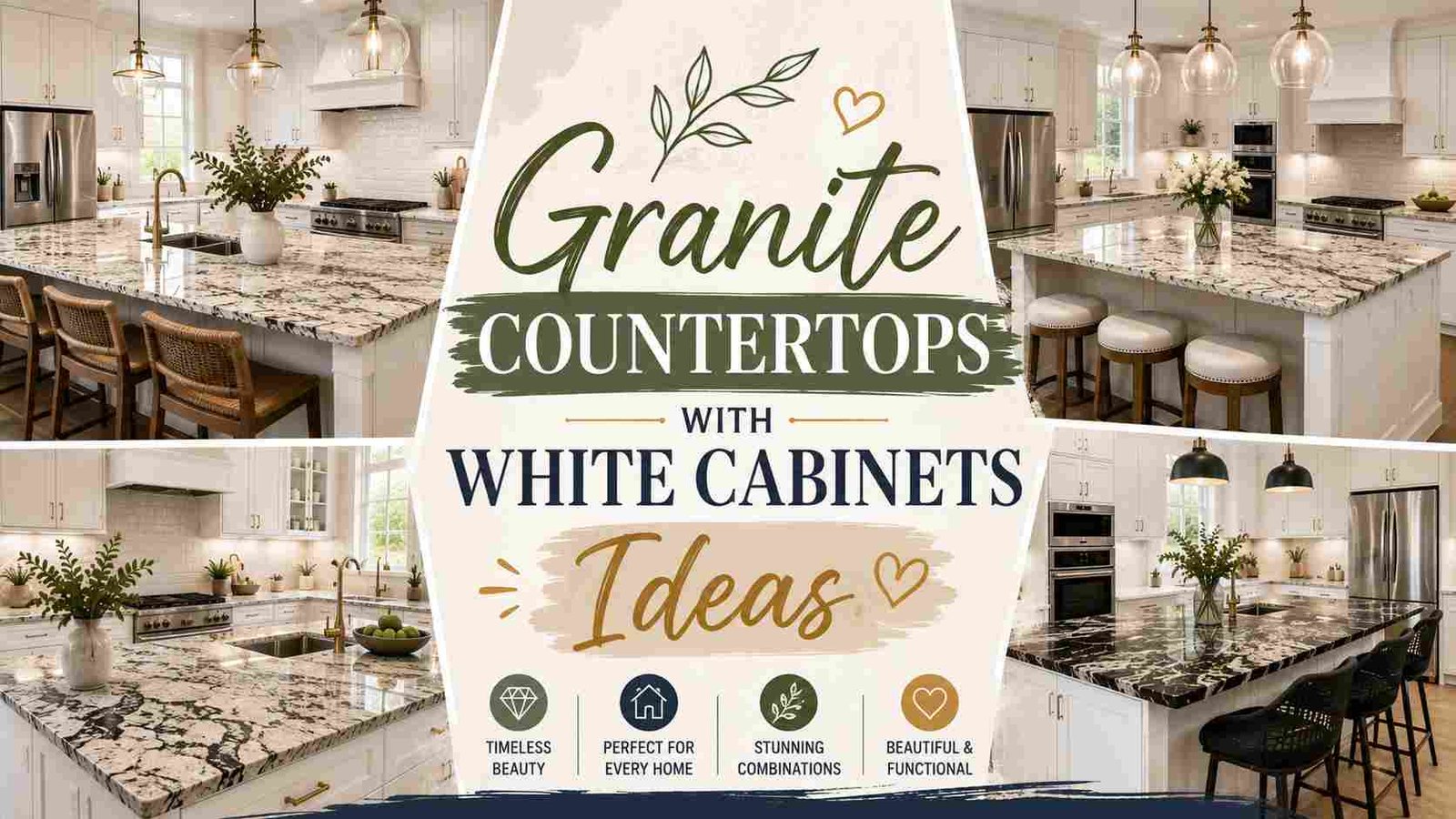
If I had to pick one kitchen combination that never fails, it would be white cabinets paired with granite countertops.
I’ve walked through hundreds of kitchens over the years — some mid-renovation, some just finished, some that homeowners were tearing apart because the “trendy” choice they made five years earlier had already started to look dated.
White cabinets with granite is one of the rare pairings that keeps looking right no matter what year it is.
But “white cabinets with granite” isn’t really one look. It’s more like a category with dozens of directions you can take it, depending on the granite color, the finish, the hardware, and even the backsplash you choose alongside it.
Some combinations feel bright and airy. Others lean warm and rustic. A few go bold enough to become the actual focal point of the room instead of just a work surface.
Below are 19 ideas I keep coming back to, either because I’ve seen them work beautifully in real homes or because they solve a specific problem — small kitchens, busy families, low-maintenance needs, or just wanting something that doesn’t look like everyone else’s kitchen.
If you’re still deciding on your own countertop and cabinet direction, it might also help to look at [choosing the right kitchen layout for your space] before locking in a color scheme, since the shape of your kitchen affects how much granite pattern you can actually get away with.
1. Classic Black and White for Maximum Contrast
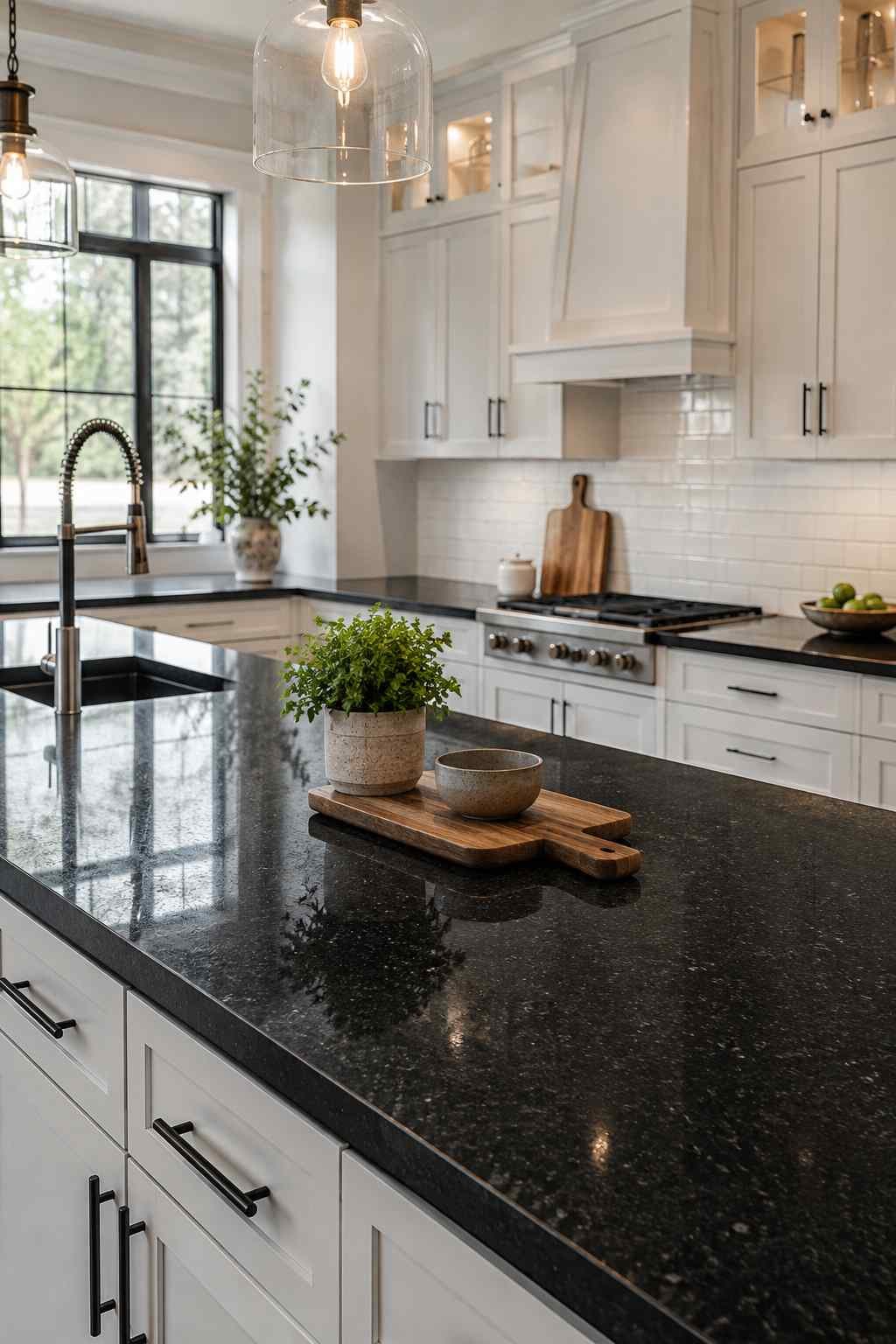
There’s a reason this combination shows up in kitchen after kitchen. A deep black granite like Absolute Black or Black Galaxy against crisp white cabinetry creates the kind of contrast that photographs well and ages well. It works in both traditional and ultra-modern kitchens, which is rare for a design choice this bold.
The trick I’ve learned is to keep everything else simple when you go this route. A busy backsplash on top of black-and-white cabinetry starts to feel cluttered fast. Stick with white subway tile or a plain marble-look tile and let the countertop do the talking.
2. Soft White Granite for a Seamless, Airy Look
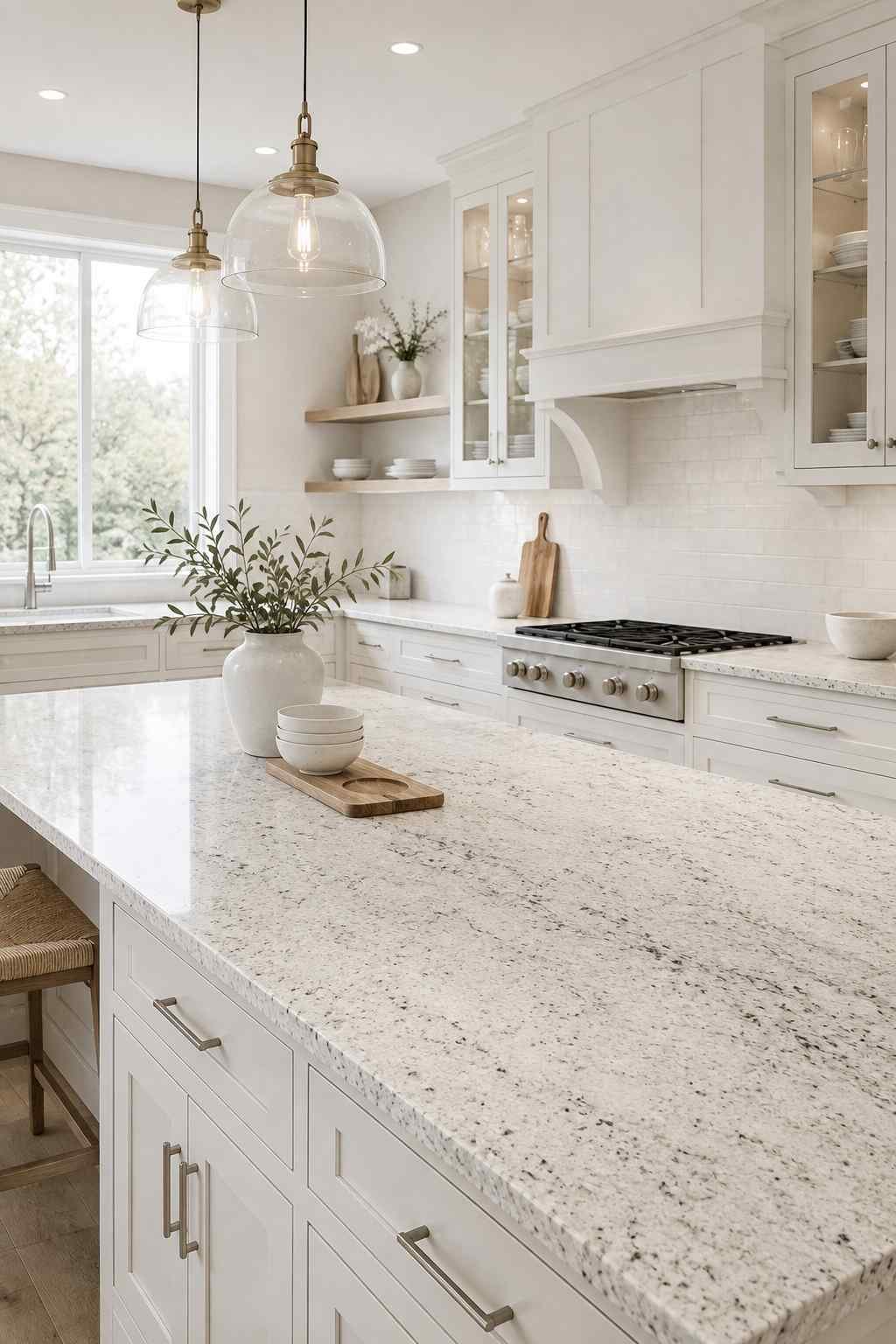
If you want a kitchen that feels bigger and brighter than it actually is, white-on-white is hard to beat. Granite options like White Ice or Colonial White have just enough movement and sparkle to avoid looking flat, while still keeping the whole space feeling open.
This is a favorite for smaller kitchens especially. When the cabinets and countertop are close in tone, your eye doesn’t stop anywhere, which makes the room read as more spacious than it measures on paper.
3. Warm Beige and Gold Tones for a Farmhouse Feel
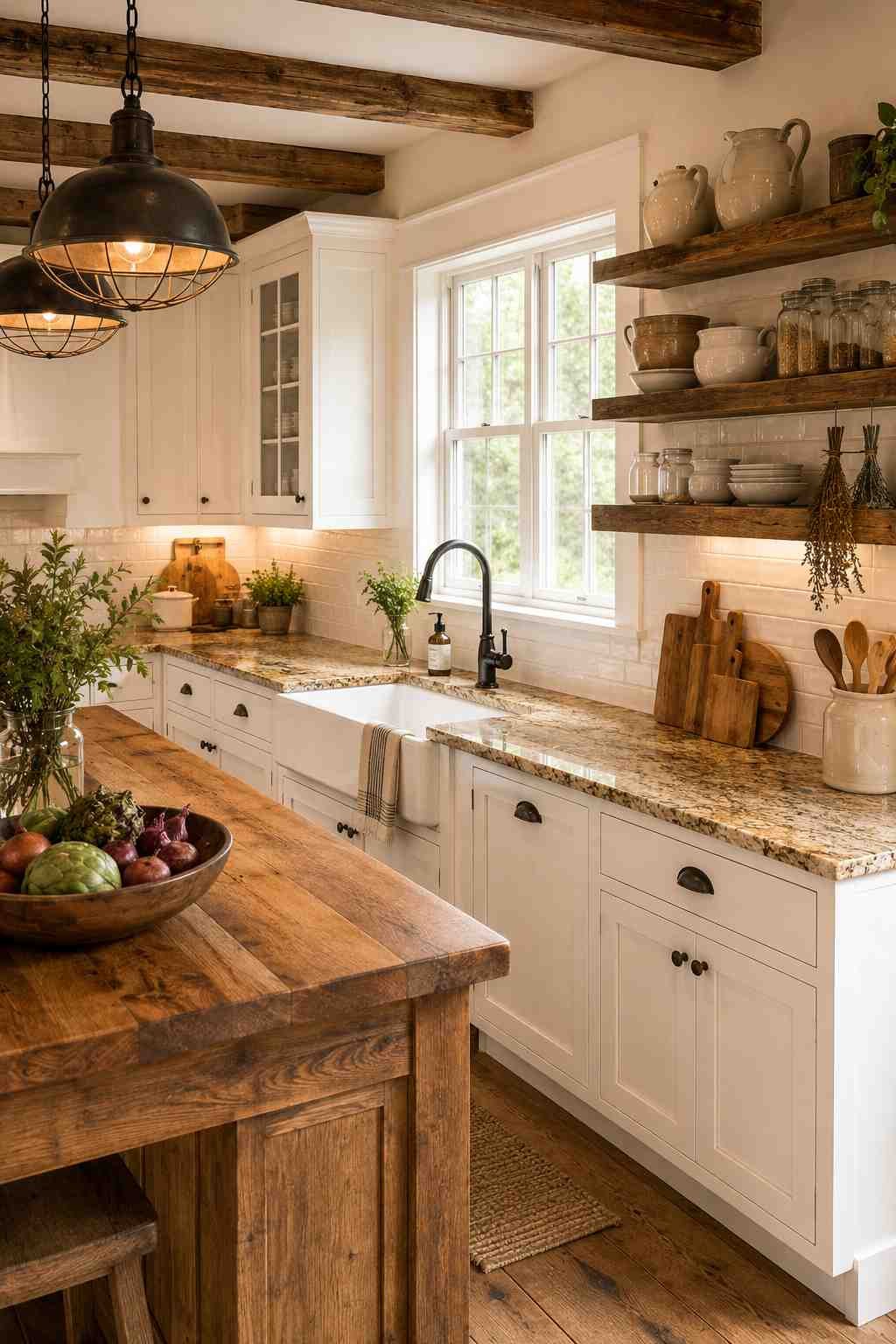
Not every white kitchen needs to feel cool and modern. Granite in warmer tones — Giallo Ornamental, Santa Cecilia, or similar golden-beige stones — pairs beautifully with white cabinets when you’re going for a farmhouse or cottage-style kitchen. The warmth in the stone keeps an all-white room from feeling sterile.
I usually recommend this combination to homeowners who plan to bring in a lot of wood accents too — open shelving, a butcher block island, exposed beams. The granite bridges the gap between the crisp cabinetry and the natural wood tones so nothing feels out of place.
4. Blue Granite for an Unexpected Coastal Touch
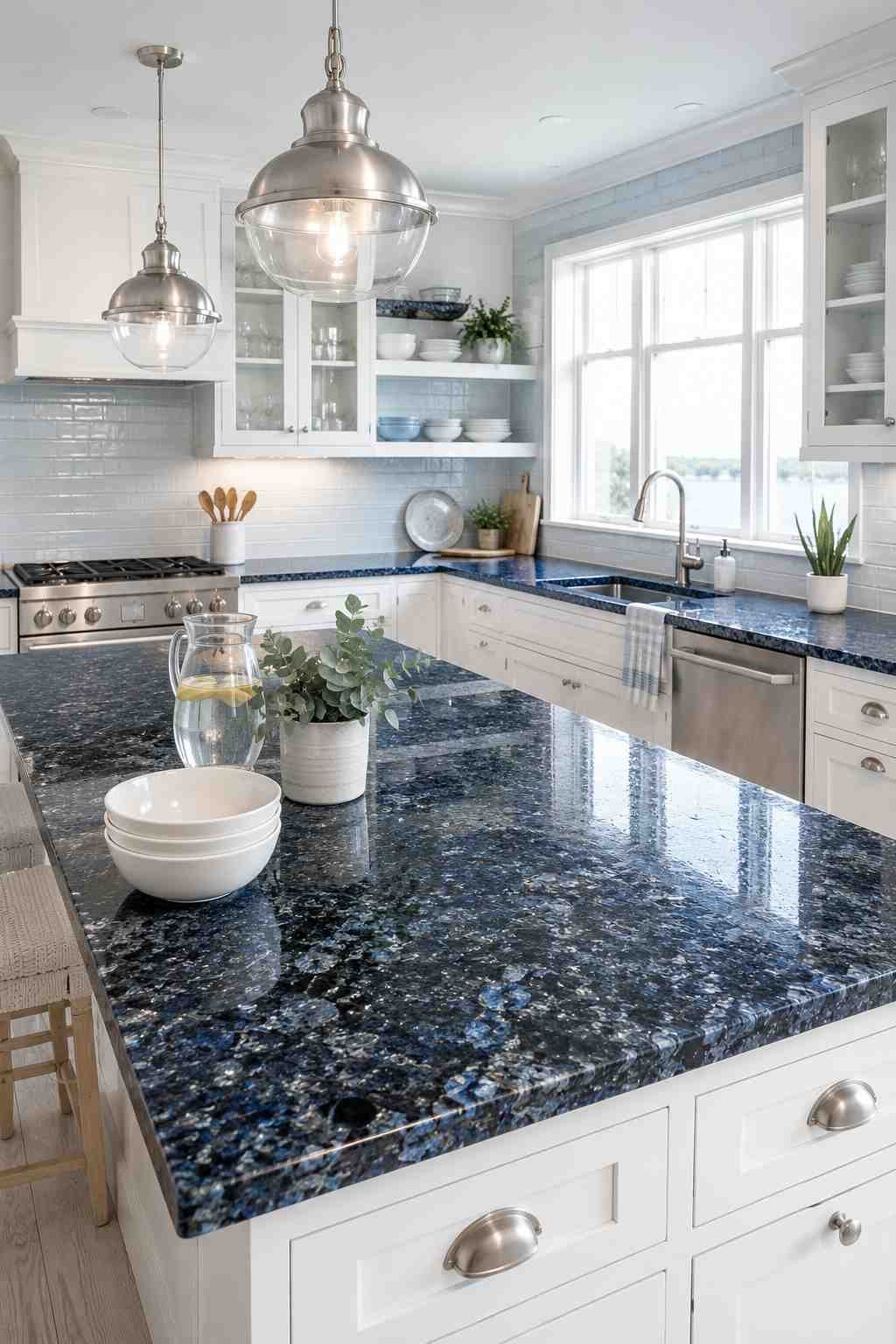
Blue granite isn’t something most people think of first, but stones like Blue Pearl or Azul Aran can completely change the personality of a white kitchen. It leans coastal without being literal about it — no anchors or shells required.
This works especially well if your home already has blue accents elsewhere, or if you want one room in the house that feels a little different from the rest without repainting anything.
5. Green Granite for an Organic, Grounded Feel
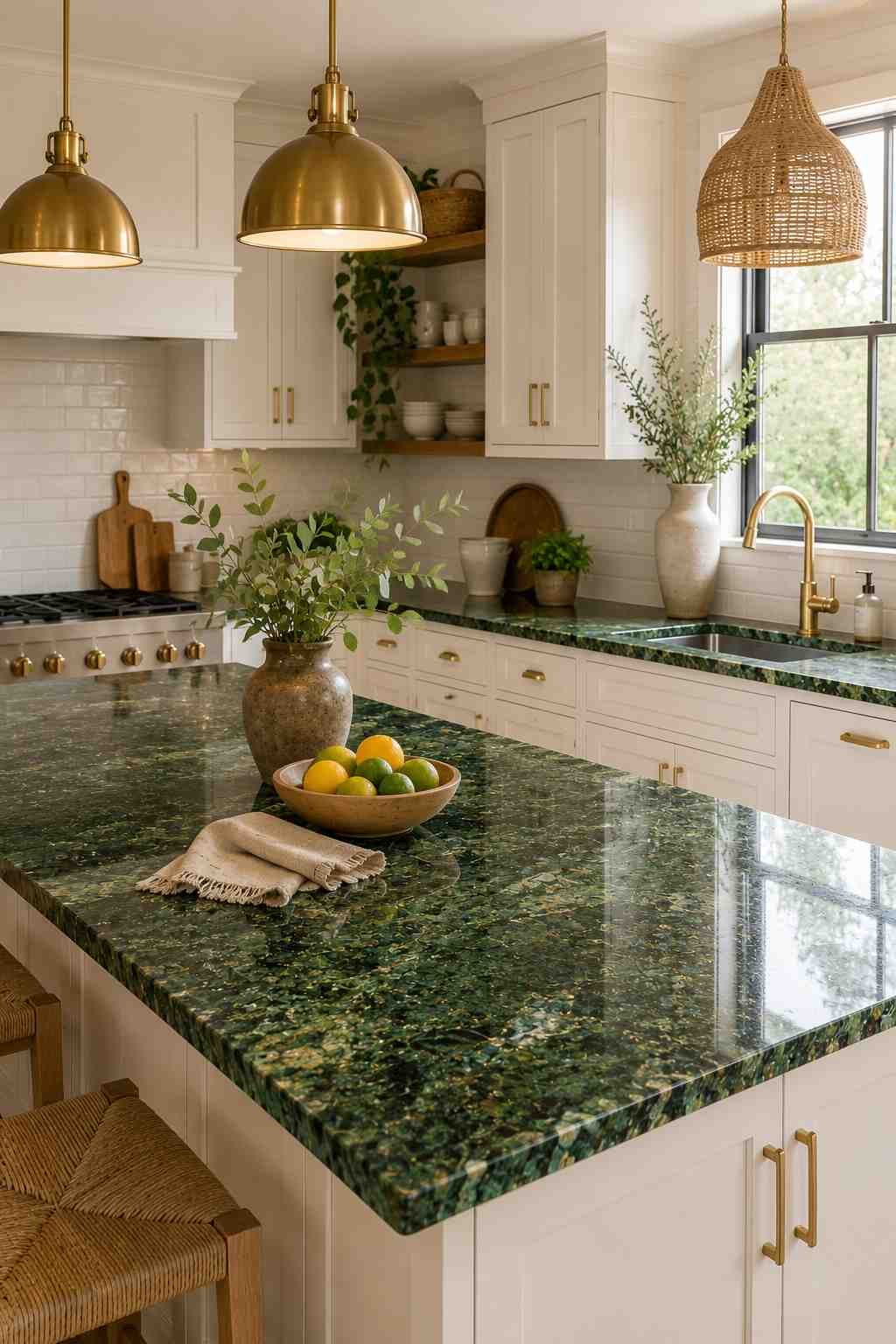
Green-toned granite, like Costa Esmeralda or Ubatuba, brings a natural, earthy quality into an otherwise clean white kitchen. It’s a good middle ground between a totally neutral kitchen and one that feels like it’s making a real design statement.
I’ve seen this pairing done well with brass or brushed gold hardware, which pulls out warm undertones in the green stone and keeps the whole look from feeling too cold.
Also Check – Kitchen Islands with Seating
6. Rich Brown Granite for Traditional Kitchens
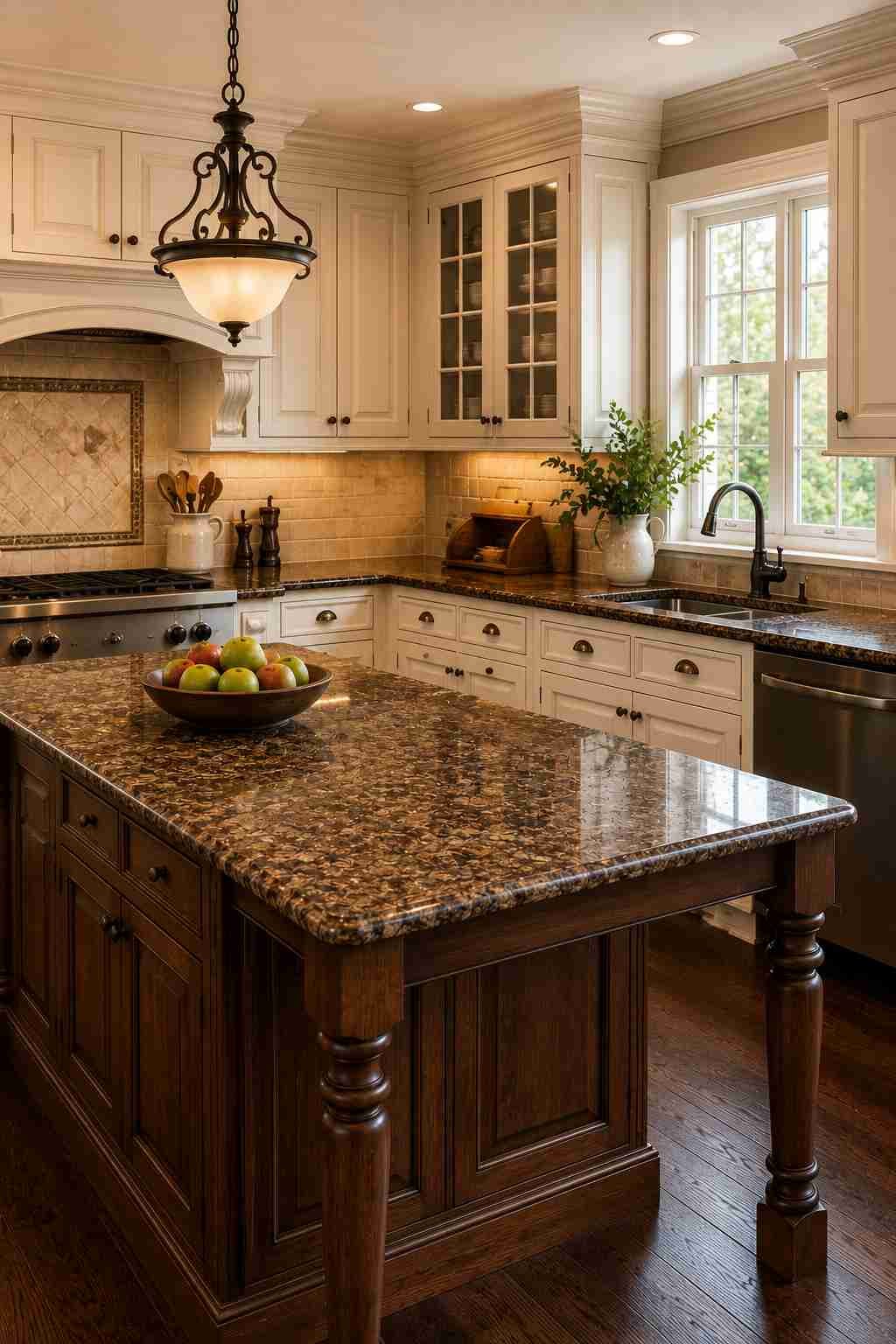
Traditional kitchen featuring white raised-panel cabinets, rich brown granite countertops with warm tan and black speckles, dark wood flooring, bronze hardware, a furniture-style island, and classic pendant lighting creating a warm, timeless atmosphere.
Baltic Brown and Tan Brown granite have been kitchen staples for decades, and there’s a good reason they haven’t gone anywhere. Against white cabinets, brown granite gives a kitchen a grounded, traditional feel that suits older homes especially well.
If your kitchen has darker wood floors, this is often the easiest granite family to match, since the countertop won’t fight with the flooring the way a cooler-toned stone sometimes can.
7. Speckled Granite for Busy Families
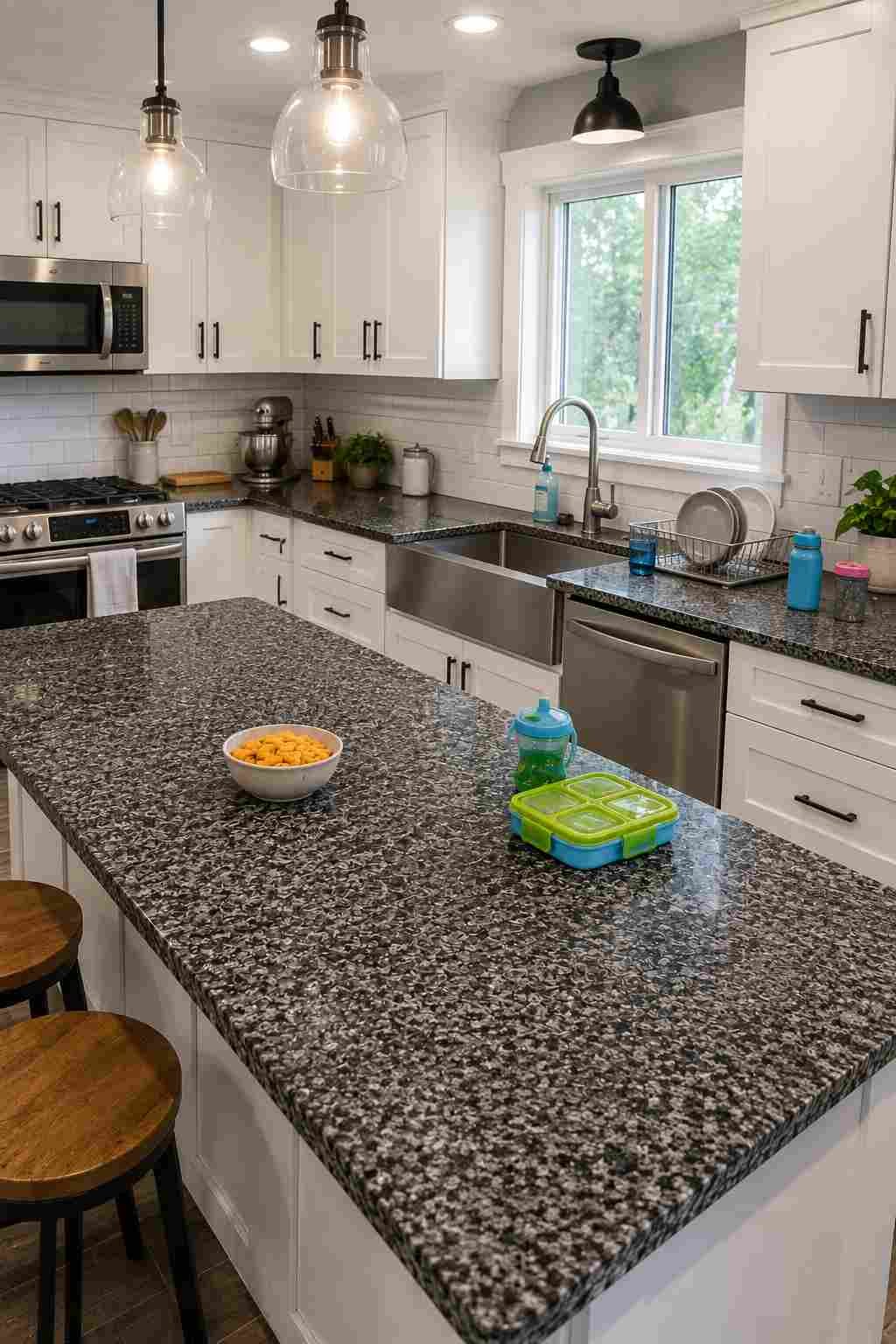
Here’s a practical one. If you have kids, or you just hate seeing every crumb and water spot on your counter, a heavily speckled granite like Black Pearl or Steel Grey is genuinely useful. The pattern hides daily wear far better than a solid or lightly veined stone.
This isn’t just an aesthetic choice — it’s one of those decisions that pays off every single day you use the kitchen, long after the “look” has stopped being the main reason you picked it.
8. Honed or Leathered Finish for a Matte, Modern Look
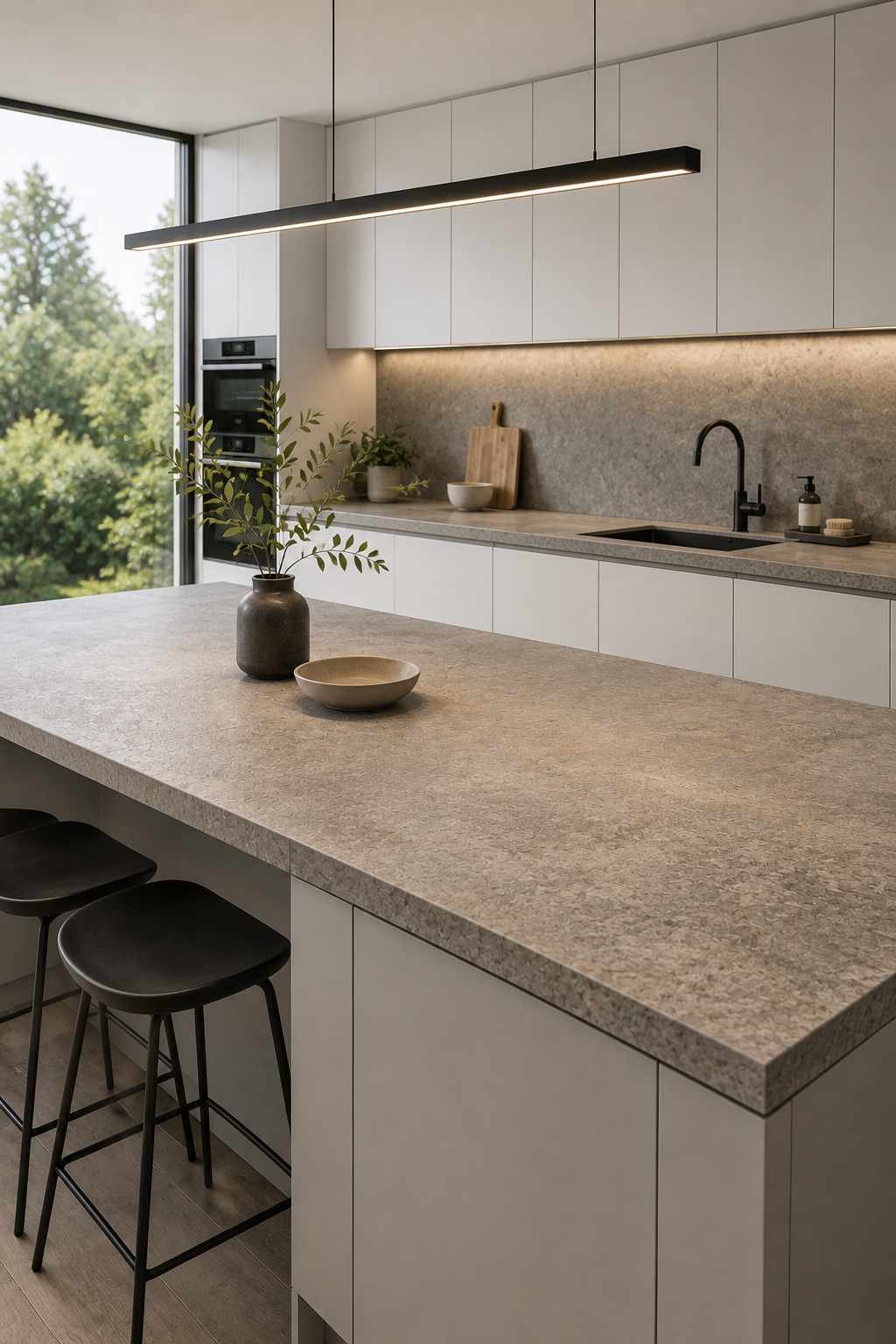
Most people default to polished granite without realizing there are other finish options. A honed or leathered finish takes the shine down and gives the stone a soft, matte texture instead. Against white cabinets, this creates a more understated, contemporary look than the classic glossy finish most people picture when they hear “granite.”
It’s worth knowing that honed granite can be slightly more porous, so if you go this direction, ask your fabricator about the right sealer and how often it needs reapplying.
9. Waterfall Edge Islands for a Showpiece Moment
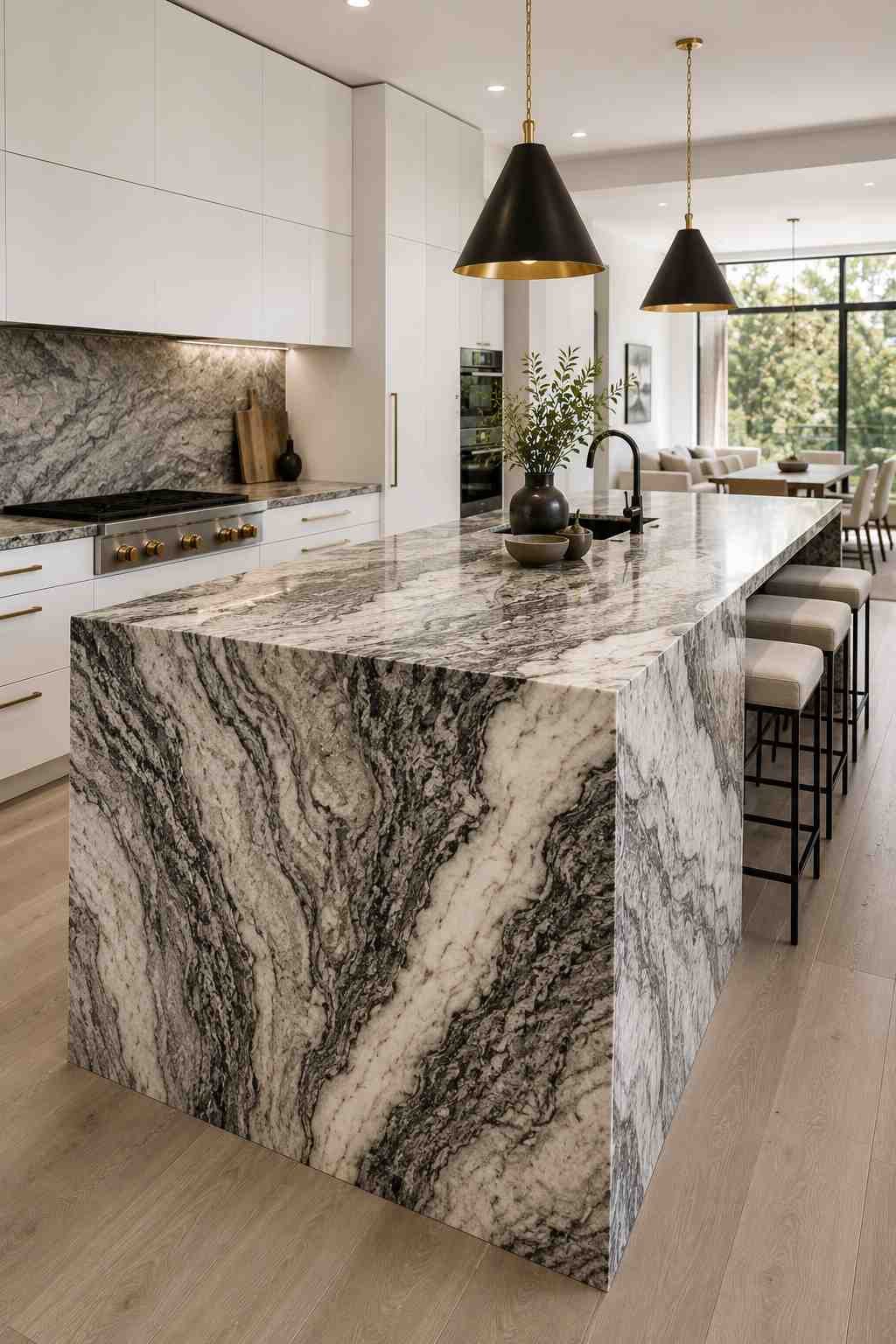
A waterfall edge — where the granite continues straight down the sides of the island instead of stopping at the edge — turns a countertop into a genuine design feature. Paired with white cabinetry, the effect is dramatic without needing bold colors to get there.
This is one of the pricier upgrades on this list because it uses significantly more slab material, but for a kitchen island that doubles as the centerpiece of an open-concept home, it’s often worth the investment.
10. Mixed Metal Hardware for Added Warmth
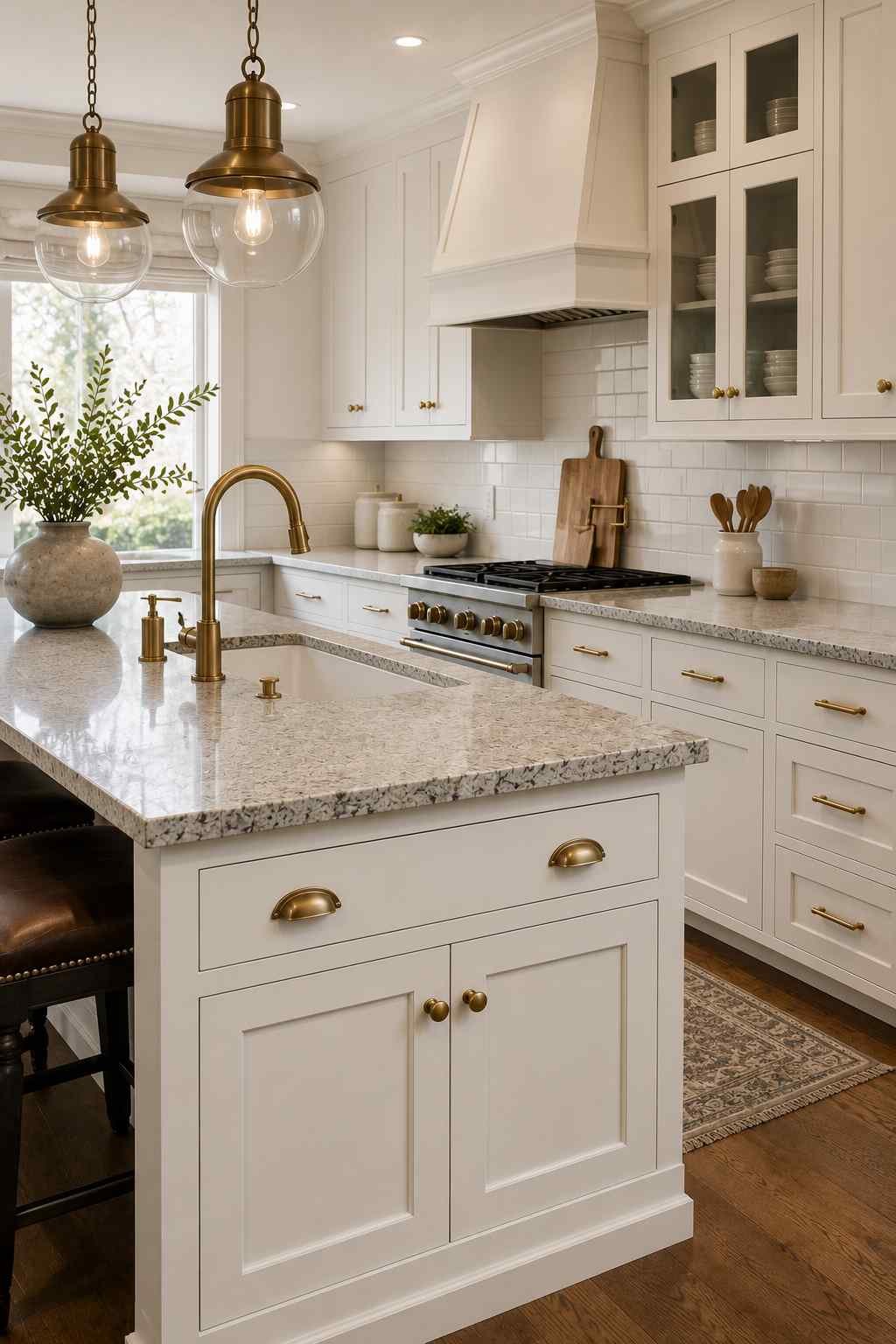
This isn’t a granite choice exactly, but it changes how any granite and white cabinet combination reads. Brass, brushed gold, or even aged bronze hardware against white cabinets adds warmth that plain chrome or stainless steel doesn’t. It’s a small, relatively inexpensive change that makes a noticeable difference in photos and in person.
If you’re renovating on a budget, swapping hardware is one of the easiest ways to update the feel of an existing white-and-granite kitchen without touching the countertop at all.
11. Two-Tone Kitchens with a Colored Island
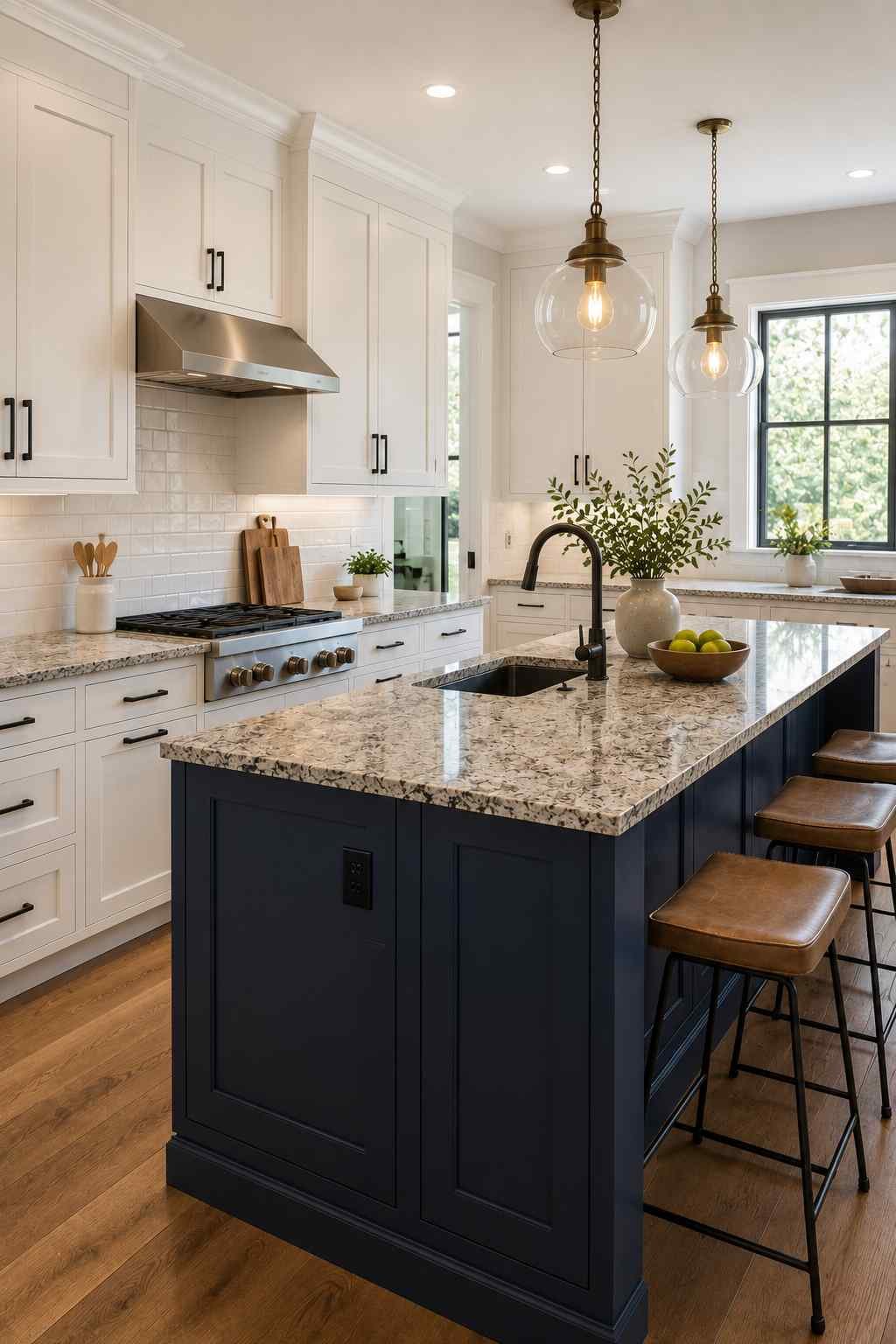
White perimeter cabinets with a contrasting island — navy, sage green, charcoal — has become one of the most requested layouts I come across now. The granite typically stays consistent across both areas, which ties the two tones together instead of making the kitchen feel split in half.
For this to work well, pick a granite with enough neutral base tone that it reads naturally against both the white cabinets and the colored island. Stones with gray or beige undertones tend to be the most flexible here.
12. Full Slab Backsplash to Match the Countertop
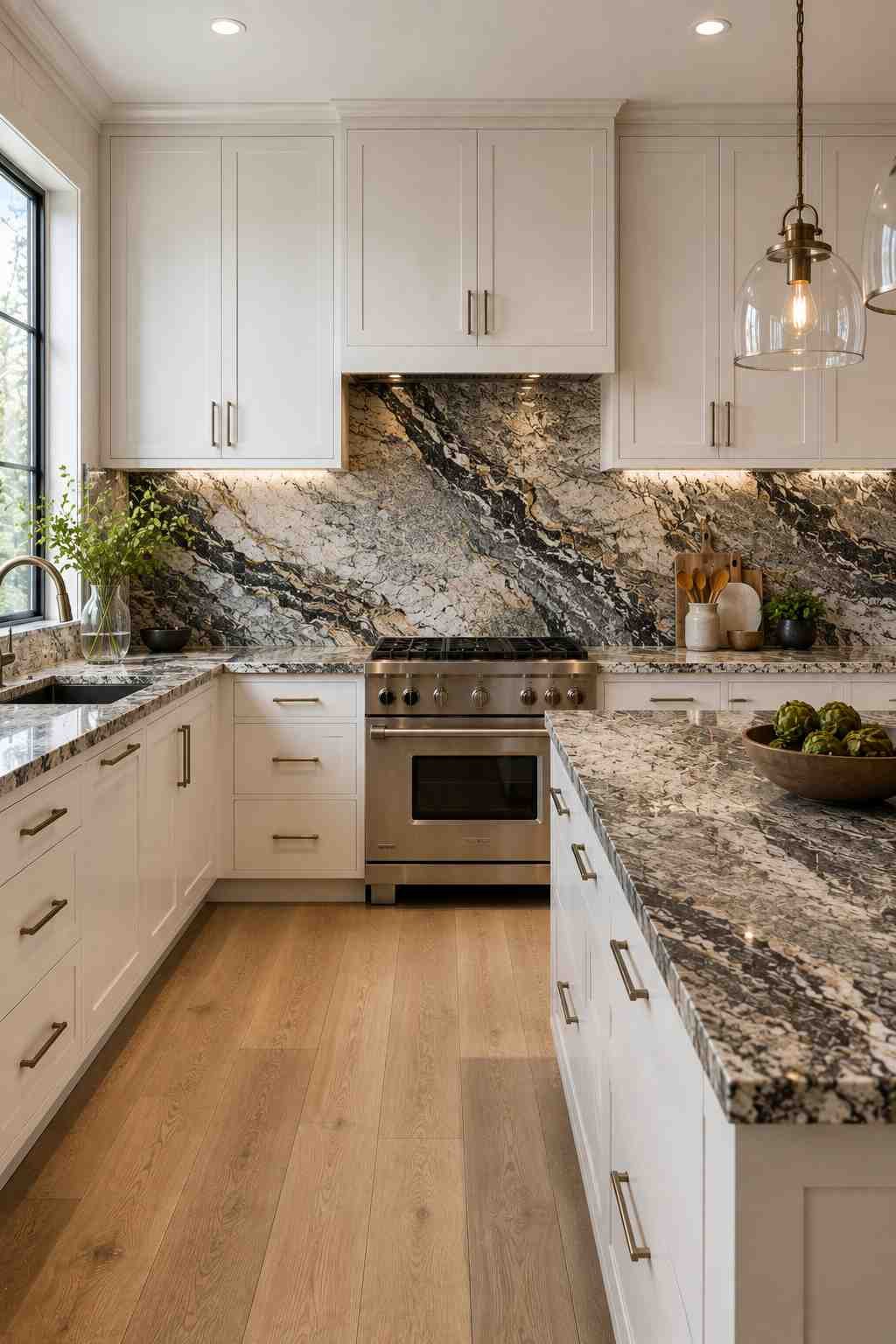
Instead of tile, some homeowners are choosing to run the same granite slab up the wall as the backsplash. Against white cabinets, this creates a clean, continuous look with almost no grout lines to clean. It also lets a dramatic granite pattern become even more of a visual feature.
It costs more than standard tile, but for anyone who’s tired of scrubbing grout, the trade-off is often worth it.
Also Check – Kitchen Design Ideas for Highland Homes
13. Farmhouse Sink with Warm-Toned Granite
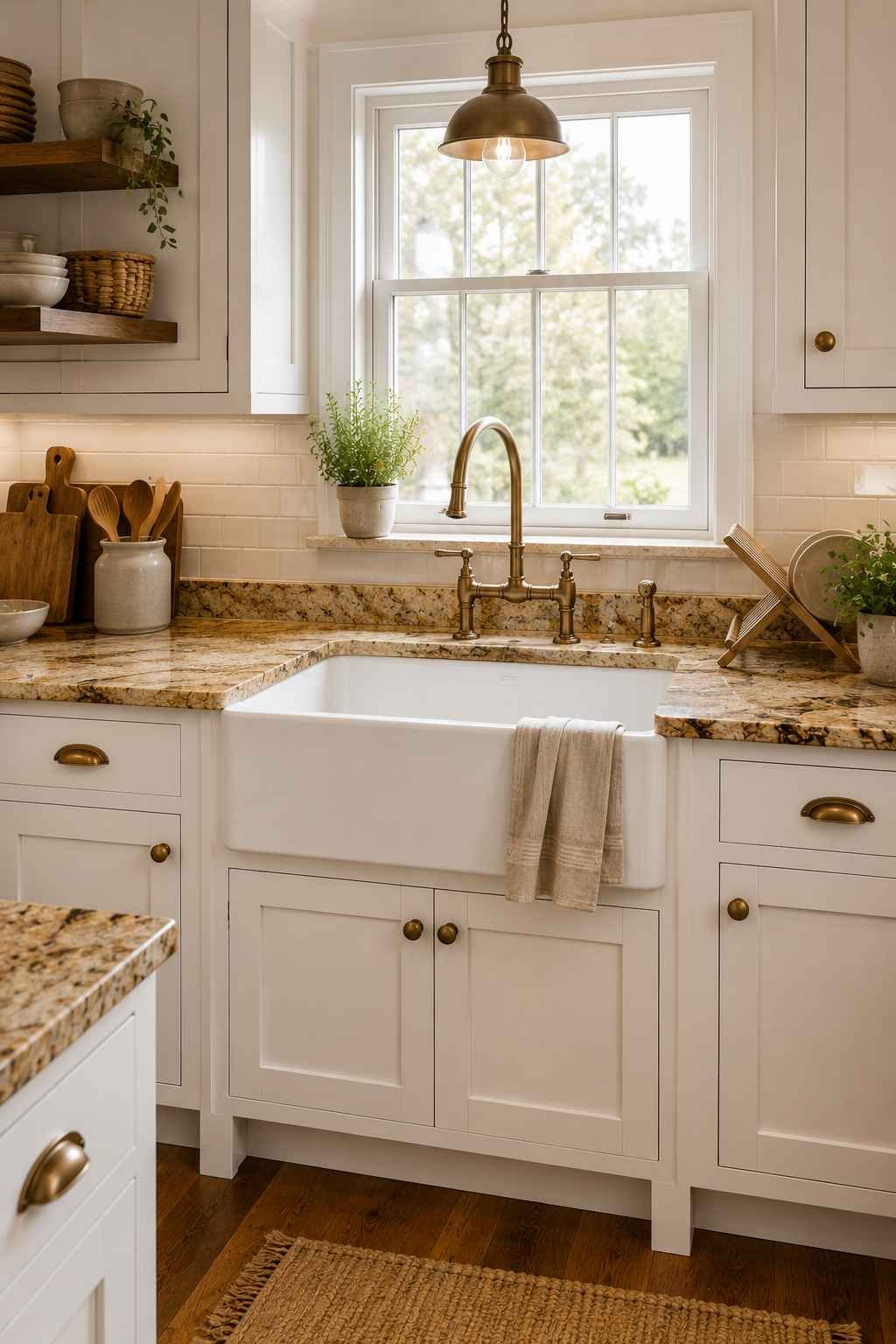
An apron-front farmhouse sink already brings a certain warmth and character to a kitchen. Pairing it with a warmer granite tone — rather than something stark white or jet black — keeps the whole look cohesive instead of feeling like two different design decisions were forced together.
This combination shows up constantly in modern farmhouse kitchens, and for good reason: it manages to feel both practical and intentional at the same time.
14. Contrast Zoning: Dark Island, Light Perimeter
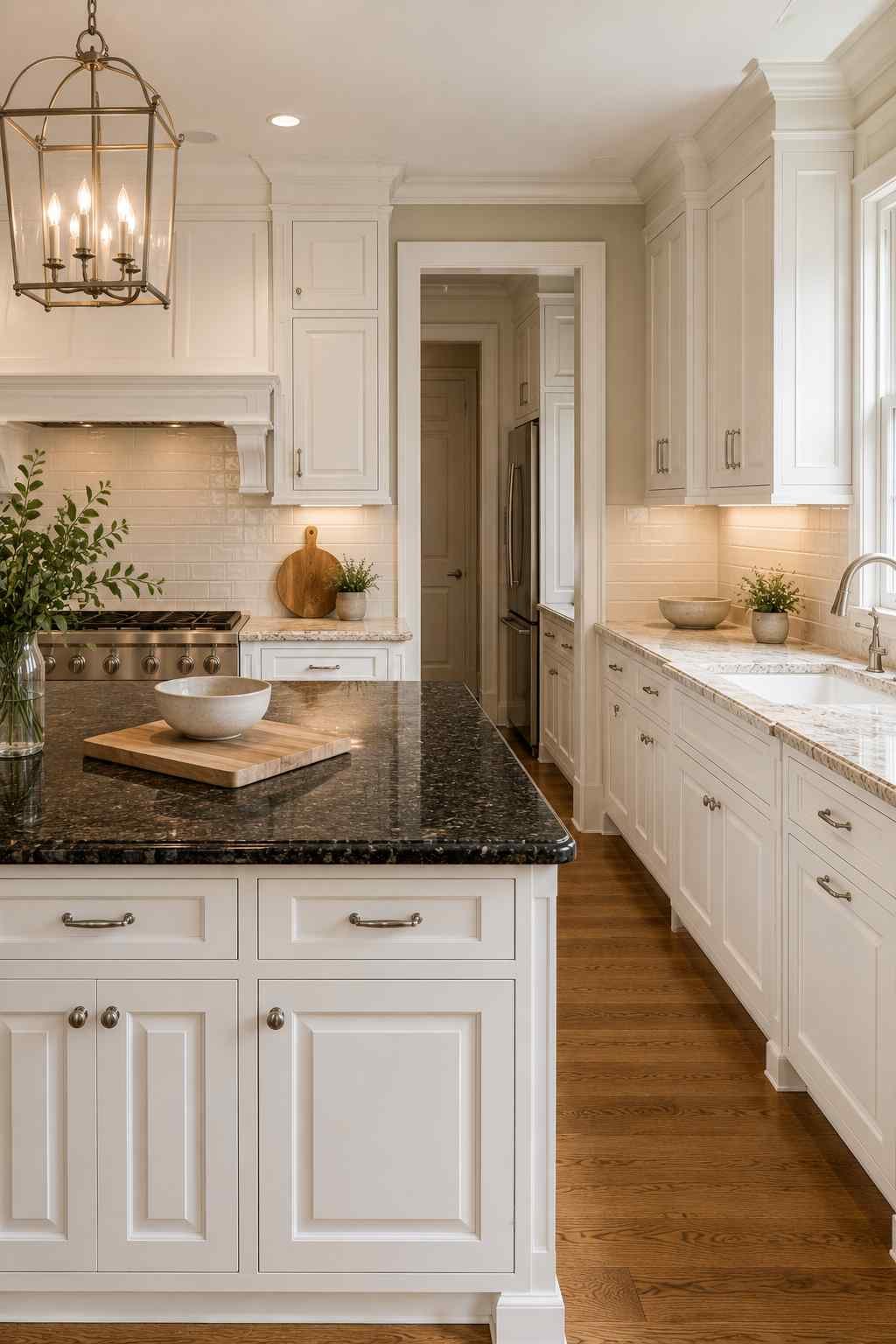
Rather than matching your island granite to your perimeter countertops, some kitchens use two different granite colors entirely — a darker stone on the island, a lighter one around the rest of the room. Against all-white cabinetry, this creates zones within the kitchen without needing to change the cabinet color at all.
It’s a subtler version of the colored-island trend, and it tends to suit more traditional homes where a bold paint color might feel out of place.
15. Classic Subway Tile Backsplash
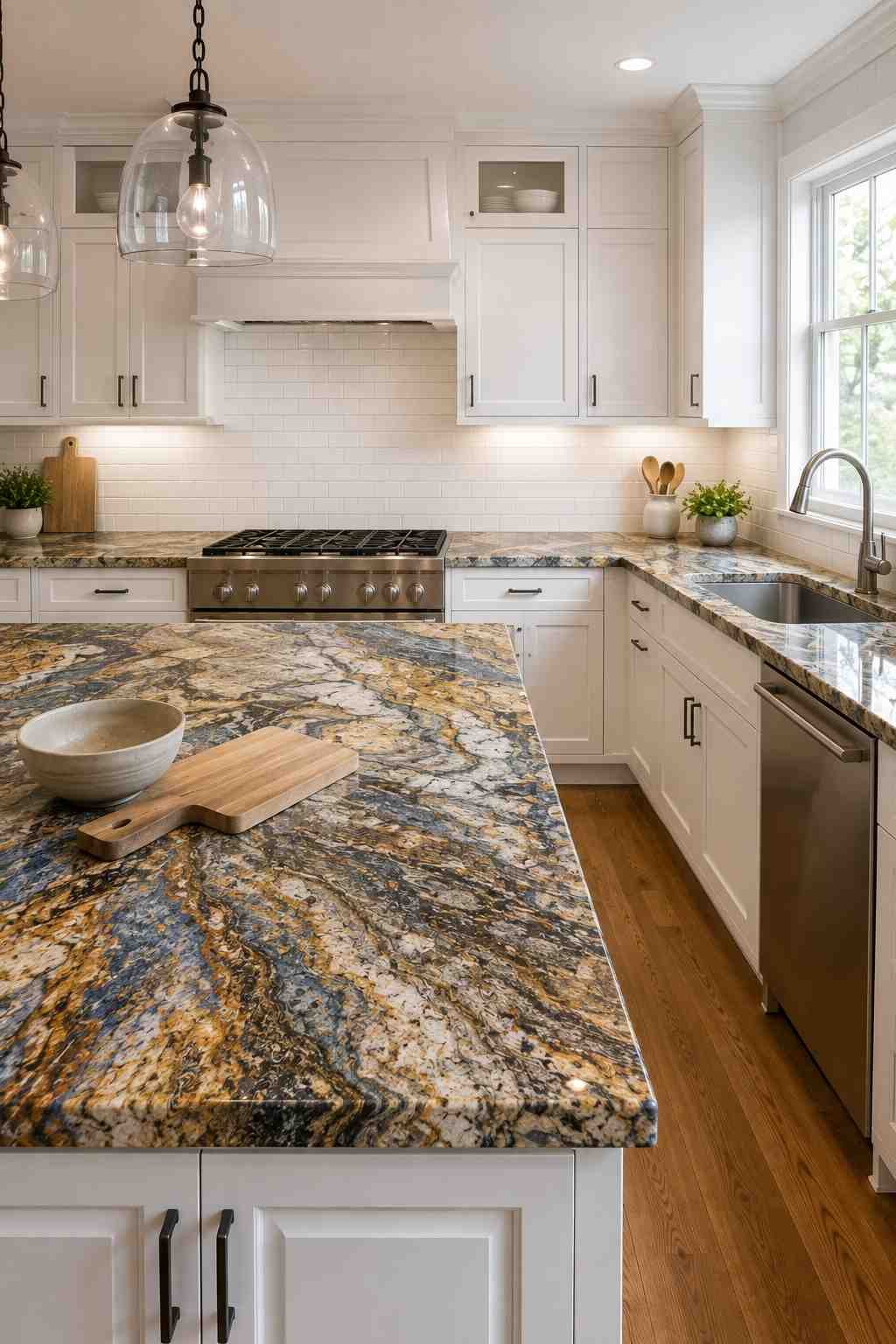
Sometimes the simplest option really is the best one. A plain white subway tile backsplash lets almost any granite countertop shine, since it doesn’t compete for attention. This is especially useful if you’ve chosen a granite with a lot of movement or color variation — Fusion, Van Gogh, or similar exotic stones — because a busy backsplash on top of a busy countertop starts to look chaotic fast.
I still recommend this combination more than any other when someone tells me they want their kitchen to “never look dated.”
16. Light Granite for Small Kitchens
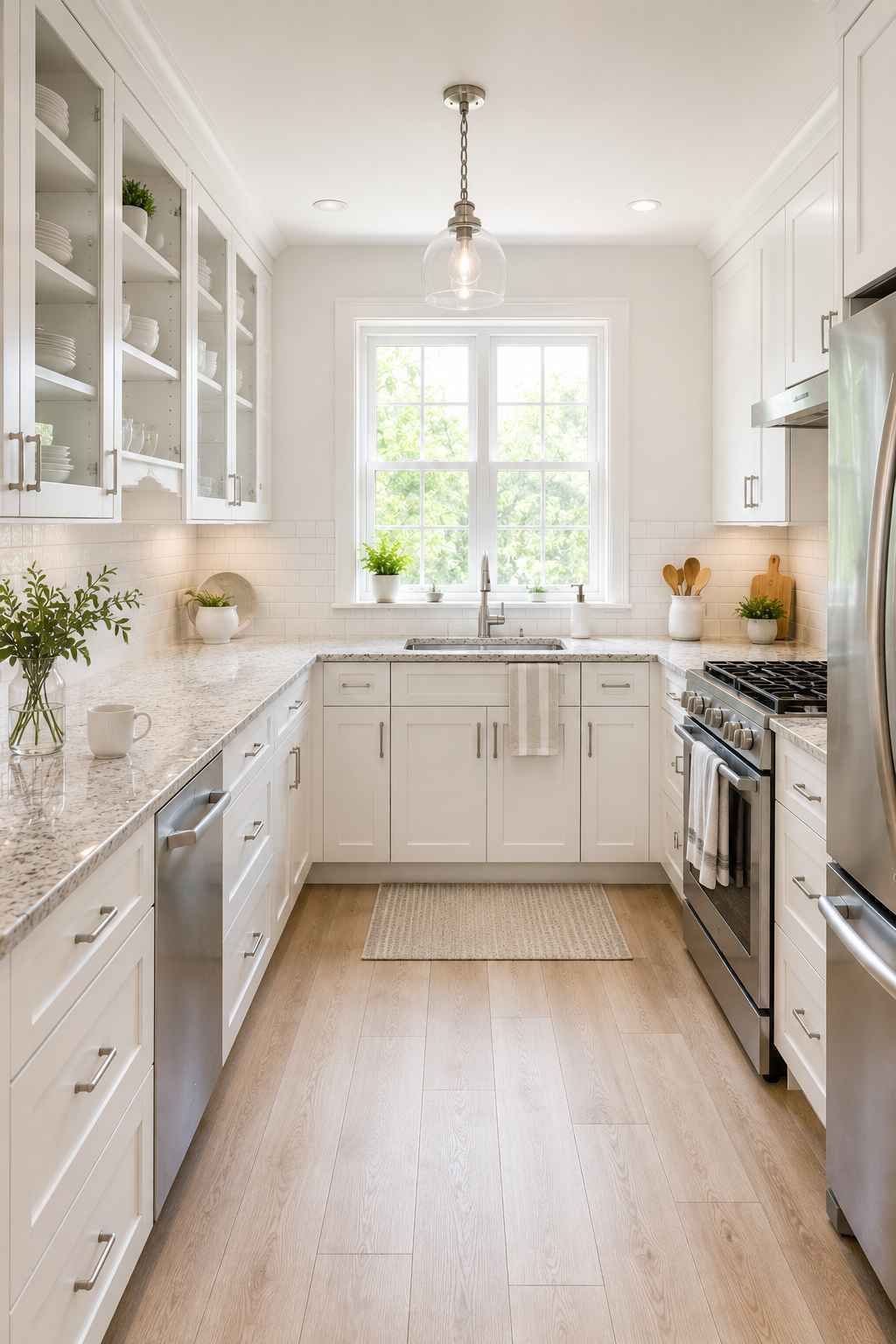
In a smaller kitchen, every material choice either helps the room feel bigger or makes it feel more closed in. Light granite — whites, soft grays, pale beiges — reflects more natural light and keeps sightlines open, which genuinely changes how a small space feels to stand in, not just how it looks in photos.
If you’re working with a compact kitchen, this is one of the few design decisions where the practical choice and the popular choice happen to be the same thing.
17. Black Hardware for a Modern Edge
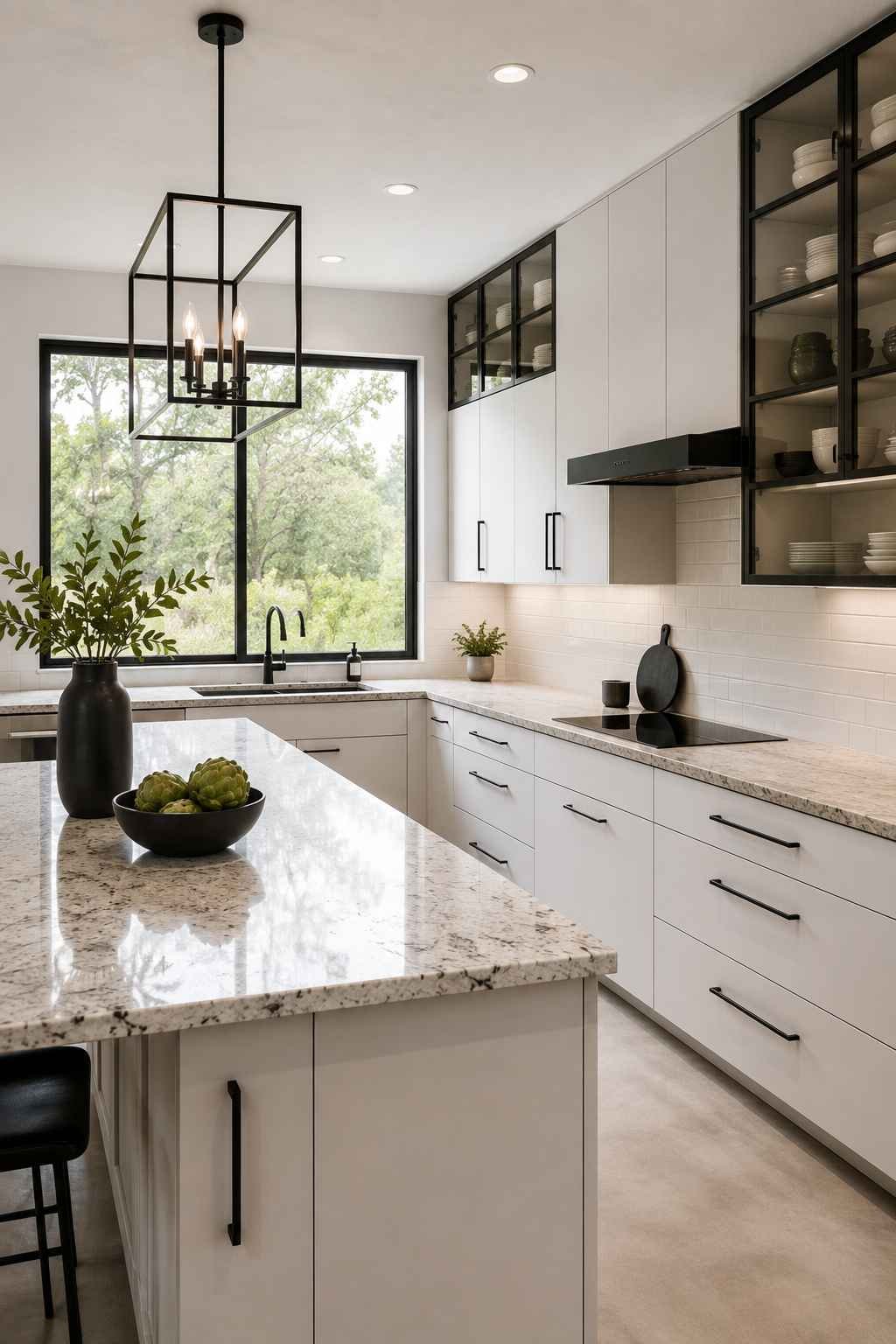
Where brass hardware adds warmth, matte black hardware does the opposite — it sharpens the contrast and gives an all-white kitchen a more modern, almost architectural feel. Against a lighter or mid-tone granite, black hardware and black faucet fixtures create just enough visual weight to keep the kitchen from feeling too soft or too plain.
This pairing has become especially popular in newer builds where the rest of the home leans toward a minimalist, contemporary style.
18. Exotic Granite as a Statement Piece
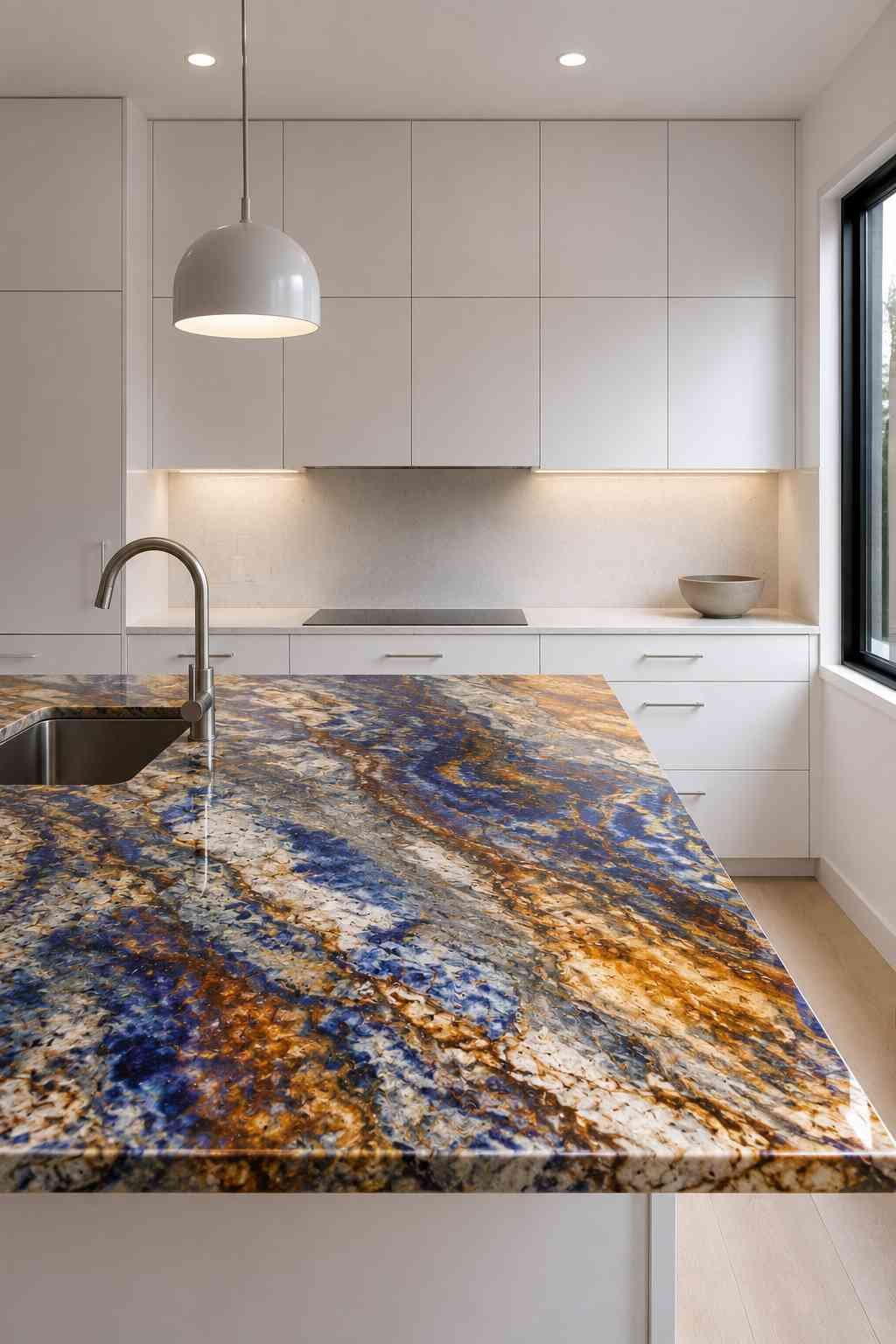
Some granite slabs are less like a background material and more like art. Stones like Fusion, Van Gogh, or Blue Bahia have such dramatic color and movement that they can carry an entire kitchen on their own. Against plain white cabinets, they get to be exactly that — the star of the room.
If you go this route, resist the urge to add more decoration elsewhere. Let the countertop be the one loud element and keep everything else — cabinets, backsplash, hardware — deliberately quiet.
19. White Shaker Cabinets, the Combination That Started It All
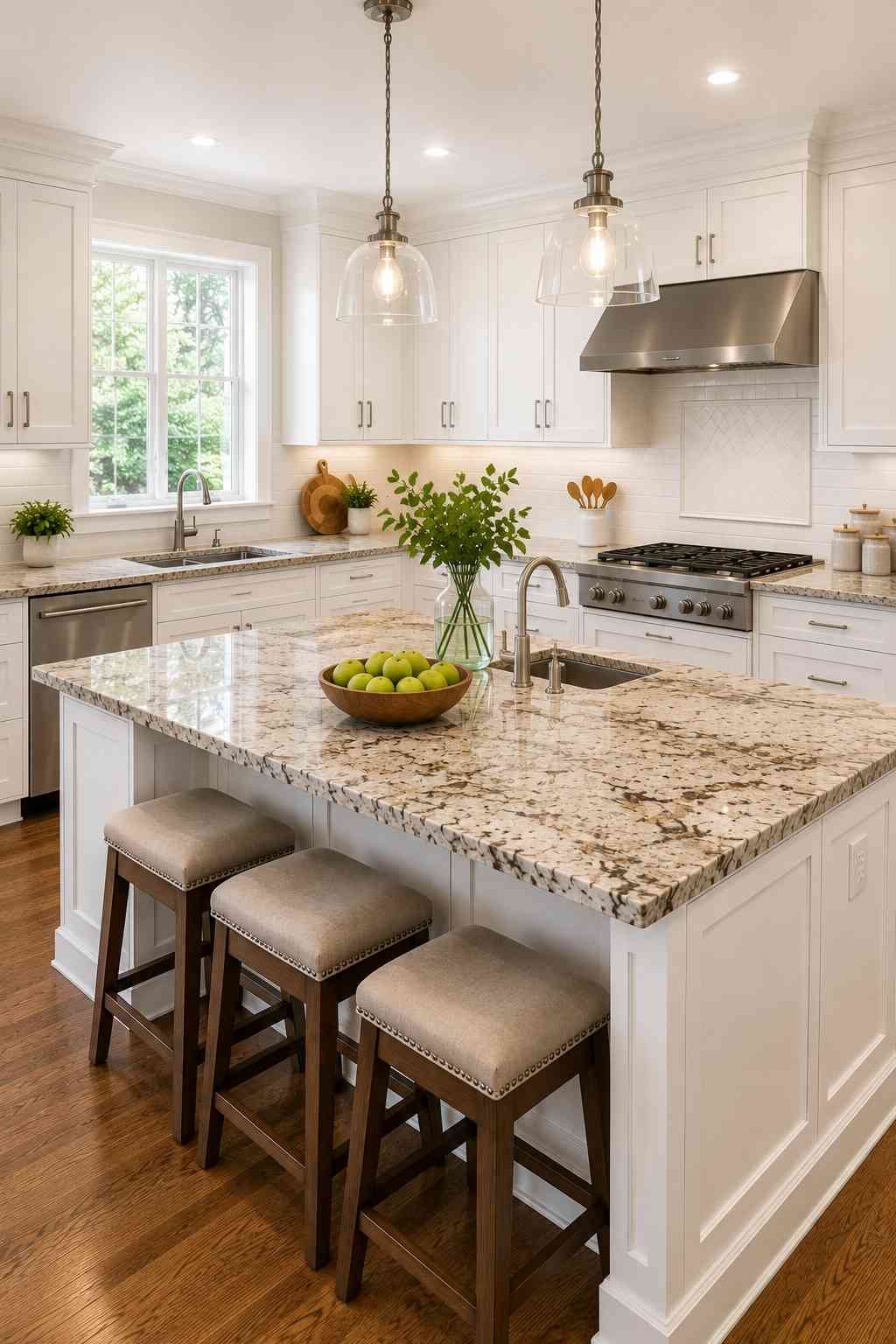
Last but honestly the one I’d point most people toward if they’re unsure where to start: white shaker cabinets with a mid-tone granite countertop. It’s the combination that shows up in real estate listings, renovation shows, and neighborhood kitchens alike, and it’s popular for a simple reason — it works in almost any home, in almost any climate, in almost any decade.
Shaker doors have clean, simple lines that don’t compete with granite’s natural pattern, which means you can choose almost any granite color on this list and it will still look intentional. If you’re planning a full renovation and haven’t settled on a cabinet door style yet, it’s worth comparing [shaker vs. flat-panel cabinet styles] before finalizing your order, since the door style affects how much visual “busyness” your granite can handle.
A Few Things I’ve Learned Along the Way
After being around enough of these kitchens, a few practical lessons stick out that don’t always make it into the glossy photos.
Sealing matters more than people expect. Granite is porous, and even a good sealant needs to be reapplied every year or two depending on how much the counter gets used. Skipping this step is the most common reason people end up disappointed with a countertop that looked perfect on installation day.
Lighting changes everything. The same granite slab can look completely different under warm bulbs versus daylight-toned LEDs. If possible, look at a physical sample in your own kitchen, at different times of day, before committing to a slab based on a showroom sample alone.
Bigger slabs, fewer seams. If your budget allows it, ask your fabricator about minimizing seams on longer countertop runs. It’s a small detail that makes a noticeable difference in how finished the final result looks.
Don’t ignore the edge profile. A simple eased edge reads more modern, while a bullnose or ogee edge leans traditional. It’s an easy detail to overlook, but it changes the overall feel of the kitchen almost as much as the granite color itself.
If you’re at the early planning stage and still weighing granite against other options, it’s also worth reading through [granite vs. quartz countertops compared] before you commit, since the two materials behave very differently over time even though they can look similar on the surface.
What Granite Actually Costs (And Where the Money Goes)
Budget is usually the first question people ask once they’ve fallen in love with a particular granite color, so it’s worth breaking down honestly. Pricing depends on three things: the rarity of the stone, the size and thickness of the slab, and the complexity of the edge and installation work.
Common, widely available colors — Tan Brown, Steel Grey, Santa Cecilia — tend to sit at the more affordable end of the range, simply because they’re quarried in high volume.
Rarer or more dramatic stones like Blue Bahia or Van Gogh cost noticeably more, sometimes several times as much per square foot, because the supply is limited and the slabs are often imported.
Beyond the material itself, labor adds up fast.
A waterfall edge, a full-slab backsplash, or a kitchen with an unusual number of corners and cutouts all increase installation time, which increases the final bill.
If you’re trying to stretch a budget, one approach I’ve seen work well is choosing a mid-range granite for the main countertop runs and saving the more dramatic, expensive slab for a single feature — like an island top or a small bar counter — where a little goes a long way.
It’s also worth getting at least two or three quotes from local fabricators rather than accepting the first one. Prices for identical stone can vary more than people expect, depending on shop overhead and how busy a fabricator is at the time you’re ordering.
How to Choose the Right Granite for Your Kitchen
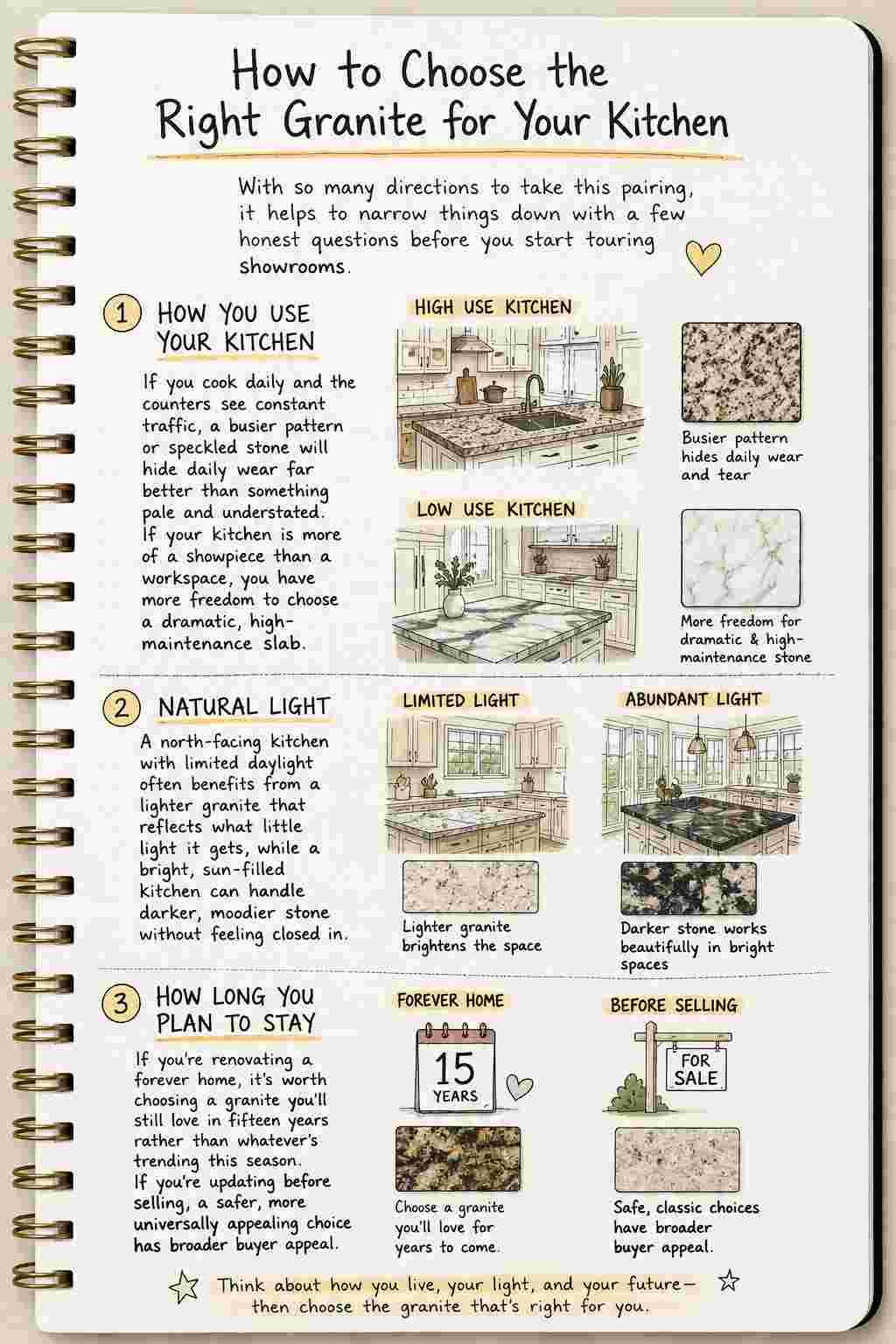
With so many directions to take this pairing, it helps to narrow things down with a few honest questions before you start touring showrooms.
Start with how you actually use your kitchen. If you cook daily and the counters see constant traffic, a busier pattern or speckled stone will hide daily wear far better than something pale and understated.
If your kitchen is more of a showpiece than a workspace, you have more freedom to choose a dramatic, high-maintenance slab.
Next, think about the room’s natural light. A north-facing kitchen with limited daylight often benefits from a lighter granite that reflects what little light it gets, while a bright, sun-filled kitchen can handle darker, moodier stone without feeling closed in.
Finally, consider how long you plan to stay in the home. If you’re renovating a forever home, it’s worth choosing a granite you’ll still love in fifteen years rather than whatever’s trending this season.
If you’re updating a kitchen before selling, a safer, more universally appealing choice — like a classic white or warm beige granite — tends to have broader buyer appeal than something bold and personal.
Frequently Asked Questions
Does granite work with every shade of white cabinet?
Mostly, yes. Warmer whites (creams, ivories) tend to pair best with warmer granite tones, while cooler, brighter whites suit grayer or bluer granite. If you’re unsure, bring a cabinet door sample with you when you’re choosing your slab.
Is granite still a good choice compared to quartz?
Granite is a natural stone with unique veining in every slab, while quartz is engineered and more consistent. Granite generally needs periodic sealing, while quartz doesn’t. Neither is objectively “better” — it depends on whether you want a completely natural, one-of-a-kind surface or a more predictable, low-maintenance one.
What granite colors are the most timeless with white cabinets?
Based on what tends to hold up best over the years, mid-tone grays, warm beiges, and classic black-and-white pairings age the most gracefully. Extremely trendy exotic colors can look wonderful now but may feel more dated a decade from now than a simpler stone would.
How often does granite need to be resealed?
It depends on the stone’s porosity, but a good rule of thumb is once every one to two years. A quick way to test it: pour a small amount of water on the countertop and see how long it takes to soak in. If it darkens the stone within a few minutes, it’s time to reseal.
Final Thoughts
White cabinets and granite countertops have stayed popular for so long because the combination is genuinely flexible.
You can lean traditional, modern, coastal, or farmhouse just by changing the granite color, the hardware, or the backsplash — without ever touching the cabinets themselves.
That’s part of why it remains one of the safest long-term investments you can make in a kitchen renovation.
If you’re still narrowing down your options, take your time with physical samples rather than relying only on photos.
Granite is one of those materials that really does look different in person, and the small details — the veining, the fleck size, the way it catches light — are exactly the things that make each kitchen feel distinct, even when the overall combination is one that’s been done a thousand times before.