
A balcony is often the most underrated space in a home. Tucked between the indoors and outdoors, it’s easy to treat it as an afterthought — a place to dry laundry, store old furniture, or leave empty altogether.
But with the right design choices, even a small balcony can become the most relaxing, photogenic, and functional corner of your entire house.
Modern luxury balcony design isn’t about cramming in expensive furniture.
It’s about intentional layout, quality materials, smart lighting, and a cohesive style that makes the space feel like an extension of your living room rather than a leftover patch of concrete.
Whether you have a compact city balcony or a sprawling terrace, the ideas below will help you rethink what’s possible.
Here are 19 modern luxury balcony design ideas, along with practical tips on how to bring each one to life.
1. The Minimalist Zen Balcony
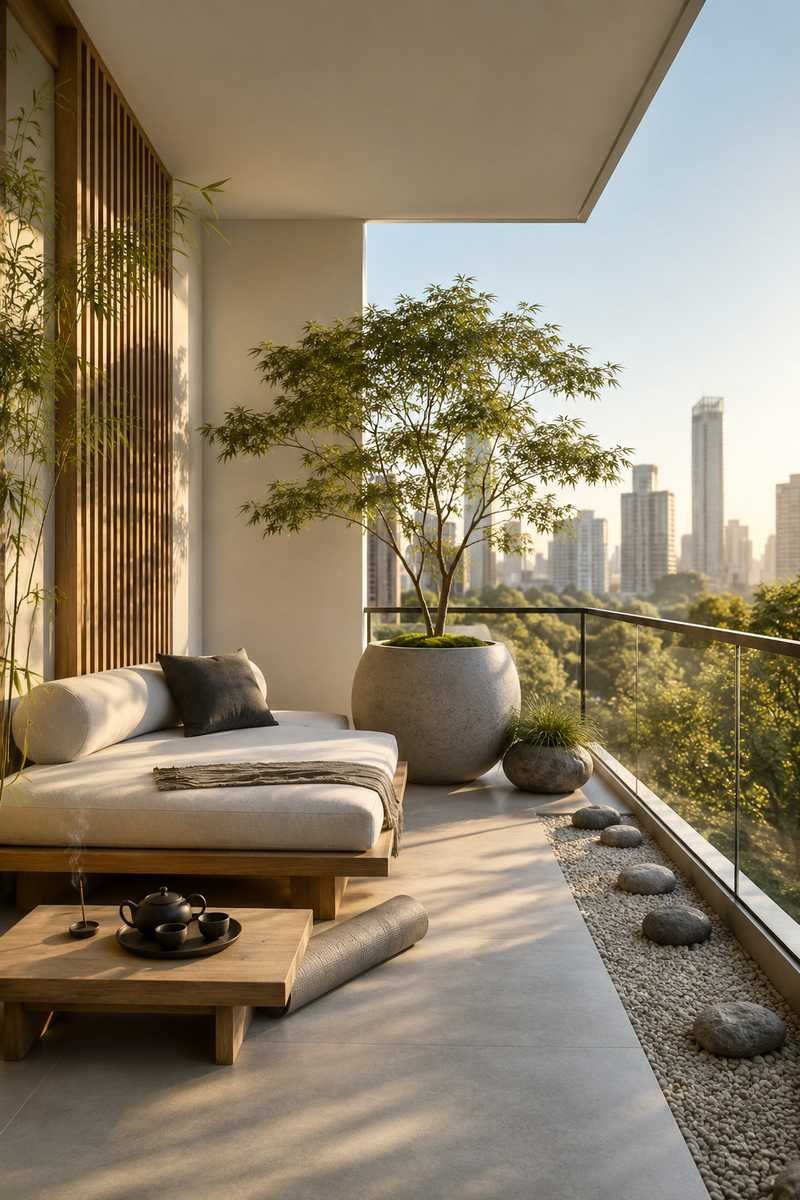
Strip a balcony down to just a few well-chosen elements and something interesting happens: it starts to feel bigger, calmer, and more expensive, even without adding anything new. That’s the logic behind the minimalist approach — a restrained palette of whites, greys, and warm wood, paired with clean-lined furniture and one or two statement pieces like a sculptural planter or a low-profile daybed.
How to achieve it: Stick to no more than three materials (e.g., wood, stone, and metal), keep furniture low to the ground, and resist the urge to add too many decorative objects. Negative space is the luxury here.
2. Vertical Garden Wall
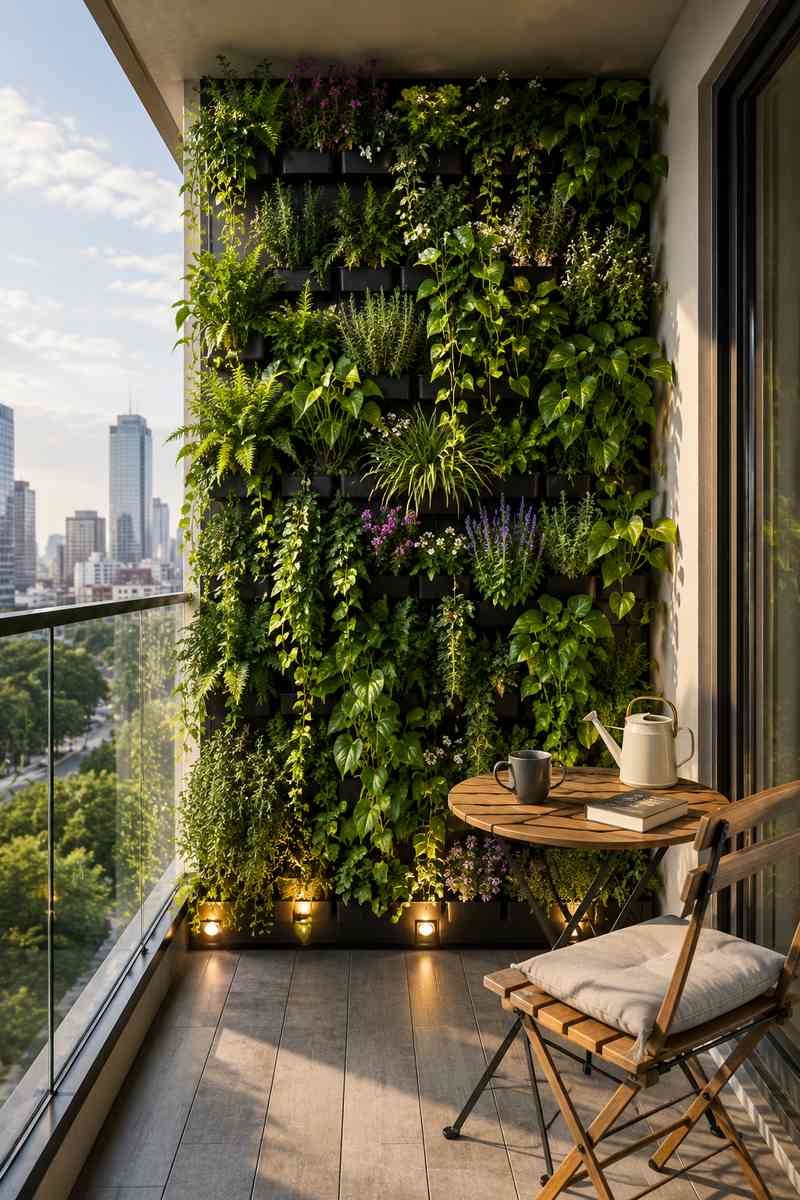
Some balconies simply don’t have the floor space for pots and planters, and that’s exactly where a vertical garden earns its place. Modular planting systems let you grow herbs, ferns, or flowering plants straight up a wall instead of across the floor, turning even a narrow balcony into something genuinely green.
How to achieve it: Install a modular felt-pocket or trellis system against the balcony wall, use a mix of trailing and upright plants for texture, and add a drip irrigation kit if you’re not confident about watering daily.
3. Resort-Style Daybed Lounge
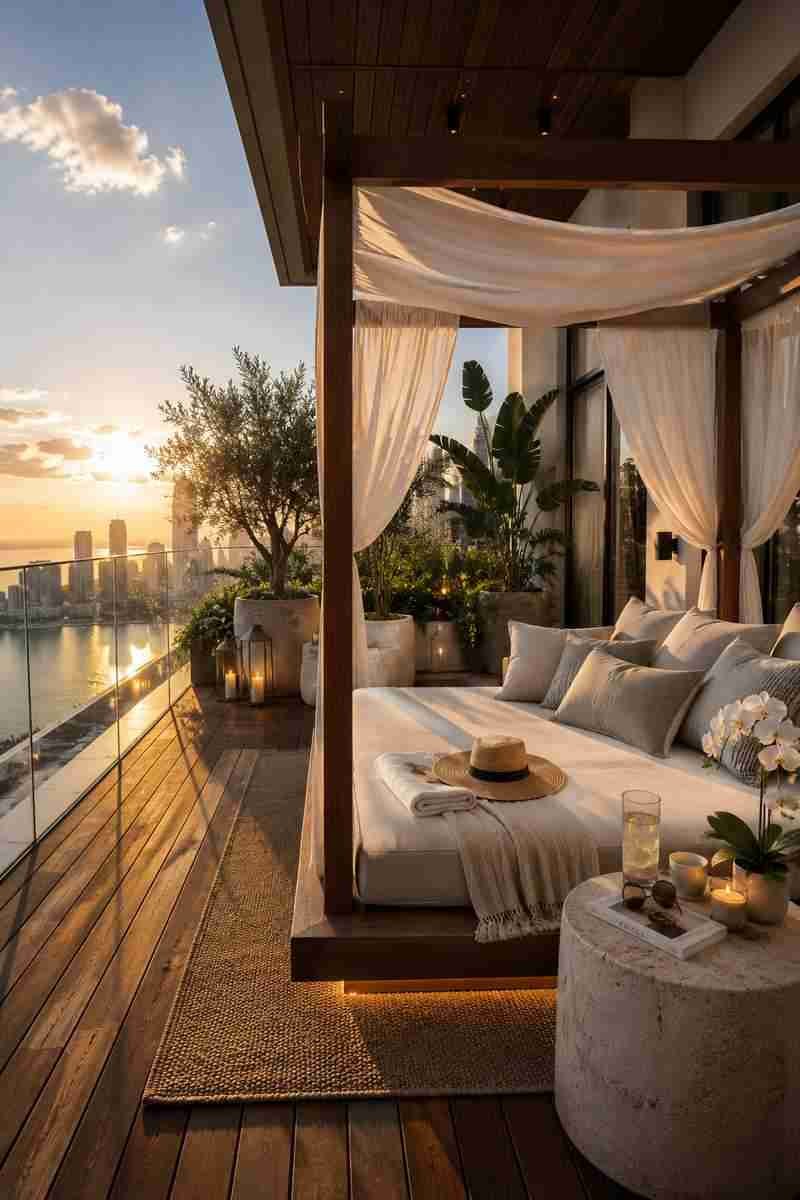
Trade a chair for a daybed and the whole balcony changes purpose — from a place you pass through to a place you actually stay. Dressed with weatherproof cushions and a canopy, a built-in or freestanding daybed borrows that unmistakable five-star hotel feeling. It works especially well on larger balconies or rooftop terraces, where lounging, not just sitting, is the point.
How to achieve it: Choose UV-resistant, quick-dry outdoor fabrics, layer in oversized cushions and a soft throw, and frame the daybed with sheer curtains or a retractable canopy for shade and privacy.
4. Warm Wood Cladding
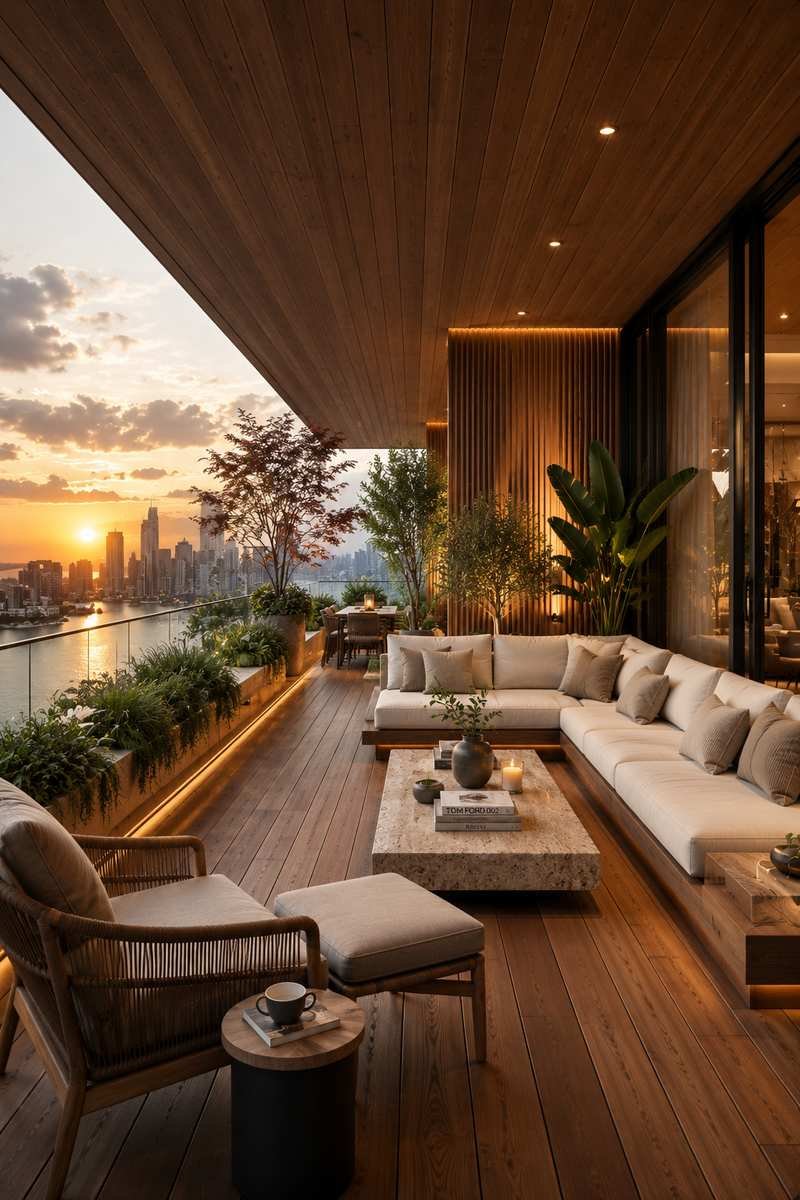
Concrete and tile do their job, but they rarely feel warm underfoot or overhead. Cladding the floor, ceiling, or a single feature wall in wood changes that immediately — it’s a material trick luxury architects lean on precisely because it bridges indoor and outdoor spaces without a visible seam.
How to achieve it: Use composite decking or thermally-treated wood for weather resistance, run the boards in one consistent direction to visually enlarge the space, and seal the wood annually to maintain its color.
5. Glass Railing for Uninterrupted Views
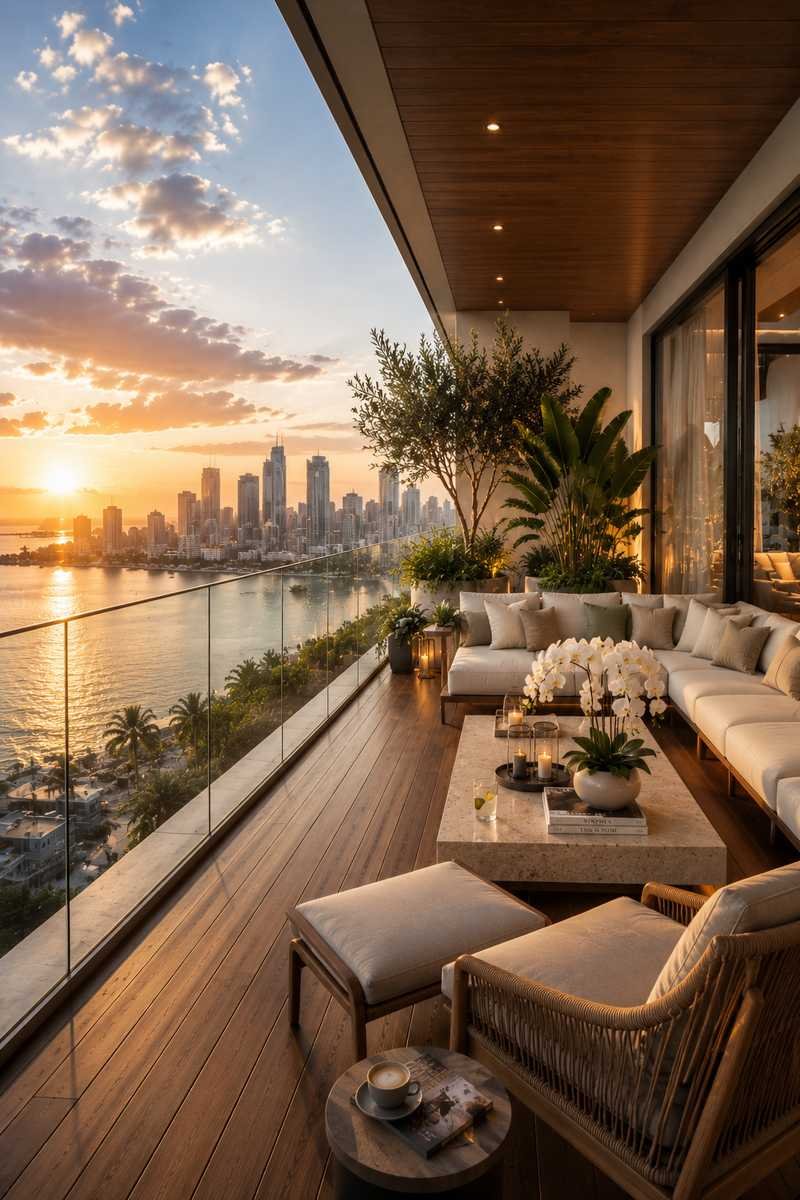
A great view deserves to be seen, not filtered through metal bars. Swap traditional railings for frameless tempered glass and the barrier all but disappears — the balcony reads as larger, and whatever you’re looking at outside suddenly feels closer.
How to achieve it: Opt for tempered, laminated glass panels with a discreet stainless steel or bronze base track, and ask your installer about self-cleaning glass coatings to reduce maintenance.
6. Statement Outdoor Rug
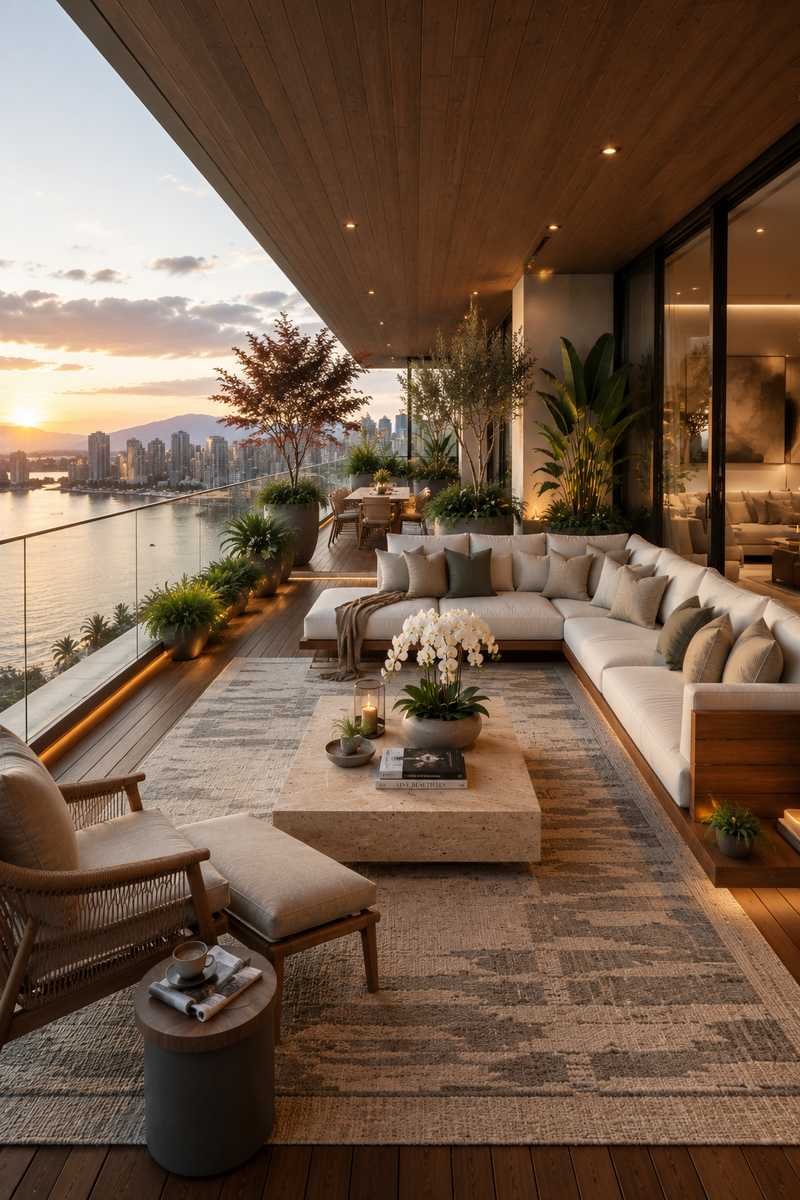
Bare tile or concrete underfoot rarely feels finished, no matter how good the furniture looks above it. A well-placed outdoor rug fixes that instantly — it defines the seating zone, adds warmth underfoot, and pulls the color scheme together the same way a rug does indoors. Modern luxury balconies tend to favor subtle geometric or abstract patterns over anything too bold.
How to achieve it: Choose a polypropylene or PET rug specifically rated for outdoor use, size it so furniture legs sit at least partially on it, and lift it off the floor slightly with a thin pad if drainage is a concern.
Check – Accent Chairs For Living Room
7. Fire Feature for Ambience and Warmth
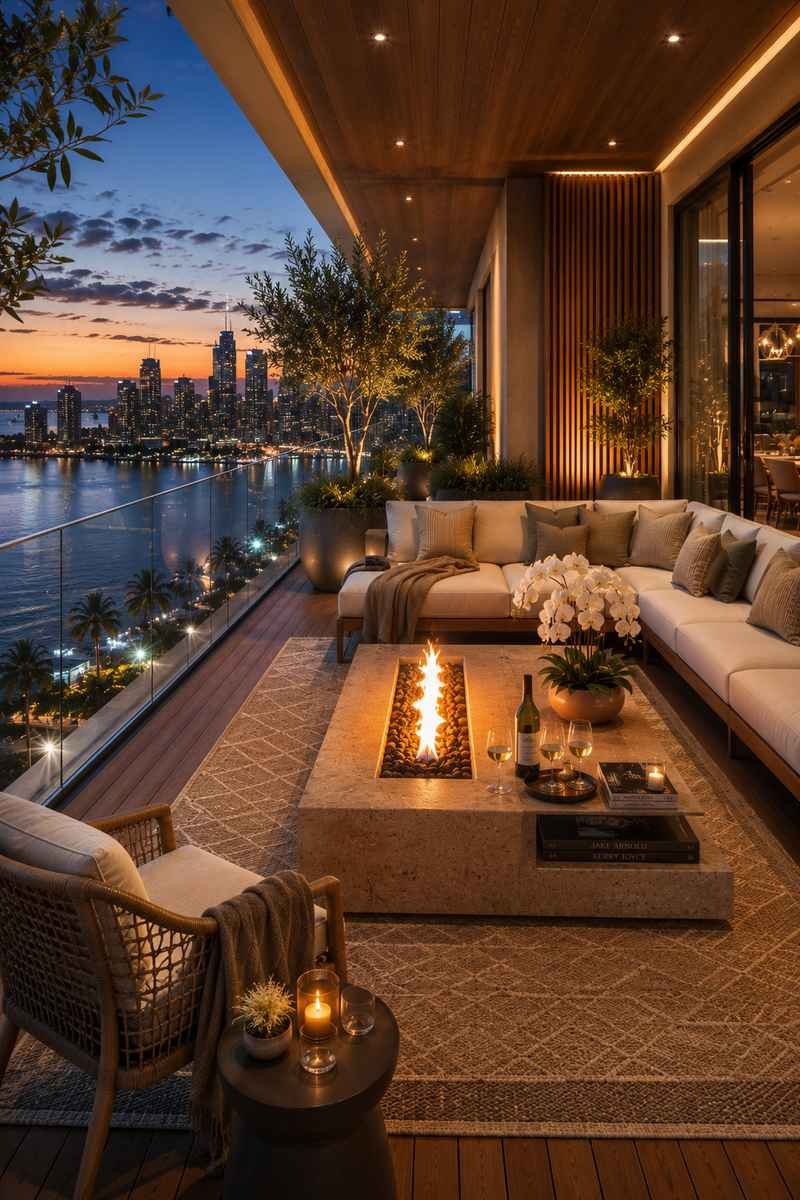
There’s a reason fire features show up again and again in luxury outdoor design: people gather around them. A small tabletop fire bowl or a built-in linear fire feature adds real warmth on cool evenings and gives a balcony a natural focal point, without needing much space to do it.
How to achieve it: For smaller balconies, a bioethanol tabletop burner is a safe, ventilation-free option. For larger terraces, a built-in gas fire table paired with weatherproof seating creates a genuine lounge atmosphere.
8. Sculptural Lighting as Art

One overhead bulb can light a balcony, but it can’t make it feel special. That takes layers: ambient string lights near the ceiling, wall-mounted sconces at eye level, and a sculptural floor or table lamp doing double duty as decor. Together, they’re what actually separates a good balcony from a luxurious one.
How to achieve it: Use warm white LEDs (2700K–3000K) for a cozy tone, install lights on a dimmer or smart switch, and choose at least one lighting fixture that doubles as a design object, like a lantern-style floor lamp.
9. Monochrome Color Palette with Metallic Accents
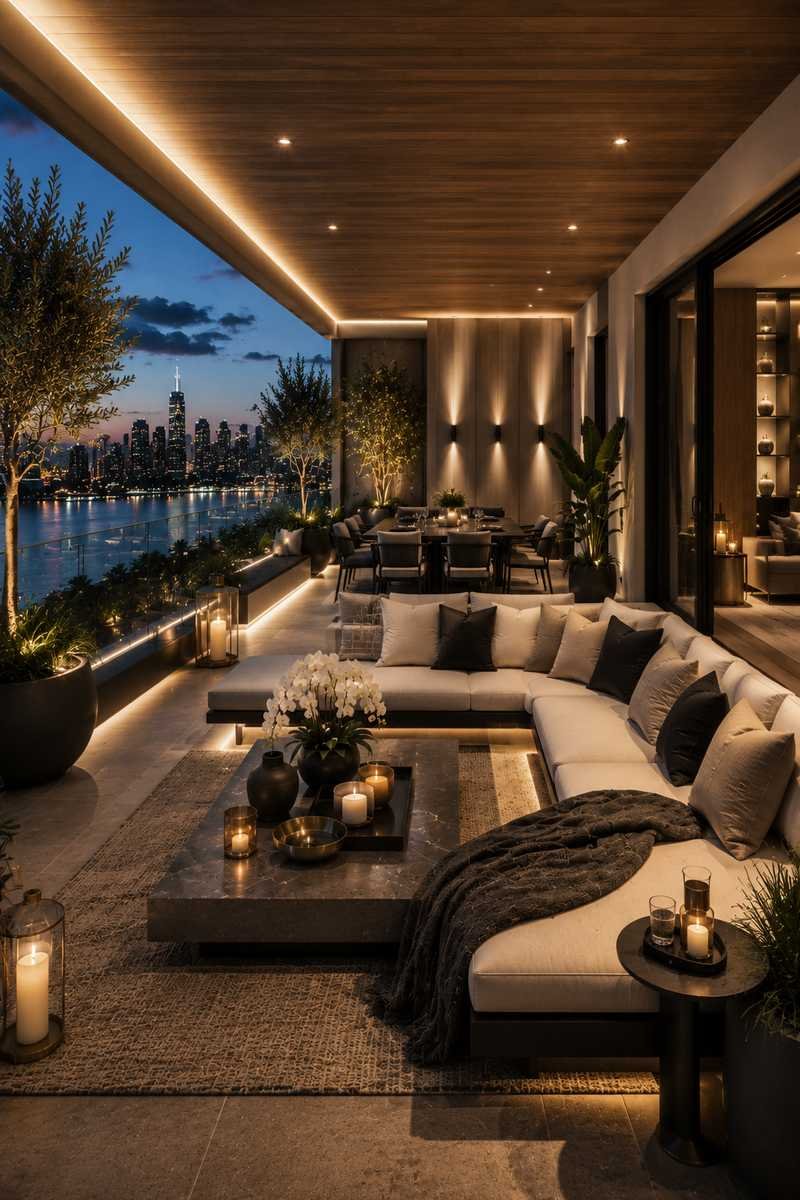
Not every luxurious balcony needs color at all. Charcoal, cream, and taupe, paired with brushed brass or matte black hardware, can look more editorial and more expensive than a busy palette ever would — and there’s a practical upside too: fewer colors means less to coordinate or replace when trends shift.
How to achieve it: Pick one dominant neutral for large surfaces (flooring, walls), a secondary neutral for furniture, and use metallic accents sparingly on hardware, planters, or a single accent table.
10. Built-In Bench Seating with Storage
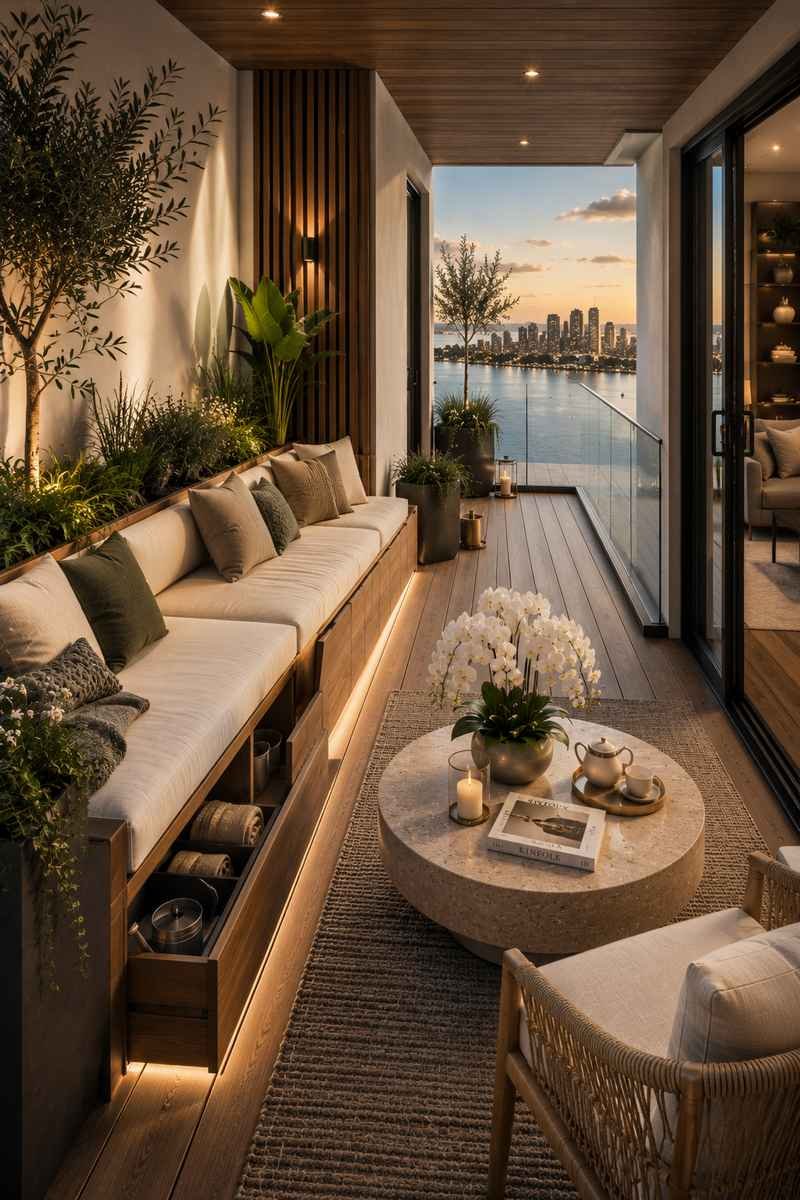
Small balconies force a choice most people don’t love: style or storage. Built-in bench seating along the perimeter sidesteps that entirely, freeing up floor space while hiding cushions, gardening tools, or folded blankets underneath the seat itself.
How to achieve it: Use marine-grade plywood or weather-treated timber for the bench frame, add a hinged lid for storage access, and top it with custom-fitted outdoor cushions in a durable fabric like Sunbrella.
11. Balinese-Inspired Tropical Retreat
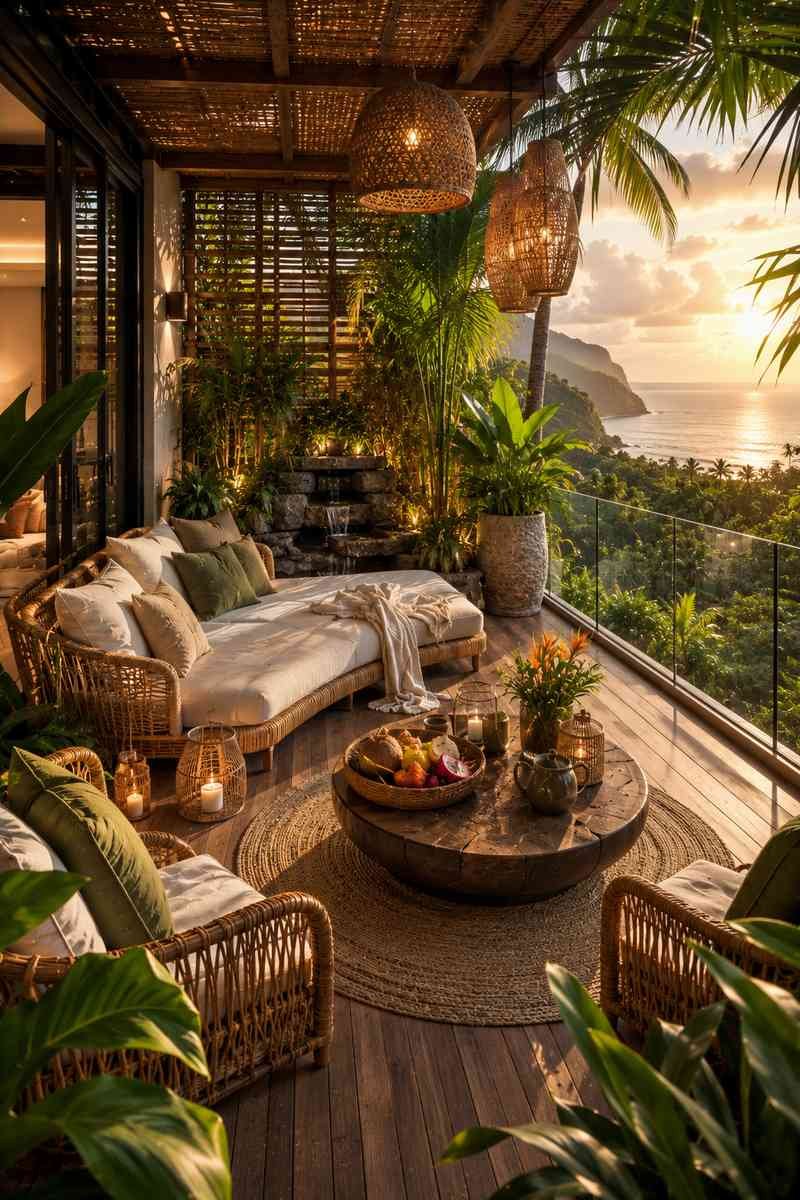
If a vacation feeling is the goal, look to Bali rather than a design showroom. Rattan furniture, bamboo screens, and lush foliage like palms or bird of paradise plants lean entirely on natural texture rather than polish — and that’s exactly what makes the style feel like an escape.
How to achieve it: Combine natural fiber furniture with waterproof cushions, add a bamboo privacy screen along one side, and use terracotta or woven planters rather than plastic ones to keep the material palette authentic.
12. Floating Shelving for Plants and Decor
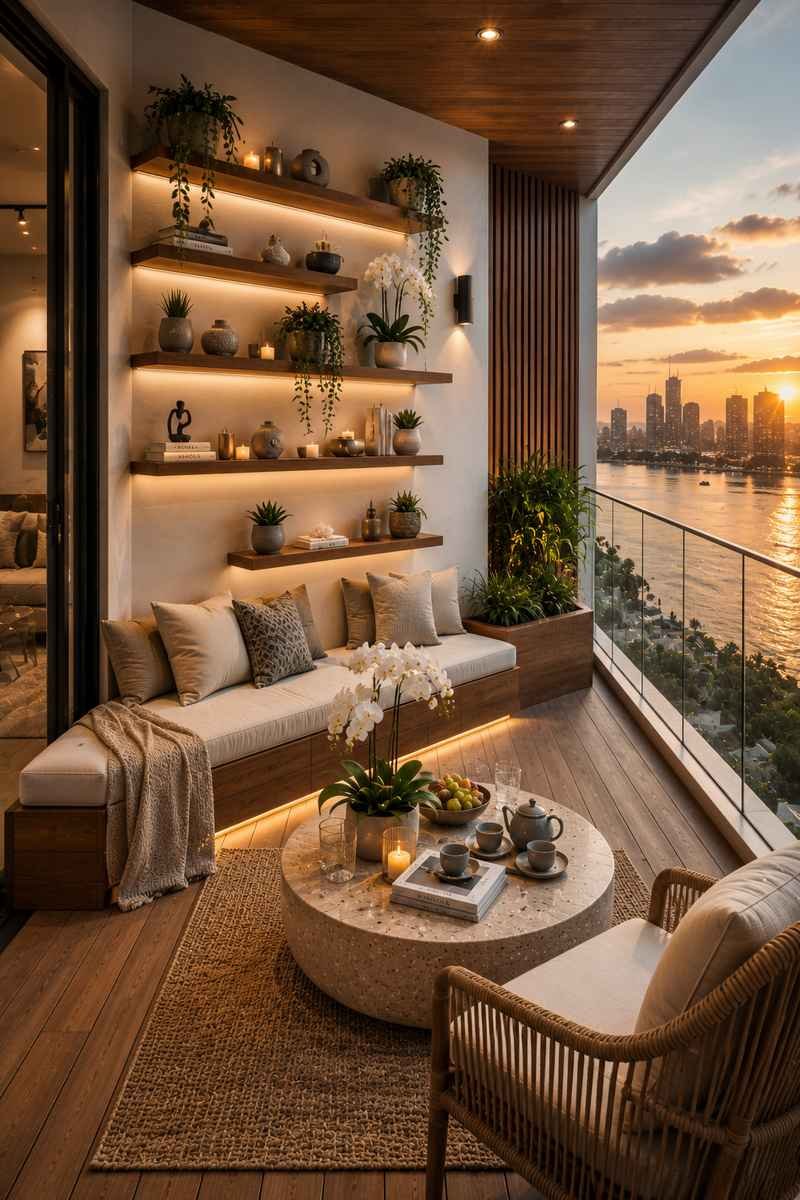
Not every balcony has room for planters on the floor, and that’s fine — the wall works just as well. Floating shelves mounted at different heights create display space for candles, small sculptures, or a few potted succulents, all without touching your actual floor area. Unlike a dedicated garden corner, this is more about styling than growing.
How to achieve it: Use weather-sealed floating brackets rated for outdoor use, stagger shelf heights for visual interest, and keep each shelf’s display curated — three or four objects per shelf is usually the sweet spot.
13. Outdoor Kitchenette or Bar Cart
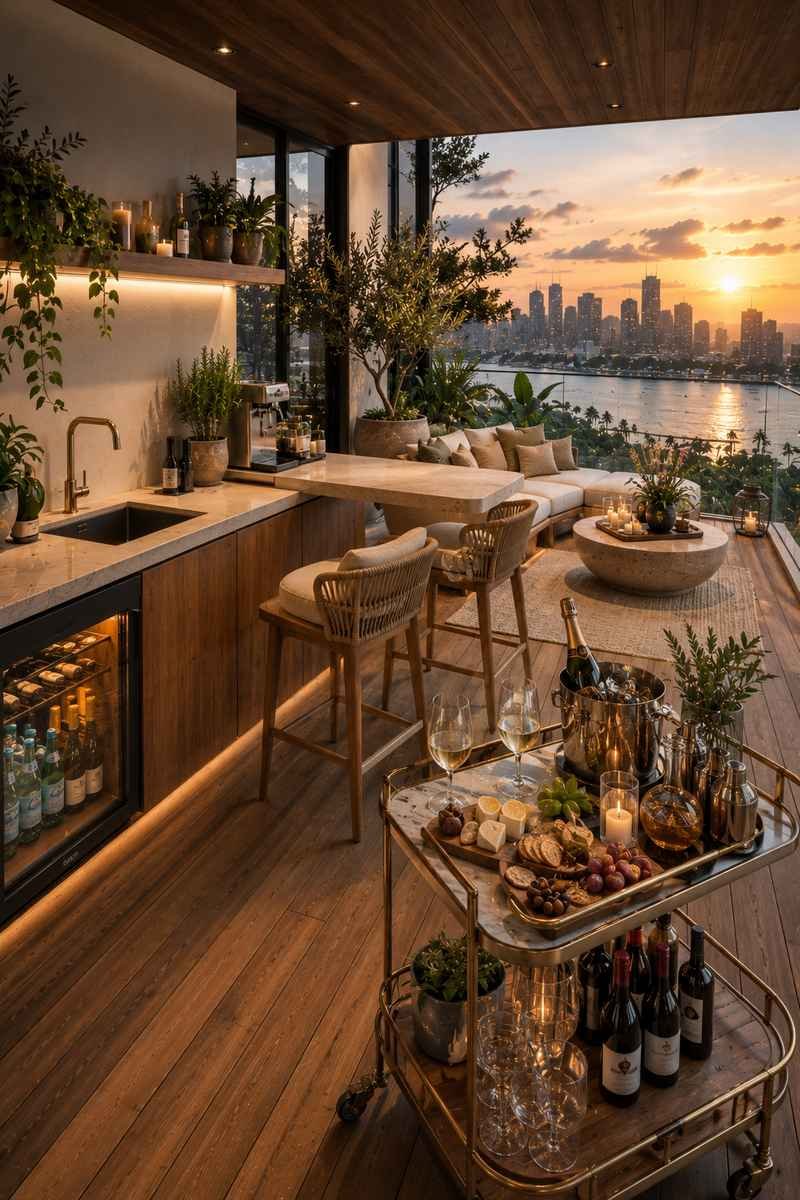
Hosting on a balcony gets a lot easier once drinks don’t require a trip back to the kitchen. A compact bar cart or a fully built kitchenette turns the space into an actual entertaining hub — even something as simple as a folding bar table with a wine chiller changes how the balcony gets used.
How to achieve it: For tight spaces, choose a slim, foldable bar cart on wheels; for larger terraces, consider a built-in counter with a sink and small fridge, using weatherproof stone or composite countertops.
14. Japandi-Style Balcony
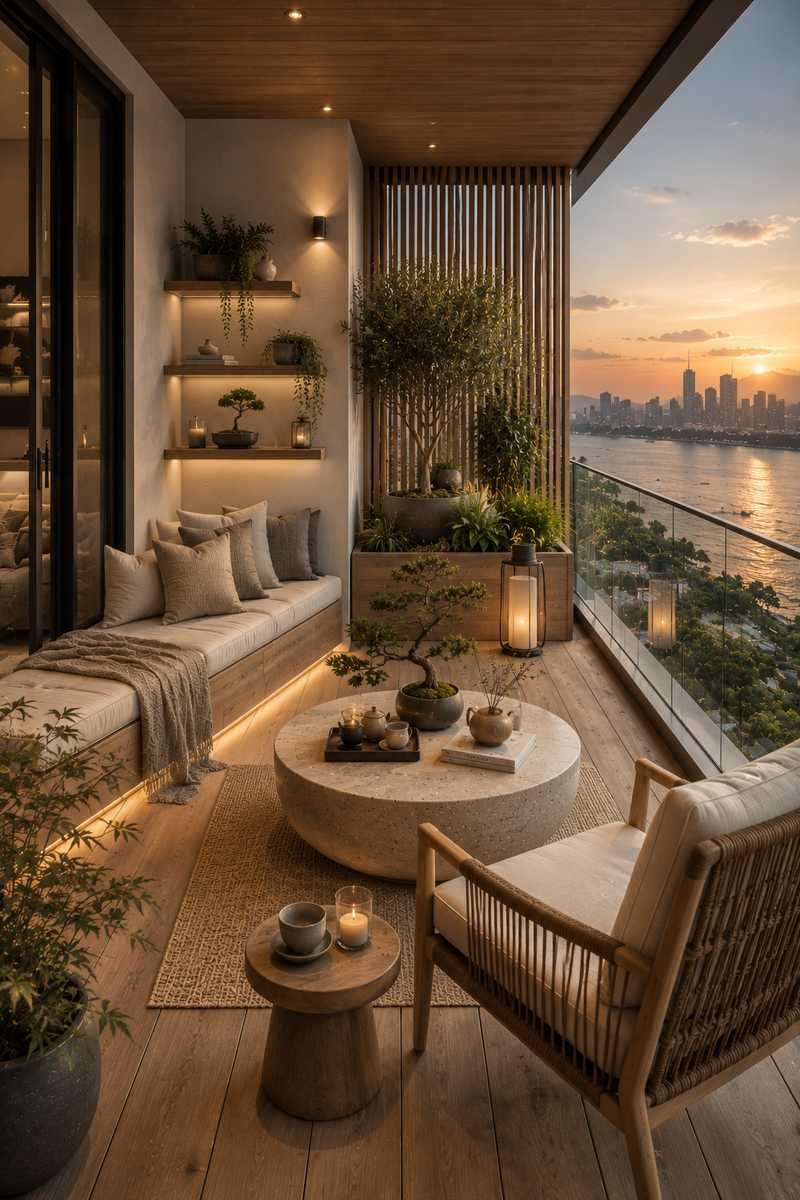
Somewhere between Japanese restraint and Scandinavian coziness sits Japandi — arguably the most balcony-friendly design trend going right now, since it works at almost any size. Clean lines, natural materials, and a muted palette do the heavy lifting, without demanding a large footprint.
How to achieve it: Choose furniture with visible wood grain and simple silhouettes, add one ceramic or stone accent piece, and keep textiles limited to neutral linen or cotton blends.
15. Retractable Pergola or Shade Sail
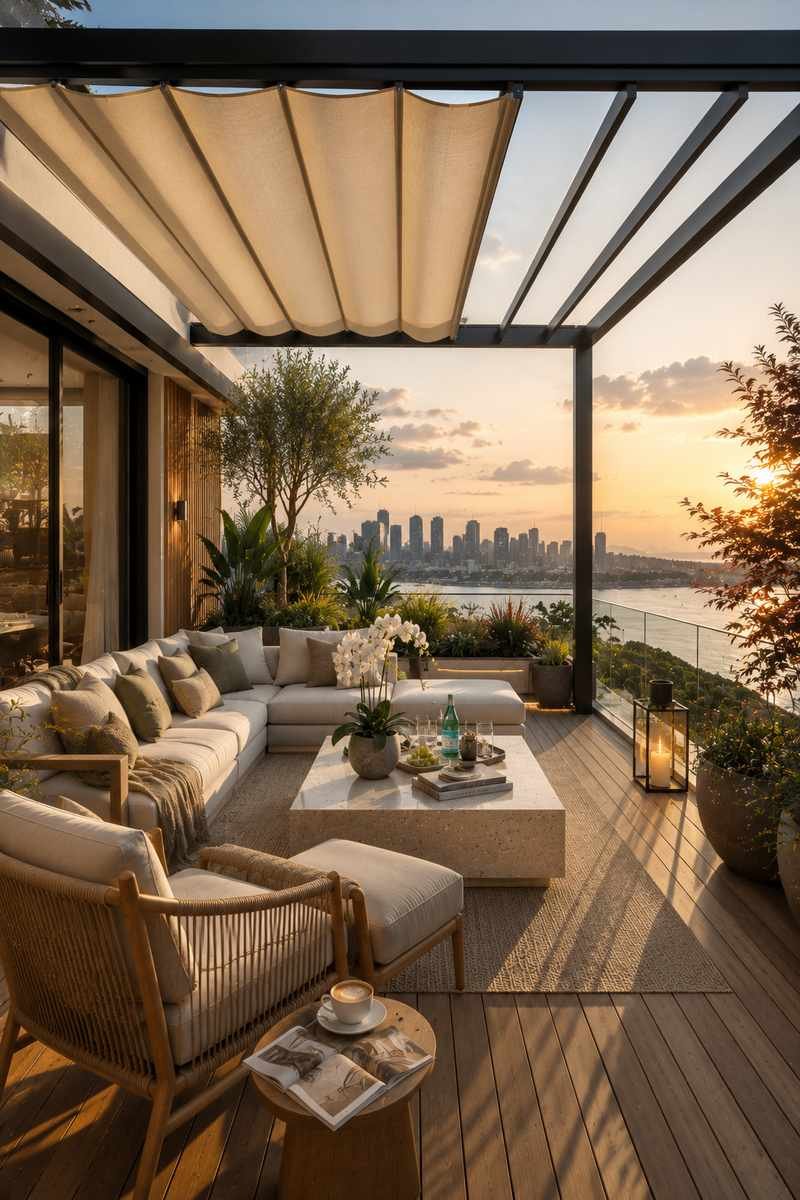
West- and south-facing balconies have one recurring problem: too much afternoon sun to actually use the space. A retractable pergola or tensioned shade sail solves it while adding real architectural interest overhead, giving you shade on demand instead of a fixed, permanent roof.
How to achieve it: Choose a motorized louvered pergola for hands-free control, or a manually adjustable shade sail in a UV-stabilized fabric for a more budget-friendly option, anchored securely to the balcony structure.
Check – Small Living Room Decor Ideas
16. Herb and Kitchen Garden Corner
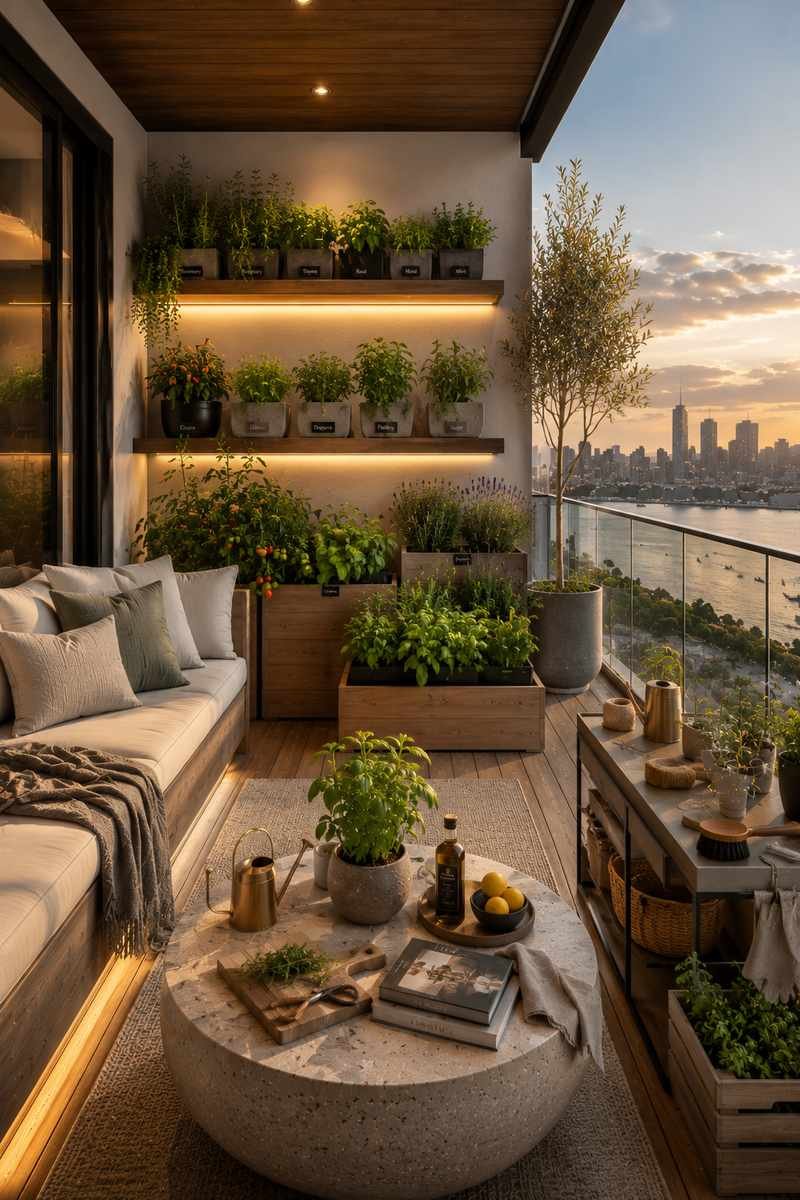
Where the vertical garden wall is mostly about aesthetics, a herb corner is about actual use — few things feel more indulgent than stepping onto the balcony to snip fresh basil or rosemary right before dinner. It’s a small footprint idea that pays off every time you cook.
How to achieve it: Use tiered planter stands to maximize sun exposure for each plant, group herbs by watering needs, and add a small watering can or copper mister as a decorative but functional touch.
17. Textured Accent Wall

A flat facade rarely has much personality on its own. One accent wall — stone veneer, textured plaster, or vertical wood slats — adds real depth to that surface, borrowing a trick straight from luxury hotel patios.
How to achieve it: Choose a weather-resistant material like exterior microcement or PVC-backed stone panels, apply it to the wall most visible from your seating area, and let it anchor the rest of your color scheme.
18. Smart-Controlled Ambience

Increasingly, luxury means control as much as it means style. App-controlled lighting, retractable awnings, and outdoor speakers let you shift a balcony’s entire mood with a tap, adapting it to whatever the occasion calls for.
How to achieve it: Start with smart plug-in lighting if rewiring isn’t an option, add a weatherproof Bluetooth speaker discreetly mounted or hidden in a planter, and look for awning motors compatible with existing smart home ecosystems.
19. Curated Furniture Set in Premium Materials
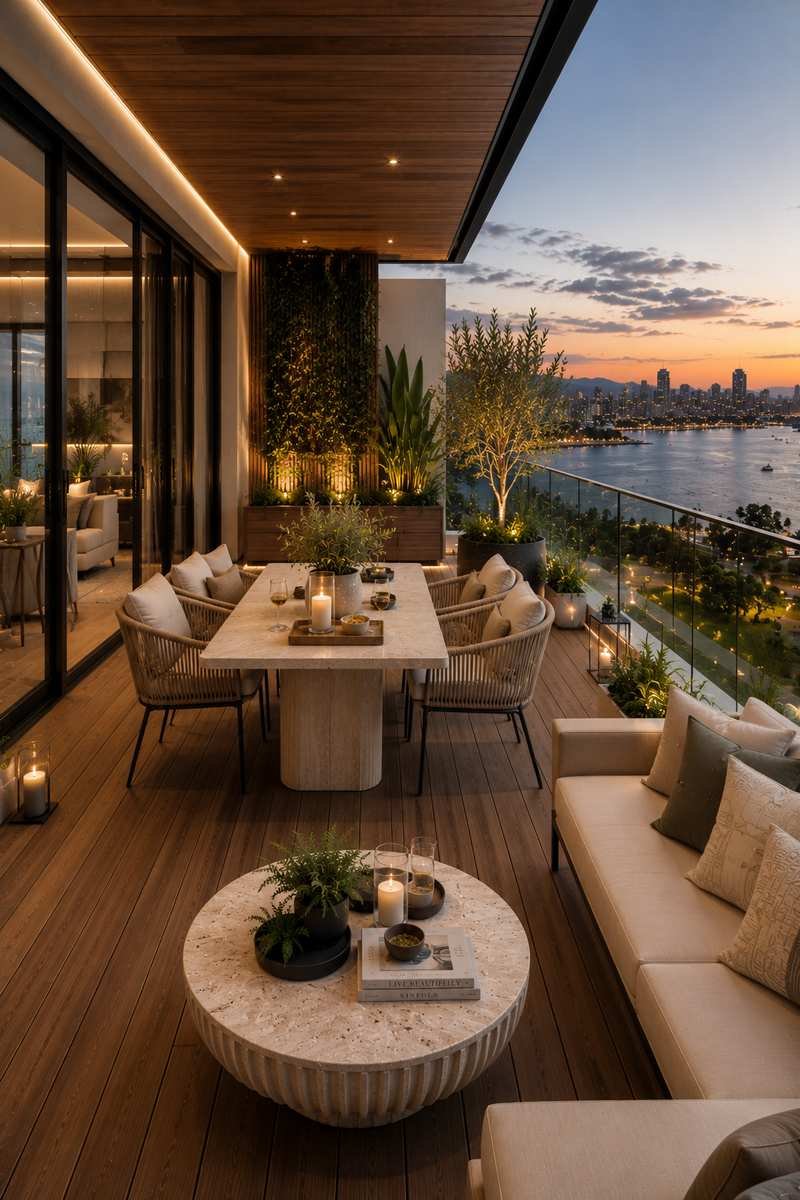
A mismatched collection of budget pieces will always look like exactly that, no matter how the rest of the balcony is styled. A small, well-chosen furniture set in high-quality materials — powder-coated aluminum, teak, or woven resin wicker — signals luxury in a way volume never quite manages.
How to achieve it: Invest in fewer, better pieces: one durable dining or lounge set rather than several disposable items. Look for furniture with removable, machine-washable cushion covers to keep it looking new season after season.
How to Choose the Right Balcony Design for Your Space
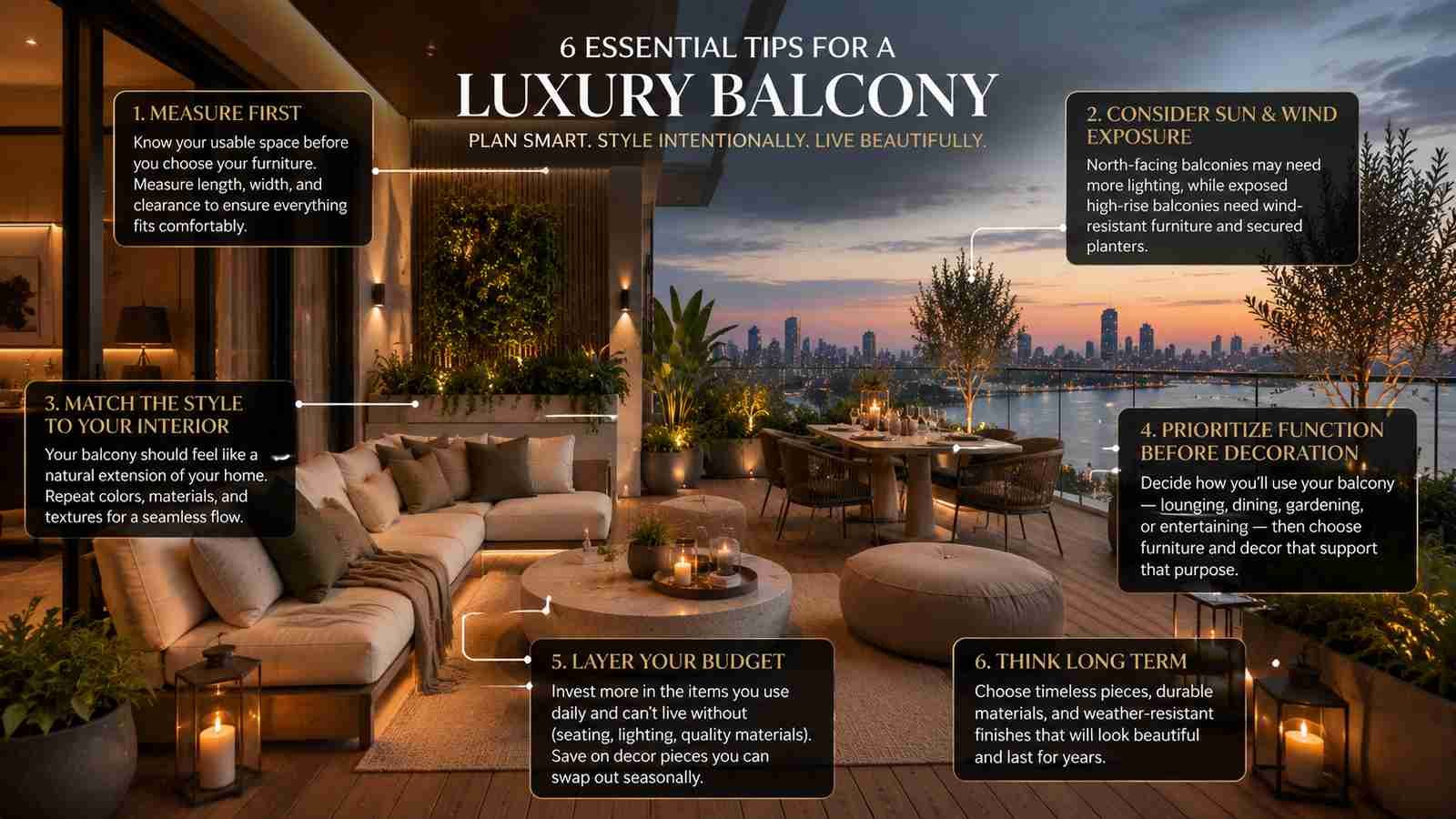
With 19 ideas on the table, it helps to have a simple framework for narrowing down what actually works for your balcony:
- Measure first. A daybed lounge needs significantly more square footage than a floating shelf setup. Know your usable space before falling in love with a Pinterest photo.
- Think about sun and wind exposure. North-facing balconies may need more lighting investment, while exposed high-rise balconies need wind-resistant furniture and secured planters.
- Match the style to your interior. A luxury balcony should feel like a continuation of your home, not a disconnected space. Carry over a color or material from your living room if possible.
- Prioritize function before decoration. Decide first whether your balcony is for lounging, dining, gardening, or entertaining — then choose decor that supports that primary use.
- Layer your budget. Spend more on the few items you touch or see daily (seating, lighting) and save on decorative extras that can be swapped out seasonally.
Materials That Age Well on Balconies
Because balconies are exposed to sun, rain, and temperature swings, material choice matters more here than almost anywhere else in the home. A few reliable options:
- Powder-coated aluminum resists rust and holds up in most climates with minimal upkeep.
- Teak wood naturally weathers to an elegant silver-grey patina and resists rot.
- Porcelain tile handles heat, moisture, and heavy foot traffic without fading.
- Sunbrella and other solution-dyed acrylic fabrics resist fading and mildew far better than standard cotton or polyester.
- Powder-coated steel planters last longer outdoors than untreated terracotta in freeze-thaw climates.
Common Balcony Design Mistakes to Avoid
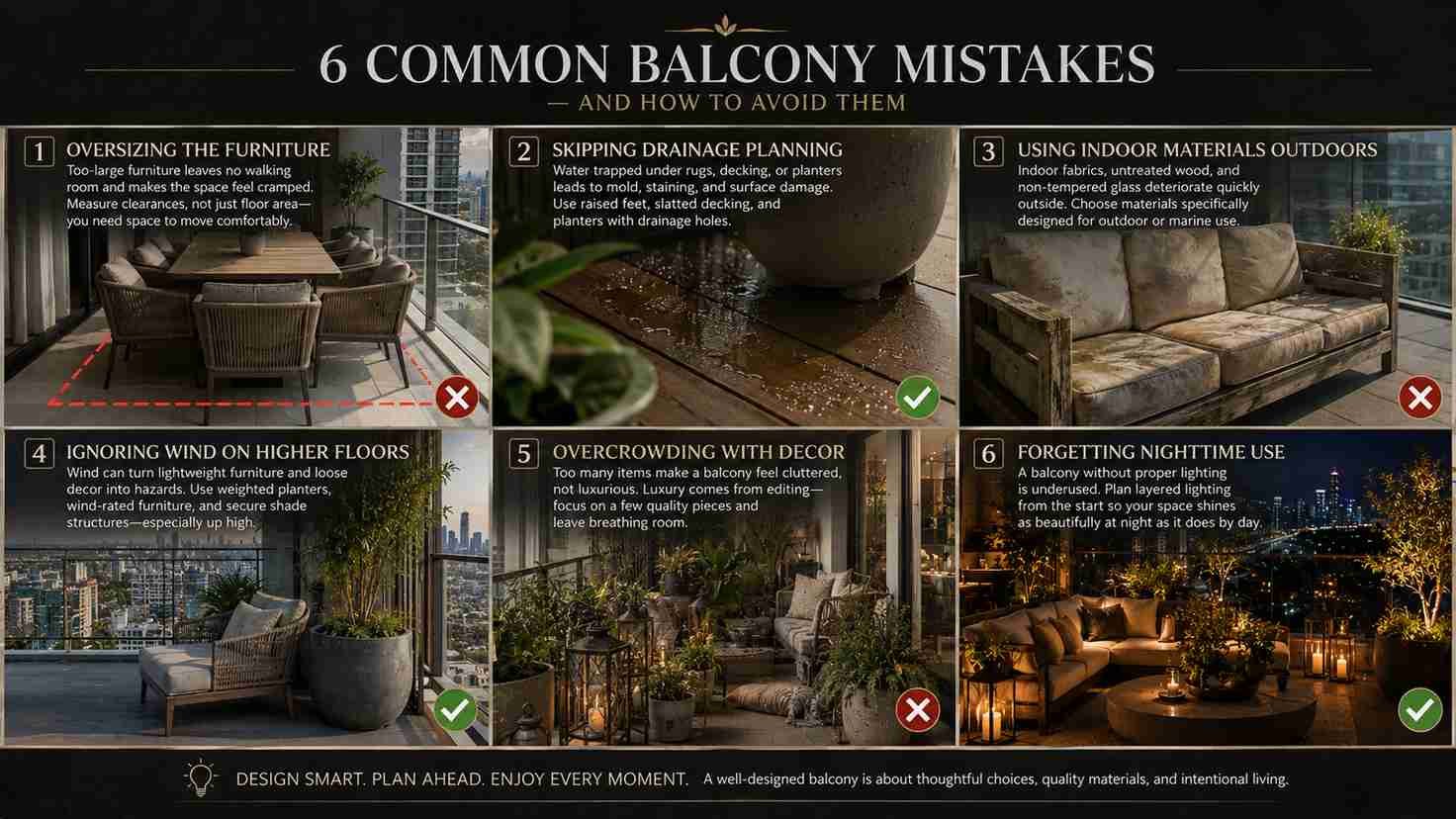
Even with the right inspiration, a few recurring mistakes can quietly undercut an otherwise good balcony design:
- Oversizing the furniture. A dining set or sofa that barely leaves walking room will make even a decent-sized balcony feel cramped. Measure clearances, not just floor area — you need space to actually move around the pieces, not just fit them in.
- Skipping drainage planning. Rugs, wood decking, and planters that trap water against the floor can lead to mold, staining, or damage to the surface beneath. Raised feet, slatted decking, and pots with proper drainage holes solve most of this before it starts.
- Using indoor materials outdoors. Regular fabric cushions, untreated wood, and non-tempered glass age badly outdoors, even under a covered balcony. If a material isn’t rated for outdoor or marine use, it’s a maintenance problem waiting to happen.
- Ignoring wind on higher floors. Lightweight furniture, unsecured planters, and loose decor can become genuinely hazardous on upper-floor balconies. Weighted planters, wind-rated furniture, and secured shade structures matter more the higher up you go.
- Overcrowding with decor. It’s tempting to add “one more” plant, lantern, or cushion, but luxury balconies almost always read as luxurious because of what’s left out, not what’s added in. A crowded balcony reads cluttered no matter how nice each individual piece is.
- Forgetting nighttime use. A balcony that looks great at noon but has no usable lighting after dark only gets half the use it could. Plan lighting as part of the design from the start, not as an afterthought once everything else is finished.
Final Thoughts
A modern luxury balcony doesn’t require unlimited space or an unlimited budget — it requires intention. Whether you’re drawn to the calm of a Japandi-style retreat, the drama of a fire feature, or the practicality of built-in bench storage, the key is choosing a handful of ideas that suit your space and committing to quality over quantity.
Start small if you need to: a better rug, layered lighting, and one great plant can transform a balcony far more than a dozen mismatched decorations ever could. Over time, you can build toward the fuller vision — a private outdoor retreat that feels every bit as considered as the rest of your home.
Frequently Asked Questions
What is the most cost-effective way to make a balcony look luxurious?
Layered lighting and a quality outdoor rug typically deliver the biggest visual impact for the lowest cost. Both can transform the feel of a balcony in an afternoon without any structural changes.
How do I make a small balcony feel bigger?
Use frameless glass railings if possible, stick to a light, monochrome color palette, choose furniture with slim profiles and visible legs, and add a large mirror or reflective surface on a wall to bounce light around.
What plants work best on balconies with limited sun?
Ferns, pothos, snake plants, and ZZ plants tolerate low to indirect light well and are commonly used on shaded balconies where flowering plants would struggle.
Do I need permission to install glass railings or a pergola?
In many buildings, especially apartments and condos, structural changes like railings or pergolas require approval from a building management company or homeowners’ association. Always check local regulations before installing anything permanent.
How often should outdoor cushions and rugs be cleaned?
Most manufacturers recommend cleaning outdoor fabrics every 4–6 weeks during heavy use seasons, with a deeper clean at the start and end of each season to prevent mildew buildup.