

A few years ago, I helped my niece redesign her bedroom. Like a lot of teenagers, she’d saved hundreds of Pinterest images that each looked beautiful on their own but didn’t add up to one coherent room.
We tried the fairy-lights-and-tapestry look first. A few months later, she wanted an ultra-minimal beige reset. That lasted about a month before she said it felt like a hotel.
The third version is the one that stuck, and it’s what changed how I think about decorating for teenagers.
Instead of chasing one aesthetic, we built a timeless foundation- quality furniture, warm neutral tones, layered lighting, real storage, and let personality sit on top of it through things that were easy to swap: artwork, bedding, plants, books, small objects.
That room still looks good today, not because we predicted every trend correctly, but because we barely built around trends at all.
I’ll say upfront that I’m not a professional interior designer.
I’m someone who genuinely loves this subject, researches it constantly, and has now helped plan or troubleshoot bedrooms for a handful of nieces, cousins, and friends’ daughters.
What follows isn’t fifteen ways to accessorize the same neutral box; it’s fifteen different levers you can actually pull: layout, walls, ceiling, storage architecture, lighting, materials, and personality. Some rooms need three of these. Very few need all fifteen.
What Actually Makes a Teen Bedroom Feel Modern (Not Just Trendy)
Modern aesthetic bedrooms aren’t defined by one color story or one Pinterest board.
They share a handful of traits: curved furniture instead of sharp edges, soft neutral palettes, light that comes from more than one source, storage that’s actually used, and natural textures like linen, bouclé, and rattan doing the visual work instead of clutter.
The real difference between a room that ages well and one that doesn’t is flexibility.
A timeless room gives you a calm backdrop and lets the small, cheap things-cushions, art, a plant- carry whatever trend she’s into that month. The furniture and the walls stay put.
ALSO READ: 20 Blue and Green Apartment Bedroom Decor Ideas For 2026
5 Things Worth Planning Before You Buy Anything
Teen bedrooms rarely do just one job. They’re a bedroom, a study space, a dressing area, and sometimes a spot where three friends end up sitting on the floor. Planning around that reality first makes everything else easier.
Furniture before accessories. A well-made bed frame, wardrobe, or desk will outlast several rounds of trend cycles- start there before shopping for anything decorative.
More than one light source. A single ceiling fixture rarely creates a comfortable atmosphere on its own. Lighting designers generally recommend layering fixtures because each one serves a different job, from studying to actually relaxing before bed.
Colors that can grow with her, not against her. Bright, themed rooms date fast. Muted sage, dusty pink, warm white, greige, oatmeal, and terracotta are all easy to build on without a repaint every time taste shifts.
Storage built into the design, not bolted on after. Most bedroom clutter isn’t caused by owning too much- it’s caused by not having anywhere accessible to put it.
Room left for personality. A beautifully designed bedroom that leaves no space for photos, records, or a favorite chaotic corner starts to feel like a hotel room fast- which is exactly the complaint that sent my niece into round three.
Which Style Actually Fits Her?
| If she loves… | Try this direction |
|---|---|
| Soft neutral interiors | Scandinavian minimalist |
| Warm earthy colors | Japandi |
| Elegant, hotel-like rooms | Modern luxury |
| Calm natural materials | Organic modern |
| Clean monochrome spaces | Contemporary minimalist |
| Cozy reading corners | Soft modern |
| Colorful, creative details | Modern eclectic |
Most great bedrooms actually borrow from two or three of these rather than committing to just one.
1. Zone the Room Into Three Areas Before You Buy a Single Thing
This is a layout decision, not a shopping list, and it’s the one most people skip.
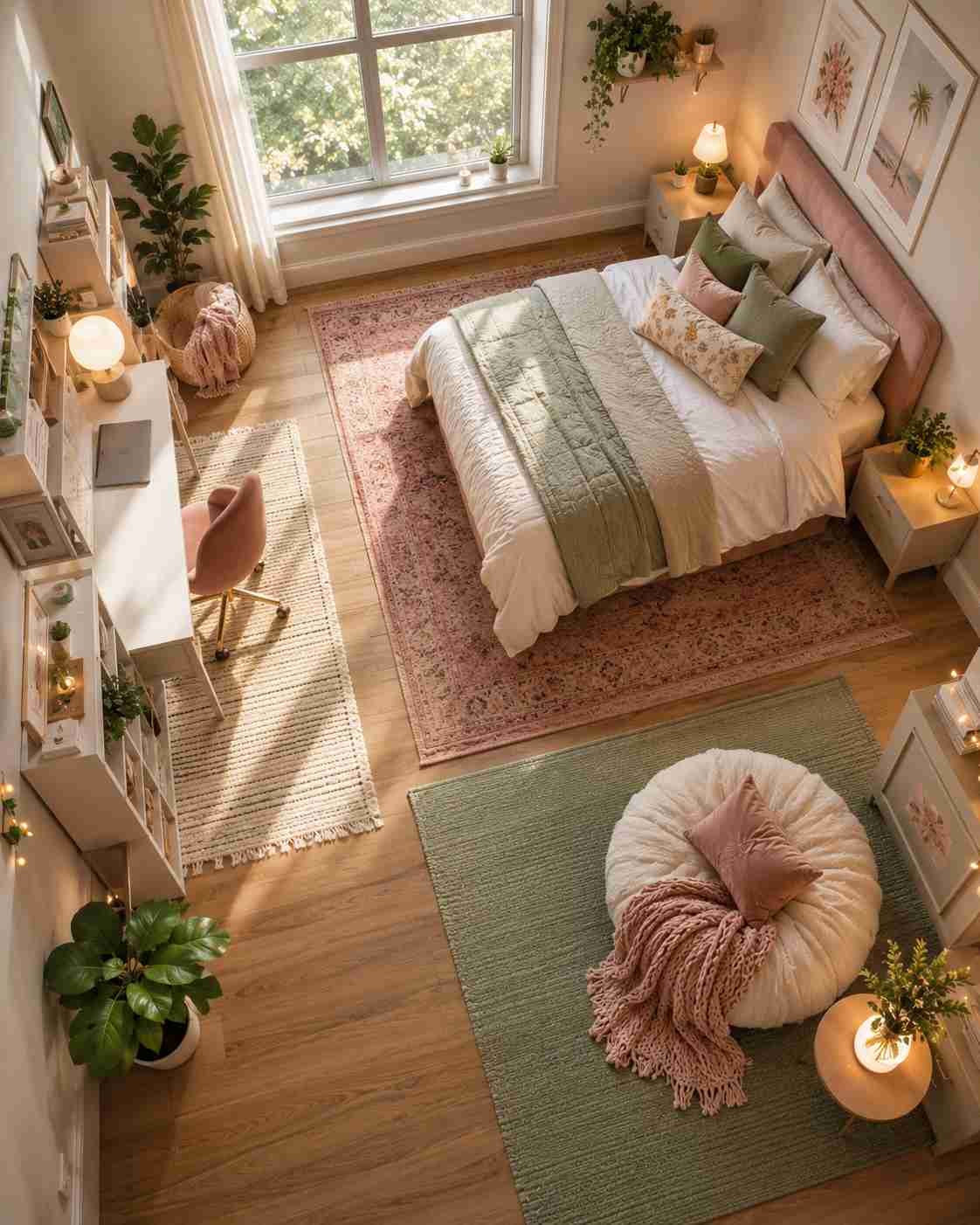
A teen bedroom usually does three jobs- sleeping, studying, and hanging out- and rooms that feel chaotic are often just rooms where those three zones bleed into each other with no visual boundary.
A rug under the bed, a different rug or rug direction under the desk, and an open floor for a floor cushion or bench in between is often enough. No new furniture required, no construction, just a plan for what happens where, decided before anything gets bought.
2. Anchor the Bed With a Curved Statement Headboard
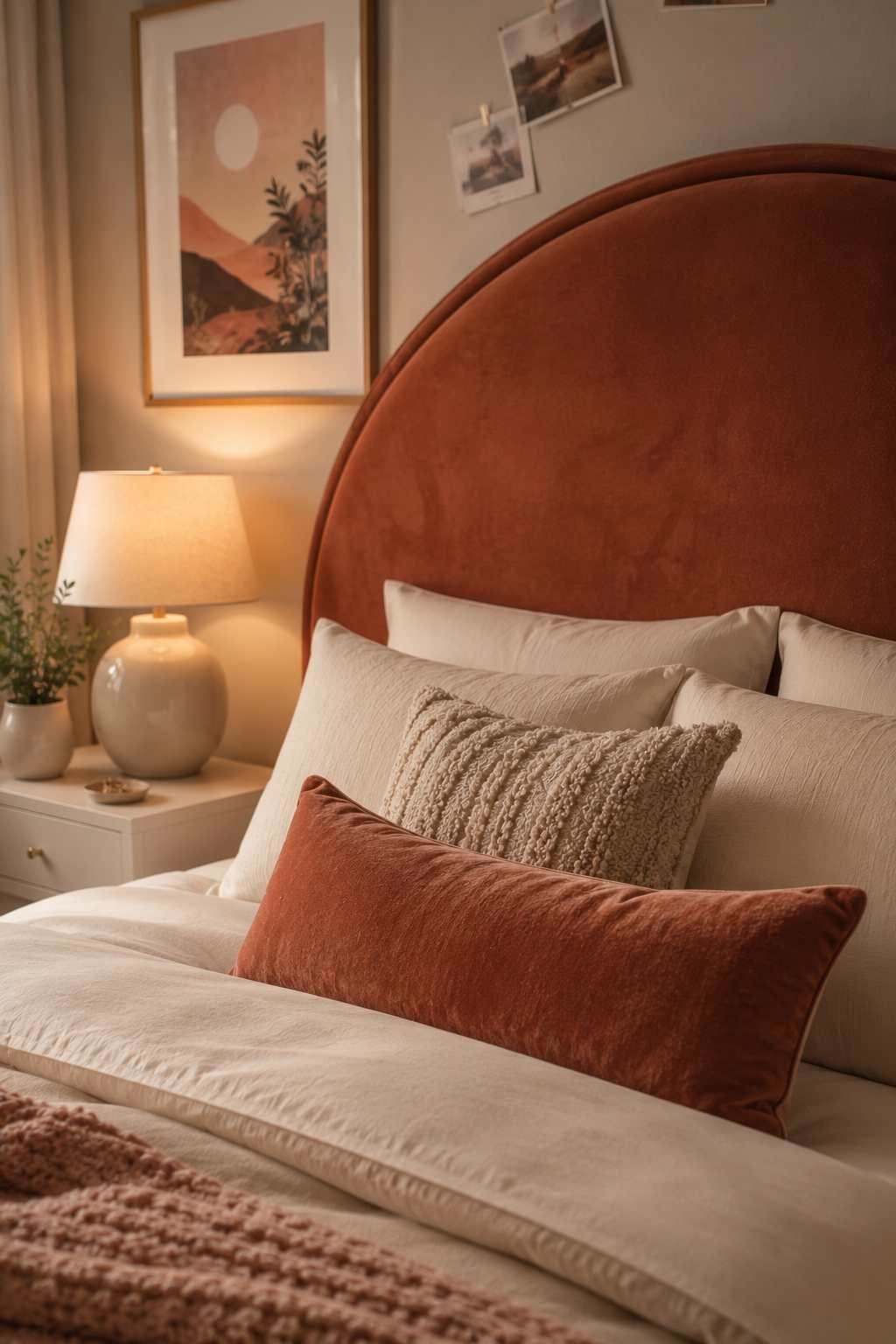
This is the one furniture-forward idea on the list, and it earns its place because the bed is the largest object in the room by far.
A gently curved headboard upholstered in velvet or a textured fabric softens the straight lines most bedrooms are built around, and it lets everything else, bedding, side tables, art, stay quiet.
3. Try a Two-Tone or Color-Drenched Wall Instead of an Accent Wall
Rather than the expected single accent wall, painting the lower two-thirds of all four walls in a muted tone (sage, terracotta, soft clay) while leaving the upper third and ceiling white makes a small room feel taller and considerably more considered than a flat, single-color box.
It’s also easy to undo. Repainting one banded section is a much smaller job than an entire room, which matters if her taste shifts in two years.

4. Give the Ceiling Something to Do
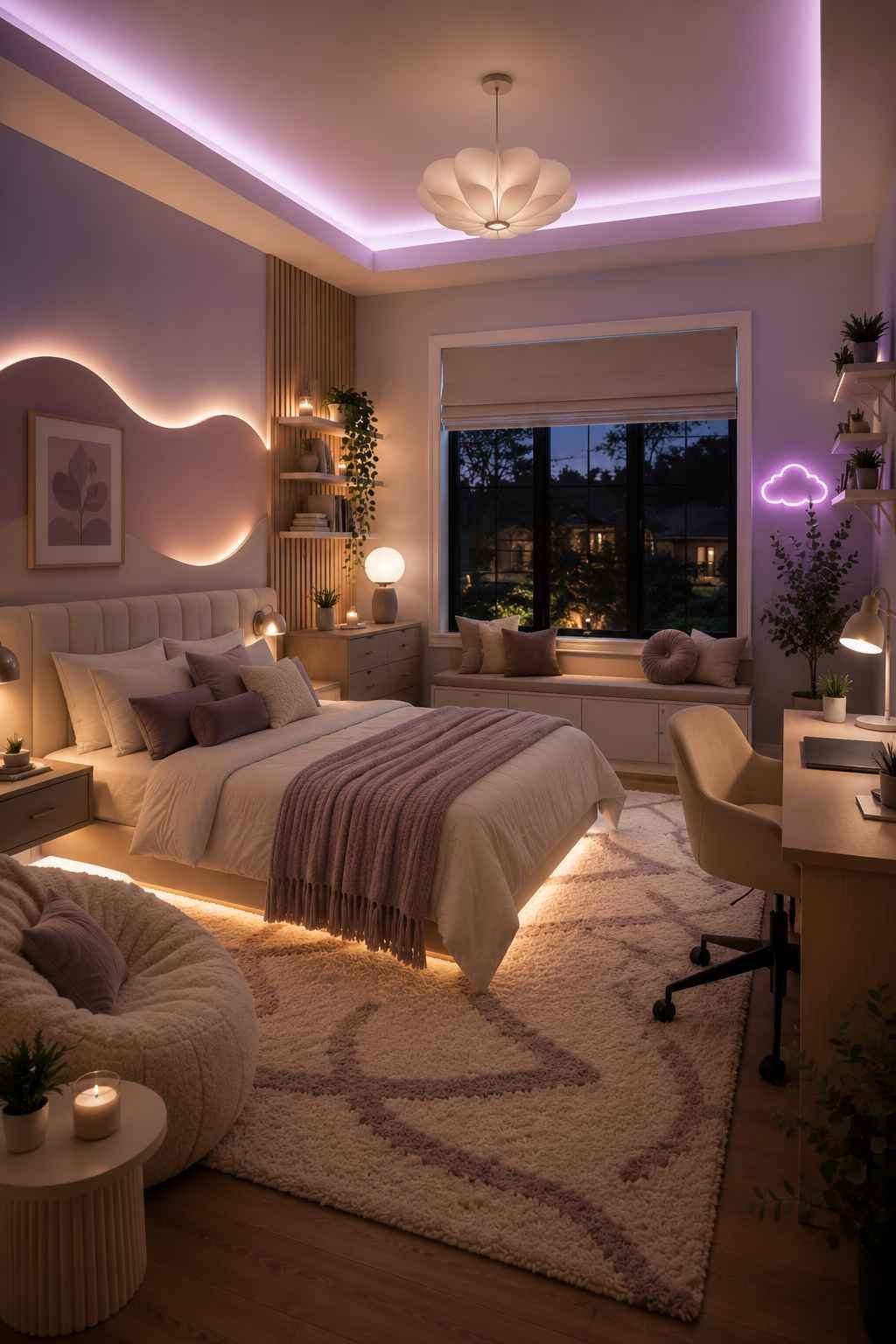
The ceiling is the one surface almost nobody decorates, which is exactly why it stands out when it’s used well. Recessed cove lighting around the ceiling edge, a painted ceiling in a soft tone, or a simple fabric canopy over the bed all add a sense of architecture without touching the floor plan at all.
5. Build Storage Into the Wall Instead of the Floor
A full wardrobe wall, floor-to-ceiling, slatted wood or simple flat-front doors, turns storage into architecture instead of another piece of furniture competing for floor space.
It’s a bigger job than most ideas on this list, but it’s also the one most likely to still make sense in five years, since it’s built around function rather than a look.

6. Turn a Window Into a Seat With Hidden Storage
If there’s a window with any depth to the wall around it, a built-in cushioned seat with a lift-up or drawer base solves two problems at once- a reading spot that isn’t just “a chair somewhere” and storage for off-season clothes or bedding that would otherwise take up closet space.

7. Design the Study Zone Around How She Actually Works, Not How It Photographs
This is different from “add a nice desk.”
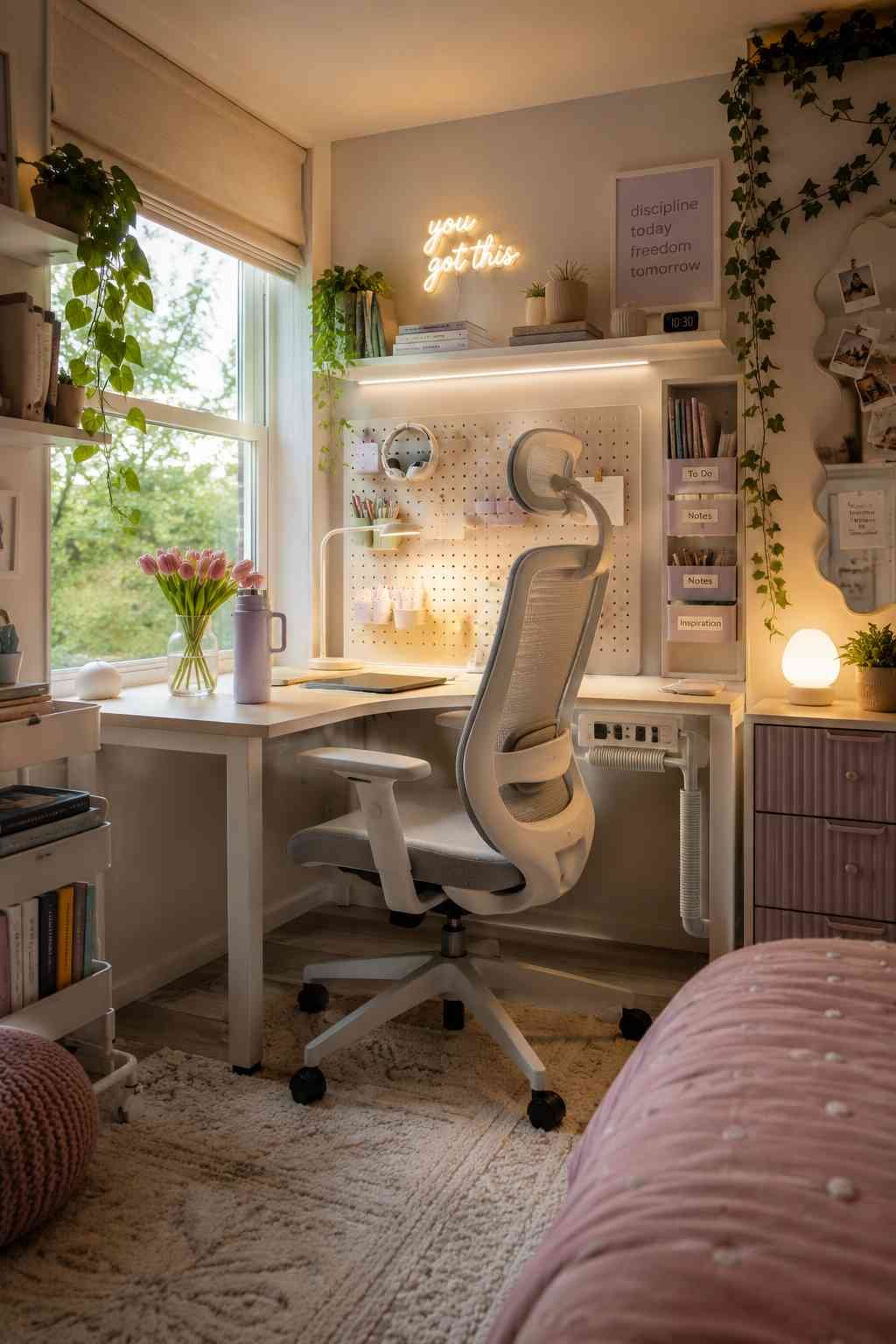
It’s about ergonomics and workflow: is the chair actually supportive for a two-hour homework session, is the desk near enough to natural light, are chargers and cables managed instead of trailing across the floor.
A desk that’s comfortable to sit at gets used. A desk that’s just styled well tends to become a dumping ground within a month.
8. Build an Actual Lighting Plan, Not Just a Nice Lamp
This is a systems idea, not a single object.
A full plan layers a ceiling fixture, a desk lamp for task lighting, a bedside lamp for reading, and one ambient source- a floor lamp or LED strip, so the room can shift from bright and functional during homework to soft and relaxing in the evening.
Warm white bulbs (2700K–3000K) across all of them keep the mood consistent.
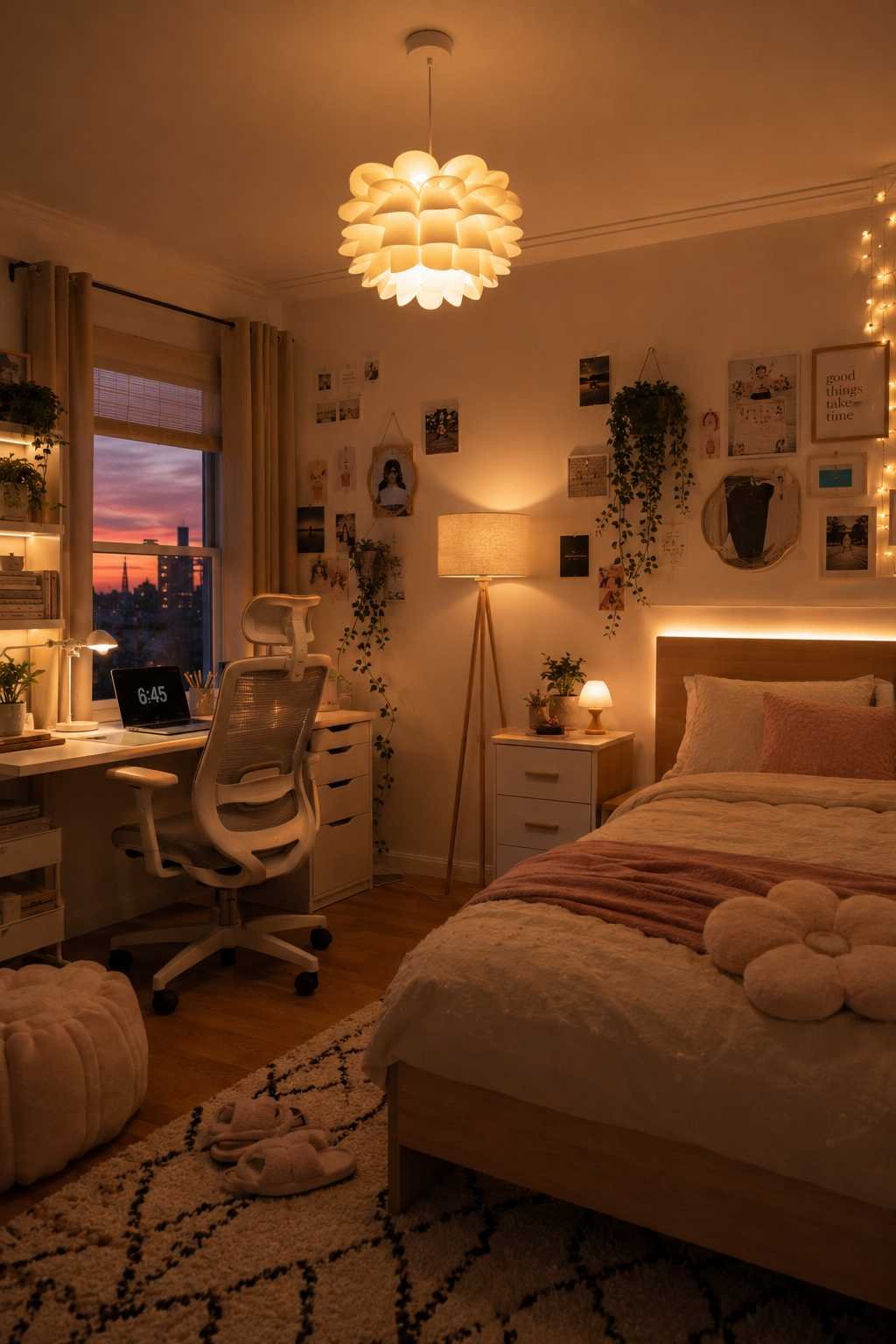
A rule worth borrowing: the 60–30–10 split — 60% main color across walls and large furniture, 30% secondary color in curtains or rugs, 10% accent color in art and cushions — keeps a room cohesive without banning contrast entirely.
9. Build a Gallery Wall Around Real Interests, Not a Copied Board
Line art, nature photography, travel photos, album covers, or personal photographs, framed consistently in black, white, or natural oak, read far more intentional than a scattered collage.
Lay the arrangement out on the floor before hanging anything- a small step that saves a surprising number of unnecessary holes.

10. Change the Material Mix, Not Just the Color
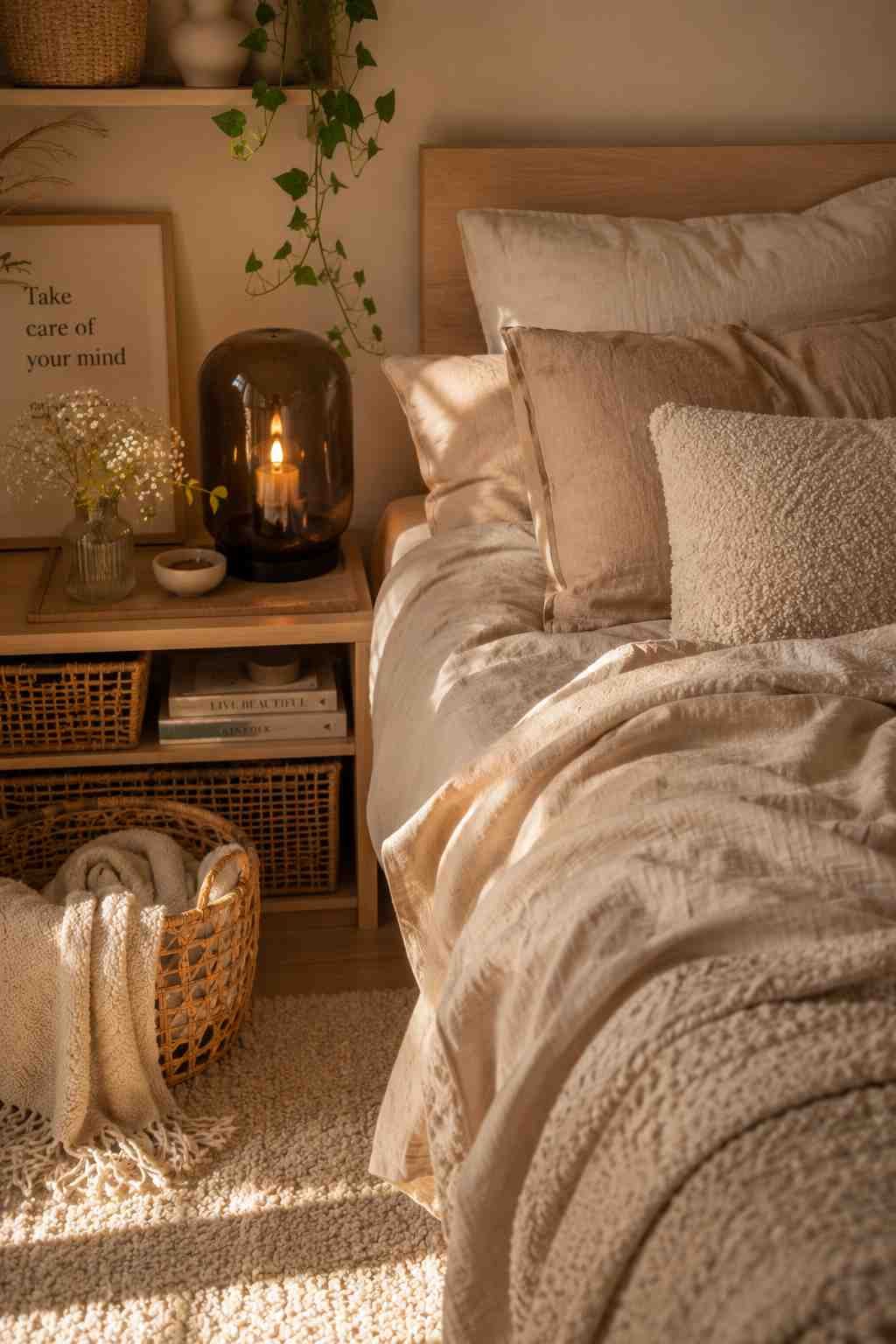
Two rooms can share the same neutral palette and feel completely different depending on what’s actually touching the eye and hand: linen bedding, a wool rug, rattan storage baskets, a bouclé cushion, a smoked-glass lamp.
This is a texture decision more than a shopping list, and it’s usually the fastest way to make a plain room feel considered rather than unfinished.
11. Choose One Piece of Furniture That Can Change Jobs
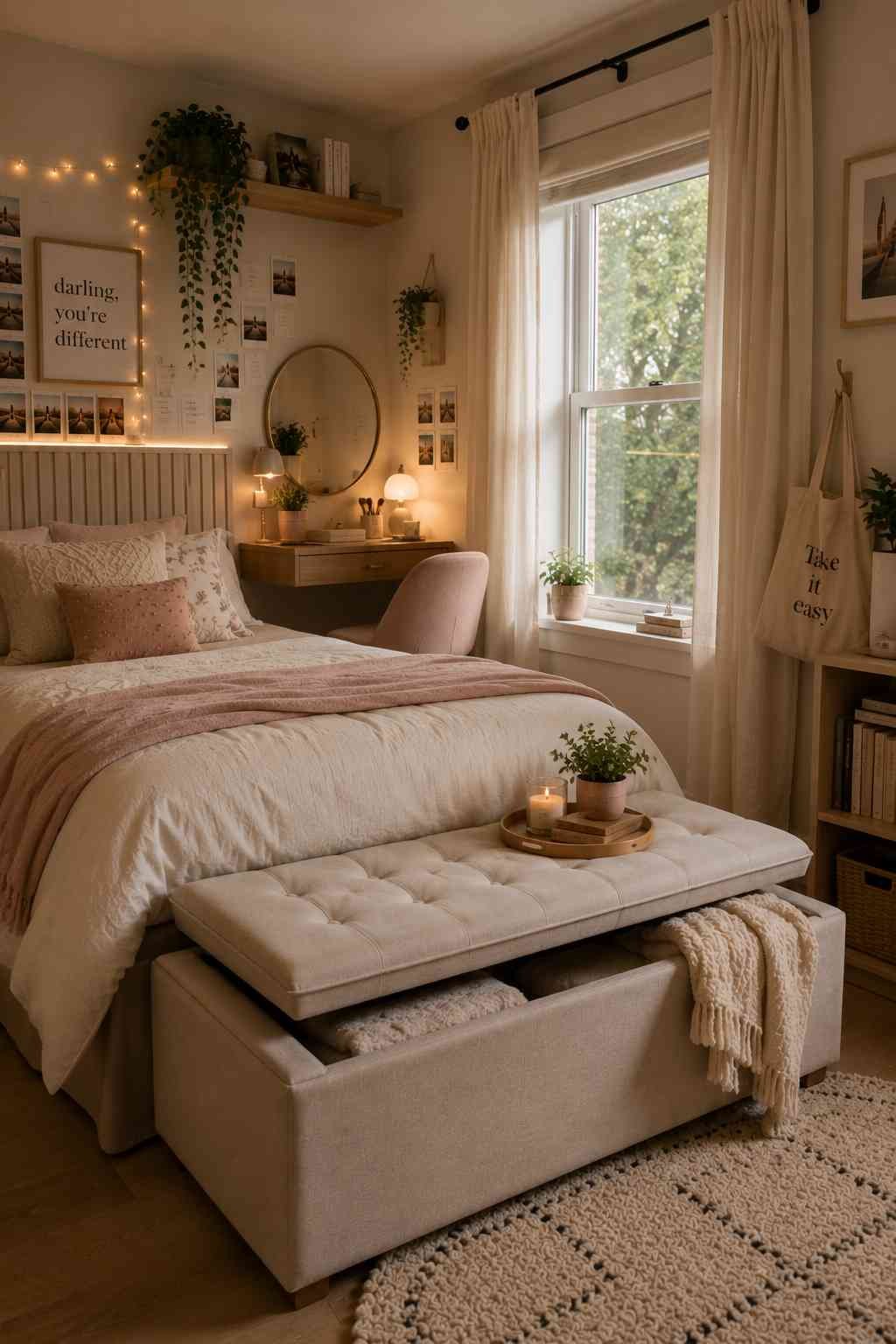
Rather than adding more furniture, replace one existing piece with something that does two jobs – a bed with drawers underneath, a lift-up storage ottoman that also seats a friend, a fold-down desk that disappears when it’s not needed.
This matters most in a genuinely small room, where every extra single-purpose piece eats floor space that has to come from somewhere.
12. Carve Out a Small Vanity Nook
A compact desk can double as a vanity with very little effort- an arched or round mirror, a comfortable stool, a couple of small organizers.
This is a genuinely different function from the study zone above (grooming and getting-ready routines rather than homework), which is exactly why it deserves its own small footprint rather than sharing the study desk.

13. Let Greenery Do Double Duty on the Shelves
Rather than treating plants as one more decorative object, use them functionally- a trailing pothos to soften the hard edge of a floating shelf, a snake plant filling an awkward empty corner that would otherwise need furniture it doesn’t have room for.
One or two plants, placed to solve a specific visual problem, do more than a windowsill full of them.

14. Give the Closet Doors a Makeover Instead of the Whole Closet
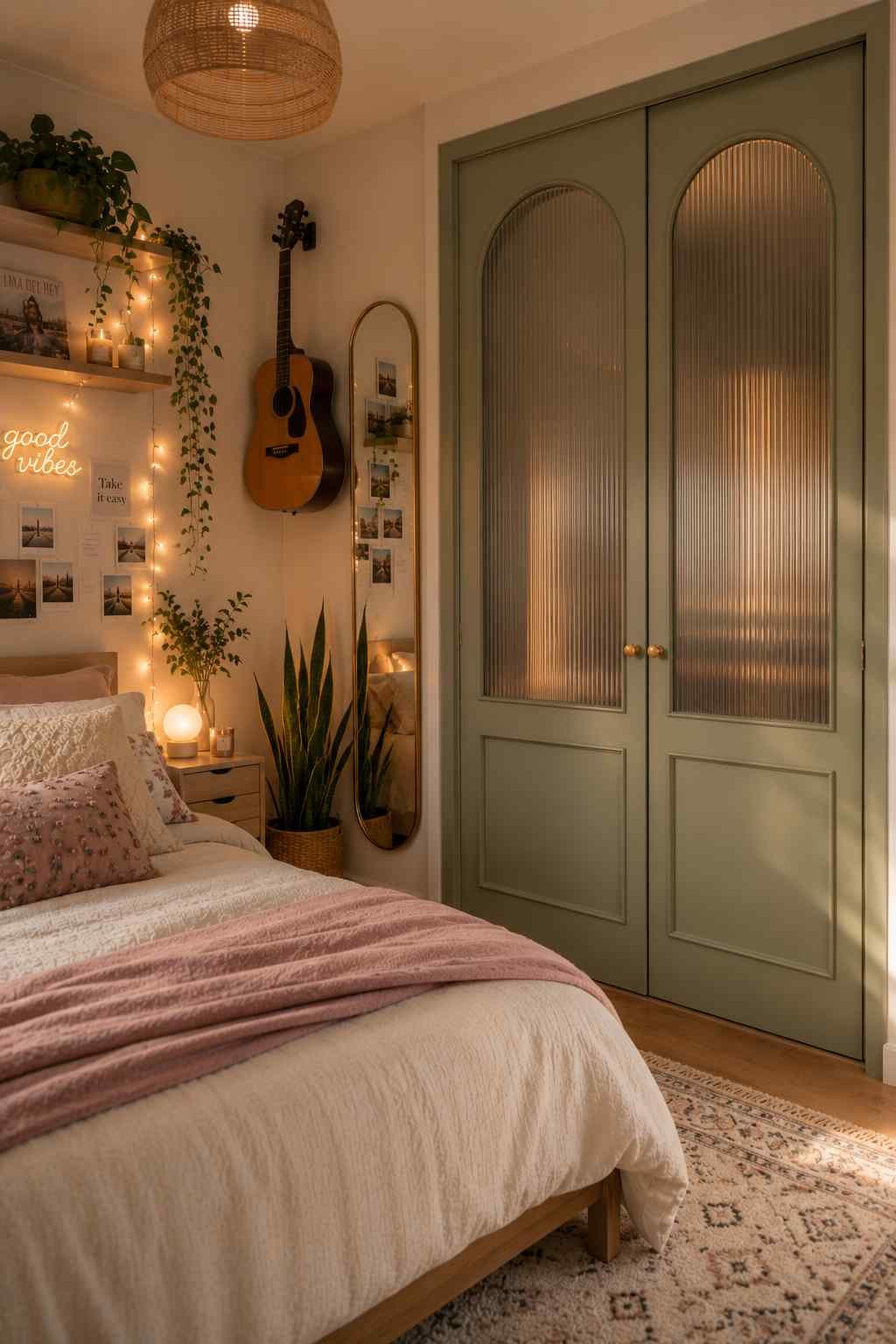
If a full wardrobe wall (idea #5) isn’t realistic, the doors alone are a much smaller project with a real visual payoff, a coat of color, mirrored panels to add light and the function of a full-length mirror, or swapping solid doors for a curtain on a track for a completely different, softer feel.
15. Add One Piece That’s Unmistakably Hers
After the layout, walls, lighting, and storage are sorted, every good bedroom needs one thing that has nothing to do with any trend- a vintage record player, a wall-mounted guitar, a shelf of favorite books, a travel photo wall, pottery she made herself.
This is the detail that stops a room from reading like a showroom, and it’s usually what people actually remember about the space.

10 Mistakes That Make a Teen Bedroom Feel Cluttered or Outdated Fast
- Chasing every trend instead of building around timeless furniture and updating small accessories.
- Buying everything at once rather than letting the room evolve over months.
- Treating storage as an afterthought is usually what clutter actually comes from.
- Relying on a single light source instead of layering lamps and ambient lighting.
- Prioritizing looks over comfort: an uncomfortable chair or mattress undercuts the whole room.
- Filling every surface rather than leaving space for a few pieces to stand out.
- Skipping measurements before buying furniture is the fastest way to make a room feel cramped.
- Blocking natural light with heavy curtains or poorly placed furniture.
- Matching everything exactly, which tends to look flatter than mixing complementary textures.
- Designing purely for photos instead of the daily routine that actually happens in the room.
ALSO READ: 15 Modern Aesthetic Teen Girl Bedroom Ideas That Feel Stylish, Practical & Timeless (2026)
Budget Breakdown
Worth investing in: mattress, bed frame, study chair, wardrobe, desk, area rug- the pieces used every day.
Fine to save on: cushion covers, artwork, decorative vases, picture frames, candles, small storage baskets, seasonal decor- all easy to swap later.
| Budget | What you can realistically achieve |
|---|---|
| Under $200 | Refresh bedding, add artwork, update lighting, add a plant |
| $200–500 | New desk chair, a rug, closet door repaint, floating shelves |
| $500–1,000 | Upgraded bed frame, window seat build, layered lighting plan |
| $1,000+ | A full wardrobe wall, coordinated furniture, and a complete layout redo |
Quick Shopping Checklist
Furniture: bed frame, mattress, wardrobe, study desk, ergonomic chair Lighting: bedside lamp, desk lamp, warm ambient lighting Storage: floating shelves, storage baskets, under-bed organizers, drawer dividers Decor: neutral bedding, rug, throw, artwork, plant, mirror, books, personal accessories
Frequently Asked Questions
How do I make a teen bedroom look good on a budget?
Start with the changes that carry the most visual weight for the least cost: bedding, a rug, warm lighting, framed art, and decorative storage baskets. Second-hand mirrors and side tables stretch a budget further without looking like it.
What colors work best for a modern teen bedroom?
Warm white, cream, beige, greige, dusty pink, sage, muted blue, and terracotta all stay flexible enough to update through accessories rather than a full repaint.
How do I make a small teen bedroom feel bigger?
Light wall colors, maximized natural light, furniture with visible legs, floating shelves, and a full-length mirror all help. Keeping the floor clear matters as much as any single piece.
Can a modern bedroom still feel cozy?
Yes, soft textiles, layered lighting, and natural materials do most of that work without undoing the clean, modern base.
Final Thoughts
There isn’t one right way to build a beautiful bedroom. Some people want calm and neutral. Others want color and clutter that actually means something to them.
What’s held up across every teen room I’ve helped plan is the same principle: invest in the furniture and lighting that won’t need replacing, then let the smaller, cheaper things carry whatever she’s into this year.
Don’t rush it. The rooms that still look good years later are almost always the ones that were built slowly.
Written by a home decor enthusiast and researcher at ideasnooker.com– someone who’s spent a lot of time helping real teenagers build rooms that actually last.