
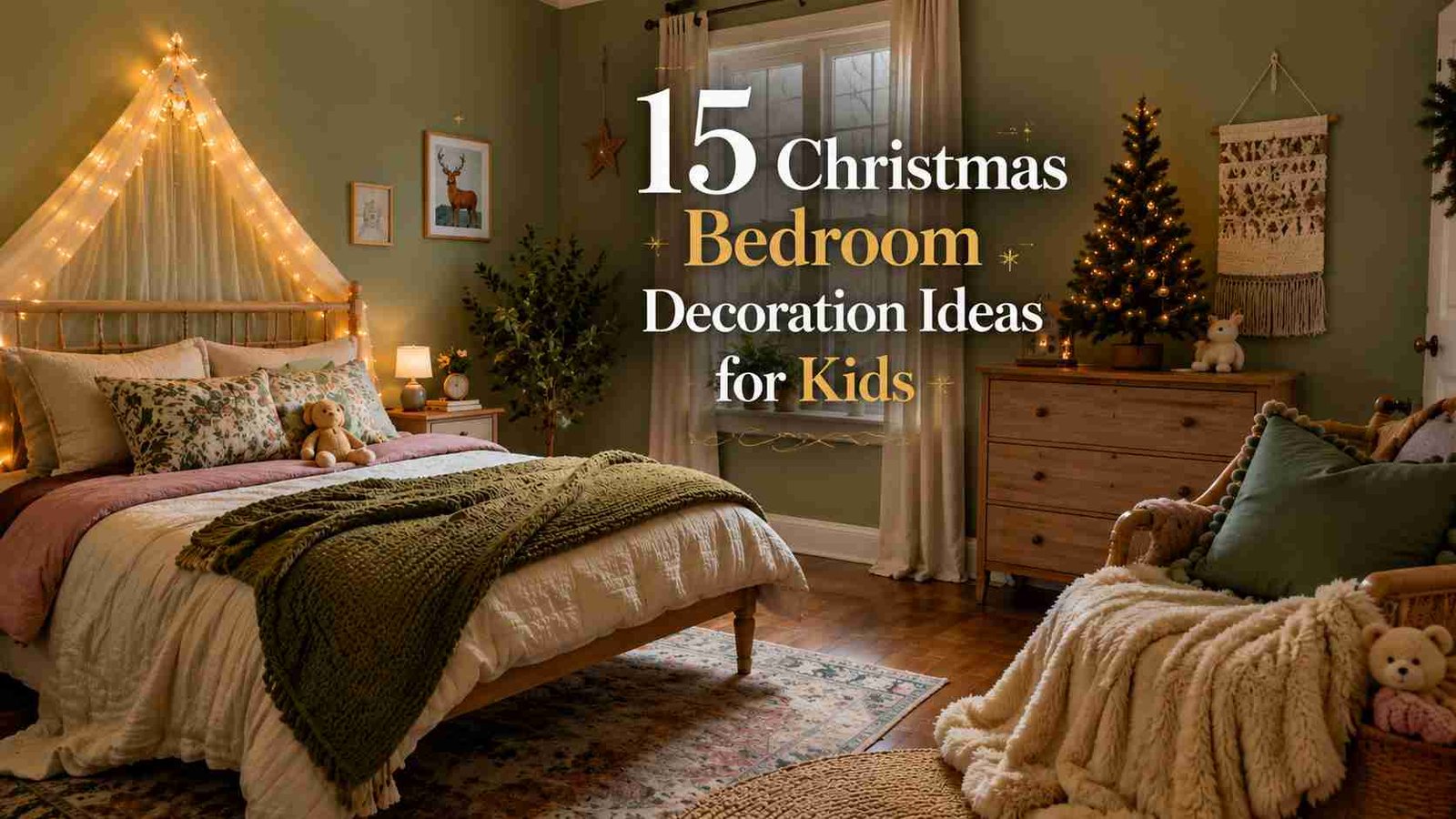
Every December, my design inbox fills up with the same request from parents: “I want my kid’s room to feel like Christmas, but I don’t want glitter in the carpet until March.
” It’s a fair ask. Kids’ Christmas decor gets sold to us as an all-or-nothing aesthetic- either a Pinterest-perfect winter wonderland with a professional stylist’s budget, or a chaotic pile of dollar-store tinsel that a toddler will have pulled down by December 3rd.
After styling children’s bedrooms for clients for several Decembers in a row, I’ve landed on a shorter list of ideas that actually survive contact with a real child, a real rental lease, and a real budget.
None of these need painting a wall, none need a professional installer, and every single one comes down in fifteen minutes flat come January 2nd- which, if you’ve ever tried to detangle a fake pine garland from a curtain rod at 11 pm, you know is worth more than any amount of “aesthetic.”
This guide covers 15 ideas ranked roughly from lowest-effort to more involved weekend projects, plus a safety checklist, a realistic budget breakdown, and answers to the questions I get asked most often about decorating a child’s room for the holidays.
Whether you’re working with a rented apartment, a shared sibling room, or a nursery that’s about to see its first Christmas, there’s something here you can start today.
One thing I’d ask you to keep in mind as you read through the list: you don’t need all fifteen.
The rooms that photograph the best and, more importantly, that the kids themselves love the most, are almost never the ones where every surface has been touched.
Pick two or three ideas that suit the room’s layout and your own patience level, do those properly, and leave the rest of the list for next year.
How to Choose a Bedroom Theme Based on Your Child’s Age
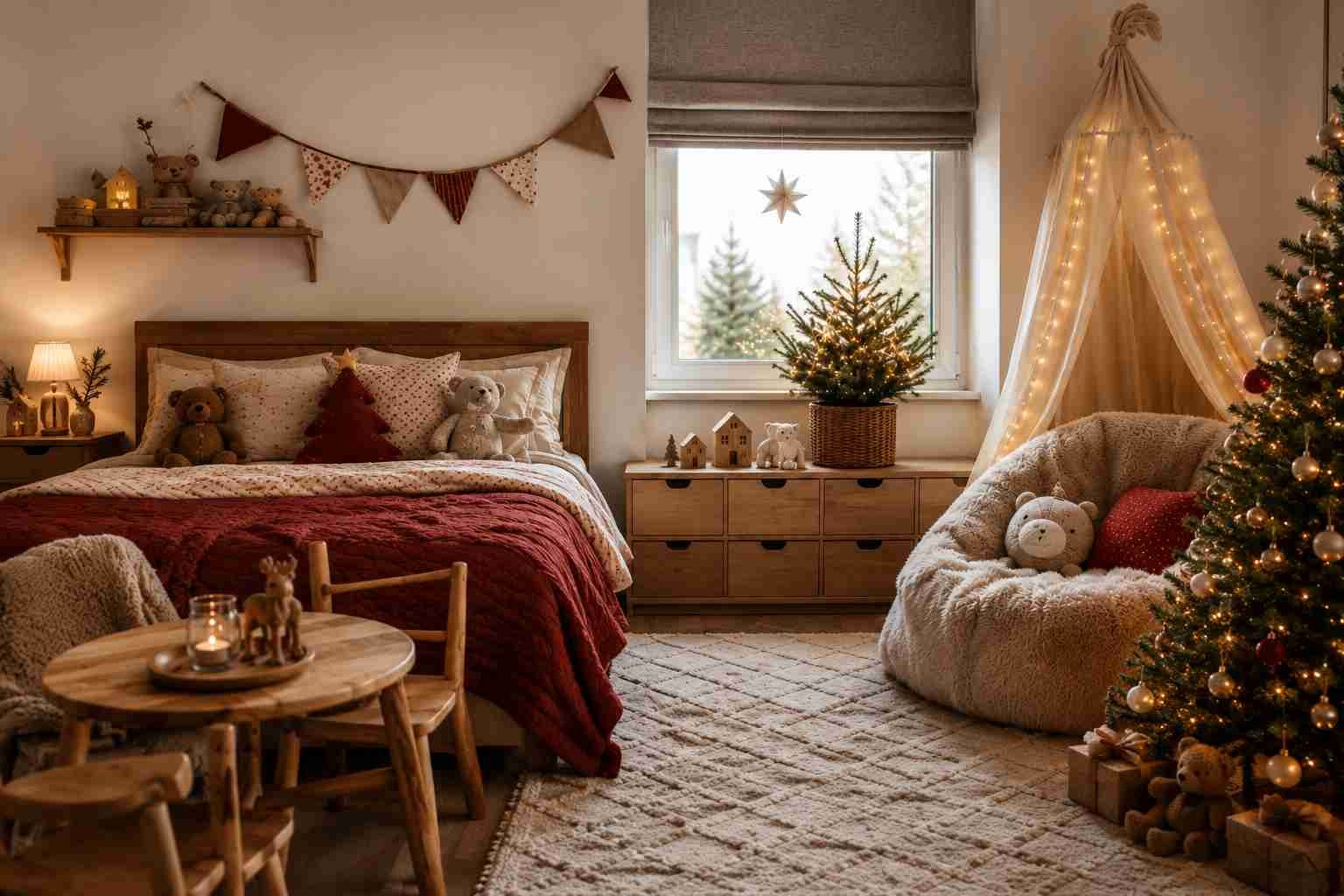
A three-year-old and a ten-year-old want two completely different rooms in December, even if the underlying budget and safety rules stay the same. I generally split the age brackets like this when I’m briefing a project:
Toddlers (1–3 years): keep decor at floor and eye level minimal, since anything within reach becomes a toy or a snack in this age group. Most of the visual interest should live above the crib rail or on the ceiling, out of grabbing range — a light canopy, a ceiling garland, or window clings do the visual work while staying physically inaccessible.
Young children (4–8 years): this is the sweet spot for involving the child directly in the decorating. Crafts like paper snowflakes, bunting letters, and choosing ornaments for a mini tree give a real sense of ownership, and this age group is old enough to understand “look, don’t touch” for the more delicate pieces.
Older children and pre-teens (9+ years): many kids this age start to have opinions about their room that go beyond “more sparkles,” and a more restrained, adult-leaning look (a single elegant garland, warm lighting, a considered colour palette) often lands better than a full theme. It’s worth asking them directly what they want rather than assuming younger-kid decor still applies.
ALSO READ: 12 DIY Outdoor Christmas Decorations Using Recycled Materials
Color Palettes That Actually Work in a Kid’s Bedroom
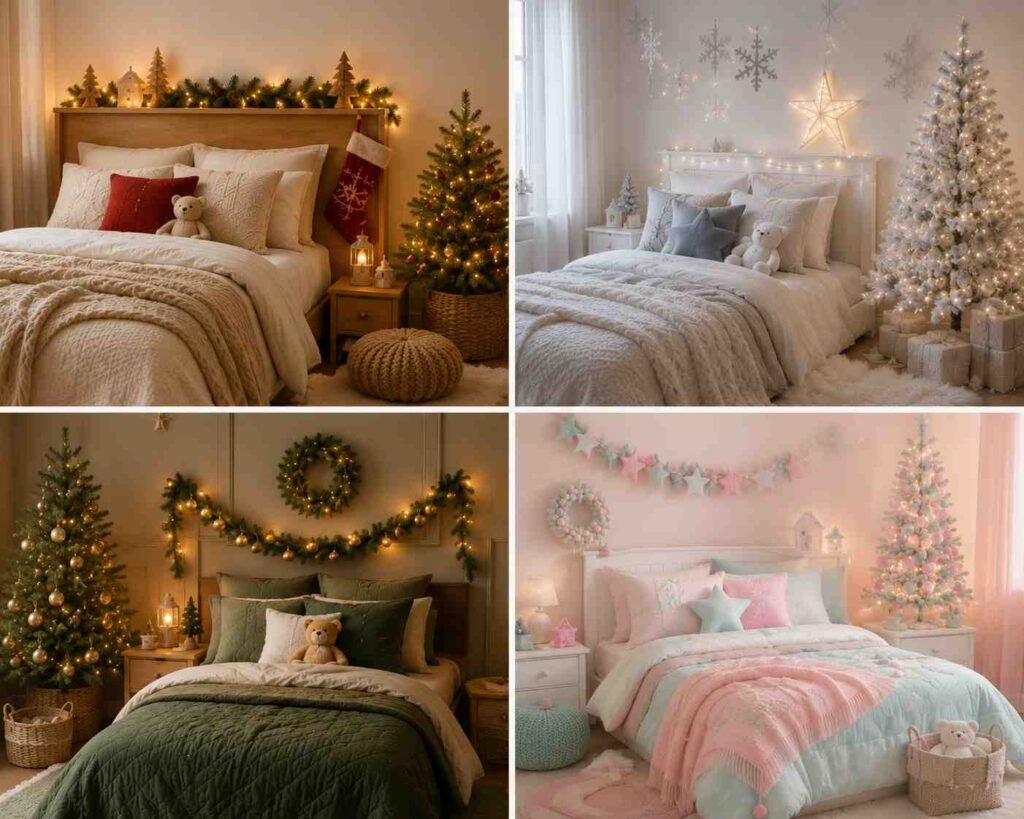
Red-and-green is the default most people reach for, but it’s not always the easiest palette to live with in a small bedroom, since it can visually shrink a space and clash with existing furniture or bedding. A few alternate palettes I use often with clients:
- Warm neutral + red accent: cream, beige, and warm wood tones as the base, with a single red accent (a stocking, a cushion, one garland) rather than red everywhere.
- Winter white and silver: snowflakes, frost effects, and silvery string lights, which works especially well layered over a room that already has pastel or neutral bedding.
- Forest green and gold: a slightly more grown-up palette that suits older kids’ rooms, using green as the dominant garland/tree colour and gold as the accent in ornaments or fairy lights.
- Candy colours (pink, mint, sky blue): a good option if the room already has a strong existing colour scheme you don’t want to fight against, using Christmas motifs (snowflakes, stars) rendered in the room’s existing palette instead of traditional red and green.
Whichever palette you land on, try to keep it to two dominant colours and one accent.
The single biggest thing that makes a kid’s room decor look chaotic rather than considered is too many competing colours fighting for attention at once, which is easy to do when every item is bought separately over several years.
Before You Start: Safety Rules I Never Skip in a Kid’s Room
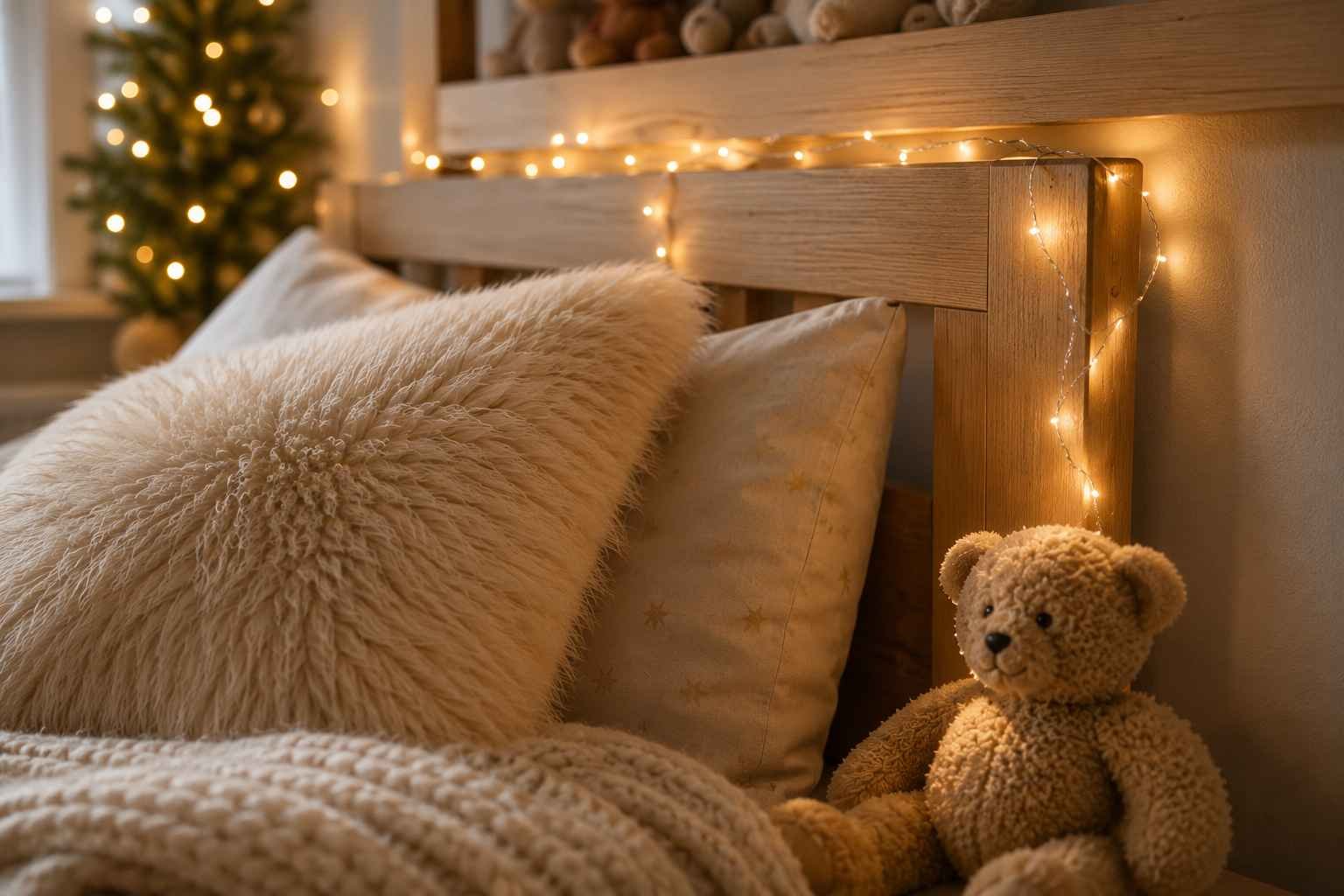
A kids’ bedroom is not a living room, and it shouldn’t be decorated like one. A few non-negotiables I follow on every project, regardless of the child’s age:
- Skip anything with small, detachable parts (mini ornaments, beads, loose glitter) in rooms used by children under 3.
- Choose battery-operated or USB-powered LED lights over mains-plug string lights near a crib or bed. LEDs run cool to the touch, which matters when curious hands are involved.
- Keep any cords, whether for lights or garlands, at least a foot away from the crib or bed frame, and never run a cord under a rug where it can fray unnoticed.
- Use removable adhesive (poster putty, washi tape, 3M Command strips) instead of nails or hot glue near a child’s sleeping area — it’s both a safety and a deposit-protection decision.
- Anything hung above a bed or crib should be lightweight and secured at two points, not one, so it can’t swing loose.
With that out of the way, here are the fifteen ideas.
15 Christmas Decoration Ideas for Kids’ Bedroom
1. A Fairy Light Canopy Above the Bed (Battery-Powered, Not Plug-In)
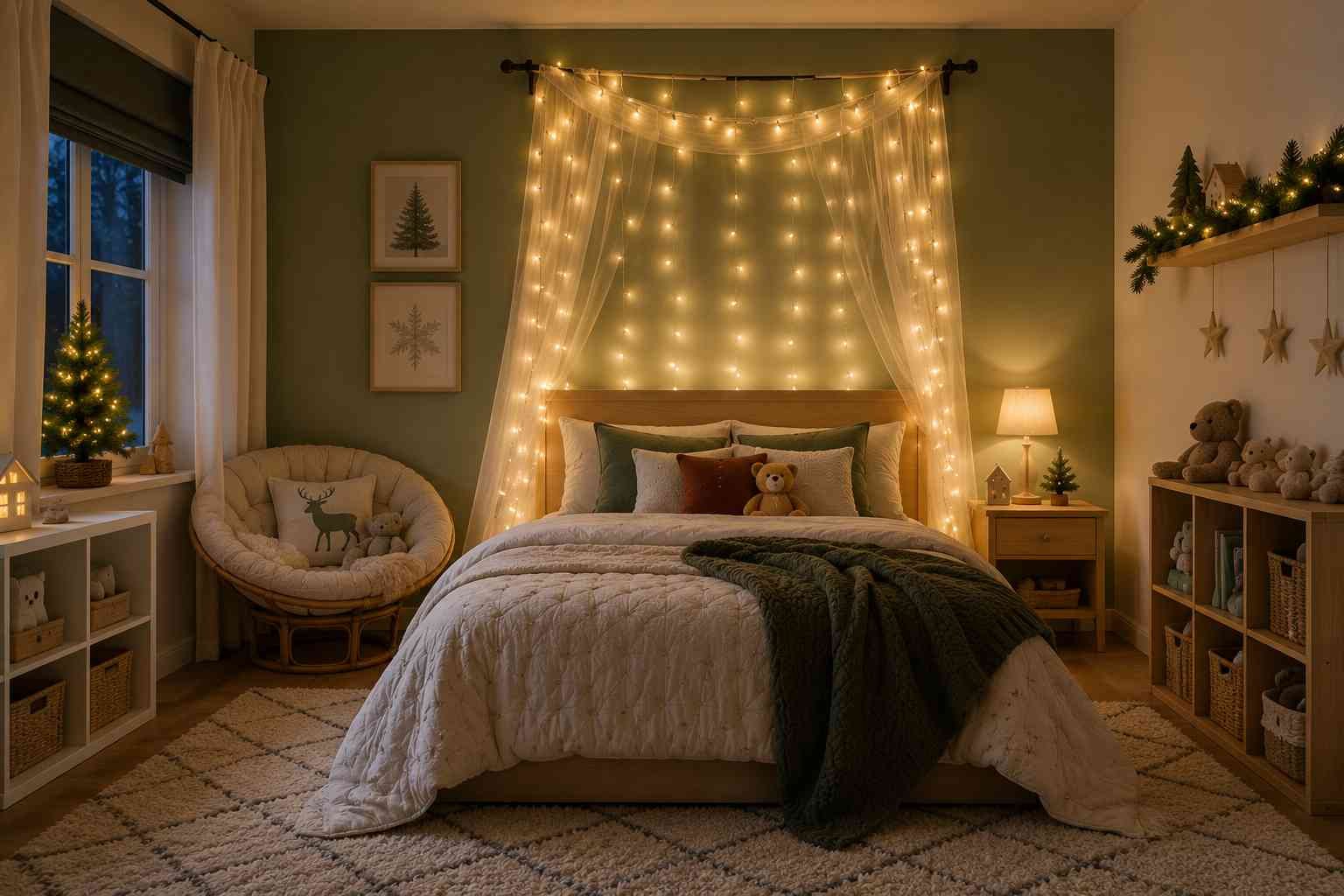
This is the single most requested look I get for kids’ rooms, and it’s popular for a good reason: a soft, warm light canopy reads as “magical” to a child and “tasteful” to a parent, which is a rare overlap.
The trick that separates a good version from a fire-hazard version is going battery- or USB-powered rather than running a mains cord over a headboard.
Drape a warm-white LED string along a curtain wire or a simple tension rod mounted just above the headboard, and let a few strands fall loosely rather than pulling them taut- the slight sag is what makes it look intentional rather than like an unfinished string light left over from a party.
For a rented room, mount the tension rod between two walls so nothing touches the ceiling or drywall at all.
Budget: ₹400–900 for a good battery-operated LED strand with a timer function, which saves you from remembering to switch it off every night.
A variation I use for shared sibling rooms is running two shorter canopy sections, one over each bed, rather than one long strand spanning the whole wall- it lets each child feel like the lighting is “theirs” without the sections competing visually.
If the room has a four-poster or canopy bed frame already, skip the tension rod entirely and wind the lights directly around the existing posts.
2. Removable Wall Decals Instead of a Painted Mural
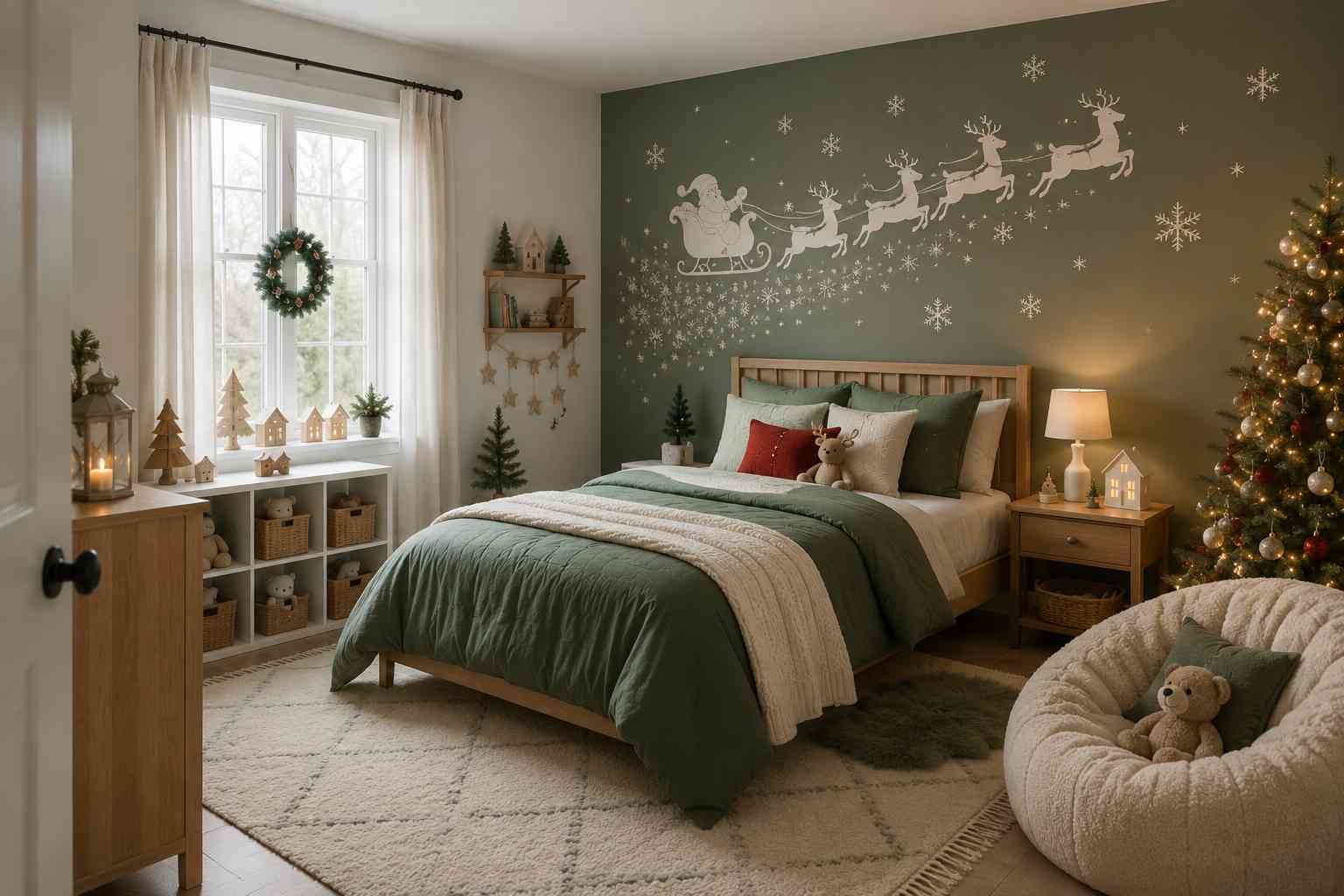
Parents often come to me wanting a full Christmas mural, a snowy scene, Santa’s sleigh, and a fireplace, and I almost always redirect them to a large-format removable wall decal instead.
The visual impact is nearly identical from across the room, but a decal peels off cleanly in ten minutes rather than requiring a repaint of the entire wall by January.
Look for decals specifically labelled fabric or matte vinyl removable wall stickers rather than the cheap glossy vinyl party decorations; the difference in adhesive quality is the entire game here.
A single large decal (a sleigh silhouette, a cluster of snowflakes drifting toward the headboard, or a simple “Merry Christmas” script) does more visual work than a dozen small ones scattered across the wall.
Practical tip: test the decal on an inconspicuous patch of wall for 24 hours before committing to the main spot, especially on textured or freshly painted walls.
Placement matters more than most people expect.
A decal positioned directly above the headboard, centred and at the child’s standing eye-level rather than up near the ceiling, reads as a deliberate feature wall moment.
The same decal stuck too high, where an adult would naturally look but a child never does, tends to disappear into the room rather than becoming a focal point.
3. A Snow-Globe Reading Corner
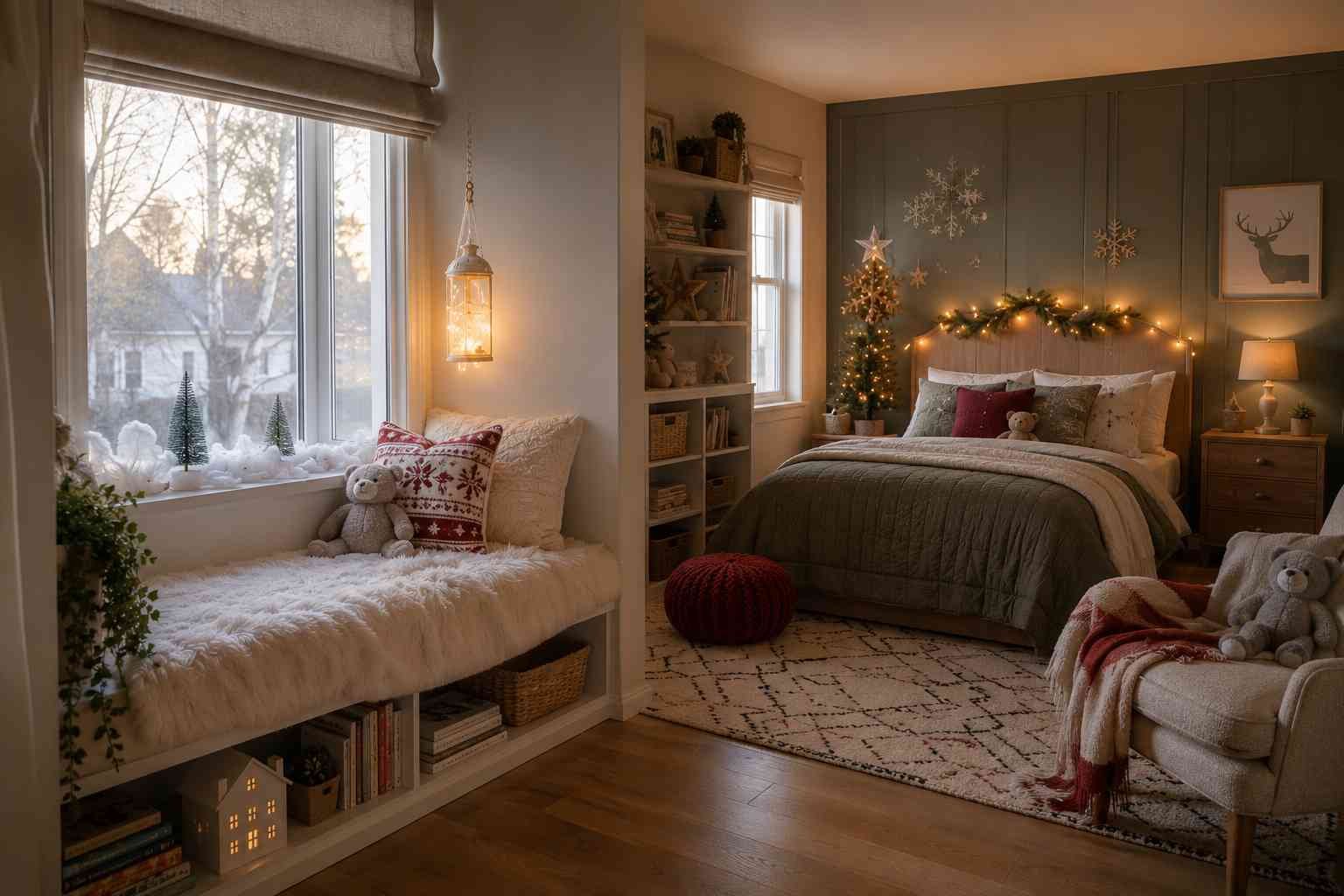
If the room has any kind of nook- a window seat, a corner between a wardrobe and a wall, even just a beanbag spot- this is where I’d spend the bulk of the decorating budget, because it’s the one idea that gets used every single day of December rather than just admired.
Layer a faux-fur or sherpa throw over the existing seating, add a low stack of Christmas picture books within the child’s own reach (not on a high shelf, which defeats the purpose), and hang one small LED lantern or fairy-light jar nearby on a low hook.
The “snow globe” effect comes from a few strategically placed cotton-wool or faux-snow tufts on the windowsill behind the seat, which catch the fairy light beautifully at night without being a mess to clean up.
Why it works: reading nooks are one of the few Christmas decor ideas that double as a genuine wind-down routine, which parents tell me matters more in December than almost any other month.
Rotate the book selection weekly rather than dumping the entire Christmas book collection into the nook at once- five or six titles feels curated and inviting, while fifteen books stacked in a corner start to look like storage overflow.
Swapping titles in and out also gives you a natural, low-effort way to keep the space feeling fresh across the six weeks of the season.
4. A Mini Tabletop Tree Just for Their Room
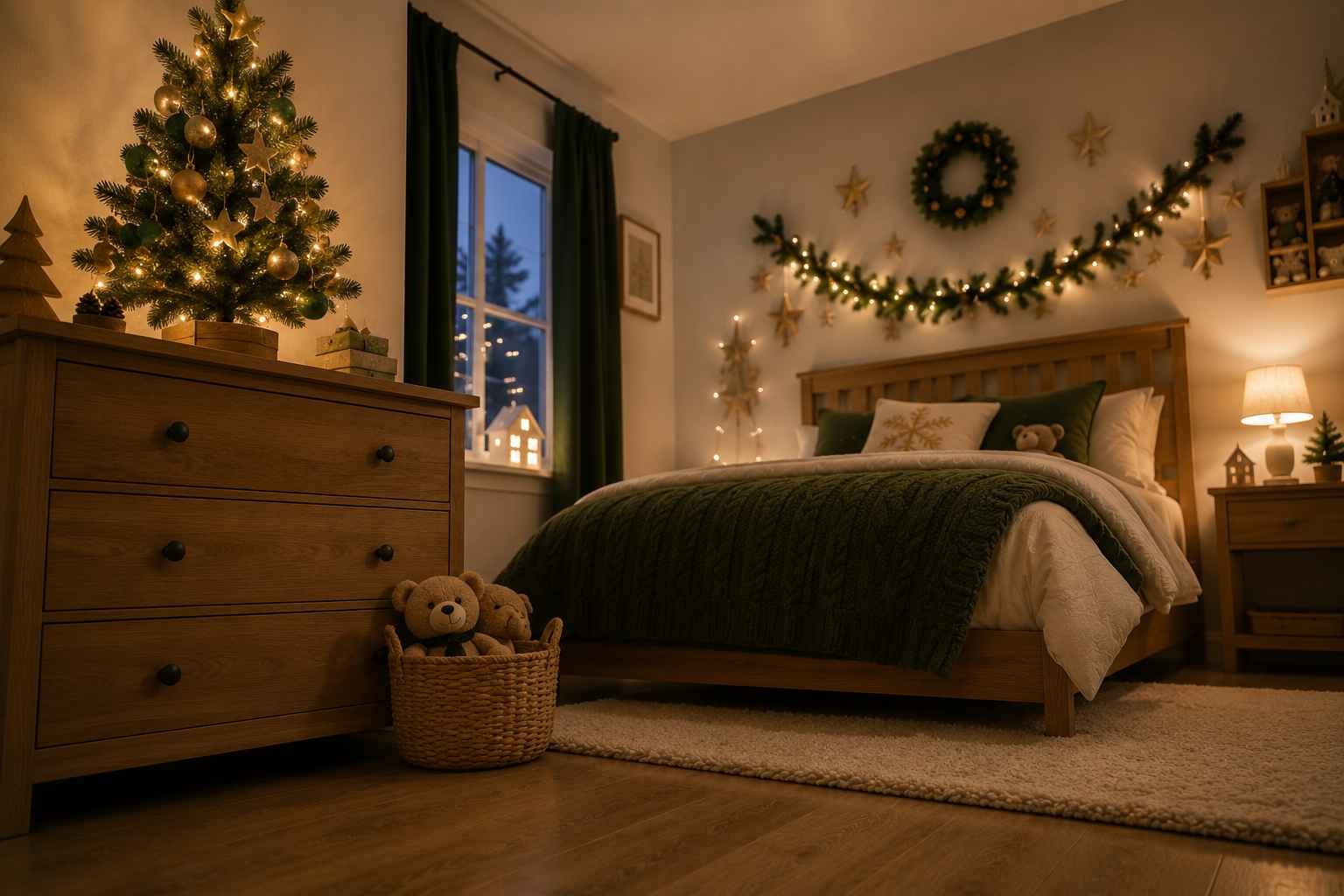
Giving a child their own small tree- 1.5 to 2 feet tall, tabletop height- solves a problem I hear constantly: kids wanting to touch, rearrange, and “help” decorate the main family tree, which frustrates everyone.
A dedicated mini tree in their own room gives them full creative control over something that’s genuinely theirs.
Use a pre-lit artificial tree with LED (not incandescent) lights so there’s no heat risk, and let the child choose soft, unbreakable ornaments- felt shapes, wooden cutouts, pom-poms, rather than glass baubles.
Place it on a dresser or a low shelf rather than the floor if there are younger siblings or pets in the house.
Budget: ₹800–2,000 depending on size and whether it comes pre-lit.
Buy one size up from what feels necessary this year- a two-foot tree still looks proportionate on a dresser next year when the ornaments have multiplied, whereas a one-foot tree tends to look cramped and overcrowded by the second Christmas of ornament-collecting.
Store the ornaments in a labelled shoebox rather than loose in a drawer, so next year’s setup takes minutes rather than a full afternoon of hunting.
5. Layer the Bedding Instead of Replacing It
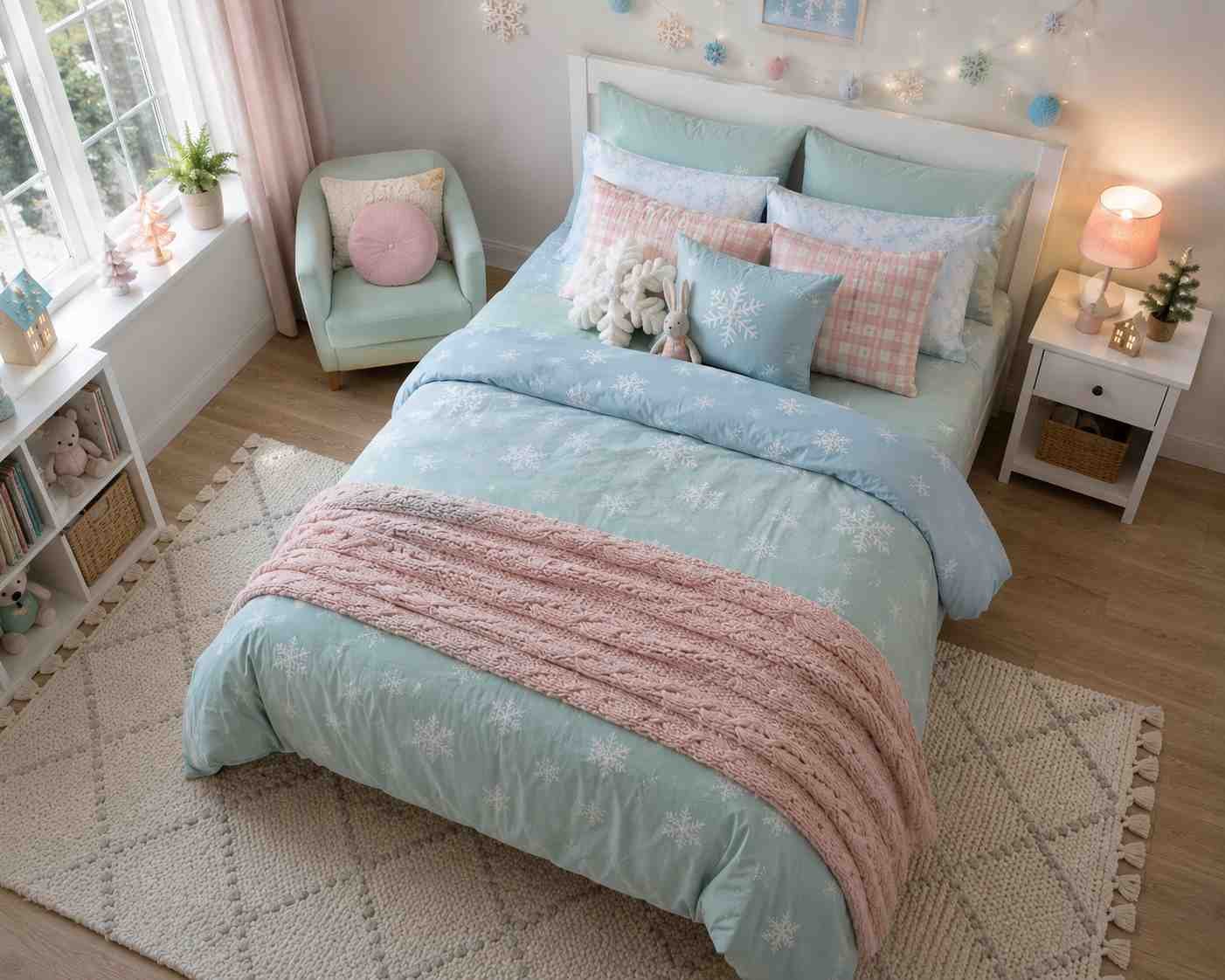
You don’t need a full Christmas-themed duvet set, which is an expensive purchase for six weeks of use. Instead, layer a Christmas-print flat sheet, a knit throw, or a set of patterned pillowcases over the bedding the child already uses year-round.
This is both cheaper and far more practical, since the base bedding stays in rotation and only the top layer needs washing or storing away in January.
A single patterned throw folded at the foot of the bed, plus two or three accent cushions in complementary colours (deep red, forest green, warm cream), does more visual work than a full themed set and is easier to swap out gradually as the child’s taste changes year to year.
Choose machine-washable cotton or flannel over anything requiring dry cleaning, since a child’s Christmas bedding will inevitably meet a spilled mug of hot chocolate at some point in December.
Flannel sheets in particular double as a genuine winter comfort upgrade rather than a purely decorative choice, which makes the purchase easier to justify.
6. Washi Tape “Frosted Window” Effect
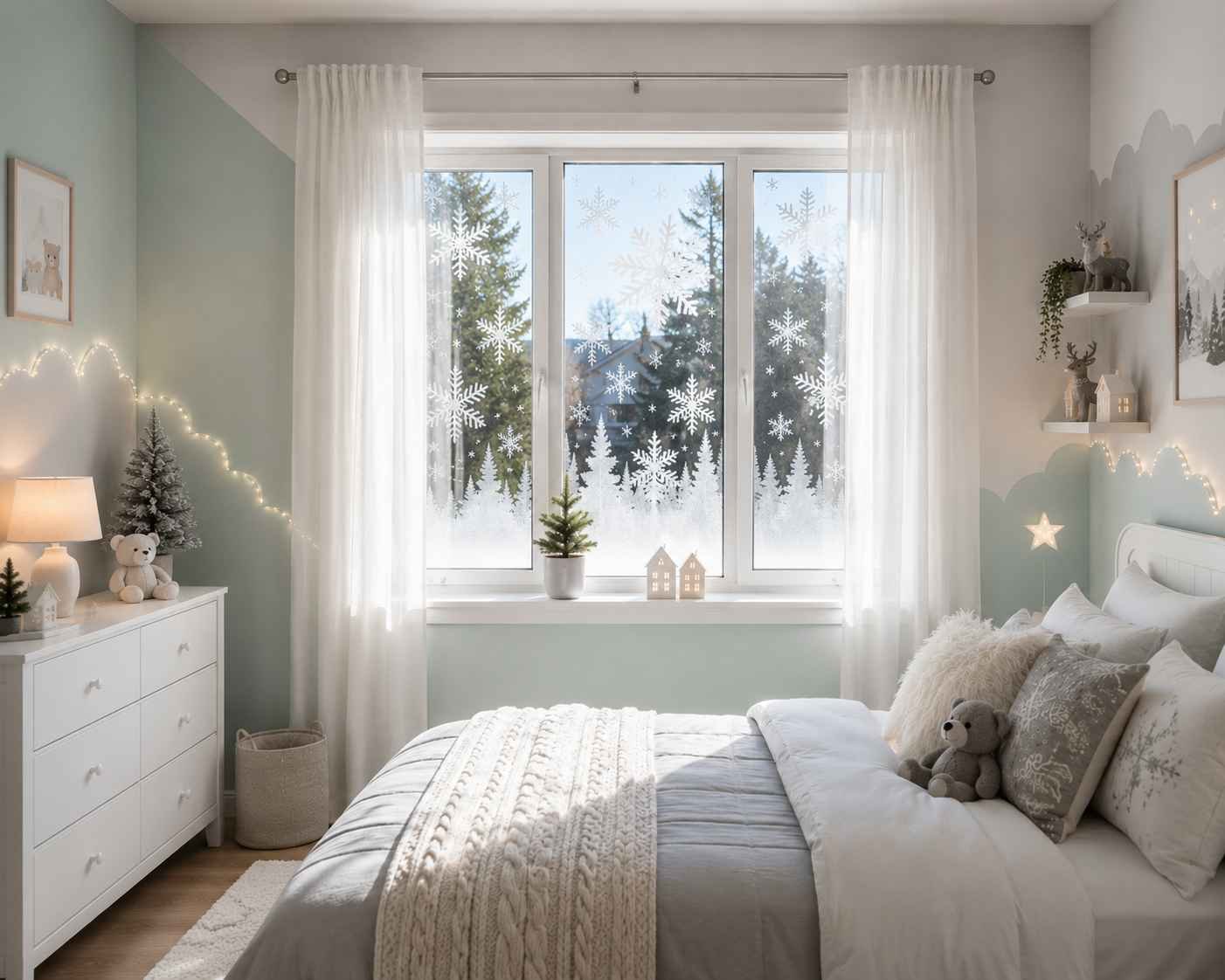
This is one of the best low-cost, fully renter-safe ideas on this list, and it’s genuinely something a child aged 6 and up can help create themselves, which adds to the sense of ownership over the room.
Using white or silver washi tape, create simple geometric snowflake or frost patterns directly on the window glass- not the frame, the glass itself- since washi tape leaves no residue on glass even after weeks.
Simple six-pointed shapes, or even just varying-length diagonal strips clustered in the corners of the pane, read as “frosted glass” from a normal viewing distance, especially with afternoon light coming through.
It’s genuinely one of the highest visual-impact-to-cost ratios in this entire list.
Budget: under ₹200 for a roll of washi tape that will have leftover for next year.
If your child is old enough to use scissors safely, this is a good one to hand over almost entirely; sketch a rough guide in pencil first if you’re worried about symmetry, then let them place the tape strips themselves.
Uneven, slightly asymmetric patterns genuinely read as more charming and handmade on a window than a perfectly symmetrical stencilled version would.
7. Paper Ornament and Pom-Pom Garlands From the Ceiling
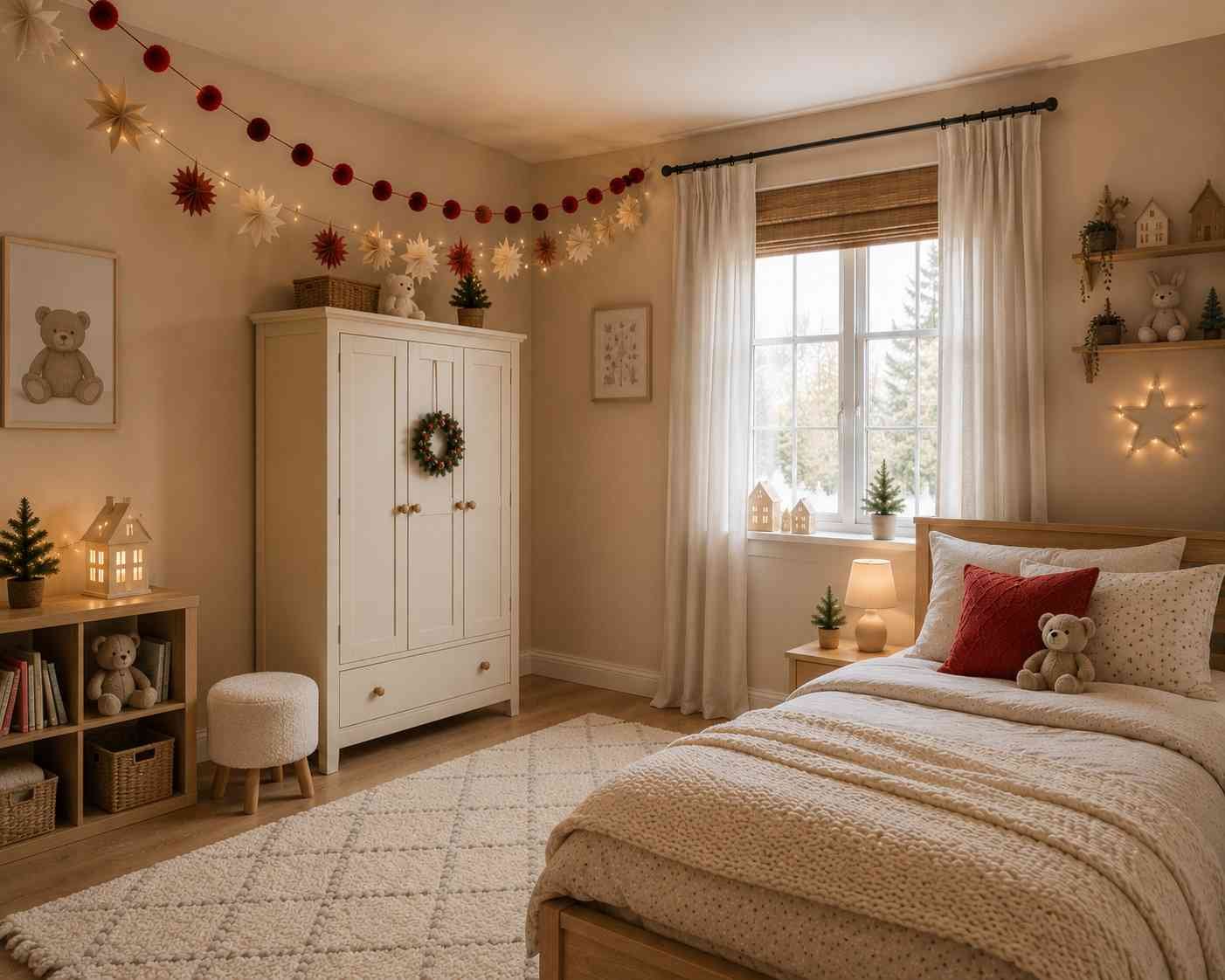
A garland strung diagonally across a ceiling corner, or looped along the top of a wardrobe, adds height to the decor without touching the walls or furniture directly.
Paper honeycomb ornaments, folded paper stars, or a simple pom-pom garland (easy to make from yarn scraps if you have an evening free) are lightweight enough to hang from a single Command hook at each end without any risk of falling.
Keep the garland span short, one corner, not the entire ceiling perimeter- so it reads as a deliberate accent rather than clutter.
This is also one of the few ideas on this list where letting the child help with the craft (cutting paper stars, threading pom-poms) becomes part of the actual decorating experience rather than something done to the room for them.
A common mistake here is hanging the garland too taut, straight and level, which ends up looking like a construction-site safety line rather than festive decor.
A gentle, deliberate sag- a shallow U-shape between the two hook points- is what reads as a garland rather than a straight line of paper shapes.
8. A Wall-Mounted Advent Calendar Display
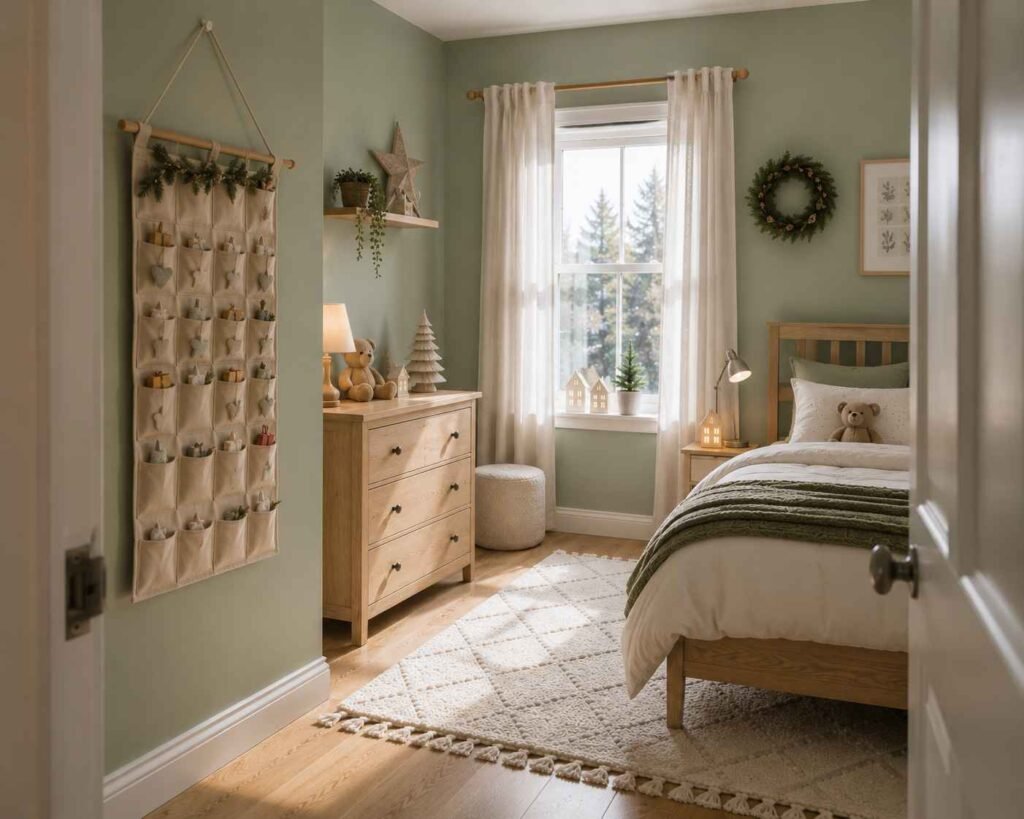
A pocket-style fabric advent calendar or a simple set of 24 small numbered paper bags pinned along a ribbon does double duty as decor and as a genuine daily countdown ritual, which is exactly the kind of decoration that earns its place on a wall for six weeks rather than sitting unused.
Mount it using a horizontal dowel or ribbon hung from two Command hooks rather than directly pinning fabric to the wall.
Fill it with small non-food items for younger children (a hair clip, a tiny toy, a sticker sheet) to avoid the daily sugar spike that a chocolate advent calendar brings, though that’s obviously a personal call for each family.
Position it somewhere the child passes every single day without needing to be reminded; beside the door or above a dresser they open each morning works far better than a wall they only glance at occasionally.
A calendar that requires a daily reminder from a parent has already lost most of its appeal as an independent ritual.
ALSO READ: 30 Christmas Tree Decoration Ideas 2026
9. A Stocking as a Standalone Wall Feature

Even in homes without a fireplace or mantel, a single oversized stocking with the child’s name embroidered or appliquéd on it, hung on the bedroom door or beside the bed frame using a Command hook, becomes a focal decor piece in its own right, not just a container waiting to be filled on Christmas Eve.
For younger kids, a stocking hung at their own eye level, in their own room, personalises the room in a way a generic “Merry Christmas” sign never quite matches.
It’s also one of the few decorations that has genuine long-term sentimental value once the season is over.
Go a size larger than the standard shop-bought stocking if you can find or make one- an oversized stocking reads as a statement piece even when empty, whereas a small stocking on its own on a large expanse of door or wall can look a little lost.
If sewing isn’t an option, a plain stocking with the child’s name added in iron-on letters gets most of the personalisation benefit in ten minutes.
10. Command-Hook Garland on the Wardrobe or Bookshelf
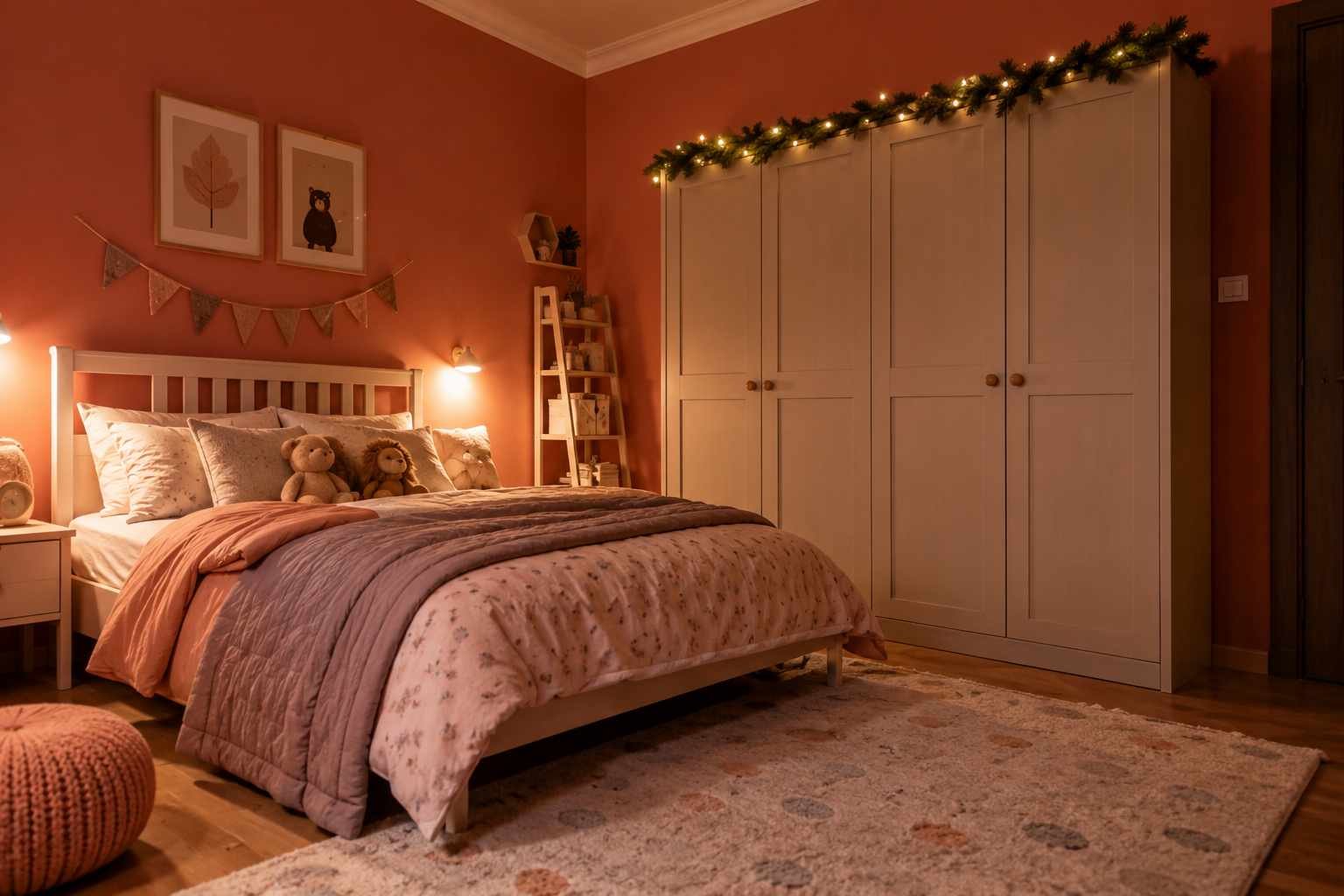
If there’s one single product I recommend to every renting parent in December, it’s a pack of small Command hooks. A simple faux-pine garland draped along the top edge of a wardrobe, bookshelf, or headboard, secured at two or three points with these hooks, transforms a piece of everyday furniture into a seasonal feature without a single mark left on paint or wood.
Add a few small battery LED picks woven into the garland for texture and warmth at night. This idea pairs particularly well with idea 1 (the light canopy), since the two together frame the bed as the room’s clear seasonal centrepiece.
Check the Command hook’s weight rating against the garland’s actual weight, including any lights woven into it, before committing to the placement; faux pine garlands are heavier than they look once damp winter humidity sets in.
When in doubt, use one extra hook in the middle of a long run rather than relying on just the two end points.
11. DIY Snowflake Window Clings
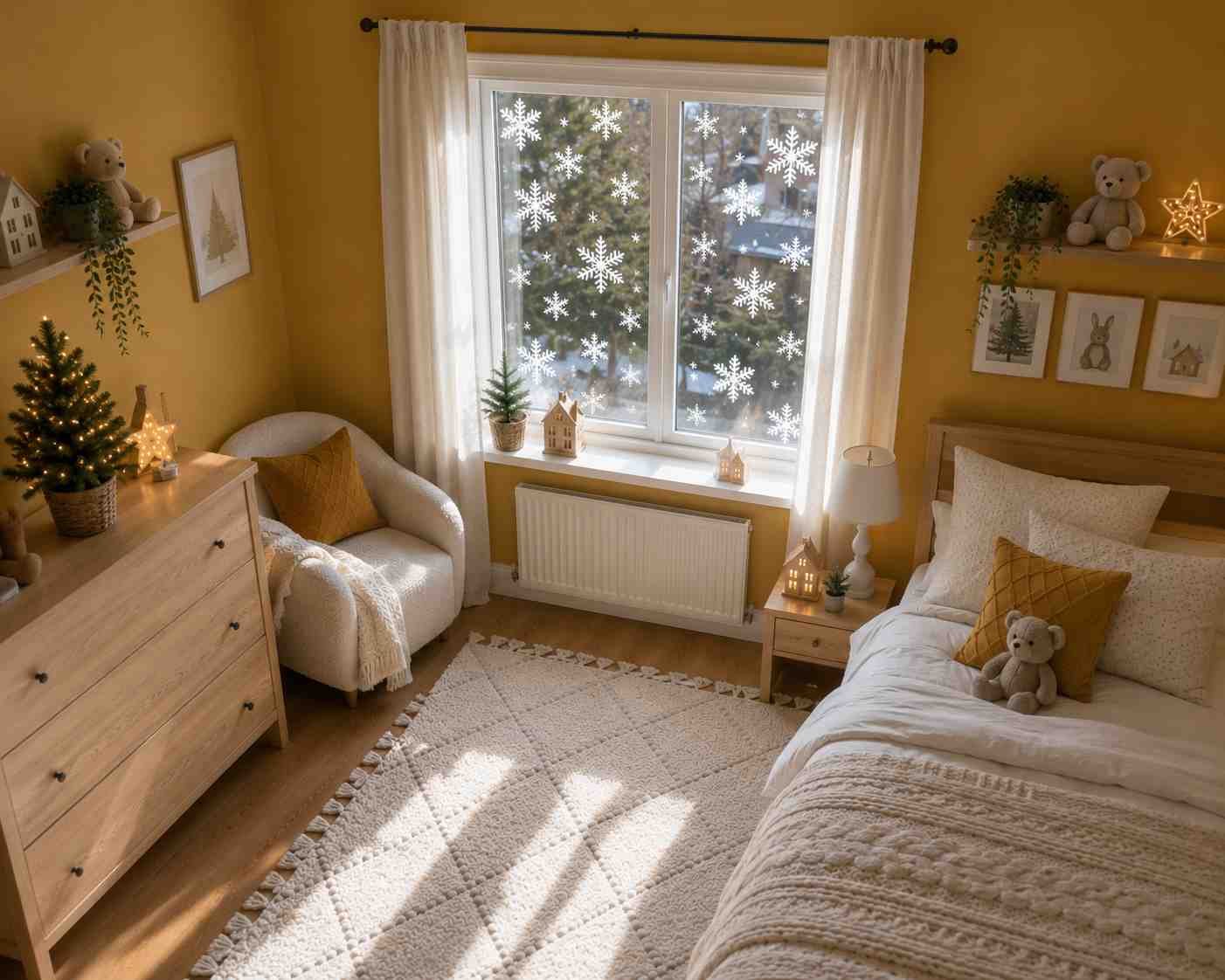
Unlike the washi tape idea above, window clings work well when you want a more three-dimensional, textured look rather than flat frost patterns.
Static-cling vinyl snowflakes (reusable, no adhesive at all) or paper snowflakes cut by the child and taped lightly to the glass both work, and both come down without leaving a trace.
This is a genuinely good rainy-afternoon activity to do with a child rather than for them- cutting paper snowflakes from folded paper is a classic for a reason, and letting a 5-to-10-year-old choose where each one goes on the window gives them ownership over at least one part of the room’s decor.
Paper snowflakes have a shorter lifespan than vinyl clings, especially near a window that gets condensation, so if you want the look to last the full six weeks without needing to be replaced, vinyl static clings are the more durable choice, while paper is better suited to a single craft afternoon with immediate, short-term display.
12. A Cozy Corner With Faux Fur and Warm-Toned String Lights
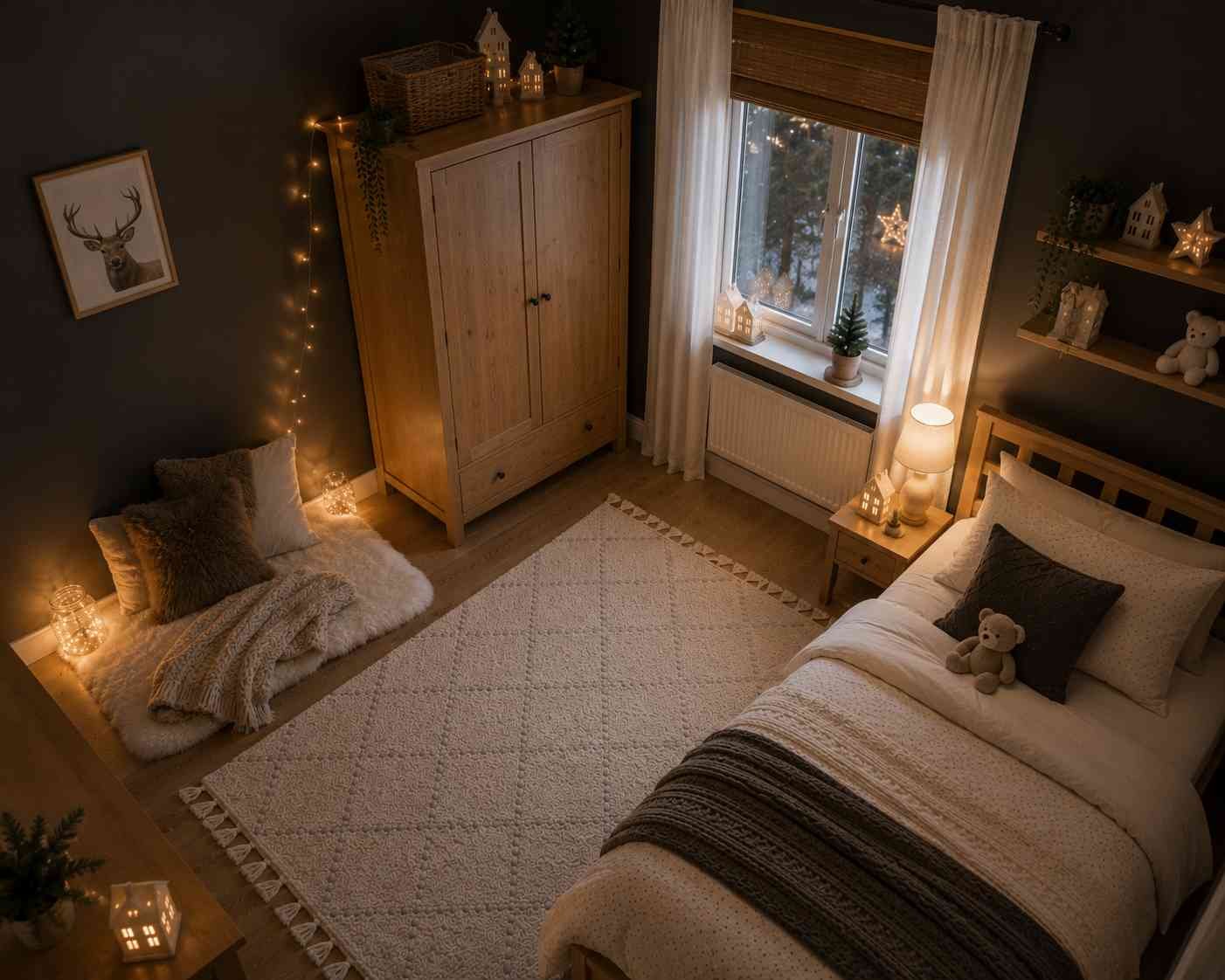
This overlaps with the reading nook idea above but works even in rooms without an obvious nook- a floor cushion in an underused corner, paired with a faux-fur throw and a small cluster of warm-white fairy lights in a glass jar or wire lantern, creates an instant “cozy corner” that reads as intentional decor rather than an empty patch of floor.
Stick to warm white (2700–3000K) rather than cool white or multicolour lights for this look specifically- warm white is what reads as “cozy” rather than “festive-but-clinical,” and it’s a far more forgiving light temperature for a child’s evening wind-down routine.
Layer at least two textures in this corner- a chunky knit throw against a smoother faux-fur cushion, for instance- since a single flat texture tends to look thin and under-styled in photographs even when it’s perfectly cozy in person.
This is a small styling detail, but it’s the difference between a corner that looks intentional and one that looks like a spare cushion was dropped on the floor.
13. Gift-Wrapped Storage Bins as Decor
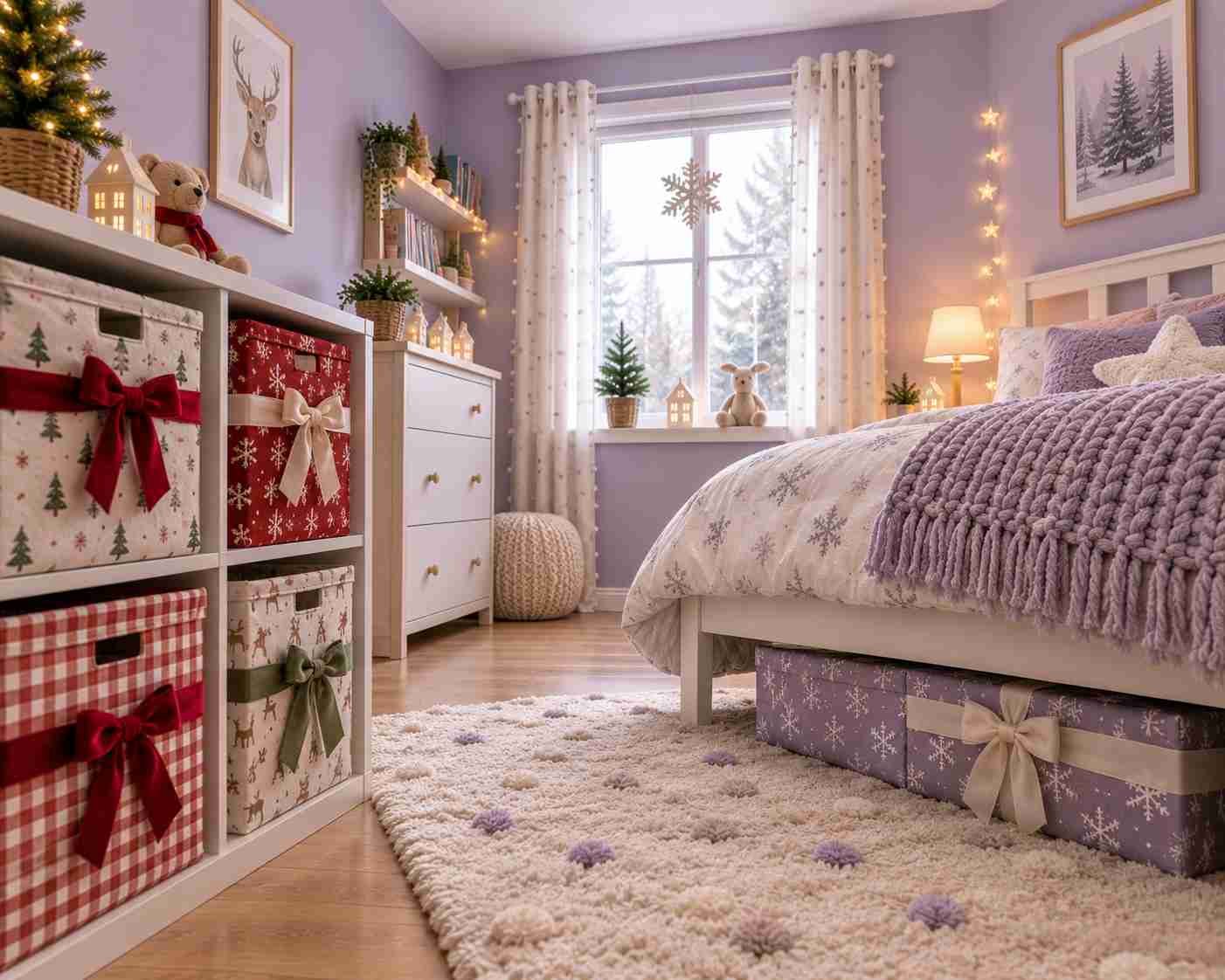
An idea I genuinely love recommending because it solves two problems in one move: existing storage bins, boxes, or baskets already in the room get wrapped in Christmas paper or fabric (or simply have a wide ribbon and gift tag added) and instantly double as decor, without adding a single new object to a room that likely already has enough toys in it.
This works especially well for toy bins, laundry hampers, or under-bed storage boxes that are functional but visually unremarkable the rest of the year.
Swap the wrapping paper for a simple ribbon bow if the bin needs to be opened and closed often, since re-wrapping paper daily gets old fast.
For bins that do need daily opening, wrap only the lid or the front-facing panel rather than the whole box, and secure the paper with double-sided tape rather than a single strip of visible tape on top.
This keeps the wrapped look intact even after repeated handling through the season, rather than needing to be redone every few days.
14. A Personalised Name Banner or Growth-Chart Ribbon
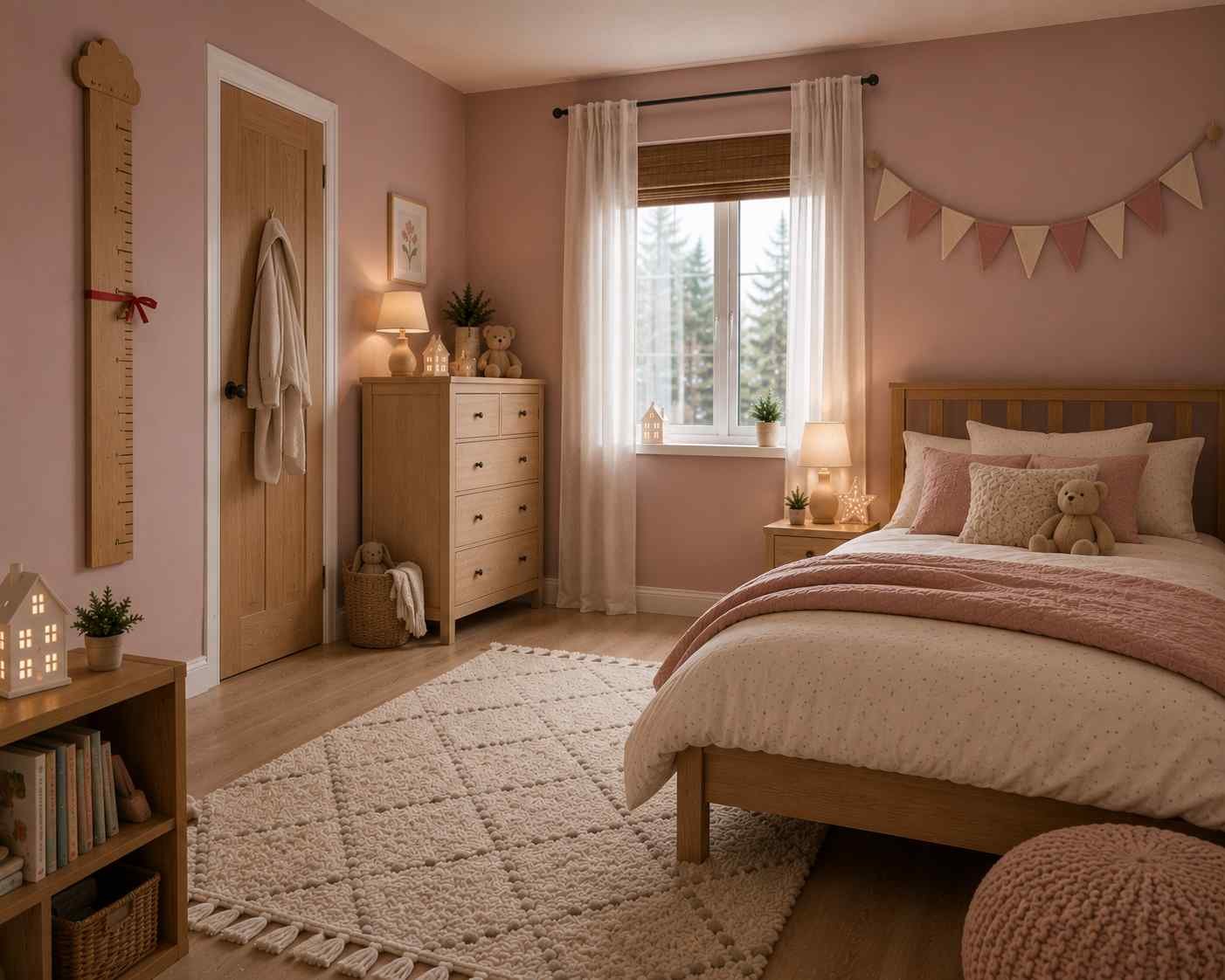
A simple fabric or paper bunting banner spelling out the child’s name, or a Christmas-specific message like “Believe” or “Santa Stop Here,” strung above the bed or across a window, is one of the most personal and lowest-cost decorations on this list.
Felt or cardstock letter bunting can be made in an evening and reused every year, which makes the per-use cost lower than almost anything else here over time.
If the room already has a growth chart or height ruler on the wall, tying a small red ribbon or bell at the child’s current height marker is a nice seasonal touch that ties the decor to something the family already tracks year-round.
Keep the letter sizes and spacing consistent if you’re cutting them by hand- a bunting with mismatched letter heights is one of the more common homemade-decor mistakes, and it’s easily avoided by tracing a single stencil for every letter rather than free-handing each one individually.
15. Paper Star Lanterns Hung at Varying Heights
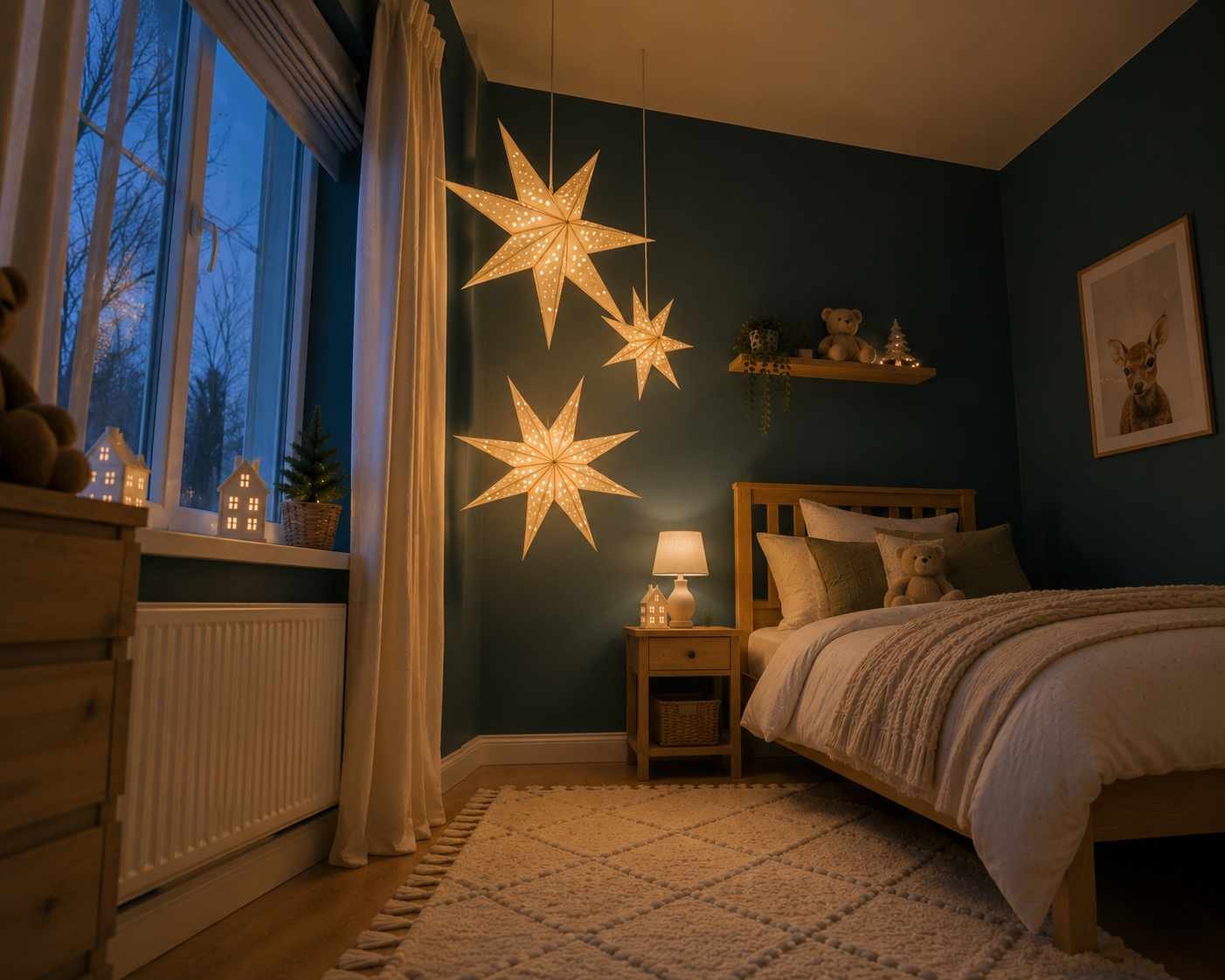
For a slightly more involved weekend project, folded paper star lanterns (available as flat-pack kits, or foldable from scratch with an evening’s patience) hung from the ceiling at two or three different heights near a window create a genuinely striking effect at night, especially with a single LED tea light inside each one.
Keep the lanterns clustered rather than spread across the whole ceiling, and use fishing line rather than visible string for the hanging point if you want the “floating” effect to read cleanly.
This is the one idea on this list I’d reserve for families who enjoy an evening craft project together, since the payoff is high but so is the time investment compared to everything else on this list.
Vary the drop height of each lantern by at least four to six inches rather than hanging them all at the same level- an uneven cluster reads as intentional and dynamic, while a perfectly even row tends to look like shop signage rather than bedroom decor.
A Realistic Budget Breakdown
One of the most common questions I get is simply “how much should this cost?” Here’s a rough guide based on projects I’ve priced for clients, assuming you’re decorating one child’s room rather than a whole house:
- Under ₹1,000 total: washi tape frost effect, DIY paper snowflakes, gift-wrapped storage bins, and a simple bunting banner cover the whole room.
- ₹1,000–3,000: add a battery LED light canopy, a wall decal, and Command-hook garland.
- ₹3,000–6,000: add a mini pre-lit tabletop tree, a proper advent calendar, and layered bedding.
- ₹6,000 and above: this is where a cozy-corner seating refresh or paper star lantern cluster starts to add up, mostly in the materials and any new soft furnishings rather than the decor itself.
Most of the rooms I style land in the ₹2,000–4,000 range for a full, considered look — the highest-impact ideas on this list (the light canopy, washi tape frost, and Command-hook garland) are also consistently the cheapest.
Common Mistakes I See Parents Make
A few patterns come up often enough across client projects that they’re worth calling out directly, since avoiding them saves both money and January clean-up time:
- Buying a full themed bedding set for six weeks of use, when a layered throw and cushions achieve nearly the same look for a fraction of the cost and the storage space.
- Spreading decor evenly across every wall rather than concentrating it in one or two focal areas — a room with one strong feature (the bed, or a reading nook) reads as considerably more polished than one with scattered small touches everywhere.
- Using mains-plug string lights bought for outdoor or living-room use inside a child’s room, where the thicker cord and larger bulbs are both a trip hazard and a heat concern near bedding.
- Skipping a trial period for adhesive products, then discovering in January that a decal or hook has taken paint off with it, which is avoidable with a 24-hour test patch.
- Decorating for the parent’s taste rather than the child’s — particularly with older kids, involving them in even one decision (the colour palette, or which idea from this list to prioritise) tends to produce a room they actually enjoy rather than tolerate.
Frequently Asked Questions
What Christmas decorations are safe for a toddler’s room?
Stick to battery or USB-powered LED lights rather than mains-plug string lights, avoid anything with small detachable parts like mini ornaments or loose glitter, and keep all cords well away from the crib or bed. Soft felt or fabric decor items are always a safer choice than glass or hard plastic in a toddler’s room.
How early is too early to put up Christmas decorations in a kid’s room?
There’s no design rule against decorating early- plenty of families I work with start the weekend after Thanksgiving specifically because the anticipation itself is part of the experience for a child. The bigger practical question is just making sure battery-powered lights have fresh batteries to last the full stretch.
What should I do with all this decor once Christmas is over?
Store everything in a single labelled box per room rather than mixing it in with general holiday storage- it makes next year’s setup far faster, and labelling by room (rather than by decoration type) means you’re not hunting through a garage full of mixed boxes when December rolls around again. Battery-powered lights should have their batteries removed before storage to prevent corrosion over the following eleven months.
What’s the cheapest way to make a kid’s room feel festive?
A roll of washi tape used to create a frosted-window effect on the glass, combined with a single wrapped storage bin and a paper bunting banner, covers most of a room for under a thousand rupees and takes an afternoon.
How do I decorate a rented room for Christmas without damaging the walls?
Removable adhesive is the answer to almost everything here: washi tape for window effects, 3M Command hooks for garlands and stockings, and fabric or vinyl removable wall decals instead of paint or wallpaper. Test any adhesive on a small hidden patch of wall first, especially on textured paint.
ALSO READ: 20+ Birthday Themes for Boys From Toddlers to Teens
Bringing It All Together
The best Christmas decor for a kid’s room isn’t the version that photographs well for five minutes — it’s the version that survives six weeks of actual daily use by an actual child, comes down cleanly in January, and doesn’t cost more than the presents underneath the tree. Start with one or two ideas from this list rather than attempting all fifteen at once: a light canopy and a washi tape window effect alone will transform a room for under ₹1,500 and an afternoon of your time. Whichever ideas you choose, the safety basics — cool-touch LED lighting, removable adhesive, and nothing small enough to swallow within reach of a toddler — matter more than any single aesthetic choice on this list. Get those right first, and the rest is simply a matter of taste