
I’ve spent years walking through kitchen remodels, watching homeowners agonize over one decision more than almost any other: what goes on top of the cabinets they just spent thousands of dollars on.
Quartz and wood are the two materials I get asked about together more than any other pairing, and for good reason. Wood brings warmth into a kitchen that can otherwise feel cold and clinical.
Quartz brings the durability and low-maintenance practicality that busy households actually need. Put them together the right way, and you get a kitchen that looks expensive without being fussy.
But here’s what nobody tells you upfront: not every quartz shade works with every wood tone.
I’ve seen gorgeous slabs get chosen off a showroom sample, only to look flat or mismatched once they’re sitting on top of a specific cabinet stain in real daylight.
The combination matters more than either material on its own.
So instead of giving you generic “quartz is versatile” advice, I want to walk through 21 specific pairings and approaches I’ve seen work in real homes — including a few unexpected ones that surprised even me the first time I saw them installed.
1. Warm white quartz with honey oak cabinets
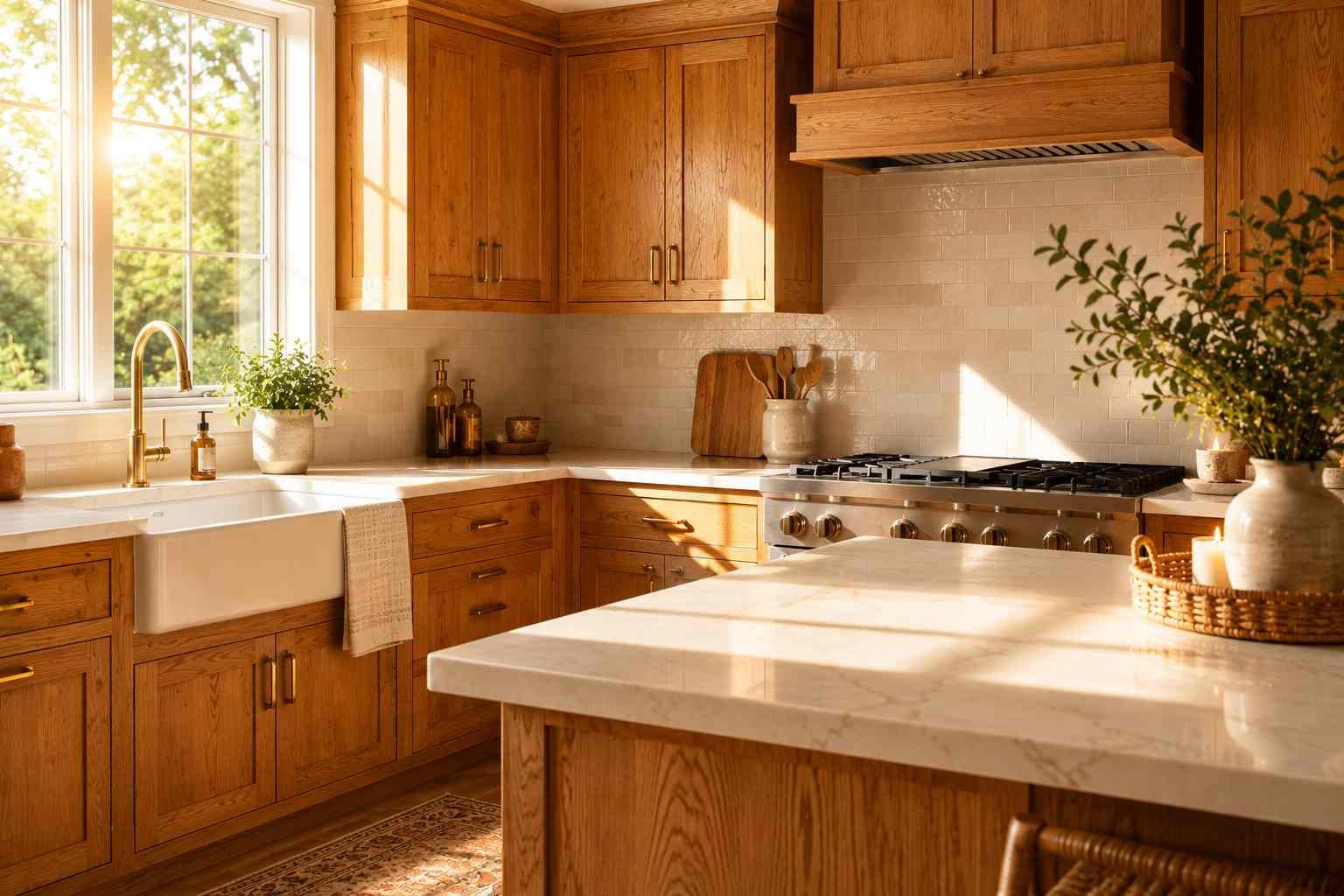
Honey oak has made a real comeback, and a lot of people who ripped it out a decade ago are now wishing they’d kept it. If you’ve got honey or golden oak cabinets, skip the stark, blue-white quartz varieties. Go for a quartz with warm undertones — cream, ivory, or a soft beige base. The cool white slabs fight with the yellow in the wood and make everything look slightly off, almost like two different eras of kitchen got mashed together. A warmer white lets the oak’s natural grain do the talking.
2. Charcoal-veined quartz against natural walnut

Walnut cabinets already carry a rich, almost chocolate depth to them, so I like pairing them with a quartz that has thin, irregular charcoal or graphite veining running through a lighter background. It reads as sophisticated rather than busy, because the veining pulls out the darker tones already present in the walnut grain without repeating the same solid brown-on-brown look twice.
3. Two-tone cabinets with a single unifying quartz slab
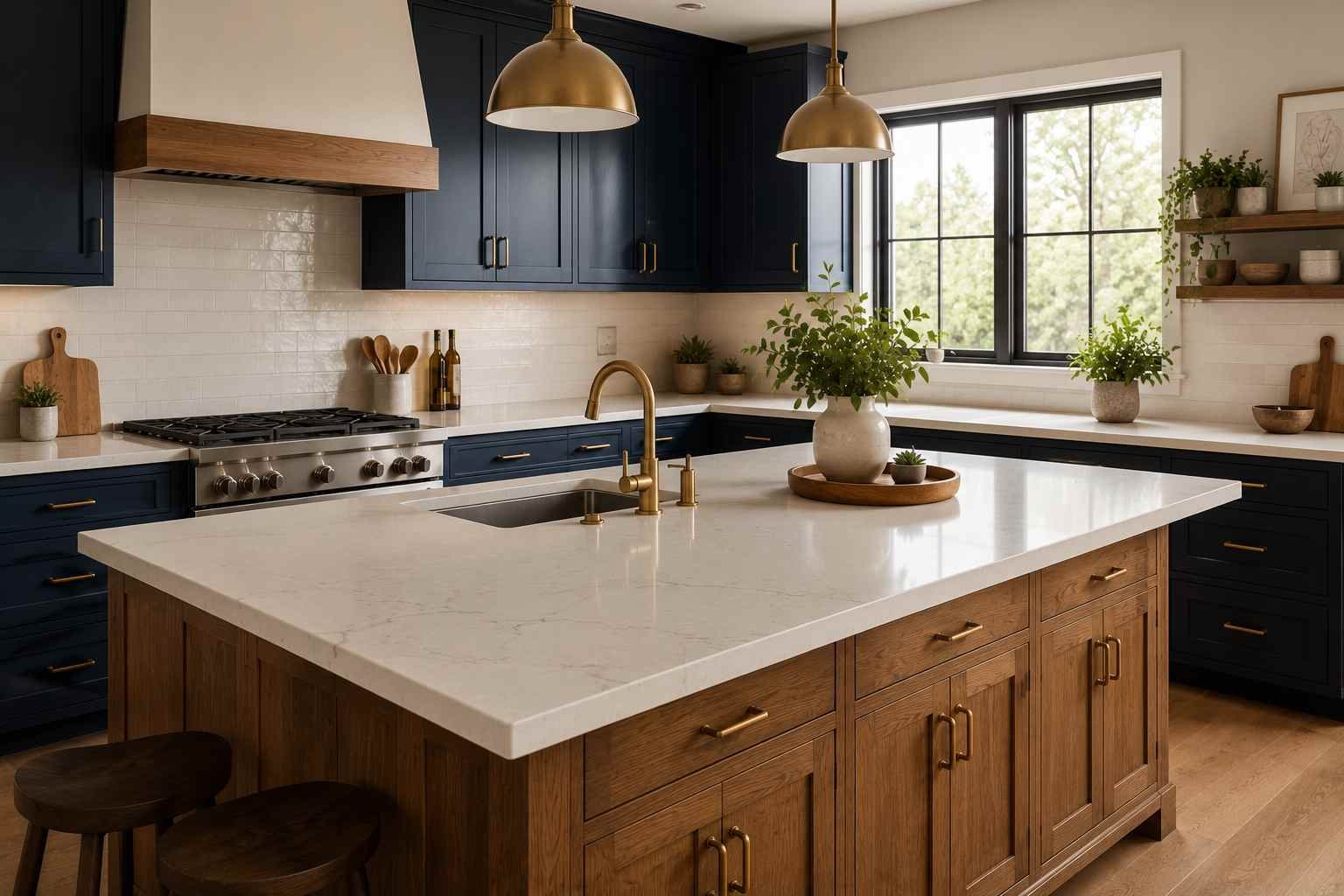
This is one I recommend constantly to people who can’t decide between painted cabinets and wood cabinets — just do both. Wood on the island, painted (often navy, sage, or a soft black) on the perimeter. The trick that makes this work is choosing one quartz pattern and running it across everything. The countertop becomes the visual thread that ties the two cabinet finishes together instead of letting the kitchen feel split down the middle.
4. Leathered-finish quartz on rustic or reclaimed wood cabinets
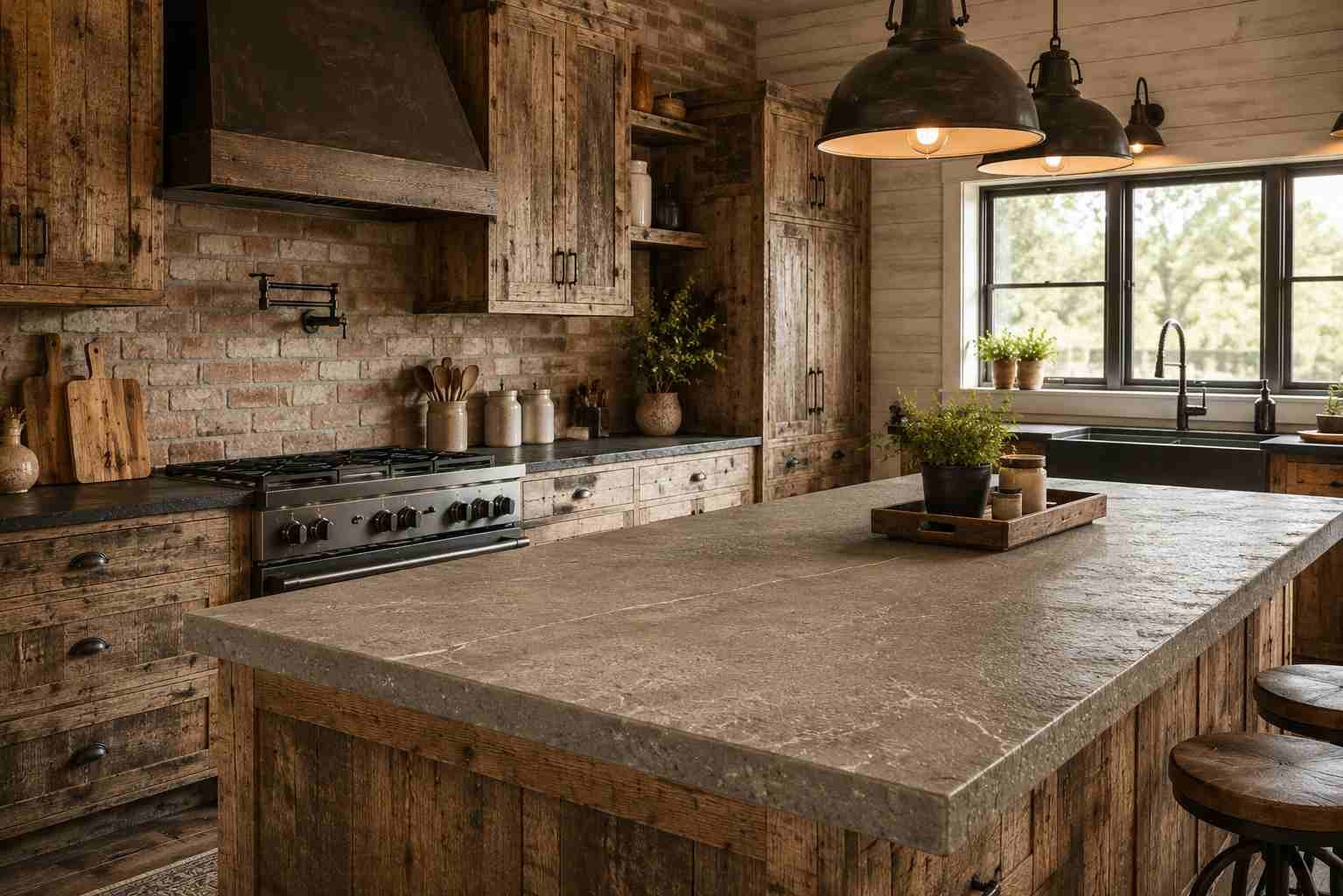
Polished quartz can look almost too glossy next to reclaimed barn wood or heavily distressed cabinetry — the sheen clashes with the rough, matte texture of the wood. A leathered or matte-finish quartz softens that contrast considerably. It still resists stains and scratches the way quartz always does, but the texture reads more organic, which suits a farmhouse or rustic-industrial kitchen far better than a mirror-polished surface would.
5. Black quartz with cherry cabinets
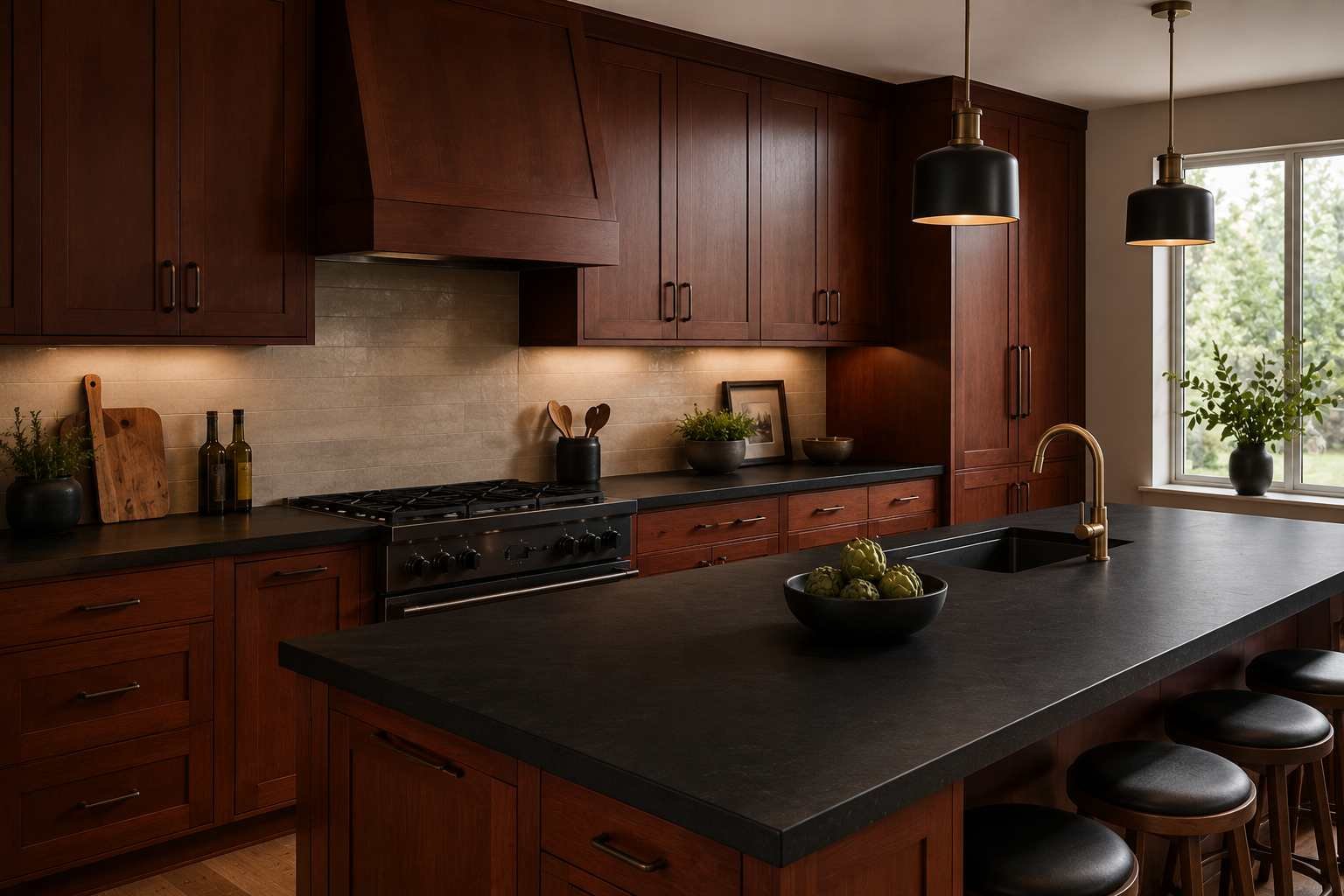
Cherry wood has a reddish depth that most people either love or find dated, depending on the era they associate it with. I’ve found that black quartz — especially a matte or soft-satin finish rather than a super glossy one — modernizes cherry cabinets instantly. It creates enough contrast that the kitchen stops looking like a 1990s remodel and starts looking intentional, almost moody in a good way.
6. Speckled quartz that pulls double duty as a “granite alternative”
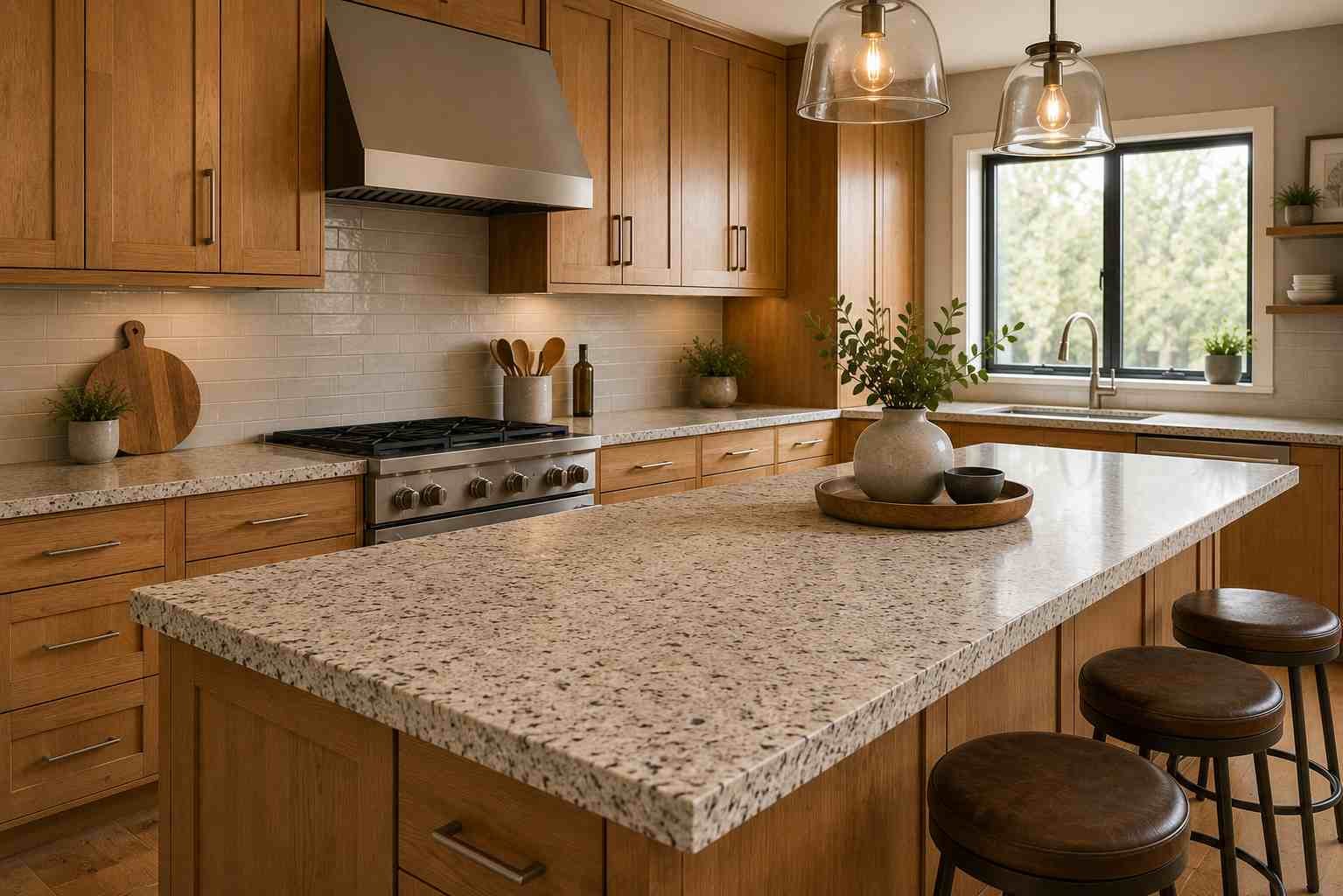
A lot of homeowners still want that classic granite speckle look but don’t want the sealing and porosity headaches that come with real granite. Speckled quartz gives you that same visual texture — flecks of grey, black, and tan scattered through the surface — while staying non-porous. This works especially well with medium wood tones like maple or birch, where the speckling echoes the natural variation already in the grain.
Also Check – Rustic Modern Black And White Kitchen Design Ideas
7. Waterfall quartz islands next to wood perimeter cabinets
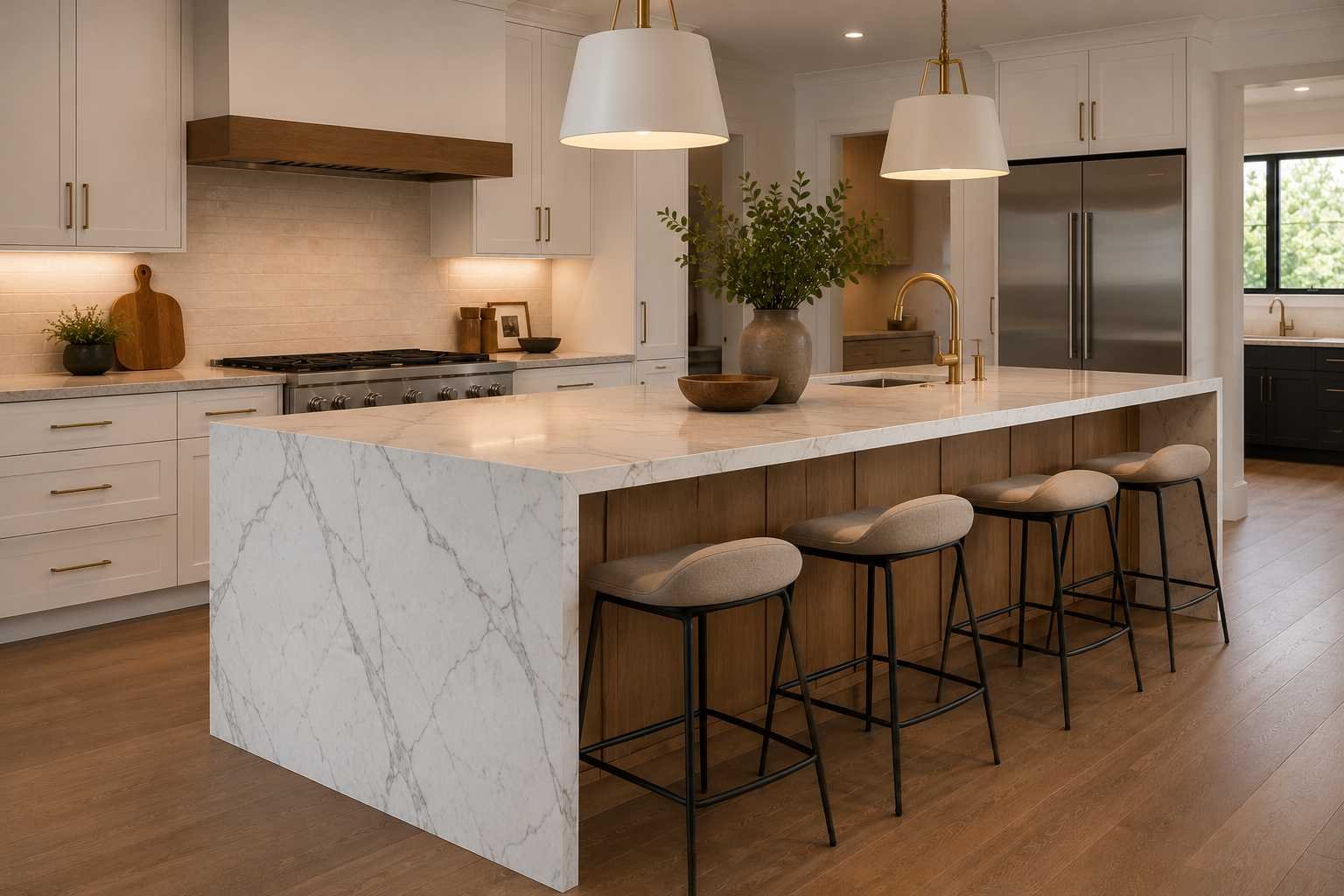
If your island has a different cabinet finish than the rest of your kitchen (say, a wood island against white perimeter cabinets, or vice versa), a waterfall edge on the quartz island makes a much bigger visual statement than a standard countertop edge. The quartz drapes down the sides of the island like fabric, drawing the eye and making the island the clear focal point rather than an afterthought.
8. Quartz with subtle gold or bronze veining paired with medium oak
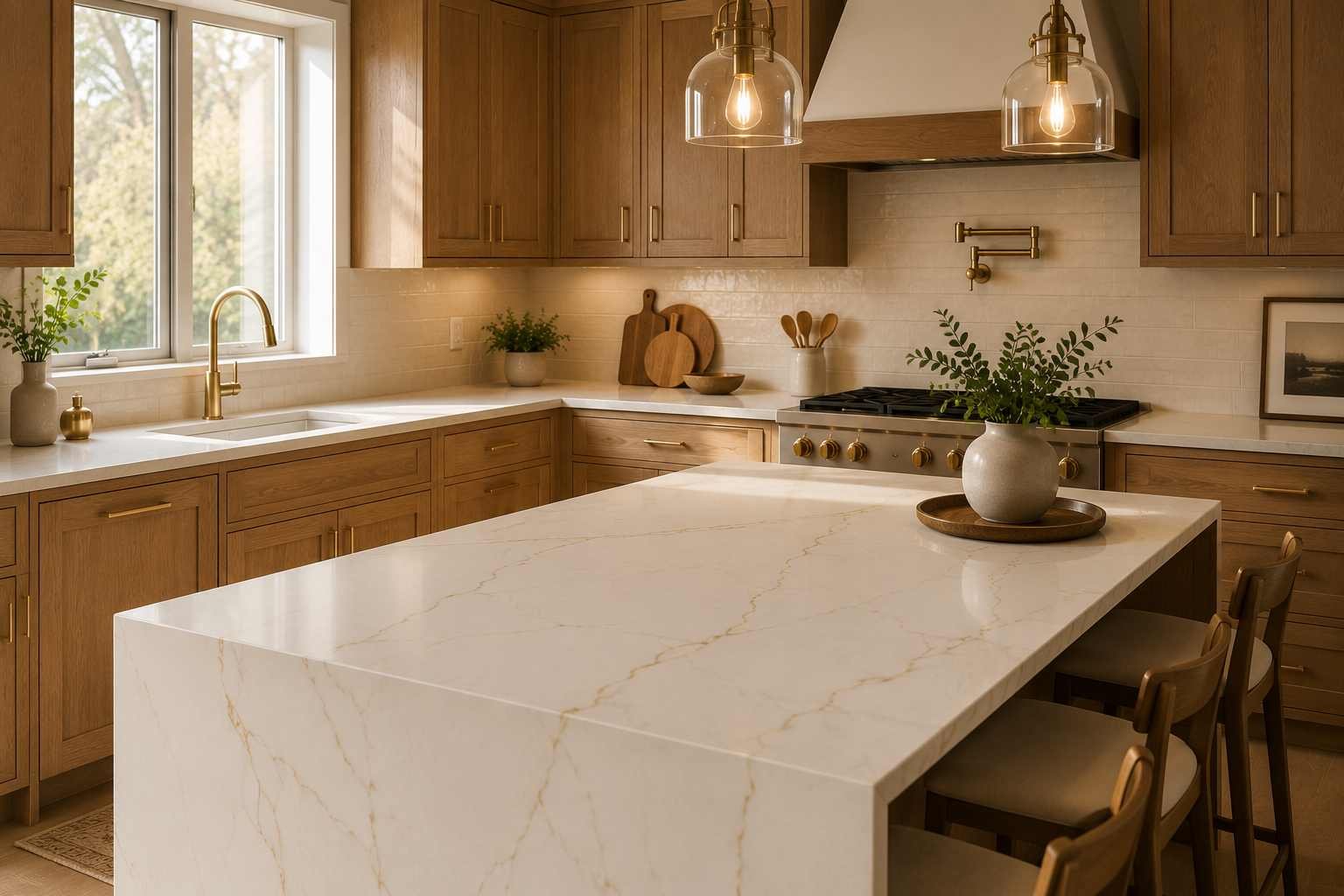
This pairing surprises people every time I suggest it, but gold-veined quartz next to medium oak cabinetry creates an almost warm, sunlit effect in the kitchen even under regular overhead lighting. The trick is restraint — you want thin, sparse veining rather than a dramatic, all-over gold pattern, or the kitchen starts to feel like it’s trying too hard.
9. Matte concrete-look quartz with light ash or whitewashed cabinets
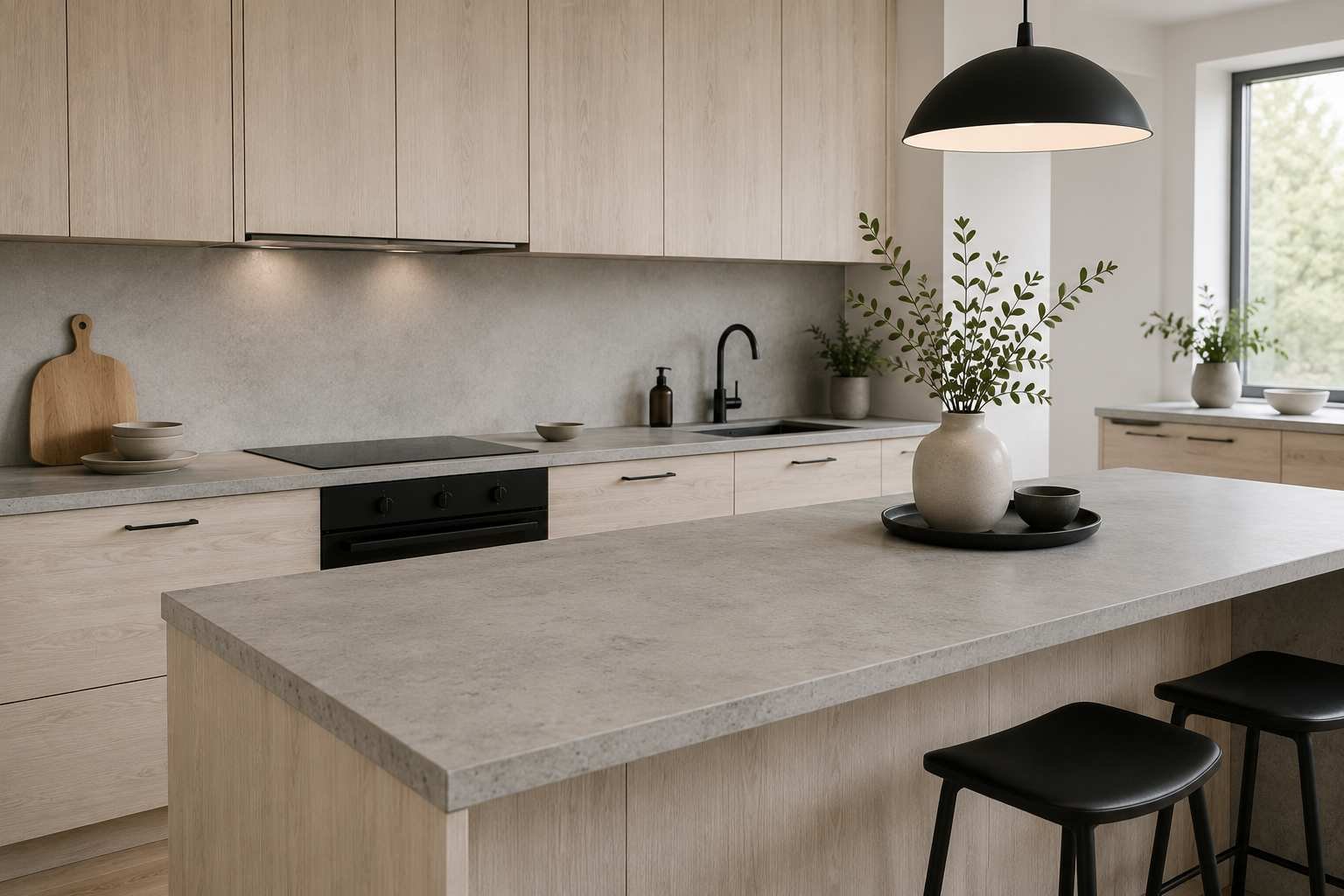
Whitewashed and ash-toned cabinets have a cool, almost Scandinavian feel to them, and a concrete-look quartz (grey, slightly mottled, matte finish) keeps that same understated mood going on the countertop. It avoids the trap of pairing something too shiny or too “stone-like” with cabinets that are meant to feel calm and minimal.
10. Deep espresso cabinets with icy white quartz
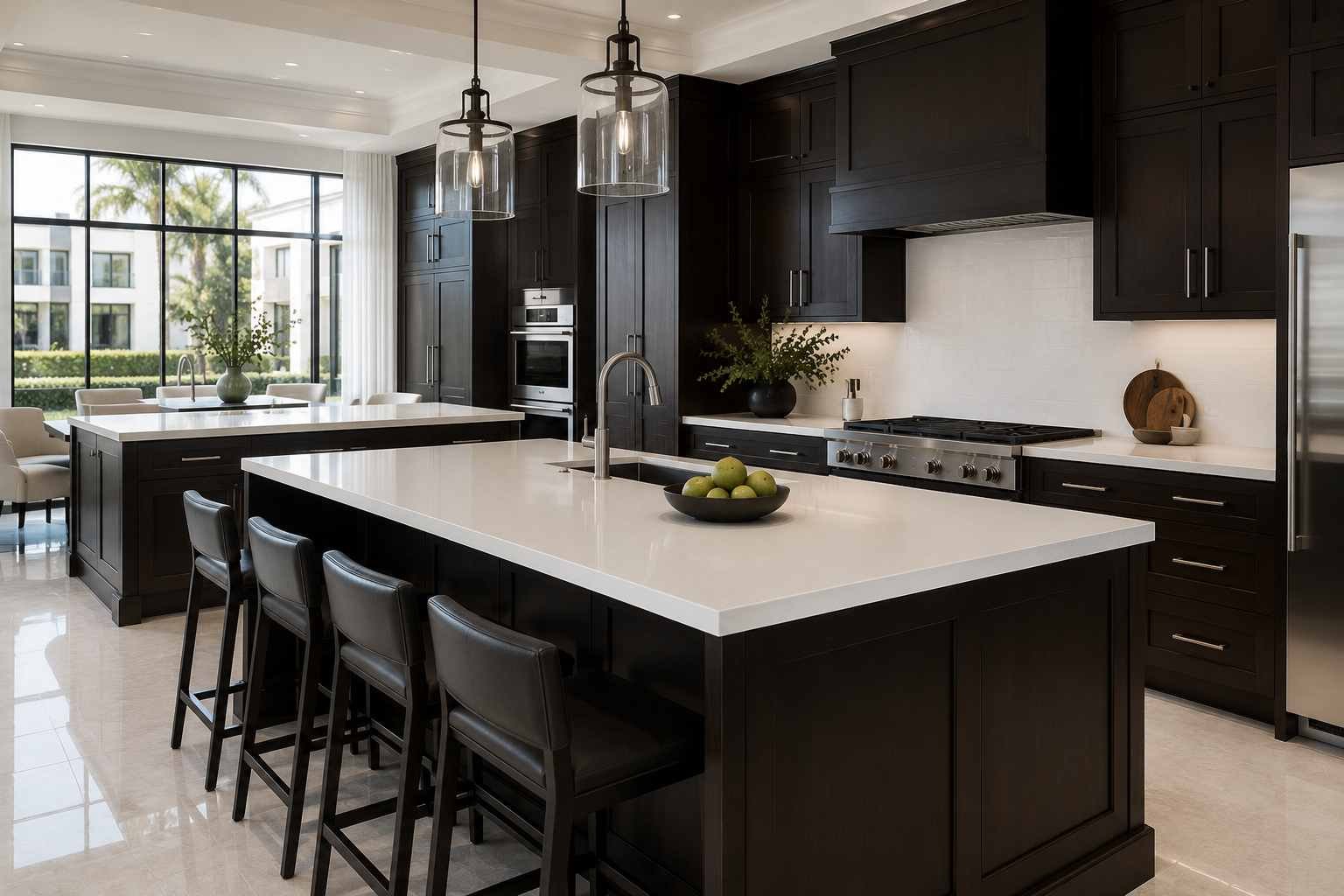
This is a higher-contrast combination, and it’s not subtle, but it’s one of the most requested looks I come across, especially in kitchens that get a lot of natural light. Very dark, almost black-brown cabinets against a bright white quartz — ideally one with minimal veining so it doesn’t compete — creates a crisp, high-end hotel-kitchen feel. It works best in larger kitchens where the contrast doesn’t feel overwhelming in a small footprint.
11. Quartz backsplash that matches the countertop, framed by open wood shelving
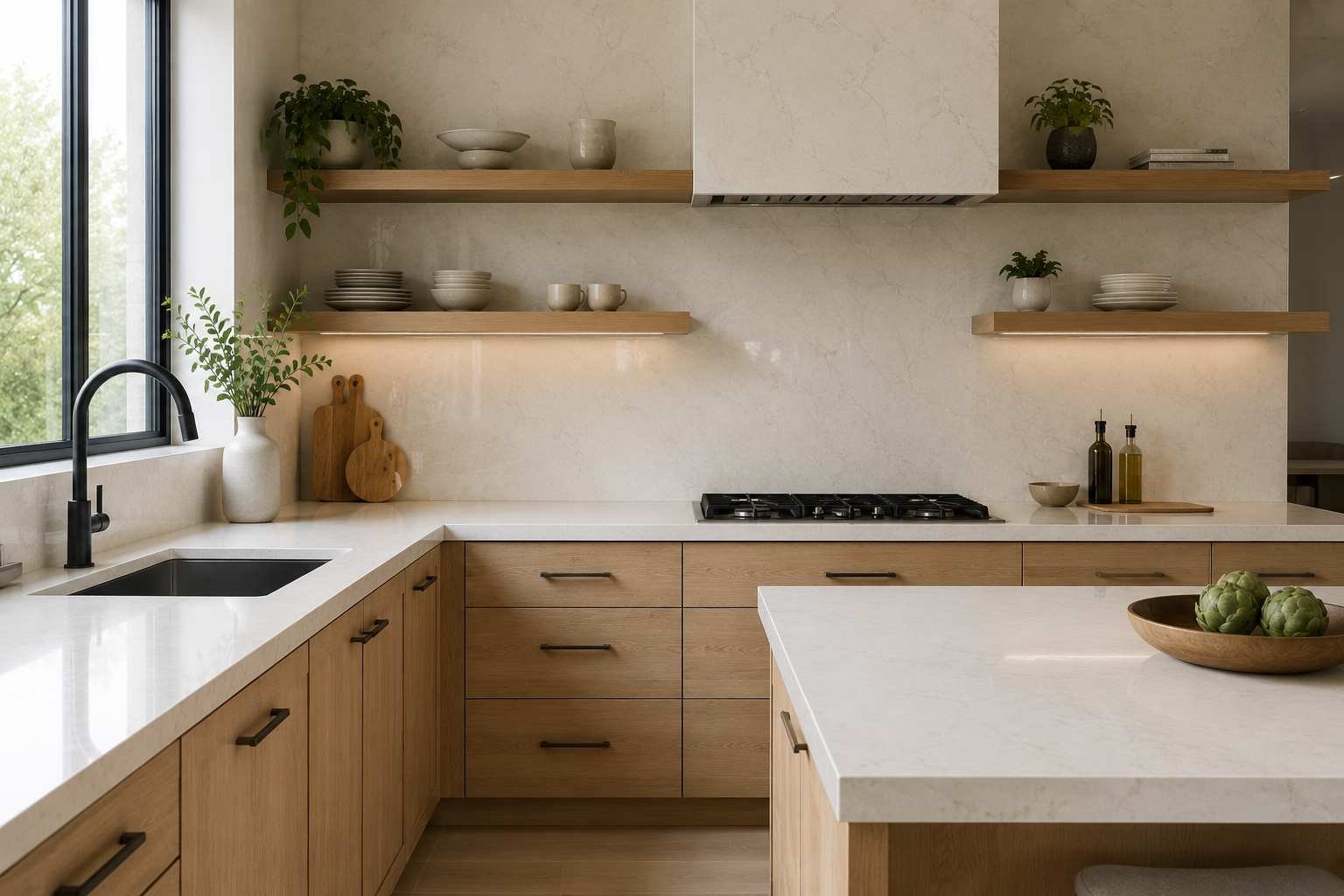
Instead of tile, some homeowners are now running the same quartz slab up the wall as a full-height backsplash, then adding open wood shelving above or beside it. The uninterrupted quartz surface makes the wood shelving stand out even more, since there’s no grout lines or seams competing for attention. It’s a cleaner look than it sounds, and it makes a small kitchen feel less chopped up visually.
12. Soft grey quartz with warm mid-tone wood — a safer middle ground
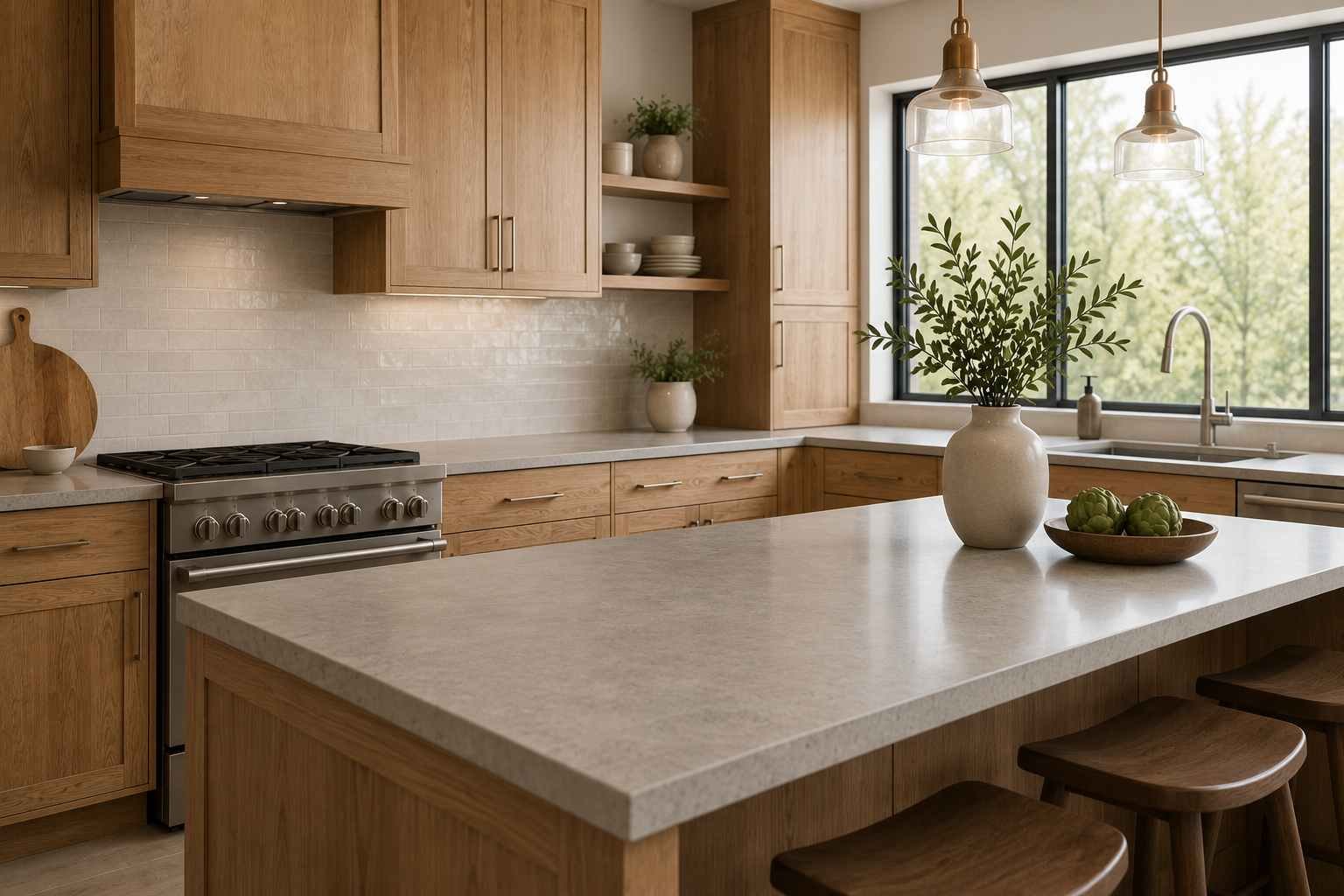
If you genuinely can’t decide on a bold direction, a soft warm-grey quartz (not a cool blue-grey) with a mid-tone wood cabinet like maple or a lighter walnut is close to foolproof. It’s not the most exciting choice on this list, but it’s the one I recommend to people who are renovating a kitchen they plan to sell in a few years, because it appeals to the widest range of tastes without looking generic.
13. Marble-look quartz with wood cabinets in a traditional kitchen
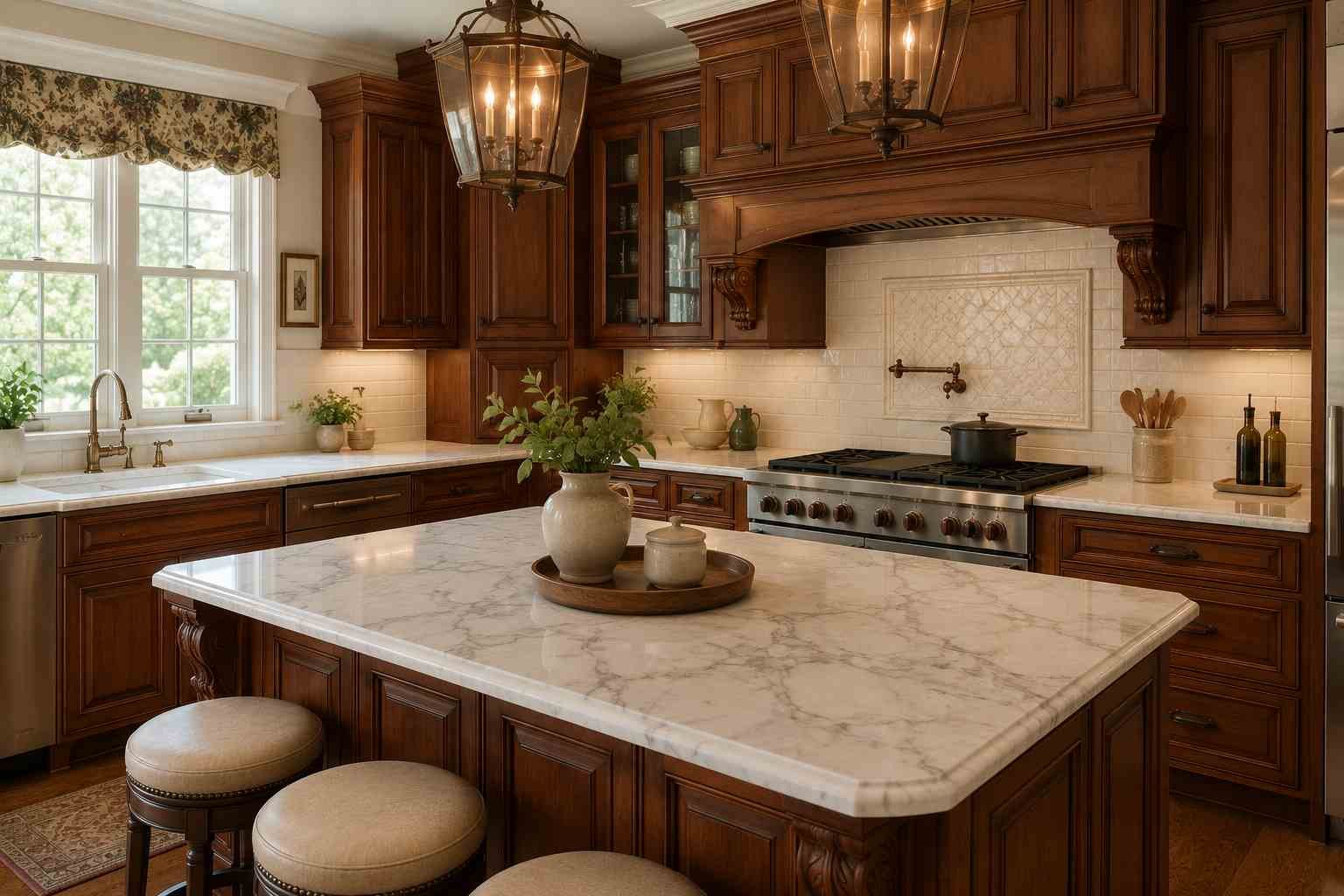
If you love the look of Carrara or Calacatta marble but don’t want the maintenance, quartz manufacturers have gotten remarkably good at replicating that soft white base with grey veining. Paired with traditional raised-panel wood cabinets — think a warm cherry or a classic oak — it gives a kitchen a timeless, almost old-world quality without the constant sealing that real marble demands.
14. Two different wood tones in the same kitchen, unified by a neutral quartz
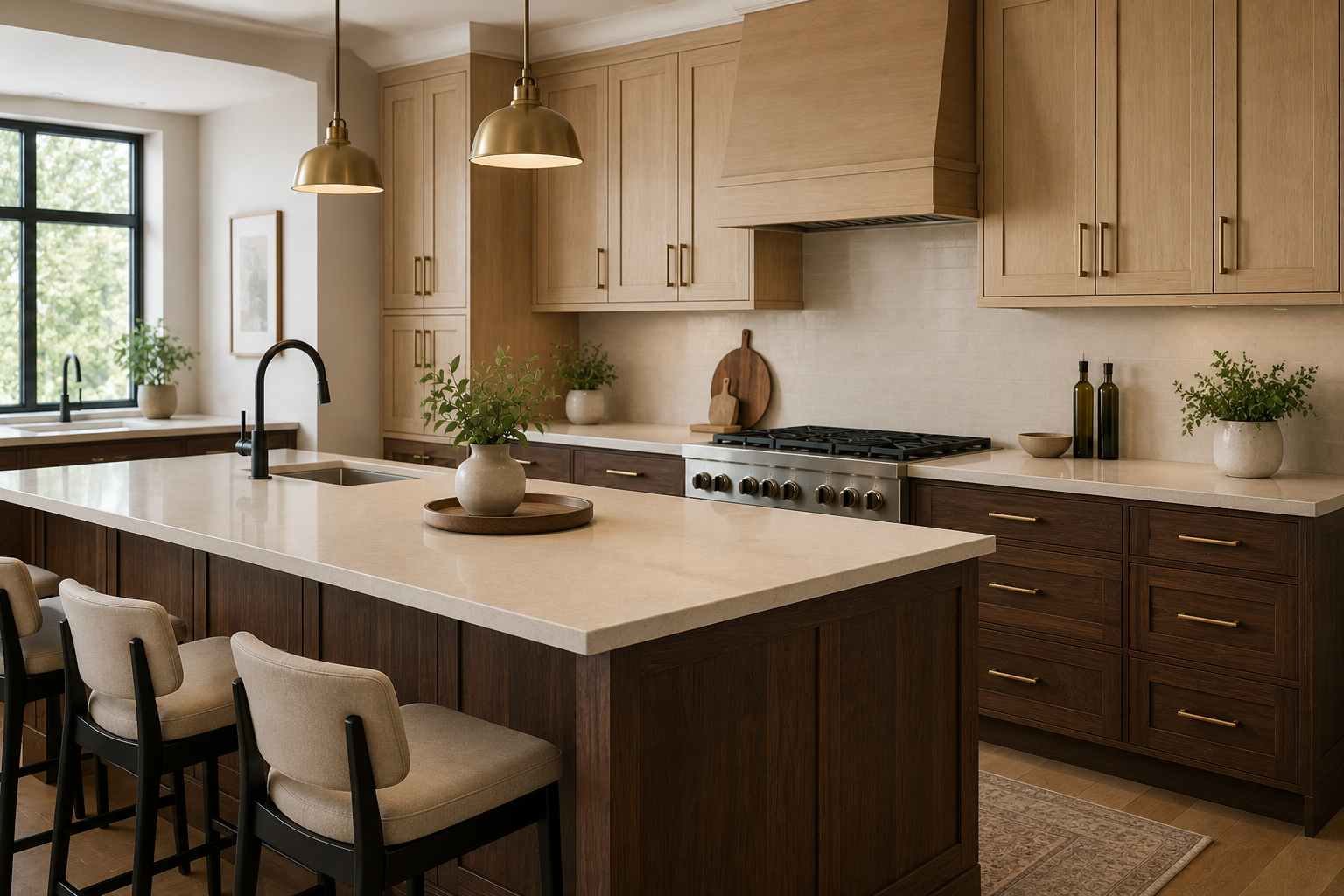
Mixing wood tones on purpose — a darker wood island with lighter wood wall cabinets, for example — has become a popular way to add depth to a kitchen. The countertop needs to stay neutral in this case, usually a warm white or soft beige quartz, so it doesn’t pick a side between the two wood tones and end up clashing with one of them.
15. Statement quartz slab as the only “loud” element in an all-wood kitchen
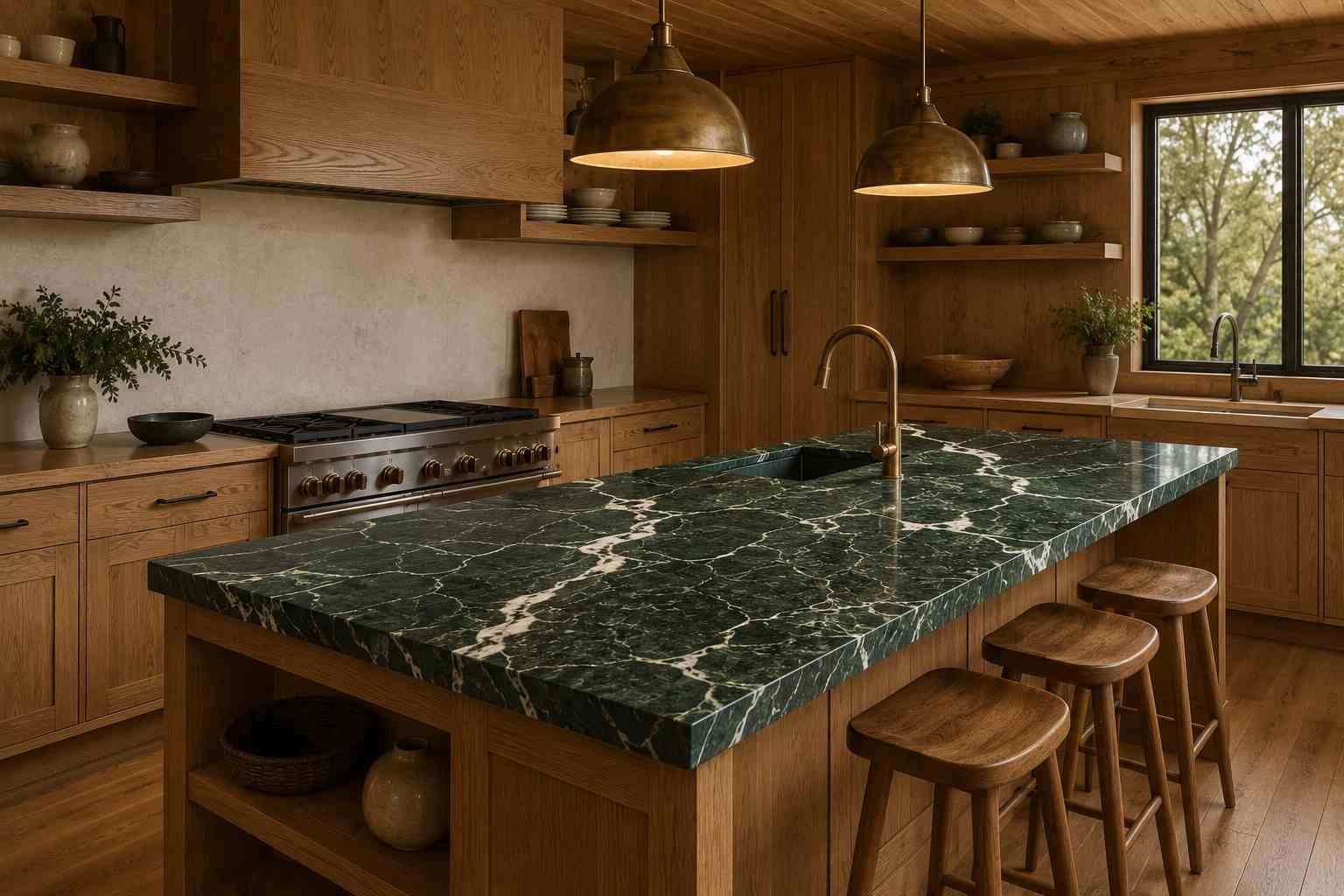
Sometimes the best move is restraint everywhere except one place. If your cabinets, floors, and even your open shelving are all wood, a bold quartz slab — think a dramatic navy-and-gold pattern or a deep green with white veining — becomes the single dramatic element in the room. It works precisely because it’s the only thing competing for attention.
16. Textured quartz edges instead of flat polished edges on wood islands
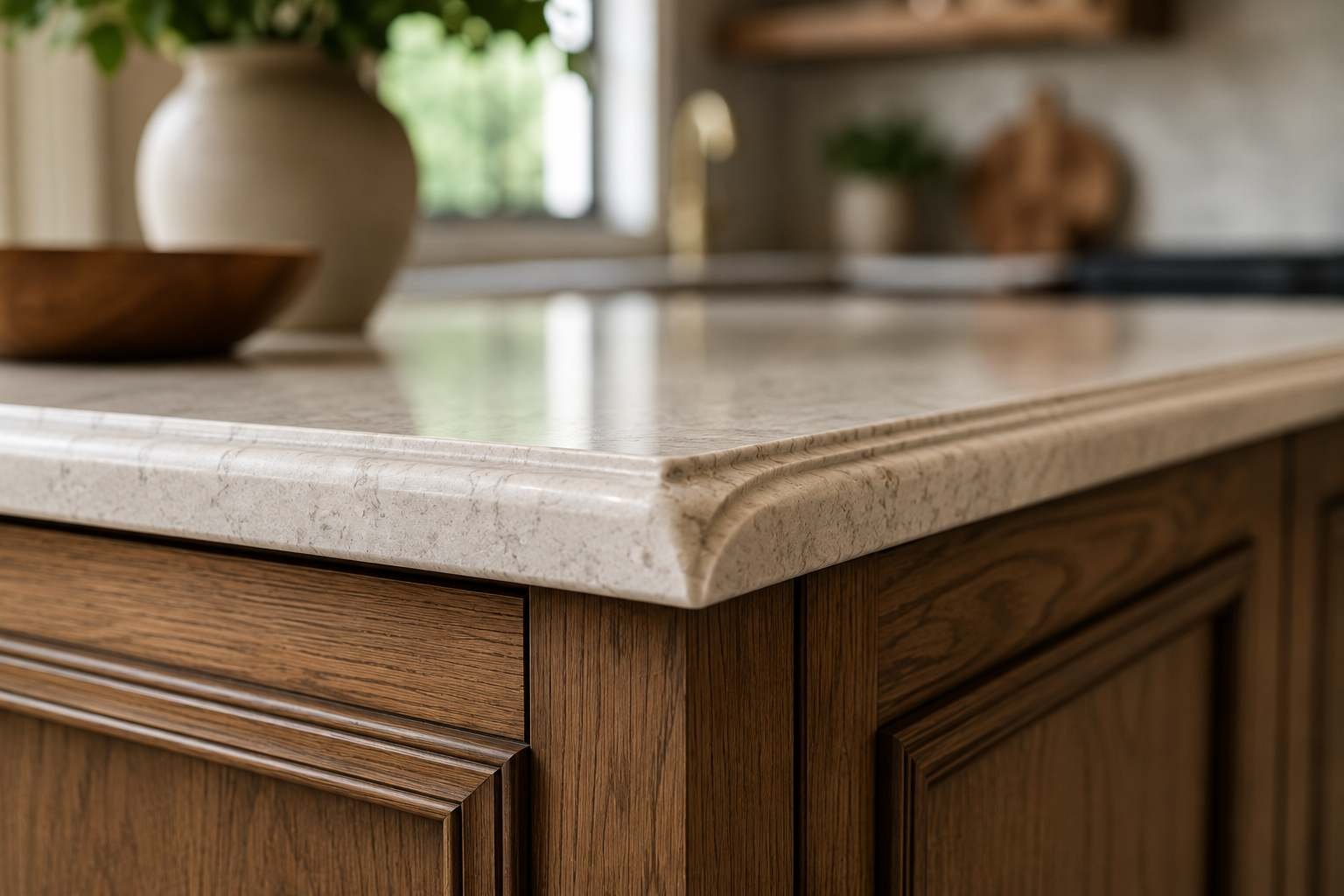
This one is more about the details than the color pairing itself. A beveled, ogee, or bullnose edge profile on a quartz island countertop softens the transition between the hard stone surface and the cabinetry below, especially on wood islands with a lot of visible grain or paneling detail. It’s a small choice that a surprising number of people skip, and then wonder why the island looks slightly unfinished.
Also Check – Modern Farmhouse Interior Design Ideas
17. Honed (not polished) quartz for a softer wood pairing

Most quartz comes polished by default, but a honed finish — which has almost no shine — reads as considerably softer and more natural. Against warm wood tones, a honed quartz avoids that “showroom” glare and instead looks more like it belongs in a lived-in, comfortable kitchen rather than a display model.
18. Quartz with movement that mimics the wood grain direction
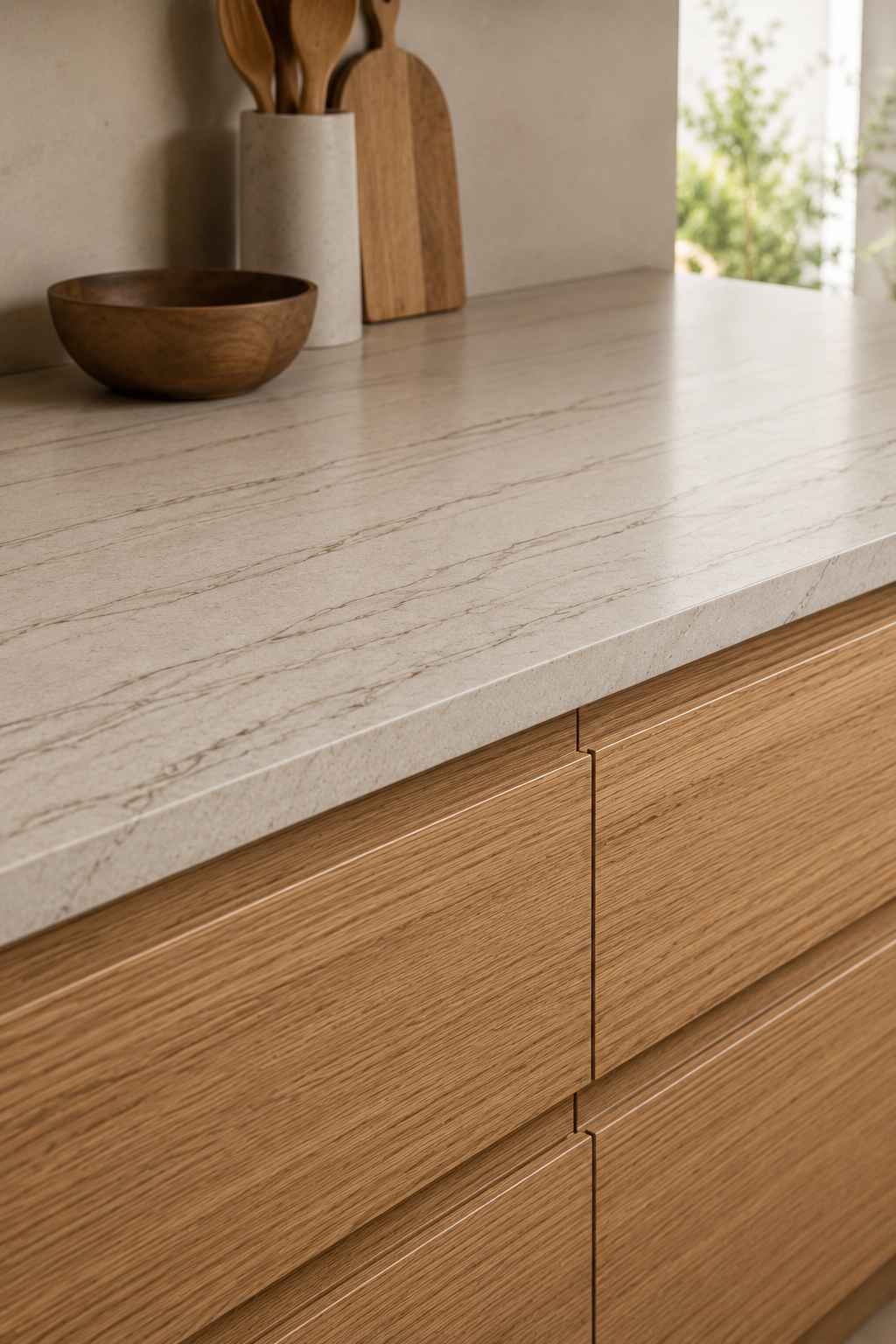
This is a subtler trick I picked up after noticing it in a few high-end kitchens: choosing a quartz pattern whose veining or movement runs in roughly the same direction as the visible grain on the cabinet doors. It’s not something most people consciously register, but it creates a quiet sense of visual harmony between the two materials without anyone quite knowing why the kitchen “just works.”
19. Cool-toned quartz on warm wood to create intentional contrast
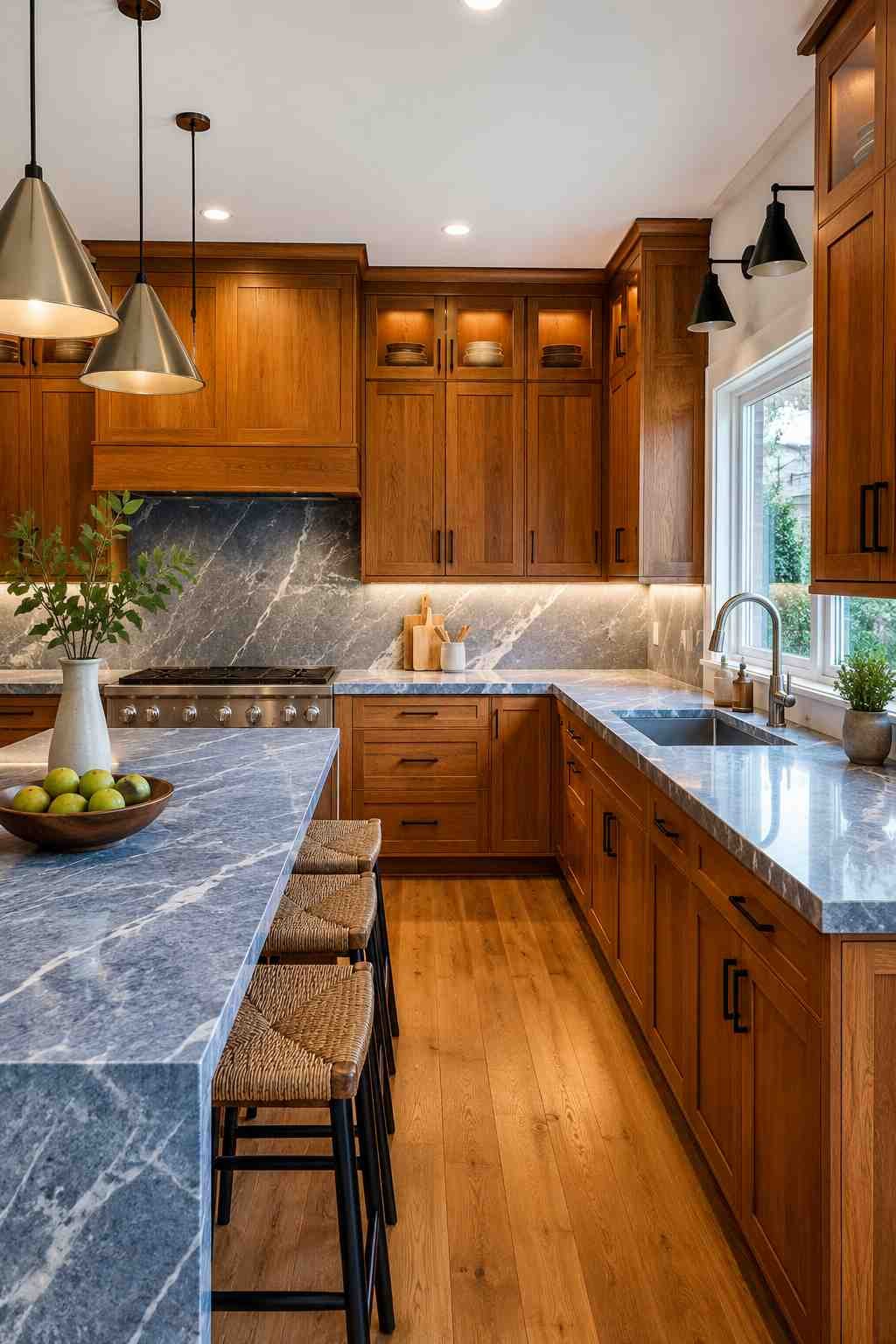
Not every pairing needs to be harmonious. Some of the most memorable kitchens I’ve seen use a cool blue-grey or icy quartz specifically against a very warm, orange-toned wood like cherry or golden oak, leaning into the contrast rather than trying to soften it. This only works if you commit to it fully — a half-hearted version just looks like a mismatch, but a confident one looks like a deliberate design choice.
20. Quartz countertops with wood cabinets in a small kitchen — go lighter on both
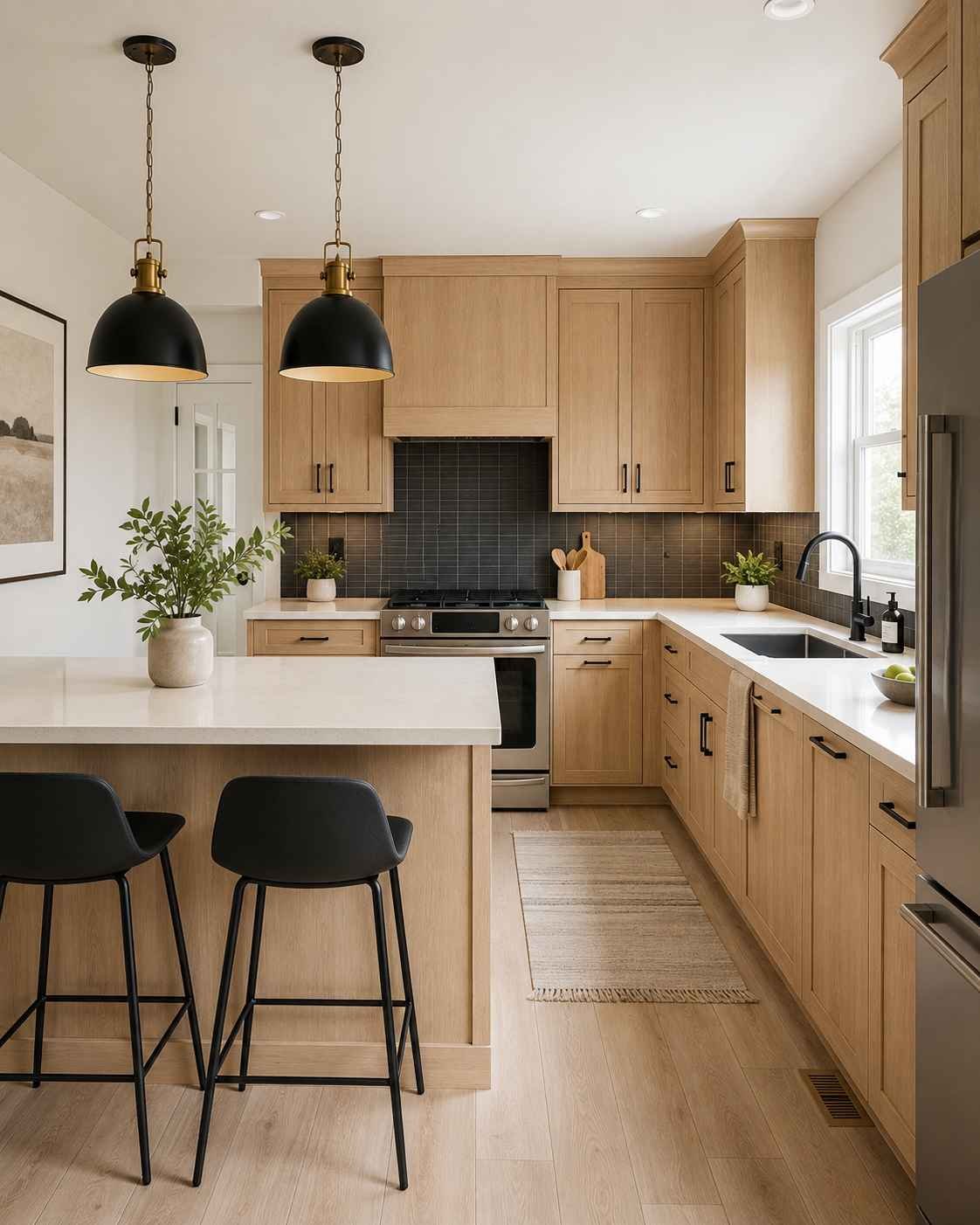
In smaller kitchens, the temptation is often to go dark and dramatic because it looks striking in photos. In person, dark wood and dark quartz together in a tight space can make the room feel noticeably smaller. A lighter wood tone with a light, low-contrast quartz keeps a small kitchen feeling open, and you can always add drama elsewhere — a dark backsplash, black hardware, or a bold light fixture — without sacrificing the sense of space.
21. Letting the wood cabinets be the “expensive-looking” element, not the quartz
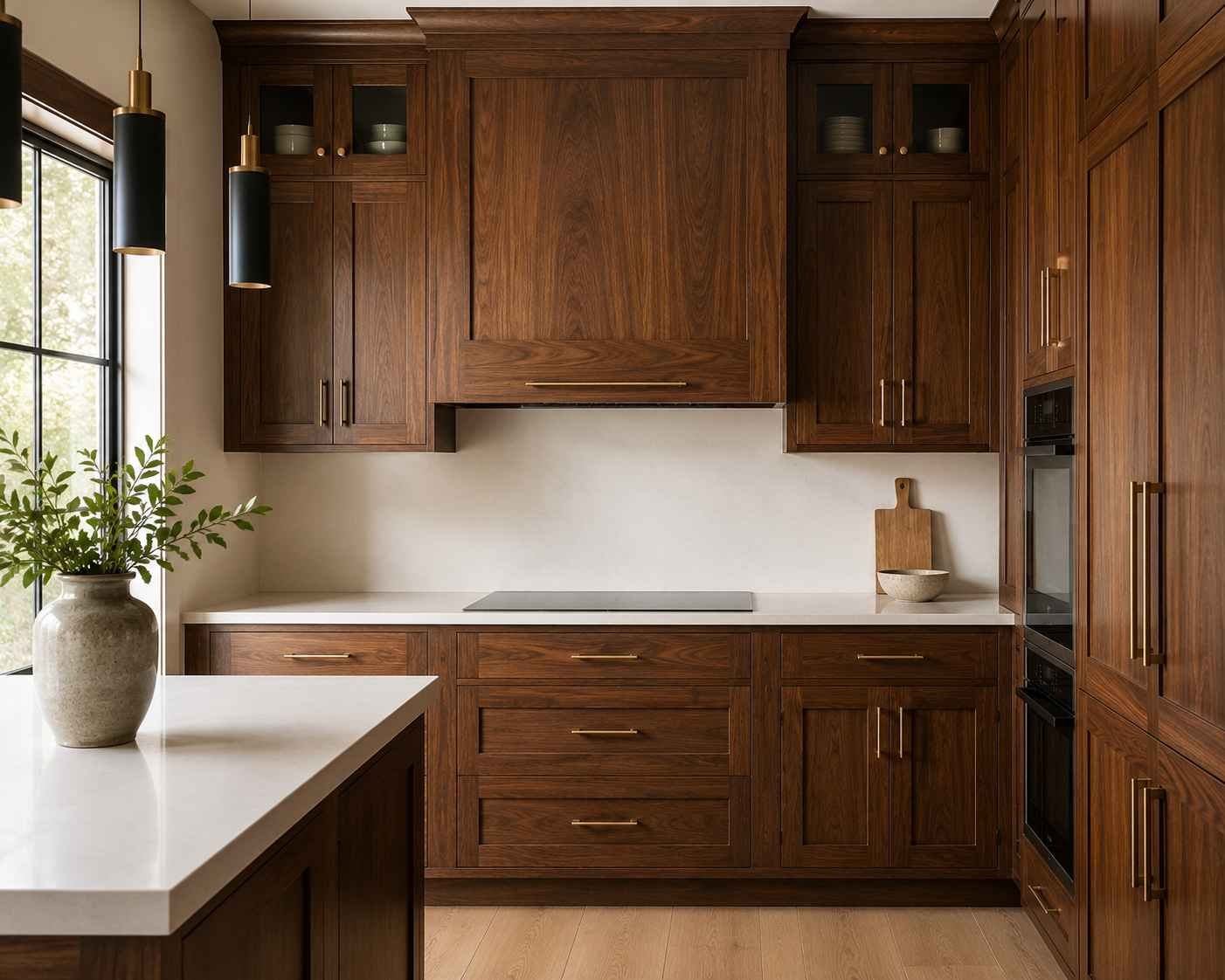
Here’s a piece of advice that goes against what a lot of showrooms will tell you: you don’t always need the most dramatic, high-end quartz slab to make a kitchen feel luxurious. Sometimes a simple, quiet quartz countertop paired with genuinely well-made, solid wood cabinets — real wood, nice hardware, good proportions — looks far more expensive than a flashy quartz pattern sitting on top of cheaper cabinetry. The wood is doing more of the visual work than people expect, and the countertop’s job is often just to support it rather than steal the scene.
A Few Things I’d Tell You Before You Buy Either Material
A couple of practical notes that don’t fit neatly into a numbered list but matter just as much as the color pairing itself.
Always look at a large sample, not a tiny swatch. Quartz patterns, especially the ones with veining or movement, can look completely different at a small scale versus across a full slab. A 4×4 inch chip will never tell you what a 10-foot countertop actually looks like.
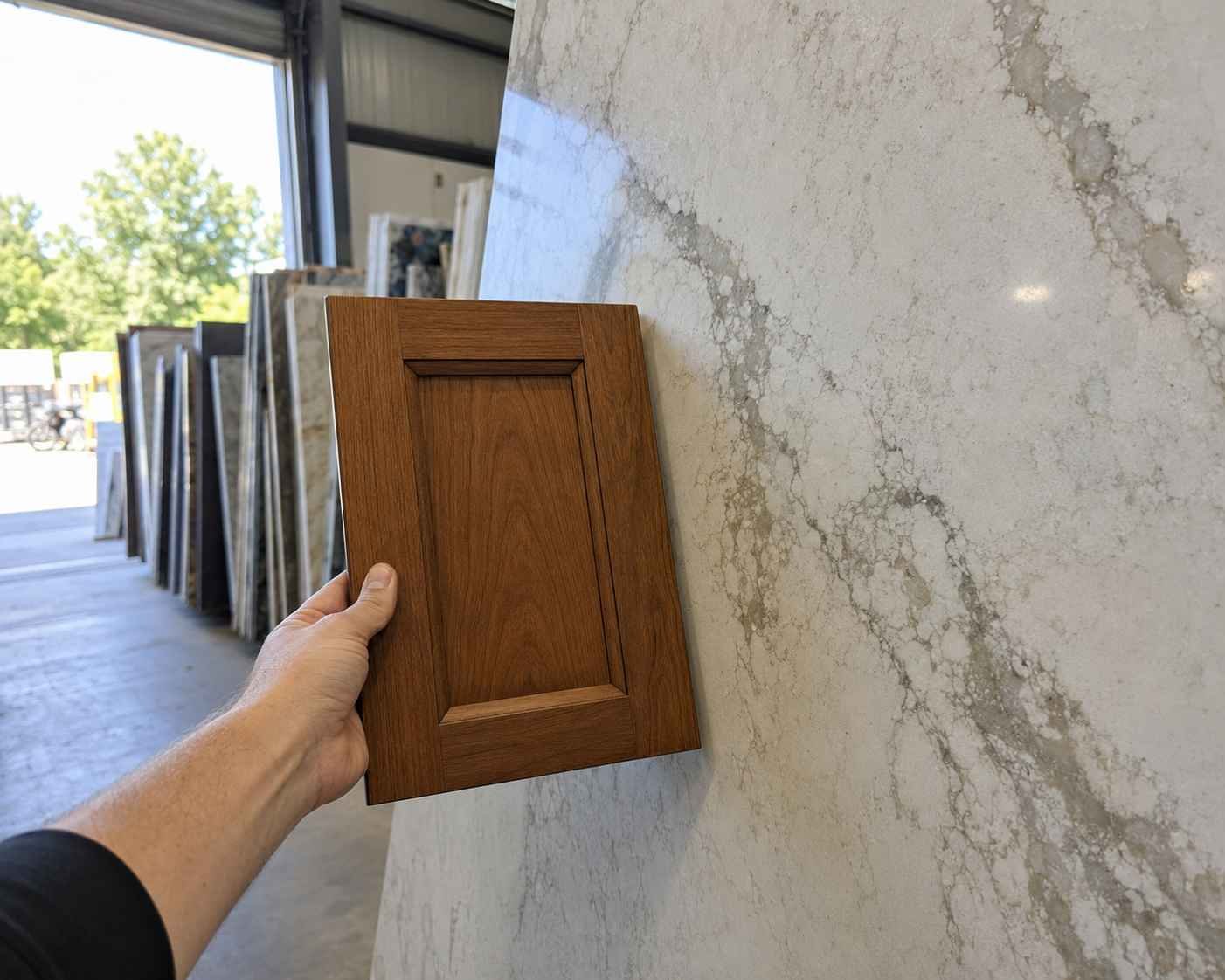
Bring your cabinet door (or a sample of it) to the stone yard. Lighting in a showroom is almost never the same as the lighting in your kitchen. If you can, take the sample outside or near a window and compare it against your actual cabinet finish in natural daylight before committing.
Think about your hardware and lighting fixtures too. Warm brass or bronze hardware tends to pull a kitchen in a warmer direction overall, while brushed nickel or matte black pushes it cooler. These small choices can shift how a quartz-and-wood pairing reads once the whole kitchen comes together, so it’s worth picking them at the same time rather than as an afterthought.
Don’t ignore the grain direction and cabinet style. A busy quartz pattern next to heavily figured wood grain (like tiger oak or curly maple) can start to feel chaotic. If your wood has a lot of natural character already, a calmer, more solid-toned quartz usually balances things out better than another highly patterned surface.
Final Thoughts
There’s no single “correct” way to pair quartz with wood cabinets — I’ve seen dramatic, high-contrast kitchens look stunning, and I’ve seen quiet, understated ones look just as good, sometimes better.
What actually matters is picking a direction and being consistent about it, rather than trying to split the difference between five different looks at once.
Whether you go warm and cozy, cool and dramatic, or somewhere comfortably in between, the combinations above should give you a real starting point instead of just another wall of inspiration photos to scroll past.
 Sumit Banerjee
[…] Also Check – Pair Quartz Countertops with Wood Kitchen Cabinets […]