
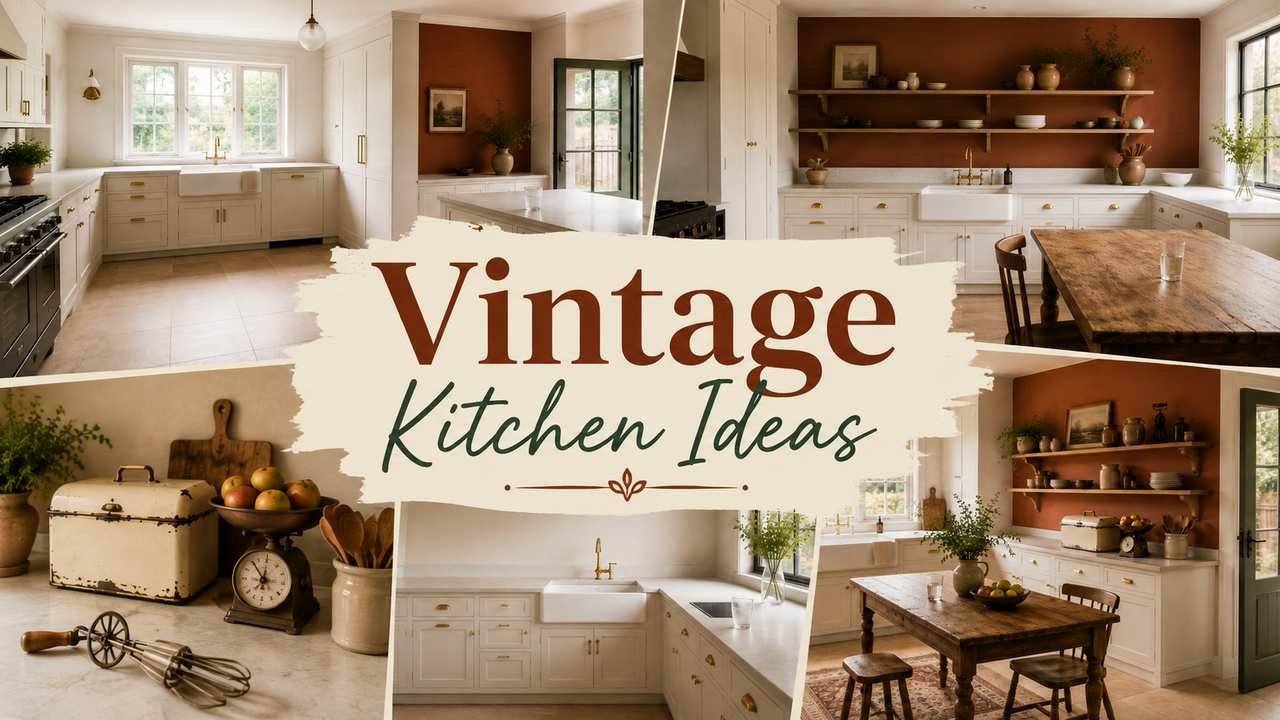
I’ve walked through more old kitchens than I can count — some in houses I was helping friends fix up, some in my own homes over the years, and a few that I only got to peek at during open houses out of pure nosiness.
Every single one taught me something. Vintage kitchens have this quality that a lot of brand-new, glossy kitchens just don’t: they feel lived in, in the best way.
There’s a warmth to a hand-painted cabinet or a chipped enamel sink that no amount of quartz and stainless steel can fake.
If you’re thinking about bringing some of that old-world charm into your own kitchen, you don’t need to gut the whole room or spend a fortune.
A lot of the best vintage touches are small, deliberate choices — the kind you notice slowly, the way you’d notice a good friend’s home is full of personality instead of showroom polish.
Below are 21 ideas I’ve picked up, tried, or admired in other people’s kitchens over the years. Some are big renovation moves, others are weekend projects.
Pick what fits your space and your budget, and don’t feel like you need to do all of them at once.
Quick look: all 21 ideas at a glance
| # | Idea | Best if you want… |
|---|---|---|
| 1 | Farmhouse sink | A strong, instant focal point |
| 2 | Checkerboard flooring | A pattern that hides everyday wear |
| 3 | Retro-style stove | A bold, decade-specific centerpiece |
| 4 | Two-tone cabinets | A custom, hand-built feel |
| 5 | Butcher block counters | Warmth without a full stone budget |
| 6 | Vintage hardware | The cheapest, fastest upgrade |
| 7 | A real pantry | Practical storage that also looks good |
| 8 | Open shelving | To show off dishware you already own |
| 9 | Subway tile backsplash | A safe, era-flexible classic |
| 10 | Retro fridge | A second big color statement |
| 11 | Freestanding furniture | To break up a too-matchy kitchen |
| 12 | Layered textiles | An easy, low-cost, changeable update |
| 13 | Warm wall color | Coziness over showroom white |
| 14 | Plate rack | A charming weekend project |
| 15 | Vintage lighting | To shift the whole room’s mood |
| 16 | Terrazzo | A playful, mid-century accent |
| 17 | Farmhouse table | A friendlier alternative to an island |
| 18 | Patterned floor tile | Old-world pattern beyond checkerboard |
| 19 | Statement faucet | A small detail with outsized impact |
| 20 | Real antiques | Authenticity nothing new can fake |
| 21 | Restraint | A kitchen that doesn’t feel like a costume |
Note: prices below are rough U.S. planning estimates as of 2026 and will vary by region, materials, and whether you DIY or hire it out. Use them as a starting point for budgeting, not a quote.
Approximate cost guide
Where-to-shop links go to general category/search pages, not specific listings — that way they stay accurate even after individual products sell out or get discontinued. Availability and pricing on any retailer’s site can shift day to day.
| # | Idea | Rough cost range | Notes | Where to shop |
|---|---|---|---|---|
| 1 | Farmhouse sink | $400 – $1,500+ | Fireclay tends to cost less than cast iron | Wayfair – farmhouse sinks |
| 2 | Checkerboard flooring | $8 – $20 per sq ft installed | Porcelain is cheaper than real marble | Wayfair – checkerboard floor tile |
| 3 | Retro-style stove | $1,800 – $6,000+ | Varies a lot by brand and size | Wayfair – retro-style ranges |
| 4 | Two-tone cabinets | $200 – $600 (paint/DIY) or $3,000+ (refacing) | DIY paint is the budget route | Wayfair – cabinet paint |
| 5 | Butcher block counters | $30 – $70 per sq ft installed | Far cheaper than most natural stone | Wayfair – butcher block countertops |
| 6 | Vintage hardware | $3 – $25 per piece | One of the cheapest upgrades on this list | Etsy – vintage cabinet hardware |
| 7 | A real pantry | $200 – $2,000+ | Depends on whether it’s shelving or a build-out | Wayfair – pantry shelving |
| 8 | Open shelving | $50 – $400 (DIY) | Mostly labor if you’re removing cabinets | Wayfair – open kitchen shelving |
| 9 | Subway tile backsplash | $10 – $25 per sq ft installed | Herringbone costs more in labor than running-bond | Home Depot – subway backsplash tile |
| 10 | Retro fridge | $1,500 – $4,000+ | Full retro-style units cost more than standard fridges | Wayfair – retro refrigerators |
| 11 | Freestanding furniture | $100 – $1,500+ | Estate sales and salvage yards are usually cheapest | Chairish – vintage furniture |
| 12 | Layered textiles | $20 – $150 | One of the lowest-cost ideas here | Etsy – vintage kitchen textiles |
| 13 | Warm wall color | $50 – $250 (DIY paint) | Mostly the cost of paint and supplies | Wayfair – kitchen paint colors |
| 14 | Plate rack | $30 – $200 | Cheaper if wall-mounted rather than built-in | Etsy – vintage plate racks |
| 15 | Vintage lighting | $80 – $600 per fixture | Statement pendants cost more than sconces | Wayfair – vintage-style lighting |
| 16 | Terrazzo | $40 – $100 per sq ft installed | One of the pricier accents on this list | Wayfair – terrazzo countertops |
| 17 | Farmhouse table | $300 – $2,000+ | Secondhand tables are far cheaper than new | Wayfair – farmhouse dining tables |
| 18 | Patterned floor tile | $10 – $30 per sq ft installed | Reproduction porcelain costs less than original cement tile | Wayfair – patterned floor tile |
| 19 | Statement faucet | $150 – $600 | Unlacquered brass often costs more than chrome | Wayfair – vintage-style faucets |
| 20 | Real antiques | $10 – $500+ per piece | Highly variable — flea markets vs. dealers | Chairish – vintage decor |
| 21 | Restraint | $0 | The only idea on this list that saves you money | — |
1. Start With a Farmhouse Sink
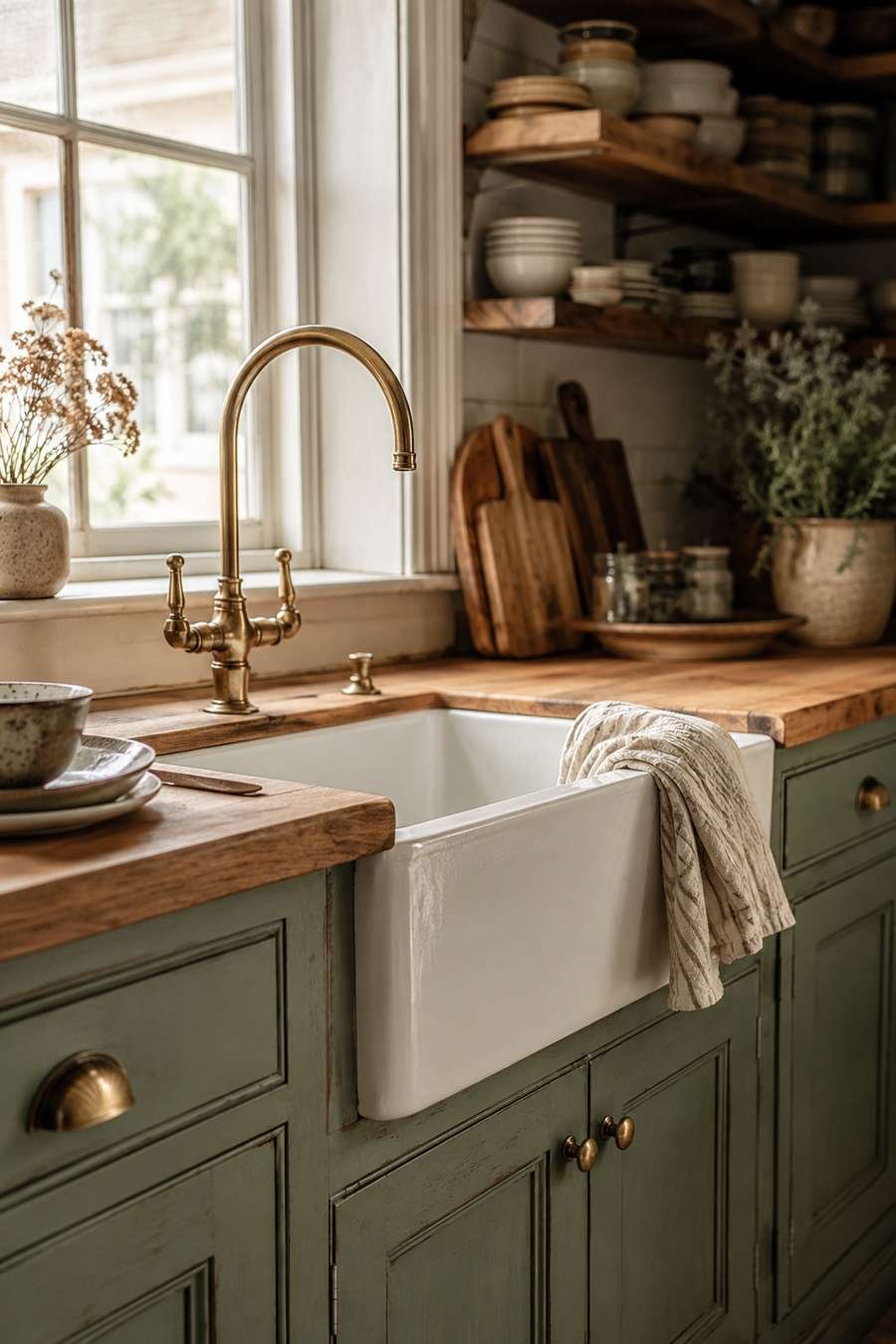
If there’s one feature that instantly signals “vintage” the moment you walk into a kitchen, it’s a deep, apron-front farmhouse sink. The exposed front panel gives it that substantial, almost furniture-like presence, and the extra depth is genuinely useful for washing big pots, roasting pans, and anything else that never quite fits in a standard sink.
White fireclay is the classic choice, but I’ve also seen cast iron ones in soft cream or pale blue that look like they were pulled straight out of a 1930s farmhouse. If you’re already exploring a broader farmhouse kitchen look, this is usually the anchor piece everything else gets built around.
2. Bring Back Checkerboard Flooring
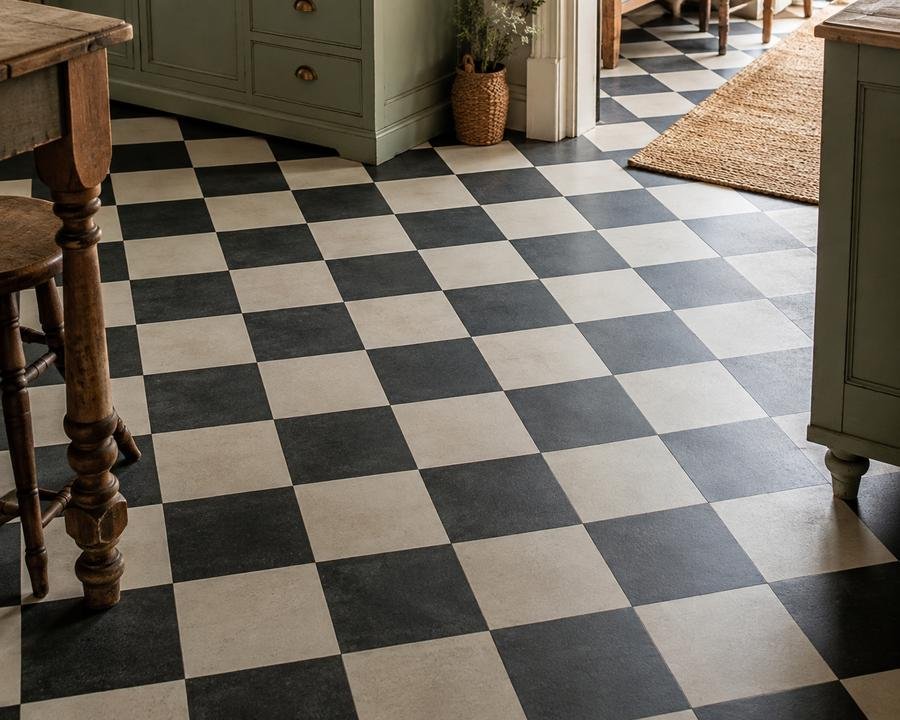
Black-and-white checkerboard floors have been showing up in kitchens since at least the 1920s, and they never really went out of style — they just went quiet for a while. What I like about this pattern is how forgiving it is. It hides scuffs better than a plain tile, and it gives even a small kitchen a sense of rhythm and movement. You don’t have to go full contrast either; a soft cream-and-sage checkerboard reads just as vintage without feeling like a diner. Porcelain tile gets you the look at a fraction of the cost and upkeep of real marble.
3. Choose a Stove That Looks Like It Has a Story
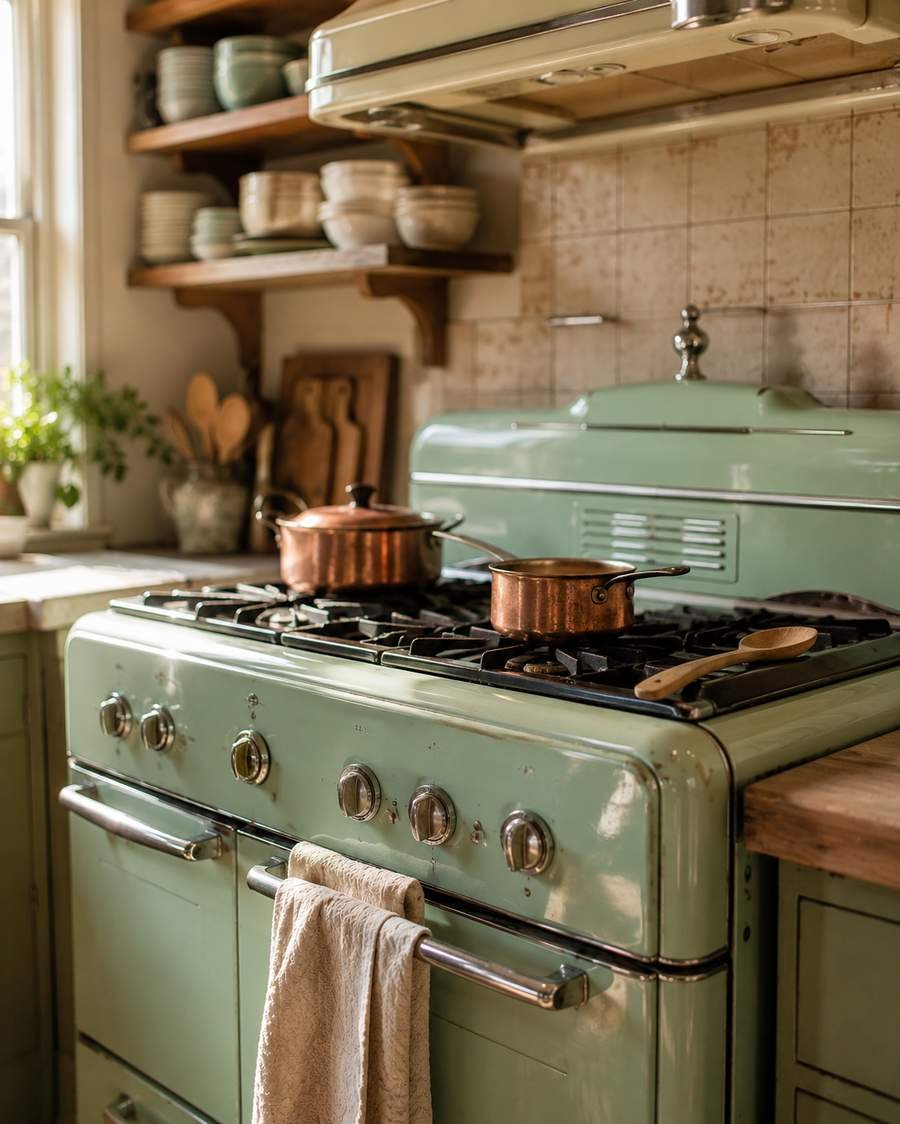
Nothing dates a kitchen to a specific decade quite like the stove. A rounded-shoulder range in mint green, butter yellow, or cherry red instantly sets the tone for the whole room. The good news is you don’t have to hunt down a genuine 60-year-old appliance and hope it still works — several brands now build ranges with that exact retro silhouette but with modern burners, self-cleaning ovens, and proper insulation underneath. It’s the rare case where you really can have both nostalgia and reliability.
4. Go Two-Tone on Your Cabinets
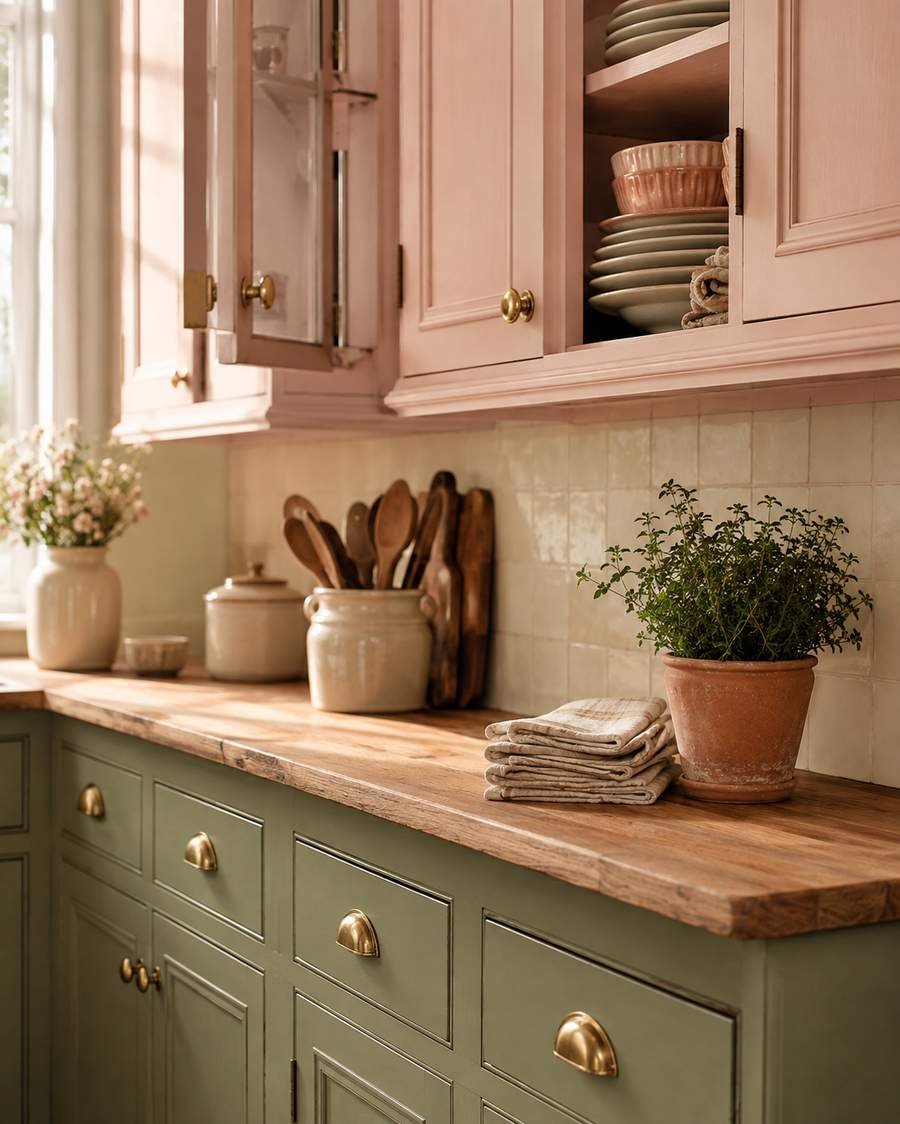
One thing that surprised me the first time I tried it: painting the upper and lower cabinets two different colors makes a kitchen feel more custom, almost like it was built by hand over time rather than installed in a single afternoon. Soft blush on top with sage or mint below is a combination I keep coming back to for a 1950s feel. For something a touch more restrained, try creamy white uppers with a deeper wood-toned or navy lower run. It breaks up the monotony of a single-color kitchen and gives your eye somewhere to land.
5. Add a Butcher Block Countertop
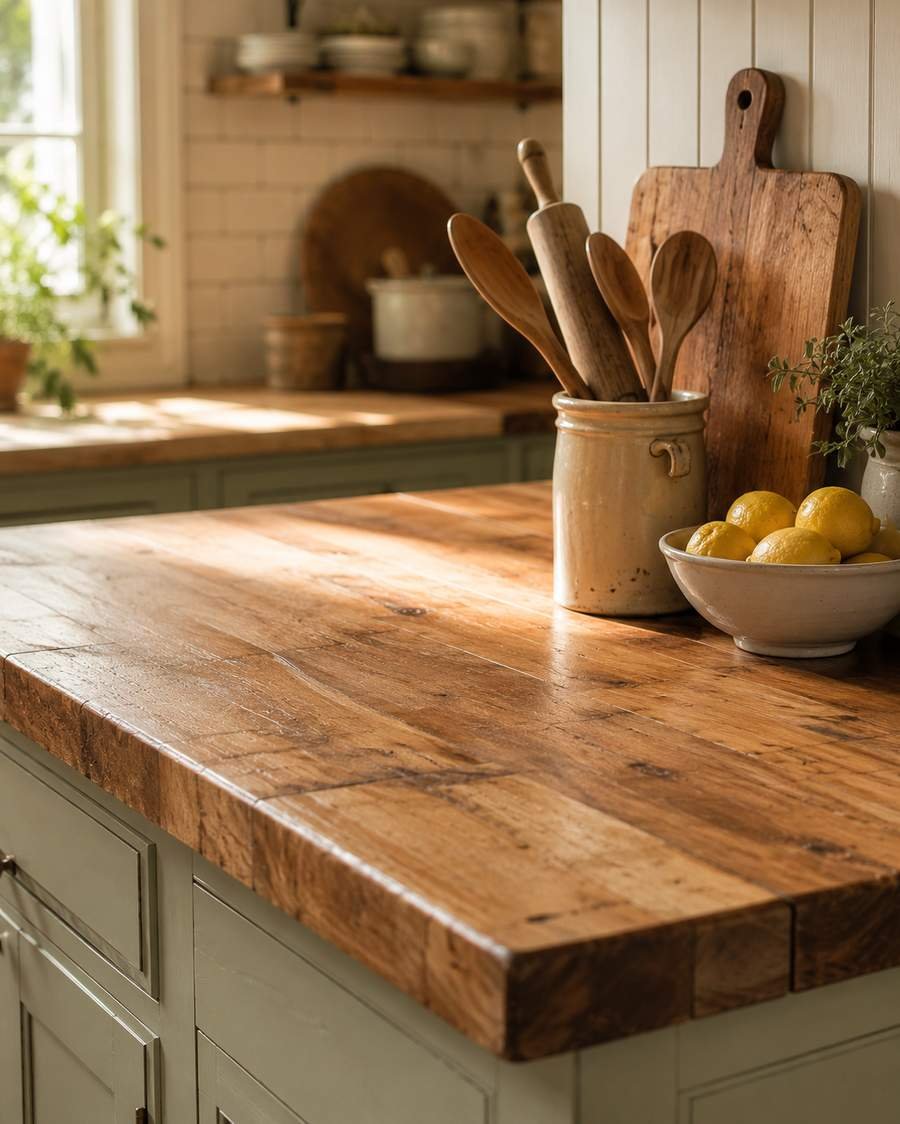
Butcher block has a warmth that stone counters can’t replicate. It’s the kind of surface that actually gets better with age — a few knife marks and water rings just add to the story. I always tell people to use it selectively if they’re worried about maintenance: a butcher block island top paired with more practical countertops elsewhere gives you the vintage character where you’ll see it most, without turning your whole kitchen into a maintenance project. If countertop choice is something you’re still weighing, it’s worth reading through a dedicated kitchen countertop guide before committing to one material for the whole room.
6. Hunt Down Original (or Reproduction) Hardware
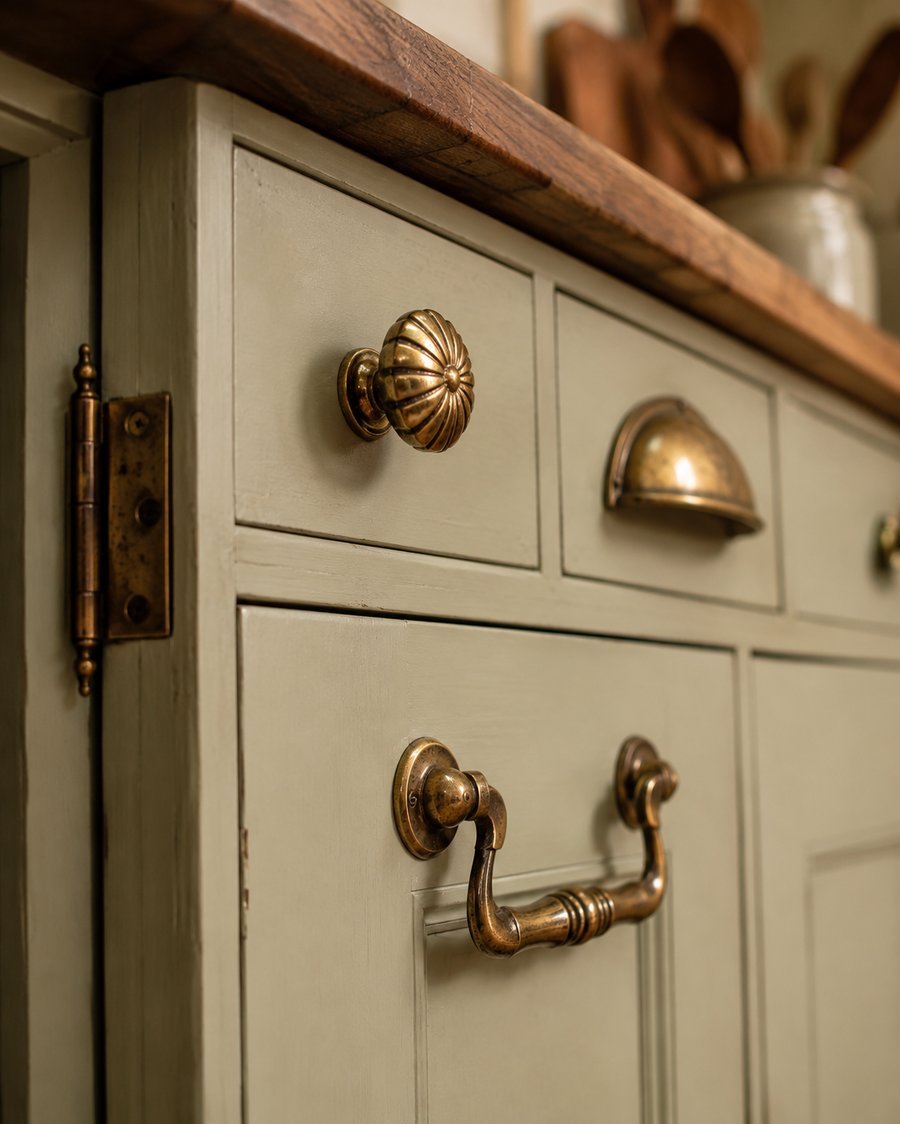
This is the cheapest, fastest way to make a kitchen feel authentically old, and it’s the one people skip most often. Swap out builder-grade handles for fluted brass knobs, bin pulls, or the little cup-style pulls you’d find on a 1930s pantry cabinet. Even the hinges matter — exposed vintage-style hinges on cabinet doors change the whole feel of a room. I usually pick these up at architectural salvage yards or flea markets, and honestly, mismatched hardware collected over time often looks more genuine than a matching set bought all at once.
7. Install a Proper Pantry (Even a Small One)
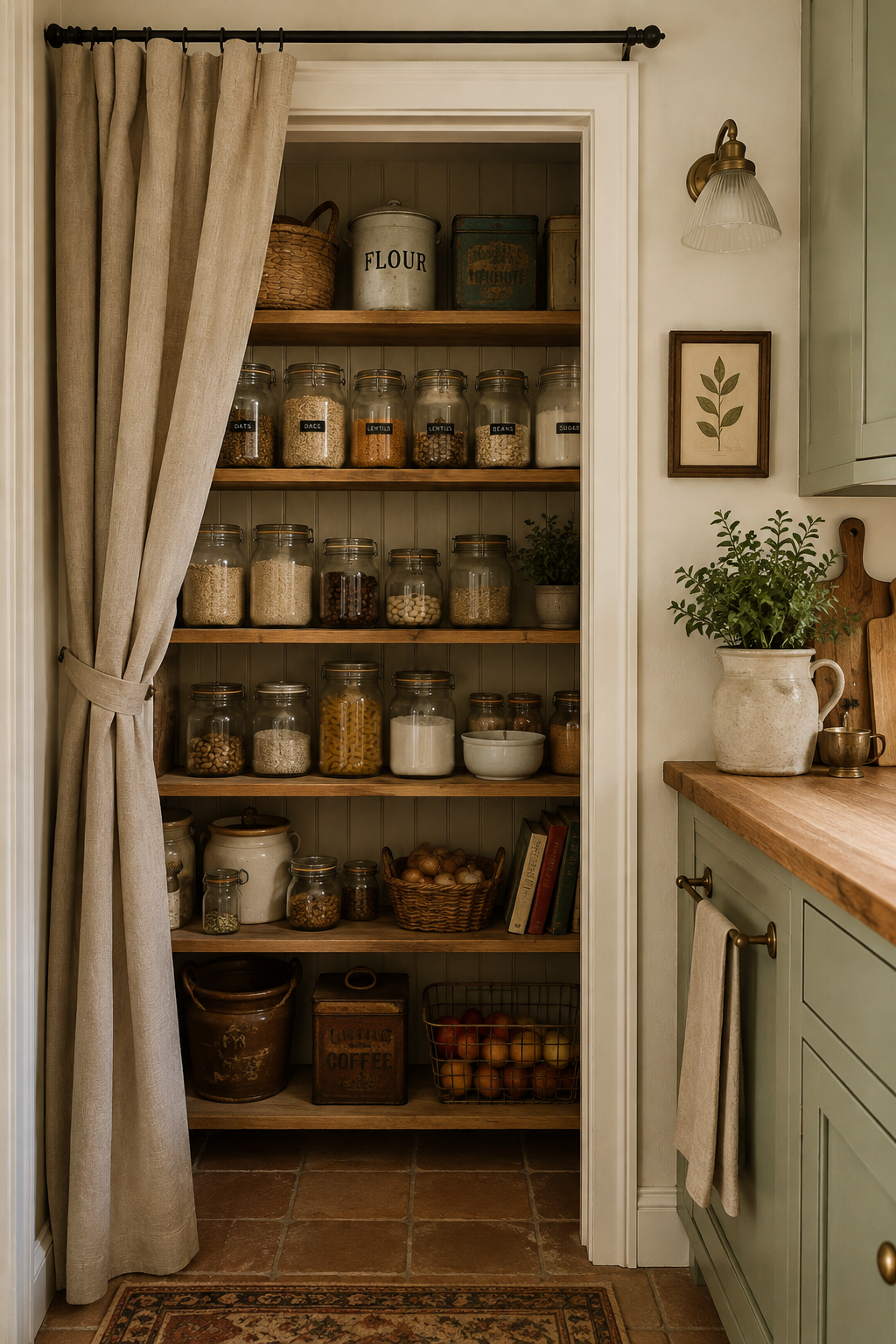
Before pull-out pantries and appliance garages, kitchens had actual pantries — a dedicated space with open shelving for jars, tins, and dry goods. If you have even a small closet or an awkward corner near your kitchen, consider converting it. Line the shelves, add a curtain instead of a door if you want a softer look, and fill it with labeled jars and vintage tins. It’s practical storage that also doubles as decor, and it solves the eternal problem of counters cluttered with cereal boxes.
8. Use Open Shelving to Show Off What You Already Own
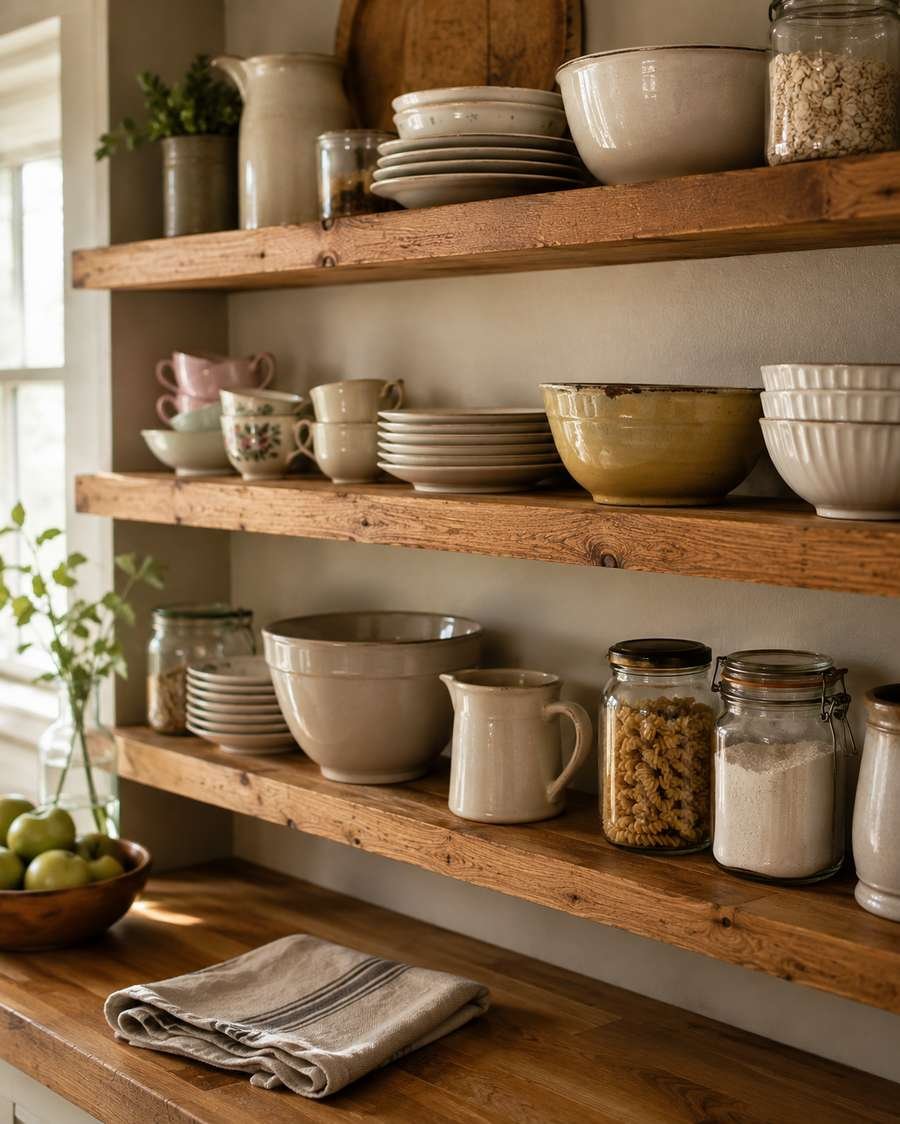
Old kitchens didn’t hide everything behind closed doors the way modern kitchens tend to. Open shelving lets your everyday dishes, mismatched teacups, and grandma’s mixing bowls actually be seen instead of buried in a cabinet. I’ll be honest — open shelving isn’t for everyone, especially if you’re not naturally tidy, but for the right kitchen it adds more personality per square foot than almost anything else on this list. Group items by color or type so it reads as curated rather than cluttered.
9. Try a Subway Tile Backsplash
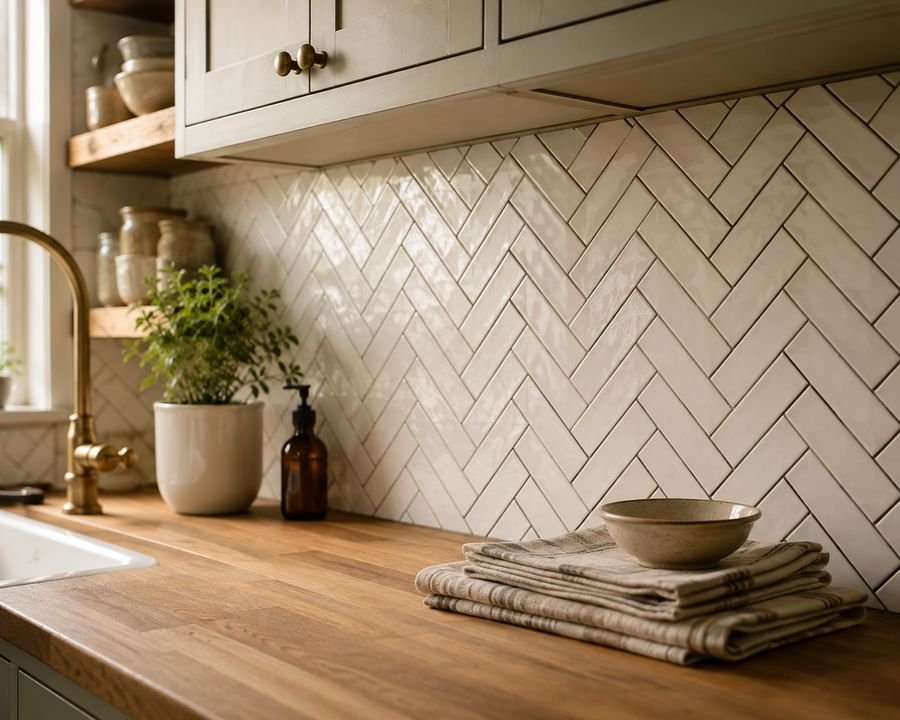
Subway tile has been around since the early 1900s subway stations it’s named after, and it’s stayed a kitchen staple because it works with almost every era of vintage style. Classic white in a running-bond pattern is the safest bet, but I’ve had a lot of fun laying it in a herringbone pattern instead, which reads a bit more 1930s and a bit less builder-grade. Dark grout gives it more definition; matching grout keeps it soft and quiet. If you want more backsplash inspiration beyond subway tile, a kitchen backsplash idea roundup is worth a browse before you tile.
10. Add a Vintage-Style Refrigerator
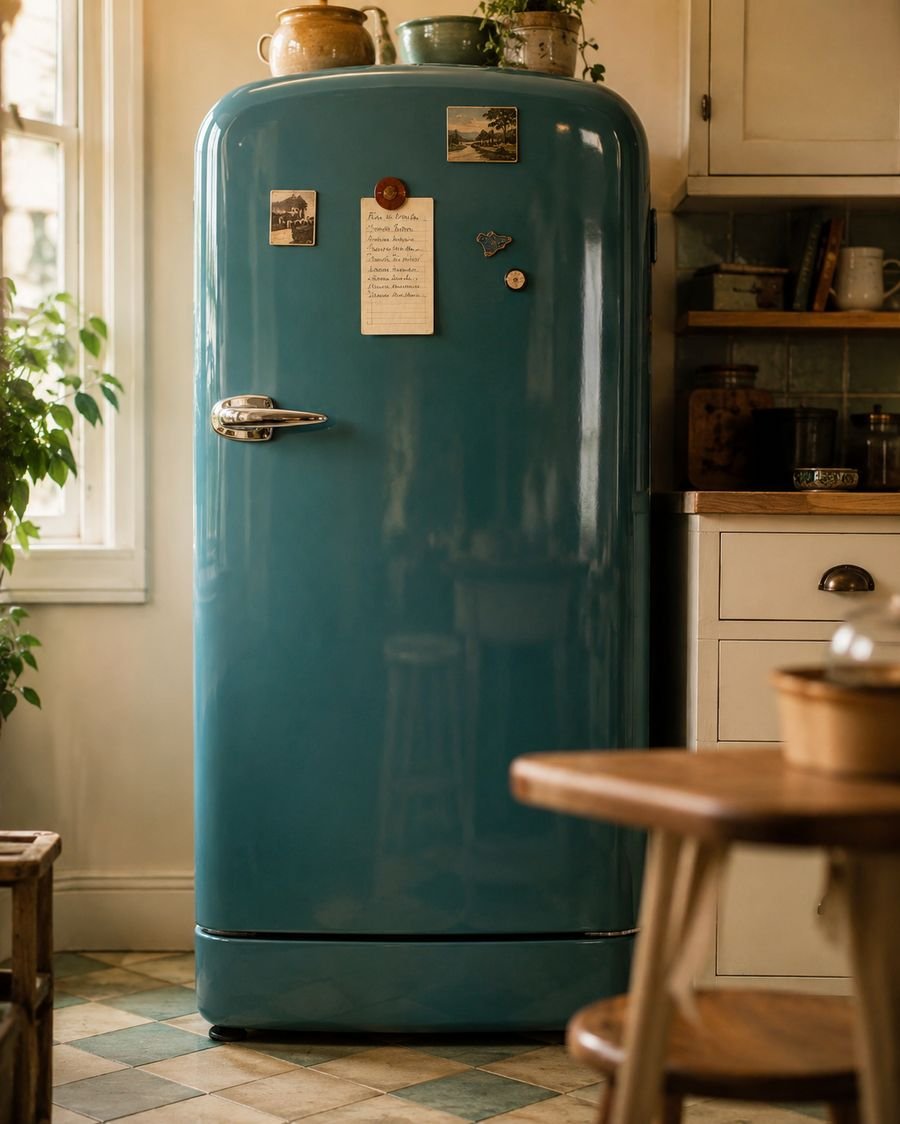
A retro-shaped fridge in a bold color is one of those pieces that turns a kitchen from “nice” into “memorable.” I’ve seen these done in everything from classic cream to deep teal, and they hold their own as a focal point the same way the stove does. If a full retro fridge is out of budget or too big a commitment, even fridge magnets, vintage-style handles, or a simple color-matched panel can nudge a newer appliance in that direction.
11. Bring in a Freestanding Piece of Furniture
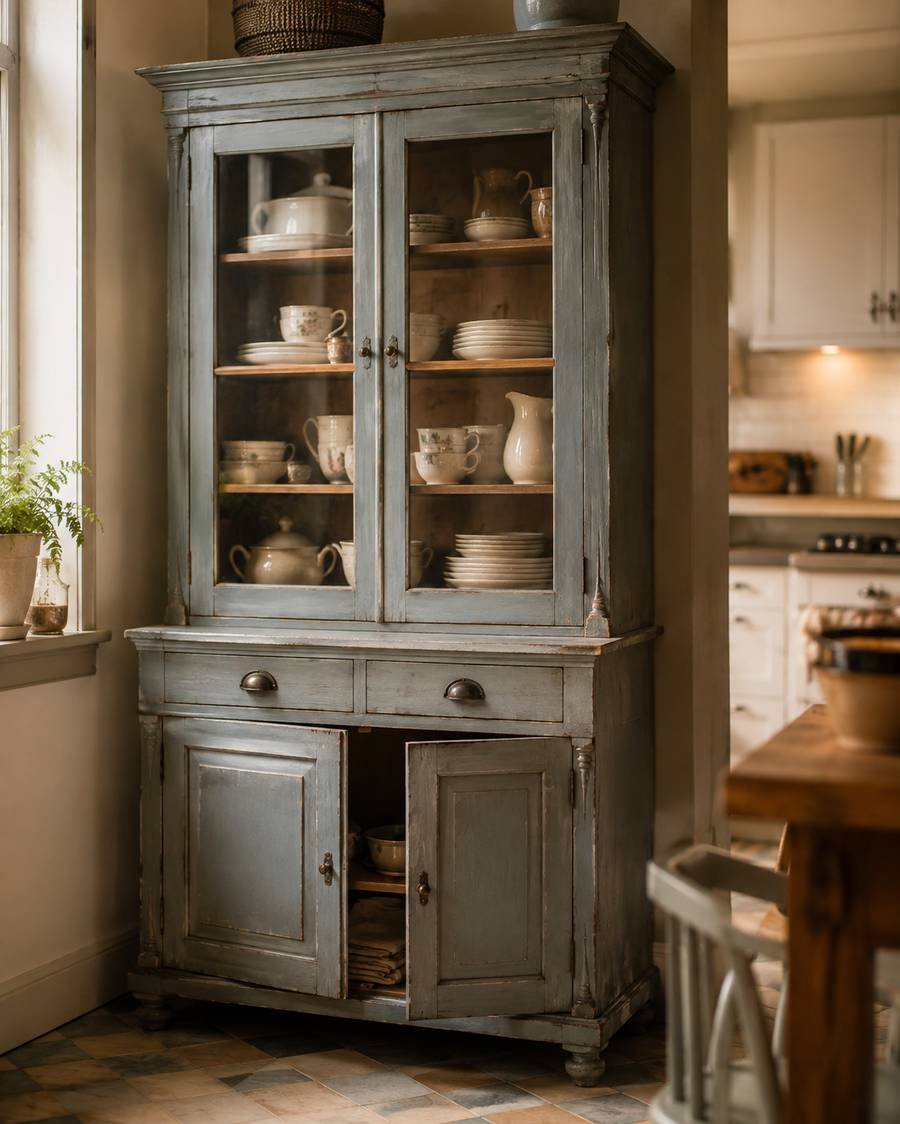
Before fitted kitchens became standard, a lot of kitchen storage came from freestanding furniture — hutches, sideboards, and dressers repurposed for pots and dishes. Adding one of these pieces, even alongside your regular cabinetry, breaks up the “everything matches” feel of a modern kitchen and adds real texture. An old painted hutch with glass-front doors is one of my favorite finds at estate sales; it does double duty as storage and as a display case for your favorite dishware.
12. Layer In Textiles
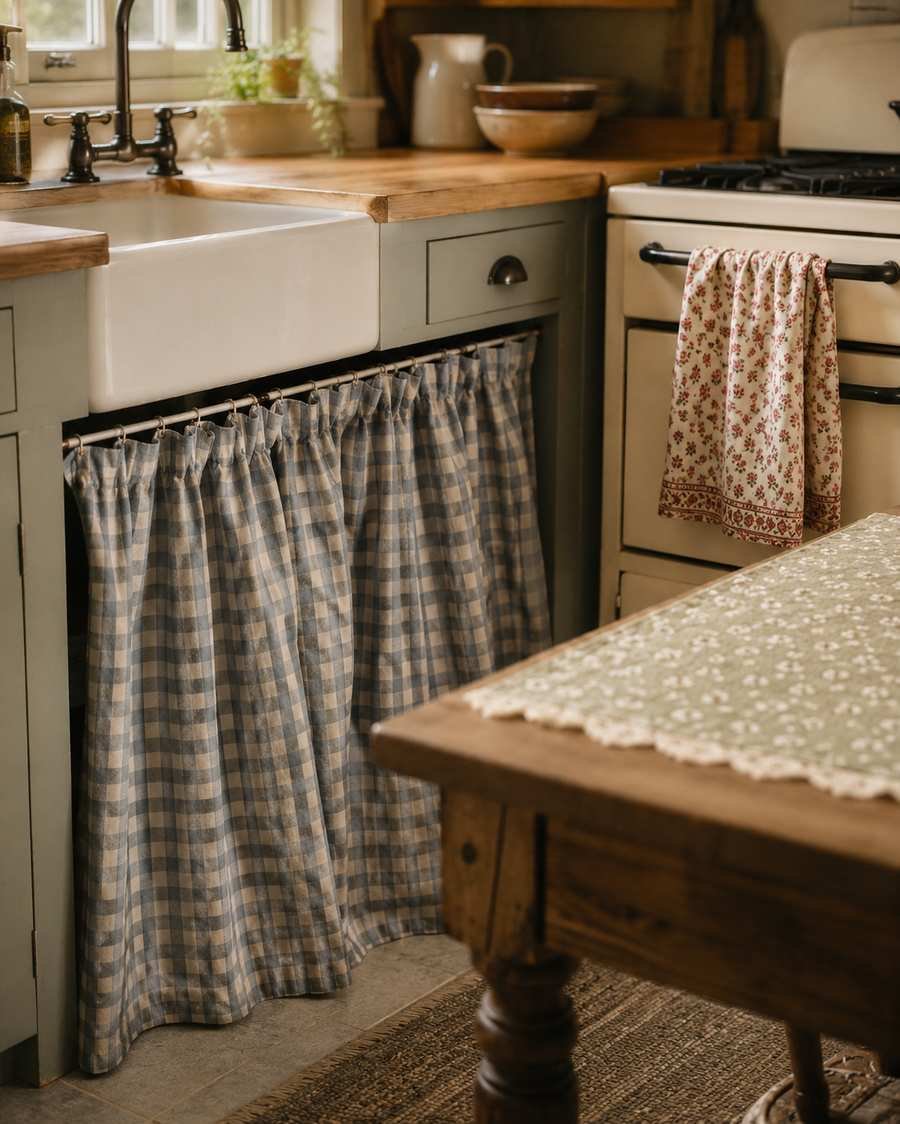
Curtains under the sink instead of cabinet doors, a printed tea towel hanging from the oven handle, a runner on the table — textiles are an easy, low-commitment way to soften a kitchen and add a vintage feel without touching a single wall. Floral prints, gingham, and small ditsy patterns all lean vintage without feeling costumey. This is also one of the easiest ideas to change seasonally if you like to switch things up.
13. Choose Warm, Saturated Wall Colors
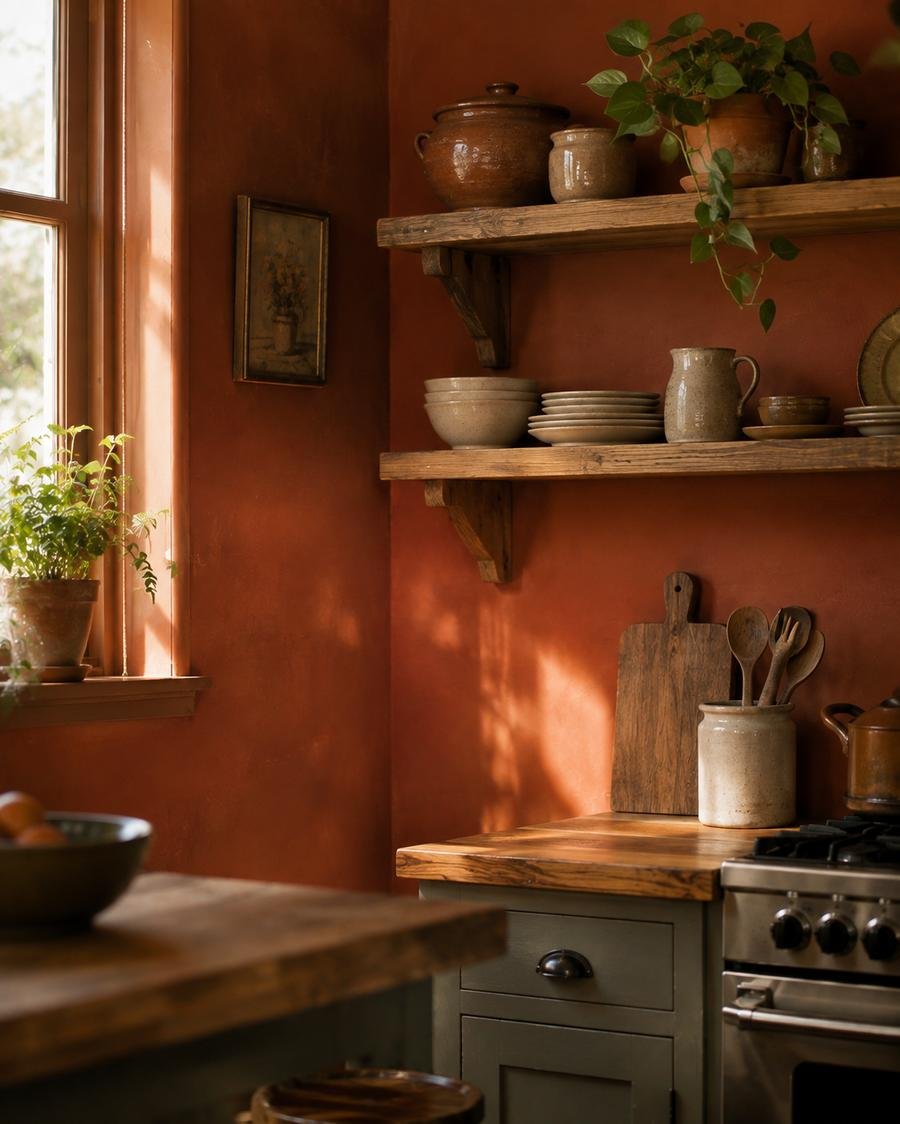
Modern kitchens lean heavily on white and gray. Vintage kitchens weren’t afraid of color. Think buttery yellow, dusty rose, sage green, or even a deep terracotta on the walls. These warmer tones photograph less “trendy” than a cool gray, but they age far better in person — they feel cozy rather than clinical. If you’re nervous about committing to a bold wall color, start with just one accent wall or the inside of open shelving.
14. Install a Plate Rack
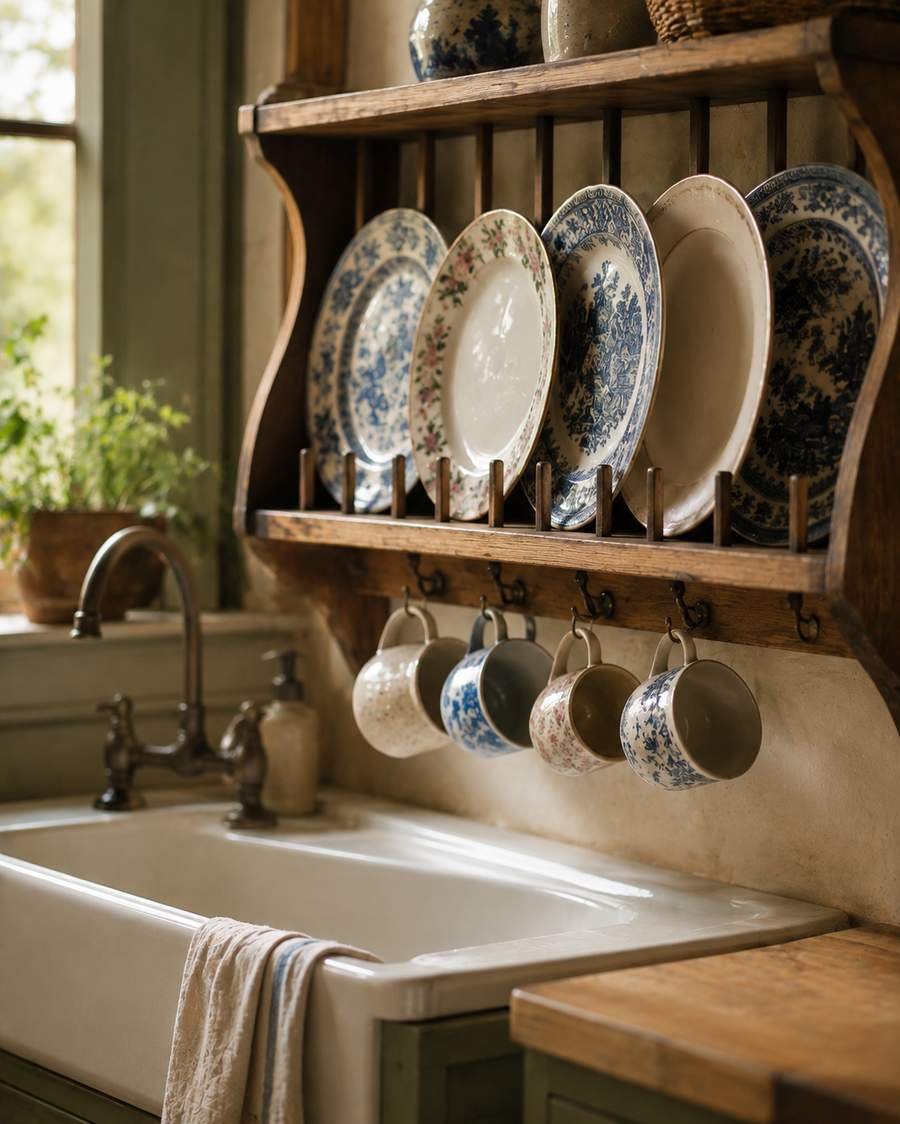
A wooden or wire plate rack mounted above the sink or built into a cabinet is a small detail that does a lot of visual work. It’s practical (dishes air dry right where you’ll use them) and it’s genuinely charming to look at, especially if you collect vintage or patterned plates. I like this one because it’s an idea you can add without any real construction — a lot of plate racks can be mounted in an afternoon.
15. Add a Vintage-Inspired Light Fixture
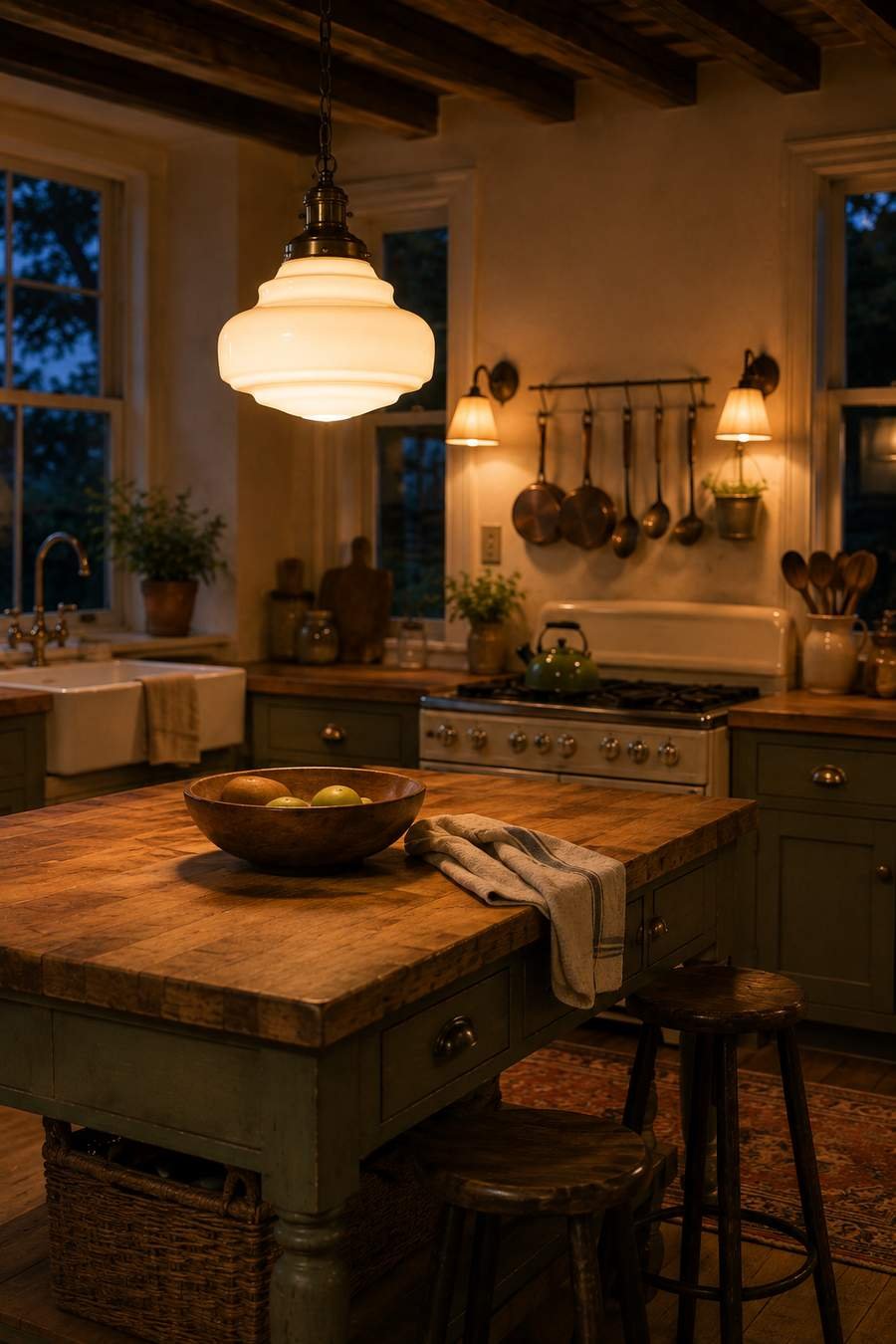
Lighting gets overlooked constantly, but it does more to set the mood of a room than almost anything else. A milk-glass pendant, a bare-bulb schoolhouse fixture, or a set of wall sconces flanking the stove can shift a kitchen’s whole personality. I tend to mix a statement fixture over the island with simpler, quieter lighting elsewhere, so the eye has one clear place to land rather than competing focal points.
16. Use Terrazzo Where You Can
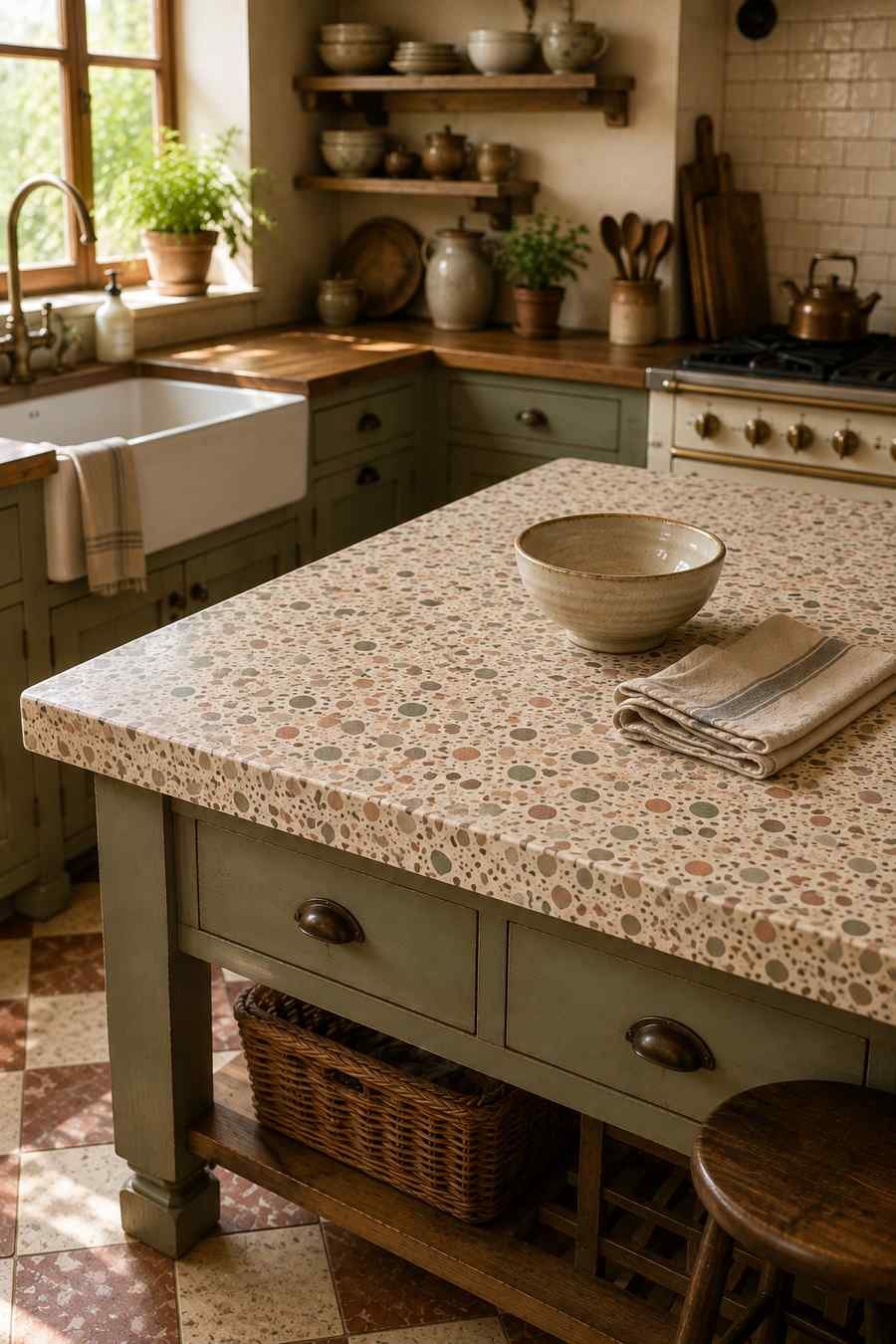
Terrazzo had its heyday in the mid-20th century and it’s having a real moment again, and for good reason — those speckled chips of stone set in cement have a playful, handmade quality that solid surfaces don’t. It works beautifully on countertops, but I’ve also seen it used on a kitchen floor or even as a small backsplash detail behind a stove. It’s a slightly bolder choice, so I usually recommend it as an accent rather than covering every surface in the room.
17. Choose a Farmhouse-Style Table Instead of an Island
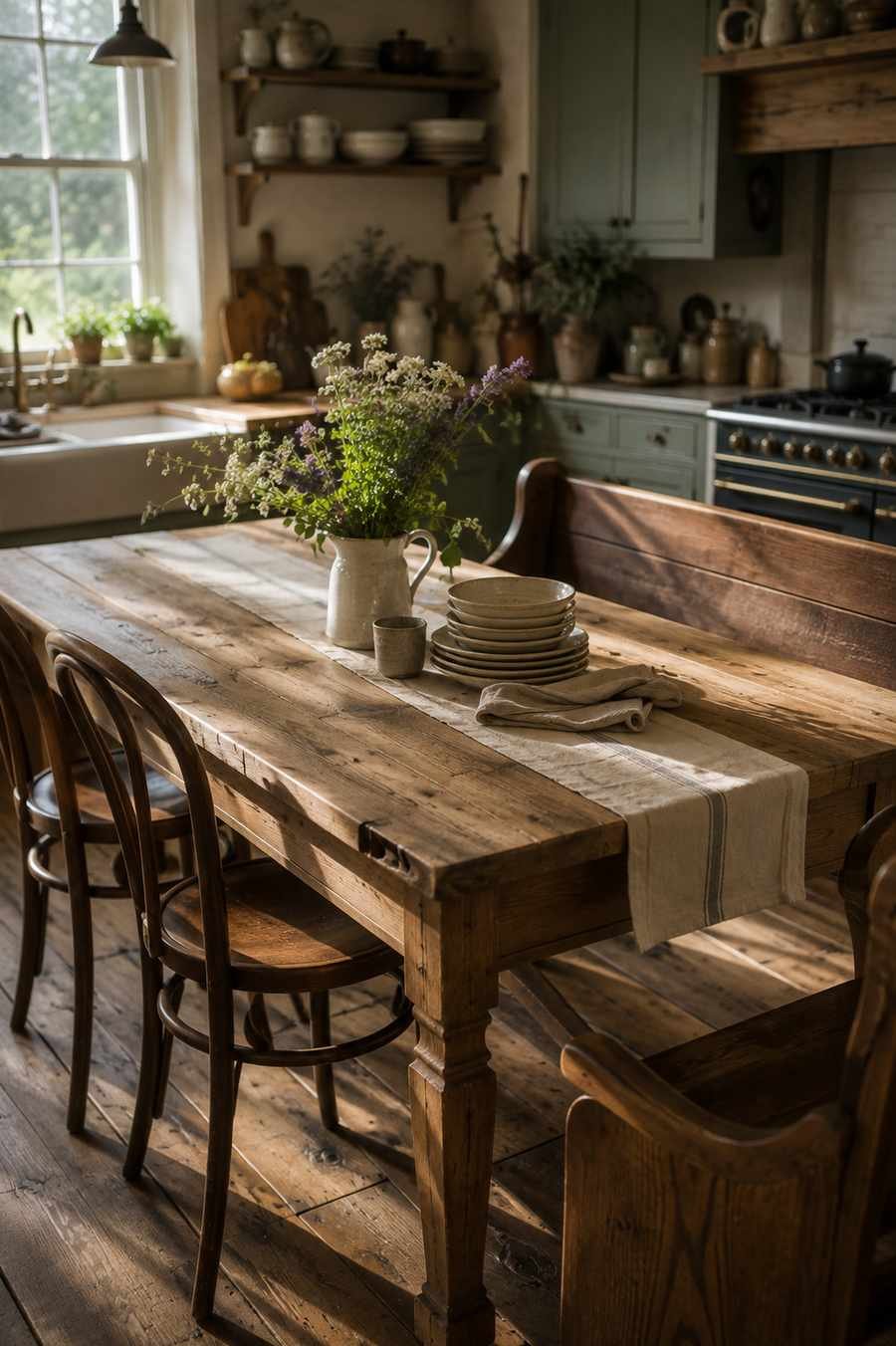
Not every kitchen needs — or has room for — a big island. A generous wood farmhouse table with a mix of chairs (a couple of bentwood, maybe an old church pew on one side) does the same job of anchoring the room, but with a softer, more collected-over-time feel. It also happens to be one of the friendliest layouts for actually gathering people, which is, in the end, what a kitchen is for.
18. Get Playful With a Patterned Floor Tile
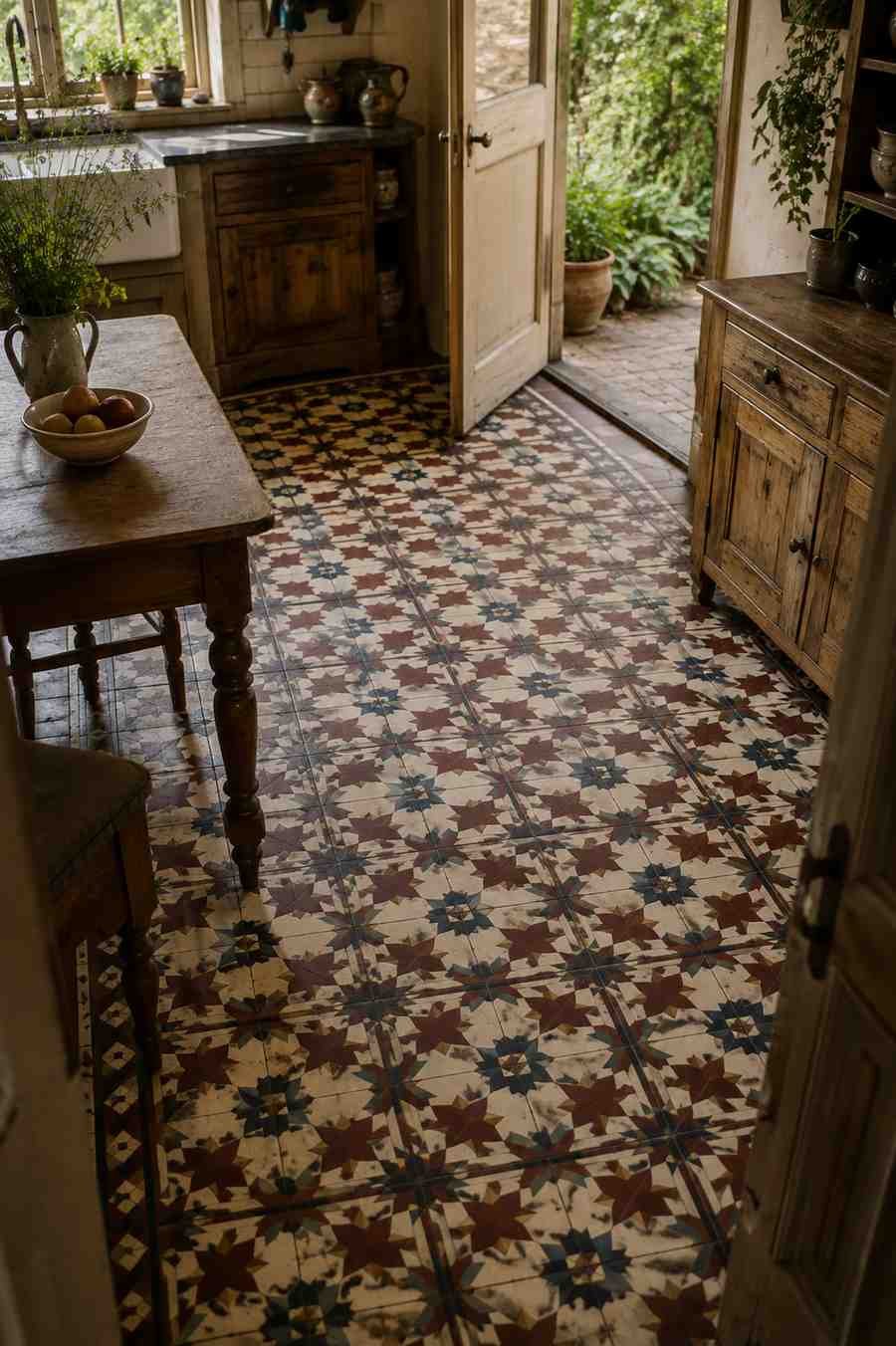
Beyond checkerboard, there’s a whole world of patterned encaustic and Victorian-style floor tiles worth looking at — deep reds, blues, and creams arranged in geometric or floral motifs. These tiles were common in kitchens and entryways going back over a century, and reproduction versions are widely available now in porcelain, which makes them far more practical for a busy kitchen floor than the original cement tiles would have been.
19. Don’t Forget the Faucet
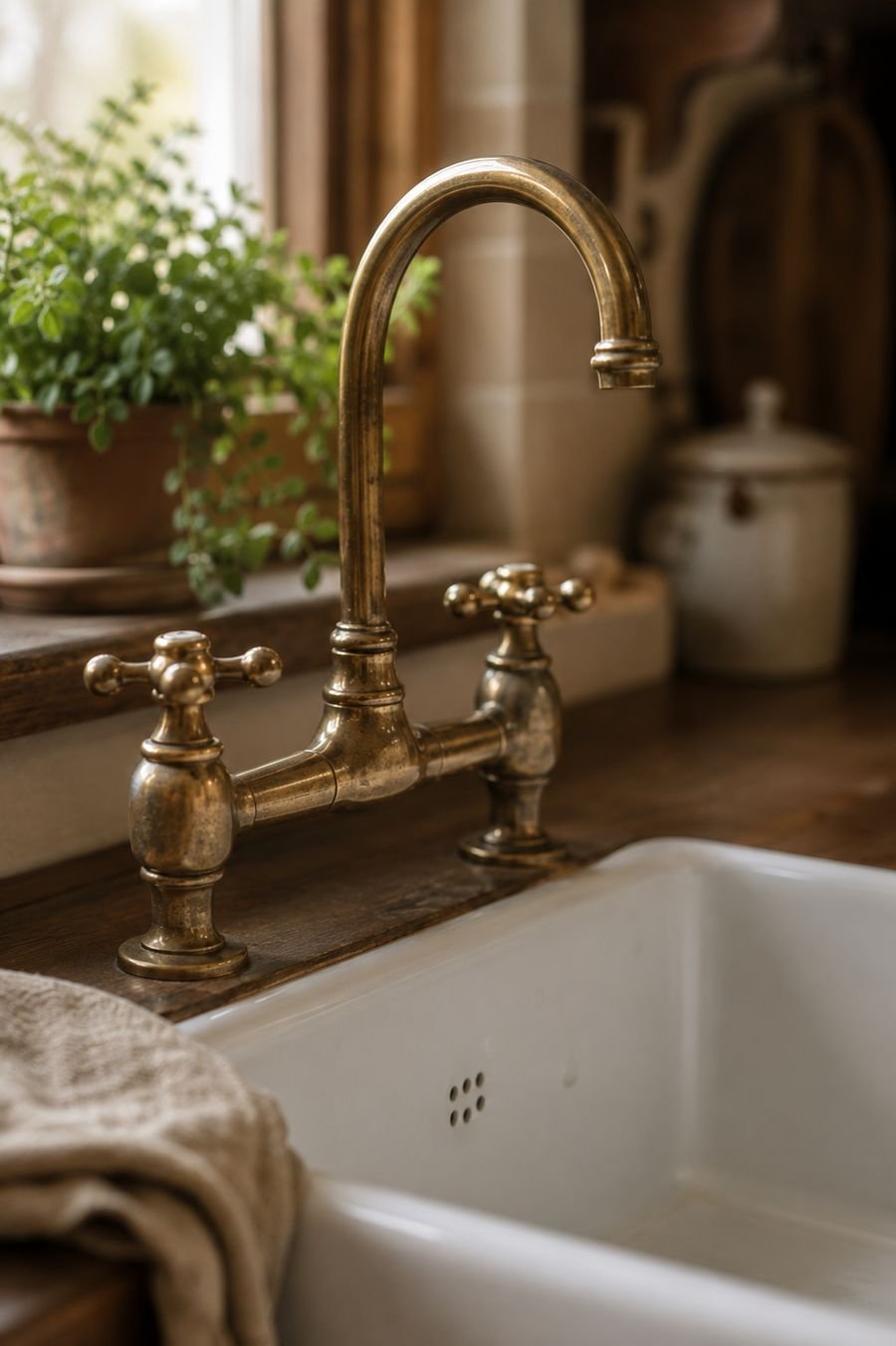
A faucet is a small object, but it’s one you touch dozens of times a day, and it’s surprisingly effective at making a sink either look brand new or genuinely old. Bridge-style faucets with separate hot and cold handles, or a gooseneck faucet in unlacquered brass that’s allowed to develop a patina over time, read far more vintage than a sleek pull-down chrome faucet. It’s a relatively small line item in a renovation budget that punches well above its cost.
20. Mix In a Few Real Antiques
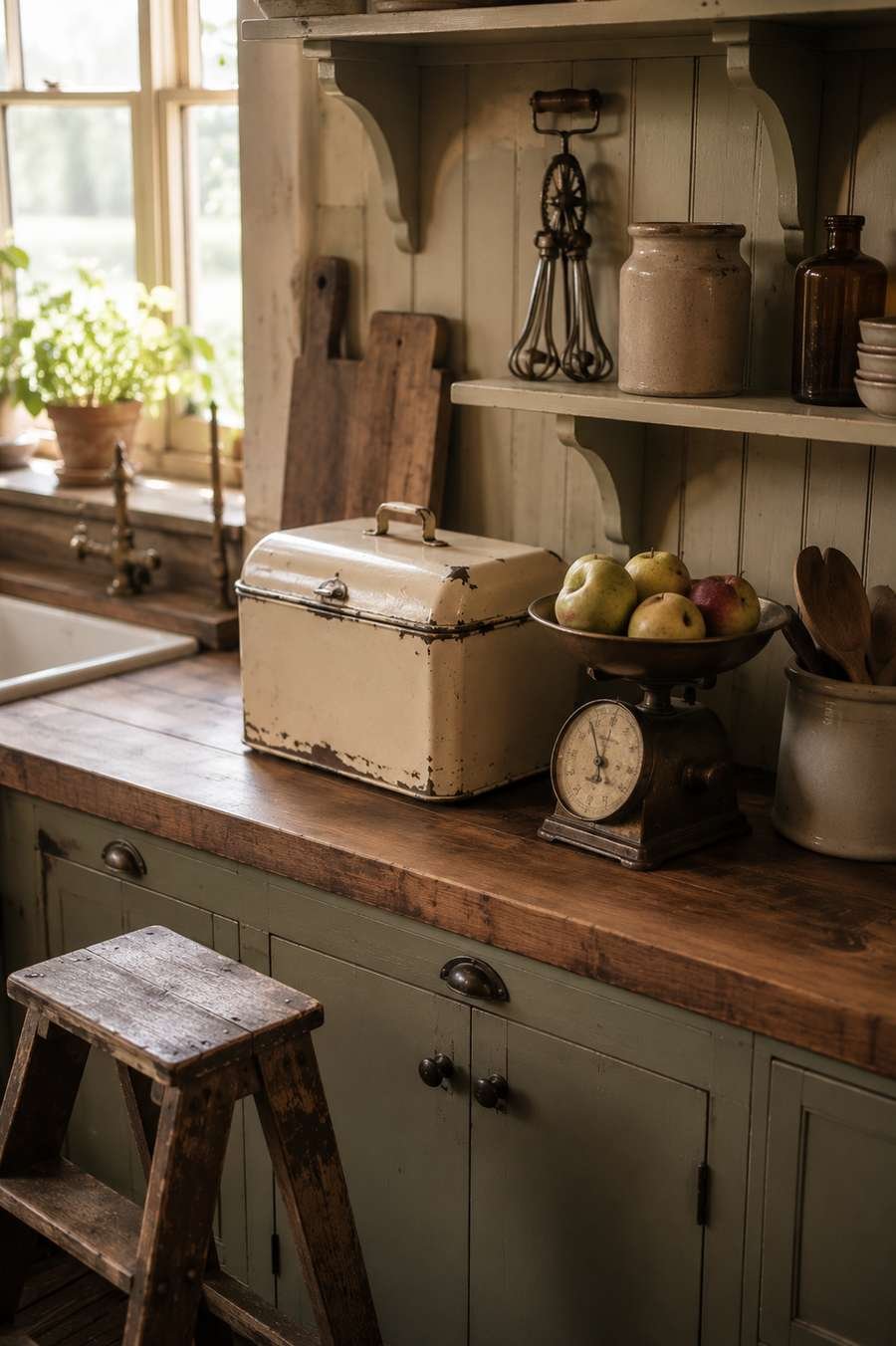
Reproduction pieces are great, but nothing replaces the character of something genuinely old. A wooden step stool, a hand-crank egg beater displayed on a shelf, an enamel bread box, or an old scale used as a fruit bowl — these small found objects add authenticity that’s hard to manufacture. I’d rather see three real antique pieces scattered through a kitchen than a dozen new items trying to look old.
21. Let the Room Breathe — Don’t Overdo It
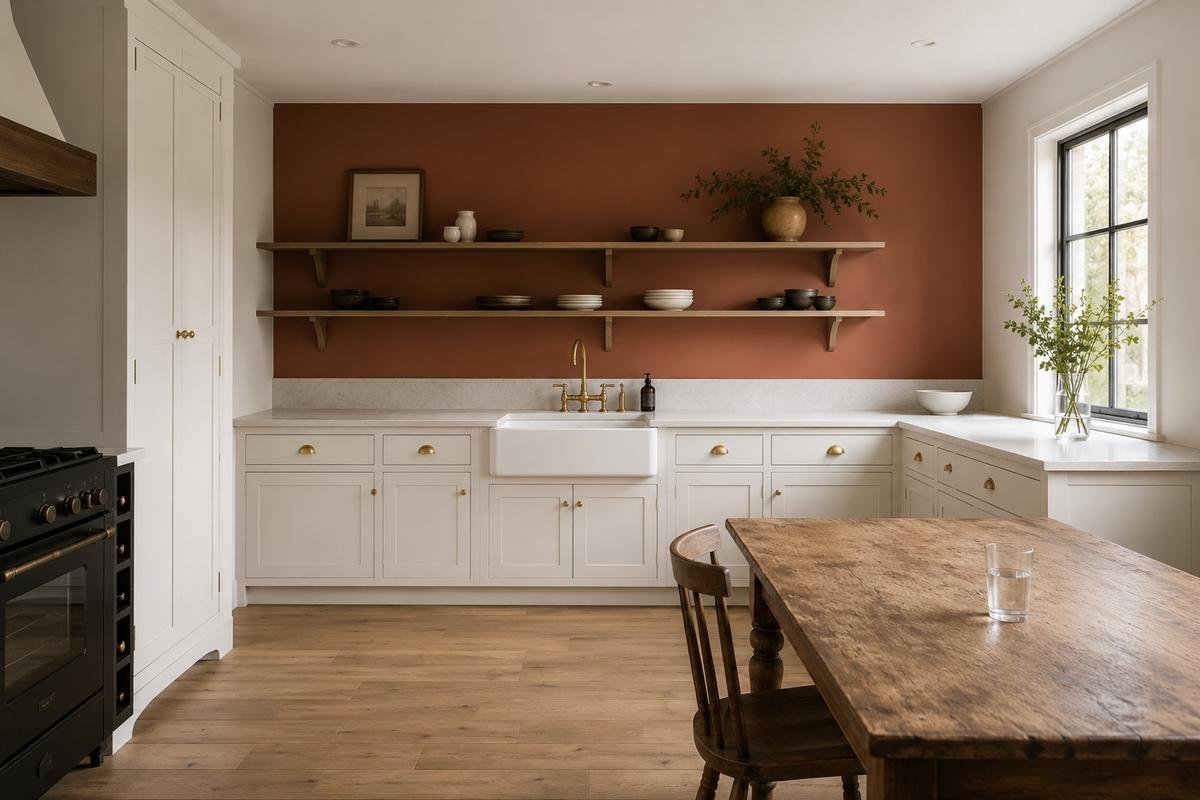
This is the piece of advice I give most often, and it’s the one people ask about least: a vintage kitchen doesn’t need to hit every idea on this list. The kitchens that feel most convincingly old are usually the ones with a handful of strong, well-chosen details and plenty of restraint everywhere else. Pick two or three ideas that genuinely excite you — maybe the sink, the hardware, and a bold wall color — and let those carry the room. Overloading a kitchen with every vintage trick in the book tends to tip it into costume territory instead of character.
A Few Closing Thoughts
The kitchens that stick with me — the ones I still think about years after seeing them — were never the most expensive or the most “on trend.” They were the ones where you could tell someone had made real choices, one at a time, usually over the course of years rather than a single renovation sprint.
That’s really the heart of vintage style: it’s not about recreating a decade perfectly, it’s about building in warmth, texture, and a bit of history, at whatever pace and budget works for you.
If you’re planning a full renovation rather than a few updates, it’s worth thinking through your kitchen layout and storage options early, since a lot of these vintage details — the plate rack, the open shelving, the pantry — work best when they’re planned into the layout from the start rather than squeezed in afterward.
And if color is where you’re feeling stuck, a closer look at kitchen cabinet color ideas can help narrow things down before you start buying paint samples.
Whatever you choose, take your time with it. The best vintage kitchens weren’t decorated in a weekend, and yours doesn’t have to be either.
Frequently Asked Questions
What makes a kitchen look “vintage” instead of just old?
Age alone doesn’t do it — plenty of dated kitchens just look tired. A vintage look comes from intentional choices: colors, hardware, and materials that belong to a specific era, used consistently rather than scattered randomly. A kitchen with one retro fridge and nothing else supporting it usually reads as mismatched rather than styled.
Is a vintage kitchen more expensive than a modern one?
Not necessarily. Some elements (a genuine antique fridge, reclaimed tile) can cost more than their modern equivalents. But plenty of the highest-impact changes — hardware, paint color, textiles, a plate rack — are some of the cheapest updates in any kitchen renovation.
Can I mix vintage details into a mostly modern kitchen?
Yes, and it often looks better than an all-or-nothing approach. A handful of vintage details in an otherwise contemporary kitchen — say, brass hardware and a farmhouse table — tends to look more collected and personal than committing to one era on every surface.
What’s the easiest vintage upgrade to start with?
Hardware and lighting. Both are relatively inexpensive, don’t require a contractor in most cases, and change the feel of a kitchen more than their cost would suggest.
Do vintage kitchens work in small spaces?
They can work especially well. A single strong vintage detail — a plate rack, a bold wall color, a small farmhouse table instead of a big island — often reads more clearly in a small kitchen than in a large one, where it can get lost.