
Modern farmhouse design has been everywhere for the last decade, and honestly, a lot of homes end up looking the same because people copy the same shiplap wall and the same barn door without thinking about why those elements worked in the first place.
The style isn’t really about a checklist of props. It’s about balancing something warm and lived-in with something clean and current, so a room feels comfortable without feeling dated or cluttered.
Over the years of working on homes, walking through client houses, and rearranging my own space more times than I’d like to admit, I’ve picked up a pretty good sense of what makes modern farmhouse rooms feel intentional versus what makes them feel like a Pinterest board someone bought all at once.
I’ve also made most of the mistakes myself first, like the time I shiplapped an entire small bathroom and instantly regretted how boxed in it felt, or the year I bought three different “farmhouse style” light fixtures that somehow still didn’t match because their metal finishes were slightly off from each other.
Those small failures taught me more than any showroom visit ever did.
Good farmhouse design isn’t about following a formula exactly, it’s about understanding which elements are doing the actual work in a room and which ones are just there because everyone else has them.
Below are 21 ideas that I keep coming back to, whether I’m working on a full renovation or just helping someone freshen up a single room on a weekend budget.
Some of these are big structural decisions, and others are small swaps you could make this weekend without touching a single wall.
1. Start With a Warm Neutral Base, Not Stark White
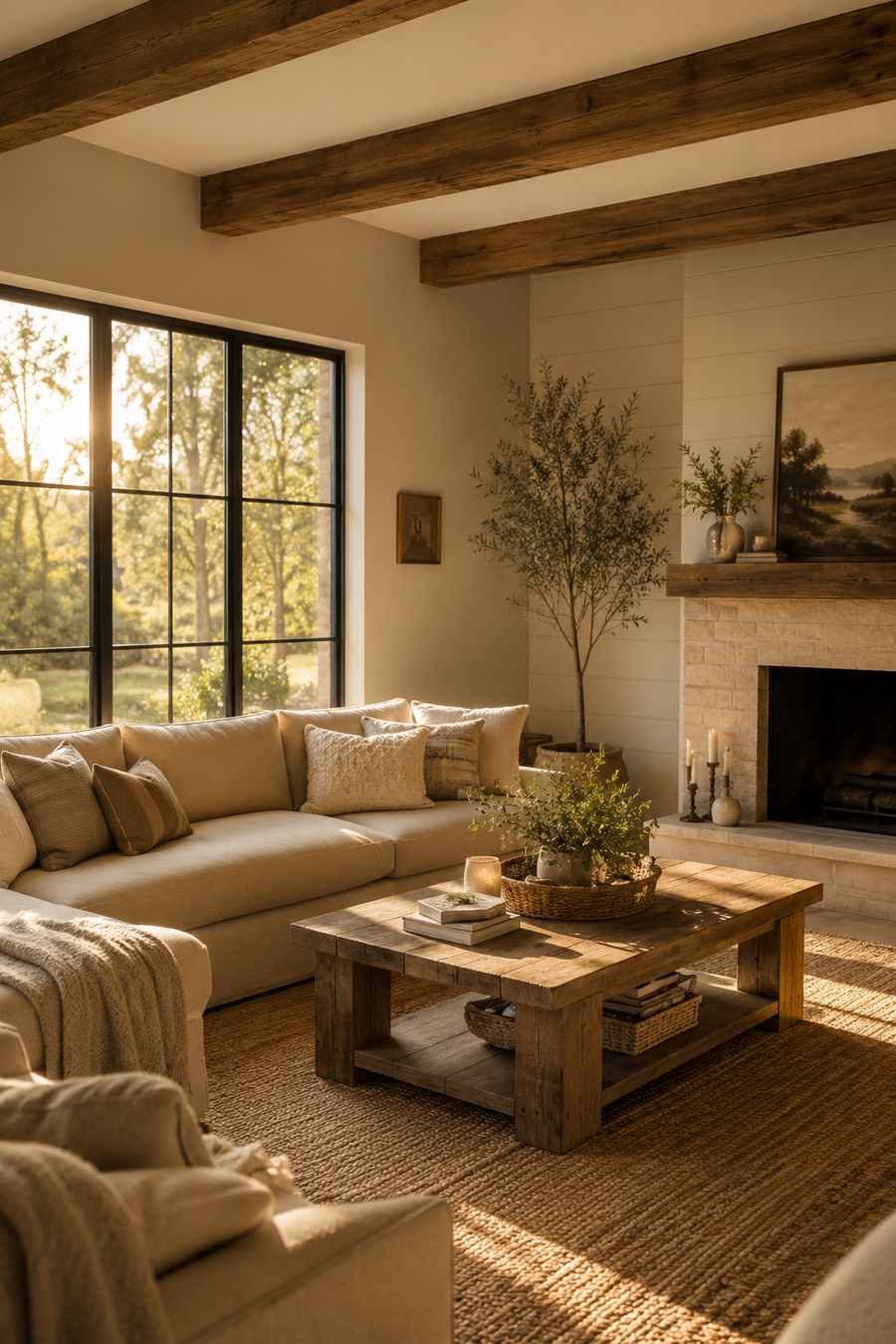
A lot of people assume modern farmhouse means bright white walls everywhere, but pure white can feel cold and clinical, especially in rooms that don’t get much natural light. Warmer off-whites, soft greige, or a pale oatmeal tone give you that airy farmhouse feel without the sterile hospital vibe. If you’re repainting a whole house, test swatches at different times of day before committing, since a color that looks perfect at noon can look flat and gray by evening.
2. Mix Wood Tones Instead of Matching Them Perfectly

One mistake I see constantly is people trying to match every wood surface in a room to the exact same shade. Real farmhouses were furnished over generations, so the wood never matched perfectly, and that’s part of the charm. Pair a lighter oak floor with a darker walnut dining table, or a reclaimed wood shelf with slightly different toned cabinetry. As long as the undertones are compatible (stick to either warm or cool, not both), the mismatch reads as collected rather than chaotic. A quick way to check this before buying anything is to hold a paint chip or fabric swatch of your main wood tone next to the new piece in daylight; if one leans orange and the other leans pink or gray, they’ll likely clash no matter how nice each piece looks on its own.
3. Bring in Black Metal Accents for Contrast
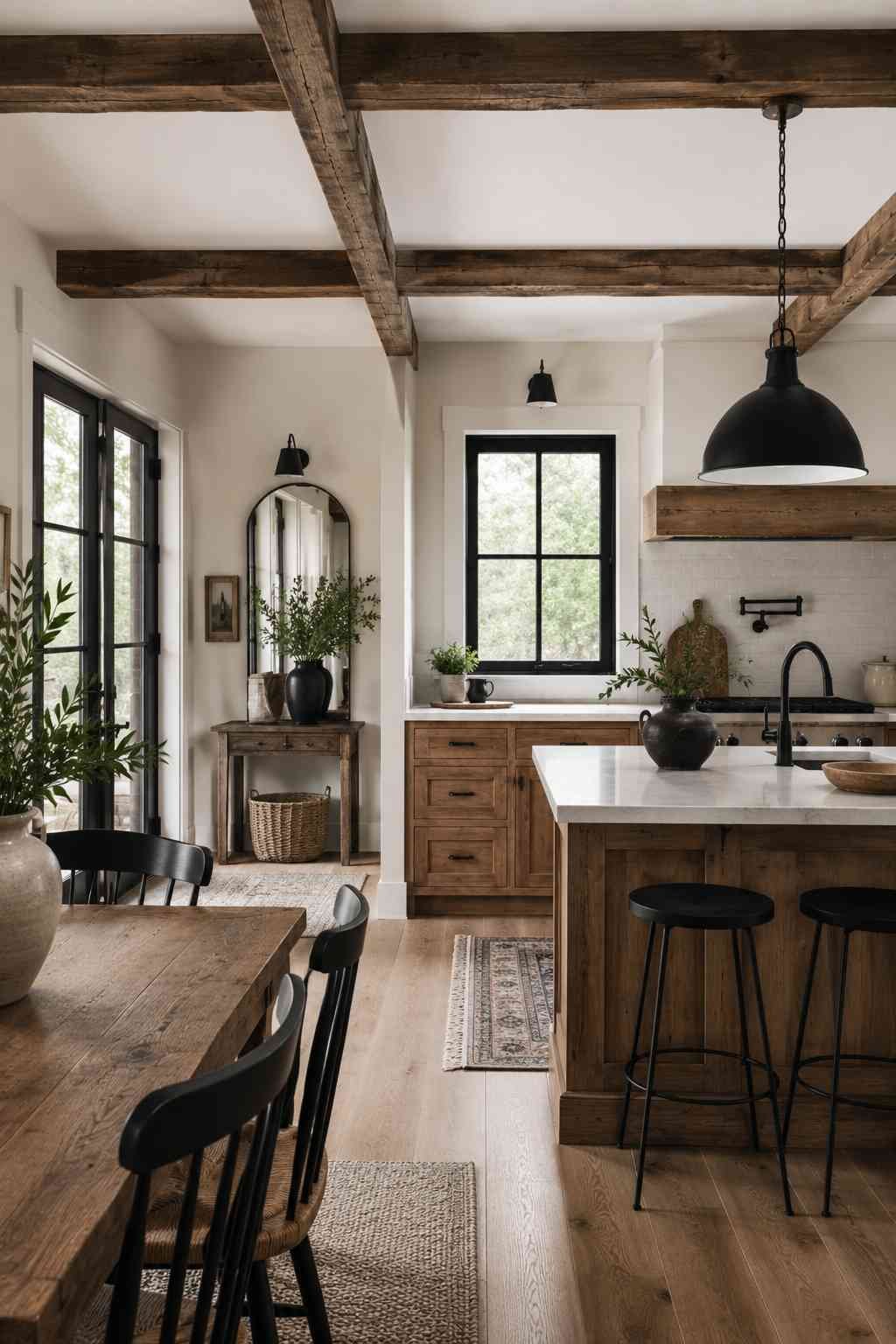
Black window frames, matte black light fixtures, or iron hardware on cabinets give a farmhouse room the structure it needs so it doesn’t drift into looking too soft or cottagey. This is one of the easiest ways to modernize a space that otherwise leans heavily rustic. A single black pendant light over a kitchen island or a black-framed mirror in an entryway can anchor an entire room. If you’re worried about going too far with black, start with one fixed element, like window frames or cabinet pulls, before deciding whether you want to repeat the color elsewhere. It’s much easier to add more black later than to remove it from something already installed.
4. Use Shiplap Sparingly, Not on Every Wall
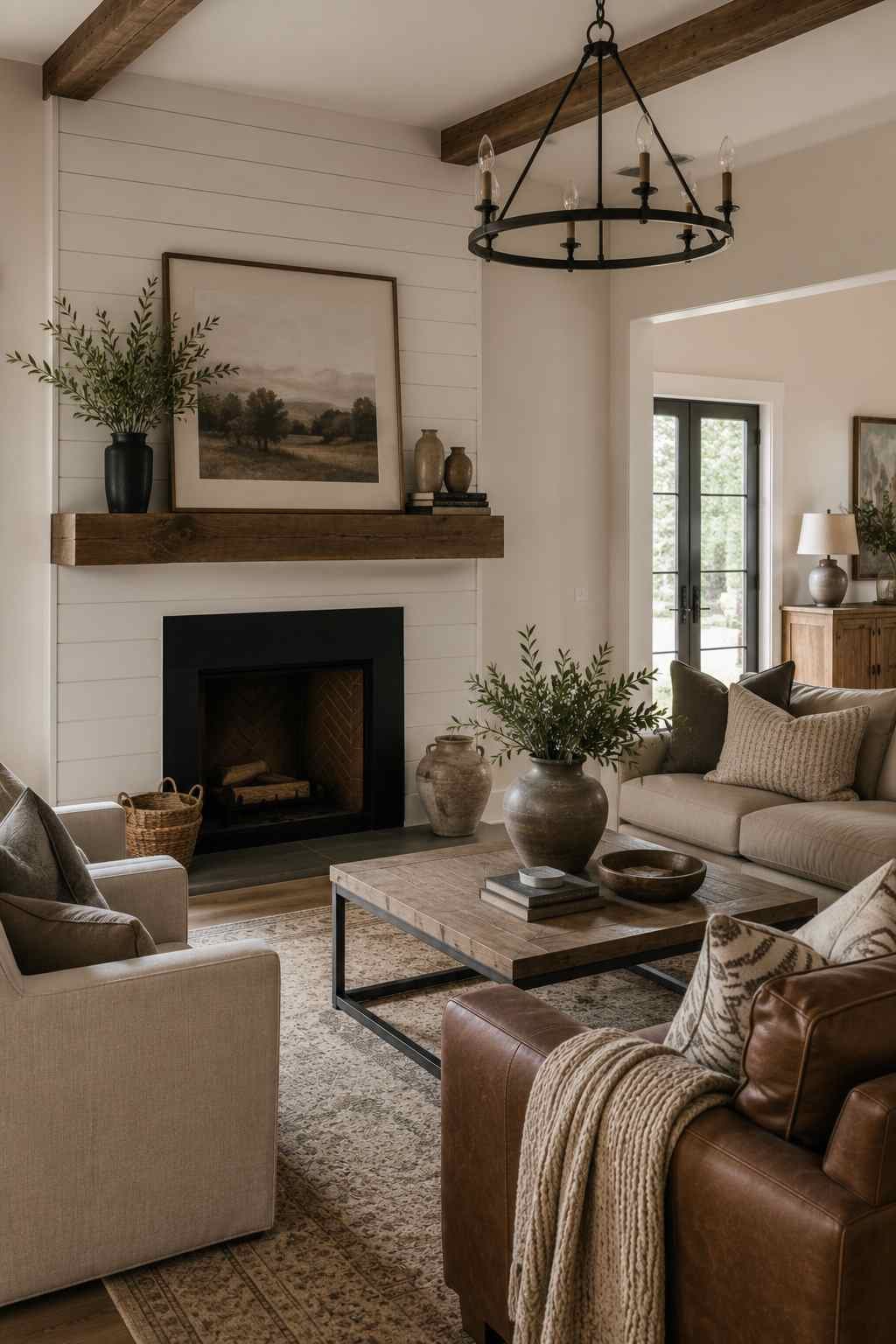
Shiplap became the poster child of farmhouse style, but covering every wall in every room with it stops looking like a design choice and starts looking like a trend you followed without editing. Pick one wall, maybe behind a bed or around a fireplace, and let the rest of the room breathe with plain painted drywall. This restraint is what separates a considered space from an overdone one.
5. Choose a Farmhouse Sink That Fits the Scale of Your Kitchen

The apron-front farmhouse sink is a signature piece, but it needs to fit the proportions of your kitchen. A 36-inch sink in a small galley kitchen will overwhelm the counter space and make everything else feel cramped. Measure your cabinet base carefully and consider a single-basin version if you’re working with a smaller footprint, since it tends to look cleaner and more current than a divided double basin. Also pay attention to the material. Fireclay sinks hold up well to daily use and stay bright white for years, while cast iron versions are heavier but can chip if you’re not careful with cast iron cookware. Stainless steel farmhouse sinks exist too, and they lean more industrial than classic farmhouse, so keep that in mind if you’re chasing a specific look.
Also Check – Brown Sofa Living Room Ideas
6. Layer Textiles Instead of Relying on One Statement Piece
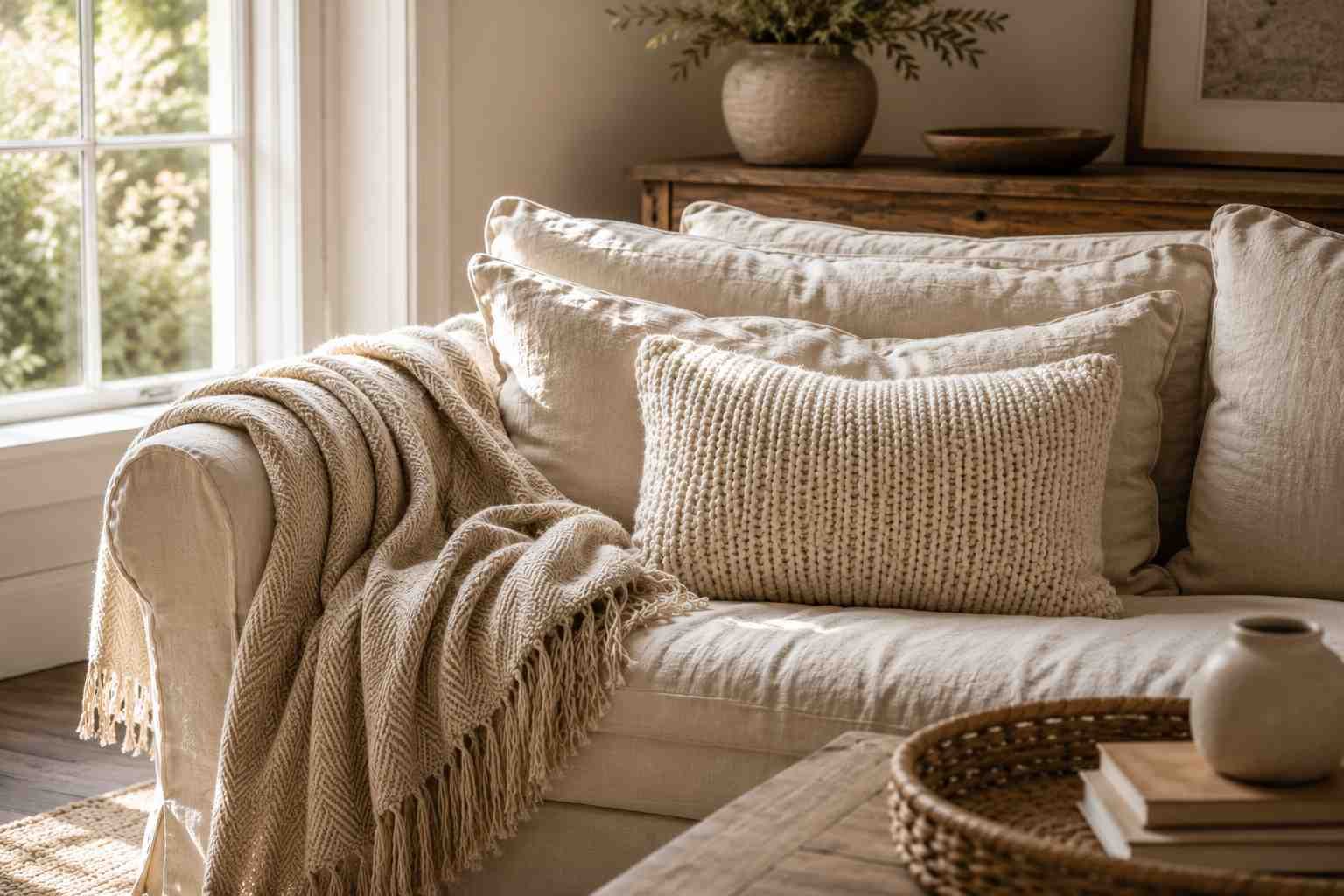
Cozy textures do a lot of heavy lifting in farmhouse interiors. Instead of buying one expensive throw and calling it done, layer a woven cotton blanket, a chunky knit pillow, and a linen slipcover together on the same sofa. The layering is what creates depth. A single item, no matter how nice, tends to look like an afterthought rather than part of the design. When shopping for textiles, natural fibers like linen, cotton, and wool will always photograph and age better than synthetic blends, since they hold their shape and develop a slightly worn softness over time instead of pilling or flattening out after a few washes.
7. Install Open Shelving in the Kitchen, But Edit What Goes on It

Open shelves are a farmhouse staple because they show off everyday dishware and create a sense of openness. The catch is that they only look good if what’s on them is curated. Stack matching plates, group glassware by color, and leave some negative space instead of cramming every shelf edge to edge. If your dish collection is mismatched and chaotic, closed cabinets might serve you better than forcing open shelving to work.
8. Add a Reclaimed Wood Beam or Faux Beam to the Ceiling
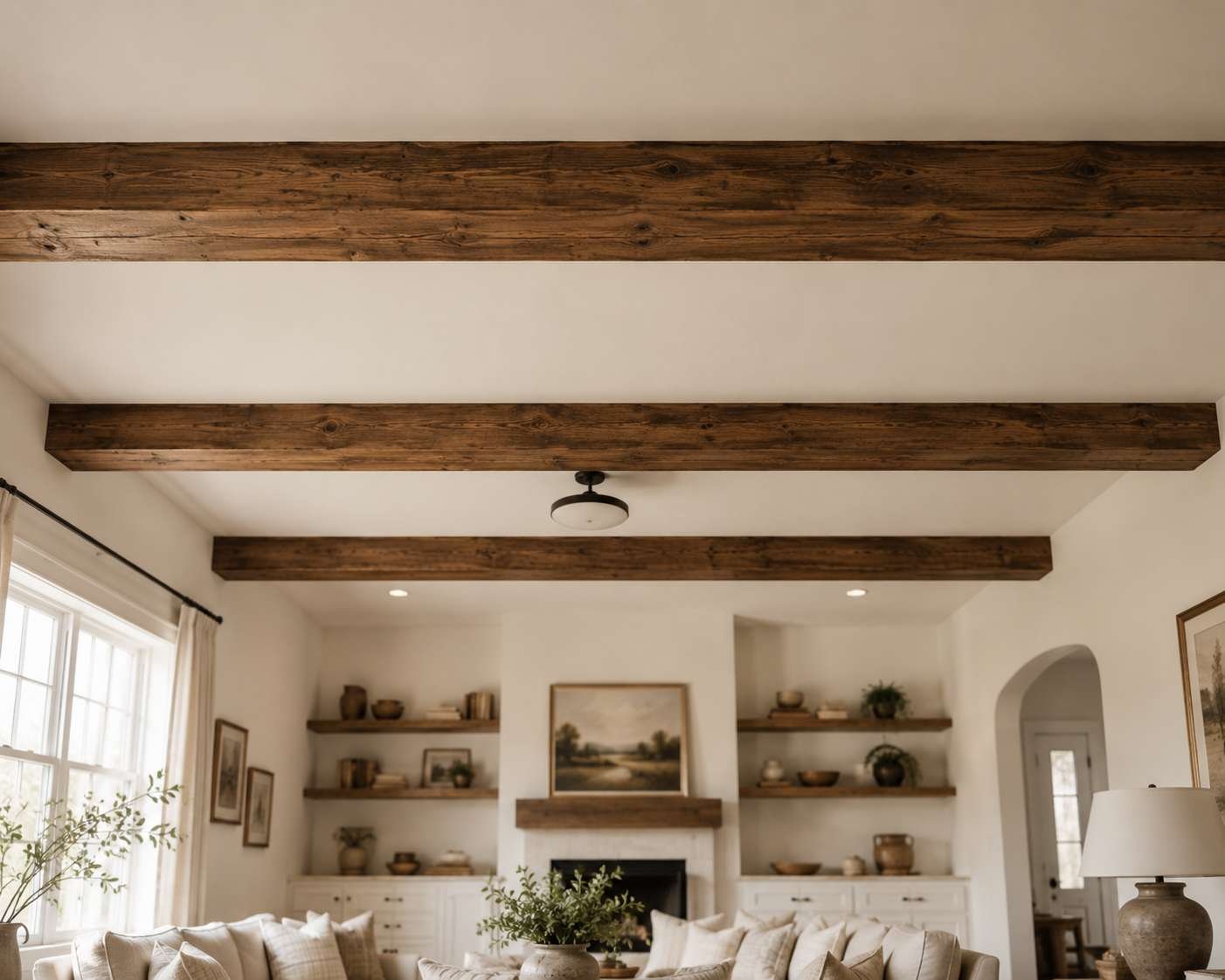
Exposed beams instantly bring architectural interest to a room, especially in homes with flat, builder-grade ceilings. If your house doesn’t have real structural beams, faux wood beams made from lightweight polyurethane or cedar cladding can achieve a similar look for a fraction of the cost and without needing structural changes. Paint them a slightly darker tone than your ceiling so they read as intentional rather than an odd add-on. Spacing matters too. Beams that are placed too close together can make a ceiling feel lower than it actually is, so if you’re adding more than one, measure the room width and try to keep the gaps even and generous rather than cramming them in for the sake of having “more.”
9. Choose Furniture With Turned Legs or Simple Straight Lines, Not Both at Once
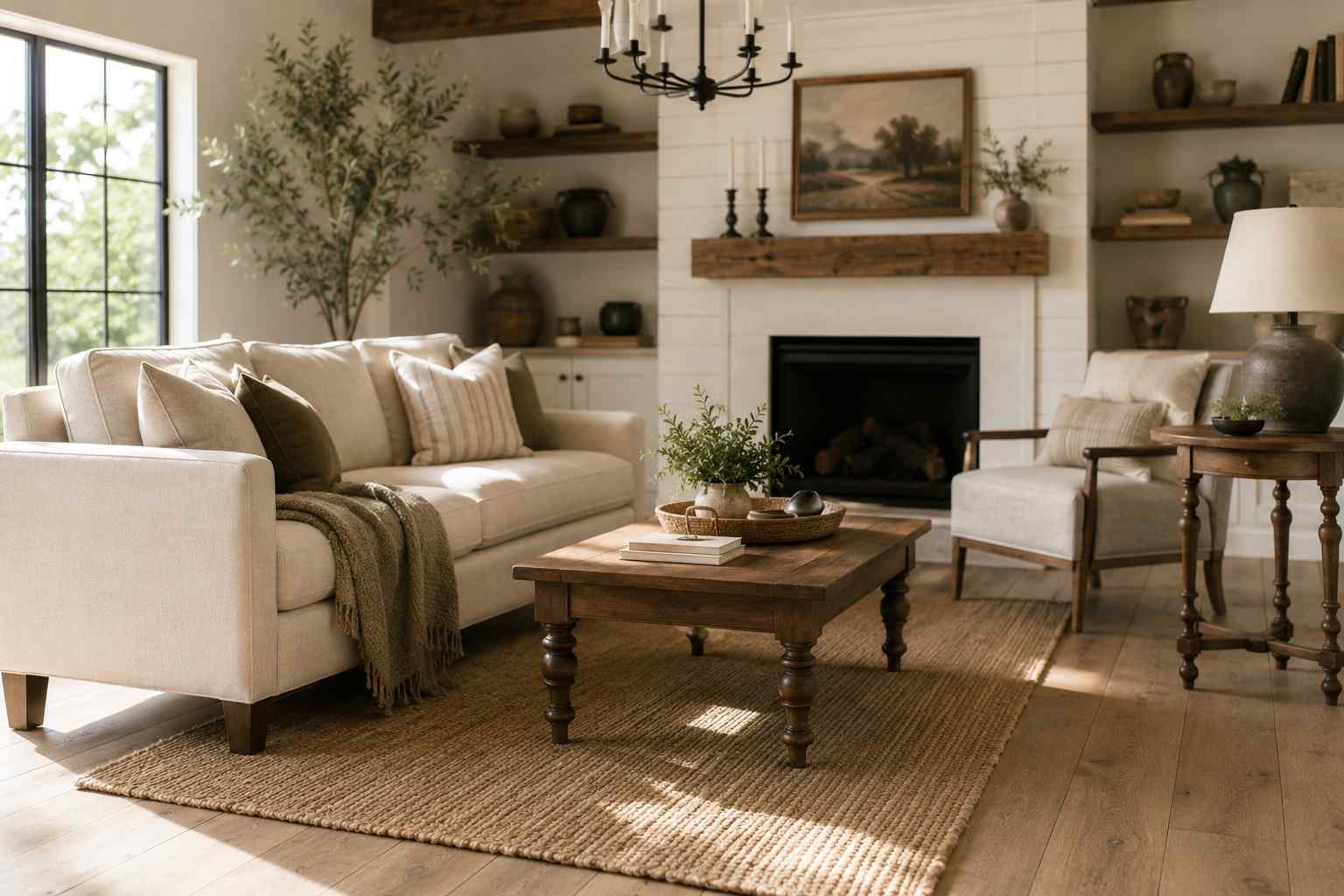
Farmhouse furniture generally falls into two camps: pieces with turned, slightly traditional legs, and pieces with simple, straight modern lines. Mixing a few of each in one room works, but if every single piece has ornate turned legs, the room starts to feel more country cottage than modern farmhouse. Balance is the goal, not uniformity.
10. Bring Greenery Into Every Room, Even Just a Little
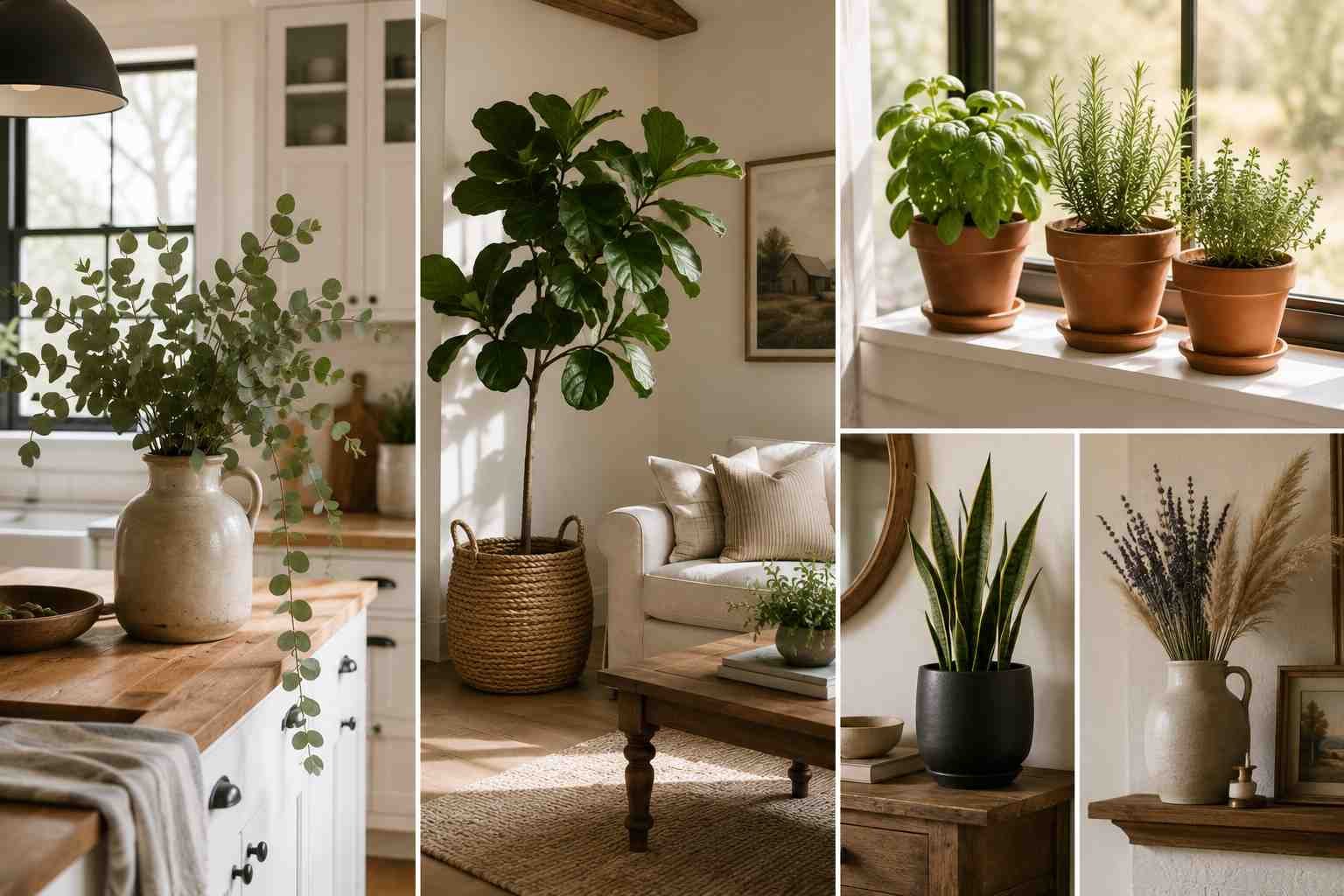
A vase of eucalyptus on the kitchen counter, a potted fiddle leaf fig in the living room corner, or a small herb garden on a windowsill does more for a farmhouse space than most decor purchases. Greenery softens hard surfaces like wood and iron, and it keeps a neutral palette from feeling flat. If you don’t have a great track record keeping plants alive, look for low-maintenance options like snake plants or pothos before giving up on the idea entirely. Dried arrangements, like bunches of dried lavender or pampas grass in a stoneware jug, are also a completely legitimate option if live plants aren’t realistic for your household, and they tend to fit the farmhouse aesthetic just as naturally without the upkeep.
11. Use a Wood Dining Table as the Anchor of the Room
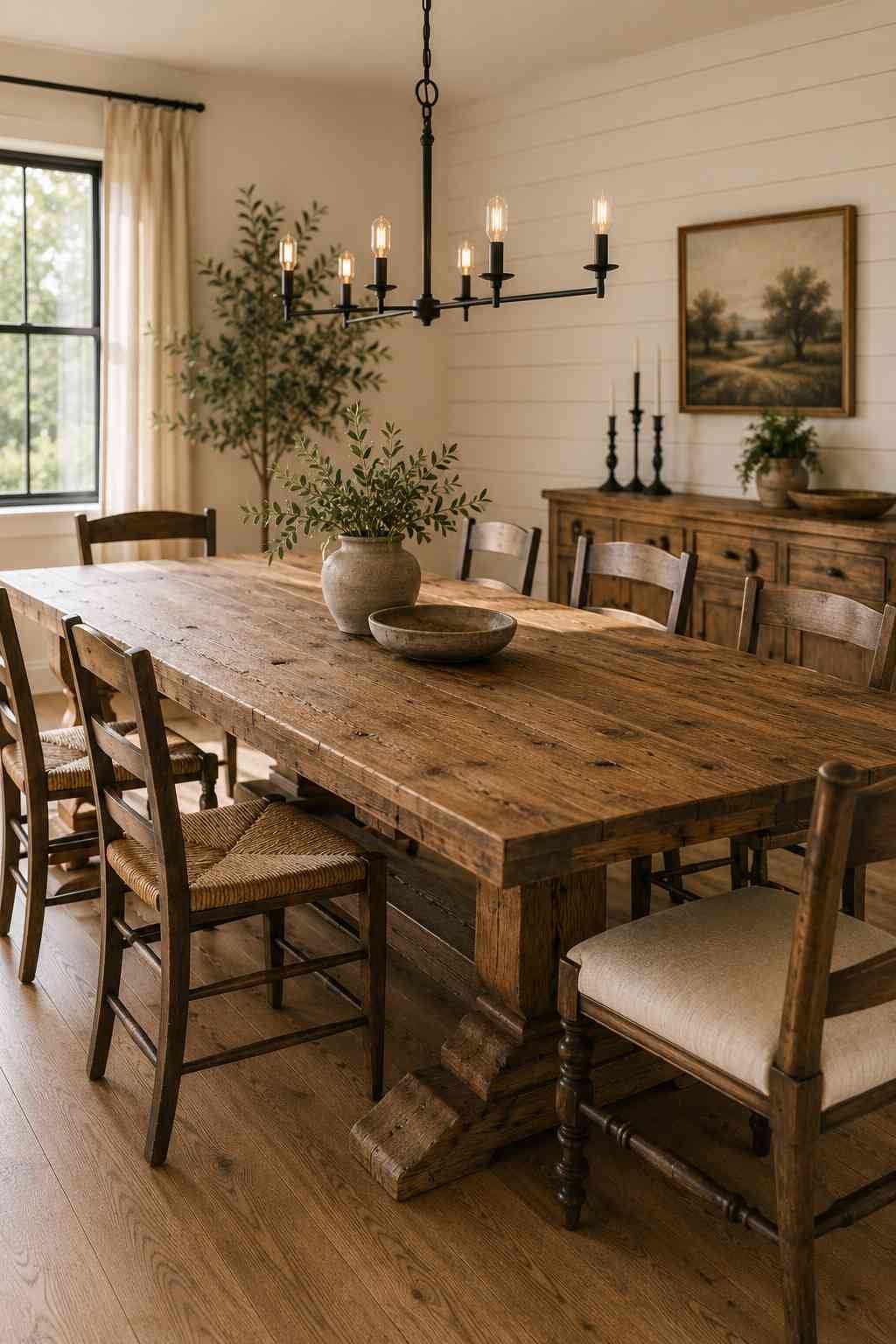
The dining table tends to be the piece that sets the tone for the whole space. A solid wood farmhouse table with a slightly distressed finish works as a visual anchor that everything else can build around, from the chairs to the lighting above it. Avoid glass or glossy lacquered tables in this style since they read as more transitional or contemporary than farmhouse.
12. Pick Woven Pendant Lights for a Softer Alternative to Metal
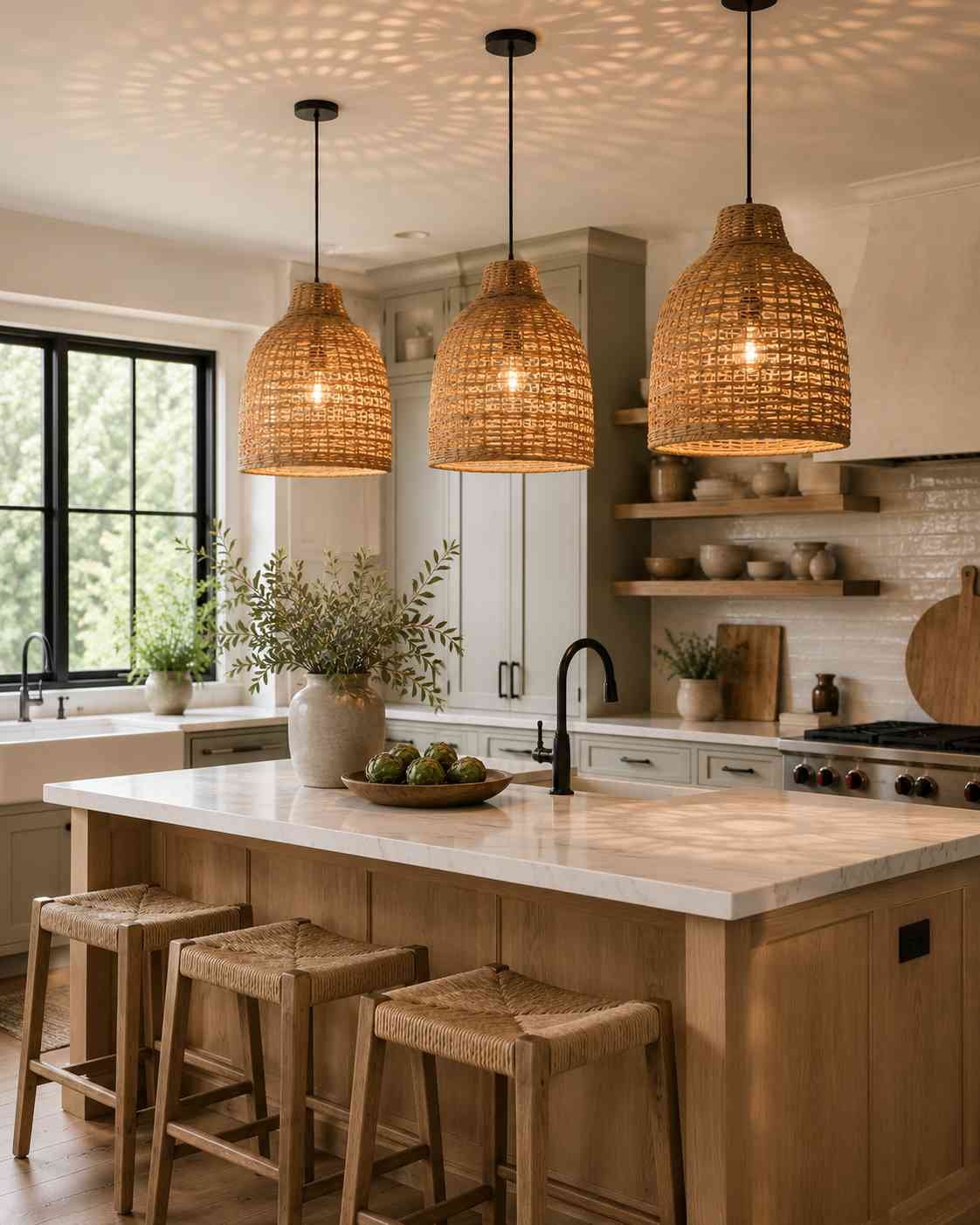
While black metal fixtures give contrast, woven rattan or seagrass pendants add texture and warmth, especially over a kitchen island or dining table. They photograph beautifully and give the room a handmade, natural feel that pairs well with wood tones. Mixing one woven fixture with metal accents elsewhere in the room keeps things from feeling one-note.
13. Bring Vintage Pieces Into a Modern Shell
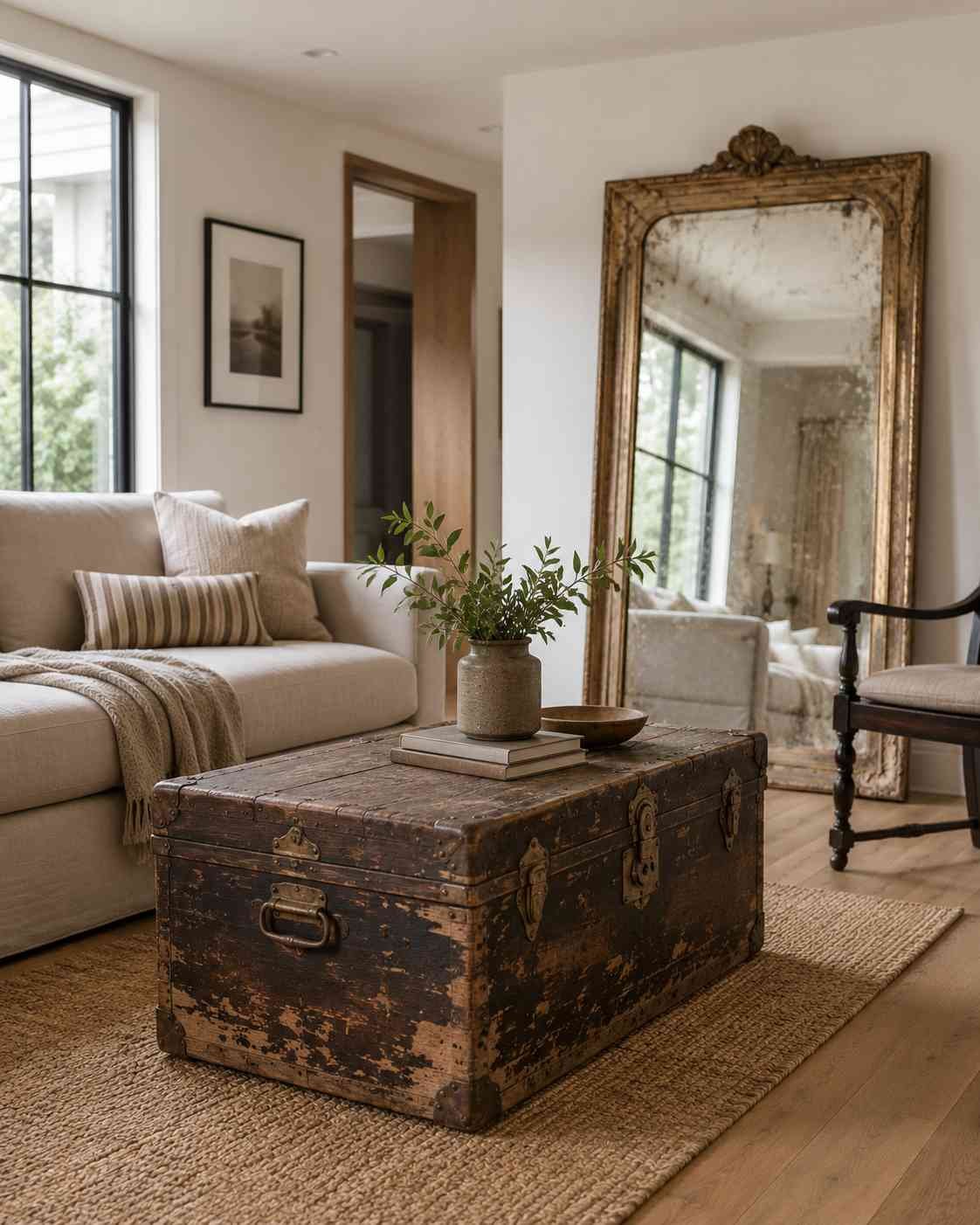
One of the fastest ways to avoid the showroom look is to add a genuinely old piece into a newly renovated space. An inherited dresser, a flea market mirror, or a weathered trunk used as a coffee table gives a room history that new furniture can’t replicate on its own. Even one vintage find in an otherwise new room does a lot to make the space feel personal rather than staged. Estate sales, local auction sites, and secondhand marketplaces are usually better sources for this than antique stores, since prices tend to be lower and the selection changes constantly, which means you’re less likely to end up with the exact same piece someone else already used in their living room.
14. Keep Window Treatments Simple
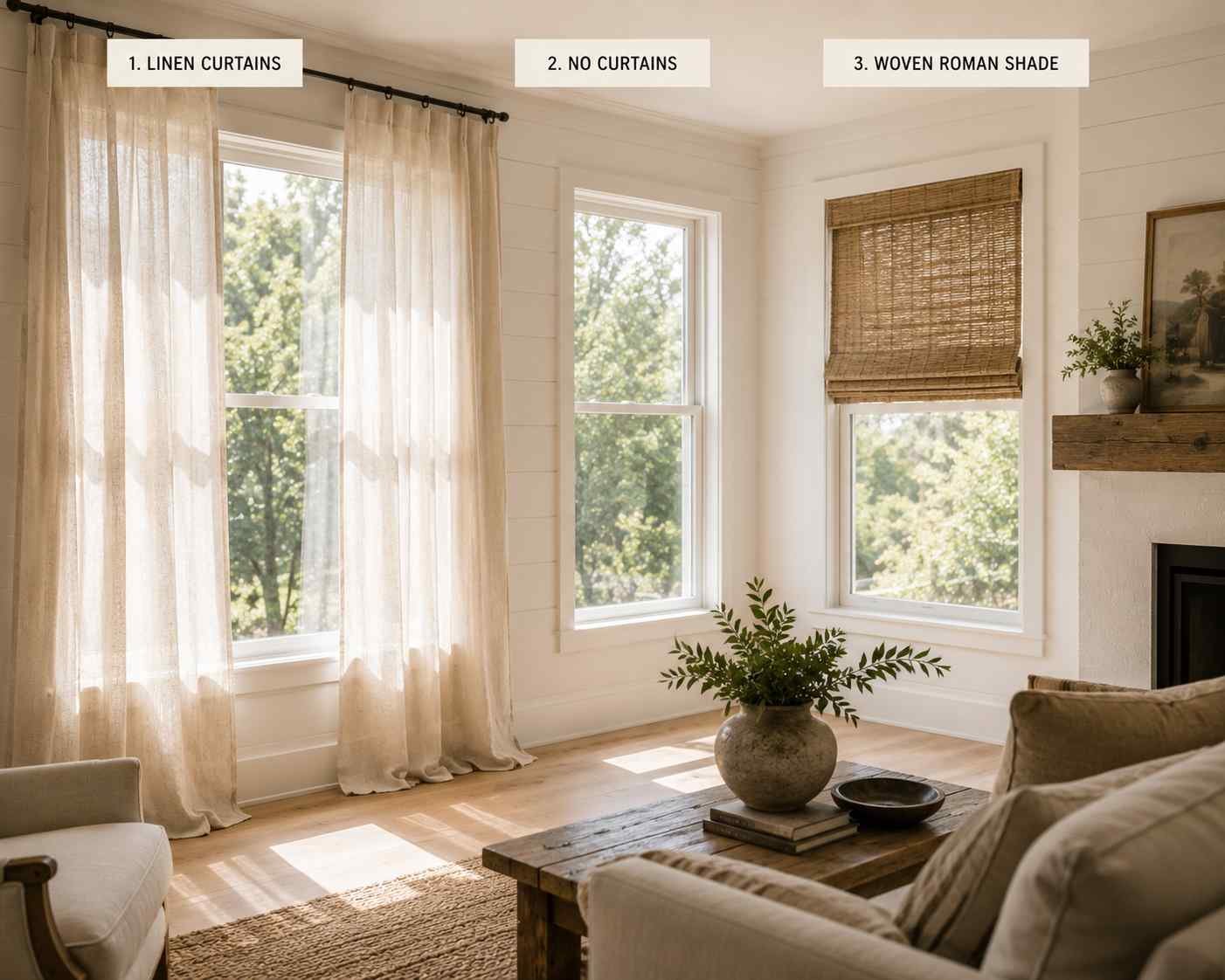
Heavy, ornate drapes work against the relaxed feel farmhouse style is going for. Simple linen curtains in a neutral tone, or in some cases no curtains at all if privacy allows, keep the focus on the architecture and light rather than the fabric. If you need more privacy, roman shades in a natural woven material are a good middle ground.
15. Use a Neutral Rug With Texture Instead of a Bold Pattern
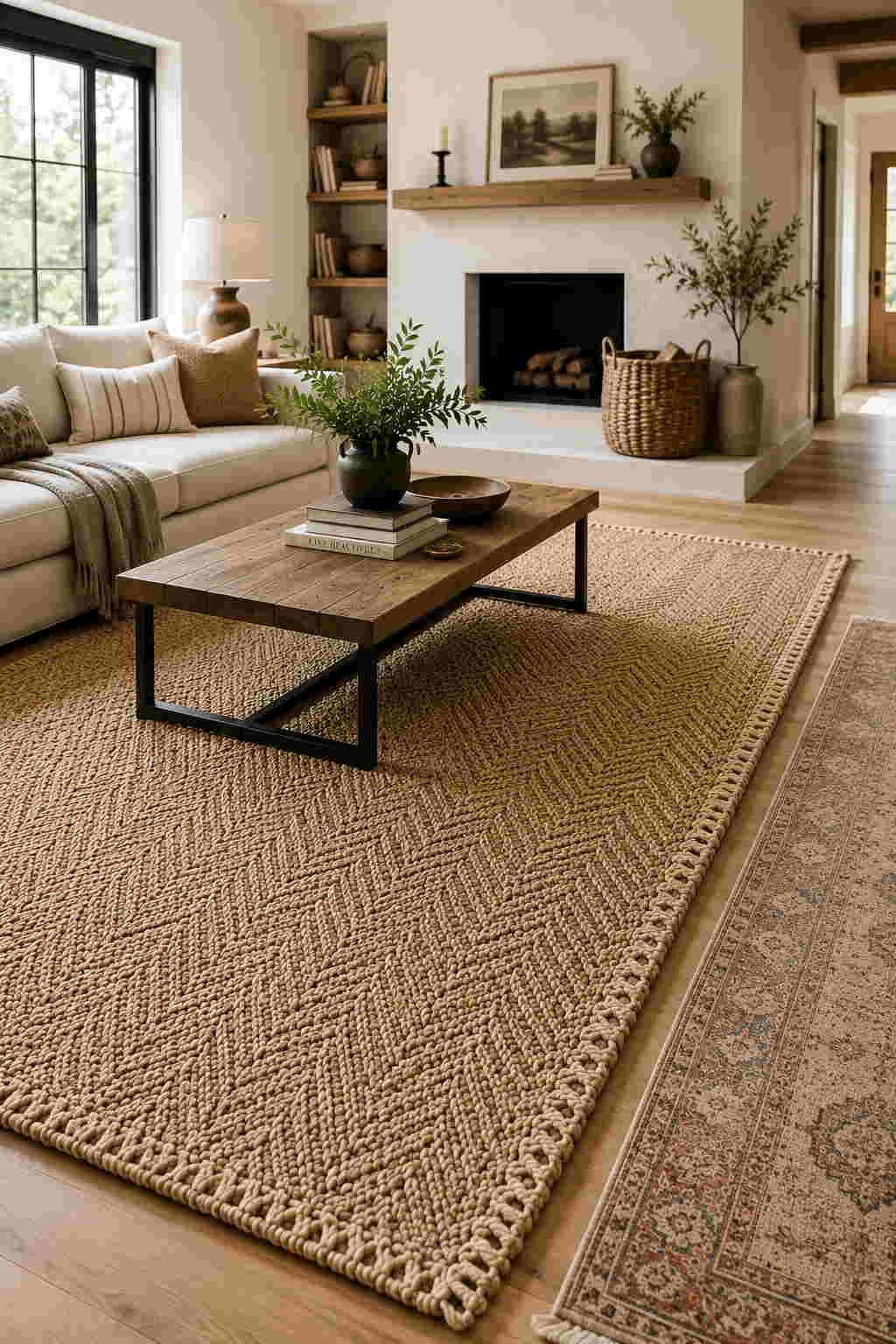
Jute, sisal, or wool rugs with subtle texture rather than loud patterns tend to work better in this style. They ground a room without competing with the wood tones and black accents already doing visual work. If you want pattern, keep it subtle, like a faded vintage-style rug rather than something with sharp geometric shapes.
Also Check – Living Room Decor Ideas
16. Give the Bathroom a Farmhouse Feel With Fixtures, Not Just Tile
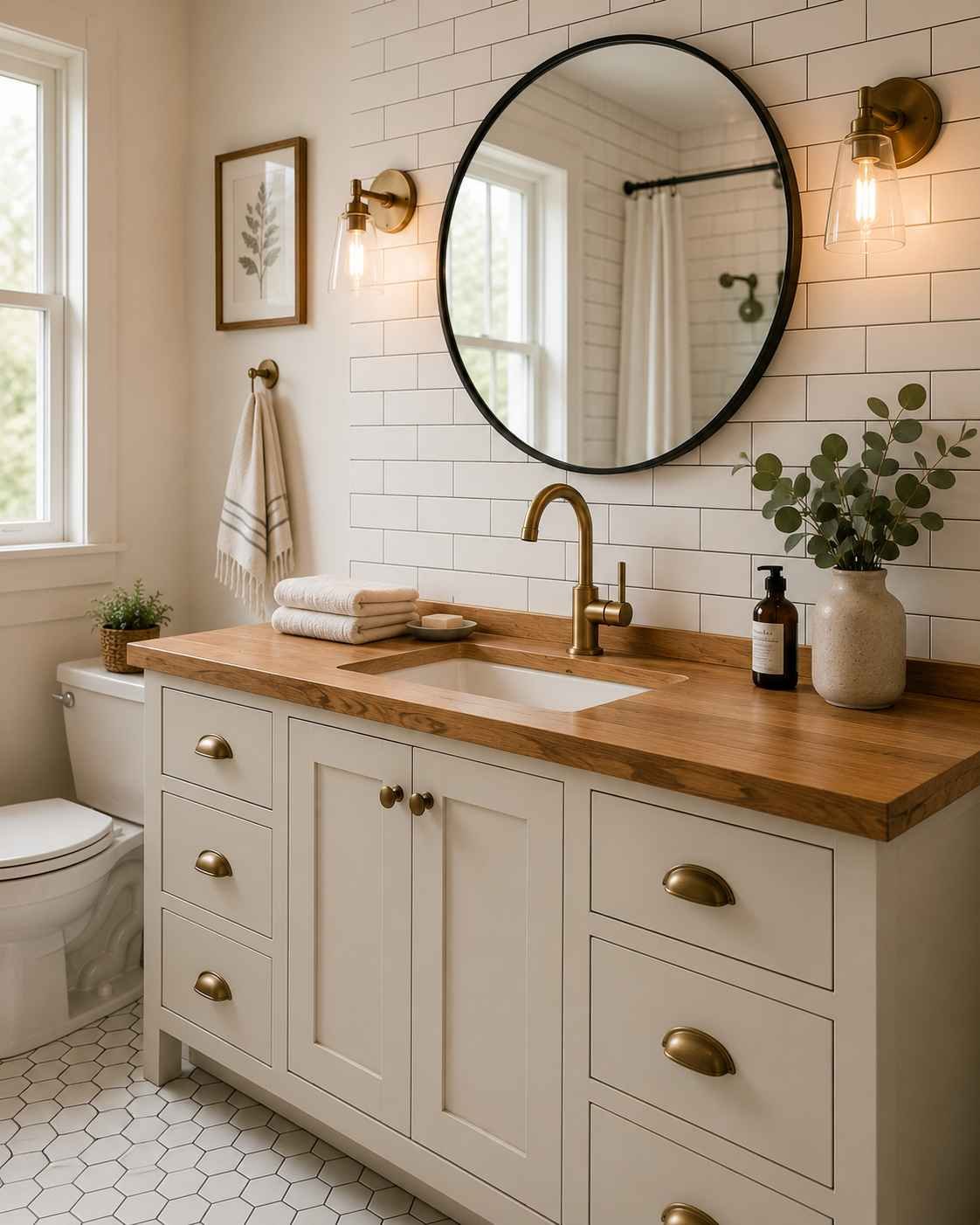
It’s easy to overdo shiplap in a bathroom and forget the fixtures matter just as much. A black or brushed brass faucet, a simple vanity with shaker-style cabinet fronts, and a round mirror with a wood or black frame will do more for the farmhouse feel than patterned tile alone. Keep the tile simple, like a classic subway pattern, and let the hardware carry the character. A wood-topped vanity or a butcher block counter instead of stone is another small detail that pushes a bathroom further into farmhouse territory without requiring a full gut renovation, though it does need to be sealed properly to handle moisture over time.
17. Choose a Statement Range Hood for the Kitchen
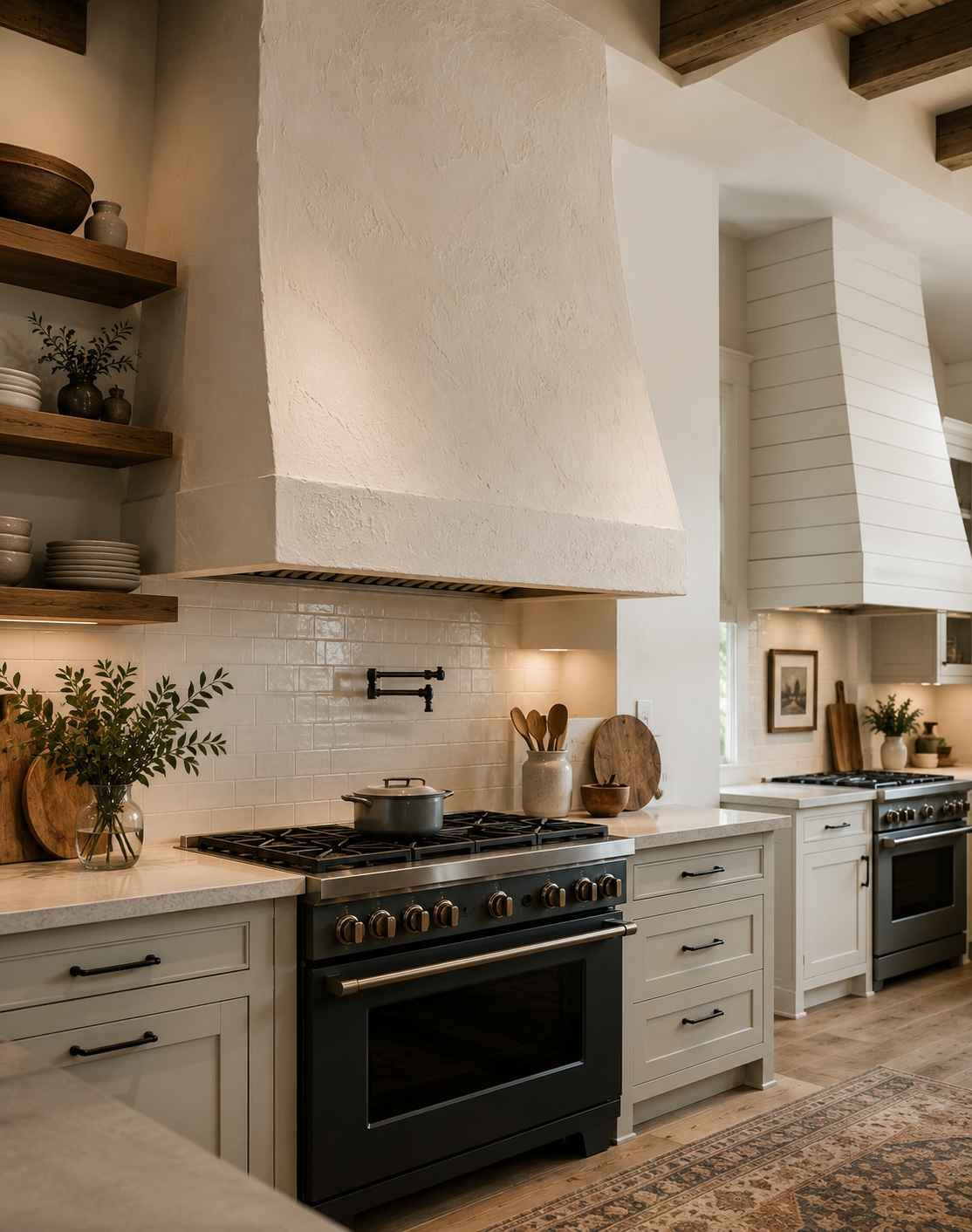
A custom wood or plaster range hood above the stove has become one of the defining features of higher-end modern farmhouse kitchens. It draws the eye upward and gives the cooking area a built-in, architectural feel rather than looking like an appliance was just installed. Even a simpler version clad in shiplap can achieve a similar effect on a smaller budget. If a full custom hood isn’t in the cards, a slim stainless insert hidden behind a wood or plaster surround is usually the more affordable route, and most cabinet installers can build one during a standard kitchen renovation without needing a specialty contractor.
18. Don’t Ignore the Entryway
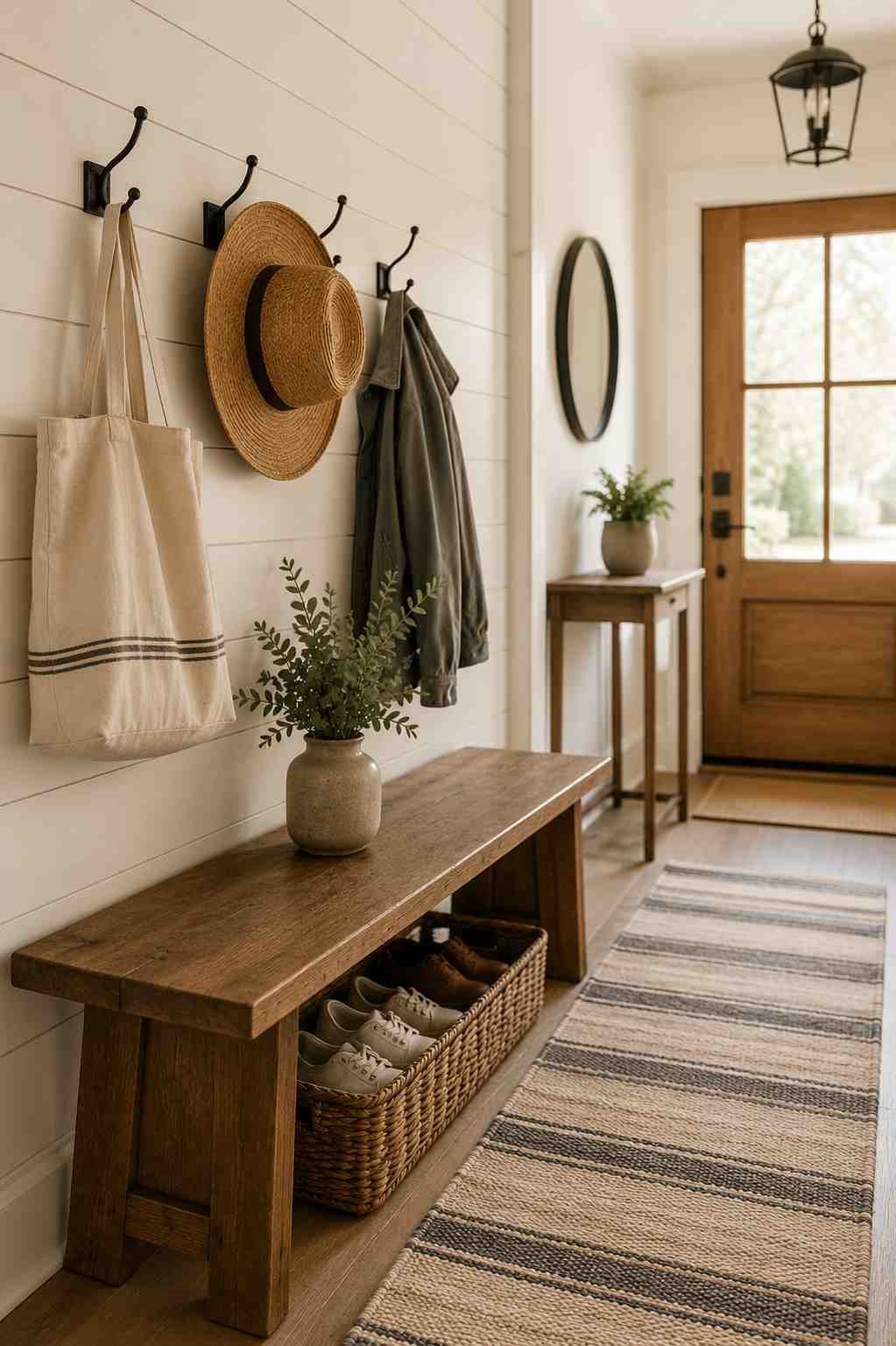
The entryway sets expectations for the rest of the house, so it’s worth giving it some attention even if it’s a small space. A bench with hooks above it, a woven basket for shoes, and a simple runner rug turn a functional mudroom-style entry into something that still feels styled. Keep the color palette consistent with the rest of the home so it doesn’t feel disconnected the moment someone walks in.
19. Use Board and Batten Instead of Shiplap for Variety
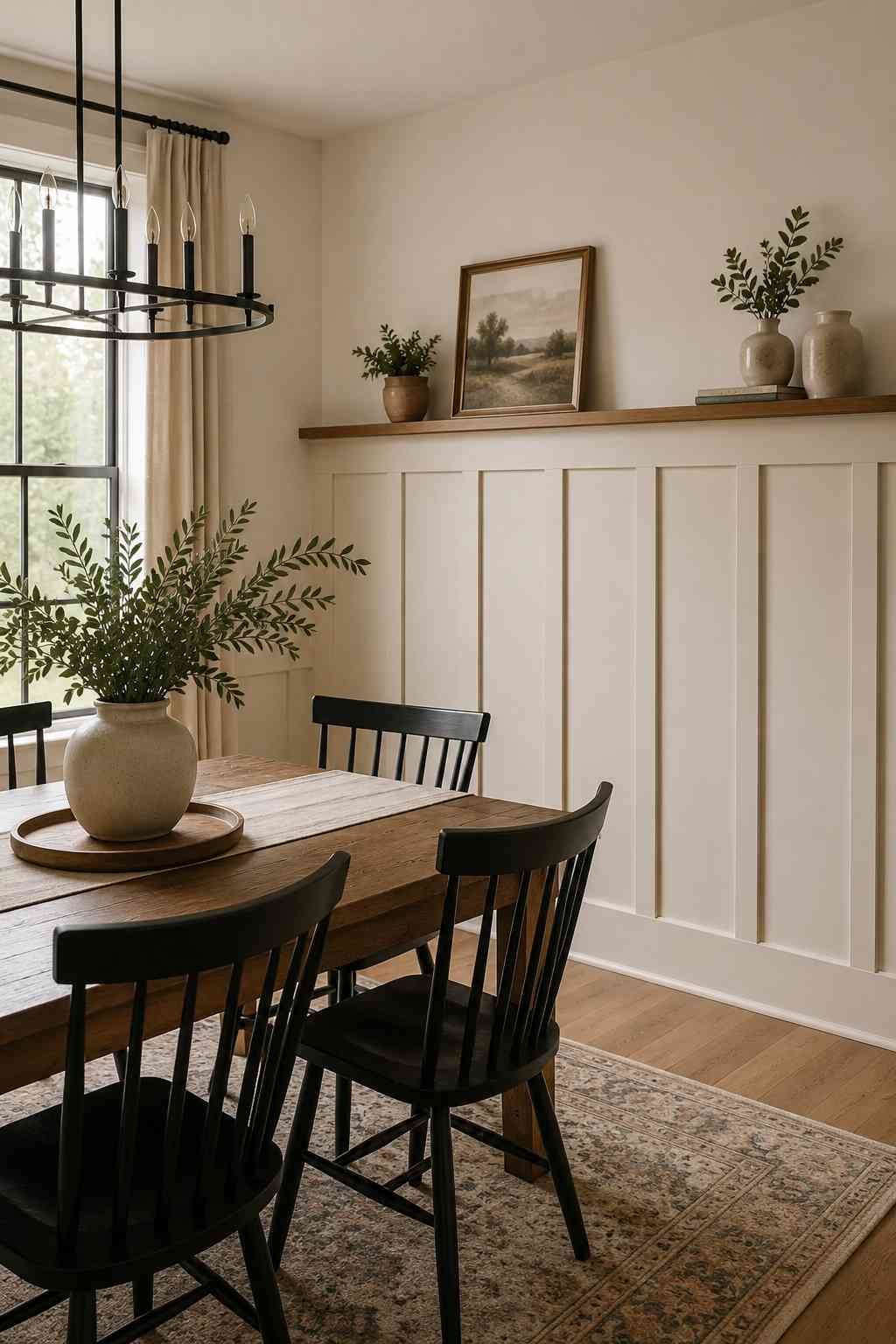
If you love the textured wall trend but don’t want another shiplap wall, board and batten offers a different rhythm with vertical lines instead of horizontal ones. It works especially well in dining rooms, hallways, or as a half-wall treatment topped with a wood shelf. It reads as slightly more polished than shiplap, which can be useful in more formal rooms like a dining area.
20. Balance Rustic Elements With At Least One Sleek, Modern Piece Per Room

Every room needs something that pulls it firmly into “modern,” whether that’s a streamlined leather sofa, a glass-and-metal coffee table, or a minimalist light fixture. Without at least one clean, contemporary piece, a room can drift toward old-fashioned country style instead of modern farmhouse. This one piece doesn’t need to dominate the room, it just needs to be present.
21. Let Function Guide the Final Layout
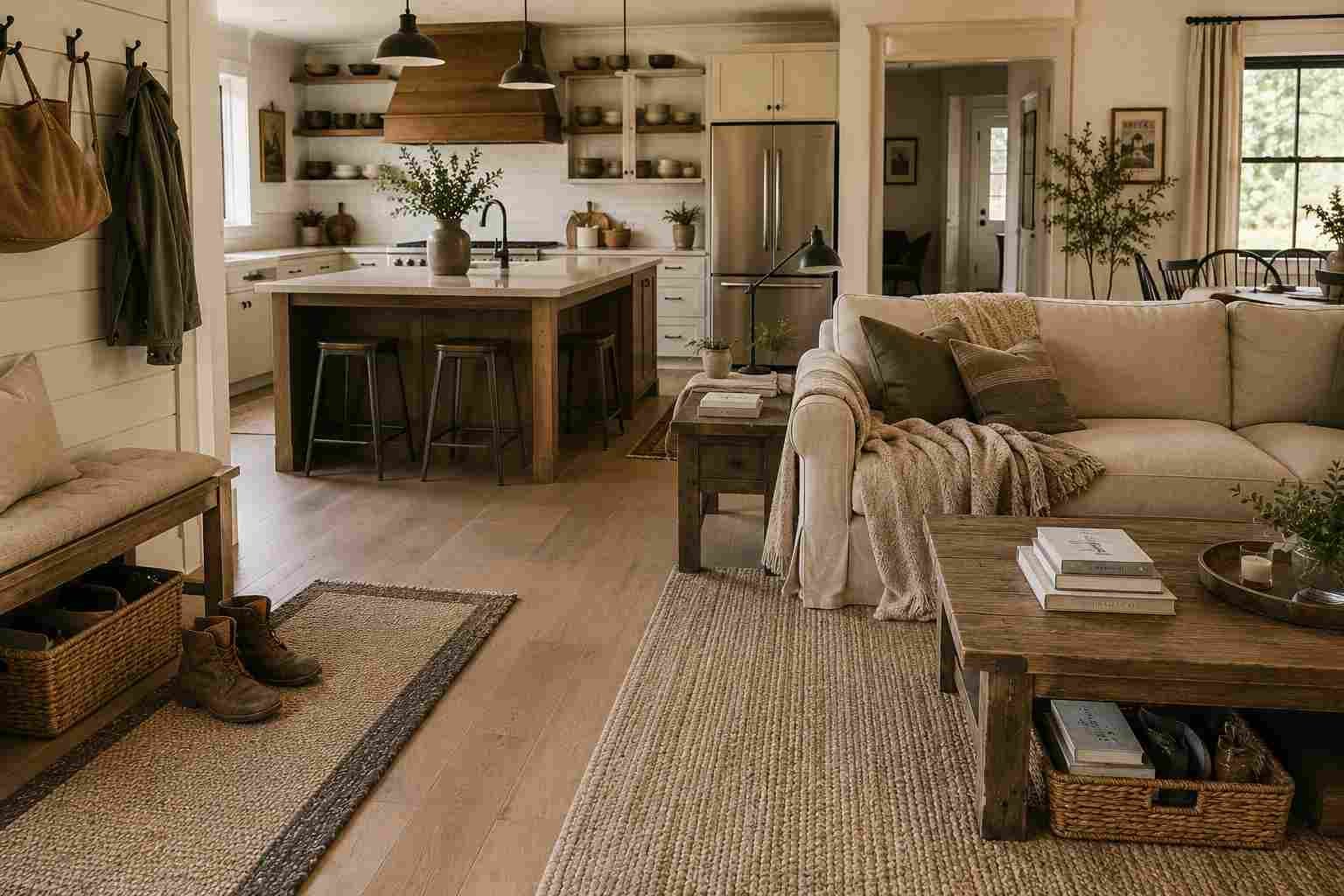
It’s tempting to arrange a room entirely around how it will photograph, but farmhouse style is meant to feel lived-in and practical above all else. Before finalizing furniture placement, think about how the room will actually be used day to day, whether that’s a mudroom bench that needs to hold muddy boots or a kitchen island that needs enough clearance for stools. A room that works well for daily life will almost always look better over time than one arranged purely for looks.
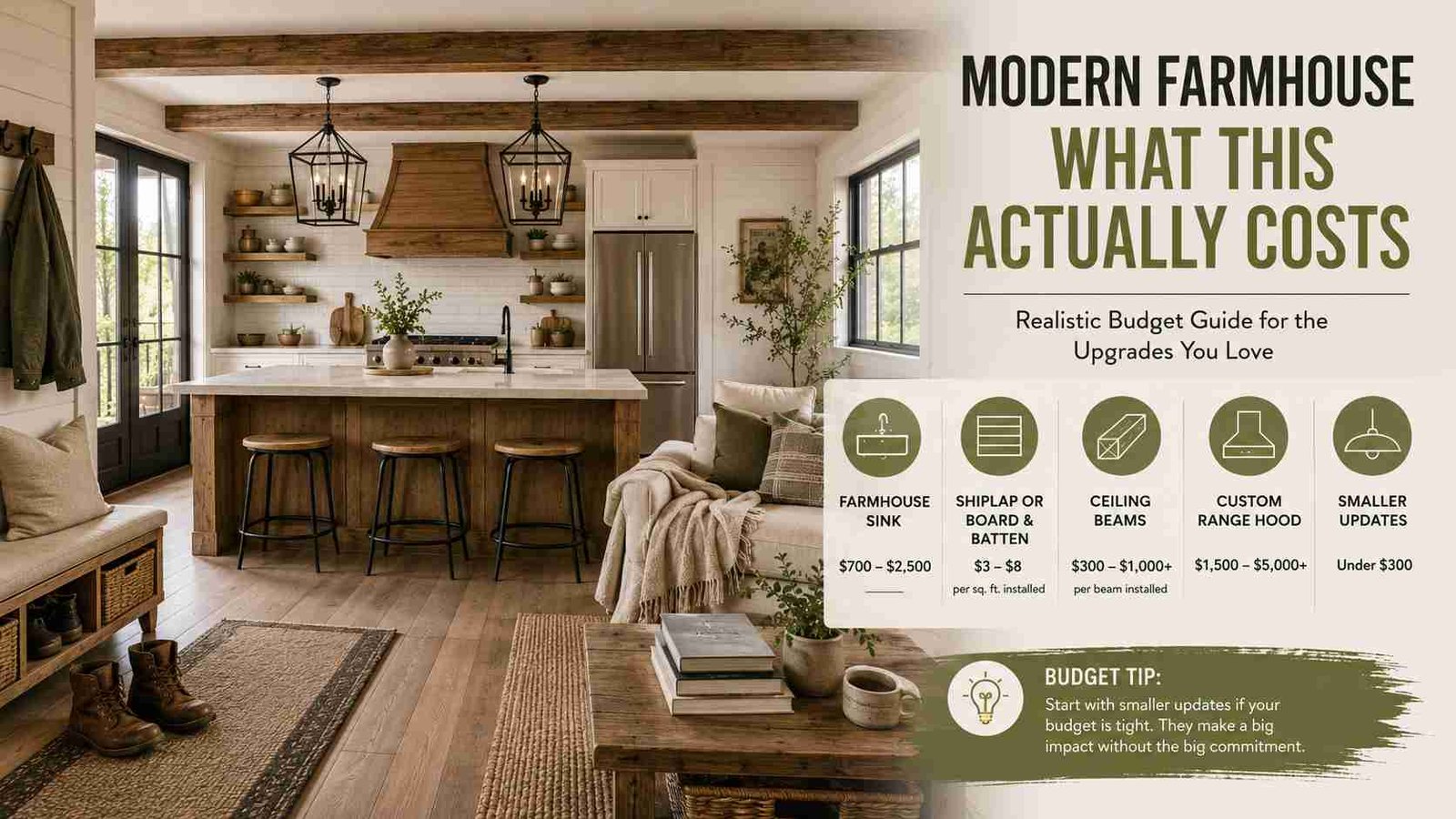
What This Actually Costs
People usually ask about budget somewhere in the middle of a project, right after they’ve already fallen in love with a look and started wondering if it’s realistic. So here’s a rough breakdown of what the bigger-ticket items on this list tend to run, based on typical U.S. pricing. These are ballpark figures, not quotes, since labor rates and material costs shift a lot by region, so treat them as a starting point for your own research rather than a final number.
Farmhouse sink: A full installation, including the sink itself and the plumbing and cabinet work to fit it, usually lands somewhere between $700 and $2,500. Stainless steel is the cheapest material to go with, fireclay sits in the middle, and copper or cast iron push toward the higher end. Undermount installs cost more than top-mount because the countertop has to be cut to fit.
Shiplap or board and batten: Expect somewhere around $3 to $8 per square foot installed for a standard accent wall, which usually works out to $300 to $1,500 depending on how large the wall is and whether you go with basic pine or a nicer wood species. Peel-and-stick versions can cut that cost significantly if you’re comfortable doing it yourself over a weekend.
Ceiling beams: Real reclaimed wood beams are the most expensive route and can run into the thousands depending on how many you need and how far they have to be shipped. Lightweight faux beams made from polyurethane or cedar cladding are a much more affordable alternative and often cost a few hundred dollars per beam installed, which is why most homeowners go this route unless they specifically want reclaimed material.
Custom range hood: This is one of the pricier upgrades on the list. A custom wood hood typically runs somewhere between $1,500 and $5,000 depending on size and detailing, while copper or stone versions can go well beyond that. A simpler shiplap-clad cover built around a standard insert during a kitchen renovation is usually far more affordable than ordering a fully custom piece.
Smaller updates: Black hardware swaps, a new light fixture, a rug, or a few vintage finds can each be done for well under $300 and are the easiest way to shift a room’s feel without committing to a bigger renovation. If your budget is tight, this is where I’d start.
A good rule of thumb is to get at least two or three quotes before hiring anyone for the bigger jobs, since prices for the same work can vary quite a bit between contractors in the same area. And if you’re doing a full room at once, it usually makes sense to prioritize the sink, flooring, or cabinetry first, since those are the hardest and most disruptive to change later, and save the lower-cost items like textiles and lighting for whatever budget is left over.
Bringing It All Together
Modern farmhouse design holds up over time because it’s flexible. You don’t need to commit to every element on this list, and honestly, trying to use all 21 ideas in one house would probably backfire and feel overdone.
Pick the ones that fit your space, your budget, and how you actually live, then build outward from there.
The rooms that feel the most successful are usually the ones where a homeowner made a few confident choices, like a black-framed window here or a reclaimed beam there, rather than trying to recreate an entire showroom look in one go.
Give a space time to develop. Add a vintage piece when you find one you genuinely like instead of rushing to fill every corner, and the room will end up feeling collected rather than assembled.
If you’re just starting a farmhouse-inspired update, my honest suggestion is to begin with the big, expensive decisions first, things like flooring, cabinetry, and wall color, since those set the tone for everything else.
Once those are locked in, the smaller layers like textiles, lighting, and accessories are much easier to get right, and far easier to change later if your taste shifts down the road.
It also helps to walk through your home room by room and ask what’s actually missing rather than what’s trendy. Sometimes the answer is a single black light fixture.
Other times it’s clearing out furniture that no longer fits the space, since farmhouse style loses its charm fast once a room feels crowded.
A house that leans too heavily on decor and too lightly on good bones will always feel like it’s trying, while a house with solid flooring, well-chosen wood tones, and a few personal touches will feel effortless even years after the trend fades.
One last thing worth mentioning: budgets and timelines rarely go exactly as planned.
I’ve watched plenty of renovations stretch on longer than expected because a custom range hood took months to arrive, or because reclaimed wood beams needed extra treatment before installation.
Building in some flexibility, both in your schedule and your spending, will save a lot of frustration. Farmhouse style, more than most others, rewards patience.
The best rooms in this style are usually the ones that were built up gradually, piece by piece, rather than purchased all at once.
[…] look like they were pulled straight out of a 1930s farmhouse. If you’re already exploring a broader farmhouse kitchen look, this is usually the anchor piece everything else gets built […]
[…] if farmhouse sinks caught your eye above, our comparison of farmhouse sink materials and their pros and cons is a good next stop before you buy […]