

If you’ve got a brick wall in your living room, consider yourself lucky.
I know that sounds strange if you’re the one staring at it wondering how to make it look intentional instead of unfinished, but after living with one for years and slowly figuring out what works (and what absolutely doesn’t), I can tell you a brick wall is one of the easiest features to build a beautiful room around.
It already has texture, warmth, and character — three things most people spend a fortune trying to fake with paint and wallpaper.
This isn’t a designer’s theory-based list.
Everything here comes from trial and error, from moving furniture around a dozen times, from hanging things that looked great in photos but terrible in my actual light, and from finally landing on combinations that made the room feel finished.
Whether your brick is a rustic red exposed wall, a whitewashed accent, or a single feature panel, these 21 ideas will help you decorate around it the smart way.
1. Let the Brick Be the Star, Not the Backdrop
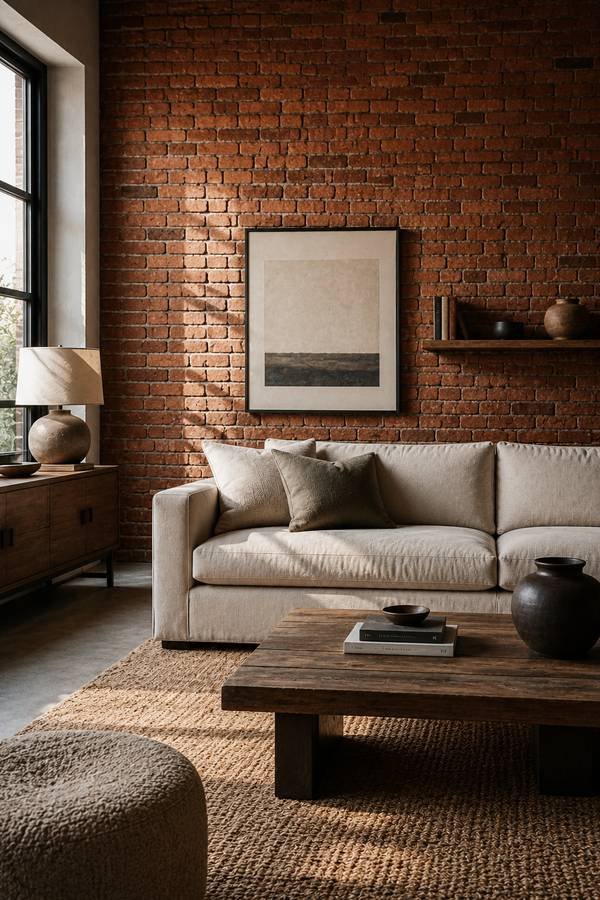
The biggest mistake I made early on was trying to compete with the brick — hanging busy art, using bold patterned curtains, adding too much color. Brick already has so much going on texturally that it needs a supporting cast, not competition. Keep your furniture and accessories simpler in shape and pattern, and let the wall’s natural texture do the visual work. A plain linen sofa in a neutral tone next to raw brick looks more expensive than most furniture showroom setups.
Quick tip: If you’re unsure where to start, start here. Simplify everything else first, then add personality back in slowly.
2. Go Neutral With Your Color Palette
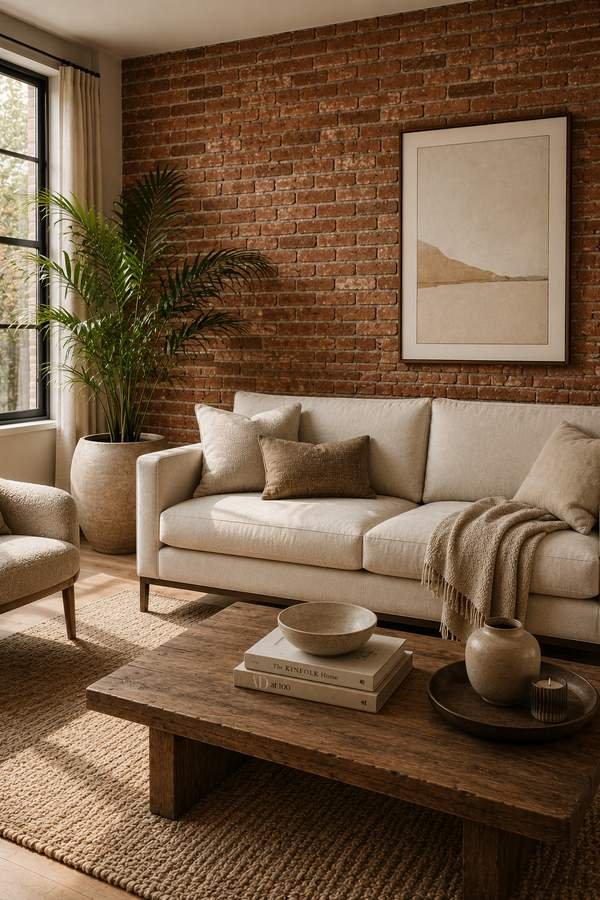
Brick already brings warm reds, oranges, and browns into the room, so building the rest of your palette around soft neutrals — cream, oatmeal, warm gray, soft white — keeps things feeling calm instead of chaotic. I learned this after trying a deep navy accent wall alongside red brick and immediately regretting it. The two competed instead of complemented. Neutrals let the brick breathe and give your eyes a place to rest.
3. Add Warm Metallics for Contrast

Brass, copper, and warm gold accents play beautifully off brick because they share the same warm undertone. A brass floor lamp, copper picture frames, or gold-rimmed mirrors add a bit of shine without fighting the rustic texture of the wall. I added a small brass side table next to my brick wall and it instantly made the whole corner feel curated rather than accidental.
4. Mount a Statement Mirror
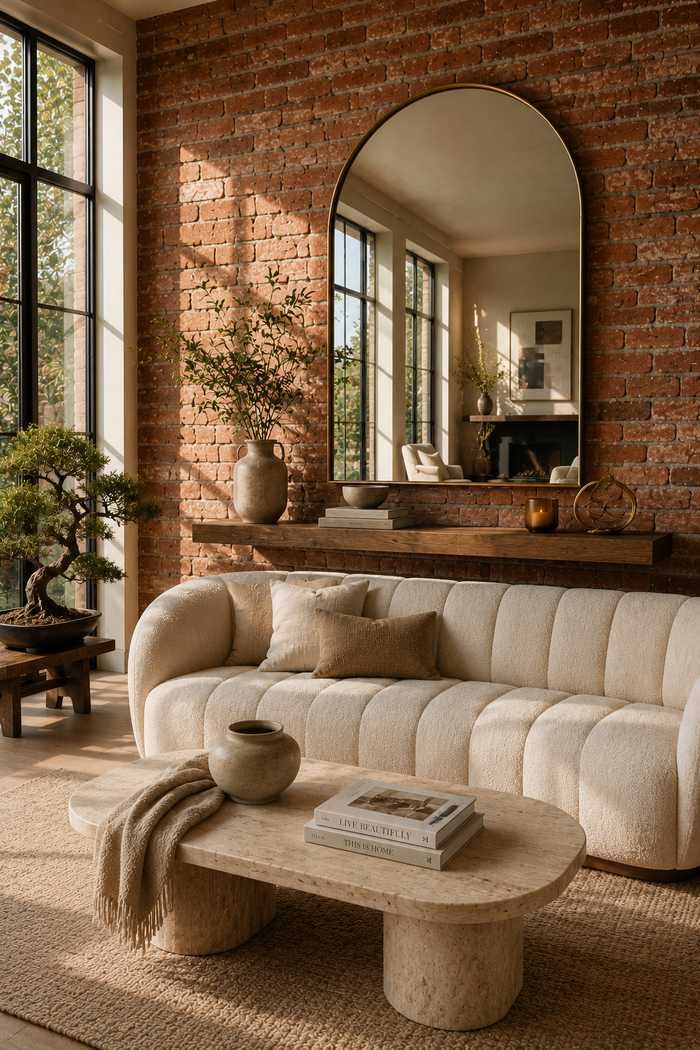
A large mirror on or near a brick wall does double duty — it bounces light around the room (which brick walls can sometimes absorb, making a space feel darker) and it softens the ruggedness of the brick with a smooth, reflective surface. Round or arched mirrors work particularly well because their curves offset the hard lines and grid pattern of the brick.
5. Install Floating Wood Shelves
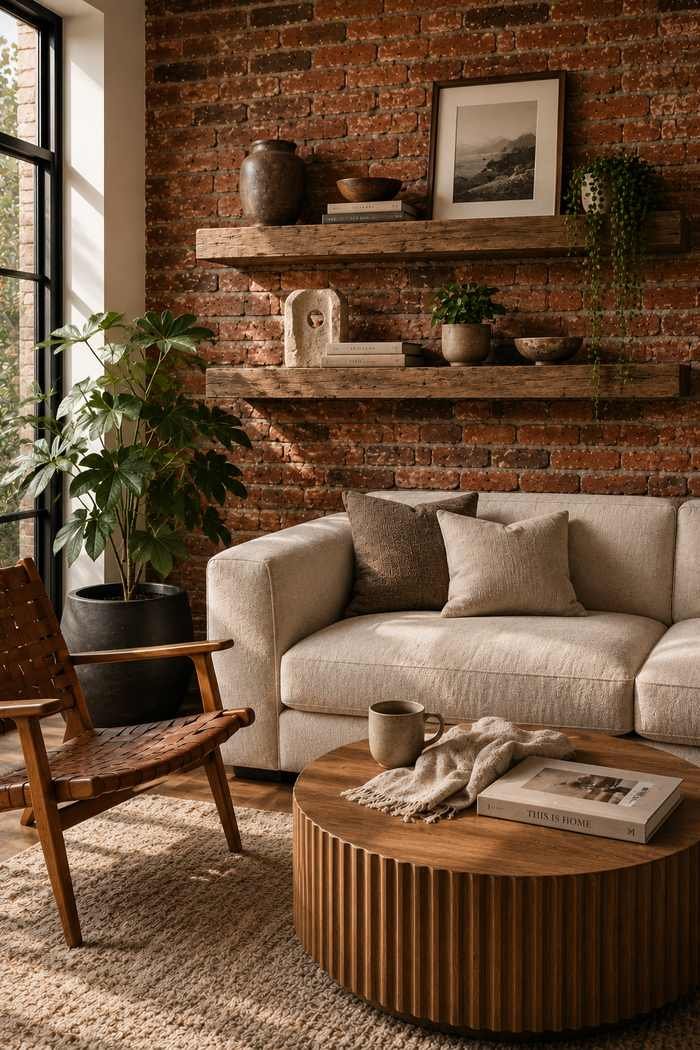
Nothing pairs with brick quite like raw or stained wood. Floating shelves mounted directly onto or beside a brick wall create a rustic-industrial look that’s genuinely one of my favorite combinations. I use mine for books, small plants, and a few framed photos, and it’s become the first thing guests comment on. The trick is not overcrowding the shelves — three or four well-chosen items look far better than ten crammed together.
6. Hang String Lights or Warm LED Strips
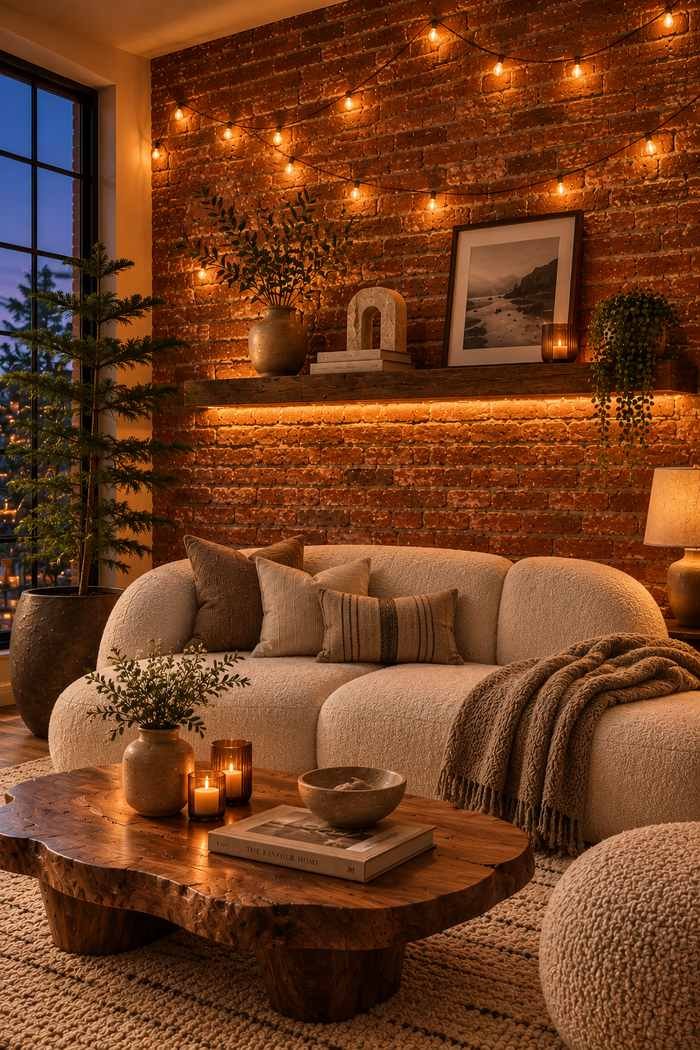
Brick walls tend to soak up light rather than reflect it, so supplemental lighting matters more here than on a painted wall. Warm-toned string lights draped loosely across the brick, or a subtle LED strip tucked behind a shelf, add a cozy glow that highlights the wall’s texture at night without turning your living room into a dorm room. Stick to warm white tones (2700K–3000K) rather than cool white for the best effect.
Quick tip: Cool white light on brick reads clinical and flattens all that texture you’re trying to show off. Always go warm.
7. Use a Gallery Wall — But Sparingly
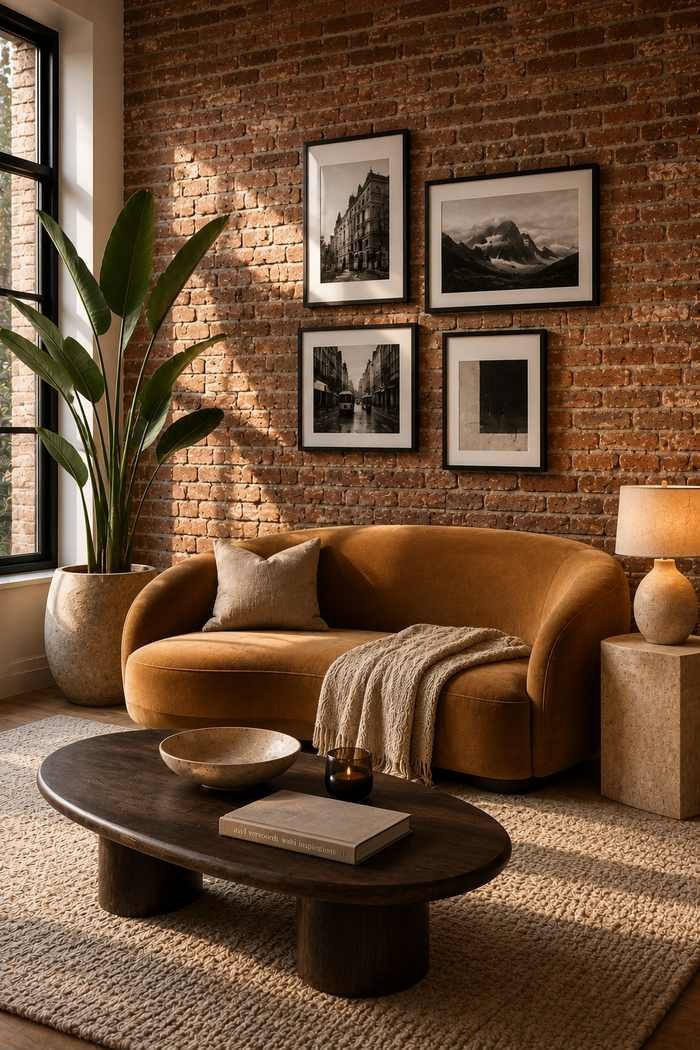
A full gallery wall crammed with frames can look cluttered against brick’s already busy texture, but a small, curated cluster of 3 to 5 frames in matching or complementary finishes works beautifully. I framed a few black-and-white photos in simple black frames and mounted them slightly off-center on my brick wall, and the contrast between the smooth frames and rough brick gives the whole arrangement depth.
8. Bring in Leather Furniture
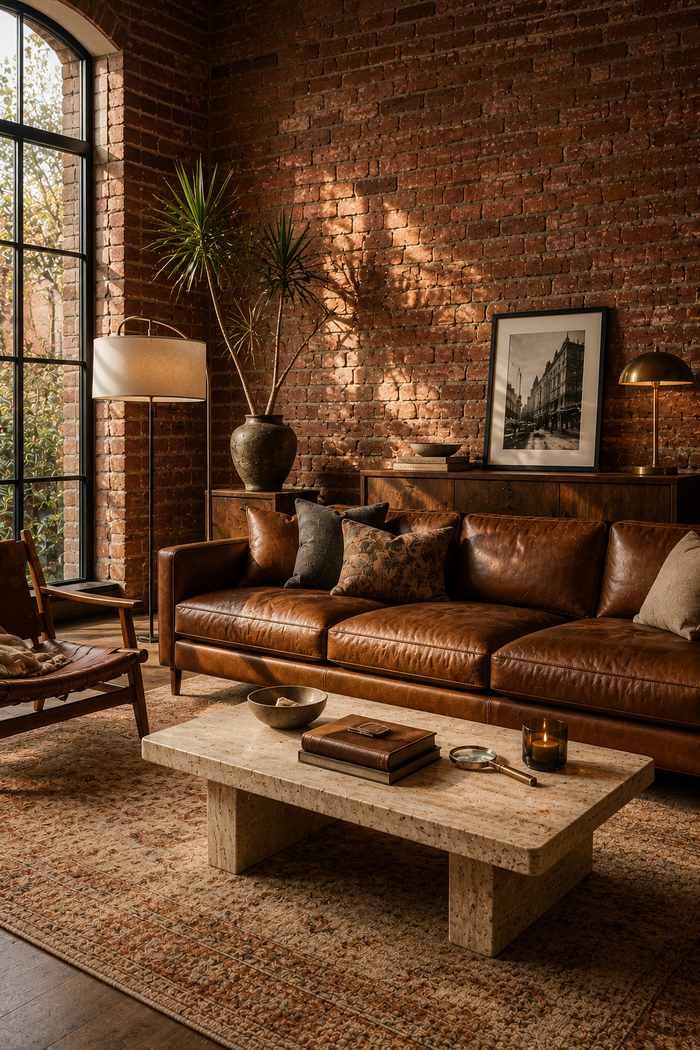
Leather and brick are a classic pairing for a reason — both age well, both have natural texture, and both lean into that warm, lived-in aesthetic. A leather armchair or a tan leather sofa against a brick wall instantly gives a room that “old library meets modern loft” feel without trying too hard.
9. Layer in Plants and Greenery
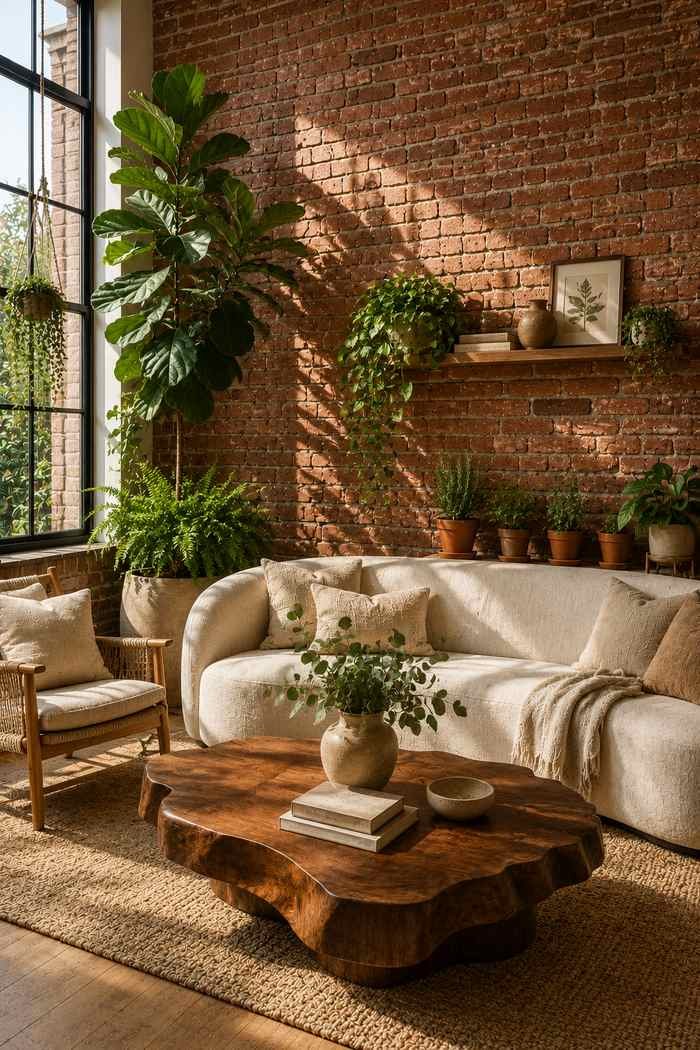
Brick can feel a little heavy and masculine on its own, so greenery softens it instantly. A tall fiddle leaf fig in the corner, a trailing pothos on a shelf, or a row of small potted plants along the base of the wall introduces life and color that brick alone can’t provide. I rotate a few plants seasonally, and it’s an easy, low-cost way to refresh the space.
10. Add a Textured Area Rug
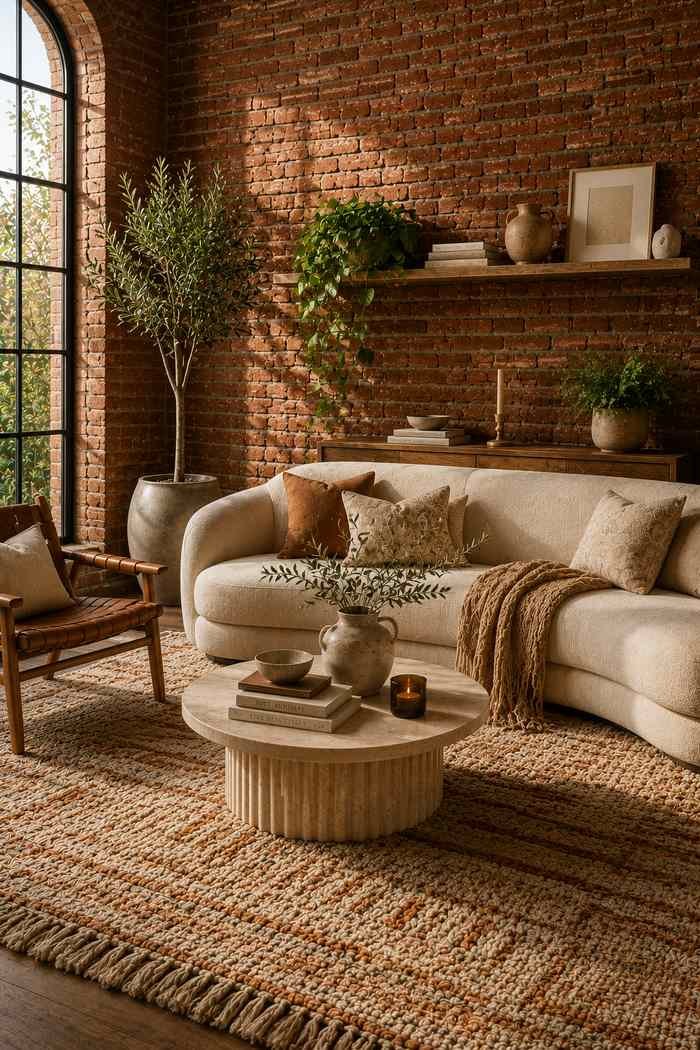
Since the brick wall already carries a lot of texture vertically, balancing it with a textured rug horizontally — think chunky wool, jute, or a flatweave pattern — ties the whole room together. A rug with warm undertones (rust, cream, camel) echoes the brick’s color story without matching it too literally.
11. Try an Industrial Lighting Fixture
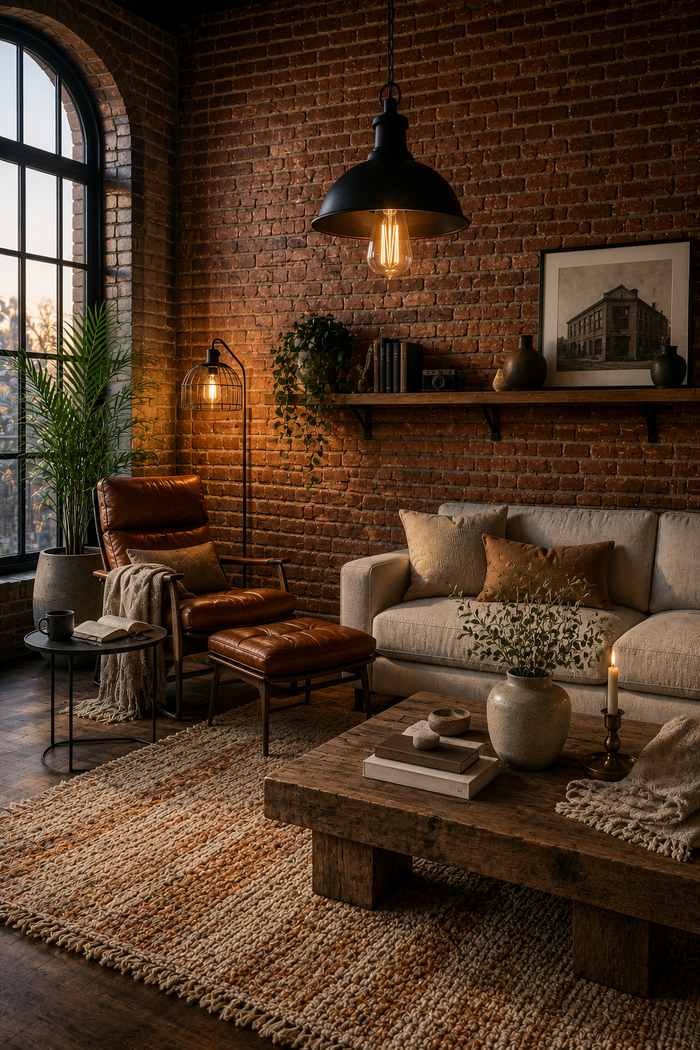
Exposed bulb pendants, black metal sconces, or a caged industrial floor lamp complement brick’s raw, unfinished quality. I hung a black metal pendant with an exposed filament bulb above my reading corner near the brick wall, and it grounds the whole area in that industrial-loft style without needing to change anything else.
Check – Small Living Room Decor Ideas
12. Use Brick as a Fireplace Backdrop
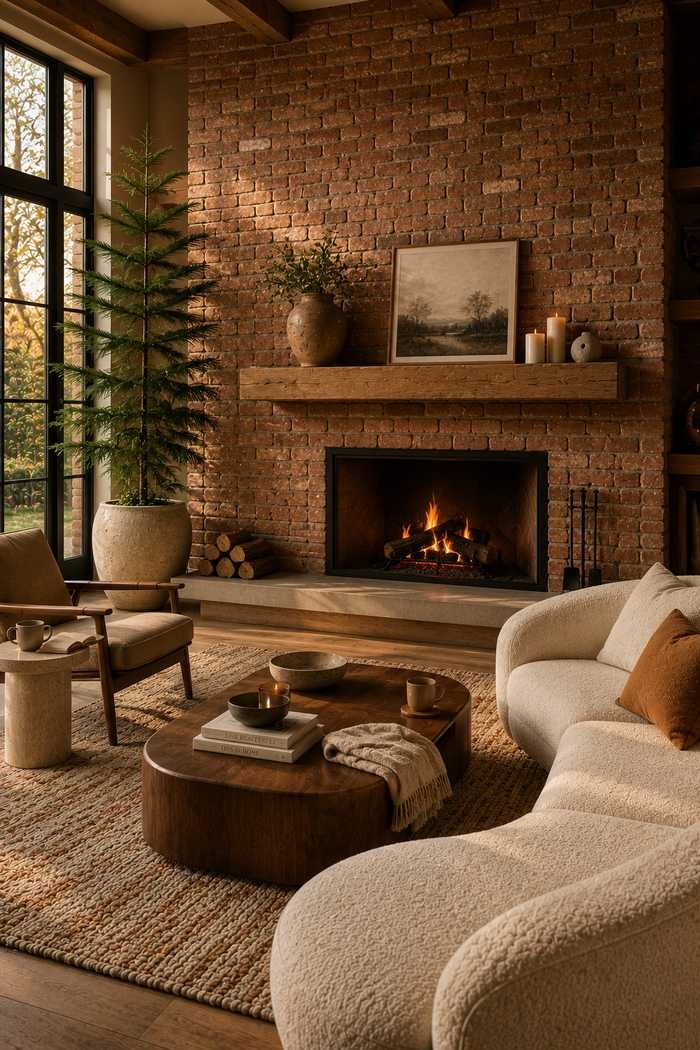
If your brick wall happens to include or surround a fireplace, lean into it rather than dressing it down. A simple wood or floating mantel, a plain hearth, and minimal styling on top (a few candles, a small piece of art) let the brick-and-fire combination do all the visual heavy lifting. Overdecorating a brick fireplace wall tends to look busy fast.
13. Paint It — Selectively

Not every brick wall needs to stay its natural color, and there’s no rule against painting it if the tone doesn’t suit your space. A whitewash or lime-wash technique keeps some of the texture and imperfection visible while lightening the overall feel of the room. I whitewashed one section of an especially dark brick wall in a rental years ago, and it transformed a dim room into something bright and airy while still keeping that handmade charm.
Quick tip: Test a whitewash mix on a small, hidden section first — brick absorbs pigment unevenly, and it’s much easier to adjust before you’ve committed to the whole wall.
14. Create a Reading Nook Against the Wall
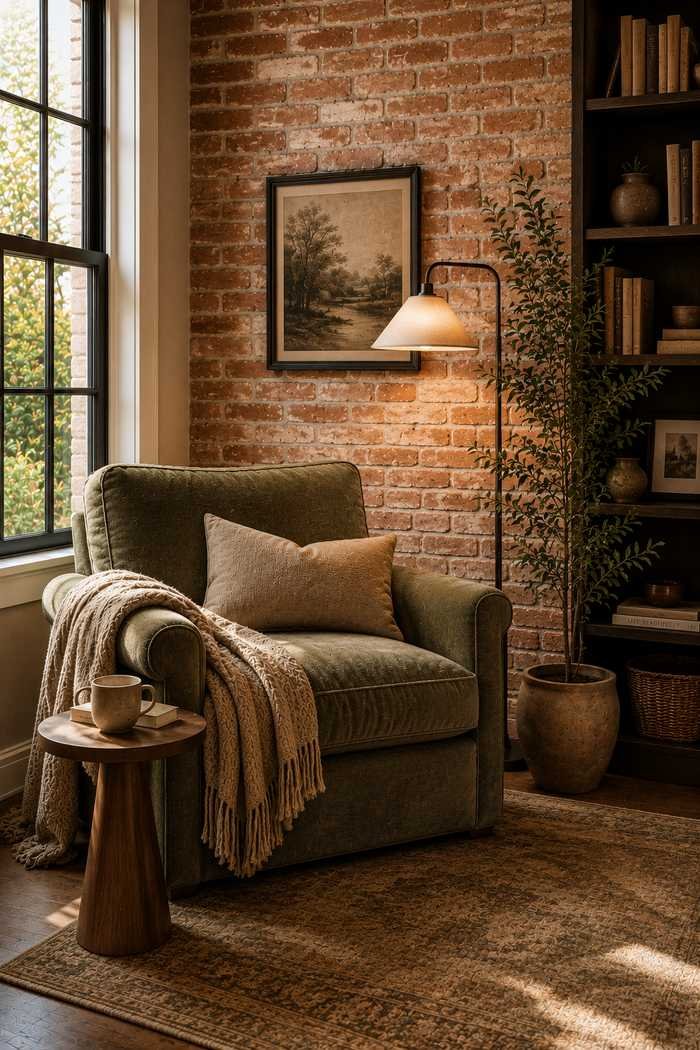
Brick walls have a natural coziness that makes them perfect for a small reading corner. A single comfortable chair, a floor lamp, a small side table, and a throw blanket tucked against a brick wall creates an intimate little pocket in the room that feels deliberate rather than like leftover space.
15. Add Woven and Natural Textures
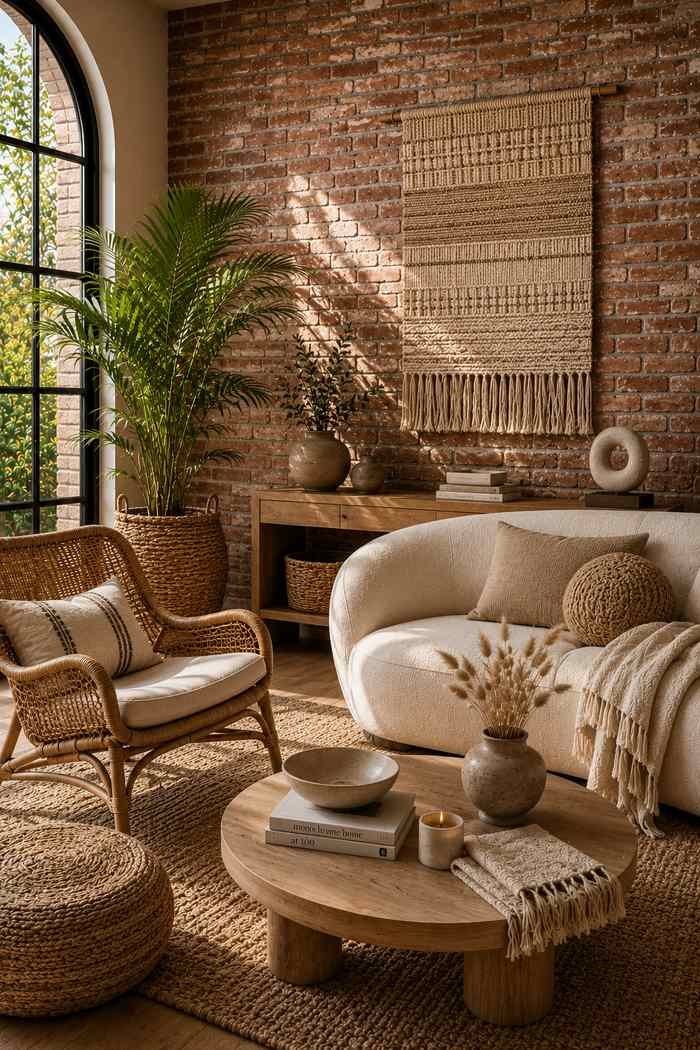
Rattan, wicker, jute, and other natural woven materials pair surprisingly well with brick because they share that same organic, imperfect quality. A rattan accent chair, a woven wall hanging, or a jute pouf near the brick wall adds texture variety without introducing anything that clashes.
16. Hang a Large-Scale Piece of Art
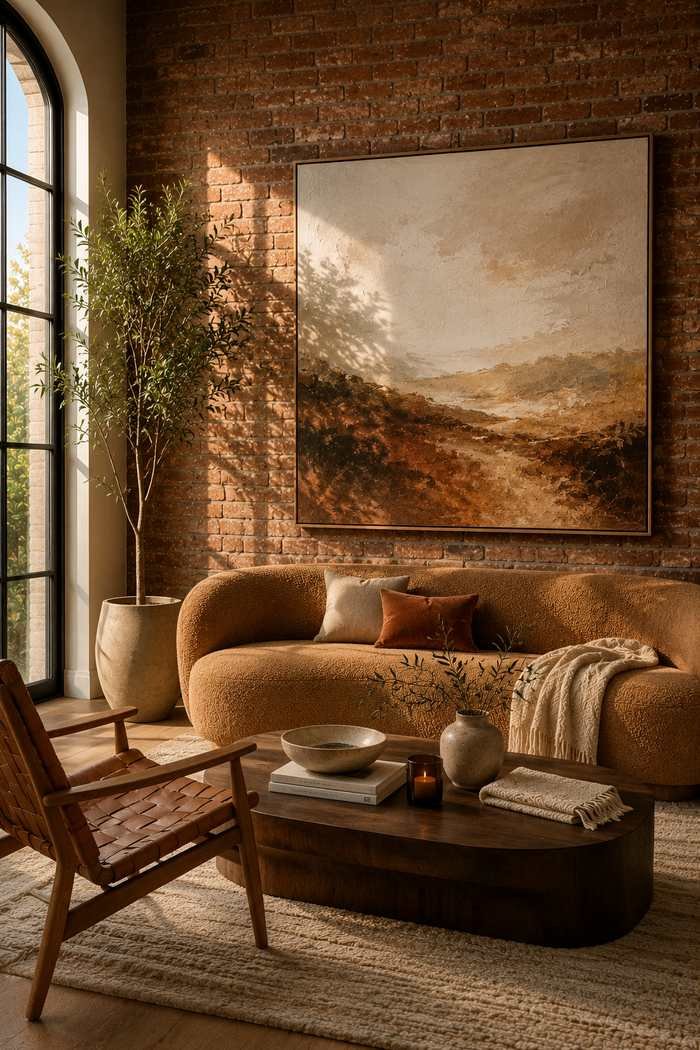
Sometimes the boldest move is the simplest one — a single oversized piece of art or a large canvas print mounted on the brick wall can act as the room’s focal point. Choose something with enough visual weight to hold its own against the texture of the brick; small or delicate art tends to get visually lost.
17. Install a Wall-Mounted TV Thoughtfully
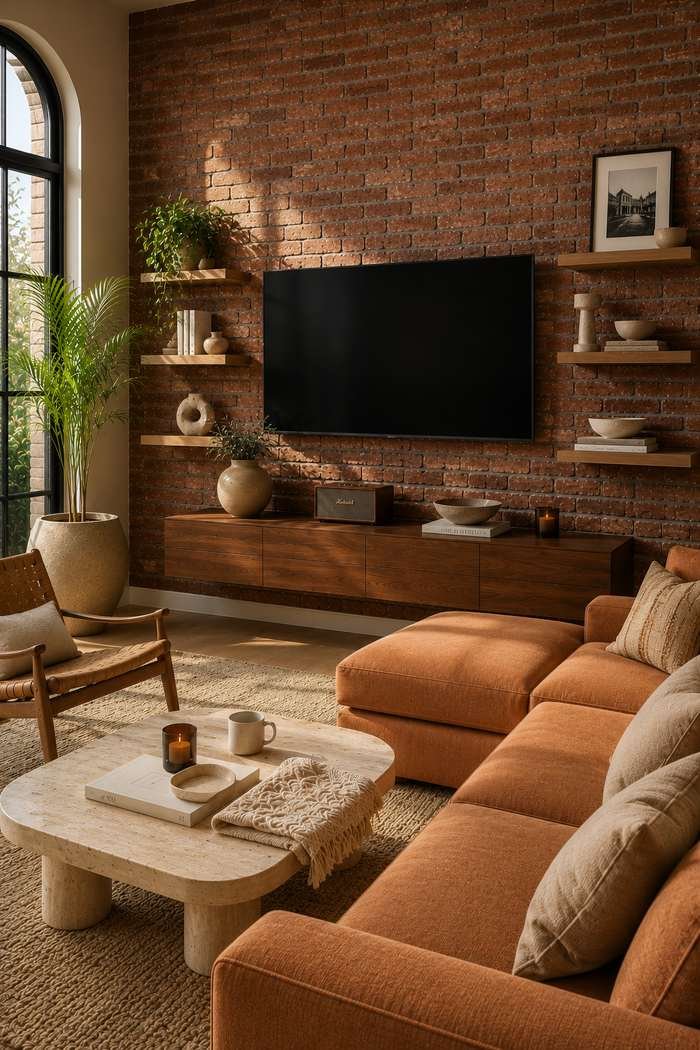
Mounting a TV directly onto brick is common, but it can look stark if you don’t dress it up. Framing the TV with floating shelves on either side, adding a console table below, or surrounding it with a few plants and books helps it blend into the room’s design rather than sitting there like an afterthought.
18. Use Brick to Define a Zone
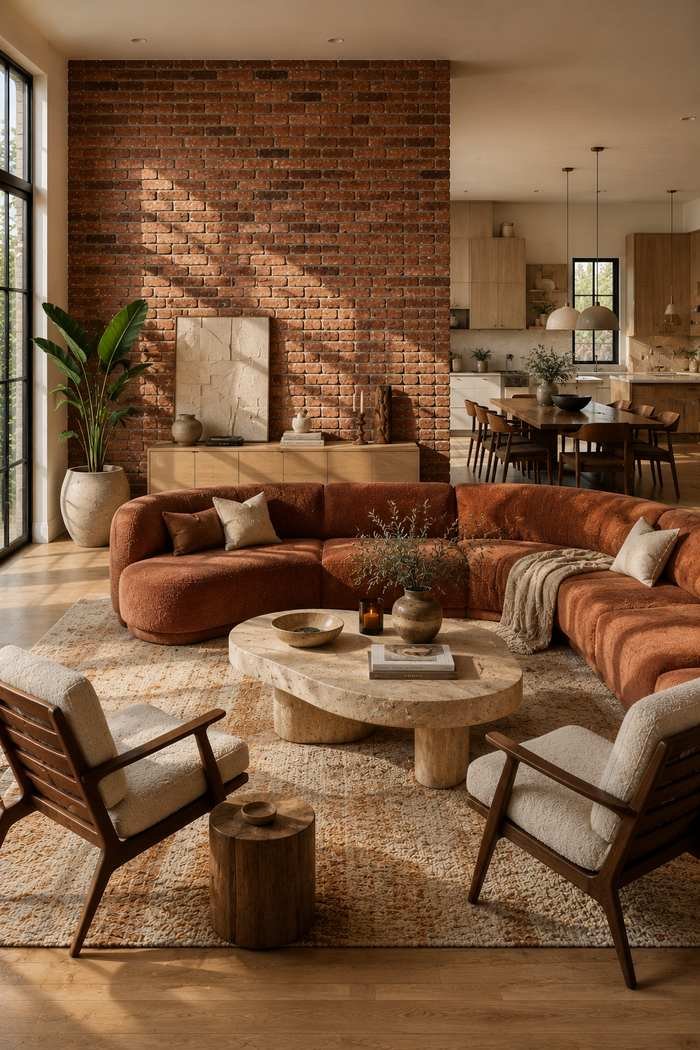
In open-concept living spaces, a brick wall can naturally define where the living room “starts.” Arrange your furniture — sofa, chairs, rug — facing toward or around the brick wall to visually anchor the seating area, especially if the rest of the room flows into a kitchen or dining space.
19. Add a Bold Accent Chair

Because the surrounding palette is often kept neutral to let the brick shine, a single accent chair in a bold color or pattern can add personality without overwhelming the room. A mustard, emerald, or deep terracotta chair against brick and neutral furniture gives the whole space a curated, magazine-style contrast.
Check – Accent Chairs For Small Living Room
20. Bring in Curtains That Soften the Room
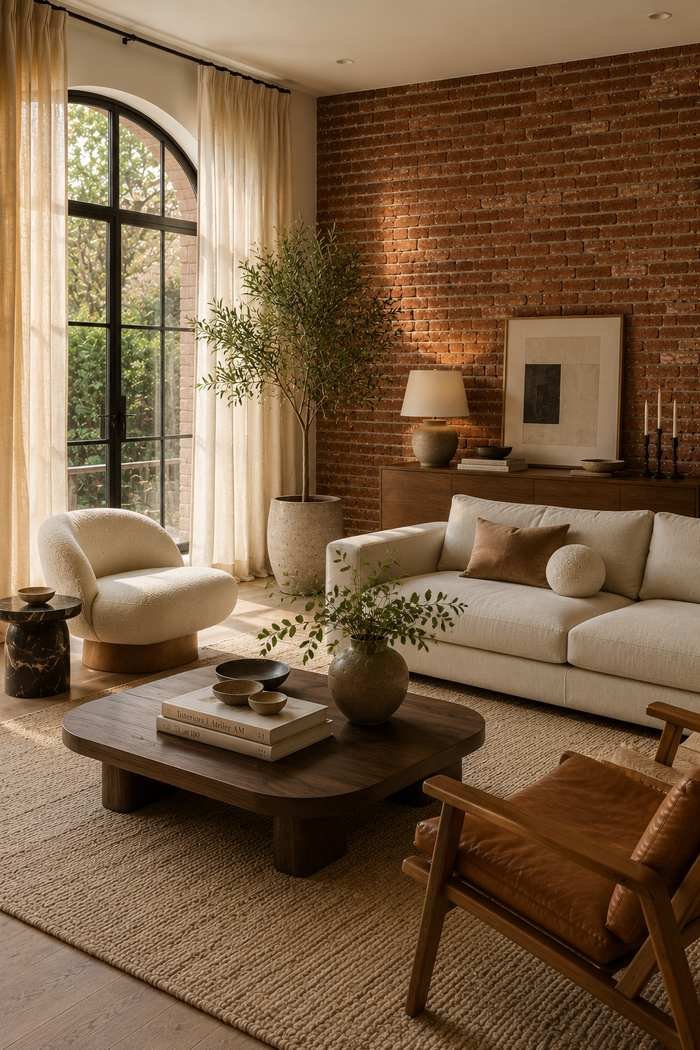
Brick can make a room feel a bit hard-edged, especially in smaller spaces. Soft, flowing curtains in linen or cotton — ideally in a warm neutral tone — soften the overall look and add a bit of movement and softness that balances brick’s rigidity.
21. Keep Some Brick Exposed, Even in Small Doses

If you’re working with a full brick room or considering covering it up entirely, consider leaving at least one wall or section exposed. Full uniformity (all brick or none) tends to feel either overwhelming or like a missed opportunity. A single feature wall left raw, paired with softer finishes elsewhere, usually strikes the best balance between character and comfort.
Common Mistakes to Avoid With a Brick Wall
A few things I got wrong before I got them right — worth avoiding from the start:
- Using cool-toned lighting. Cool white bulbs make warm brick look dull and gray instead of rich. Always go warm white.
- Overcrowding shelves or walls. Brick already has texture and visual noise built in. Too many objects on top of that makes a room feel busy rather than cozy.
- Fighting the brick with bold, competing colors. Deep blues, purples, or anything with a cool undertone tend to clash rather than complement. Stick to warm neutrals and let brick set the color temperature of the room.
- Ignoring scale. Small, delicate furniture or tiny art pieces get visually swallowed by brick’s texture. Choose pieces with enough visual weight to hold their own.
- Painting the whole wall without testing first. A full coat of paint (or whitewash) is hard to undo. Always test a small section before committing.
Frequently Asked Questions
Does a brick wall make a living room look smaller?
Not necessarily. Brick can feel visually heavy in a small or dark room, but pairing it with good lighting, mirrors, and lighter furniture tones balances it out. In brighter or larger rooms, it usually adds warmth without shrinking the space.
Should I paint my brick wall or leave it exposed?
It depends on the tone of the brick and how much natural light the room gets. Darker, dimmer rooms often benefit from a whitewash or light paint treatment, while brighter rooms can usually handle raw, exposed brick without feeling heavy.
What color furniture goes best with a brick wall?
Warm neutrals — cream, oatmeal, tan, soft gray — tend to work best because they don’t compete with brick’s natural warmth. Leather, wood tones, and brass accents also pair well.
Is exposed brick outdated?
Exposed brick has stayed a popular, timeless feature for decades because it adds texture and character that’s hard to replicate. What can look dated is over-decorating around it — the brick itself rarely goes out of style.
Do I need special lighting for a brick wall?
Not special, but intentional. Brick tends to absorb more light than painted drywall, so warm supplemental lighting (lamps, string lights, LED strips) helps the texture stand out, especially in the evening.
A Quick Note on Photos
This article is based on real, lived-in experience rather than a showroom or stock photography.
If you’re publishing this on your own site, adding a few photos of your own brick wall living room — even mid-progress “before” shots — will do more for credibility and reader trust than any stock image could.
It also happens to be something search engines increasingly reward: real, original images tied to real experience.
Final Thoughts
Decorating around a brick wall isn’t about hiding it or over-styling around it — it’s about giving it room to be the interesting part of your living room while everything else quietly supports it.
The biggest lesson I’ve learned after years of tweaking my own space is that restraint usually wins. Fewer, better pieces; warmer tones; natural textures; and lighting that flatters the brick rather than competes with it.
Start with one or two ideas from this list rather than trying to do everything at once. See how the room feels, live with it for a few weeks, and adjust from there.
That’s exactly how I arrived at a living room I’m actually proud of — not from a single big renovation, but from small, thoughtful changes made over time.