
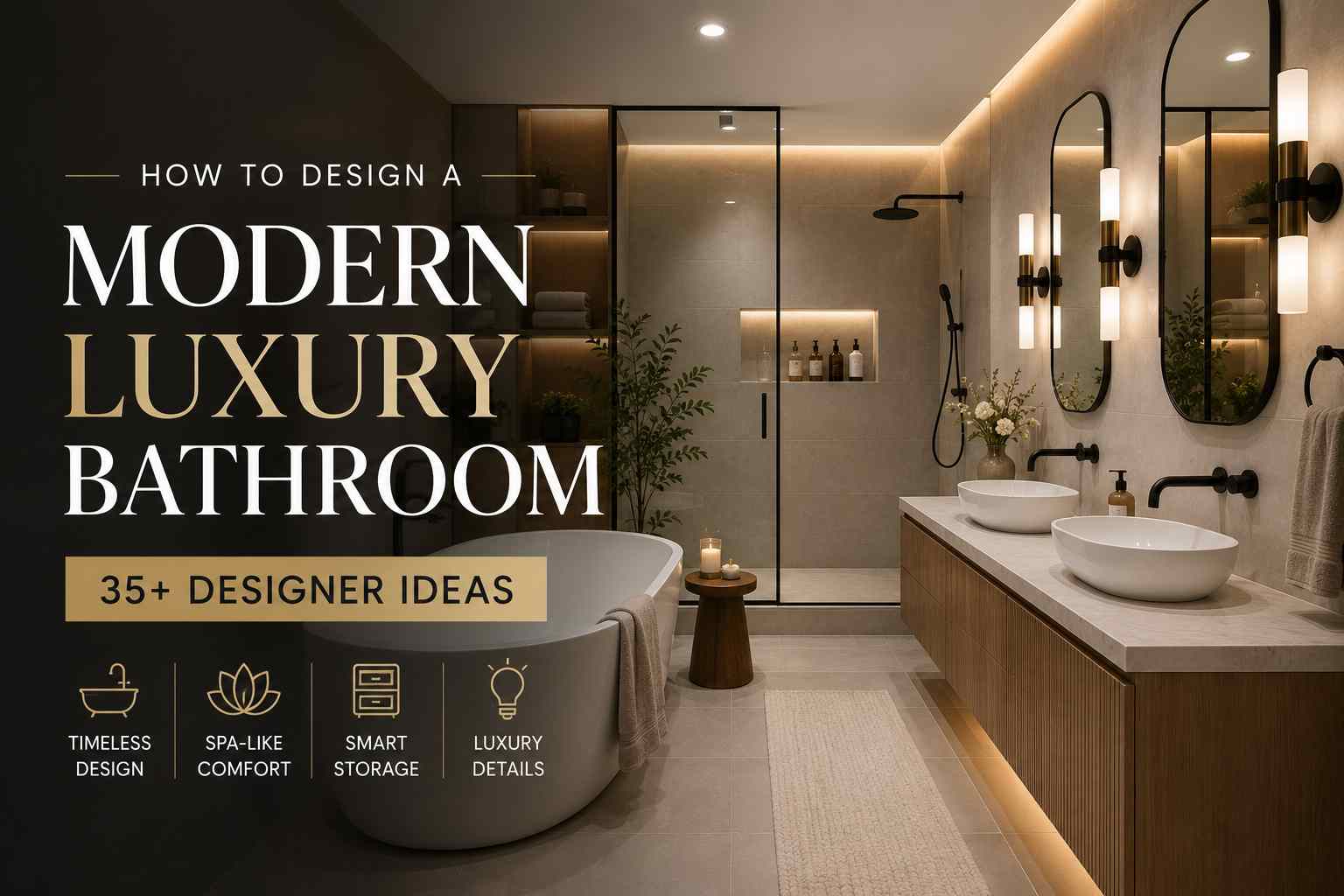
A luxury bathroom isn’t defined by expensive marble or a freestanding bathtub. It’s created by solving everyday problems while making the room feel calm, spacious, and functional.
Many homeowners spend thousands on renovations only to discover their bathroom still feels cramped, cluttered, or outdated. That’s because luxury starts with good design- not expensive materials.
This guide walks you through the most common bathroom problems and shows you exactly how professional designers solve them. You’ll also discover 35 modern luxury bathroom ideas that work for every budget, from rental apartments to full custom remodels.
Whether you’re planning a complete renovation or simply upgrading a few features, these ideas will help you make smarter decisions before spending your money.
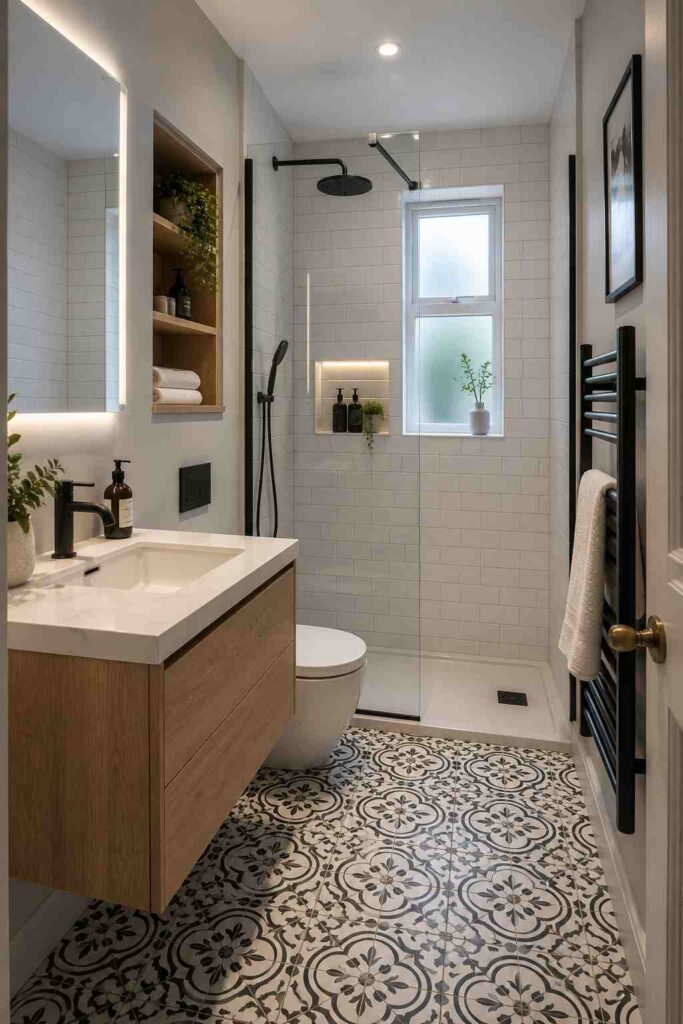
Why Most Bathrooms Never Feel Luxurious?
When people think about a luxury bathroom, they often picture marble walls, freestanding bathtubs, rainfall showers, and expensive designer fixtures. While those features certainly add visual appeal, they’re not what truly make a bathroom feel luxurious.
In reality, luxury is created through thoughtful design. A bathroom that feels spacious, organized, well-lit, and comfortable often looks more expensive than one filled with premium materials but poor planning.
One of the biggest mistakes homeowners make is focusing on decorative finishes before solving practical problems. Installing expensive tile won’t fix a cramped layout. Buying high-end faucets won’t make poor lighting disappear. Adding stylish accessories won’t solve a lack of storage.
Professional designers approach bathroom renovations differently. They begin by identifying what’s preventing the room from functioning well, then select materials and finishes that improve both usability and appearance.
Before exploring the 35 design ideas in this guide, ask yourself these questions:
- Does your bathroom feel smaller than it actually is?
- Is it difficult to keep countertops organized?
- Does the room feel dark, even during the day?
- Are outdated cabinets making everything look old?
- Does your shower feel more functional than relaxing?
- Are you working within the limitations of a rental property?
If you answered “yes” to any of these questions, you’re not alone. The good news is that each problem has practical, design-focused solutions, many of which don’t require a complete remodel.
Throughout this guide, you’ll learn how to create a modern luxury bathroom by first addressing these everyday challenges.
ALSO READ: 28 Modern TV Unit Designs That Instantly Transform Your Living Room
How Interior Designers Create a Luxury Bathroom
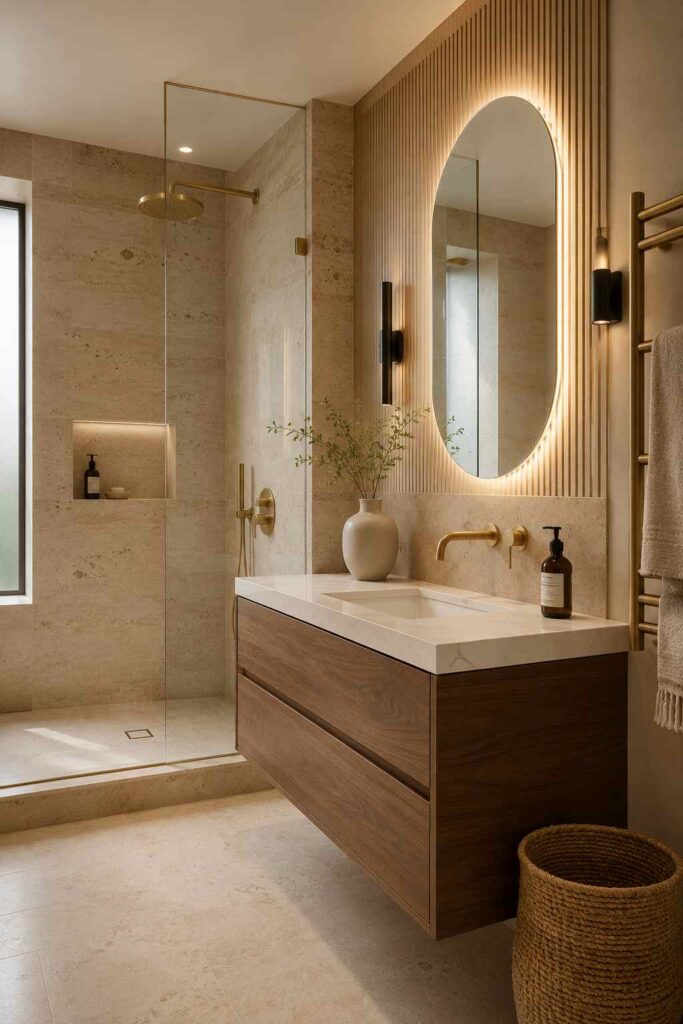
Luxury bathrooms don’t happen by accident. Designers follow a proven process that balances function, comfort, and aesthetics. Instead of shopping for finishes first, they focus on improving how the space works.
Step 1 – Create an Open Layout
Luxury begins with openness. Bathrooms feel larger when sightlines remain uninterrupted. That’s why designers often choose floating vanities, frameless glass shower enclosures, and wall-mounted fixtures.
Even in compact bathrooms, reducing visual clutter can dramatically change how spacious the room feels.
Step 2 – Layer the Lighting
One ceiling light is never enough. Luxury bathrooms combine three types of lighting:
- Ambient lighting for general illumination
- Task lighting around mirrors
- Accent lighting to create atmosphere
Backlit mirrors, under-cabinet LED strips, and dimmable sconces create depth while making everyday routines easier.
Step 3 – Simplify the Material Palette
Too many colors and finishes make a bathroom feel chaotic. Professional designers usually limit themselves to:
- One primary tile
- One wood finish
- One metal finish
- One accent color
This creates visual harmony throughout the space.
Step 4 – Add Texture Instead of Clutter
Luxury isn’t about filling every shelf. Instead, designers use subtle textures like:
- Fluted wood
- Honed stone
- Linen towels
- Woven baskets
- Matte ceramics
These materials create warmth without overwhelming the room.
Step 5 – Focus on Daily Comfort
A truly luxurious bathroom makes everyday routines more enjoyable. Small upgrades like heated towel racks, built-in shower niches, soft-close drawers, and dimmable lighting improve comfort far more than decorative accessories.
Now let’s solve the first- and most common- problem.
Problem #1 – Your Bathroom Feels Too Small
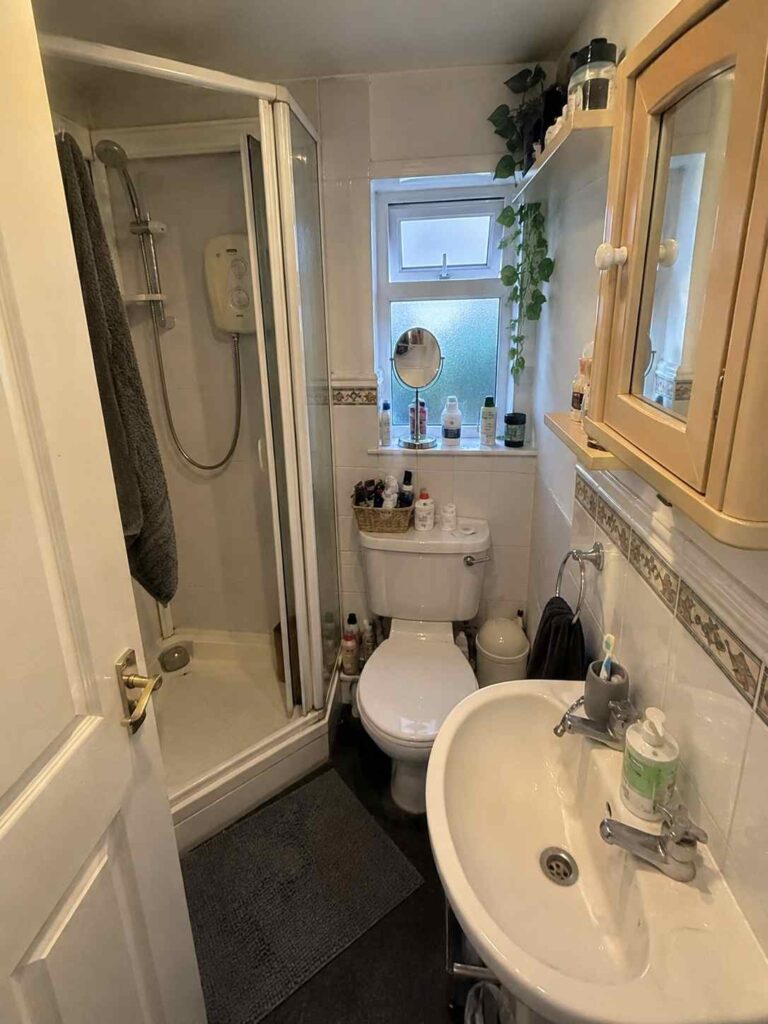
A bathroom doesn’t need to be physically large to feel spacious. Many compact bathrooms feel cramped because of bulky furniture, poor layouts, dark finishes, or too many visual interruptions.
The following ideas are designed to maximize the perception of space while maintaining a luxurious appearance.
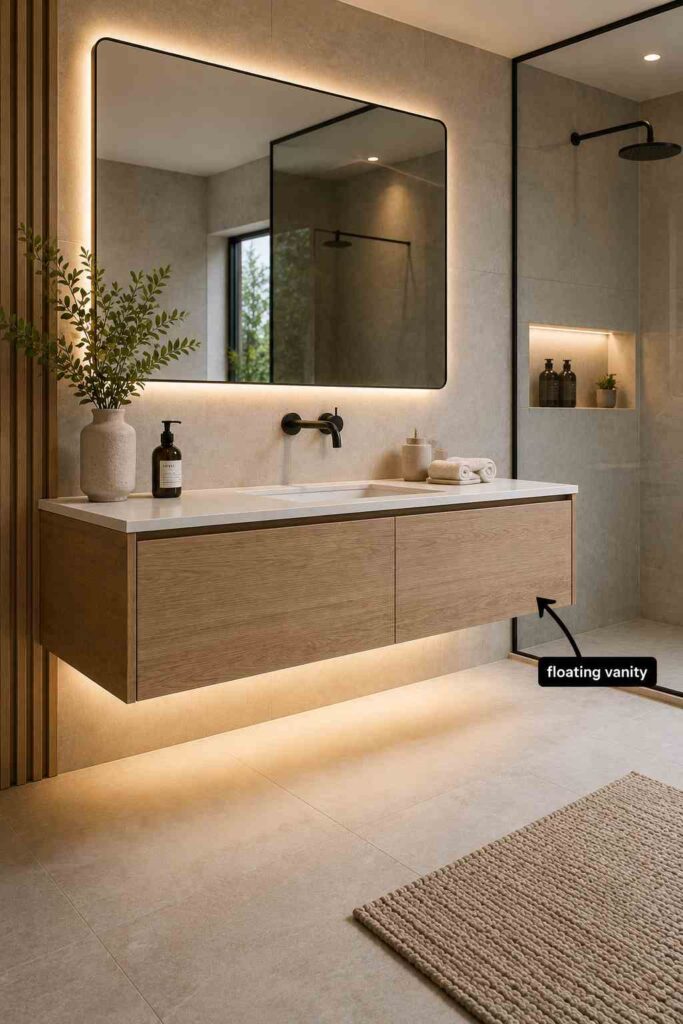
Idea #1 – Install a Floating Vanity
The Problem
Traditional floor-mounted cabinets occupy valuable visual space and make small bathrooms feel crowded.
Why It Works
Floating vanities expose more of the flooring, allowing the eye to travel beneath the cabinet. This simple design trick makes the room appear noticeably larger.
Best For
- Small bathrooms
- Apartments
- Powder rooms
- Contemporary homes
Estimated Cost
$300–$1,500 depending on size and material.
Designer Tip
Install warm LED strip lighting underneath the vanity to create the illusion that it’s floating.
Mistakes to Avoid
Avoid choosing a vanity that’s too deep. A shallower cabinet often provides enough storage while improving movement around the room.
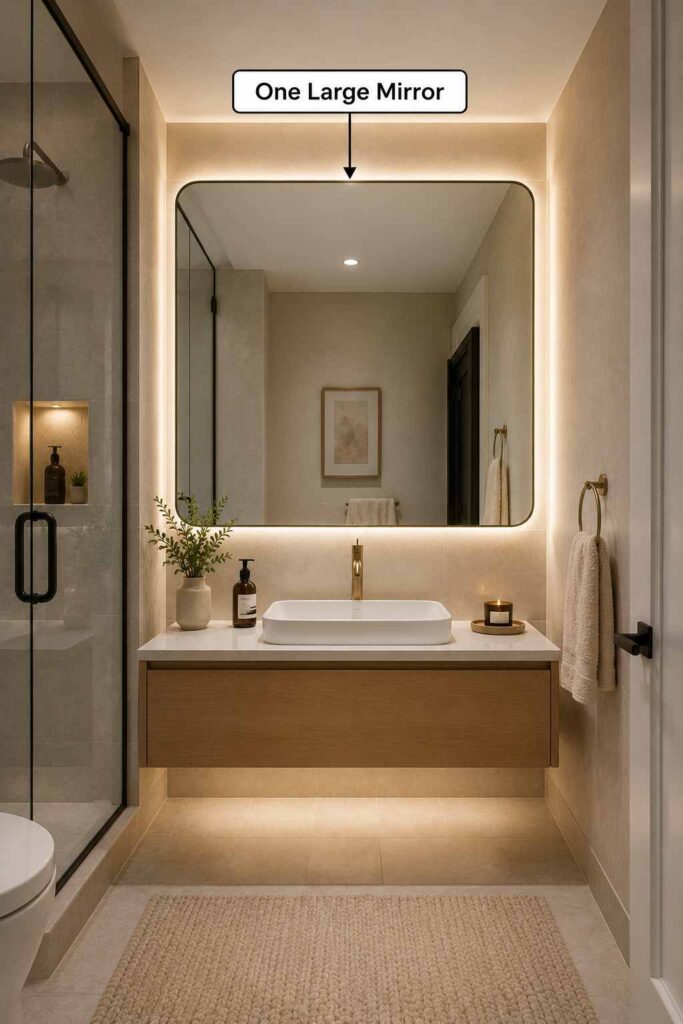
Idea #2 – Replace Two Mirrors with One Large Mirror
The Problem
Small framed mirrors visually divide the wall, making bathrooms feel busy.
Why It Works
A single oversized mirror reflects more light while creating the illusion of a much wider room. Large mirrors also allow natural light to bounce around the space more effectively.
Best For
- Double vanities
- Narrow bathrooms
- Windowless bathrooms
Estimated Cost
$150–$800
Designer Tip
Backlit mirrors combine functionality with ambient lighting, eliminating the need for additional wall fixtures.
Mistakes to Avoid
Avoid decorative mirrors with overly ornate frames if your goal is a clean, modern luxury aesthetic.
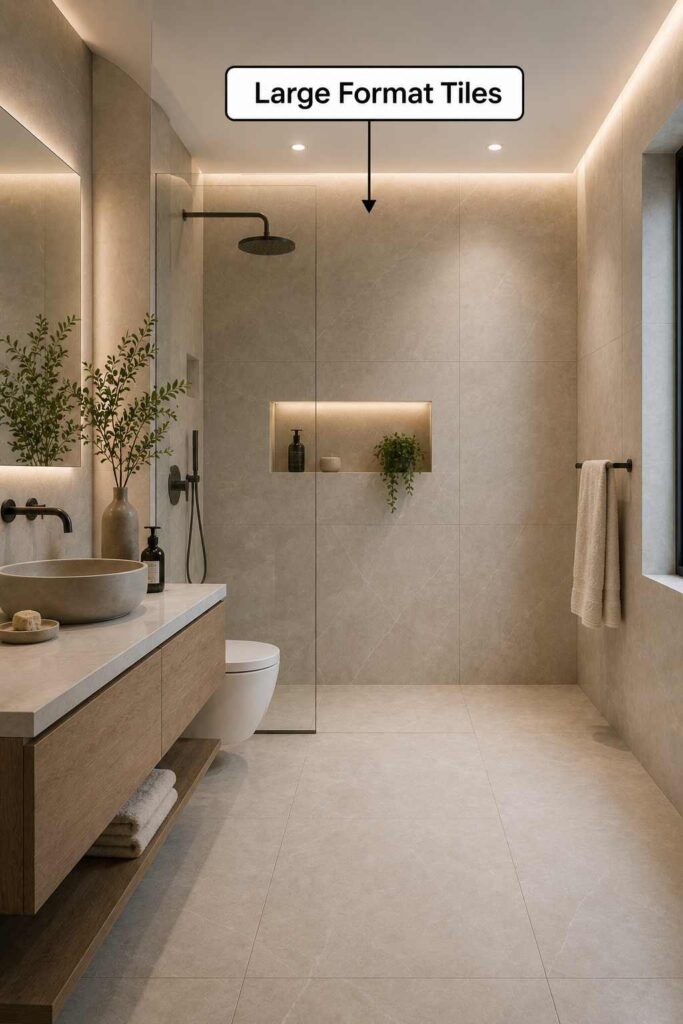
Idea #3 – Choose Large Format Tiles
The Problem
Small tiles create numerous grout lines, making walls appear visually cluttered.
Why It Works
Large-format porcelain or stone tiles create uninterrupted surfaces that feel calm and sophisticated.
Fewer grout joints also make maintenance easier.
Best For
- Shower walls
- Bathroom floors
- Feature walls
Estimated Cost
$8–$25 per square foot installed.
Designer Tip
Use matching grout to further reduce visual interruptions.
Mistakes to Avoid
Avoid combining several tile sizes and patterns in a small bathroom.
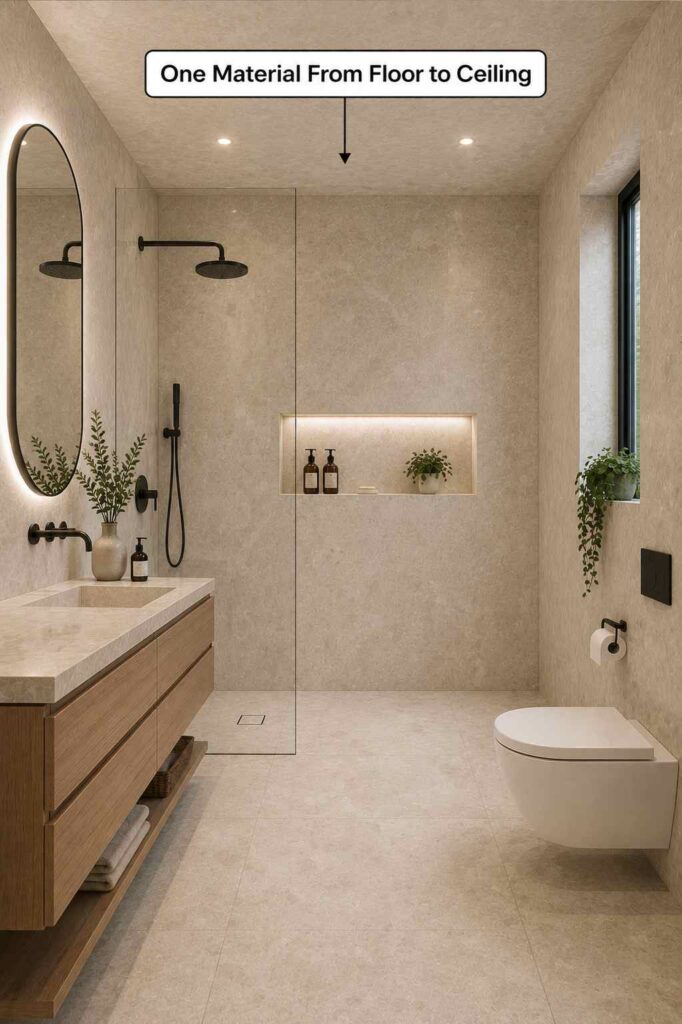
Idea #4 – Continue One Material From Floor to Ceiling
The Problem
Switching between multiple materials breaks the visual flow.
Why It Works
Using the same tile or stone from the floor up the shower walls creates continuity, making ceilings appear taller. This is a common technique in luxury hotels and spa-inspired bathrooms.
Best For
- Walk-in showers
- Modern bathrooms
- Minimalist interiors
Estimated Cost
Varies based on tile selection.
Designer Tip
Porcelain slabs mimic natural stone while requiring less maintenance.
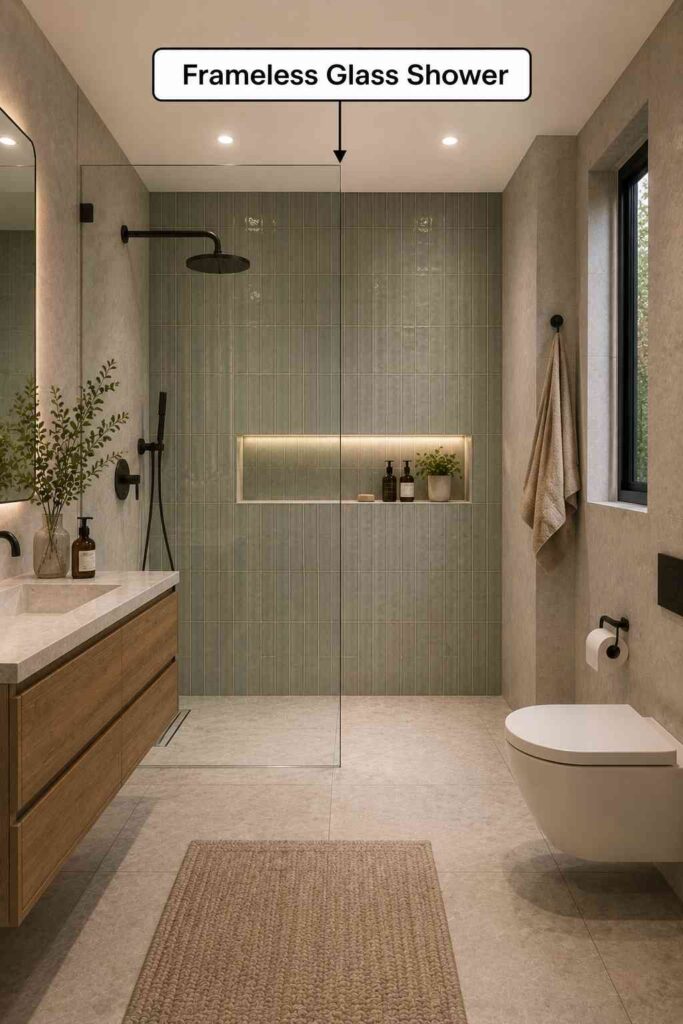
Idea #5 – Install a Frameless Glass Shower
The Problem
Curtains and bulky shower frames visually divide the room.
Why It Works
Frameless glass keeps sightlines open, allowing beautiful tilework to remain visible throughout the bathroom.
Best For
- Walk-in showers
- Contemporary remodels
Estimated Cost
$900–$2,500
Designer Tip
Choose low-iron glass for maximum clarity.
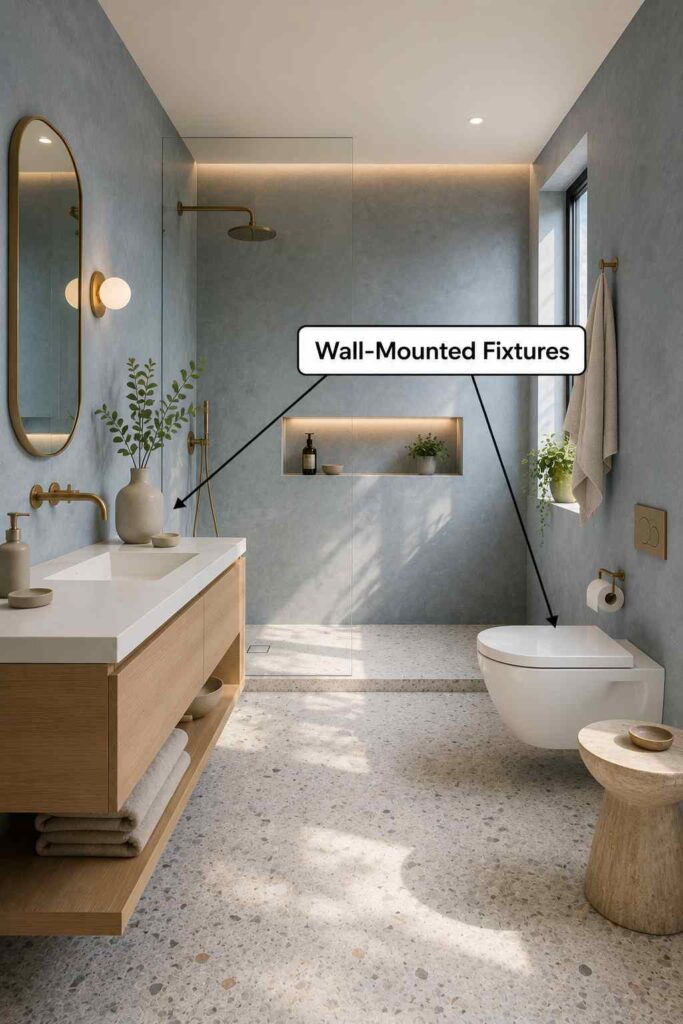
Idea #6 – Choose Wall-Mounted Fixtures
The Problem
Floor-mounted fixtures occupy valuable visual space.
Why It Works
Wall-mounted installations simplify cleaning while making bathrooms appear lighter and less cluttered. Although installation costs are higher, the visual payoff is significant.
Estimated Cost
$600–$2,500 depending on plumbing requirements.
Designer Tip
Pair wall-mounted fixtures with floating cabinetry for maximum impact.
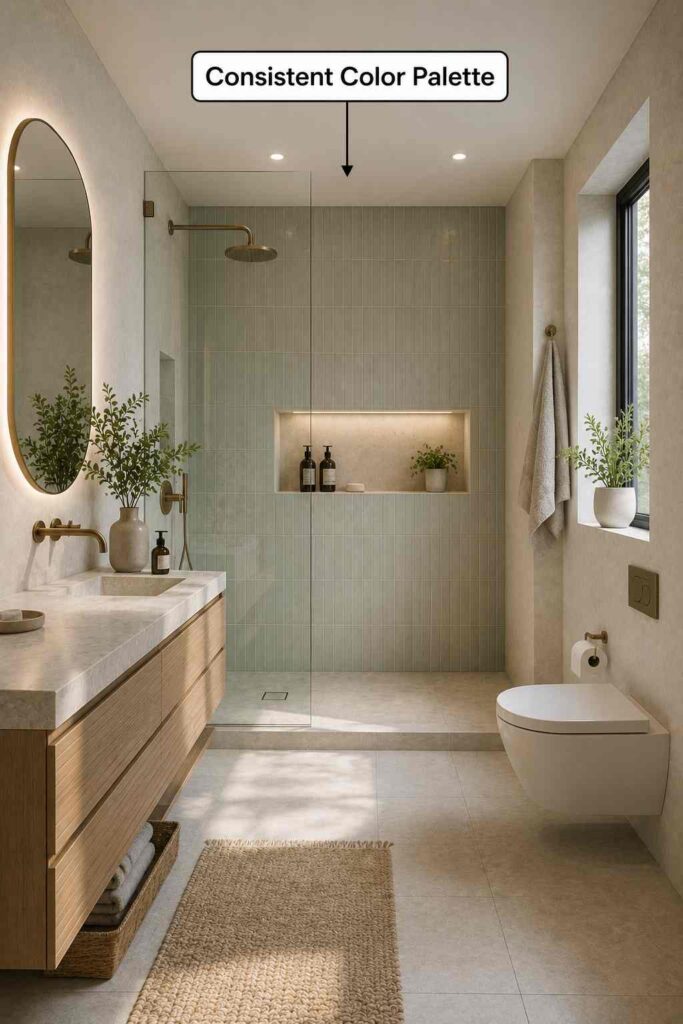
Idea #7 – Stick to a Light, Consistent Color Palette
The Problem
Too many contrasting colors make compact bathrooms feel smaller.
Why It Works
Warm whites, soft greiges, natural oak, and light stone finishes reflect more light while creating a calming environment. Adding one accent color- such as matte black, brushed brass, or sage green- keeps the design interesting without overwhelming the space.
Designer Tip
Limit your bathroom to three primary colors for a cohesive designer look.
Problem #2 –Your Bathroom Looks Outdated
Even a clean bathroom can feel old if it still has builder-grade cabinets, dated chrome fixtures, small ceramic tiles, or yellowed lighting. The good news is that you don’t always need a complete renovation to modernize your bathroom. Strategic upgrades can dramatically improve its appearance while keeping your budget under control.
The following ideas focus on high-impact improvements that professional designers frequently recommend.
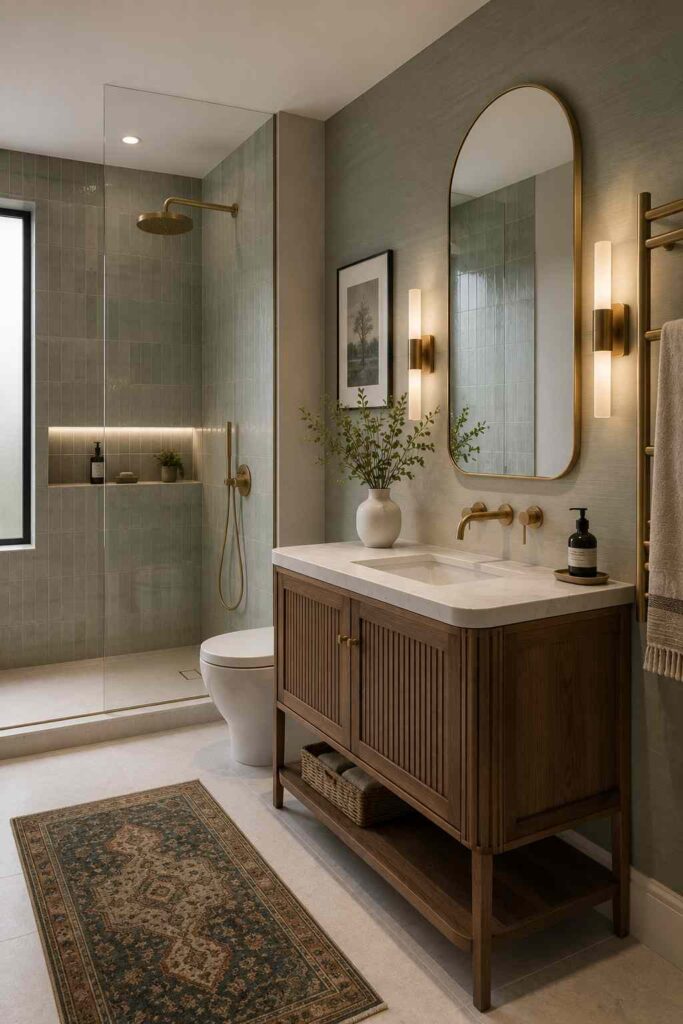
Idea #8 – Replace Your Vanity With a Furniture Style Cabinet
The Problem
Most standard bathroom vanities are designed for affordability rather than aesthetics. Flat cabinet doors, thin countertops, and basic hardware instantly date a bathroom.
Why It Works
Furniture-style vanities resemble high-end furniture instead of built-in cabinetry. Features like fluted wood, rounded corners, shaker panels, natural oak, walnut finishes, and stone countertops create a more custom appearance.
Unlike traditional cabinets, they add warmth and character while becoming a focal point.
Best For
- Primary bathrooms
- Guest bathrooms
- Modern farmhouse
- Contemporary interiors
Estimated Cost
$700–$3,500
Budget Alternative
Paint your existing vanity and replace the hardware and countertop before investing in a completely new cabinet.
Designer Tip
Floating furniture-style vanities combine two luxury trends in one upgrade.
Mistakes to Avoid
Avoid choosing oversized vanities simply because space allows. Proper proportions make a bathroom feel more luxurious.
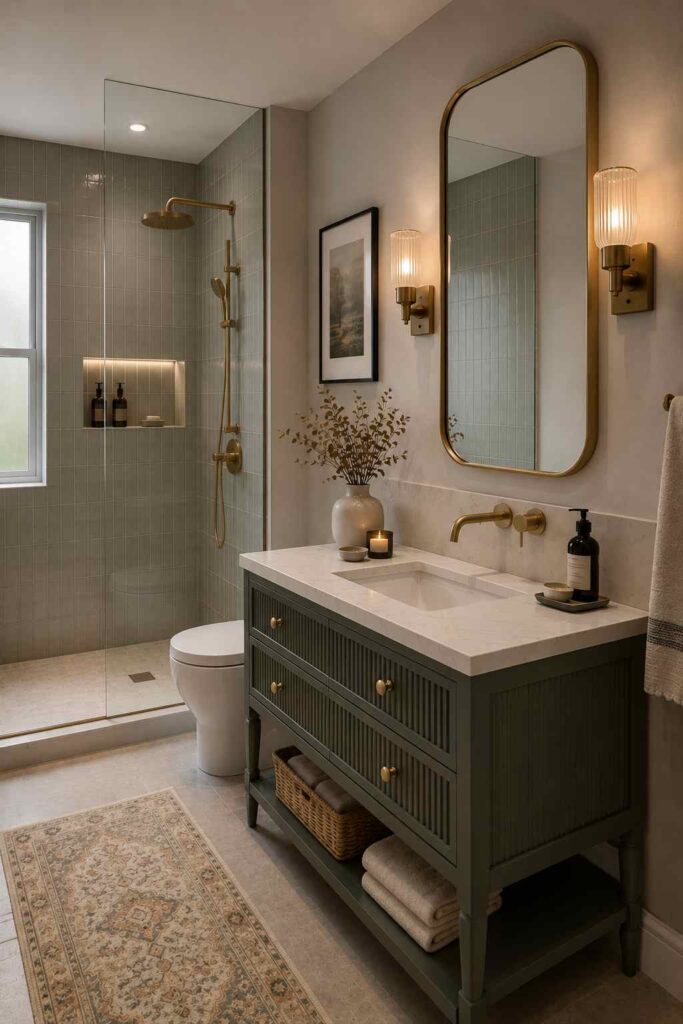
Idea #9 –Upgrade to a Quartz or Natural Stone Countertop
The Problem
Laminate countertops quickly reveal a bathroom’s age.
Why It Works
Stone surfaces introduce texture, durability, and timeless appeal. Quartz is especially popular because it resists stains and requires very little maintenance. Marble offers unmatched elegance but needs regular sealing.
Best For
- Family bathrooms
- Luxury remodels
- Homes with high resale goals
Estimated Cost
Quartz: $60–$120 per square foot
Marble: $90–$180 per square foot
Budget Alternative
Choose quartz that mimics marble instead of genuine marble for lower maintenance.
Designer Tip
A thicker countertop edge instantly creates a premium appearance.
Mistakes to Avoid
Don’t select highly patterned stone if your bathroom already includes busy flooring or decorative tile.
Idea #10 – Upgrade Cabinet Hardware
The Problem
Old chrome handles and plastic knobs make even newer cabinets look inexpensive.
Why It Works
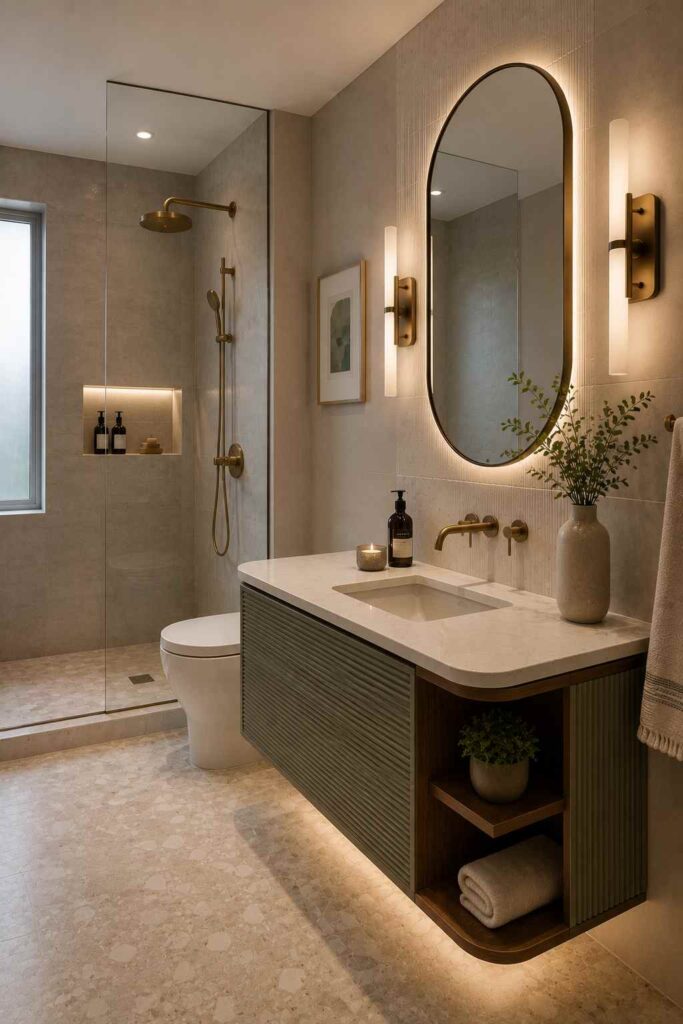
Changing cabinet hardware is one of the easiest luxury upgrades you can make. Modern options include:
- Brushed brass
- Matte black
- Satin nickel
- Bronze
- Champagne gold
Consistent hardware creates a professionally designed appearance.
Best For
Every bathroom.
Estimated Cost
$50–$250
Designer Tip
Use longer cabinet pulls instead of small knobs for a cleaner contemporary look.
Mistakes to Avoid
Mixing several metal finishes without a clear design plan.
Idea #11 – Install a Sculptural Vessel Sink
The Problem
Standard drop-in sinks rarely stand out.
Why It Works
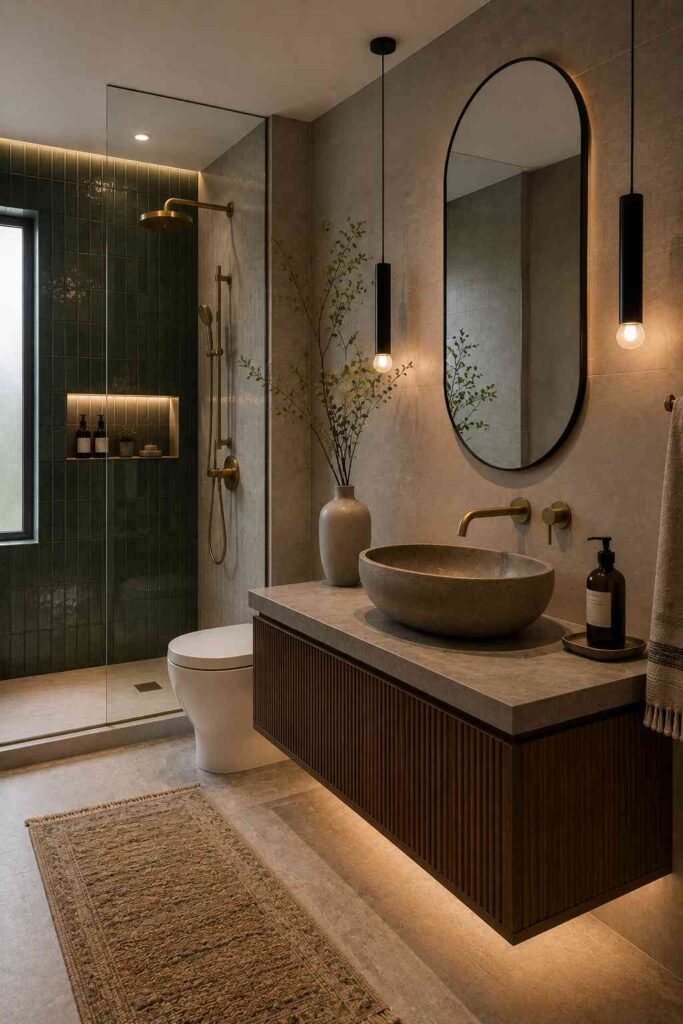
A vessel sink creates an instant luxury statement while turning the vanity into a design feature. Popular materials include:
- Stone
- Ceramic
- Concrete
- Matte porcelain
Best For
- Powder rooms
- Guest bathrooms
- Modern luxury interiors
Estimated Cost
$150–$900
Budget Alternative
Choose a simple white ceramic vessel sink paired with a quality faucet.
Designer Tip
Pair vessel sinks with wall-mounted faucets whenever possible.
Mistakes to Avoid
Choosing extremely shallow vessel sinks that splash during everyday use.
Idea #12 – Paint Existing Cabinets a Rich Color
The Problem
Bright white builder-grade cabinets often feel flat and generic.
Why It Works
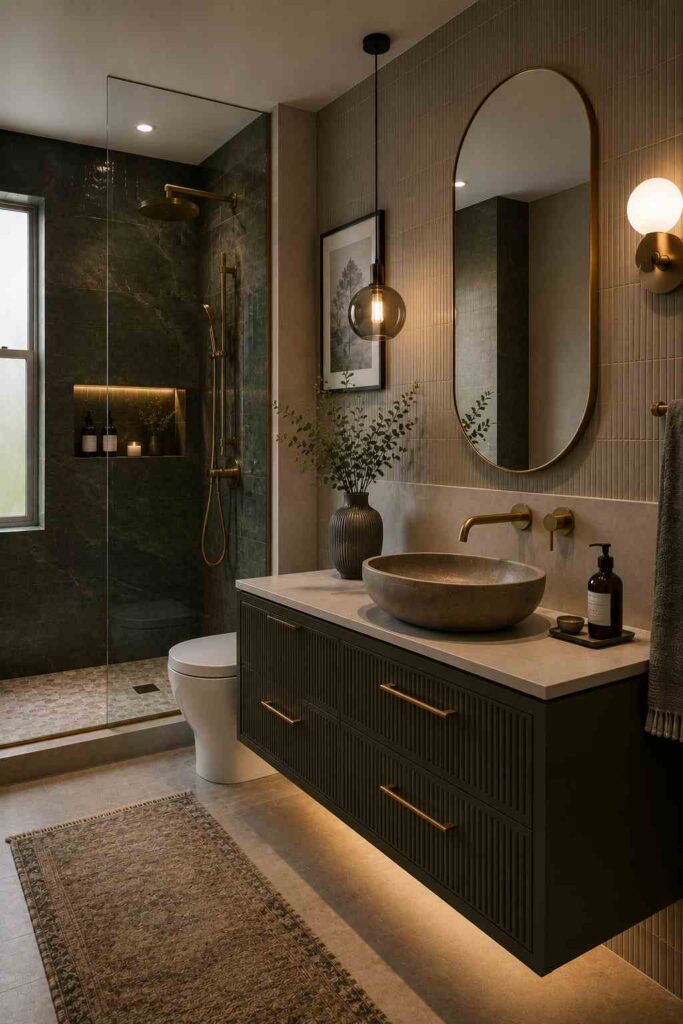
Dark colors create depth while making stone countertops and brass hardware stand out. Popular designer colors include:
- Forest Green
- Deep Navy
- Charcoal
- Warm Black
- Olive Green
Estimated Cost
DIY: $150–$300
Professional: $600–$1,500
Designer Tip
Use moisture-resistant cabinet paint specifically formulated for bathrooms.
Mistakes to Avoid
Choosing cool blue-toned gray instead of warmer greige shades.
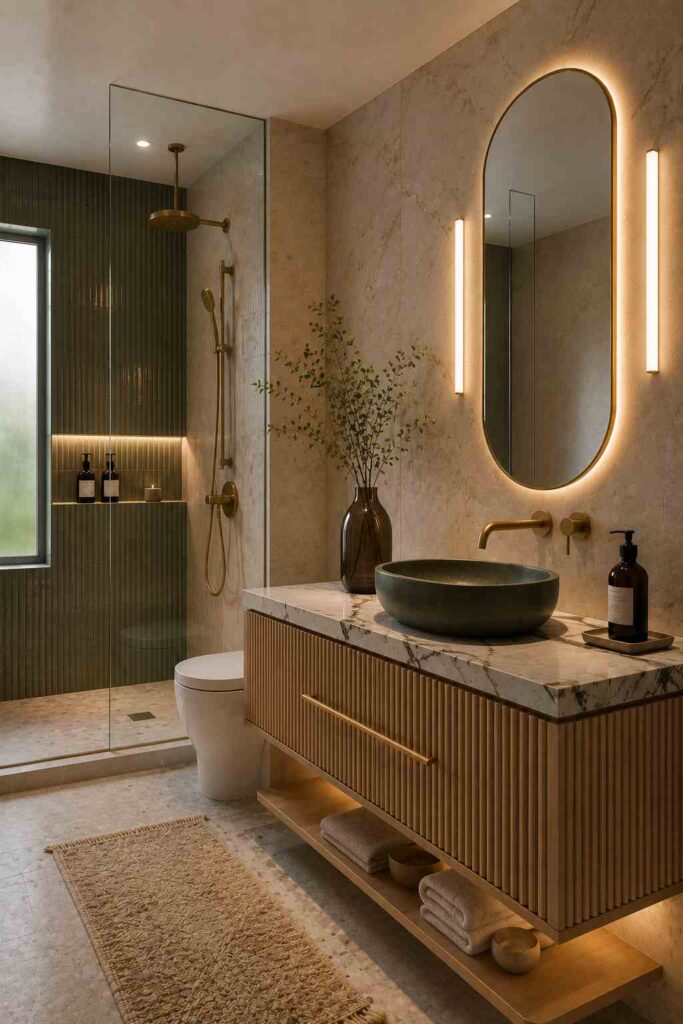
Idea #13 – Add Fluted Wood Details
The Problem
Flat cabinet doors can make bathrooms feel lifeless.
Why It Works
Fluted wood introduces texture without adding visual clutter.
Popular applications include:
- Vanity fronts
- Wall panels
- Decorative cabinet doors
- Island ends
The vertical grooves also help emphasize ceiling height.
Estimated Cost
Moderate
Designer Tip
Natural oak fluting pairs beautifully with warm white walls and brushed brass hardware.
Idea #14 – Mix Wood With Stone Finishes
The Problem
Bathrooms that rely entirely on white finishes often feel cold.
Why It Works
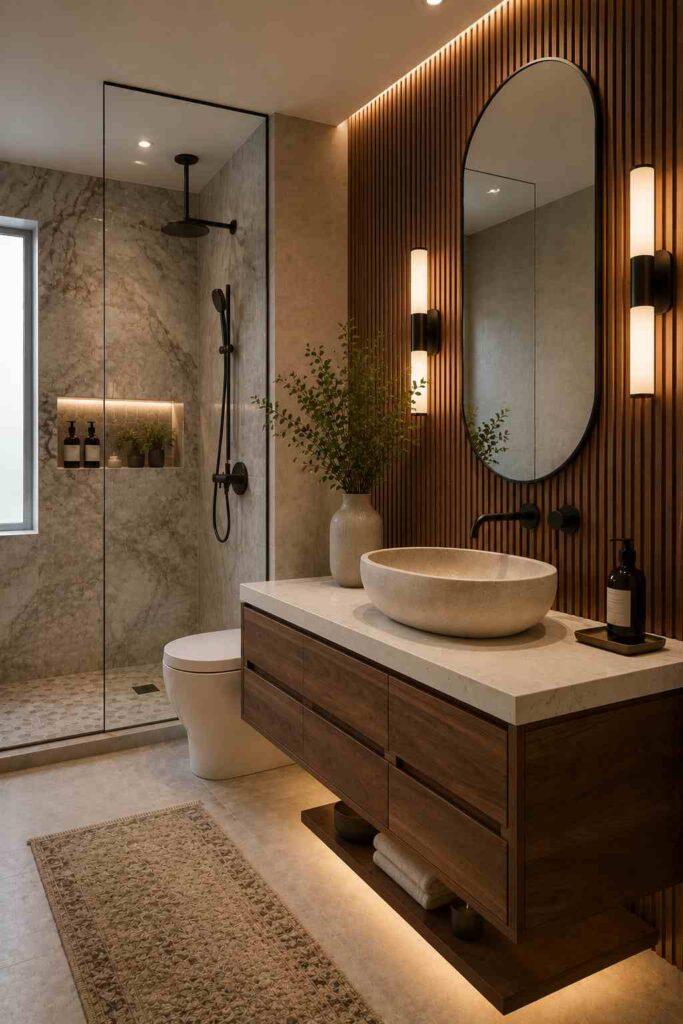
Luxury interiors balance warm and cool materials. A walnut vanity paired with white quartz creates visual contrast while maintaining simplicity. Successful combinations include:
- Oak + White Quartz
- Walnut + Marble
- White Oak + Travertine
- Charcoal Cabinets + Limestone
Designer Tip
Limit yourself to one wood tone throughout the room.
Mistakes to Avoid
Combining multiple wood finishes.
Problem #3 – There’s Never Enough Storage
A cluttered bathroom rarely feels luxurious. Even beautiful materials lose their impact when countertops are covered with toiletries, towels, cosmetics, and cleaning products.
Luxury bathrooms hide everyday necessities while keeping frequently used items within easy reach. These storage ideas help you create a cleaner, calmer, and more functional space.
Idea #15 – Install Deep Drawers Instead of Traditional Cabinets
The Problem
Standard cabinets waste valuable storage space because items become difficult to reach.
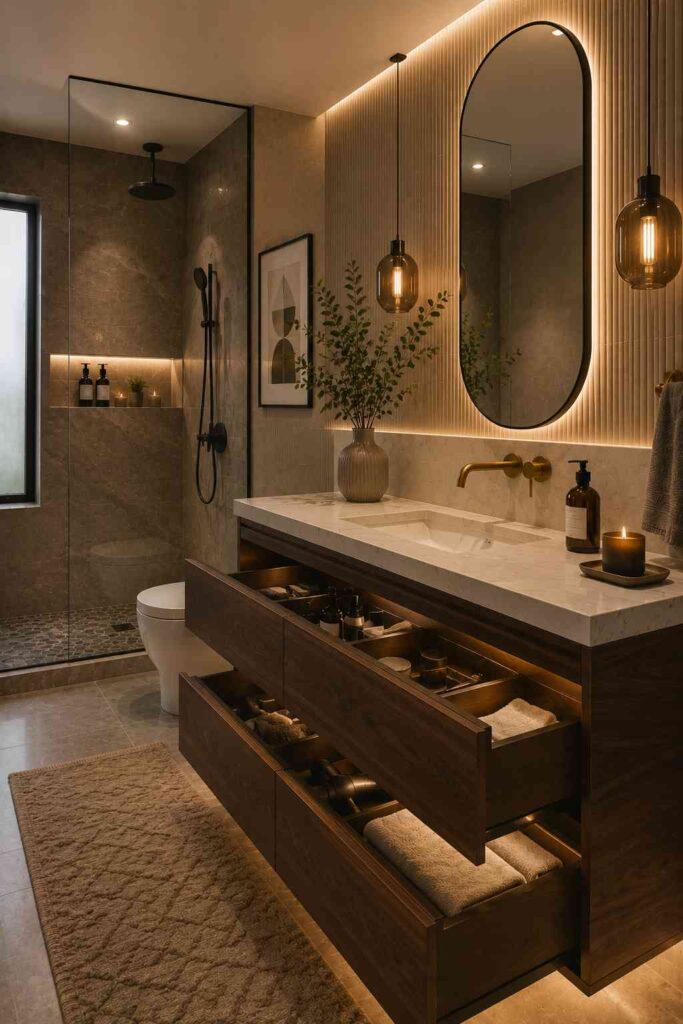
Why It Works
Deep drawers allow everything to remain visible and organized. They’re especially useful for storing:
- Hair dryers
- Curling irons
- Cleaning products
- Extra toiletries
- Towels
Estimated Cost
Included with most modern vanities.
Designer Tip
Use adjustable drawer organizers to maximize storage.
Mistakes to Avoid
Ignoring soft-close drawer hardware.
Idea #16 – Build Shower Niches Instead of Hanging Caddies
The Problem
Wire shower caddies create visual clutter and often rust over time.
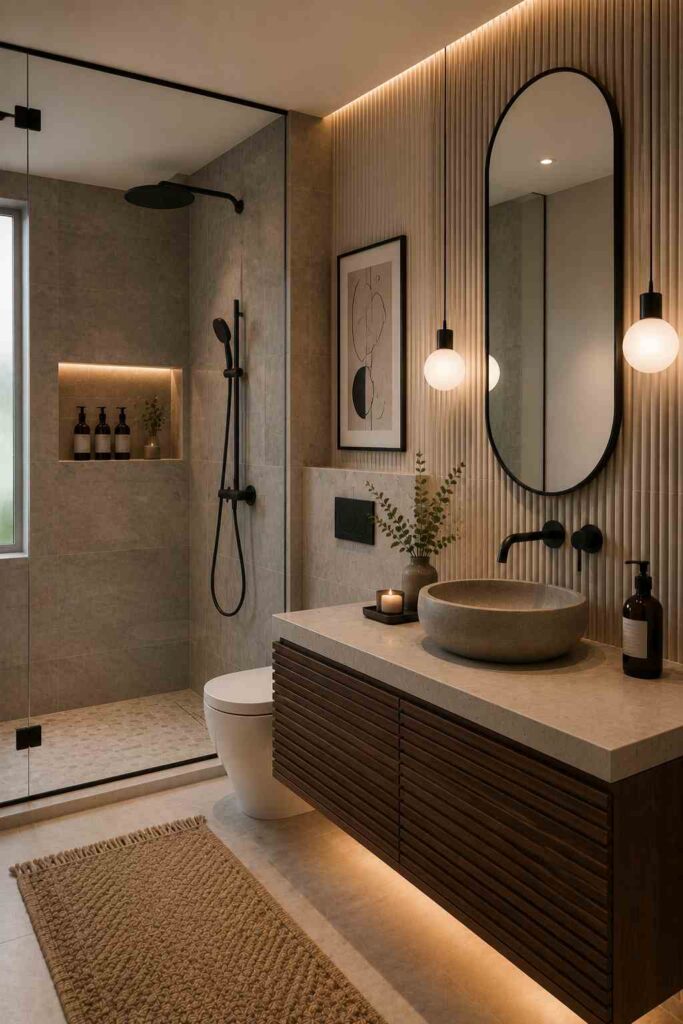
Why It Works
Built-in niches become part of the wall while keeping shampoo bottles organized. Luxury hotels almost always include recessed shower storage.
Estimated Cost
$300–$800
Designer Tip
Install the niche at chest height for easy access.
Mistakes to Avoid
Making niches too small for larger shampoo bottles.
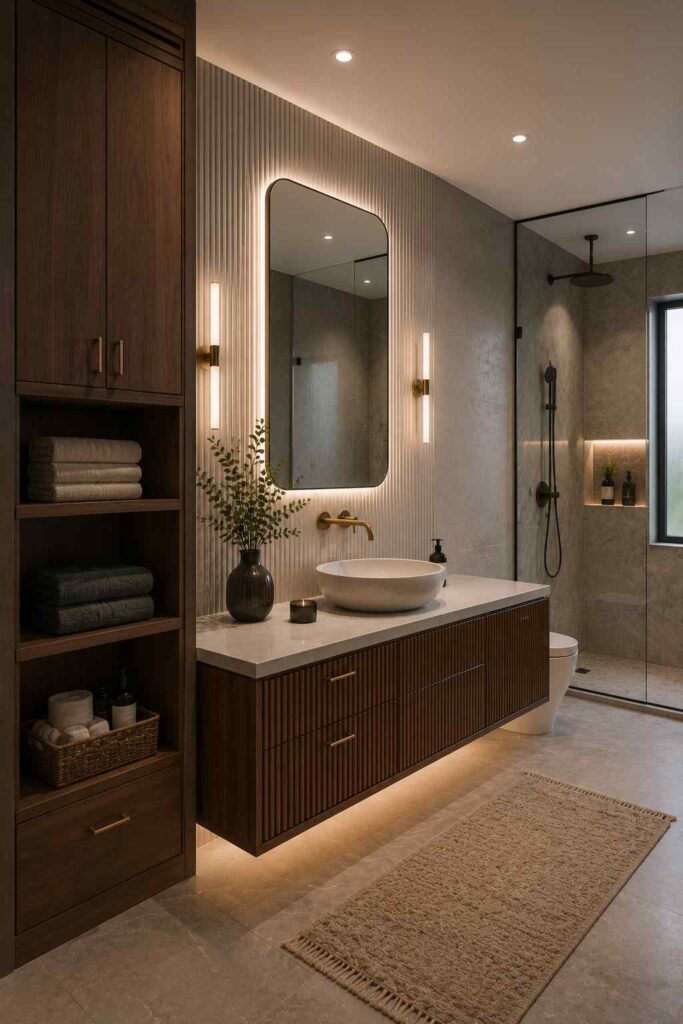
Idea #17 – Add a Tall Linen Cabinet
The Problem
Most bathrooms rely solely on vanity storage.
Why It Works
Vertical storage uses unused wall space while reducing countertop clutter. Tall cabinets are perfect for storing:
- Towels
- Toilet paper
- Cleaning supplies
- Guest toiletries
Estimated Cost
$300–$1,500
Designer Tip
Choose cabinets that reach close to the ceiling for a custom-built-in appearance.
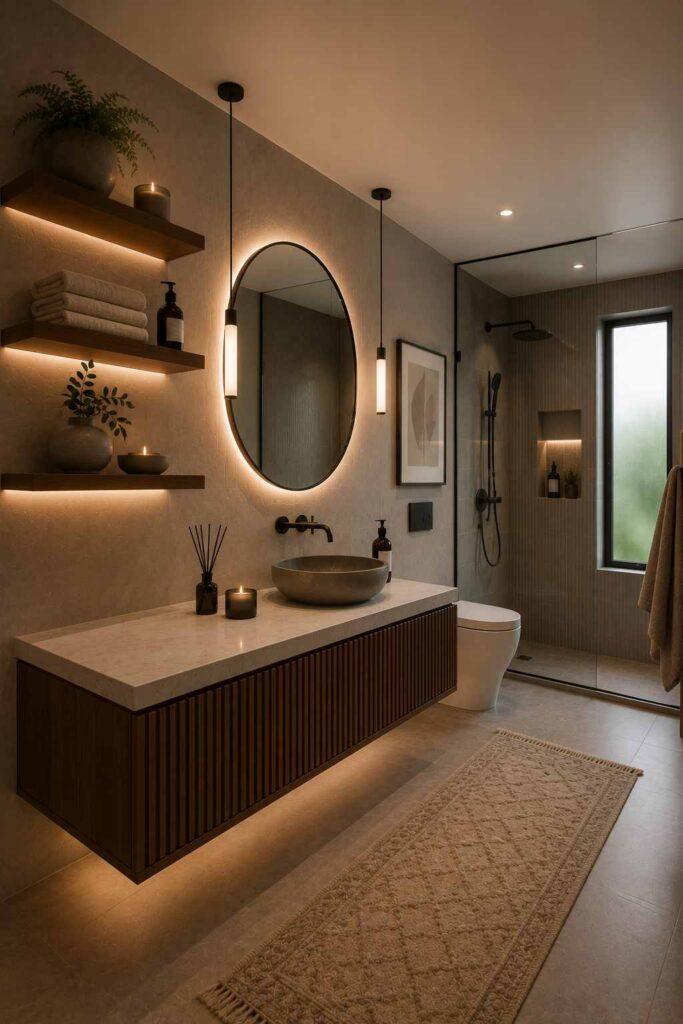
Idea #18 – Style Open Shelves Carefully
The Problem
Open shelving quickly becomes messy.
Why It Works
When styled intentionally, shelves add personality while maintaining organization. Follow the “Rule of Three.” Each shelf should contain no more than three coordinated items, such as:
- Folded towels
- Ceramic containers
- Small plants
- Candles
- Decorative bowls
Designer Tip
Leave space between objects. Luxury design depends on breathing room.
Mistakes to Avoid
Displaying everyday toiletries.
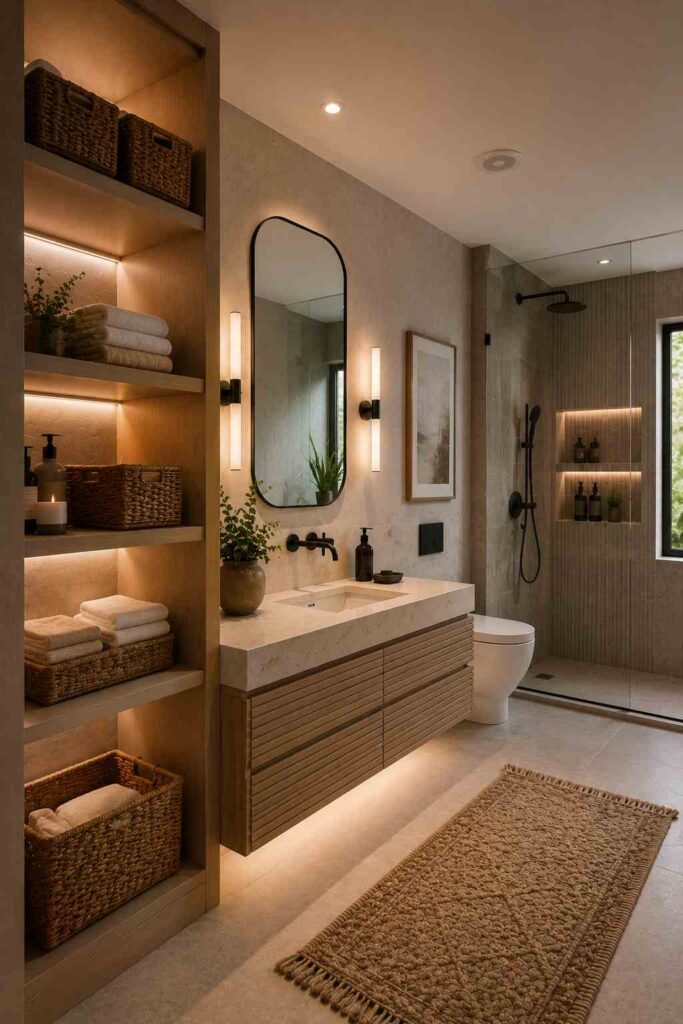
Idea #19 – Use Decorative Storage Baskets
The Problem
Visible cleaning products make bathrooms feel cluttered.
Why It Works
Natural woven baskets hide everyday essentials while introducing warmth and texture. Use them for:
- Hair tools
- Extra towels
- Toilet paper
- Laundry
Designer Tip
Choose matching baskets instead of mixing different styles.
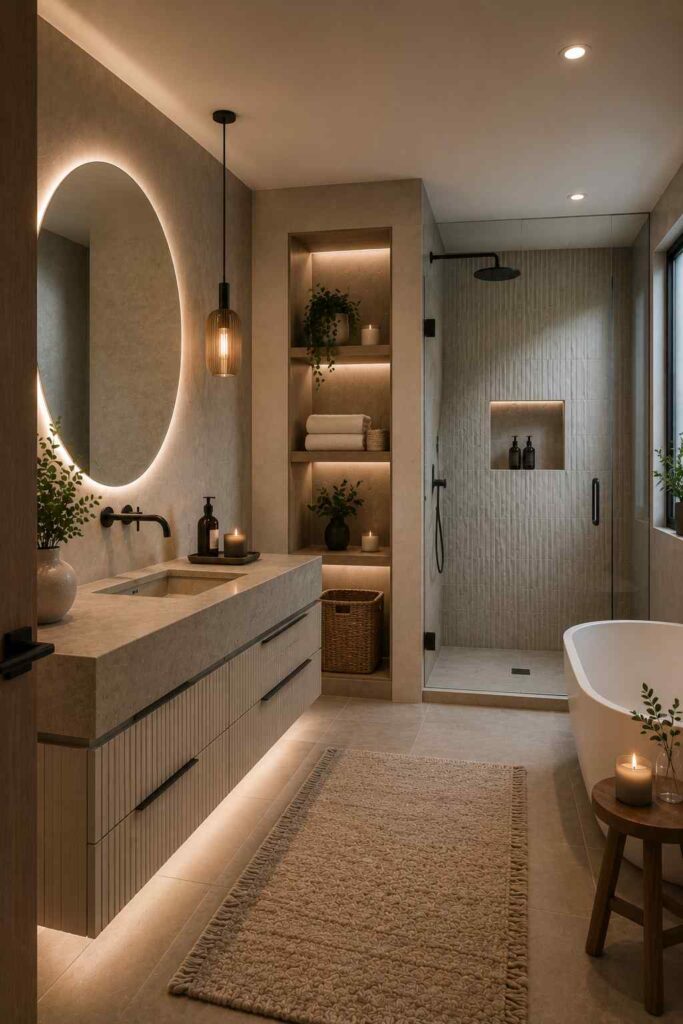
Idea #20 – Declutter Before Decorating
The Problem
Many homeowners buy decorations before removing unnecessary items.
Why It Works
Luxury interiors emphasize negative space. Every decorative object should have a purpose. Instead of filling every shelf, leave room for surfaces to breathe.
Ask yourself:
- Do I use this every week?
- Does it improve the design?
- Could it be stored elsewhere?
If the answer is no, remove it.
Designer Tip
One beautiful tray with neatly arranged soap, lotion, and a candle looks far more luxurious than ten unrelated accessories.
Problem #4 – Poor Lighting Makes Everything Look Cheap
Lighting is one of the most overlooked elements of bathroom design, yet it has one of the biggest impacts on how the space feels. You can install premium tile, expensive fixtures, and designer accessories, but if the lighting is harsh or poorly planned, the bathroom will still feel cold and outdated.
Professional designers don’t rely on a single ceiling fixture. Instead, they layer different types of lighting to improve functionality while creating a warm, spa-like atmosphere.
The following ideas will help transform your bathroom through better lighting alone.
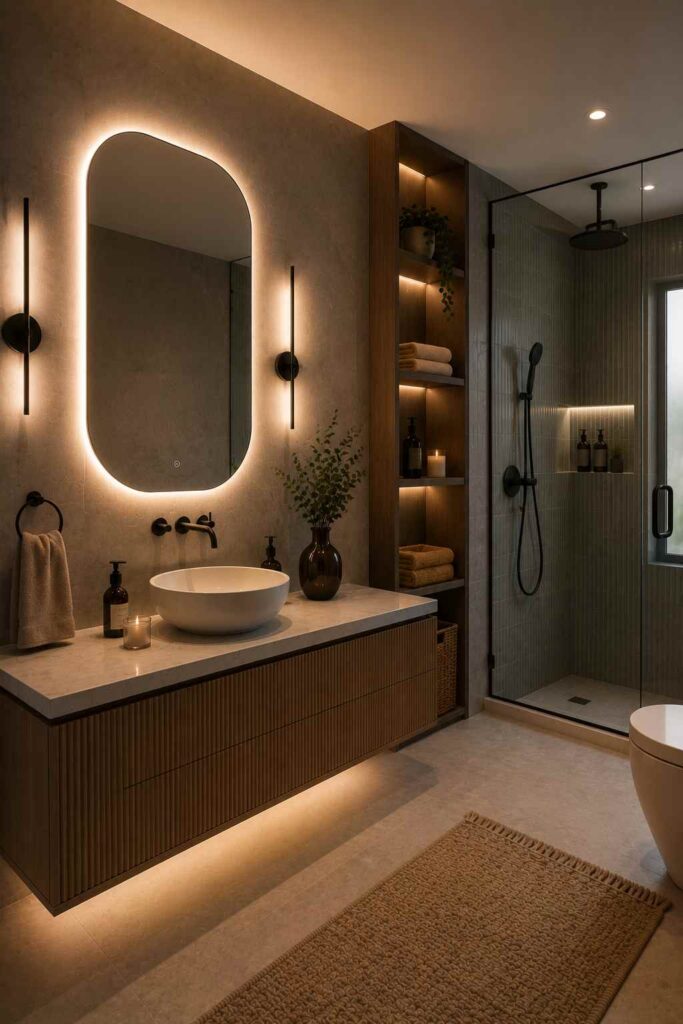
Idea #21 – Install a Backlit LED Mirror
The Problem
Traditional vanity lights often create harsh shadows, making daily grooming more difficult while giving the bathroom a flat appearance.
Why It Works
Backlit mirrors distribute light evenly around the face while creating a soft glow that instantly makes the room feel more luxurious. They also eliminate the need for bulky vanity light bars, creating a cleaner, more contemporary design.
Best For
- Master bathrooms
- Guest bathrooms
- Modern renovations
Estimated Cost
$300–$1,200
Designer Tip
Choose a mirror with adjustable brightness and color temperature so you can switch between task lighting and relaxing evening lighting.
Mistakes to Avoid
Avoid cool blue LED lighting above 4000K, which can make the room feel sterile rather than inviting.
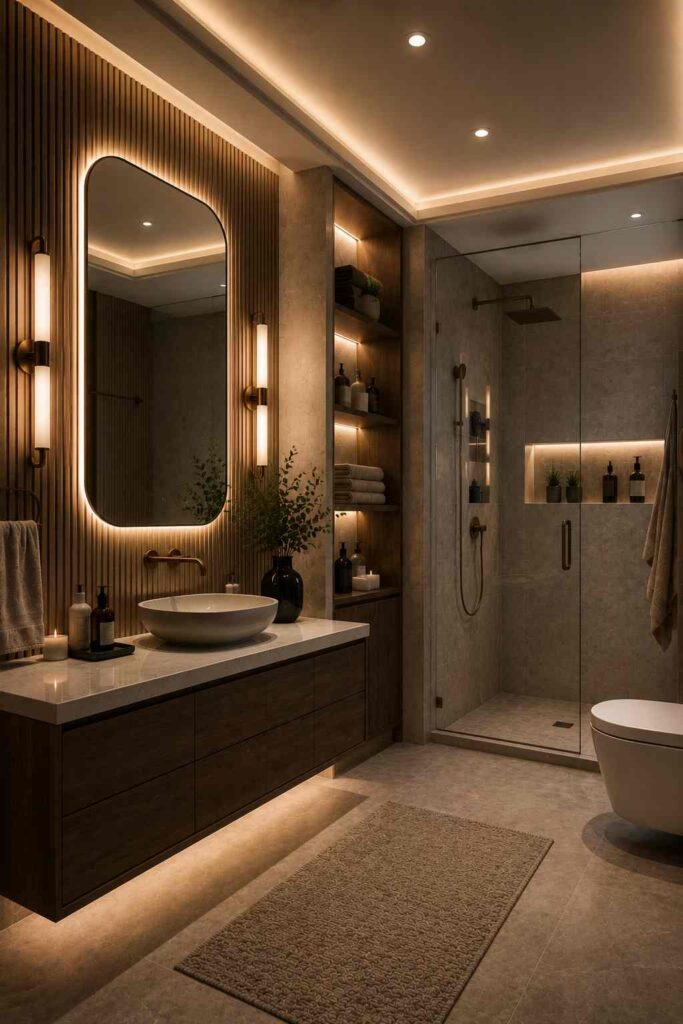
Idea #22 – Layer Your Lighting Instead of Using One Ceiling Light
The Problem
Many bathrooms rely on a single overhead fixture, leaving dark corners and uneven lighting throughout the room.
Why It Works
Layered lighting creates depth while making the room feel professionally designed. A luxury bathroom typically includes:
- Ambient lighting for overall brightness
- Task lighting around the vanity
- Accent lighting under cabinets or inside niches
Each layer serves a different purpose while contributing to the overall atmosphere.
Estimated Cost
$500–$2,500 depending on fixtures.
Designer Tip
Install separate switches for each lighting layer to create different moods throughout the day.
Mistakes to Avoid
Using only recessed ceiling lights without adding dedicated vanity lighting.
Idea #23 – Add Dimmable Lighting
The Problem
Bright lighting is useful in the morning but uncomfortable during evening routines.
Why It Works
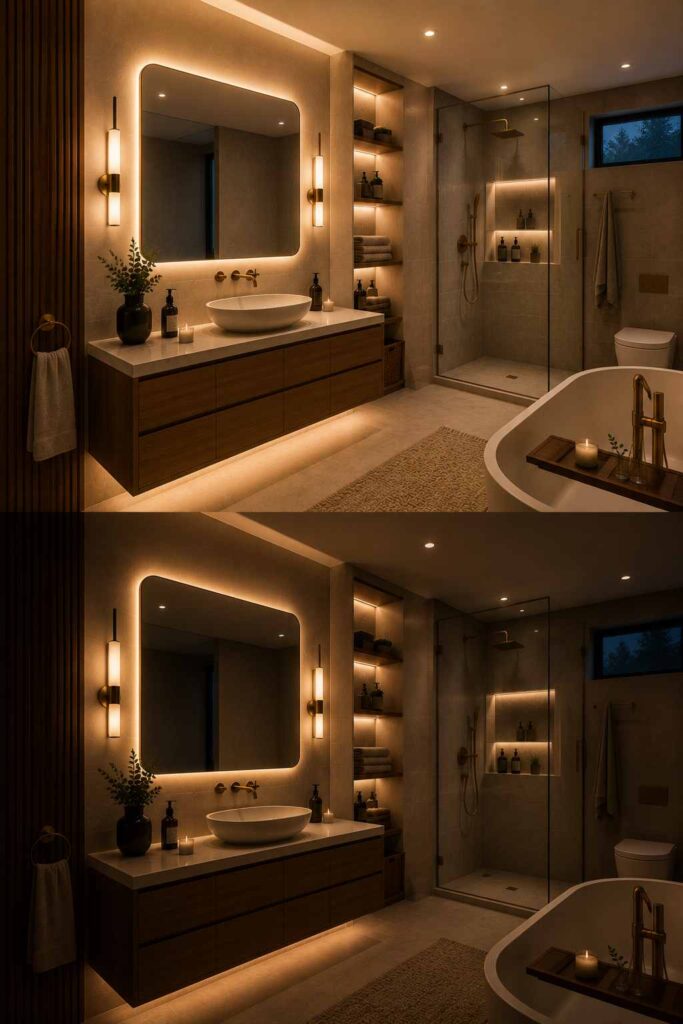
Dimmers allow you to adjust brightness according to the time of day.
Bright lighting is ideal for grooming, while softer lighting creates a calming environment for relaxing baths.
Estimated Cost
$50–$250
Designer Tip
Smart dimmers allow lighting scenes to be programmed for different times of day.
Mistakes to Avoid
Installing non-compatible LED bulbs that flicker when dimmed.
Idea #24 – Use Warm White Lighting
The Problem
Many older bathrooms use cool white bulbs that make walls and skin tones appear lifeless.
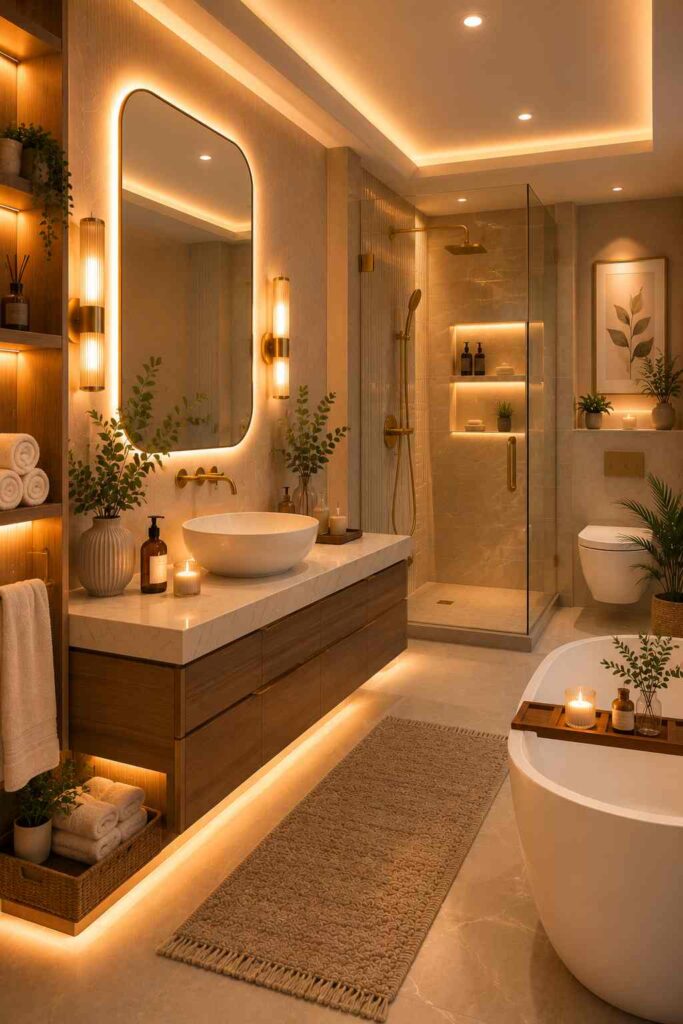
Why It Works
Warm white lighting between 2700K and 3000K creates a softer, more welcoming atmosphere that complements natural materials like wood and stone.
Luxury hotels almost always use warm lighting because it feels more comfortable and relaxing.
Best For
Every bathroom.
Estimated Cost
$10–$50 for quality LED bulbs.
Designer Tip
Keep every bulb in the bathroom at the same color temperature for a consistent appearance.
Mistakes to Avoid
Mixing warm and cool bulbs in the same room.
Idea #25 – Install a Statement Pendant Light
The Problem
Many bathrooms lack a visual focal point.
Why It Works
A decorative pendant instantly adds personality while drawing attention upward.
Popular materials include:
- Frosted glass
- Brass
- Matte black
- Linen shades
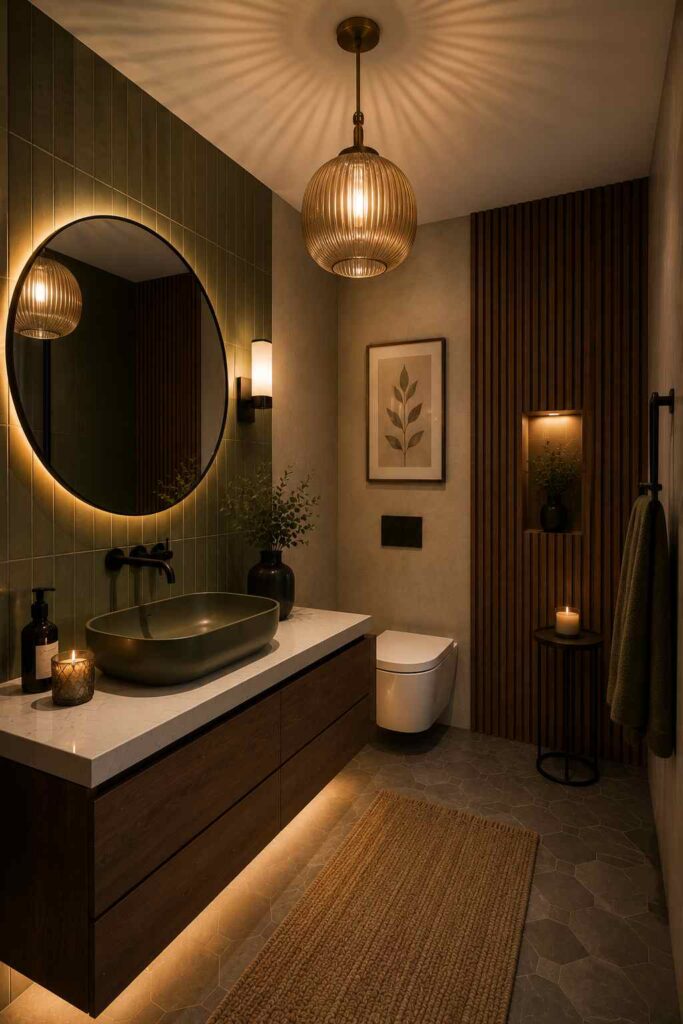
Pendant lighting works especially well in powder rooms where moisture is less of a concern.
Estimated Cost
$150–$800
Designer Tip
Hang the pendant low enough to create visual interest but high enough to avoid obstructing movement.
Mistakes to Avoid
Choosing oversized fixtures for compact bathrooms.
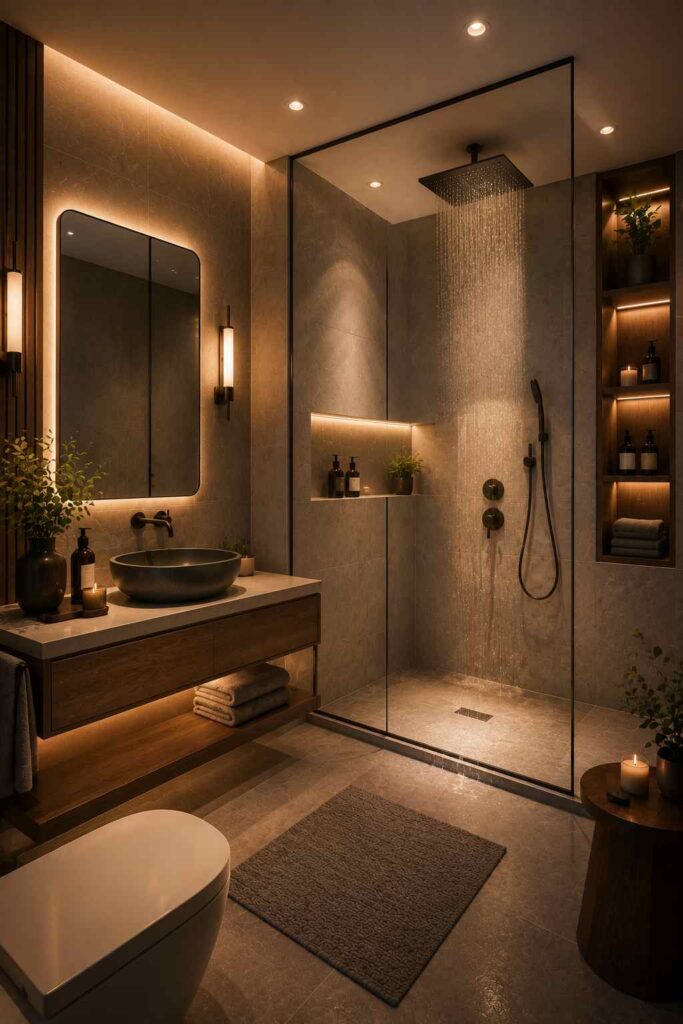
Idea #26 – Upgrade to a Rainfall Showerhead
The Problem
Standard showerheads provide uneven water coverage and rarely feel relaxing.
Why It Works
Rainfall showerheads distribute water more evenly, creating a gentle, immersive shower experience similar to luxury hotels and spas.
Many homeowners pair them with handheld showerheads for additional flexibility.
Estimated Cost
$200–$1,000
Designer Tip
Install the rainfall head directly overhead for the best experience.
Mistakes to Avoid
Ignoring water pressure requirements before purchasing.
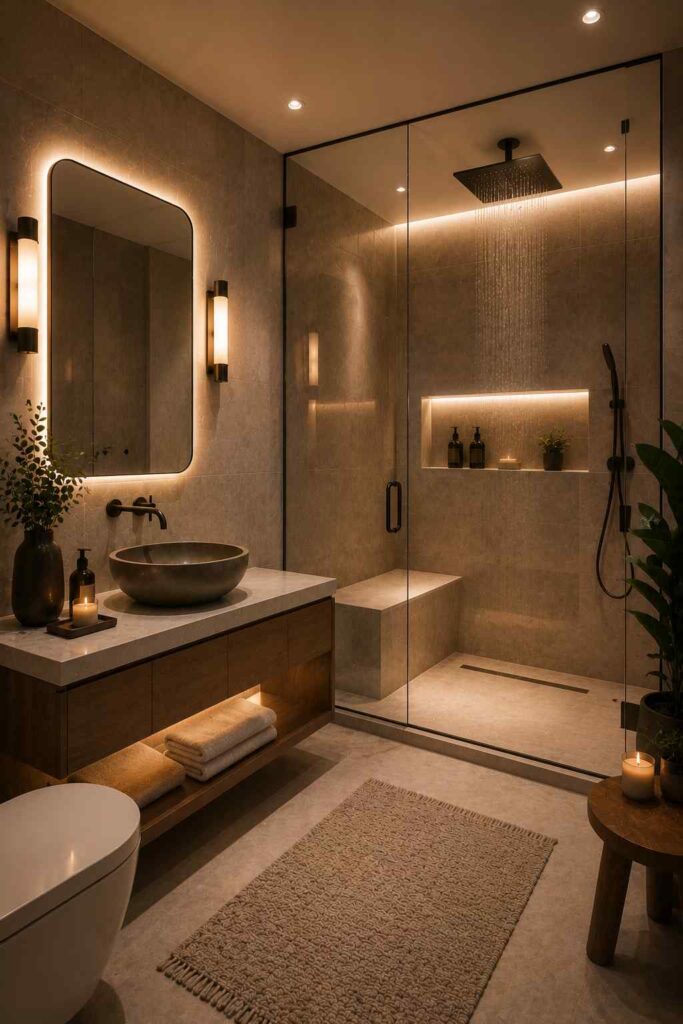
Idea #27 – Add a Built-In Shower Bench
The Problem
Standing throughout every shower reduces comfort, especially during longer routines.
Why It Works
Built-in benches add convenience while making the shower feel more luxurious. They’re useful for:
- Shaving
- Relaxing
- Steam showers
- Accessibility
Estimated Cost
$400–$1,500
Designer Tip
Use the same tile on the bench as the shower walls for a seamless appearance.
Mistakes to Avoid
Building benches without proper waterproofing.
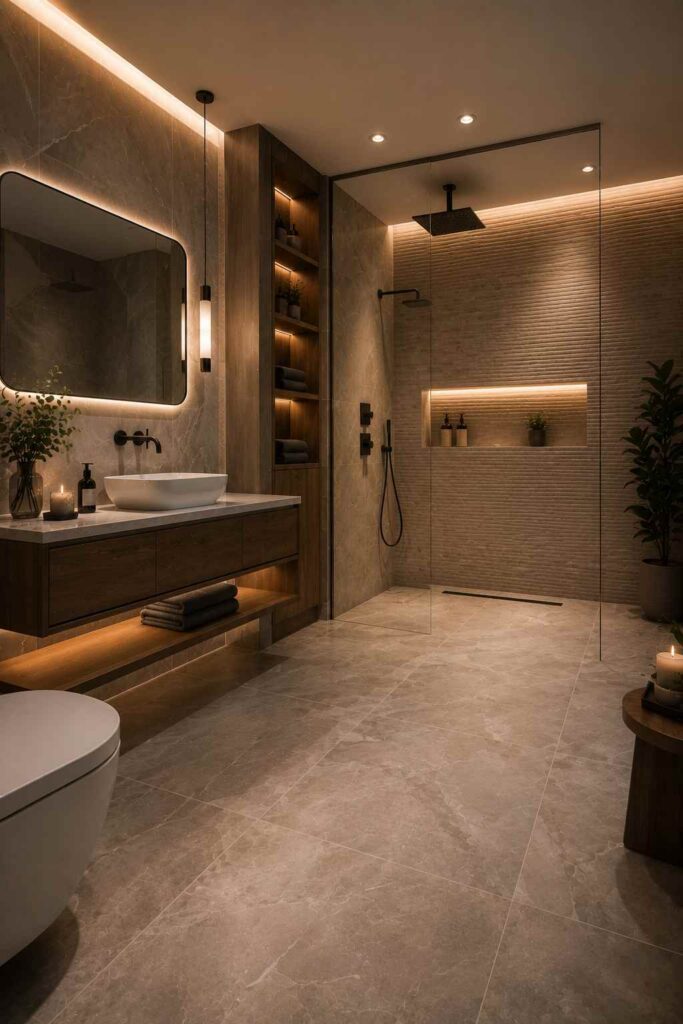
Idea #28 – Create a Curbless Walk-In Shower
The Problem
Traditional shower curbs interrupt the visual flow of the bathroom.
Why It Works
Curbless showers create one continuous floor surface, making bathrooms feel larger while improving accessibility. This is one of the defining features of modern luxury bathroom design.
Estimated Cost
$3,000–$8,000
Designer Tip
Pair a curbless entry with large-format tiles for maximum visual impact.
Mistakes to Avoid
Poor floor slope that prevents proper drainage.
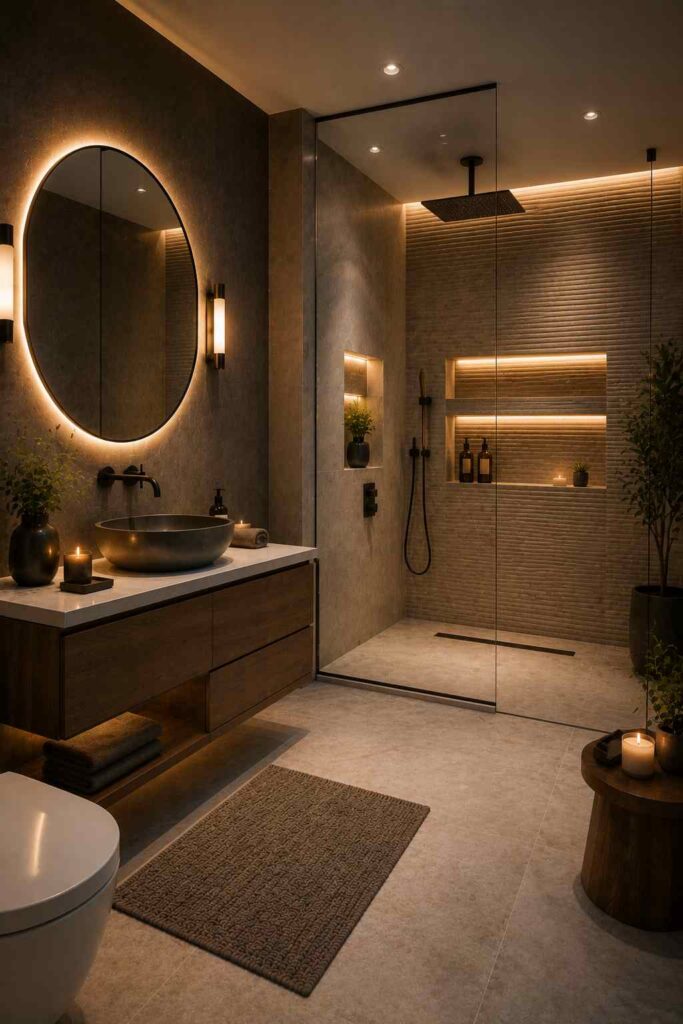
Idea #29 – Add Built-In Niches with LED Lighting
The Problem
Shampoo bottles left on the floor or hanging caddies create clutter.
Why It Works
Built-in niches provide practical storage while integrated LED lighting adds a subtle luxury feature that’s both functional and visually impressive.
Estimated Cost
$500–$1,200
Designer Tip
Match the niche tile with the surrounding wall for a seamless look.
Mistakes to Avoid
Making niches too shallow for everyday products.
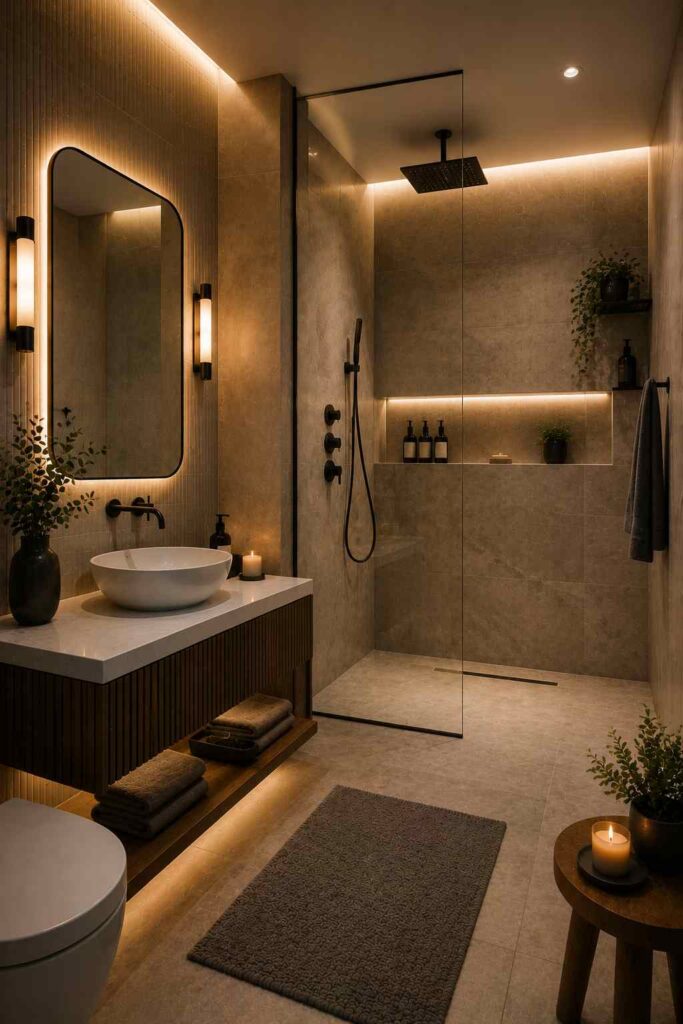
Idea #30 – Use Coordinated Shower Accessories
The Problem
Random shampoo bottles and mismatched accessories make even expensive showers feel disorganized.
Why It Works
Decant toiletries into matching dispensers and coordinate accessories such as soap dishes, hooks, and towel bars in the same finish.
This creates a boutique hotel aesthetic with minimal investment.
Estimated Cost
$50–$300
Designer Tip
Stick with one metal finish throughout the shower area for a cohesive look.
Mistakes to Avoid
Displaying colorful plastic bottles that distract from your overall design.
Problem #6 – You’re Renting or Working With a Small Apartment Bathroom
Not everyone has the freedom or budget to completely remodel a bathroom. Renters and apartment owners often face restrictions that make replacing tile, plumbing, or cabinetry impossible.
Fortunately, creating a modern luxury bathroom doesn’t always require demolition. Many high-impact upgrades are affordable, removable, and landlord-friendly. These ideas help transform temporary spaces without permanent changes.
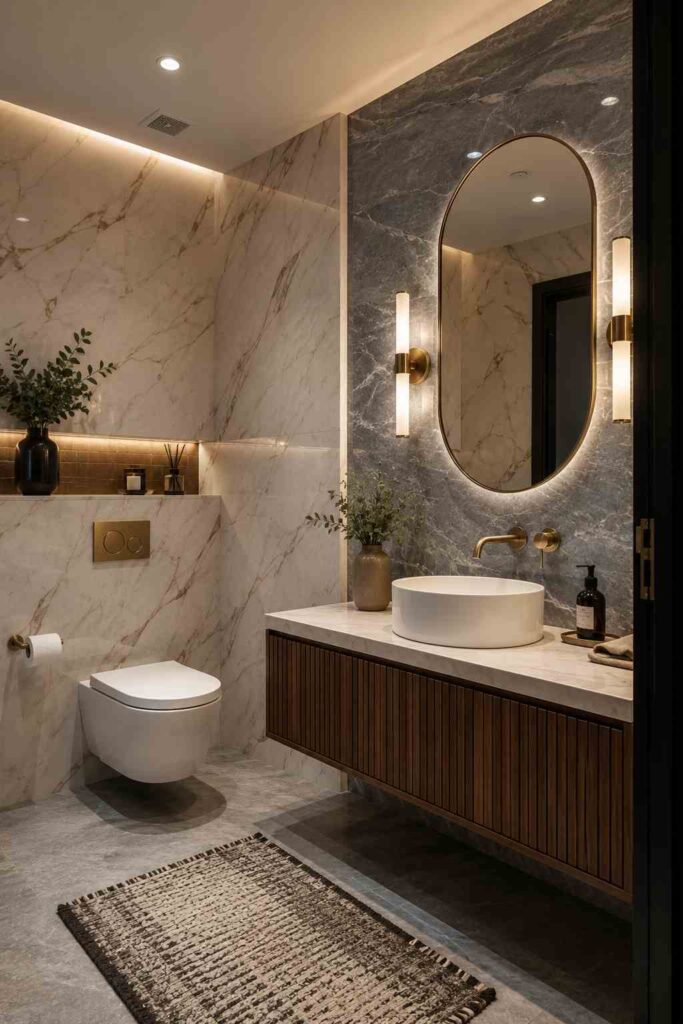
Idea #31 – Upgrade Walls with Peel-and-Stick Marble or Stone Panels
The Problem
Plain painted walls or outdated ceramic tile can make a bathroom feel dated, but replacing them isn’t always an option.
Why It Works
High-quality peel-and-stick wall panels and marble-effect films instantly refresh a bathroom’s appearance without damaging the original surface.
Today’s premium products closely mimic natural stone, concrete, and textured finishes while remaining removable.
Best For
- Rental apartments
- Small bathrooms
- Budget-friendly makeovers
Estimated Cost
$50–$300
Designer Tip
Apply peel-and-stick materials to a single feature wall rather than every surface to create a more realistic designer finish.
Mistakes to Avoid
Purchasing low-quality adhesive films that bubble or peel in humid environments.
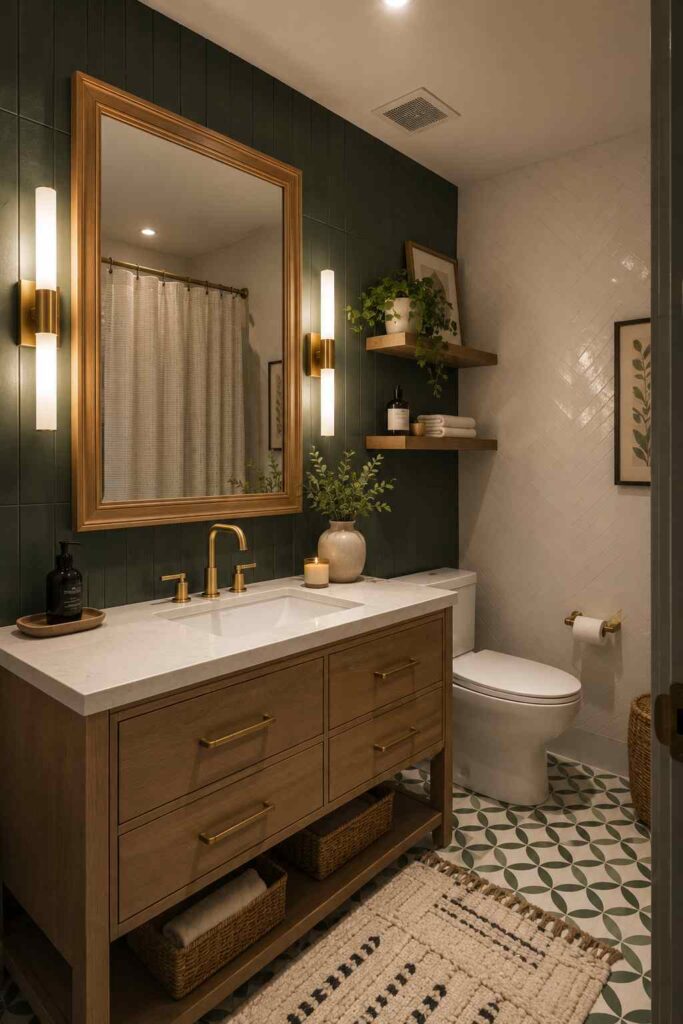
Idea #32 – Frame an Existing Mirror Instead of Replacing It
The Problem
Large builder-grade mirrors glued directly to the wall often make bathrooms feel unfinished.
Why It Works
Mirror frame kits transform plain mirrors into elegant design features without removing the original glass.
Wood, matte black, brushed brass, and painted frames can dramatically change the room’s appearance in just a few hours.
Best For
- Rental homes
- Budget renovations
- Guest bathrooms
Estimated Cost
$80–$300
Designer Tip
Choose a frame color that matches your cabinet hardware to create a cohesive look.
Mistakes to Avoid
Using oversized decorative frames that overwhelm small bathrooms.
Idea #33 – Replace Bathroom Textiles
The Problem
Old towels, faded bath mats, and mismatched shower curtains make bathrooms feel cluttered and inexpensive.
Why It Works
Textiles introduce color, texture, and warmth while requiring very little investment.
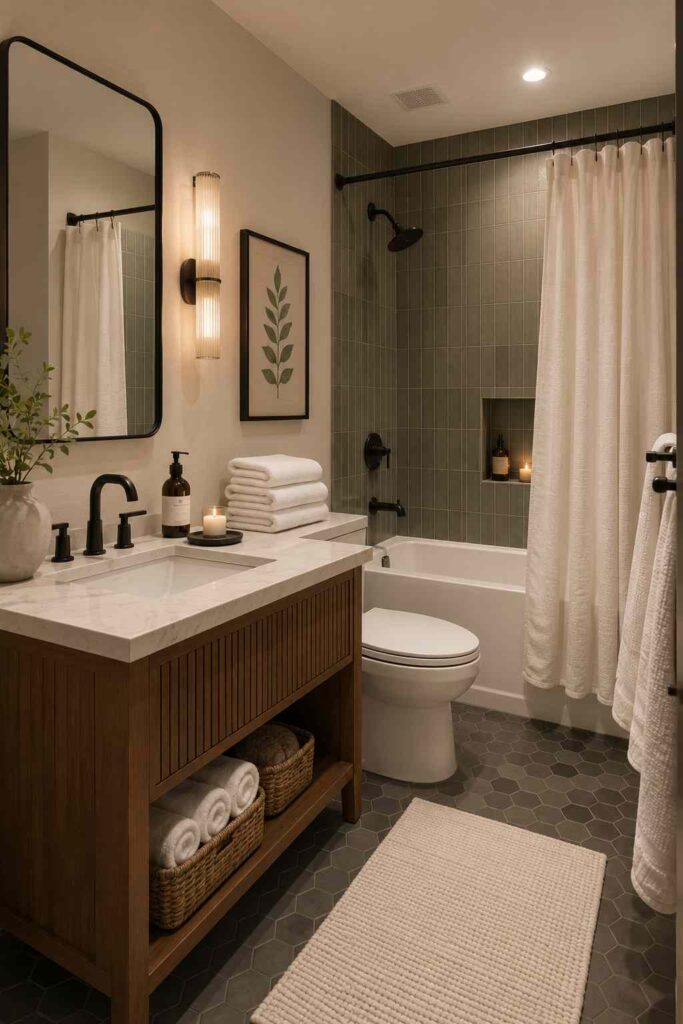
Luxury hotels often rely on:
- Thick white towels
- Linen shower curtains
- Waffle-weave bath mats
- Neutral color palettes
These simple upgrades instantly create a cleaner, spa-inspired atmosphere.
Estimated Cost
$100–$400
Designer Tip
Display only two or three neatly folded towels while storing extras elsewhere to reduce visual clutter.
Mistakes to Avoid
Using bright colors and busy patterns that compete with the room’s overall design.
Idea #34 – Add Freestanding Storage Furniture
The Problem
Many apartment bathrooms lack built-in storage.
Why It Works
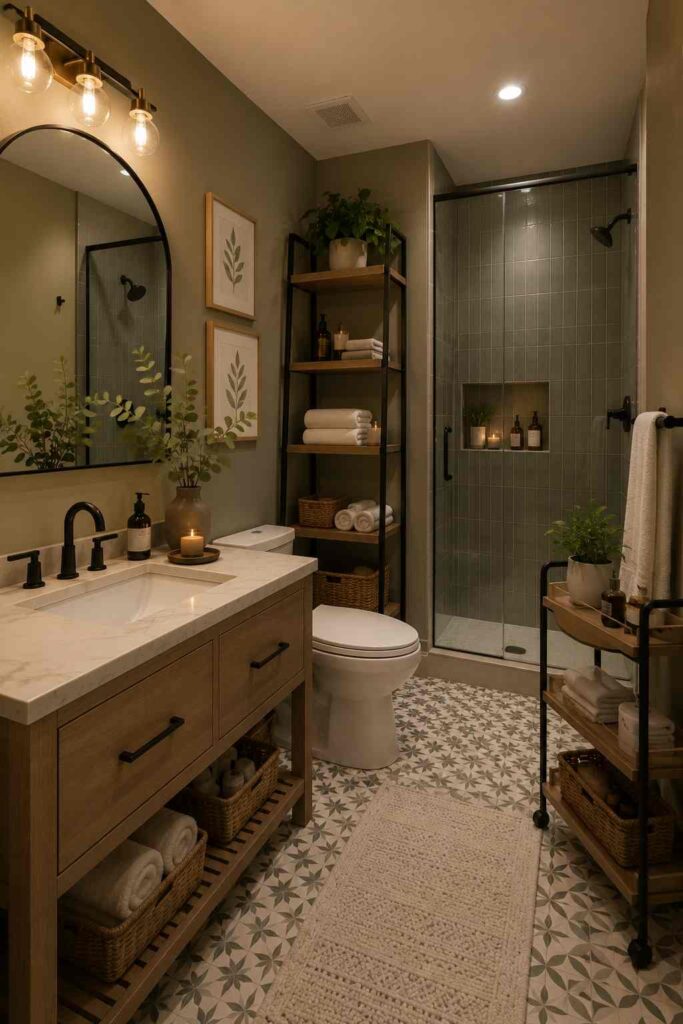
Slim ladder shelves, rolling carts, and narrow storage cabinets provide additional organization without permanent installation.
Choose furniture made from:
- Natural oak
- Bamboo
- Walnut
- Matte black steel
These materials blend beautifully with modern luxury interiors.
Estimated Cost
$120–$600
Designer Tip
Leave open space around the furniture to prevent the room from feeling overcrowded.
Mistakes to Avoid
Choosing oversized cabinets that reduce walking space.
Idea #35 – Style Like a Boutique Hotel
The Problem
Many homeowners purchase decorative accessories without a clear plan, resulting in clutter rather than sophistication.
Why It Works
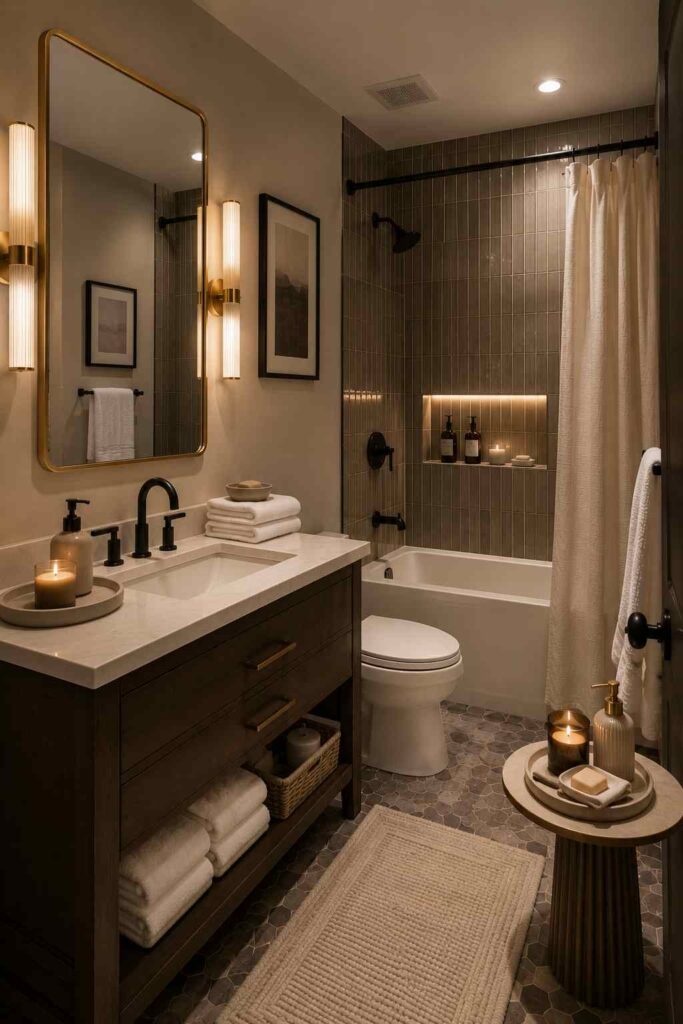
Luxury hotels use only a handful of carefully selected accessories.
Instead of filling every surface, choose a few high-quality pieces, such as:
- A scented candle
- A ceramic soap dispenser
- A small vase with eucalyptus
- A stone tray
- One decorative bowl
- A neatly folded towel stack
Less decoration often creates a stronger impression.
Estimated Cost
$50–$250
Designer Tip
Group accessories in odd numbers (three or five items) to create balanced visual styling.
Mistakes to Avoid
Displaying every decorative item at once. Rotate accessories seasonally to keep the bathroom fresh.
Modern Luxury Bathroom Remodel Costs (2026)
Before beginning a renovation, it’s important to understand where your budget will have the greatest impact. While costs vary depending on location, materials, and labor, the following estimates provide realistic planning guidelines.
Typical Bathroom Remodel Costs
| Project Type | Typical Cost | Best For |
| Cosmetic Refresh | $500–$2,000 | Paint, accessories, lighting, mirror, hardware |
| Partial Remodel | $3,000–$8,000 | Vanity, flooring, lighting, fixtures |
| Mid-Range Remodel | $8,000–$20,000 | New tile, shower, vanity, plumbing updates |
| Luxury Remodel | $20,000–$50,000+ | Custom cabinetry, natural stone, premium fixtures, and layout changes |
Where Should You Spend More?
Not every upgrade provides the same value. Professional designers generally recommend investing in permanent elements that affect daily comfort and long-term durability.
Worth the Investment
- Quality vanity
- Quartz or stone countertop
- Shower waterproofing
- Lighting
- Ventilation
- Large-format tile
- Frameless shower glass
These upgrades improve both functionality and resale value.
Where You Can Save Money
Some features look expensive without requiring a luxury budget. Consider saving on:
- Decorative accessories
- Mirror frames
- Open shelving
- Paint
- Cabinet hardware
- Textiles
- Artificial plants
Choosing affordable versions of these items allows you to allocate more of your budget to structural improvements.
Which Bathroom Upgrades Give the Biggest Return?
Whether you’re renovating for yourself or preparing to sell your home, some improvements consistently deliver a higher return on investment than others.
Bathroom Upgrade Comparison
| Upgrade | Cost | Visual Impact | Return on Investment |
| Fresh Paint | Low | 4-star | High |
| New Lighting | Low | 5-star | High |
| Replace Mirror | Low | 4-star | High |
| Cabinet Hardware | Low | 4-star | High |
| Floating Vanity | Medium | 5-star | High |
| Quartz Countertop | Medium | 5-star | High |
| Frameless Shower Glass | High | 5-star | Medium-High |
| Large-Format Tile | High | 5-star | Medium |
| Freestanding Bathtub | Very High | 4-star | Medium |
| Steam Shower | Very High | 3-star | Low–Medium |
Recommended Upgrade Priority
If you’re working with a limited budget, complete projects in this order:
Phase 1 – Under $1,000
- Replace lighting
- Paint walls
- Upgrade hardware
- Add luxury towels
- Replace accessories
- Install a new mirror
Phase 2 – $1,000–$5,000
- Replace vanity
- Install a quartz countertop
- Upgrade flooring
- Improve storage
- Add a frameless glass shower
Phase 3 – $5,000+
- Replace tile
- Build a curbless shower
- Install custom cabinetry
- Upgrade plumbing fixtures
- Add heated flooring
- Install premium ventilation
This phased approach allows homeowners to spread renovation costs while still achieving meaningful visual improvements after each stage.
Before You Buy Anything: A Luxury Bathroom Planning Checklist
Before purchasing materials, ask yourself these questions:
- Does this upgrade solve a real problem?
- Will it improve storage or functionality?
- Does it match the rest of my design palette?
- Am I mixing too many finishes?
- Will this still look good in ten years?
- Is there a lower-maintenance alternative?
- Have I prioritized ventilation and lighting?
Making thoughtful decisions now can save thousands of dollars later and help create a bathroom that remains stylish for years to come.
Common Luxury Bathroom Design Mistakes (And How to Avoid Them)
Even with a generous budget, a bathroom can still feel ordinary if the design lacks balance and planning. Interior designers often see the same mistakes repeated in renovations of every size. Avoiding these common issues will help your bathroom look timeless rather than trendy.
Mistake #1 – Choosing Style Over Function
Luxury begins with comfort. Before selecting decorative finishes, make sure your bathroom has enough storage, adequate lighting, proper ventilation, and a layout that works for your daily routine.
Better Approach: Solve functional problems first, then add decorative elements.
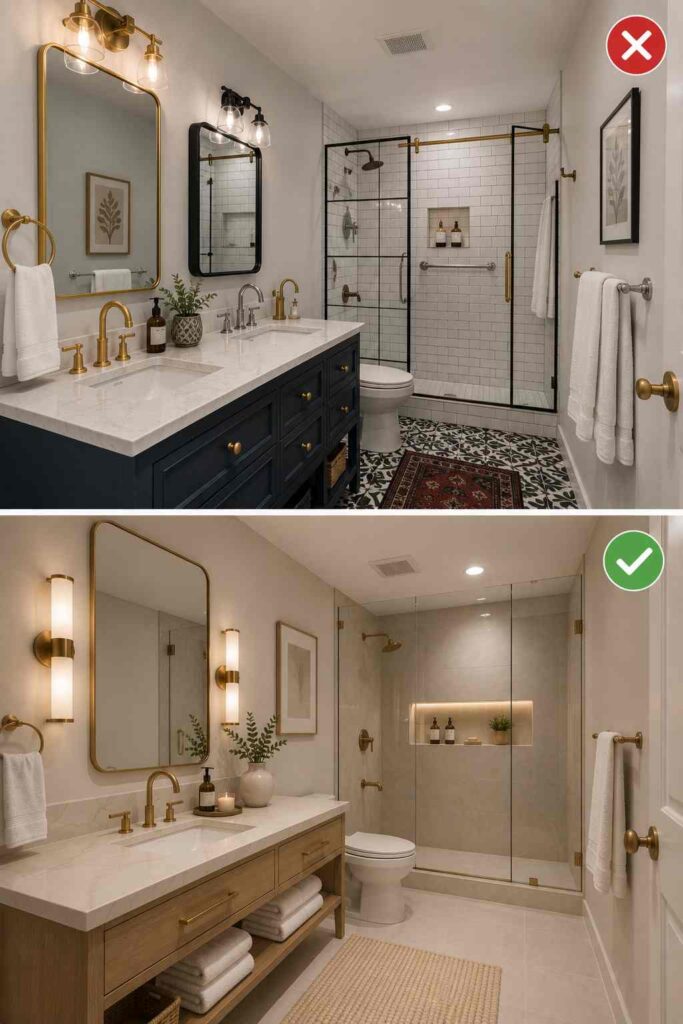
Mistake #2 – Mixing Too Many Finishes
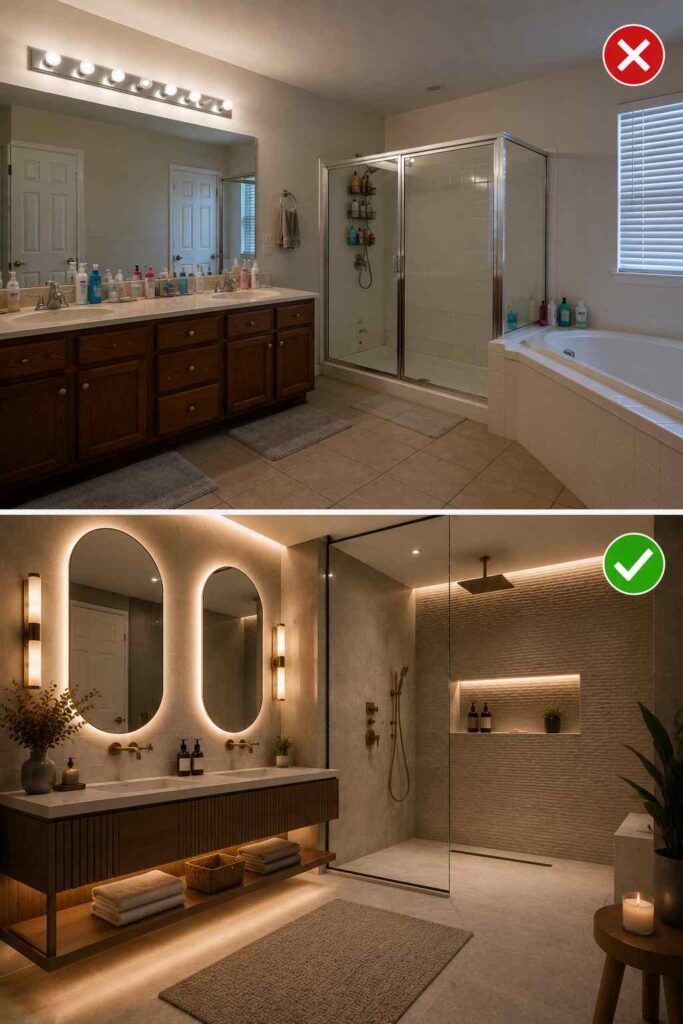
Combining polished chrome, brushed brass, matte black, and bronze in one bathroom often creates a disconnected appearance.
Better Approach: Limit yourself to one dominant metal finish and, if desired, one complementary accent.
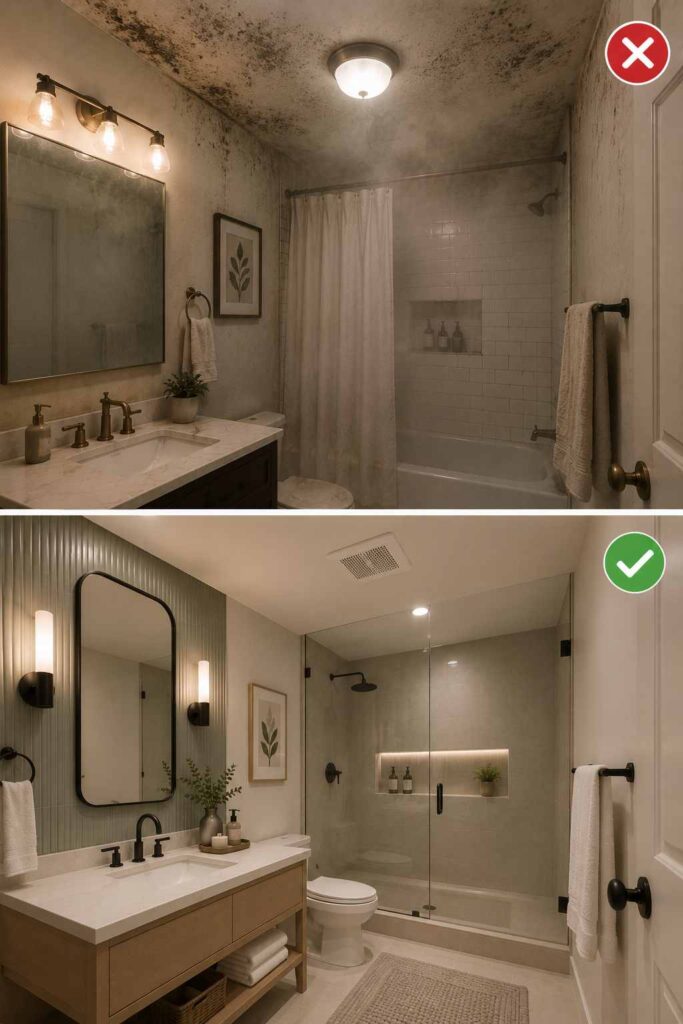
Mistake #3 – Ignoring Ventilation
Even the most beautiful bathroom can quickly lose its appeal if moisture leads to mold, peeling paint, or damaged cabinetry.
Better Approach: Install a properly sized exhaust fan and run it for at least 15–20 minutes after every shower.
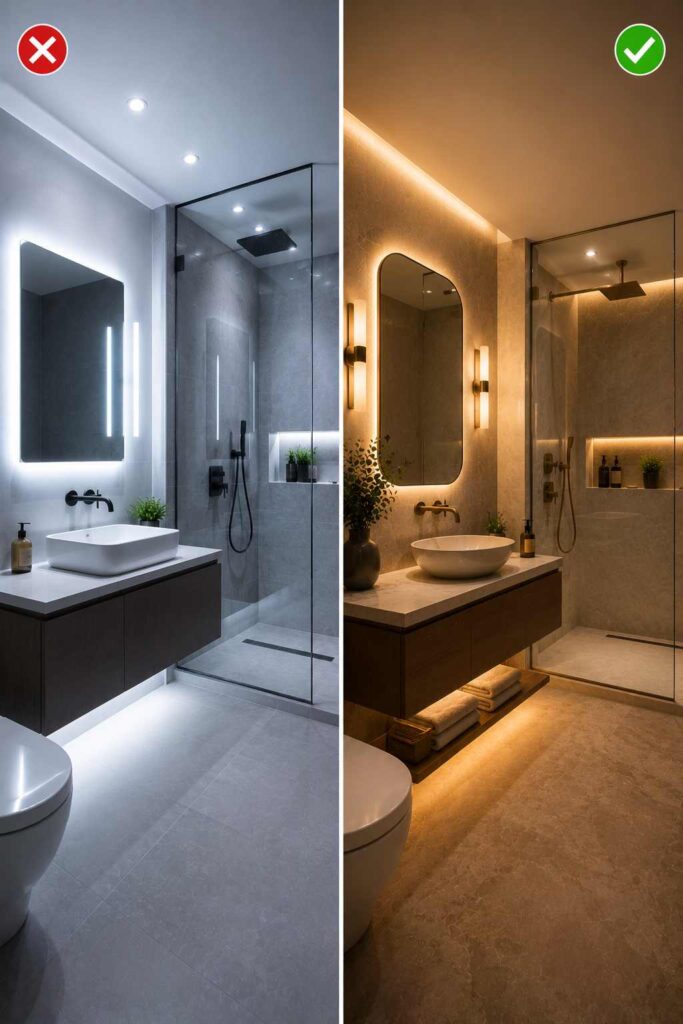
Mistake #4 – Using Cool White Lighting
Lighting above 4000K often feels clinical rather than relaxing.
Better Approach: Use warm white LED lighting between 2700K and 3000K throughout the room.
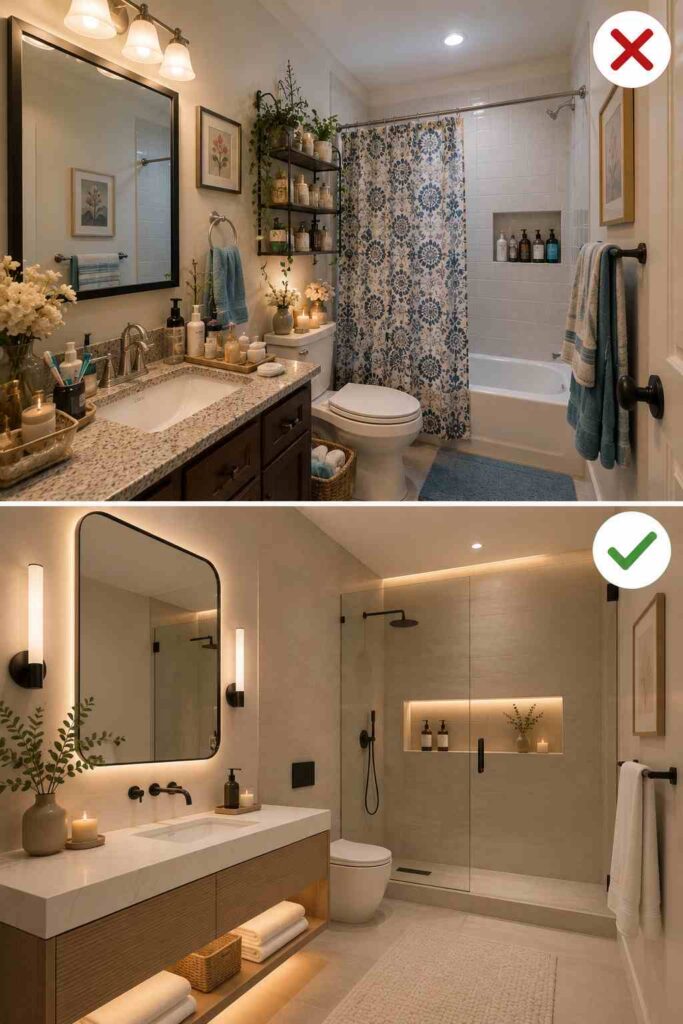
Mistake #5 – Overdecorating Every Surface
Luxury bathrooms feel calm because they embrace negative space.
Better Approach: Display only a few carefully selected accessories and store everyday items out of sight.
Mistake #6 – Choosing Trendy Finishes Without Thinking Long-Term
Design trends come and go. Highly fashionable colors or finishes may feel outdated within a few years.
Better Approach: Build your bathroom around timeless materials such as natural wood, quartz, porcelain, limestone, or warm neutral colors, then update smaller accessories over time.
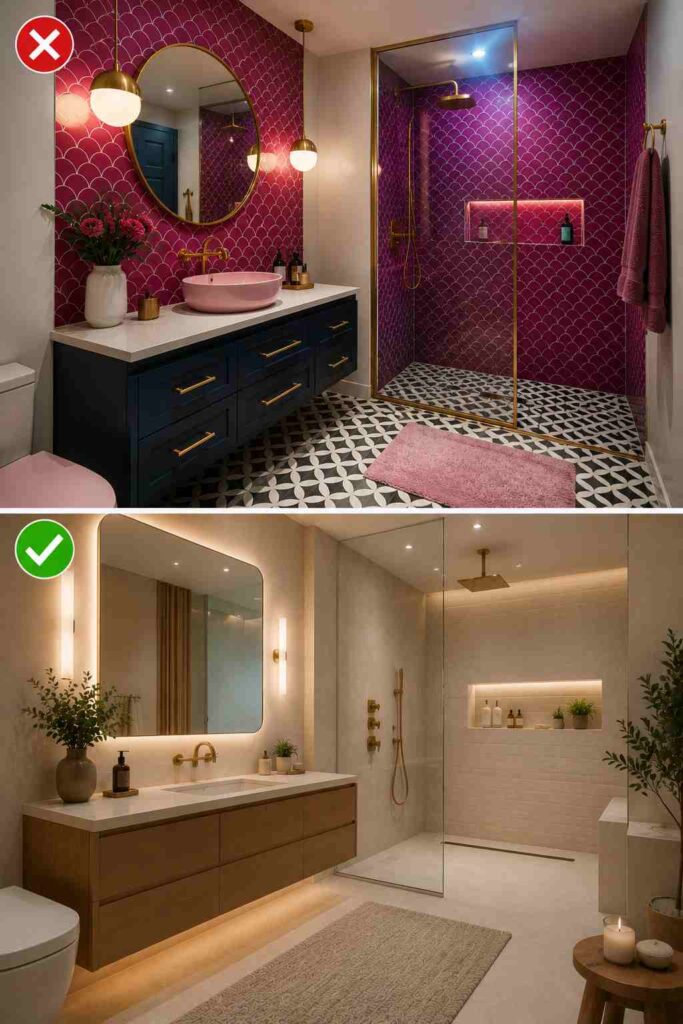
Mistake #7 – Spending Too Much on Low-Impact Items
Expensive decorative accessories rarely transform a bathroom if the layout, lighting, or storage remain poor.
Better Approach: Invest first in improvements that enhance comfort and functionality before purchasing decorative items.
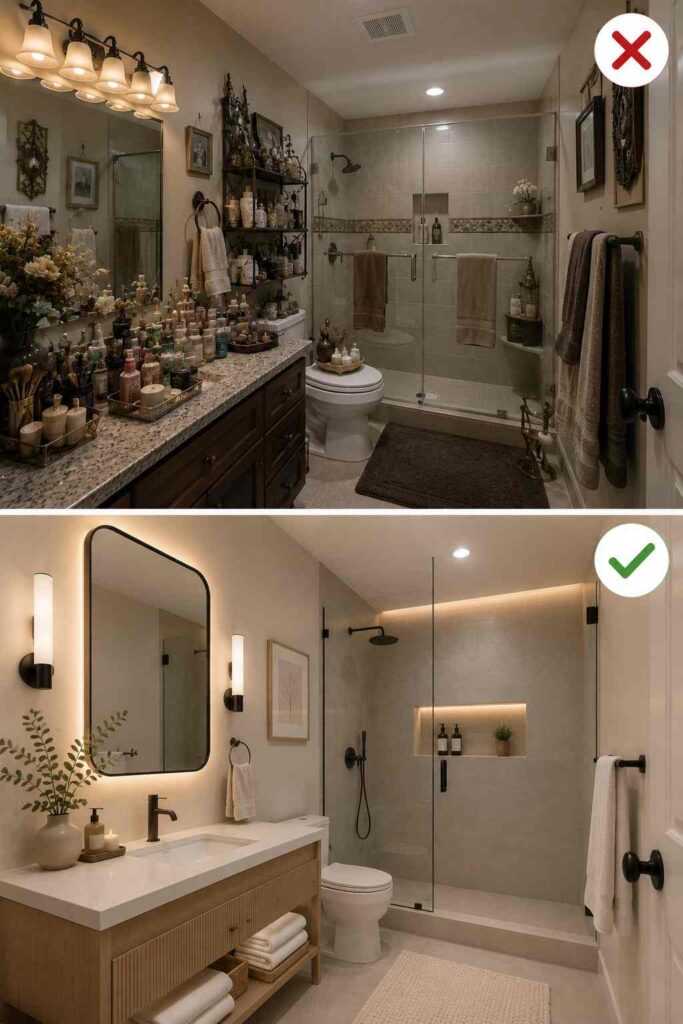
Luxury Bathroom Planning Checklist
Before starting your renovation, use this checklist to ensure every decision supports your long-term goals.
Layout
- □ Does the room feel open?
- □ Can people move comfortably?
- □ Is the vanity appropriately sized?
Storage
- □ Is there enough concealed storage?
- □ Are countertops free from clutter?
- □ Have you included shower niches or drawers?
Lighting
- □ Do you have ambient lighting?
- □ Do you have task lighting?
- □ Are all bulbs the same warm color temperature?
Materials
- □ Have you limited your palette to one wood tone?
- □ Are your tile selections coordinated?
- □ Do your hardware finishes match?
Comfort
- □ Is ventilation adequate?
- □ Are towels easily accessible?
- □ Will the space remain easy to clean?
Completing this checklist before purchasing materials can help prevent costly changes later in the project.
What colors make a bathroom look expensive?
Warm whites, soft greige, natural beige, light taupe, charcoal, deep navy, forest green, and walnut wood tones are commonly used in luxury bathrooms. These colors pair well with natural stone, brushed brass, matte black, and textured finishes.
Is marble better than quartz for a bathroom?
Both are excellent options, but they serve different needs. Marble offers unique natural beauty and timeless elegance, while quartz provides greater durability, requires less maintenance, and resists staining. Many homeowners choose quartz with marble-inspired veining for the best balance of appearance and practicality.
Which lighting is best for a luxury bathroom?
Layered lighting is the best approach. Combine ambient ceiling lighting, vanity task lighting, and accent lighting such as backlit mirrors or LED shower niches. Choose warm white bulbs between 2700K and 3000K for a comfortable atmosphere.
How can I make a small bathroom feel more luxurious?
Focus on maximizing visual space by using floating vanities, frameless glass shower enclosures, oversized mirrors, large-format tiles, and a consistent color palette. Improving lighting and reducing clutter can often make a small bathroom feel larger than adding expensive decorative features.
Final Thoughts
Creating a modern luxury bathroom isn’t about having the biggest budget; it’s about making thoughtful decisions that improve both form and function. The most successful bathrooms solve everyday problems first by maximizing space, improving storage, enhancing lighting, and creating a layout that feels calm and intuitive.
Once those foundations are in place, premium materials, elegant fixtures, and carefully chosen accessories can elevate the room into a relaxing retreat that feels both beautiful and practical.
Whether you’re planning a complete renovation or updating one feature at a time, the 35 ideas in this guide provide a roadmap for designing a bathroom that reflects timeless style, supports your daily routine, and adds long-term value to your home.
Save this guide for future reference, compare your options carefully, and approach your renovation with a clear plan. By investing in the right upgrades in the right order, you can create a modern luxury bathroom that remains stylish, functional, and enjoyable for many years to come.
[…] ALSO CHECK: 30+ Ideas To Make A Modern Luxury Bathroom […]
[…] Check – How To Design a Modern Luxury Bathroom […]