
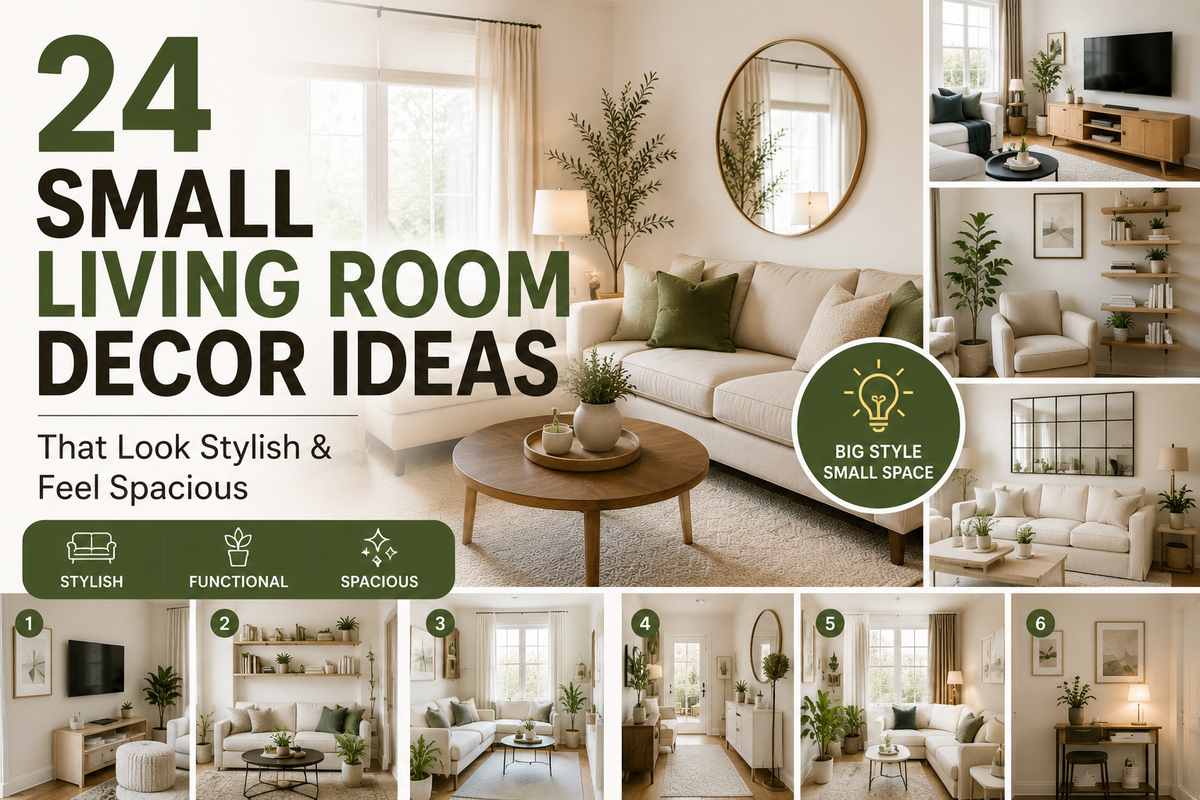
Decorating a small living room is one of the most common challenges homeowners and renters face — especially in apartments or compact homes where every square foot counts. You buy a new chair, add a coffee table, try a few decor pieces, and somehow the room feels tighter instead of better.
Here’s the truth: the size of your room matters far less than how you use the space.
Small, intentional changes — like adjusting furniture placement, switching to lighter colors, or improving lighting — can completely transform how a room feels. Some of the most inviting living rooms in the world are compact spaces designed with purpose and care.
This guide covers 24 practical, realistic ideas you can apply whether you’re decorating a small apartment, a family home, or even a rented space where major renovations aren’t possible.
1. Use Light Colors to Make the Room Feel Bigger
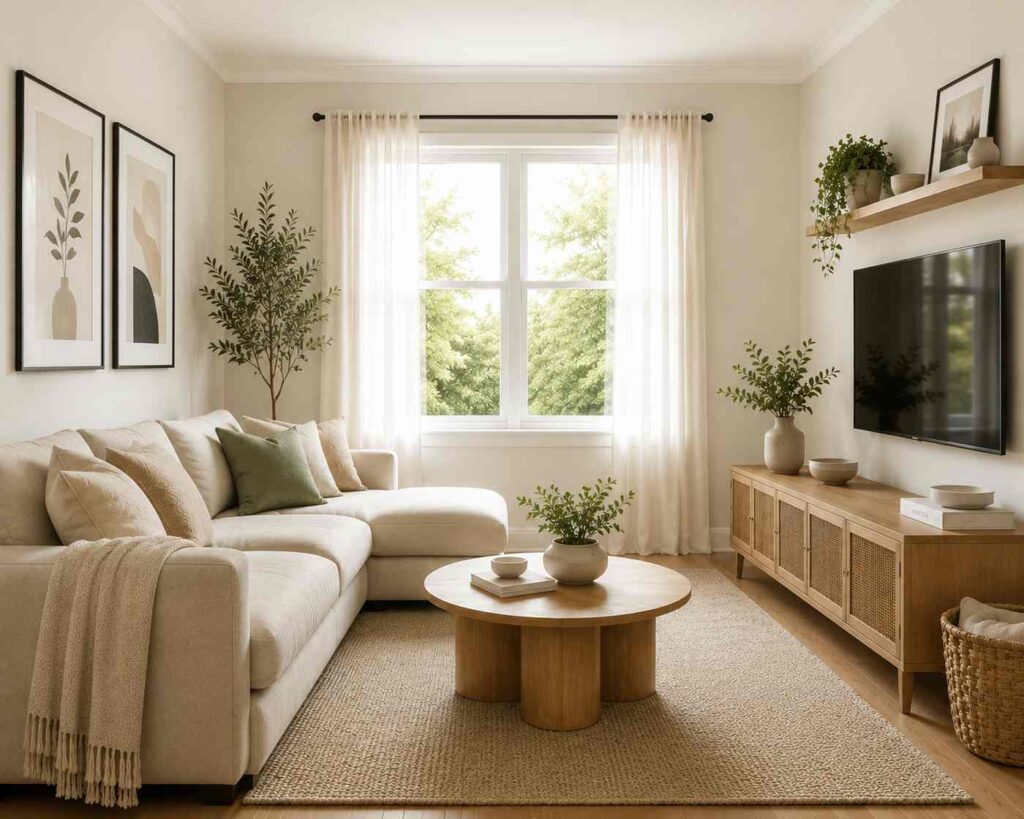
Light colors reflect both natural and artificial light, making a room feel more open and airy. This is why interior designers consistently recommend soft neutrals for compact spaces.
Best shades for small living rooms:
- Warm white
- Soft beige
- Light gray
- Pale sage green
- Cream tones
- Dusty pastels
If pure white feels too stark, choose warm undertones over cool ones — they create a softer, more welcoming atmosphere. You don’t need to paint everything white either. Lighter walls combined with darker accents through cushions, artwork, or rugs can create beautiful contrast without making the room feel cramped.
Pro Tip: Paint your ceiling slightly lighter than the walls to create the illusion of extra height.
2. Choose Furniture With Visible Legs
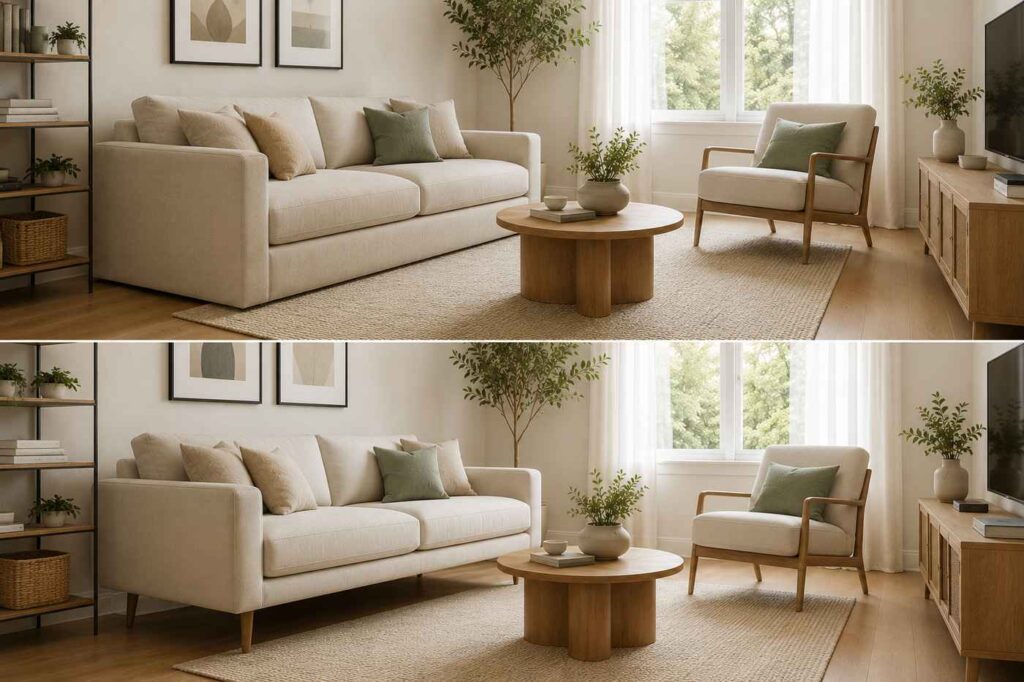
Furniture that sits flush with the floor visually “blocks” a room. Pieces with raised, visible legs allow light and sightlines to pass underneath, making the room feel more open.
What to look for:
- Mid-century modern sofas
- Raised armchairs
- TV units with slim open bases
- Elevated sideboards
Also choose sofas with slimmer arms rather than thick, padded ones — this saves more space than most people realize.
Pro Tip: Even a few inches of clearance under furniture makes a noticeable visual difference.
3. Add Mirrors to Reflect Light and Create Depth
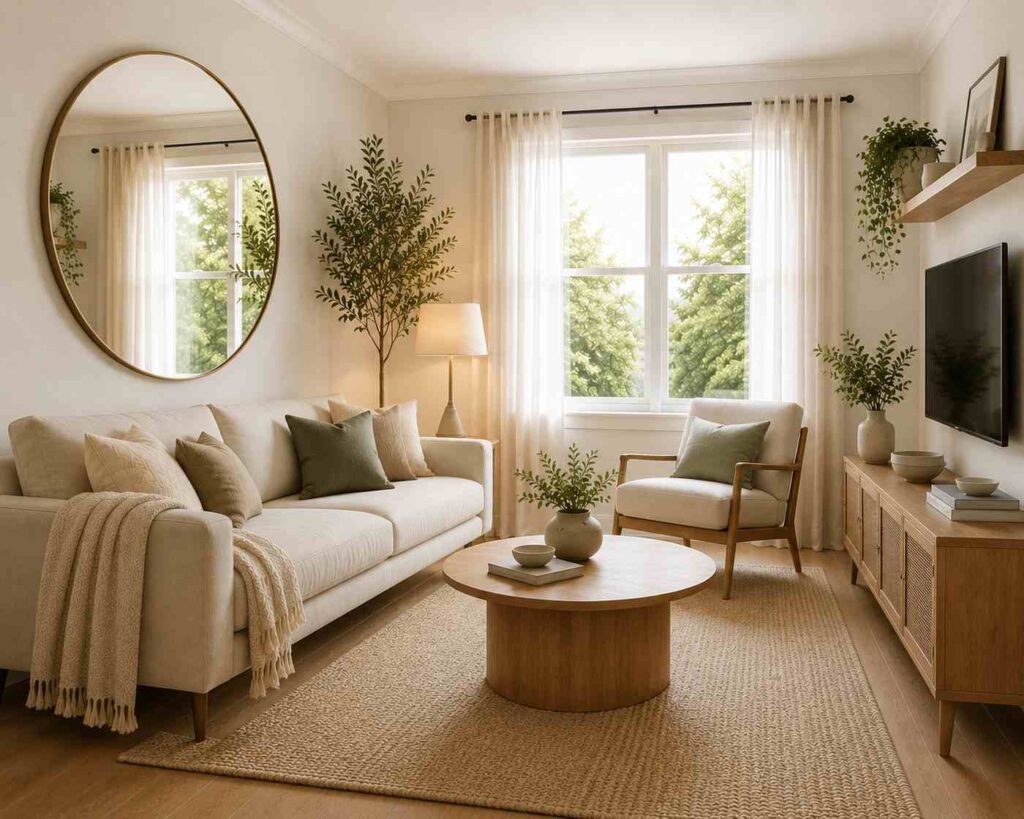
MirroA well-placed mirror is one of the most effective tools for visually expanding a small room. Mirrors reflect both natural and artificial light, brighten dark corners, and create the illusion of extra depth.
Best mirror placements:
- Directly across from windows
- Behind the sofa
- Near lamps or light sources
- Above fireplaces or console tables
Larger mirrors generally work better than several small ones because they create one strong, continuous reflection.
Pro Tip: Round mirrors soften a small space visually, while rectangular mirrors give a cleaner, more modern feel.
4. Invest in Multifunctional Furniture
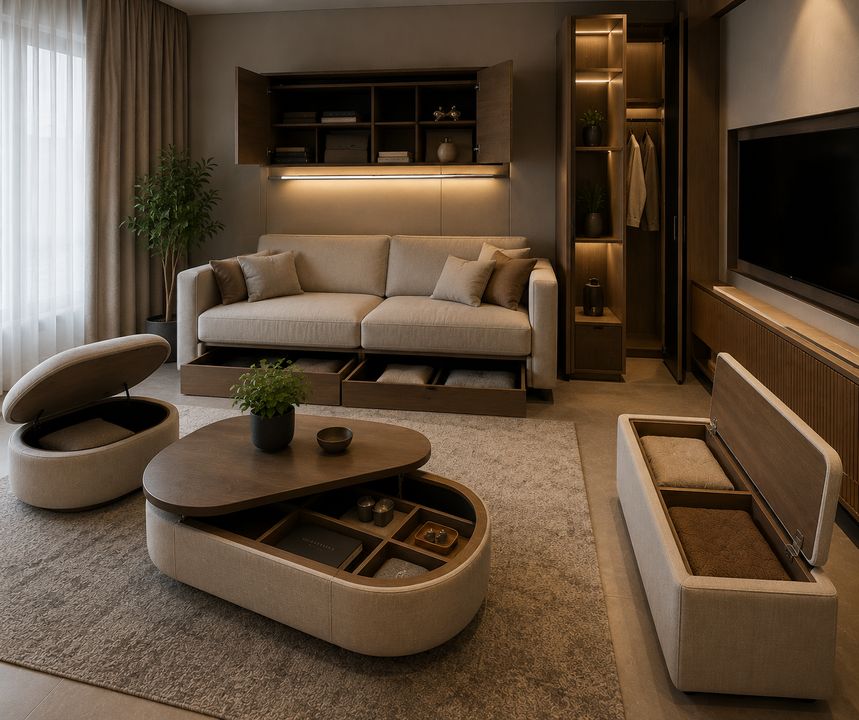
In a sIn a small living room, every piece of furniture should ideally do more than one job. Multifunctional pieces reduce clutter while improving day-to-day practicality.
Smart furniture choices:
- Storage ottomans (seating + storage + coffee table)
- Sofa beds for guest use
- Lift-top coffee tables with interior storage
- Nesting side tables that tuck away
- Storage benches
- Foldable furniture for flexible use
Pro Tip: Before buying any furniture, ask yourself: “Does this piece solve more than one problem?”
5. Use Vertical Space for Storage
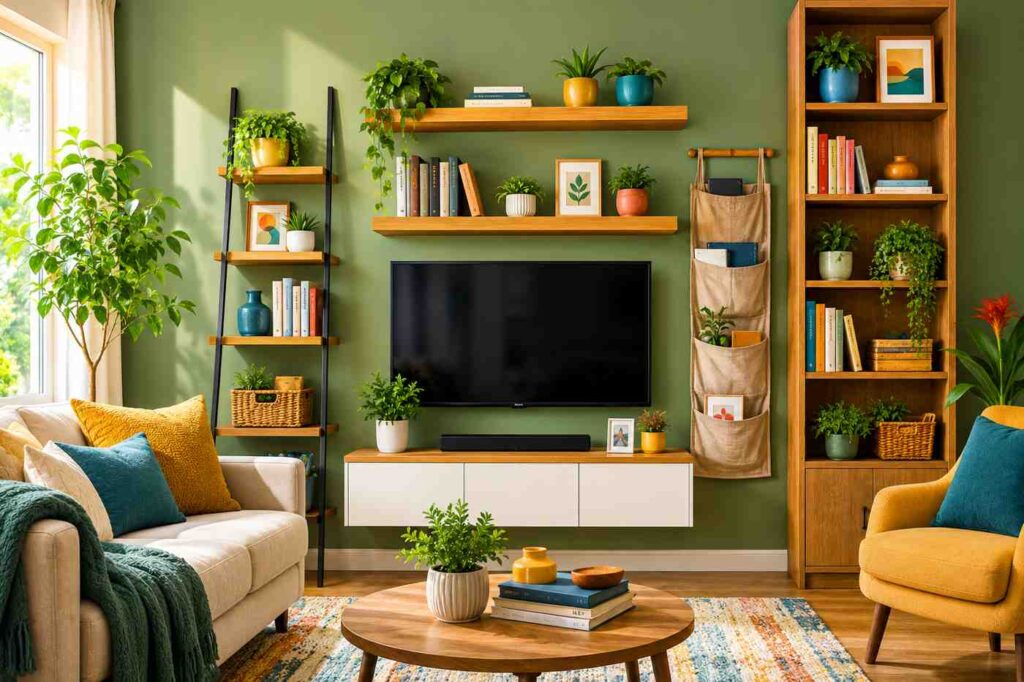
When floor space is limited, your walls become incredibly valuable. Vertical storage keeps the room organized without eating up walking space — and naturally draws the eye upward, making ceilings feel taller.
Vertical storage ideas:
- Floating shelves
- Tall, narrow bookshelves
- Wall-mounted cabinets
- Hanging organizers
- Ladder shelves
Pro Tip: Avoid overloading shelves. Leave breathing room between items so the display feels intentional, not cluttered.
Also Check: Modern TV Unit Designs
6. Keep Some Floor Space Visible
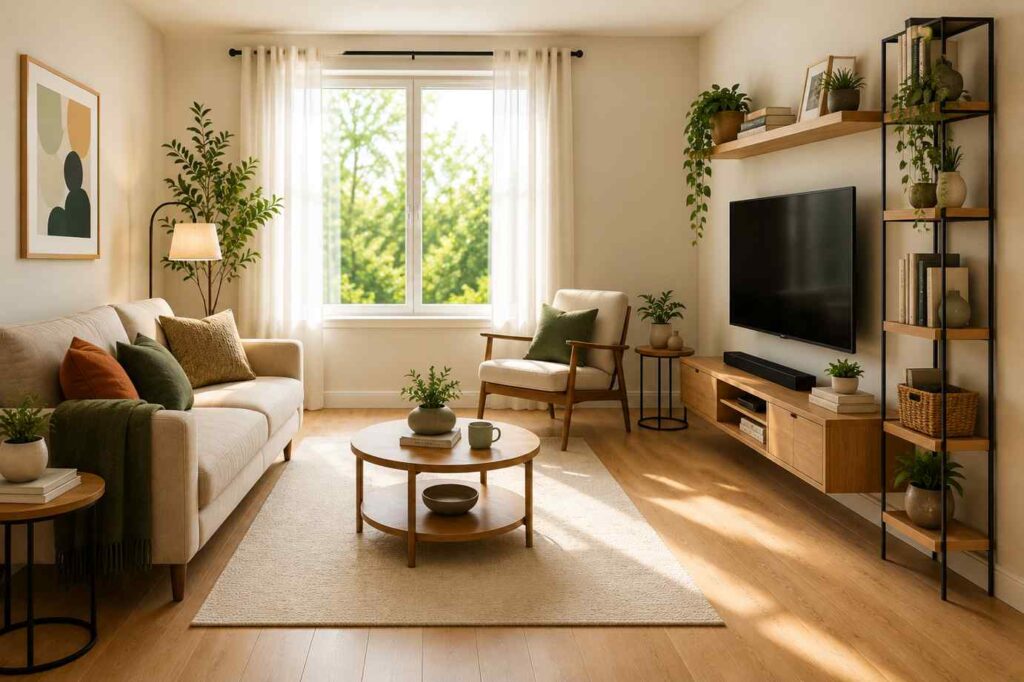
One of the most common mistakes in small living rooms is filling every available inch with furniture. One of the most common mistakes in small living rooms is filling every available inch with furniture. Rooms feel larger when floor space remains visible because the eye can move more freely around the space.
Simple ways to maintain openness:
- Leave gaps between furniture pieces
- Avoid oversized coffee tables
- Choose fewer, more intentional items
- Opt for raised furniture to maintain visual airiness
Pro Tip: Rearranging existing furniture — completely free — often creates more breathing room than buying new pieces.
7. Use a Larger Rug Instead of a Tiny One
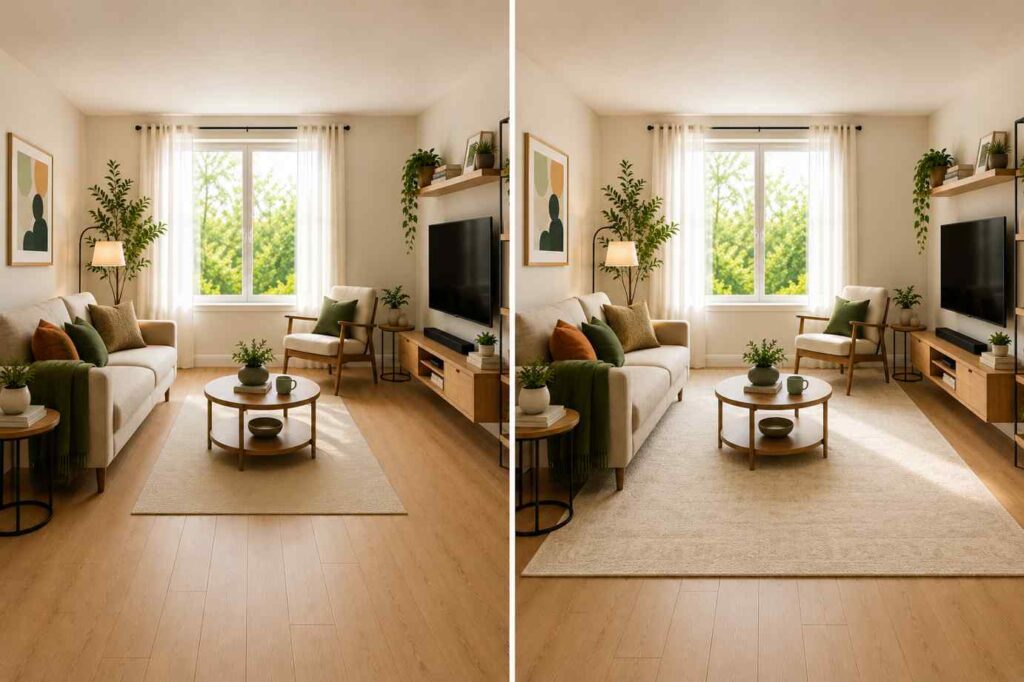
Many peopMany people assume a small room needs a small rug. In reality, a tiny rug makes a space feel disconnected and even smaller. A properly sized rug unifies the entire room and anchors your furniture arrangement.
Getting the size right:
- The front legs of your sofa and chairs should sit on the rug
- The rug should anchor — not float inside — the furniture grouping
- Leave some floor visible around the outer edges
Pro Tip: Light-colored rugs with subtle patterns work best in compact spaces.
8. Maximize Natural Light
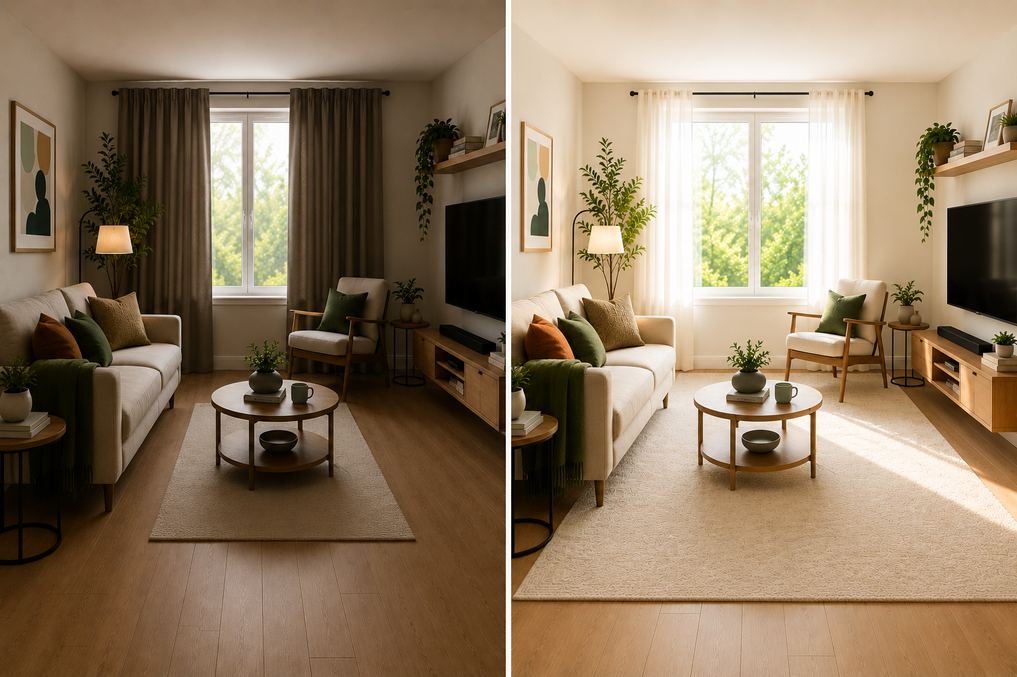
NatuNatural light has a dramatic impact on how spacious and uplifting a room feels. Heavy, dark curtains can make an already small room feel closed off and gloomy.
Better window treatment choices:
- Sheer curtains
- Linen drapes
- Light-filtering fabrics
- Minimal or no window treatments where privacy allows
Pro Tip: Clean your windows regularly. Dust and grime reduce natural brightness more than most people notice.
9. Declutter Your Space Regularly
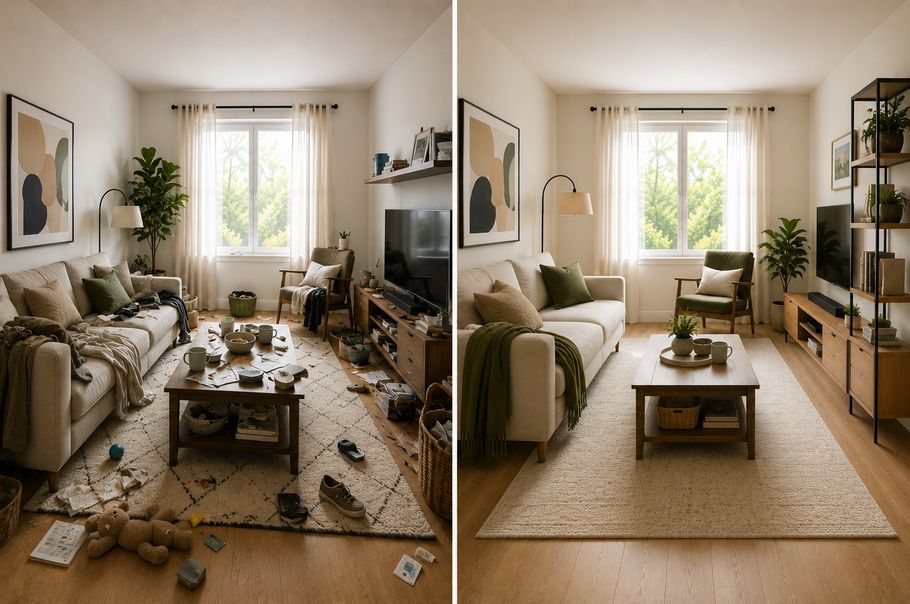
Even the most beautifully designed room feels stressful when clutter builds up. Small spaces suffer far more from disorganization because there’s less room to absorb visual noise.
Focus your decluttering on:
- Tabletops and surfaces
- TV units and media consoles
- Open shelves
- Corners
- Visible cables and wires
Pro Tip: Follow the “one in, one out” rule — when you bring something new into the room, remove or donate something old.
10. Float Furniture Away From the Walls
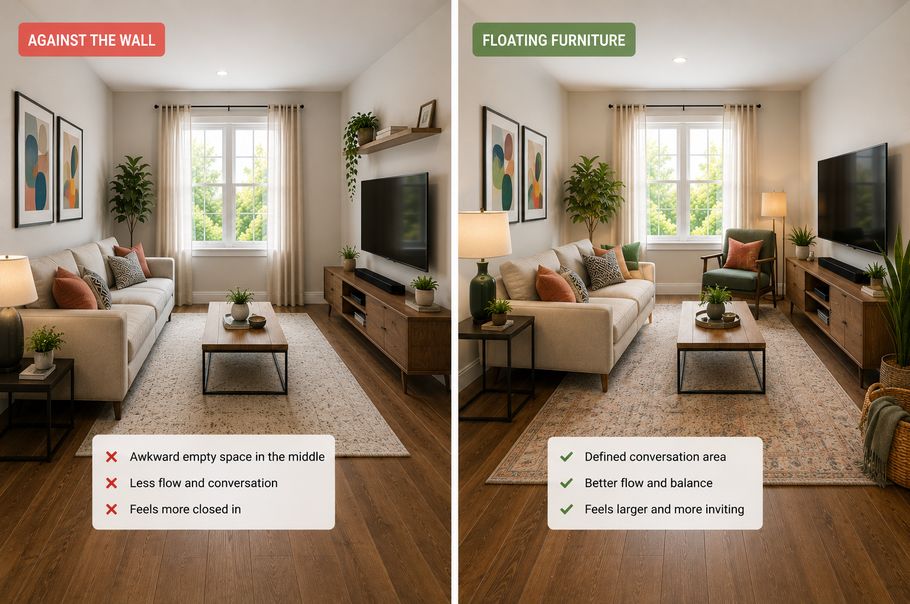
It mIt sounds counterintuitive, but pulling furniture slightly away from walls can actually make a room feel larger. When every piece hugs the perimeter, the center of the room feels awkward and hollow.
Try this instead:
- Pull sofas 2–4 inches forward from the wall
- Create a conversational furniture grouping in the center
- Use a rug to visually define the seating area
Pro Tip: Even a small gap behind furniture adds noticeable visual depth to the room.
11. Use Glass or Acrylic Furniture
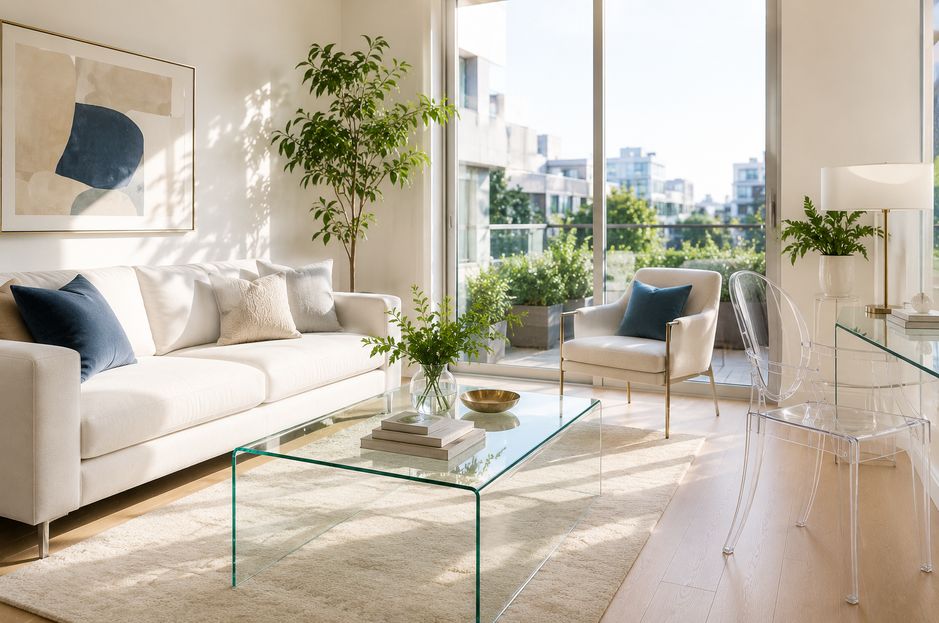
Transparent furniture maintains open sightlines throughout the room. Glass coffee tables and acrylic chairs visually “disappear,” reducing heaviness without sacrificing function.
These materials work especially well in modern, minimalist, or small apartment settings.
Pro Tip: Pair transparent furniture with soft textures like woven rugs or linen cushions to keep the room feeling warm, not cold.
12. Create One Clear Focal Point
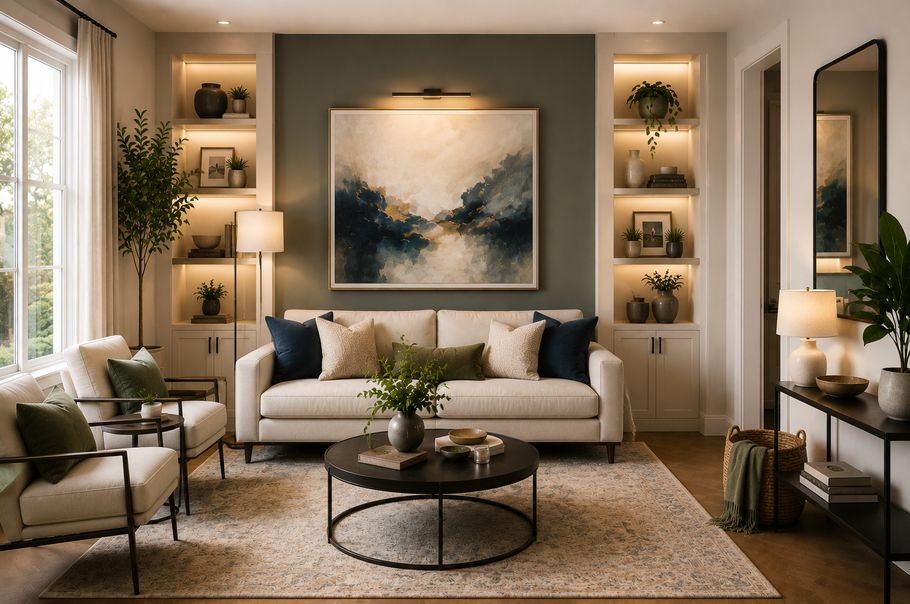
EverWithout a focal point, small spaces feel scattered and unfocused. Establishing one strong visual anchor gives the eye somewhere to land and makes the entire room feel more organized.
Strong focal point options:
- Statement artwork
- An accent wall
- A stylish sofa in a bold color
- A large mirror
- Built-in shelving
- A fireplace
Pro Tip: Avoid creating multiple competing focal points. One strong focal area is always more impactful than three weak ones.
13. Use Wall Sconces Instead of Floor Lamps
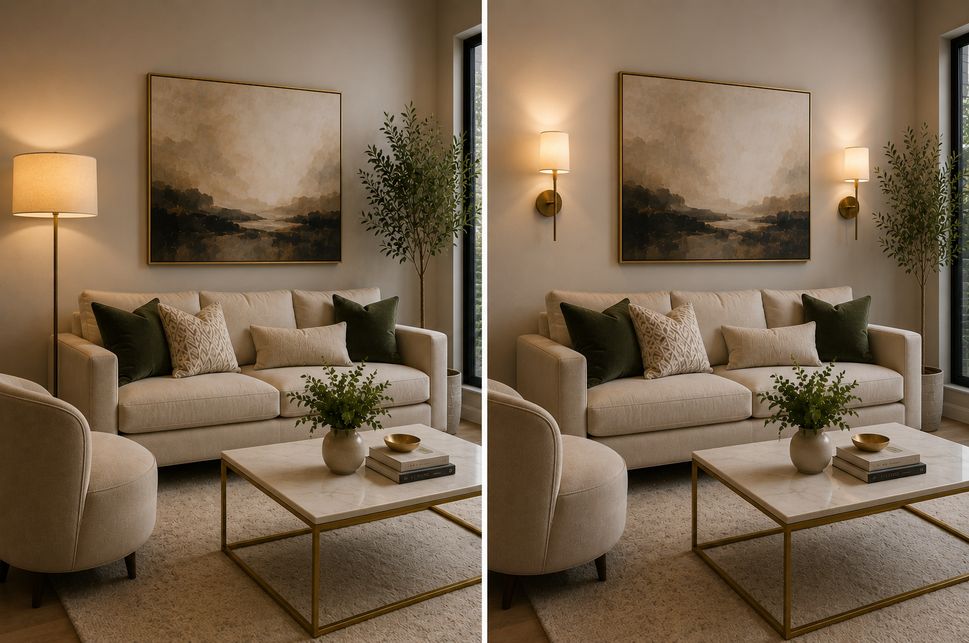
Lighting is essential in small spaces, but bulky floor lamps can take up valuable room.
Wall-mounted sconces free up floor space while adding elegance.
They also help create layered lighting, which makes rooms feel cozy and professionally designed.
Real-Life Tip:
Warm white lighting usually feels more inviting than harsh cool-toned lighting.
14. Add Indoor Plants for Warmth and Freshness
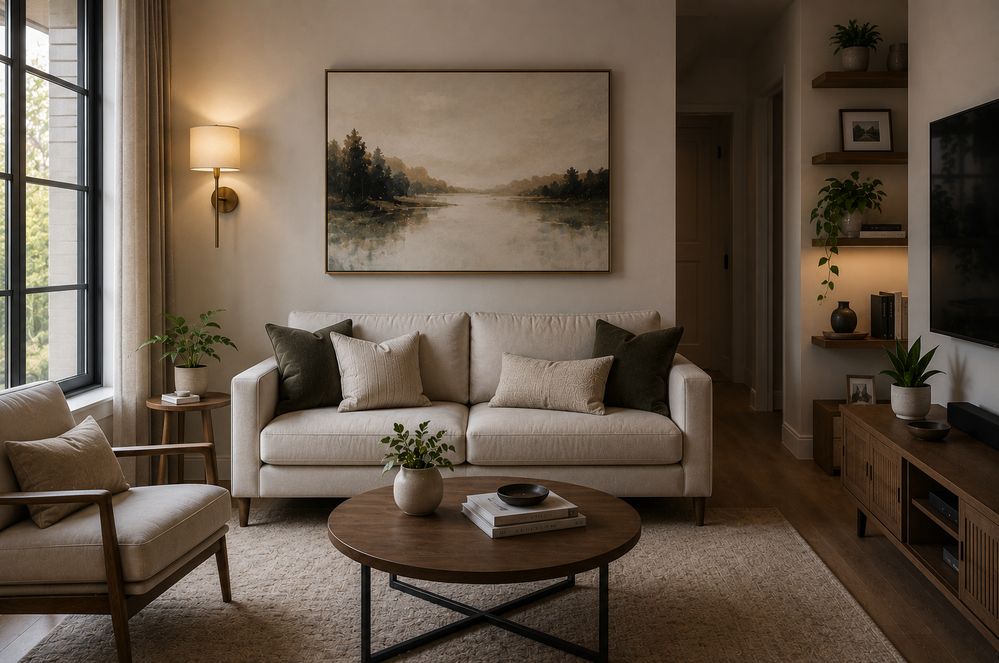
Plants instantly make living rooms feel more alive and welcoming.
Even one or two plants can soften hard edges and improve the emotional atmosphere of a room.
Low-maintenance options include:
- Snake plant
- Pothos
- ZZ plant
- Rubber plant
- Peace lily
Plants can also improve indoor air quality and reduce stress.
Real-Life Tip:
Use hanging planters or vertical plant stands if floor space is limited.
15. Stick to a Consistent Color Palette
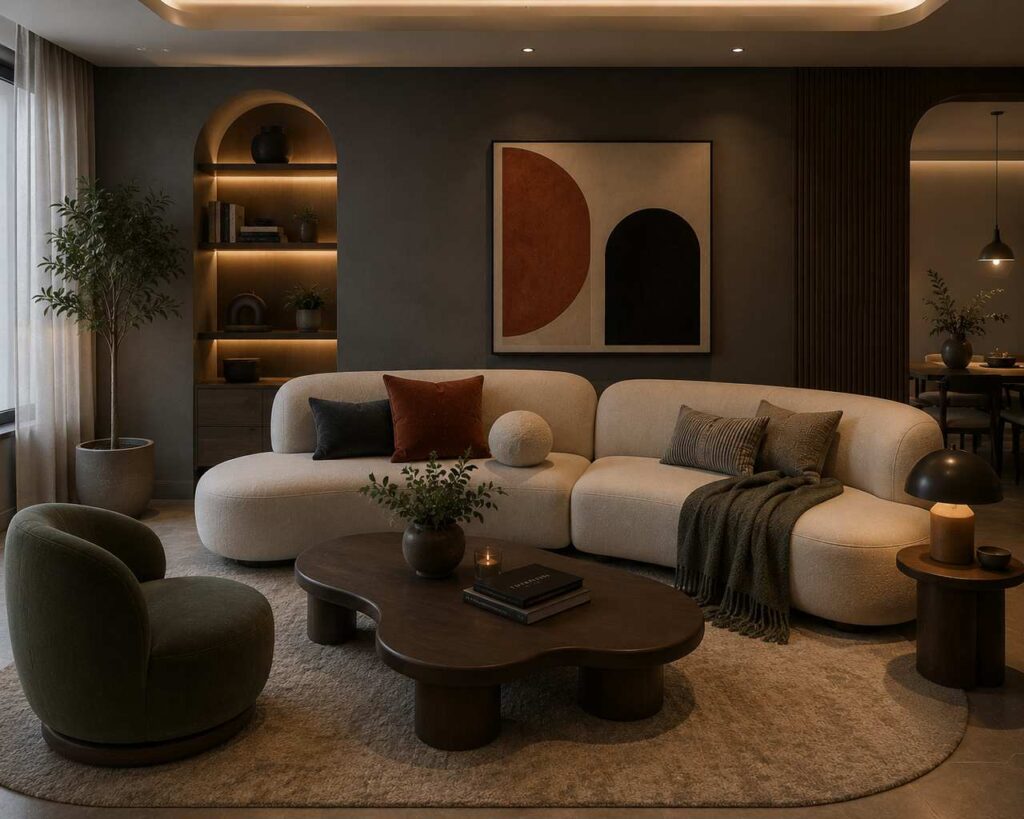
Too many colors in a small room can feel visually overwhelming.
A consistent palette creates harmony and calmness.
A simple approach is:
- One primary color
- One secondary color
- One accent color
This keeps the room feeling intentional without becoming boring.
Real-Life Tip:
Repeat colors throughout the room using cushions, artwork, throws, and rugs.
16. Hang Curtains Higher Than the Window Frame
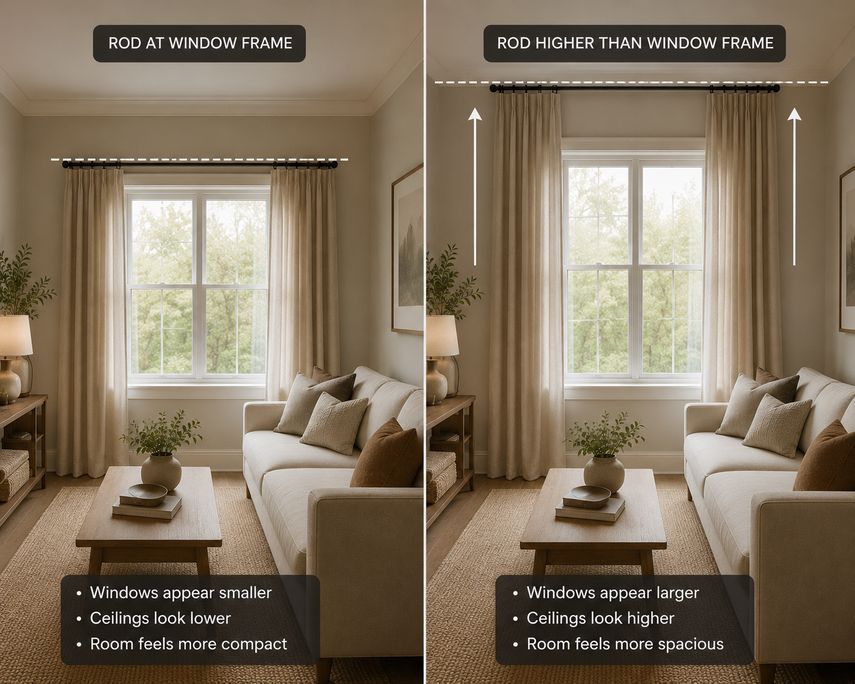
This designer trick creates the illusion of taller ceilings.
Instead of mounting curtain rods directly above windows, install them closer to the ceiling.
This makes:
- Windows appear larger
- Ceilings feel higher
- The room look more luxurious
Real-Life Tip:
Let curtains slightly touch the floor for a polished designer-inspired look.
17. Embrace Minimalist Decor
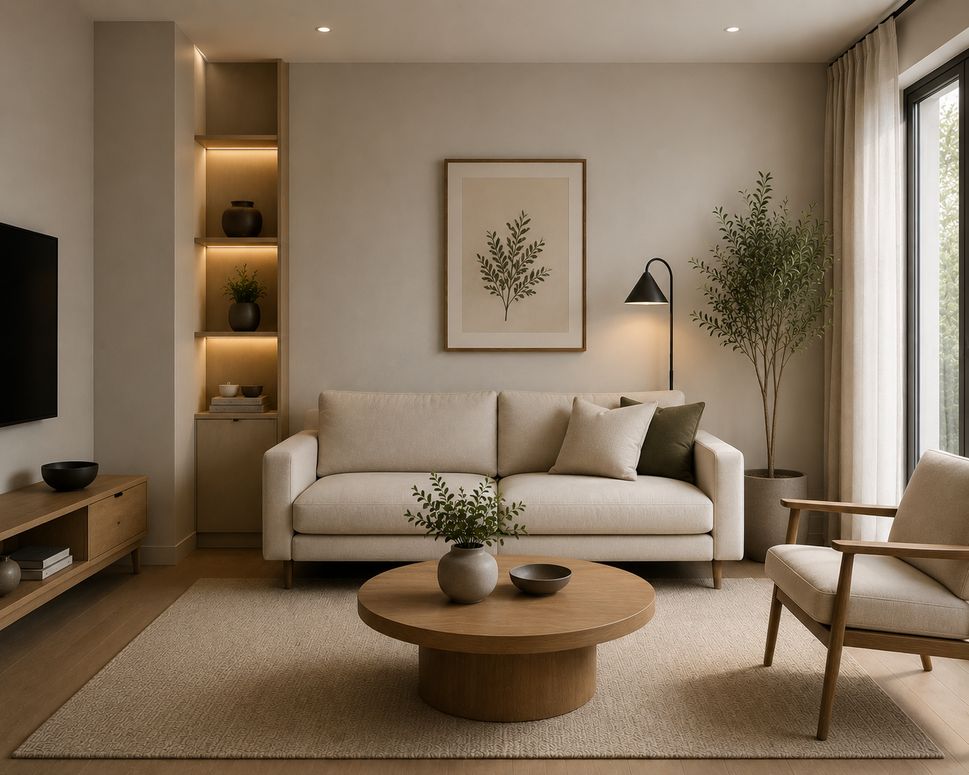
A lot of people hear the word minimalism and imagine a cold room with no personality. In reality, minimalism in a small living room simply means keeping things that serve a purpose or genuinely make you happy.
It simply means being intentional about what you keep in the room.
Focus on:
- Clean surfaces
- Functional decor
- Fewer but meaningful pieces
- Open breathing space
Minimalist rooms often feel calmer and easier to maintain.
Real-Life Tip:
Instead of decorating every shelf, leave some empty areas for balance.
18. Layer Different Types of Lighting
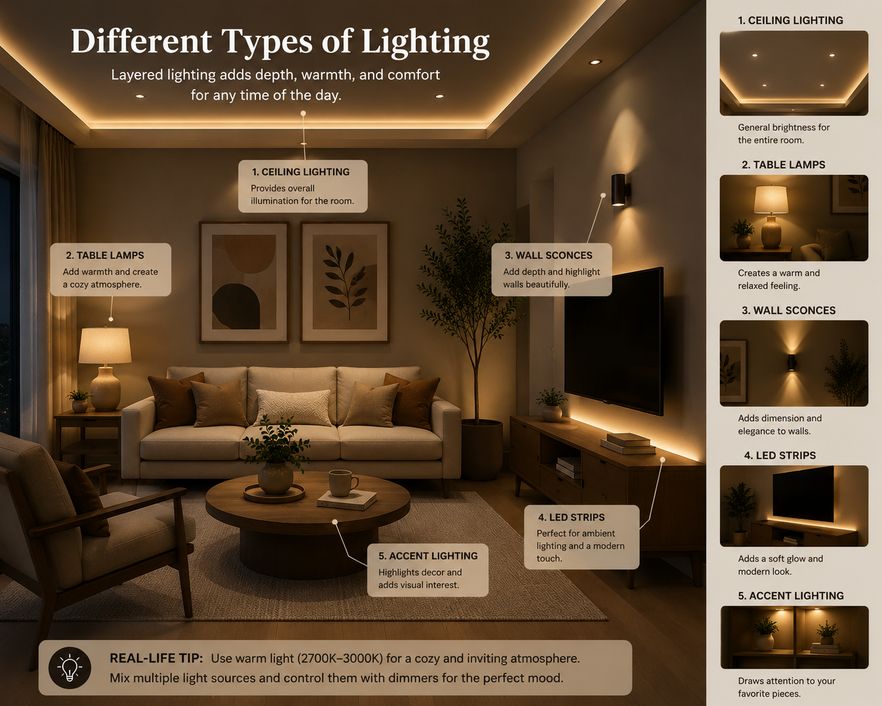
Relying only on one ceiling light can create harsh shadows and make the room feel flat.
Layered lighting adds depth and warmth.
Combine:
- Ceiling lighting
- Table lamps
- Wall sconces
- LED strips
- Accent lighting
Different lighting sources make the room feel more comfortable during both day and night.
Real-Life Tip:
Use warm lighting around 2700K–3000K for a cozy atmosphere.
19. Add Texture to Create Visual Interest
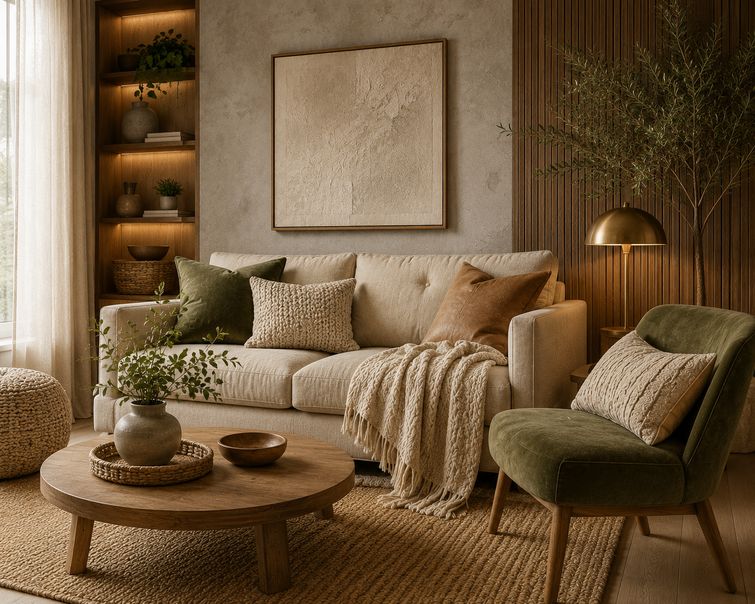
Small spaces still need personality and warmth.
Texture adds richness without requiring extra clutter.
Mix textures like:
- Linen
- Velvet
- Wood
- Cotton
- Leather
- Woven baskets
- Knit throws
Combining textures creates depth and makes the room feel thoughtfully designed.
Real-Life Tip:
Stick to similar tones when layering textures to avoid visual chaos.
20. Install Built-In Shelving if Possible
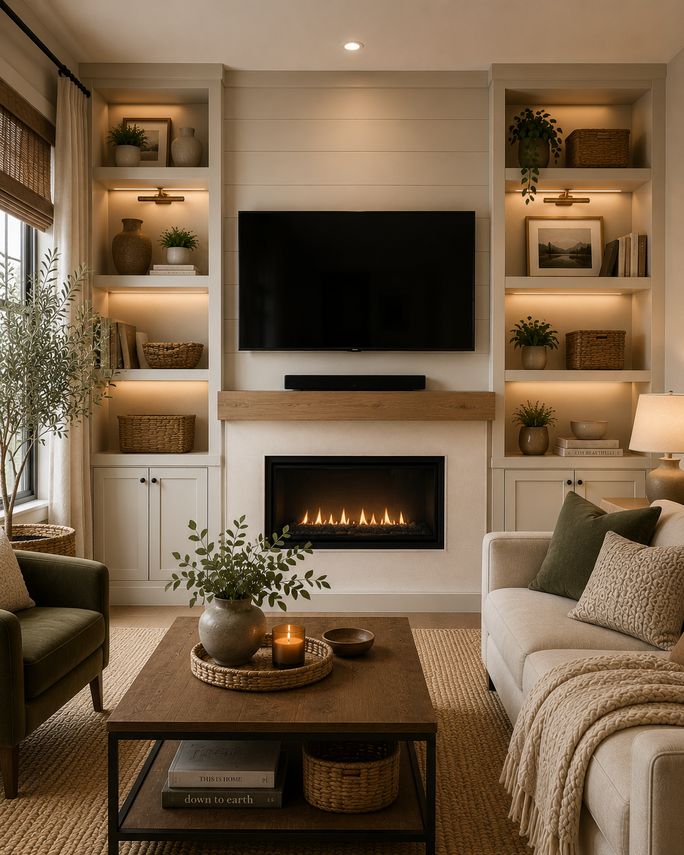
Built-in shelving maximizes awkward spaces and creates a polished custom appearance.
It’s especially useful around:
- TVs
- Fireplaces
- Corners
- Windows
Built-ins can increase both storage and home value.
Real-Life Tip:
Paint built-ins the same color as the walls for a seamless look.
21. Add Personal Touches That Feel Meaningful
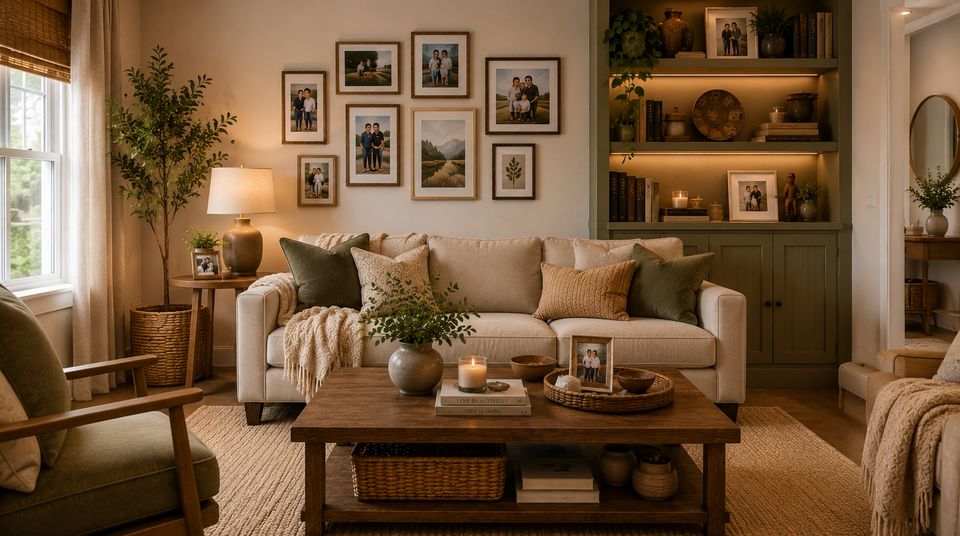
Beautiful homes feel personal — not overly staged.
Adding meaningful decor helps create emotional comfort.
Ideas include:
- Family photos
- Travel souvenirs
- Favorite books
- Handmade decor
- Personal artwork
These details make the space feel warm and lived-in.
Real-Life Tip:
Display meaningful items intentionally instead of scattering them randomly.
22. Use Corners More Efficiently
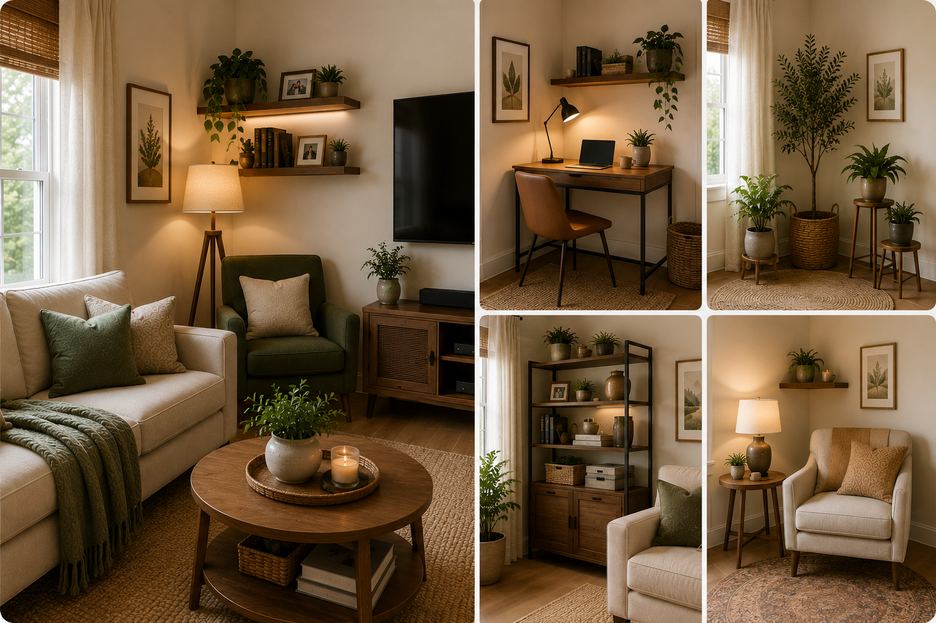
Corners are often underused in small living rooms.
You can transform corners into:
- Reading nooks
- Small workspaces
- Plant areas
- Storage zones
- Accent seating areas
Making use of every corner improves functionality without overcrowding the center of the room.
Real-Life Tip:
Corner shelves are excellent for small apartments.
23. Keep Walkways Open and Comfortable
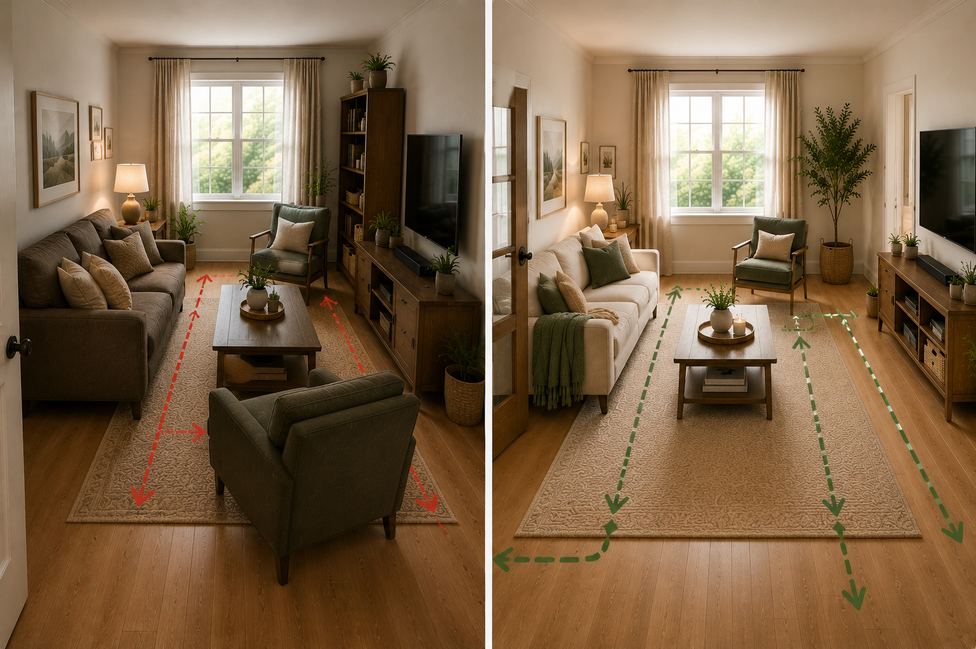
A room can look beautiful but still feel uncomfortable if movement feels restricted.
Clear pathways make the room feel more spacious and relaxing.
Try to:
- Avoid blocking entrances
- Maintain easy walking flow
- Reduce unnecessary furniture
Comfort and functionality should always come before trends.
Real-Life Tip:
Rearranging furniture can dramatically improve movement without spending any money.
24. Prioritize Comfort Over Perfection
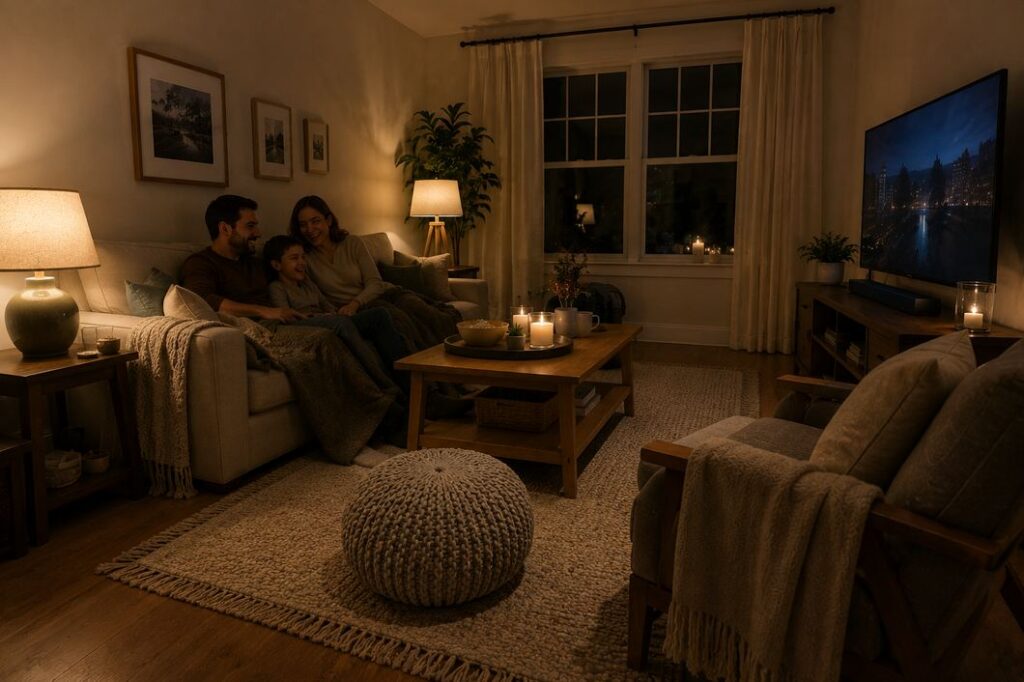
The most admired living rooms in real life aren’t always the ones that look best in photos. They’re the rooms where people actually enjoy spending time — relaxing after work, watching a film, reading quietly, or talking with family.
Design around how you actually live:
- Prioritize comfortable, properly sized seating
- Use warm, layered lighting
- Create a practical layout that supports daily movement
- Choose cozy textures and soft furnishings
Your living room should support your everyday life — not just look good online.
Pro Tip: Design your space around your real habits, not around trends you saw on social media.
Final Thoughts
Decorating a small living room can feel overwhelming at first, especially when social media constantly Decorating a small living room well is less about size and more about intention. Every decision — from furniture scale to color choice to lighting — shapes how the room feels to be in every single day.
You don’t need to transform everything at once. Start with one small change:
- Rearrange your furniture
- Swap out heavy curtains for lighter ones
- Add a mirror opposite a window
- Declutter one surface
- Introduce a warm lamp in a dark corner
Even a single change can make a room feel noticeably lighter, calmer, and more inviting.
Most importantly, create a space that feels good for you personally. When your living room is comfortable, functional, and emotionally calming — it naturally becomes more beautiful too.
[…] walls are the foundation of a luxurious small living room. Shades like cream, beige, taupe, soft grey, and warm white create a bright and airy feel while […]
Neutral-colored walls are truly the foundation of a luxurious small living room. Shades like cream, beige, taupe, soft grey, and warm white not only create a bright and airy atmosphere but also make the space feel more open, elegant, and timeless. When paired with layered textures, soft lighting, and minimal décor, these tones instantly elevate the overall aesthetic.
[…] Also Check – Small Living Room Decor Ideas […]
[…] Check – Small Living Room Decor Ideas […]
[…] ALSO READ: 24 Small Living Room Decor Ideas That Look Stylish & Feel Spacious […]